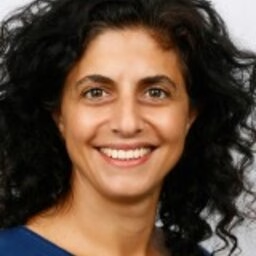
This blog is part of a series contributed by presenters at the International Humanitarian Studies Association (IHSA) Conference, held in Istanbul and Bergen in October 2025. Here, Alasdair Gordon-Gibson looks into the changing context for humanitarian action, and argues for a new and broader approach that embraces diversities of actors, approaches, and contextuality.
Many of the issues raised in the panels at the IHSA Conference, have focused on civilian protection. Most discussions centre around perceptions of a diminished humanitarian space and a lack of respect for humanitarian principles, as well as a loss of trust in its participants. My research argues that the space for principled humanitarian action has not diminished, but that changes in the geo-political landscape, with a growing diversity of stakeholders and increasing agency of affected populations, has meant that the nature of space for shared discussion has altered. To regain trust and access in this changed environment, humanitarians must learn a new way of thinking and talking that is more inclusive, respectful, and confident in the universal value of its discourse.
This requires a solution that looks beyond resetting the current patterns of policy and practice and turns towards a radical change in the way we think around the humanitarian engagement with politics and power. It will mean uncomfortable participation in spaces of engagement that challenge the traditional humanitarian approaches around neutrality and impartiality.
Most working in the humanitarian sector consider the principles of neutrality, impartiality and independence as being an essential and pre-existing part of the expression of ‘humanity’, and that are universally applicable regardless of context or culture. However, to many analysts they were established – like the organisations themselves – at a particular historical juncture and so may represent an ethos that is questioned or rejected by stakeholders outside of their foundational traditions. To regain relevance in a revised space requires confident engagement with the prevailing context of humanitarian action. This means acknowledgement of the political identity of the humanitarian sector, and recognition of its social agency: its interface with established and non-established power.
Auxiliary or Anarchist? The freedom to choose
Scholars of Social Identity Theoryhave observed that people’s orientation towards authorities change once they have established a social bond, meaning that incorporation into the social fabric of public life increases the likelihood of a more considered interpretation of the intent of authority and its auxiliary structures. The construction of social capital, and its associated features of trust, norms of behaviour and mutual obligation, have been linked to an emergence of community participation, where voluntary engagement with state or non-state authority is seen to be a product of shared values and a culture of responsibility to one’s community and society.
Interpretations of the auxiliary role has often been a contested concept in humanitarian engagement. As humanitarians, we are always an auxiliary in some form, most importantly to the community in crisis, but also often to the established or unestablished authorities and other stakeholders in the emergency response. The question posed here is how to navigate this relationship? How to challenge authority when red lines are crossed?
There is history of a legitimated identity to question and challenge authority that shares a common genealogy stretching from Europe to the Middle East and beyond. The traditions and politics are different, but there is a universal expression of dignity and respect, and the voluntary impulse to protect these values, that is common to all. Participating in the discourse of power and playing an influential part as a trusted challenge to authority is not absent from the contemporary humanitarian environment. Examples are evident when local actors and national politicians choose to resist authority – or are auxiliaries to authority but have access to opposition discourse.
Context Matters
There are no blueprints for a humanitarian response, since in every case the social and the political dynamics are different: context matters. The rise in authoritarianism, inequality and social injustices exacerbated by political authoritarianism, and environmental catastrophes through climate change, means that new social movements will emerge and so the formal humanitarian system must adapt in order to respond. This means acknowledging the hierarchies of politics and power and working more transparently with them. Access and engagement in this changing context require a new humanitarian approach. Humanitarian principles must be the lodestar guiding the ethical and operational compass but with recognition of their limits.Prescriptions of rules and principles do not mean their universal acceptance or applicability in all contexts: a dogmatic prescription of rules and procedures neglects the reality of people striving to survive in a crisis.
Mistrust and disappointment with the global political responses to conflicts and complex emergencies, where a sense of humanity is seen as a diminishing concept in humanitarian responses, has led for increasing calls for solidaritywith affected populations that identifies a shared humanity. Disenchantment with political authority makes it more important than ever to engage with the political discussion, rather than distancing from it in the quest for absolute neutrality, impartiality, and independence. It means influencing political decisions in a bolder way that promotes the social agency of the humanitarian identity: one that engages in a discussion that is less dogmatic and directs towards a space for discourse around an ordinary humanitarian society rather than an ordered humanitarian system. I suggest that reconsideration of the two ‘orphaned’ Red Cross and Red Crescent Movement Fundamental Principles of Voluntary Service and Universality, interpreted and understood in the contexts of contemporary conflicts, will help drive a principled discourse with power and politics that is able to be in solidarity with the most vulnerable: an auxiliary when it works and an anarchist when it does not.
ENDNOTES
IHSA 2025 – Panel: Politics of humanitarianism: power, influence, and governance. Session Friday 17th October: ‘The politics of humanitarian negotiations.’
Opinions expressed in Bliss posts reflect solely the views of the author of the post in question.
Alasdair Gordon-Gibson
Alasdair Gordon-Gibson worked for 25 years within the International Red Cross and Red Crescent Movement. Awarded a PhD in International Relations from the University of St Andrews he is currently an Honorary Lecturer with the Graduate School for Interdisciplinary Studies, University of St Andrews. Email agg2@st-andrews.ac.uk
Are you looking for more content about Global Development and Social Justice? Subscribe to Bliss, the official blog of the International Institute of Social Studies, and stay updated about interesting topics our researchers are working on.
In this blog to mark the International Day of Disaster Risk Reduction (October 13), HSC Coordinator Tom Ansell dives into the role of ‘Early Warning’ systems and policies as part of Disaster Risk Reduction initiatives. They fit within greater DRR programming to make sure that people are warning in advance and can take precautions, or other measures, to prepare for an upcoming shock or hazard. The 2004 Asian Tsunami highlighted the need for more early warning systems for countries with Pacific and Indian Ocean coasts – these systems were triggered earlier this year after an 8.8 magnitude earthquake off the coast of Russia.
Managing the risks to people’s lives and livelihoods before, during and after a disaster (whatever the cause) requires looking beyond just ‘responding to a disaster’. Since the 1990’s, and the UN’s ‘International Decade for Natural Disaster Reduction’, attitudes towards the disaster cycle have matured and within many emergency management agencies there is some reference to several ‘phases’ of a disaster in a ‘cycle’. For example, the Australian Emergency Management Agency refers to the ‘prevention, preparedness, response, recovery’ phases (now considered a bit old fashioned!). The ‘risk management approach’ is currently the most modern frame for disaster preparation for and responding to a disaster, which focuses on risks rather than timelines: “establish contexts, identify risks, analyse risks, assess risks, treat risks” – and repeat!
Risks are themselves a mixture of hazards/shocks (something that might cause a disaster), vulnerability (socioeconomic conditions that might exacerbate the hazard), exposure (how close people, livelihoods, etc, are to the hazard), and coping capacity (the resources and protocols in place to manage risk).
To make a risk assessment, practitioners consider the severity of a risk, and the likelihood of it occurring, to make a compound ‘score’. Disaster Risk Management involves activities, policies, procedures and so on to mitigate risks (DRR), often by reducing vulnerabilities or exposure, or by increasing coping capacity.
So a systematic approach to DRR will approach all of these various components. It’s easy to see why knowing about a hazard early might make it easier to protect people and livelihoods. Or, in technical language: Early Warning increases coping capacity, by giving more time to prepare for a hazardous situation (by taking anticipatory action), thereby decreasing exposure! Within the humanitarian sector, programmes and interventions around this are usually referred to as Early Warning, Early Action (EWEA). Ideally, these activities should be contextual, appropriate, ‘people-centred’, community-based and/or managed, and inclusive.
What do Early Warning systems look like?
What an early warning system looks like is completely dependent on the context and hazard in question. The logic behind most early warning systems, though, is monitoring a hazard (say, a river level) and then triggering information sharing and next steps once a certain level of immediacy has been reached.
For example, the Syria Civil Defence (the White Helmets) co-developed an app-based early warning system for airstrikes, military activities, and knock-on emergencies during the Syrian civil war. A central command room processes incoming reports of, say, jets taking off from an air base, and then sends a warning via app and SMS to mobile phones in the region, with instructions to take cover. Prior to this system, early warnings of air strikes were spotted by people in watch-towers, and communicated by word of mouth and a walkie-talkie radio network, which led to delays in warning people about incoming danger. This app-based system could be used to warn of other incoming hazards, for example a particularly violent winter storm, upstream flooding, or seismic activity. The Netherlands utilizes a similar system for all manner of hazards, NL-Alert.
But whilst tech-enabled Early Warning systems have grown in the last 15 years, there are plenty of contexts where word-of-mouth, radio broadcasting, or an emergency network (the ‘telephone tree’ method) is the most effective way of getting information to people in time to evacuate, take precautions, or otherwise prepare. For example, if there is a river close to a community that periodically floods, people ‘upstream’ can monitor river levels, and spread the words to communities ‘downstream’ if there is particularly high water. This is also the case for knowledge passed down through the generations: if a particular species of animal usually leaves just before a violent storm, for example, this can serve as the ‘trigger’ to warn people.
Early Warning systems are equally useful for slow-onset disasters. An example here is part of the Productive Safety Net Programme (PSNP) in Ethiopia, which is designed to reduce the risk of famine during poor harvests by offering cash-for-work and cash transfers for people that mainly rely on local agriculture for income and to maintain access to food. The programme is ‘activated’ when drought has been detected for a certain number of months, depending on the region.
Early Warning for Tsunami since 2004
On 26 December 2004, a large underwater earthquake off the coast of Indonesia triggered 50-metre high waves that killed over 220,000 people, as well as leaving more than 2 million people homeless in 15 countries. At the time, Indonesia was not considered an especially high-risk country for tsunami, meaning that the at the time there was little monitoring of underwater seismic activity, or sea level surface. The Pacific Tsunami Warning Centre was only able to find out about the impending disaster through internet news stories about devastation in Thailand (itself also unprepared for underwater earthquakes or tsunami at the time), and so couldn’t warn countries with Indian Ocean costs in time.
Following the destruction of the 2004 tsunami, national governments, UN agencies, and NGOs all put renewed efforts into reducing exposure to tsunami and oceanic hazards. At an intergovernmental level, the tsunami sped up development and adoption of the Hyogo Framework for Risk Reduction (now surpassed by the Sendai Framework). At a national level, Thailand created a multi-hazard oceanic early warning system, with tsunami detection buoys and information sharing with Indonesian, Australian, and Indian detection buoys. These signals are sent to a national coordination centre, whereupon various operating procedures are activated. A warning is then broadcast in five languages by fax, SMS, through ‘warning box’ speakers, radio relay towers, public tannoys, social media and through radio and TV warnings. The system will be developed further to give direct to mobile phone warnings in the coming decades.
Indonesia, meanwhile, has developed a network of 553 seismographs, as well as using oceanographic modelling and local hazard mapping for low-lying coastal areas. Once this network detects seismographic activity, procedures include public announcements, vertical evacuation routes, and evacuation signage.
Outside of the Pacific region, the destruction of the 2004 tsunami impelled Caribbean governments to put together the Tsunami and other Coastal Hazards Warning System for the Caribbean Sea and Adjacent Regions (ICG/CARIBE EWS), a multi-hazard coastal early warning system, and since 2011 have integrated the CARIBE WAVE exercise, which simulates a tsunami or underwater earthquake evacuation. In 2024, over 700,000 people were ‘evacuated’ during the exercise.
Unfortunately, well-functioning early warning systems are not enough to completely mitigate the risk of a large disaster, as the 2011 Tohoku earthquake and tsunami demonstrates. More than 20,000 people died during the quake and 39-metre tsunami wave, with knock-on effects including the Fukushima Daichi nuclear accident, despite Japan having a well-developed tsunami early warning system. The worth of all of this preparation work was evident this July, though. An 8.8 magnitude offshore earthquake occurred off the coast of Russian Kamchatka, triggering early warning systems and causing precautionary policies in several countries (including Japan, Indonesia, Russia, and China), including evacuations. The earthquake did cause tsunami-like waves, though did not have the same destructive force as the 2004 tsunami.
Conclusion – early warning as part of a multi-level DRR framework
Early warning systems, then, are a key part of reducing disaster risk, especially to climactic and environmental hazards. But we shouldn’t equate that with completely eradicating risks, or indeed think that early warning is the only part of risk management and reduction that should be concentrated on. Early warning systems work best as part of a full multi-level DRR framework, with training and education on detecting hazards, well-developed protocols for early action, evacuation, or other mitigation measures; and a general policy to reduce societal vulnerability through equitable policies, reducing socio-economic inequalities, and strong governance structures.
Opinions expressed in Bliss posts reflect solely the views of the author of the post in question.
About the Author
Tom Ansell
Tom Ansell is the coordinator and programme manager of The Hague Humanitarian Studies Centre, and the Coordinator of the International Humanitarian Studies Association. He has a study background in religion and conflict transformation, as well as an interest in disaster risk reduction, and science communication and societal impact of (applied) research.
Are you looking for more content about Global Development and Social Justice? Subscribe to Bliss, the official blog of the International Institute of Social Studies, and stay updated about interesting topics our researchers are working on.
In his 1975–76 lecture series at the Collège de France, Michel Foucault famously declared, ‘Society must be defended’. While framed within the context of biopolitics and the genealogy of state violence, this provocation has found renewed relevance in the 21st century as new forms of warfare emerge. Today, the greatest threats to societies are not only kinetic or territorial but epistemic and cognitive. Cognitive warfare – an increasingly salient form of conflict – operates by targeting perception, social cohesion and identity, often exploiting the fault lines of gender, race, and class, to undermine collective resilience.
Photo Credit: United Nations
This blog post explores how NATO’s instrumental engagement with the Women, Peace and Security (WPS) Agenda intersects with these new threat environments. Despite normative commitments to inclusion, NATO’s implementation of WPS remains structurally tethered to operational efficiency and military effectiveness, rather than transformative gender justice. The rise of cognitive warfare, which thrives on polarization and symbolic manipulation, underscores the urgent need to reassess what it means to defend society. Rethinking defence in the cognitive age requires not merely stronger militaries but stronger democracies – and this is only possible by fully integrating marginalized voices, particularly women, into the foundations of security thinking and practice.
Cognitive Warfare: Targeting the social fabric
Cognitive warfare is a strategic practice that seeks to influence, destabilize and control the minds and behaviours of target populations through information manipulation, disinformation, psychological operations and narrative disruption. Unlike traditional warfare, its objective is not the destruction of infrastructure but the corrosion of shared meaning and societal coherence. In this form of conflict, the ‘battlespace’ is everyday life: news media, education systems, social media platforms and interpersonal trust.
Actors – both state and non-state – engage in cognitive warfare to reshape identities, manipulate emotions and undermine public consensus. These operations often capitalize on gender, ethnic and ideological divisions to deepen internal discord. For example, campaigns may weaponize narratives about gender roles, women’s rights, or ‘wokeness’ to generate backlash, recruit supporters or delegitimize institutions. Importantly, cognitive warfare targets not just what people believe, but their capacity to believe ‘together’, fragmenting the cognitive unity that underpins democratic societies.
The challenge cognitive warfare presents to traditional security paradigms is profound. Institutions such as NATO, built on hierarchical, masculinized models of defence, remain structurally oriented toward external threats, kinetic action and deterrence. However, when societies themselves become the battleground – through misinformation, distrust and symbolic violence – conventional tools fall short. A broader, more inclusive understanding of what constitutes security and who is responsible for producing it becomes indispensable.
The WPS Agenda and NATO: Between inclusion and instrumentalization
Since the adoption of UN Security Council Resolution 1325 in 2000, the Women, Peace and Security (WPS) Agenda has sought to mainstream gender perspectives within security and peacebuilding processes. NATO, as one of the earliest international actors to adopt a WPS action plan, has made formal commitments to increasing women’s participation, integrating gender-sensitive policies and addressing conflict-related sexual violence. However, feminist critiques have consistently argued that NATO’s engagement with the WPS Agenda has remained instrumental rather than transformative.
Rather than challenging militarized logics or hegemonic masculinity, NATO has largely used gender inclusion as a means of enhancing operational efficiency. Gender advisors, female engagement teams and gender training have been deployed to bolster mission success – particularly visible during operations in Afghanistan – without addressing the broader patriarchal structures of the alliance itself. Gender becomes a force multiplier, not a site of political transformation.
This approach not only limits the potential of the WPS Agenda but also creates vulnerabilities within the alliance. In an age of cognitive warfare, where legitimacy and perception are key, superficial inclusion can be co-opted or weaponized. Anti-gender movements, emboldened by populist and nationalist currents, have already begun to frame gender-sensitive policies as distractions from ‘real’ military priorities. Recent statements by US officials, such as Pete Hegseth’s denunciation of the WPS programme as ‘woke’, reflect a broader backlash against gender equality within defence institutions.
Such politicization renders NATO’s fragile engagement with WPS even more precarious. It also highlights a core contradiction: an institution that seeks to defend democratic societies cannot afford to marginalize the very constituencies that embody those democratic values. In failing to fully embrace gender justice, NATO not only undermines its own legitimacy but also cedes ideological ground to actors who seek to destabilize democratic cohesion through cognitive means.
The intersection of cognitive warfare and WPS reveals the limitations of a security architecture premised on traditional threat-response frameworks. Defence, in this context, cannot merely be about protecting borders or building military capacity. It must involve cultivating epistemic resilience, narrative sovereignty and social inclusion.
Women’s participation is not just normatively important – it is strategically essential. Excluding or tokenizing women undermines collective intelligence and leaves societies vulnerable to the very divisions cognitive warfare exploits. Conversely, including women in meaningful, leadership-level roles across security institutions expands the range of perspectives, narratives and strategies available to resist cognitive incursions.
Moreover, feminist security thinking – rooted in care, relationality and structural critique – offers tools for reimagining defence beyond violence. It prompts us to ask: What are we defending? Whose society is being protected? And how do we define threat in the first place? These are not ancillary questions but central ones in an age when the terrain of conflict is symbolic, social and affective.
To truly defend society, institutions must undergo epistemic transformation – not just integrate more women, but reconfigure how knowledge is produced, valued and operationalized. This involves dismantling the false binary between hard and soft security, and recognizing that resilience against cognitive warfare begins with inclusion, trust and equity.
Rethinking defence: Defending democracy from within
In light of these dynamics, it is time to revisit Foucault’s challenge: ‘Society must be defended’ – but how? The answer lies not in a return to fortress mentalities or reactive militarism, but in a proactive commitment to inclusive, democratic resilience. In the face of cognitive warfare, defending society means defending its pluralism, its capacity for critical thought and its inclusive institutions. It means moving beyond tokenistic gender inclusion toward structural empowerment.
NATO and other security actors must rethink what constitutes strength. In the long run, it is not military hardware but social cohesion, narrative legitimacy and institutional trust that will determine whether societies withstand the assaults of cognitive conflict. Women are not auxiliary to this project – they are central to it. As the global security landscape evolves, so too must our understanding of defence. In an age where societies themselves are the battlefield, the imperative is not only to defend, but to transform. And that transformation begins by taking seriously the voices, knowledges and futures that have long been sidelined.
This blog post is based on the authors’ presentations delivered at the Pre-NATO Summit event at De Haagse Hogeschool / The Hague University of Applied Sciences on 5h June 2025.
Opinions expressed in Bliss posts reflect solely the views of the author of the post in question.
About the authors
Shyamika Jayasundara-Smits
Shyamika Jayasundara-Smits is an Associate Professor in Conflict and Peace Studies at ISS/Erasmus University Rotterdam. She is a transdisciplinary researcher specializing in Political Science, with expertise in International Relations and Critical Peace and Conflict Studies. Her research and teaching focuses on the intersections of governance, development, armed conflict, post-war transitions, and peacebuilding.
Bilge Sahin
Bilge Sahin is an Assistant Professor of Conflict and Peace Studies at the International Institute of Social Studies (ISS), Erasmus University Rotterdam. Her teaching and research explore the complex intersections of gender, sexuality, war, and security.
Are you looking for more content about Global Development and Social Justice? Subscribe to Bliss, the official blog of the International Institute of Social Studies, and stay updated about interesting topics our researchers are working on.
Global Governance and Policy Analyst Chimwemwe Salie Hara looks into the road towards achieving the Sustainable Development Goals by 2030 in this blog, arguing that reform of financing and governance must be made in the face of significant geopolitical tensions if we are to achieve better outcomes for countries across the world that ‘leaves no one behind’.
The world is experiencing an escalation of geopolitical tensions that have impacted development trends in various regions. These tensions have led to uncertainties as various shocks require responses from global development policies that are coordinated and cooperative between the countries in the ‘Global North’ and the ‘Global South’. Currently, the global value chain has been disrupted and high inflation rates have led to increased poverty for many people in both developed and developing countries. In addition, challenges such as wars, climate change which has exacerbated inequalities and immigration, and the rise of populism have made global cooperation more difficult as actors from the Global North and South have failed to tackle these important issues together. At a time when global governance institutions such as the United Nations are focused on achieving the Sustainable Development Goals (SDGs) by 2030, ongoing conflicts in regions such as Africa, Europe and Middle East are jeopardizing SDG 16, which emphasises the promotion of peace and SDG 17 of promoting partnerships to achieve all goals.
Nationalist turns in the ‘Global North’ hit development financing
The challenge of financing these global goals is exacerbated by a shift in priorities in relation to multiple armed conflicts. Much of the effort and attention is now focused on buying arms rather than investing in development cooperation programs that could help people affected by geopolitical crises, many of whom are currently living in dire poverty. Unfortunately, as a result of these geopolitical upheavals, some regions, particularly in Europe and America, have changed their development policies and prioritised security over global development cooperation. Recently, the ‘Dutch government’ announced to cut development cooperation and the British Prime Minister also announced to cut development aid and allocate more funds to defence security.And the USAID was disbanded with President Trump’s second term. This shows that most countries that had pledged 0.7% of their gross national income (GNI) to the United Nations are reducing their spending on official development assistance (ODA)/development cooperation. This puts progress towards achieving some of the SDGs at risk around the world, particularly on poverty, hunger, education and health.
This shift can largely be attributed to the rise of nationalist governments and populism, reminiscent of the situation in the United Kingdom (UK) during Brexit. Although, there are some efforts at engagement, such as the European Union’s (EU) Global Gateway Initiative (launched in 2021), which aims to strengthen relations with African countries, significant changes in their approach are still needed.
The focus should not only be on humanitarian aid, but also on investments in the energy sector development and trade that focuses on improving the value chain and governance as these remain major challenges for most African governments. For example, Malawi has an energy sector problem and poor road infrastructure development that affects industrialisation and trade for economic transformation. With allies like the EU through the Global Gateway Initiative, the country could improve its socio-economic development indicators. This approach would help achieve some development initiatives despite the geopolitical challenges.
Global governance has struggled with difficulties in development cooperation, especially in climate finance, even after the heads of state and government endorsed the Paris Climate Agreement in 2015. The situation worsened when the United States withdrew from the climate agreement during Donald Trump’s first term, and then again now in his second term as part of an inward-looking development policy and significant funding cuts under the nationalist slogans of ‘America First’ and ‘Make America Great Again’. This highlights the challenges facing global cooperation, leading to a decline in development efforts rather than strengthening solutions to tackle climate change. This call for radical reforms to international financial planning draws some lessons from the Bridgetown Initiative, which campaigned and advocating for reforming global financing in 2023 Paris Summit, France.
Reducing geopolitical tensions is key for better outcomes for all
With only five years left until the 2030 deadline for the Sustainable Development Goals (SDGs), significant efforts must be made, especially by global leadership with negotiating experience, to reach common agreements that reduce geopolitical tensions. This focus is critical to advancing global development cooperation, especially in times of crisis. The geopolitical tensions on trade between China and the United States must be resolved amicably as no country can sustain itself in a globalized world with its own resources. This requires the intervention of institutions such as the World Trade Organisation (WTO) to protect global trade partnerships. Therefore, considerable efforts should be made to review trade agreements between the two countries on the basis of rules, not power. If these tensions escalate, they will disproportionately affect countries in the Global South, particularly in sub-Saharan Africa and others, as President Trump has already announced tariffs around the world, even on poor countries like Malawi.
Once geopolitical tensions subside, world leaders must find common ground to address the major challenges by organizing global development cooperation in a way that takes into account the interests of all stakeholders from the Global North and the Global South. Efforts should also be made to develop mechanisms that support long-term global sustainability goals. A global governance institution such as the United Nations should lead the reform process and ensure that global development cooperation adapts to current realities rather than relying on the development models of the 1940’s when most institutions were established. It is important to remember that the world is currently facing several geopolitical crises. Financing should also be a priority, as financial challenges are hampering achieving global goals. There is an urgent need to develop clear standards that apply more equitable and inclusive methodologies. This will help define future collective, complementary, and cooperative activities and responses.
The world needs a leader that can influence and set an example in this regard. The countries of the Global South, especially sub-Saharan Africa, should advocate innovative investment approaches such as the exchange of technical knowledge and value creation capacities with a liable partner. This would promote trade within the framework of the African Continental Free Trade Area (AfCFTA) established in 2018. In the long term, the continent will move away from dependence on the global economic system by promoting economic trade for socio-economic development instead of relying solely on aid. Financing opportunities for domestic revenue mobilization in the Global South should be promoted through the development of a strategy aligned with the 2015 Addis Ababa Action Agenda (AAAA). This approach can help finance the Sustainable Development Goals and close some of the gaps created by donor fatigue
In this way, voices from the Global South would have much to say about their development pathways, strategies, and tactics to combat poverty, food insecurity and cross-border challenges through collaborative and coordinated global development policies. In that way, SDGs ‘Leave no one behind’ by 2030 will be achieved. Currently, the system is still dictated by the countries of the Global North, be it in trade or in the financing of global goals thus why radical reforms are needed.
Therefore, to effectively address today’s polycrisis and global social issues, changing global development policy will require a consensus that prioritizes fairness, economic stability for all, and collaboration.
Opinions expressed in Bliss posts reflect solely the views of the author of the post in question.
About the Author:
Chimwemwe Salie Hara
Chimwemwe Salie Hara is a Global Governance and Policy Analyst and Programmes Adviser for Sustainable Livelihood Development at Opdracht (Mission) in Africa (AiO), The Netherlands. He holds an MSc in International Public Administration from Erasmus University Rotterdam, with a focus on governance, management, and policy. His work centers on globalisation, development cooperation, public policy, social protection, and humanitarian governance.
Are you looking for more content about Global Development and Social Justice? Subscribe to Bliss, the official blog of the International Institute of Social Studies, and stay updated about interesting topics our researchers are working on.
What happened to the scholar that didn’t embrace new media? They ran out of cassette tapes! Awful jokes aside, it’s more and more important for scientists, and particularly social scientists, to be plugged in to society to better interact with it. A recent Economist article highlighted that academic research papers in the humanities and social sciences are getting harder to read, more convoluted and stuffed full of jargon and incomprehensible sentences. There is a perception in the ‘outside world’ (perhaps pushed by populist political currents!) that academics are starting to talk more just to other academics rather than to society at large, which is at the very least not conducive to a high level of public discourse. In some cases, it has led to the removal of experts from the policymaking process. At the same time, and partially thanks to the growing legions of science communications officers and the phenomenon of ‘cool geeks’, there are more opportunities than ever for (social) scientists to spread their ideas and research in accessible, bite-sized and socially engaged ways. Even the Lowlands Festival has a science pavilion to show off the latest research on everything from the psychology of perceptions of equality, quantum physics, the creative possibilities of generative AI and much more besides.
Tom Ansell, Sarah Njoroge (MSc) and Gabriela Anderson intend this blog as a call to academics to think along, repackage their work into fun and digestible gobbets and make use of the science communications talent available to help boost our collective ‘impact’… whatever ‘impact’ means!
This image was taken at Research InSightS LIVE #4 Conflict Compounded: Implications of the war in Ukraine on global development challenges
Social science is best when it’s in conversation with society
Aside from the self-fulfilment element, and the satisfaction of personal curiosity, social scientific research has a function of providing evidence-based approaches to societal questions that can inform various stakeholders in how they act. That could be the government, organizations, businesses or people themselves. Like many forms of scientific enquiry, it serves to further human knowledge, and so (indirectly and ideally) improve people’s lives or the society that they live in. The link between the academic and the society in which they function should be one of constant conversation, where ideas are presented to people, and then validated or reconsidered through their experiences and their interaction with the everyday (this is also expressed by Anthony Giddens as the ‘double hermeneutic’). Of course, this sentence may spark flashing lights in the minds of many academics reading this, but in short – social science is rooted in society and so should seek to be in conversation with ‘real’ people all the time. A social scientist that hides away in a university is an isolated one! This means that researchers must have a way of being in conversation with people. At least part of that conversation must be a clear transmission of social science theories in a compelling and clear way, and knowledge sharing in a form that is digestible, interesting and (hopefully) means that people in the ‘real world’ can see their own lives and questions in cutting-edge research.
This is especially true in the last few years , where a significant portion of the world’s institutions face ‘alternative facts’ and the rise of public discourse strongly influenced by a ‘post-truth’ world. During the COVID-19 pandemic, for example, the need to provide accurate and evidence-based advice to the general public was literally a matter of life and death. Knowledge of the mechanisms of how an mRNA vaccine worked (the Moderna one) helped ensure that enough people went and received the jab to reach the critical mass of vaccinated people. Now imagine if the various biologists had remained hidden behind a wall of jargon and specific terminology, and all the while remained in their labs and refused to speak to the public in understandable language. Naturally, the immediate risks aren’t quite the same in social science research uptake, but the need for public trust and mandate is the same. Where the influence of rigorous social scientific research would help, however, is in government policymaking. Imagine how the new Dutch international aid policy would look had various members of ISS’ work been consulted in its drafting. We can’t make policymakers listen to good research, but we can make it as easy as possible for them to find, digest and be interested by it.
Avoiding extractivism and ‘closing the loop’
Considering the other side of the conversation between research and the public, we need to move beyond the effort of making sure our writing reflects our values as researchers to be ethical and non-extractive only during the research process. Research even in these most critical and conscious of times still teeters on the lines of opinion-mining, often masquerading through notions such as ‘collaboration’ and ‘co-creation’. Jamie Gorman expresses this quite well in the quote (almost jokingly): ‘What does a social researcher have in common with an oil rig operator? The answer is that both can be miners engaged in the extraction of a precious resource’. For social science researchers, that precious resource is knowledge. A key part of making sure that research is non-extractive is ‘closing the loop’ and making sure that the people that have contributed to the research are both involved and can get something out of it (something called participatory research).
The potential impact of research does not stop before and during the research process, it needs to extend into the dissemination and communication of said research. By looking beyond the production of a research to how it can be shared to an audience outside of the academic community, we allow for a greater reach through inclusivity, accessibility and even opening up for future potentials in participation and, most importantly, allowing research to be useable (from theory to practice and vice versa). How is this done? By sharing research in different mediums and through different mediums and media. Examples include translated versions, both in terms of language and even the softening of academic and ‘waffle’ jargon, different (relevant) and contextual forms of outputs, such as radio broadcasts (in the case of the Democratic Republic of Congo), video abstracts, infographics, posters, dialogue cafes, podcasts, etc. In doing so, we reach people at their different levels in all their differences of backgrounds, making room for a greater impact from our research.
Moving from inaccessible papers to socially engaged media
So, how do we actually move from rigorous, well-researched ideas to public discourse and policy that reflect them? The best science communication doesn’t just ‘simplify’ research, it translates, distils, demystifies and engages. It meets people where they are, using formats that are accessible without compromising complexity, and applies sky high thinking to everyday life.
Take podcasts, for instance. The Good Humanitarianbridges the gap between academic research and humanitarianism and the real-world challenges practitioners face. MOOCS, or open access-learning, allows people – whether they have an educational background in social sciences or not – to engage with contemporary debates. Written and visual storytelling, from in-depth interviews, infographics and posters to interactive web experiences, has made complex and socio-political topics more digestible for a general audience. Live shows, such as Research InSightS LIVE or dialogue cafes invite people to listen and engage on topics in enjoyable, yet succinct formats. In addition, social media is increasingly becoming more important for visibility, and as a way to link research that proposes an alternate world to the people that can achieve it. Even platforms like TikTok have been effectively used to debunk misinformation and explain key social science concepts in under a minute, but all face potential challenges of course.
At the same time, researchers must be empowered to engage in these spaces. Not everyone who can run a hefty statistical model or analyse complex patterns can seamlessly translate these insights for public consumption. This is precisely where science communicators come in – not to dilute these ideas but to ensure that big ideas are clarified and shared widely. Closing the loop isn’t just an ethical responsibility in participatory research – it’s a vital step toward ensuring that knowledge serves people by feeding back into their livelihoods.
Science communicators do more than just support researchers. They can be catalysts for expanding the reach and impact of academic work at its inception. Research can often benefit from creativity and audience awareness that can make it resonate beyond academia. In other words, researchers and science communicators can make an excellent team – if they truly collaborate. That means not just seeing communicators as an ‘add-on’, but valuing their input, trusting their instincts and recognizing their ability to turn rigorous research into compelling narratives that engage policymakers, practitioners and the public alike, also extending their inclusion to before and during the research process, not only after.
If universities and research institutes truly want to make an impact, they need to rethink the way they communicate knowledge. The challenge isn’t just about writing readable research papers. It’s about shaping public discourse, informing policy and making social science a living, breathing conversation. After all, what good is knowledge if it’s locked away in academic journals?
Opinions expressed in Bliss posts reflect solely the views of the author of the post in question.
About the authors:
Tom Ansell
Tom Ansell is the coordinator and programme manager of The Hague Humanitarian Studies Centre, and the Coordinator of the International Humanitarian Studies Association. He has a study background in religion and conflict transformation, as well as an interest in disaster risk reduction, and science communication and societal impact of (applied) research.
Sarah Njoroge
Sarah Njoroge (MSc) is a multi-skilled communications professional who tells stories on societal issues through videos, articles, podcasts and more. She has extensive experience writing, designing and co-producing content on international development. Sarah is currently a Digital Content Manager at RNW Media and formerly worked as a Communications Officer at ISS.
Gabriela Anderson
Gabriela Anderson is the community manager of The Hague Humanitarian Studies Centre and coordinates the Humanitarian Observatories Network. Graduating with a Master’s from the International Institue of Social Studies in 2022 with a focus on the Governance of Migration and Diversity, her research focuses on notions of (self-)representation, placemaking and the importance of inclusive communication in its various forms and through its different mediums, especially in areas of Conflict & Peace with both academic and practitioner related organizations.
Are you looking for more content about Global Development and Social Justice? Subscribe to Bliss, the official blog of the International Institute of Social Studies, and stay updated about interesting topics our researchers are working on.
The UN Refugee Convention contributes to asylum and migration-related challenges in the EU, as well as the often inadequate reception of refugees globally. In this Opinion piece, Tom De Veer explains how some adjustments to the Convention could remove a key flaw that currently exacerbates these issues. If adopted in other refugee laws, treaties, and conventions, this change could have enormous positive effects on refugees worldwide.
Image Credit: Wikicommons
The core of the UN Refugee Convention is the principle of non-refoulement, which prohibits sending refugees against their will to places where they face risk. As a result, countries cannot simply deport asylum seekers to another nation. This principle explains the difficulties the United Kingdom encountered in attempting to deport asylum seekers to Rwanda and the opposition from the EU to Italy’s attempts to house asylum seekers in Albania. These objections arise because institutions such as the European Convention on Human Rights (ECHR) do not consider the reception conditions in many countries to be sufficiently safe.
However, when refugees flee to a country, the non-refoulement principle is satisfied because they were not forced to go there. This applies to 85% of the world’s refugees — those who lack the financial means to travel to wealthy nations. Instead, they live in often deplorable and sometimes unsafe conditions in nearby, usually poor, countries in their region. Although the UN Refugee Convention recommends that countries unable to accommodate refugees adequately receive assistance from other nations, it does not mandate such aid. In practice, this often results in insufficient support. Meanwhile, asylum seekers who can afford the journey to a Western country receive all social security benefits and eventually often become citizens of the country. Without changes to the current system, this disparity will likely worsen, as reports from the UN and the Intergovernmental Panel on Climate Change (IPCC) predict that refugee flows will increase significantly in the coming decades due to climate change and related conflicts.
It is therefore critical to develop better refugee conventions and build a robust infrastructure for the reception, accommodation and resettlement of (climate) refugees worldwide. This can be achieved by removing the non-binding nature of the UN Refugee Convention. If a poor country cannot adequately fulfill its obligations to refugee rights, wealthier nations should be required to assist. With this system in place, regional reception centres can be established or existing ones improved, allowing asylum seekers to be relocated to nearby countries where they can receive proper care. Wealthy countries will have a strong incentive to fund these initiatives to prevent asylum seekers from arriving in their territories. Refugees will then be more likely to choose nearby reception locations in their region, knowing they will ultimately be resettled there anyway. This system will also eliminate the need for expensive, dangerous and often deadly journeys to the EU.
Furthermore, individuals who do not genuinely need to flee their homes but seek welfare in wealthy nations will no longer be able to do so. They will remain in their home countries, as they will know they will be sent to reception centres in their region, where their hopes for greater prosperity will not be realised. This system will ensure that those who truly need protection can seek refuge in nearby, safe locations and will enhance that those who don’t stay home.
The safety of asylum seekers can be ensured in various ways. One option is to deploy UN peacekeepers to protect such locations, as is done in some existing refugee camps. However, these peacekeeping missions will only succeed if peacekeepers are given a strong mandate, including the authority to use force to protect refugees if necessary. This will require cooperation from involved countries and the international community’s commitment to providing such mandates. Another approach could involve establishing reception centres in safe countries, with guarantees from host governments to ensure the safety of asylum seekers. Foundation Connect International has conducted an initial assessment of countries that may be suitable for hosting asylum seekers in different regions, using safety as a key criterion, based on the Global Peace Index. For example, countries like Zambia emerged as potential safe havens.
For this adaptation of the UN Refugee Convention to be effective, it must be embraced by other national and international refugee treaties, laws and conventions. The populations of the EU generally support such changes. In the Netherlands, for instance, a 2022 survey by Ipsos on behalf of Foundation Connect International showed strong public backing for the idea of properly accommodating asylum seekers in their regions. This was the preferred solution among nearly 70% of 3,000 Dutch citizens, largely regardless of their political views, with only 12% rejecting it.
In addition to regional reception, there is also a need to facilitate the return of refugees to their home countries once it is safe, and to address the root causes of migration, particularly poverty. Wealthy nations can assist by funding return programmes and making the proper reception of returnees a condition for aid and trade with the EU. As the cost of receiving asylum seekers in Western countries is, on average, 50 times higher than in poorer nations, a portion of the savings could fund these initiatives, as demonstrated by Foundation Connect International’s calculations.
By implementing these changes, wealthy countries would fulfil their responsibilities, supporting poorer nations in accommodating asylum seekers and accepting refugees from their own regions. As a result, refugees worldwide would be safely and properly accommodated in nearby countries. This would eliminate the current inequity where those with financial means can access safety in wealthy nations, while others are forced to survive in squalor in their regions.
Opinions expressed in Bliss posts reflect solely the views of the author of the post in question.
About the author
Mr. Tom de Veer is the director of the international NGO and consultancy bureau Foundation Connect International that specialises in water, sanitation and hygiene in developing countries. He also leads a lobby programme of Connect International that aims to mainstream cash transfers for life for people in developing countries in combination with reception of migrants in their regions to enhance support to all refugees worldwide and surrounding host populations.
t.deveer@connectinternational.nl
Are you looking for more content about Global Development and Social Justice? Subscribe to Bliss, the official blog of the International Institute of Social Studies, and stay updated about interesting topics our researchers are working on.
Gender Studies worldwide confront the double whammy of the academic field’s persistent urgency amidst heightened risk for its scholars and students. As a result, there is a pressing need for collaboration and solidarity among scholars working in Gender Studies to safeguard academic freedom for high-quality research and education and strengthen advocacy efforts in the face of growing challenges. Four Gender Studies hubs in Pakistan, Turkey, and the Netherlands have started creating and using digital spaces for knowledge creation, exchange, and mutual support.
Persistent urgency of Gender Studies to further a gender equality agenda
Rooted in feminist activism of the late 1960s, Gender Studies uniquely integrates theory, vision, and action to examine the role of gender in society and resulting inequalities and power differences. The discipline remains highly relevant. Despite global policy commitments to gender equality – from the UN Convention on the Elimination of All Forms of Discrimination against Women (CEDAW) to the Sustainable Development Goals (SDGs) – gender-based violence and human rights violations as well as gender gaps in the economy and in decision-making positions persist.
In Pakistan, consistently ranked among the lowest in gender equality, the situation is dire. Gender-based violence, including abductions, (gang)rape, and domestic violence experienced by women, increased in 2023 compared to 2022. Transphobia has intensified, exemplified by the Federal Shariat Court’s declaring sections of the historic Transgender Persons (Protection of Rights) Act 2018 in violation of Islamic law, even as transgender persons face ongoing violence and discrimination. State repression, including obstruction of annual Aurat [women’s] marches on International Women’s Day, further undermines efforts for gender justice.
To tap the potential of Gender Studies to counter such gender-based discriminations and gaps, the discipline’s Northern bias poses a formidable obstacle. Gender Studies curricula are still dominated by theories grounded in the global North, despite the discipline’s emphasis on intersections with local contexts and histories that produce specific forms of gendered structures and inequalities in society. For students in global South contexts like Pakistan, this creates the impression of an academic discipline that is antagonistic to students’ culture, dismissive of their lived realities and struggles, making engagement difficult. Therefore, to implement gender equality agendas effectively, indigenous gender perspectives are crucial.
The Netherlands, known for its strong gender equality commitments, is not immune to the rise of anti-gender rights politics. As part of a major overhaul of the Dutch policy for development cooperation that significantly reduces support for international partners and orients it more towards Dutch interests, the Minister for Foreign Trade and Development Aid recently announced to end international funding for women’s rights and gender equality, threatening to halt progress in its commitment to pursuing a feminist foreign policy.
Countering anti-gender rights backlash through transnational digital collaboration in Gender Studies
Against the backdrop of persistent gender inequalities, Northern-centric theorising of gender and backlash against Gender Studies, we have started experimenting with transnational digital collaboration between the institutions in which we are based in Pakistan, Turkey, and the Netherlands. This approach offers an effective way to address these intertwined challenges to gender equality through context-sensitive engagement.
We believe that this initiative has the potential to transfer context-sensitive Gender Studies knowledge to a broader audience while modernising higher education institutes and enhancing curricular relevance. It also fosters transnational solidarity among scholars, providing a safe space to share work, address concerns, and collaboratively navigate challenges to gender equality in academia and beyond.
Opinions expressed in Bliss posts reflect solely the views of the author of the post in question.
About the authors:
Karin Astrid Siegmann works as an Associate Professor of Gender and Labour Economics at the International Institute of Social Studies of Erasmus University Rotterdam (ISS).
Saad Ali Khan is an Assistant Professor at the Centre for Excellence in Gender Studies at Quaid-i-Azam University Islamabad (CEGS) and a Visiting Fellow at the ISS.
Rabbia Aslam is an Assistant Professor at the CEGS. Her doctoral research investigated Gender Studies as an academic field in Pakistan.
Bilge Sahin works as an Assistant Professor in Conflict and Peace Studies at ISS where she incorporates gender perspectives into her teaching and research.
Alia Amirali is an Assistant Professor at the CEGS as well as a feminist organizer.
Selin Akyüz is an Associate Professor at TED University Ankara, specializing in gender studies, political masculinities, and feminist methodologies.
Aurangzaib Alizai holds the position of an Assistant Professor in the Gender and Development Studies Department at the University of Balochistan Quetta.
Tuğçe Çetinkaya is a PhD candidate in the Department of Sociology at Middle East Technical University Ankara where her doctoral research explores the gender and class dynamics of local environmental struggles.
Zuhal Yeşilyurt Gündüz is Professor and heads the Center for Gender Studies as well as the Political Science and International Relations Department at TED University in Ankara.
Muhib Kakar is an academic and researcher specialised in Gender Studies.
Amna Hafeez Mobeen is a lecturer and researcher at CEGS. She recently completed her doctoral dissertation at Pakistan’s National Institute of Pakistan Studies (NIPS).
Are you looking for more content about Global Development and Social Justice? Subscribe to Bliss, the official blog of the International Institute of Social Studies, and stay updated about interesting topics our researchers are working on.
In this blog, ISS Professor of Humanitarian Studies Thea Hilhorst highlights the banning of UNRWA by the Israeli government. UNRWA is not only an aid provider, within Gaza it provides many functions that the state might take care of in other countries, from medical provision to education. The Israeli government’s reasoning for banning UNRWA are based on false pretenses, and providing the vitally needed humanitarian aid now that a ceasefire has been reached will only become more complex if UNRWA stops its vital work.
No longer than a week after a ceasefire was reached in Gaza, UNRWA was forced to stop its work in the territory. This is creating yet another complexity in the already difficult task of providing vital humanitarian assistance to Gazans. If Israel is serious about its promise to provide more humanitarian help to Gaza, its first and most important task should be to put off or cancel its plan to withhold cooperation, communication, and facilitation from UNRWA, including forcing its offices to close and staff to leave the country.
UNRWA, it should be remembered, it part of the UN, and has had the responsibility of providing assistance for Palestinians since 1949. Moreover, in Gaza the operation functions similarly to the state in other countries. Until the beginning of the most recent war, Israel controlled Gaza but did not govern it (aside from militarily). Hamas’ political wing took over the various institutions of state in Gaza (in 2006), but Israel and several large international donors and countries refused to work with it as they consider it a terrorist organization. UNRWA took responsibility for a large number of state services, including healthcare coordination, education, and infrastructure repair. Since the start of the recent war, UNRWA has been an essential keystone part in the coordination of humanitarian aid deliveries to Gaza.
A majority of the Israeli parliament, the Knesset, voted to ban UNRWA at the end of October 2024, deciding to remove UNRWA’s operating rights in Israel and Israeli-held territory – effectively meaning it can no longer operate at all. One of the arguments for the vote to ban UNRWA was its ties with Hamas, which do exist to the extent that Hamas is the most major political force in Gaza and so must be collaborated with to work in the territory. A well-publicised report stemming from research into UNRWA by the former French Minister for International Affairs, Tanya Colonna, added to several other reports confirming UNRWA’s overall neutrality.
When it was made known that some UNRWA staff were involved in the Hamas-led attacks on Israeli civilians on 7 October 2023, the workers were immediately dismissed and UNRWA’s various regulations to ensure neutrality were further sharpened. Indeed, UNRWA couldn’t have predicted that its staff might take part in such attacks, not least because UNRWA staff are screened by the Israeli security services before they are allowed to begin their work.
From the proceedings of the debate in the Knesset, it would seem that lots of Israeli lawmakers take issue with UNRWA because it often speaks out over the right of return for Palestinians displaced in 1948-9, and therefore feeds the idea of Palestinian victimhood. The Israeli politicians also held that UNRWA registers the children of refugees as refugees, therefore systematically increasing the numbers of displaced people. In reality, this isn’t the decision of UNRWA: children of refugees that do not receive any nationality in their birth land are always registered as refugees, otherwise they would have no official identity. These rights (to identity) are codified in international law. Every organization that might replace UNRWA would have to do the same.
Following the ceasefire, humanitarian assistance should finally be delivered to Gaza. Medical services also need life support, and fast: the vast majority of hospitals across Gaza are now bombed out: part
of the over 70% of all buildings in Gaza that have been damaged by the war. Without UNRWA, this task becomes near-impossible, and whilst other organisations will fill the gap as best they can, they estimate that it will take up to 3 years to fulfil the now-empty space that UNRWA had.
In the previous decades, and during various wars in Gaza, UNRWA has organized and maintained education, medical services, and provisions for families in need. To pull the plug now flies in the face of the stated aim to ‘flood Gaza with aid’. It would, for Gazans, be incredibly helpful for Israel to put off or cancel the banning of UNRWA.
Opinions expressed in Bliss posts reflect solely the views of the author of the post in question.
About the Author:
Thea Hilhorst
Dorothea Hilhorst is professor of Humanitarian Studies at the International Institute of Social Studies of Erasmus University.
Are you looking for more content about Global Development and Social Justice? Subscribe to Bliss, the official blog of the International Institute of Social Studies, and stay updated about interesting topics our researchers are working on.
Travelling with children is more complex than travelling alone. It is also more expensive. Yet the impact of children on migration decision-making – and the dilemmas faced by parents and caregivers on the world’s major migration routes – are poorly understood.
In this blog, Chloe Sydney draws upon recent survey data to share initial insights into how parents and caregivers make decisions about migration when children are accompanying them on their journey.
Photo Credit: PACES
Surveying migrant decision-making
Between March and October 2024, the Mixed Migration Centre (MMC) surveyed 1,557 people on the move in Italy, Niger, and Tunisia for PACES, a 40-month Horizon Europe project that aims to understand migration decision-making and thereby also inform migration policymaking (1). Among people surveyed, 11.5% were travelling with children(2).
A gendered and geographical distribution
Women surveyed were nearly four times more likely than men to travel with children, with 24% of women travelling with children compared to just 6.5% of men – and their migration decision-making accordingly constrained.
Geographically, the percentage of respondents travelling with children drops progressively along the route: 16% in Niger, 10% in Tunisia, and just 8% in Italy(3). As can be observed on MMC’s 4Mi Interactive, a similar trend emerges when broadening the scope beyond PACES to all data collected in the three countries. This may be because parents and caregivers are wary of exposing children to the significant risks found in the Sahara, Libya, and the Mediterranean Sea.
How the risks inform the route
Recommendations and past experiences of family or friends were the most common factor informing choice of route for all respondents. For those travelling with children, safety and familiarity also played an important role in informing decision-making: as illustrated below, those travelling with children were somewhat more likely than others to prioritize safety (30% compared to 26%) and to choose routes they knew best (36% compared to 27%).
However, cost matters too, especially since travelling with children makes things more expensive. ‘My journey here with my children has not been easy at all, I had to spend a lot of money between Benin and Niger’, shared a Togolese father. In the face of limited resources, 35% of those travelling with children chose their route at least partly because it was the cheapest option, compared to 26% of other respondents. Conversely, parents and caregivers travelling with children were less likely to prioritize the fastest route, possibly because faster routes tend to be more expensive.
If the cheapest route involves greater risks, parents and caregivers face a difficult dilemma. Should you expose your children to danger in the hope of finding safety? In the words of British poet Warsan Shire,
you have to understand, that no one puts their children in a boat unless the water is safer than the land […]
Keeping safe en route
In the absence of safe alternatives, parents and caregivers take steps to mitigate the risks. As shown below, to protect themselves from crime and abuse, people travelling with children were more likely to travel in a group (58%), stop in places with trusted contacts (42%), and use safer methods of transport (36%). These precautions aim to reduce risks related to crime and abuse, but may also increase the cost of travel.
Despite efforts to protect children from harm, over two-thirds (68%) of respondents travelling with children felt children had been highly or very highly exposed to serious risks such as physical violence, sexual violence, kidnapping or death during the journey.
‘I cannot encourage anyone to take this route, because I lost my daughter during the journey, and I miscarried as a result of the pressure’, shared a Nigerian woman in Tunisia. ‘If you want to go, you should leave your children at home’, warned a father who saw his daughter being raped on their journey from Chad to Tunisia.
Where to go and whether to stay
Just as travelling with children can influence the route taken and the means of travel, it also influences decision-making with regards to choice of destination.
Reflecting parents’ and caregivers’ safety concerns, among those who specified a destination, over half (54%) of respondents travelling with children said they chose it at least partly because it was the safest option(4). This was the case for just 44% of those not travelling with children.
Perhaps to provide for their families, people travelling with children were more likely to mention their choice of destination was influenced by economic opportunities, at 80%. They were also more likely to mention the social welfare system, at 41%. Access to better education mattered somewhat more to them as well, as shown in the figure below.
Finally, travelling with children impacts whether and why people might one day return to their countries of origin. Those travelling with children were more likely to say they would return only if they believed it was safe (26% compared to 18% for other respondents). ‘The security situation is much better here than in our country of origin’, explained a man from northeast Nigeria, surveyed in Niger.
What we’ve learned
Among the people we interviewed, the presence of children impacts migration decision-making. Those travelling with children more often prioritise safety when selecting a destination, deciding whether to return, or to a certain extent when choosing a route. However, as travel becomes more expensive, costs also play a more important role in decision-making, potentially forcing some families to forsake safer, costlier routes in favour of more affordable, perilous journeys.
Our data also highlights the risks faced by children on the move, and their resulting need for specialised protection services. ‘My daughter has suffered many injustices on this route, she will be forever traumatised’, said a mother from Tigray in Ethiopia. ‘She has seen things beyond her years.’ Those who embark on dangerous journeys with their children, however, often have few alternatives: opportunities for safe, regular migration from Tigray, for example, are limited, even though the region is beset by high levels of food insecurity, limited access to essential services including education, and continued political instability.
Endnotes:
1. Since we rely on non-probability sampling, our findings cannot be generalized to all people on the move. Our baseline data collection will be complemented by two rounds of longitudinal data collection, enabling us to examine decisions to stay and migrate over the course of a year and a half.
2. One respondent refused to say whether they were travelling with children.
3. The proportion of women surveyed remains relatively stable across the three countries, so this does not explain the drop in respondents travelling with children.
4. 177 respondents travelling with children and 1,344 of other respondents had specified a destination.
Funded by the European Union. Views and opinions expressed are those of the authors only and do not necessarily reflect those of the European Union. Neither the European Union nor the granting authority can be held responsible for them.
Opinions expressed in Bliss posts reflect solely the views of the author of the post in question.
About the author
Chloe Sydney
Chloe Sydney is the Mixed Migration Centre’s Global 4Mi and Data Coordinator. She has nearly a decade of research experience, with a particular focus on forced migration. Chloe has a PhD on refugee decision-making with regards to return, and a master’s degree in International Migration and Public Policy.
Are you looking for more content about Global Development and Social Justice? Subscribe to Bliss, the official blog of the International Institute of Social Studies, and stay updated about interesting topics our researchers are working on.
On 19th July 2024, the International Court of Justice ruled that Israel’s prolonged occupation of Palestinian territory is a violation of international law. In this blog post, Michelle Rudolph and Rachel Kurian analyse how the water governance regime imposed by the Israeli occupation in the West Bank generates systemic injustice and water insecurity for Palestinians. Their study was presented at the Teach-In Series on Water Justice in Palestine hosted by IHE Delft in May 2024 and held at IHE and at the Universities of Amsterdam and Wageningen.
Palestinian herders’ encampment in the northern Jordan Valley, West Bank (Photo by Michelle Rudolph, Jordan Valley, July 2019).
The sun blazes fiercely, its early morning heat already engulfing the dry landscape. In this wide expanse, a community of tents stands resolute, their silhouettes distinct against the dusty backdrop. Dust settles on every surface, coating the worn fabric of shelters and clinging to the hot iron roofs and water troughs.
Abdullah stands quietly at the edge of the encampment. He wipes his sweat from his brow, his weathered face a testament to years spent under the sun. His sheep huddle in the scant shade, their woolly bodies pressed close together. Each animal is precious, providing milk, meat and wool that sustain his family. As he tends to his flock, a distant rumble disrupts the quiet, catching Abdullah’s attention. The sound of live military training echoes through the valley. His brows furrow as he listens intently, wondering if the manoeuvres will draw closer and disrupt the fragile peace. For a moment, he stands still, his eyes scanning the horizon, the weight of uncertainty heavy on his shoulders.
Yet, immediate concerns press upon him, anchoring him firmly in the present. The problem of finding water for his family and sheep looms large. The water troughs lie empty, a stark reminder of his ongoing struggle to secure this vital resource. Abdullah draws a deep breath, bracing himself for the challenges that lie ahead today, much like every other day before it.
Since the war of June 1967, nearly 90% of the Jordan Valley, West Bank, has been under Israeli military control and so has the distribution of water. As a Palestinian Bedouin in the valley, Abdullah lives alongside his extended family in tents devoid of running water. Groundwater lies beneath their feet, yet regulations prohibit them from digging a well. The Jordan River flows nearby, but its access has been blocked by the Israeli military and Civil Administration. Below the Bedouin encampment, a water pipeline supplies a neighbouring Israeli settlement with continuous water, but Abdullah and his family are strictly forbidden from tapping into it. In an attempt to secure water, Abdullah once constructed a small water tank, only to have it demolished by the Israeli military for lacking proper permission. Each morning, Abdullah grapples with the pressing question: How can he procure enough water for drinking, washing, cleaning, cooking, and caring for his children, while ensuring his sheep thrive to provide income for his family’s survival? Abdullah’s experiences, shared with us during an interview in July 2019, are similar to those of many Palestinians in this area.
In this blog post, we delve into the critical issue of water and human insecurity faced by Palestinian Bedouins and farmers. Drawing from our study on water governance in the West Bank, we explore the underlying causes of these insecurities.
Our research sheds light on the asymmetrical power relations that shape water governance, significantly impacting the lives of vulnerable communities. Central to our discussion is the concept of hydro-hegemony, introduced by Zeitoun and Warner in 2006. This concept was developed to help us understand how stronger riparian states use various tactics and strategies in cross-border water conflicts to assert their dominance. However, we can also apply it to our case in which Israel’s hydro-hegemony over groundwater resources in the West Bank is manifested through three forms of power:
Material Power: This includes the use of military force, financial resources, and technological advancements.
Bargaining Power: This involves strategic negotiations and the use of incentives to influence outcomes.
Ideational Power: This encompasses the use of discourse and ideologies to shape perceptions and narratives.
Our study shows that these power dynamics are not just abstract concepts but have real, tangible effects on the daily lives of Palestinians. The systemic and structural nature of water insecurity means that many Palestinians are not only denied their basic right to water but also their right to livelihoods and to life itself.
The research we draw on combines historical and contemporary data with information based on 27 in-depth interviews we conducted in 2019. These interviews were held in the West Bank, primarily with Palestinian women and men from various communities in the Jordan Valley. In addition, we spoke to representatives from crucial institutions like the Palestinian Water Authority (PWA), the Union of Agricultural Work Committees (UAWC), and the Palestinian development and training institution MA’AN.
West Bank, Area C, and the Jordan Valley
The West Bank is a landlocked territory spanning approximately 5700 square kilometres – about one-seventh the size of the Netherlands. It is bordered by Jordan to the east and Israel on the north, south, and west and it has been under Israeli military occupation since June 1967.
The region is rich in freshwater resources, including the Jordan River and three major aquifers: the Western Aquifer, the North-Eastern Aquifer, and the Eastern Aquifer, that are collectively known as the ‘Mountain Aquifer’ and that extend through the West Bank and Israel (see image 2) (World Bank, 2009).
Image 2 – Water resources in the West Bank (by Michelle Rudolph after Zeitoun et al., 2009).
In 1967, the establishment of Kfar Etzion marked the beginning of Israeli settlements in the West Bank. These settlements, built by Israel and populated by Israeli citizens, have grown significantly over the decades. They are illegal under international law, as Article 49(6) of the 1949 Geneva Convention IV – also signed by Israel – explicitly prohibits an occupying power from transferring its civilians into the occupied territory (ICRC, 2018). That Israel’s long-term occupation of Palestinian territory and settlement building are unlawful has also been confirmed by International Court of Justice (ICJ) in its recent ruling of 19 July 2024.
In 1993, the first Interim Agreement, the Declaration of Principles on Interim Self-Government Arrangements known as Oslo I, was signed by the Israeli government and the Palestinian Liberation Organisation (PLO). It recognised Israel as a state and created joint Israeli-Palestinian committees for ‘mutual security’ and economic cooperation on several aspects, including water. The second agreement of 1995, the Israeli-Palestinian Interim Agreement on the West Bank and the Gaza Strip known as Oslo II, divided the West Bank into three administrative zones – Areas A, B, and C – each with a different governance system. Area C which covers 60% of the West Bank and contains most of the agricultural lands and water resources, came under full Israeli civil and security control.
While these agreements seemed to facilitate some level of cooperation, in reality, they allowed Israel’s continued control over Palestinian resources. They legitimized Israel as the sole authority to decide which lands would come under Palestinian control and left open the resolution of key areas of conflict such as borders, refugees, Jerusalem, and settlements. Moreover, they provided no legal power to stop the expansion of settlements and roads in the West Bank (Roy, 2002).
The Jordan Valley, where Abdullah lives with his family, is situated in the eastern part of the West Bank. Most of this area falls within Area C (blue and purple areas on the map), meaning it is under full Israeli military control. Often, these lands are designated as Israeli military zones (grey marked areas) or nature reserves (green marked area), restricting Palestinian access.
Referred to as a “giant greenhouse,” the Jordan Valley is ideal for irrigated agriculture due to its fertile soil, groundwater resources, ample sunlight, and warm climate. However, the stringent controls over land and water have led to a steady decline in Palestinian agricultural production throughout the occupation.
The Jordan Valley (image by Michelle Rudolph after OCHA 2012).
Impact on Palestinian Communities and the Urgent Need for Action
So, what do asymmetrical power relations in water governance mean for Palestinians famers and herders in the Jordan Valley? Our research reveals that they are confronted with various, interconnected, and cumulative forms of water insecurity in their daily lives:
Quantity– The quantitative supply gap is the starkest expression of the discriminatory water regime, as shown by the huge discrepancy in water consumption between Israeli settlers and Palestinians in the Jordan Valley (see image). For example, in the Ro’i and Beka’ot settlements in the northern Jordan Valley, the average household consumption exceeds 400 litres per capita per day (lpcd), compared to just 20 lpcd in the neighboring Bedouin community of Al-Hadidiya (Hareuveni, 2011).
Not being served by any network, many Palestinian Bedouin communities are forced to rely on water trucking, obtaining water from wells, springs, or filling points in other communities (UN, 2021). Some Palestinian farmers own their own wells. However, these are usually only a few dozen metres deep, in contrast to Israeli wells that regularly go down hundreds of metres to reach the aquifer. In past decades, groundwater levels have dropped significantly and so have the pumping rates from Palestinian wells. When Palestinian farmers have applied for permission to deepen their wells in order to regain access to fresh groundwater, their applications have often been denied by the JWC or the permission that they have received has not allowed them to dig as deep as required. Quality– While the quality of the water from springs and the Israeli network was generally considered good, water from wells often has high concentrations of chloride, rendering it unsuited for domestic use and posing health risks to families and livestock when they do drink from it
Distance and time– Water insecurity also results from the distance to water sources and the time required to collect water. Bedouin families who depend on water trucking endure long daily journeys to access fresh water, particularly challenging during the summer months.
Price and Affordability– Access to water is often financially burdensome, the price depending on the cost of the electricity needed to pump groundwater, the cost of water distribution, and the cost of transporting the water. Particularly for Bedouins, it challenges their economic stability.
Frequency and Reliability– Several of the issues discussed above show how Palestinians in the Jordan Valley experience water insecurity in relation to both the frequency and reliability of their water supplies. During the interviews, it was highlighted that frequency and reliability of water access were also compromised through the use of military force by Israel’s Civil Administration, as when construction and movement restrictions were imposed on Palestinians and water-related supply systems (e.g. water tanks and pipes) were demolished by Israeli soldiers.
Safety– Finally, the enforcement of military power in a context of conflict and occupation creates significant issues around safety of water access. One Bedouin father of eight shared his experience, explaining how he had been arrested several times by the Israeli military for unknowingly letting his sheep graze on closed-off land. “There are no borders. Only by experience you learn where (…) you can’t go”.. The situation is further aggravated by acts of violence perpetrated by armed Israeli settlers against Palestinians, including shootings and vandalism to property, which create a pervasive atmosphere of fear and insecurity. A local NGO member captured the dire reality of Palestinians in the Jordan Valley with stark clarity: “[They] are feeling threatened all the time. They are feeling insecure all the time. They have a lack of everything all the time”.
Daily domestic water consumption in litres per person (image by Michelle Rudolph after OCHA, 2021).
Living under these different forms of water and human insecurity has profound and far-reaching consequences for Palestinians, impacting their farming, herding, livelihoods, health, families and social relations. They are not just denied their fundamental right to water, but also their right to livelihood and life itself. As poignantly noted by a doctor from a health clinic in Area C in the Jordan Valley: “People here die twice in their lives. They die when they are alive, and they die when they are dying. […] no water, no cleaning, no hygiene, problems, conflicts […]”. At the same time, Palestinian farmers and herders are determined to remain on their land, undertaking various strategies to sustain their livelihoods and lives under extreme forms of violence, which we detail in another ongoing study.
This summer marks five years since we spoke with Abdullah and many other Palestinian farmers and herders in the Jordan Valley. During this time, several Bedouin communities in the area have been demolished, and Israeli pressures have only intensified (UNRWA, 2024). Since October 7, reports of settler violence and Israeli military offenses have surged: As of now, 20 Bedouin communities in the West Bank have been forcibly displaced by armed extremist settlers often with the consent and support of the Israeli military which is, as argued by Forey (2024), a form of ethnic cleansing.
These escalating challenges underscore the dire and urgent need for action. The struggle for water and human security faced by Palestinians in the West Bank is not just a local issue but a fundamental human rights crisis. It demands our continued attention, advocacy, and efforts to support those affected and to push for lasting and just solutions.
Opinions expressed in Bliss posts reflect solely the views of the author of the post in question.
About the Authors:
Michelle Rudolph
Michelle Rudolph is a social scientist, water engineer, and visual designer, holding an MSc in Environmental Engineering (Delft) and an MA in Development Studies (SJP) at the ISS. Michelle’s professional endeavours encompass research, fieldwork, and teaching, with a focus on water governance, disaster risk reduction, social vulnerability, and communication across various global contexts. She currently works as a consultant at HKV, a firm based in the Netherlands, specialized in flood risk and water management.
Rachel Kurian
Rachel Kurian is (retired) International Labour Economist at the ISS. She has done fieldwork and research on Palestine since 2014.
Are you looking for more content about Global Development and Social Justice? Subscribe to Bliss, the official blog of the International Institute of Social Studies, and stay updated about interesting topics our researchers are working on.
On 17 October 2024, together with colleagues from various EUR faculties, another Teach-In was organized at the EUR Woudestein campus to address Israel’s aggression in Palestine and Lebanon. In this blog post, Isabel Awad and Jeff Handmaker reflect on the urgency of the current moment and the responsibilities of academics and educational institutions to respond.
Image by Authors
Frustration at a lack of accountability and inaction
There is a palpable frustration across the EUR about the genocidal violence perpetrated by Israel and the absence of accountability for its actions, either from its international partners or via international mechanisms. The violence has directly affected our own academic colleagues/students, and their families. Their steadfastness has inspired us to keep this issue on the EUR agenda.
These latest developments have shaken our universities directly. On November 14, a nationwide protest in Utrecht against the Dutch government’s budget cuts in education was cancelled by the trade unions, following unsubstantiated allegations that a pro-Palestinian organization would threaten the safety of protestors. Student unions held a protest after all, facilitated by the Utrecht municipality, and drawing at least 1000 participants. The protest not only took place without any incidents, but was extended to also cover the right to protest. This, and other recent events have exacerbated the frustrations we observed during the Teach-In of October 17. They also underscore the need to process on-going horrors critically, avoiding moral equivalence and relativism. As humans, it is important to see the humanity in others, certainly without normalisation, and without “both siding” the conflict.
Amplifying a Palestinian and Lebanese narrative
The main speaker at the 17 October event was Rima Rassi, a lecturer of Sociology at American University in Beirut and also a doctoral student at the ISS-EUR. She joined us online.
Rima shared insights into her current reality, living under lockdown in Beirut with her family. She highlighted Israel’s massive escalation of violence in Gaza and Lebanon, including bombings, missile attacks and ground invasions.
As numerous scholars had warned already back in October 2023, Rima underscored how “we are witnessing ethnic cleansing and genocide in real time, streamed through the small bright screens of our smartphones, recorded through tweets and Instagram reels and TikTok videos”.
She quoted Lina Mounzer, a Lebanese writer: “we have discovered the extent of our dehumanization to such a degree that it’s impossible to function in the world in the same way”.
Rima’s powerful presentation made clear that understanding and amplifying the grossly under-represented Palestinian and Lebanese narrative is crucial.
As the ICJ reiterated in a 2024 Opinion, which built on its earlier, 2004 Opinion, in this context there are clear responsibilities, not just for Israel, but for all statesin responding to these atrocities. Moreover, as the ICJ has authoritatively underscored, there is a responsibility for all states, particularly those who have been lending diplomatic, financial and military support, to end their complicity and to hold Israel accountable.
Universities in the West cannot ignore the widespread destruction in Gaza including the killing of dozens of professors as well as hundreds of students and the destruction of university buildings and infrastructure. As we highlighted in an earlier Teach In with Dr. Maya Wind, we are witnessing a “scholasticide”, aimed at the total destruction of higher educational capacity in Gaza.
With empathy for the unimaginable suffering being experienced, those within the EUR community have checked-in on each other, and in particular those we know from Israel, Palestine and Lebanon. And we have centered the voices of Palestinians, which are so frequently silenced by the media, by the academy and by governments.
Students organised an encampment, renaming the space in front of the food court as Shireen Abu Akleh square, to honour the Al Jazeera journalist who was killed by the Israeli military in 2022. This renamed square on the Woudestein campus has been a frequent spot for protests and commemorations of all kinds. Events have been held on all four of our campuses: the Erasmus Medical Centre, EUC, ISS and on Campus Woudestein.
We also note how EUR has established an Advisory Committee on Sensitive Collaborations, which has yet to take a definitive decision in relation to the University’s partnerships with Israeli institutions and complicit companies. The Committee’s chair attended the 17 October event.
Who spoke, and who did not
Rassi’s talk received a standing ovation. In-depth responses to her talk came from an expert panel of EUR academics from Sociology (Dr. Irene van Oorschot), Law (Dr. Federica Violi), Epidemiology (Dr. Layal Chaker) and Media and Communication (Dr. Isabel Awad). These four EUR scholars underscored the importance of learning from Palestinian and Lebanese voices and of finding ways to turn knowledge into collective action against the ongoing genocide. ISS’ Dr. Jeff Handmaker moderated.
Two speakers from Birzeit University, a longstanding partner university of the EUR, were also scheduled to speak to us through Zoom. These were Ghaied Hijaz, a student and activist with the Right2Education Campaign and Dr Amal Nazzal, an Assistant Professor in the Business Administration and Marketing Department.
As organizers, we considered Hijaz and Nazzal closely connected to EUR, given their affiliation with an EUR partner institution. However, EUR administrators informed us that they were “external guests” who needed security clearance to speak at EUR, a process that required additional time. By the day of the event, only one of the Birzeit speakers was “cleared”. Out of protest and solidarity, the other speaker decided not to participate. The absence of their voices added to the frustration in the room about the frequent silencing of Palestinian perspectives in Dutch society.
Vigil
To close the event, as we did in a previous gathering remembering academics in Gaza who had been killed, a vigil was held to remember and pay tribute to the now more than 40.000 Palestinians killed, including more than 14.000 children. Together, at the Shireen Abu Akleh square, we lay flowers, and collectively recited a poem by Professor Refaat Alareer, formerly of Islamic University of Gaza who was killed in an Israeli airstrike on 6 December 2023, “If I Must Die”:
If I must die,
you must live
to tell my story
to sell my things
to buy a piece of cloth
and some strings,
(make it white with a long tail)
so that a child, somewhere in Gaza
while looking heaven in the eye
awaiting his dad who left in a blaze—
and bid no one farewell
not even to his flesh
not even to himself—
sees the kite, my kite you made, flying up above
and thinks for a moment an angel is there
bringing back love
If I must die
let it bring hope
let it be a tale.
Opinions expressed in Bliss posts reflect solely the views of the author of the post in question.
About the authors:
Isabel Awad
Dr. Isabel Awad is Associate Professor in the Erasmus School of History, Culture and Communication.
Jeff Handmaker
Dr. Jeff Handmaker is Associate Professor in the International Institute of Social Studies, both at Erasmus University Rotterdam.
Are you looking for more content about Global Development and Social Justice? Subscribe to Bliss, the official blog of the International Institute of Social Studies, and stay updated about interesting topics our researchers are working on.
In this blog, IHSA Vice-President and Senior Research Fellow at the Food Studies Centre at SOAS (University of London) Susanne Jaspars summarises and expands upon a contribution to the roundtable that followed the inaugural IHSA Annual Lecture on “War and Humanity” held in Bergen in May 2024. The blog was prepared with the help of Tamer Abd Elkreem and information gathered from their research project on the effects of digitalising food assistance.
War causes famine through acts that undermine the means of survival of particular population groups. This includes acts of commission such as attacks on production, markets, restriction of access for humanitarian actors, and the obstruction of relief. Also acts of omission such as failures to act in response to warnings or signs of famine, and acts of provision: the selective provision of food to one side of the conflict. These tactics can be part of counter-insurgency operations but also yield benefits for some. For example from being able to sell food at high prices and buy livestock at low cost, or use cheap labour from displaced populations.
Legal frameworks such as International Humanitarian law (IHL) and International Criminal Law (ICL), specify starvation as a crime: ‘It is prohibited to attack, destroy, remove or render useless objects indispensable to the survival of the civilian population […] for the specific purpose of denying them for their sustenance … whether in order to starve out civilians, to cause them to move away, or for any other motive’. The crime of starvation includes wilfully obstructing humanitarian aid. The term “objects indispensable to survival” includes more than food, encompassing water installations and supplies, irrigation works, medicine, clothing, shelter, fuel, and electricity. There is no pre-defined list as items indispensable to survival are evolving and context dependant.
Also, in 2018, the UN Security Council unanimously adopted resolution 2417 which condemns the use of starvation as a method of warfare against civilians and emphasised that it may constitute a war crime. I would like to discuss this a little further, in particular:
How does reporting and accountability for starvation crimes work in practice?
The Food and Agricultural Organisation (FAO) and the World Food Programme (WFP) report twice yearly to the UN Security Council (UNSC) on Resolution 2417. The UN Office for the Coordination of Humanitarian Affairs (OCHA) can also write closed White Papers to the UNSC and individual donors (like FCDO or the EU) too. But how is this being operationalised? What and how are FAO and WFP reporting? What are some of the obstacles?
Consider the February 2024 FAO/WFP report to the Security Council on Gaza and Sudan – which is remarkably apolitical. The report states the facts on displacement, impact on food systems, and obstruction of humanitarian access, and then what is prohibited under IHL. However, these are mostly passive statements such as:
‘Unprecedented levels of conflict-induced displacement … have occurred.’
‘Civilian infrastructure has been damaged (water, fuel, electricity, bakeries, farms)’
‘Conflict has halted production, prices have increased’
‘Humanitarian aid has been restricted’
‘Hostilities have led to telecoms blackouts’
War seems to almost be external to people’s economies or society, something neutral. Using the passive tense to describe acts of war and its effects removes politics and responsibility. This is exactly the opposite of what is needed to understand starvation crimes.
The recommendations are all clearly needed but bland: restore humanitarian access, pressure warring parties to adhere to IHL, have an independent investigation. With UN organisations reporting, how could it be otherwise? A focus on starvation crimes was supposed to put the politics back into famine analysis. But can UN resolution 2417 do it? Questions remain on who should be reporting starvation crimes (states? resistance movements? activists? students?) and who should act on it.
The South Africa case against Israel at the International Court of Justice (ICJ) sets an important precedent, in particular the amendment to the provisional measures in March 2024: to take all necessary and effective measures – without delay – for the provision of humanitarian assistance, in response to reports of famine and starvation. Since then the International Criminal Court (ICC) is seeking a warrant for the arrest of Israeli leaders, in another unprecedented move, for war crimes of starvation. Even with these high-level actions, the crimes continue.
In contrast, on Sudan there is mostly inaction. While starvation and genocide in Gaza is played out daily on our television screens, such reports on Sudan are rare. Recent warnings of famine, and statements by UN experts, have had little impact except to pressure warring parties to come to power-sharing agreements rather than holding them to account.
Communications networks as objects indispensable to survival
Of course, much of the lack of action in response to Sudan’s crisis is due the prioritisation of geopolitics and economic interests over humanitarian response and – ultimately – stopping the war. Sudan’s invisibility is also a result of blocking and manipulating communications networks and connectivity. Most societies are digitalised, meaning that people are increasingly dependent on connectivity for their day-to-day activities or – in the case of Sudan – their survival. Connectivity becomes important in relation to starvation crimes because:
Blocking communications networks hides information on violations of human rights and humanitarian law.
Internet shutdowns disrupt social networks, remittances, food systems.
Third, network shutdowns also block aid provision, not because it hinders the coordination, information and security of aid organisations, but aid itself is increasingly digitalised: pre-paid debit cards, electronic vouchers, and mobile money.
In Sudan, the Bankak App from the Bank of Khartoum has been a lifeline since the start of the April 2023 war because it could be used to transfer of money to crisis-affected people and local organisations. From early February, however, the RSF disabled all internet providers. Soon after, Starlink Satelites were introduced in RSF-held areas, which ordinary people pay to use for internet connection but which were brought in and managed by the RSF. As such, control over communications has become a way of denying services and resources to the enemy, life or death for ordinary citizens, as well as a new way of profiteering. It also illustrates the moral dilemmas of providing aid in conflict and the challenges of reporting on famine crimes. This does not mean we stop calling out starvation crimes, but rather highlights the importance for humanitarians to analyse famine as a political scandal that requires global as well as local action.
Opinions expressed in Bliss posts reflect solely the views of the author of the post in question.
Are you looking for more content about Global Development and Social Justice? Subscribe to Bliss, the official blog of the International Institute of Social Studies, and stay updated about interesting topics our researchers are working on.
On Tuesday 8th October 2024, Dutch Scholars for Palestine (DSP) staged a walk-out across various academic institutions in the Netherlands. Participating in the walk-out in solidarity with the Palestinian people provided a profound opportunity to reflect on Alain Verheij’s discourse on critical friendship. This act of protest was not merely a statement of dissent; it was a collective rejection of the blatant complicity of our institutions in the ongoing slow genocide against the Palestinian people.
In this opinion piece, Irene van Staveren provides a slightly edited translation of Alain Verheij’s article where he reflects on the complex and often polarized discourse surrounding Israel and Palestine, particularly in the wake of the tragic events of October 7th. Drawing from both personal experiences and theological insights, the author advocates for a balanced approach to the Israeli-Palestinian conflict—one that emphasizes critical friendship and prophetic critique. By engaging with the rich traditions of both Judaism and Christianity, the author seeks to encourage readers to confront uncomfortable truths, challenge blind support or condemnation, and foster a deeper understanding of the humanitarian crises affecting both Israelis and Palestinians.
On October 6, it was ‘Israel Sunday’ in Protestant churches across the Netherlands. The theme, as always, was to “give shape to the indelible bond with the people of Israel.” But in a year marked by heightened conflict, navigating this bond is more complex than ever. The leadership of the churches recognizes the sensitivity of this issue, publishing carefully worded statements that avoid offending anyone. Yet, this approach leaves us wondering: is the Protestant Church Netherlands (PKN) more concerned with maintaining neutrality than with standing up for justice?
A Personal Confession
Before diving deeper into this topic, let me offer a personal confession: in some ways, I might be called a Zionist (which is a highly contested term). I deeply understand the Jewish desire for a homeland, a response to centuries of persecution, culminating in the atrocities of the Holocaust. The persistent fear of antisemitism that haunts Israel is not misplaced; it’s a reality ingrained in the Jewish psyche, and rightfully so.
My respect for the Jewish tradition runs deep. The Old Testament, is a cornerstone of my faith. I often find myself more drawn to its stories and lessons than to the New Testament. Jesus and Paul didn’t appear in a vacuum—they emerged from the rich religious and cultural context of Judaism, a tradition that continues to inspire and teach.
The Role of Prophetic Criticism
One of the remarkable elements of both Jewish and Christian scriptures is the role of the prophets. In many ancient societies, rulers were seen as divine or infallible. Not so in biblical Israel. There, kings were subject to the will of God, and when they strayed from this, the prophets were quick to call them out. No leader was above criticism; no action was beyond reproach.
This tradition of prophetic critique is one that modern Christians should embrace, especially when it comes to Israel. While Israel is often referred to as “the only democracy in the Middle East,” it is worth noting that it still lacks a formal constitution. And while its military is often described as “the most moral army in the world,” but its actions, particularly in Gaza, raise significant moral questions.
Unconditional Support and Unconditional Hatred
Among Christians, you’ll find both extremes: some offer unwavering support for Israel, while others offer unwavering condemnation. The former group, often philosemites, blow shofars, wave the Star of David, and shout ‘shalom,’ while applauding every military strike. The latter group denounces Israel at every turn, seeing only injustice in its actions. Both positions, however, are flawed.
When we place Israel on a pedestal, either to worship or vilify, we strip its people of their humanity. Israelis are not mythical beings; they are human. They are people with fears, traumas, and hopes—people protesting against Netanyahu’s government, grieving for Gaza, or worrying for children who have been kidnapped or conscripted.
What Israel needs, particularly from its allies in the West, is not blind supporters or harsh critics. Instead, it needs critical friends—those who, like the prophets of old, are willing to speak uncomfortable truths out of a place of deep care. Unconditional support does nothing to advance peace, just as unconditional hatred only fuels further polarization.
The tragic events of October 7th, where countless lives were lost in attacks by Hamas, are a reminder of the spiral of violence that plagues the region. Yet, Israel’s large-scale retaliatory actions, which risk dragging multiple nations into conflict, demand scrutiny. If Western nations, including the Netherlands, continue to support Israel without question, they contribute to the cycle of violence rather than its resolution.
Conclusion
As we reflect on Israel Sunday, I hope that more of us will take up the mantle of critical friendship. Just as the biblical prophets held their leaders accountable, we too must be willing to offer constructive criticism to Israel, encouraging it to pursue peace and justice. Only then can we honor the shared traditions of Judaism and Christianity and contribute to a more just and peaceful world.
The original version of this opinion piece in Dutch can be found here.
Opinions expressed in Bliss posts reflect solely the views of the author of the post in question.
About the authors
Alain Verheij
Alain Verheij studied theology in Amersfoort (2012) and did a Research Master Hebrew Bible Studies at the University of Leiden (2014). His work involves storytelling based on the bible for groups, the media and churches. He is a critical thinker and invited speaker. He writes a column for newspaper Trouw, and is author of several books (in Dutch), including books about God and Money, God and Me, and an Ode to the Loser.
Irene van Staveren is Professor of Pluralist Development Economics at the ISS. Professor Van Staveren’s field of research included feminist economics, heterodox economics, pluralist economics and social economics. Specifically, her fields of expertise lie in ethics and economic philosophy.
After weeks of protest and student-led demands to cut ties with Israeli universities, a joint letter recently published in Dutch newspaper Trouw by the rectors of all Dutch universities declared that they will not consider cutting ties with all universities. Whereas the letter leaves an opening for universities to evaluate their collaboration with specific institutions, the main message remains that cutting ties would run counter to academic freedom. In this (translated) blog article, Professors Thea Hilhorst, Klaas Landsman and Amina Helmi argue that the letter risks stifling a dialogue that had been going on in various forms since October of last year. Dutch universities can do well to follow the University of Gent’s example, where a ‘human rights’ commission has advised on the severing of ties with Israeli institutions, and where this advice was actually heeded, they write.
Source: Pixabay
In the last few weeks there have been mounting protests both by students and by scientific staff at universities, all of them calling for Dutch universities to cut their ties with Israeli universities. Last Saturday, the rectors of universities in the Netherlands jointly wrote an open letter that was published in Dutch newspaper Trouw saying that there would not be a ban on collaboration with all Israeli universities, stating that this would run against the core value of academic freedom. With this decision, the rectors stifle the dialogues that had begun to be held over this issue in different universities.
Ever since the protests began, it has been painfully clear that the universities were not well prepared to organize discussion on human rights-based boundaries to their partnerships with Israeli institutions; it seems they were improvising while some entered into dialogue with protesters while others didn’t.
Two years ago, when Russia invaded Ukraine, it took only a few days for the university boards in the Netherlands to collectively declare that they would sever all their ties with Russian institutions. It concerned a quick decision taken by the boards without consultation within their institutions. In their open letter the rectors explain that that decision was in response to an urgent request from the government. The question remains if such a decision should then not be evaluated against the value of academic freedom?
Towards the end of last year, the discussion around working with institutions and companies in the fossil fuel industry also came to the fore, again provoked by various student protests. The question then was if Dutch universities can maintain their relations with the fossil fuel industry despite their commitment to sustainability. Over the course of this debate, various study and research committees were set up to investigate, including by the Royal Dutch Scientific Academy (KNAW). That debate has yet to reach a conclusion, and no decisions have been made.
The question about the ethics of collaboration is now resurfacing in relation to the relation with Israeli universities. According to the International Court of Justice, there are several clear signs that Israel is in the process of conducting a genocide. Can universities in this situation hold on to their ‘business-as-usual’? How, in a few years, will we look back on the universities’ reluctance to act? We cannot pretend we didn’t know what was going on in view of the series of declarations of the Court.
Many Israeli universities’ programmes contribute directly or indirectly to the continuing occupation of Palestinian land and the displacement of Palestinian people, as well as the ongoing war that is killing thousands of civilians and creating famine conditions. The letter published by the various rectors did not make any mention of the potentially unfolding genocide. They frame the situation as a conflict that has two sides that are more or less comparable in power. However, the issue concerns the disproportionality of the respons of Israel to the 7 October attacks. The rectors state in their letter that they care about supporting Palestinian collegaues, yet fail to mention that all eleven universities in Gaza have been wiped off the face of the earth by Israeli bombardments.
Indeed, the open letter published by the rectors is a top-down interruption of processes of dialogue that had been building in the previous weeks. In various universities, committees and groups had been set up to help advise and facilitate this dialogue. The Dutch universities would do well to take advice from the University of Ghent in Belgium. At that university, a ‘human rights commission’ advised the specific severing of ties with three Israeli institutions, adjudged to be materially contributing to the ongoing repression of human rights, whilst the rest of the ongoing partnerships were to continue as normal. The university adopted the advised road.
It’s quite unthinkable that Dutch universities can continue to uphold their various core values without occasionally having to make painful choices informed by these values. On the basis of recent history, we can only make three suggestions to the universities:
1) bring in an ethical committee and give them the mandate to give binding advice,
2) make sure that the commission evaluates cases against the core values of the institution, and
3) make sure that the committee reflects all stakeholders within the university.
Opinions expressed in Bliss posts reflect solely the views of the author of the post in question.
About the authors:
Dorothea Hilhorst
Dorothea Hilhorst is professor of Humanitarian Studies at the International Institute of Social Studies of Erasmus University.
Klaas Landsman
Klaas Landsmanis the Chair of Mathematical Physics, Institute for Mathematics, Astrophysics, and Particle Physics at Radboud University Nijmegen.
Amina Helmi
Amina Helmi is a professor at the Kapteyn Astronomical Institute in Groningen. Helmi’s main research interests are galaxy evolution and dynamics, with emphasis on what can be learned from the nearby Universe, and in particular from our own Galaxy.
Are you looking for more content about Global Development and Social Justice? Subscribe to Bliss, the official blog of the International Institute of Social Studies, and stay updated about interesting topics our researchers are working on.
Water security in the South Caucasus region is under great threat. The three countries in the region, Armenia, Azerbaijan, and Georgia, share the waters of the Kura-Aras River Basin with Iran and Türkiye (Turkey). The basin faces major water management challenges that can have a dire impact on the region’s water security in coming years. Third-party involvement in water diplomacy has potential to benefit the region greatly but also carries specific risks. In this blog article, Farhad Mukhtarov and Douwe van der Meer of the recently established South Caucasus Water Academics Network (SWAN) discuss the network’s upcoming activities and show how it will help address issues related to transboundary water cooperation and beyond.
The Kura and Aras rivers are the lifelines of the South Caucasus, traversing the region diagonally from Türkiye (also known as Turkey) to Azerbaijan, where they meet to drain into the Caspian Sea. The levels of the two rivers have dropped dramatically over the past decade and are set to decrease even more as a result of national water management practices that fail to consider the wider region’s water security.
One major challenge for water availability, especially in downstream areas of the basin, is the construction of new water reservoirs (dams) in the upstream areas of two main rivers of the basin, the Kura and Aras. Some estimations (1) for example predict that the Kura-Çoruh Water Diversion is set to decrease the amount of water that flows from Türkiye, where the Kura originates, through neighbouring Georgia and Azerbaijan by at least 25%. Sakal (2) writes that the diversions of Kura river waters at Çoruh from the Caspian Sea Basin to the Black Sea Basin “means that the Government of Türkiye plans to divert 59.6% of the available volume of water in the Kura River, at the diversion”. Such major interbasin transfers may have a serious destabilising impact on downstream countries. Türkiye is also planning to construct a number of dams on the Aras River — a potential source of tension with downstream users Iran, Armenia, and Azerbaijan.
Downstream water abstraction
Besides upstream dam construction, water scarcity is being compounded by increased water abstractions downstream and by climate change. In Azerbaijan, the country through which the two rivers run through last before draining into the Caspian Sea, the total size of irrigated land has nearly doubled from around 1 million hectares in the early 2000s to 1,8 million hectares by 2019 as part of a plan to develop an agriculture-based economy. This has placed further stress on available water resources and their equitable distribution among citizens — an enduring global priority (SDG 6 for example calls for ensuring universal and sustainable access to water and sanitation). A recent World Bank Country Climate and Development Report for Azerbaijan indicated that if adaptation measures are not taken in time, crop production in the years 2051–2060 will drop dramatically (e.g. the yield of onions slashed by around 70%, of tomatoes by 60%, and of maize and potatoes by 50%) (WB, 2023). This would hit the bottom 40% of population (by income) the hardest.
Climate change
Water scarcity in the region is also likely to further increase as a result of climate change through a combination of decreasing and less predictable precipitation rates and the melting of the region’s glaciers, which would lead to strong surface water run-off into the sea. This brings the increased risks of droughts and floods together with landslides in mountainous areas of Georgia, Armenia, and Azerbaijan. On average, river flooding already affects 100,000 people in Azerbaijan annually — the most affected country in the region due to its downstream positioning. If unaddressed, the costs of these disasters to the government would surge to USD 251 million per year.
Water pollution
Water scarcity aside, water quality is another problem in the region, as most of the sewage and industrial runoff flowing or discharged into the Kura and Aras is untreated. Although water pollution is a problem throughout the region, downstream countries struggle the most due to the absence of wastewater treatment facilities along the Kura and Aras rivers; most of the raw sewage and industrial effluents flow in these two major arteries of the region untreated, whereas Azerbaijan depends on these waters for domestic water supply and sanitation.
The need for transboundary water cooperation (and why it’s not working)
These challenges show the need for collaborative solutions. This cooperation has not been easy in past in the region fraught by ethnic tensions, separatist movements, military conflicts, and rivalries of major powers for influence (3). While cooperation on water management between the countries sharing the basin could potentially alleviate water management problems, they have cooperated only minimally so far. No multilateral treaty governs the Kura-Aras basin, and the countries of the basin have signed only few bilateral agreements inherited from the Soviet Union period (4). The political situation in Azerbaijan’s Nagorno-Karabakh and in the broader region moreover has been tense since the Second Karabakh War in 2020 and the ongoing Russia–Ukraine War, complicating current transboundary water relations.
Third-party involvement in water diplomacy
In light of these challenges and own motivations, external actors (those that are not part of the river basin) have become involved in water management in the South Caucasus. The EU has a strategic interest in the region traditionally seen as a “backyard” of Russia and Iran, with Türkiye also having a significant presence. For example, Türkiye and Azerbaijan have been in close cooperation, as recently manifested by the jointly prepared Karabakh Action Plan to revitalize agriculture in the region.
European Union countries consequently have a serious presence in the region (5) — both governmental and private sector companies from the Netherlands, Germany, and France are participating in water-related research, capacity-building efforts, and development projects. A big part of this presence is focused on helping Armenia and Georgia, countries committed to harmonising their water legislation with the European Union Water Framework Directive and other water-related directives, which include the adoption of new water management codes, the establishment of river basin management bodies, and the creation of participatory river basin management plans (6). The US also has a history of interest and engagement in the region, both geopolitically and from a developmental perspective; USAID has funded three projects on transboundary cooperation in the region in the past 20 years, with the latest launched in 2023 and to run until 2028.
Thus, third parties such as the European Union, USAID, and others have an important role to play in the river basins in the South Caucasus. While it is evident that these countries are active in the area out of self-interest, the impact of their presence can also be positive (e.g. enhancing dialogue, capacity building, and highlighting the attractiveness of the water sector for young professionals). Generally, external (or third-party) water diplomacy, both political and economic, has proven effective in fostering dialogue among participating countries and creating trade and economic ties that shift attention from resource sharing to benefit sharing(7). However, there are also complexities in this subject.
Short-term wins, long-term losses?
Indeed, third-party involvement in water diplomacy is not without risk (8). Powerful third-party donors, mediators, and development assistance partners may normalise unequal relationships in order to achieve tangible results such as basin agreements — a solution that may temporarily reduce tension but may backfire in the longer term due to the fact that arrangements have been forced from outside and without sufficient bottom-up trust-building and legitimacy. Such arrangements have been creating what has been called ‘negative peace’ for their tendency to create what seems to be peace on the short term while leading to greater tension on the longer term. This arguably happened in the Nile River Basin, where temporary diplomatic arrangements did not lead to a longer-term agreement among the riparian states involved in the negotiations (9). Instead, the situation escalated and is presently very tense.
Lastly, third parties also tend to prioritise technical cooperation and infrastructure projects, neglecting “soft” infrastructure such as trust building and information exchange; this perhaps has to do with the tangibility of technical cooperation and the challenges of institution building (10). This was one of the comments of the IOB, the Dutch Policy and Operations Evaluation Department of the Ministry of Foreign Affairs, in its analysis of the Netherlands development cooperation work for water diplomacy between 2006 and 2016. As a result, it is important for water diplomats of third parties working in the South Caucasus to realise that efforts to build confidence, trust, and promote public diplomacy through cultivating scientific, cultural, and educational links between societies of conflicting riparian states (i.e. track-2 and track-3 diplomacy) are as important as technical infrastructure and expertise.
Another potential danger comes from the difficulties in balancing multiple and at times conflicting objectives that third parties may have, such as building/maintaining peace, providing development cooperation, seeking geopolitical gains (e.g. issue linkages) and promoting trade. These difficulties have been discussed in other contexts in detail, where third-party actors have engaged in economic and political diplomacy to the detriment of basin-wide solutions. For example, active US role in the Mekong River Commission has been linked to the lack of political will of China to join basin wide discussions. On the other hand, the difficulties that the Netherlands experiences in adjusting its export of water governance expertise and making it more socially inclusive suggests the inherent difficulty of the “win-win” scenario – both getting profits and helping partner countries (11).
The creation of the South Caucasus Water Academics Network (SWAN)
Academic and policy discussions and analyses of these complex dynamics is necessary both for increased security in the region and improved water diplomacy and management. This is important because there is little awareness both in the region and in European Union about the importance of water for economic and political stability in the region. It is also important because any meaningful change in water security will depend on the strength of bottom-up organic initiatives that emerge from the experts in the region themselves.
With this in mind, dr. Mukhtarov recently initiated the UNIC4ER seed funding project titled ‘Advancing EU Water Diplomacy in the South Caucasus’ in collaboration with the University of Oulu in Finland and the Koç University in Türkiye. UNIC4ER stands for UNIC for Engaged Research — an initiative of UNIC cities and universities to foster societally relevant research in a collaborative manner. The project sought to create a network of academics and practitioners from the region to collaborate on the issues of research and capacity building in the areas of water governance and diplomacy. You can read more about the project here.
Through this project, academic experts from all five countries of the Kura-Aras basin gathered in Tbilisi, Georgia from 3 to 5 April this year to discuss transboundary water relations and water diplomacy in the Kura-Aras basin. The workshop that took place in Tbilisi led to the establishment of the South Caucasus Water Academics Network (SWAN), which consists of regional water management experts and other experts on the topic of water governance from UNIC partner institutions. A follow-up meeting took place on 2 May in order to discuss the major outcomes of the inaugural workshop and to prepare for new events and activities. SWAN members will gather regularly to discuss follow-up activities such as writing joint grant proposals, supervising MA students, and conducting joint research, advocacy, and awareness raising. Two follow up events have already been planned and take place in June in the Hague.
Two upcoming network events
The first follow-up workshop is titled ‘The Water–Conflict Nexus and Diplomacy: The Case of the South Caucasus’ and will take place at the International Institute for Social Studies (ISS) in The Hague on 18 June 2024. This workshop, which includes panelists from Armenia, Azerbaijan, Georgia, the US, and Kazakhstan, is the first event to connect the discussion on water governance and diplomacy in the South Caucasus with the broader debates around third-party involvement in (regional) water cooperation to promote global security and solidarity.
The second follow-up event is a conference panel titled ‘Third-Party Engagement in Water Diplomacy and Governance: The Case of the South Caucasus’ that forms part of the Third International Conference on Environmental Peacebuilding in The Hague. The panel will take place on 21 June 2024 and will enable discussion of the issues in the South Caucasus in the global context of water diplomacy, governance, and peacebuilding.
Through these two events, we hope to provide answers to some pressing questions and debates, including:
The links between water governance and water diplomacy in the South Caucasus (i.e. EU Directives and the standards they promote in Georgia and Armenia but not in Azerbaijan; donor dependency and public sector capacity in Georgia and Armenia; reform fatigue; the lack of trust among the riparian states to collaborate)
The nexus between water diplomacy and conflictwith a critical perspective on the role of donors (e.g. motivations of donors to fund projects given the multiple difficulties in the region)
The nexus between water diplomacy and energy resources/infrastructurewith a critical perspective on the role of donors (e.g. motivations of donors to fund projects given the multiple difficulties in the region)
Variation in how donors/third-party water diplomacy agents operateand in the agents themselves (who they are and how they operate); variation based on where they operate
Donor-dependency and donor-driven project landscapes of water governance and diplomacy in the region —issues and challenges (e.g. how to make impact sustainable beyond project timelines, how to make sure the power disbalances are not harmful in the longer-term, how to make sure there is attention to local communities and not only national level government specialists/experts/officials in projects with a strong regional focus)
The results of these two events will be discussed by SWAN members and will be published after the summer as part of the strategy of the newly established network to facilitate exchanges between scholars and practitioners working on water security in the region and to promote positive change.
Endnotes:
Sakal, Halil Burak. “The risks of hydro-hegemony: Türkiye’s environmental policies and shared water resources in the South Caucasus.” Caucasus Survey 10, no. 3 (2022): 294–323.
Ibid.
Previous analyses have provided several reasons for the difficulties of transboundary collaboration in this complex context. See e.g. Campana, M. E., Vener, B. B., & Lee, B. S. (2012). Hydrostrategy, Hydropolitics, and Security in the Kura‐Araks Basin of the South Caucasus. Journal of Contemporary Water Research & Education, 149(1), 22–32.
See Sakal (2022: 300) and Campana et al. (2012) above.
Bilgen, A. and Mukhtarov, F. (2024) Selling Excellence: Hydrohubs and Policy Mobility in Neo-liberal World Order. In Edward Elgar Handbook on the Governance and Politics of Water Resources. Eds. Oliver Fritsch and David Benson. Edward Elgar. Forthcoming.
Pohl, B., Swain, A., Islam, S., & Madani, K. (2017). Leveraging diplomacy for resolving transboundary water problems (pp. 19-34). Anthem Press, London.
E.g. Mukhtarov, F., Gasper, D., Alta, A., Gautam, N., Duhita, M. S., & Hernández Morales, D. (2022). From ‘merchants and ministers’ to ‘neutral brokers’? Water diplomacy aspirations by the Netherlands–a discourse analysis of the 2011 commissioned advisory report. International Journal of Water Resources Development, 38(6), 1009-1031. Also see footnote no. 8.
See Pohl et al. (2017).
Ibid.
See for example Van Genderen, R., & Rood, J. (2011). Water diplomacy: A niche for the Netherlands. Netherlands Institute of International Relations ‘Clingendael’, with the Netherlands Ministry of Foreign Affairs and the Water Governance Centre. Mukhtarov et al. (2022) studies the report by van Genderen and Rood (2011) and provided an analysis of the challenges of the “win-win” and “neutral broker” modes of operation for the Netherlands in practice. These modes of operation are commonly used to reconcile the donor interest (e.g. the Netherlands’ interest in economic spin-offs) and donor needs (e.g. Indonesian interest in keeping Jakarta floods-free).
Opinions expressed in Bliss posts reflect solely the views of the author of the post in question.
About the authors:
Farhad Mukhtarov
Farhad Mukhtarov is Assistant Professor of Governance and Public Policy at the International Institute of Social Sciences (ISS), Erasmus University Rotterdam and an Adjunct Senior Research Fellow at Lee Kuan Yew School of Public Policy at National University Singapore. Mukhtarov’s research can be summarized in three broad themes: water governance, politics of knowledge, and theories of policymaking. Geographically, Farhad’s work has covered Western Europe, the larger Mediterranean, and Central and South-Eastern Asia. He currently develops research in the South Caucasus.
Douwe Meer
Douwe van der Meer is a recent graduate of Leiden University with a degree in International Relations. As an intern at Clingendael Institute, Douwe researched transboundary relationships around the Aras River’s management. Douwe is active as a freelance researcher, consultant, and tour guide in Eastern Europe, the South Caucasus, and Central Asia.
Are you looking for more content about Global Development and Social Justice? Subscribe to Bliss, the official blog of the International Institute of Social Studies, and stay updated about interesting topics our researchers are working on.
The last-minute cancellation of the Feminist March that was set to take place in Amsterdam earlier this year due to safety concerns and organizational challenges led the organizers and participants of the march to ponder the challenges facing feminist activism. In this blog article, Elliot YangYang, who attended the event as a participant, reflects on what transpired and highlights the importance of maintaining agency amidst external pressures.
Photo by Claudio Schwarz on UnsplashPhoto
On 10 March, just two days after International Women’s Day, a march for women’s rights organized by Feminist March was set to take place in Amsterdam. Feminist March is an organisation that focuses on protests and different feminist programmes. The purpose of the march with the same name was “to work to strengthen the bonds within the feminist community and build a brighter, more equitable future for all of us.”
But the march was unexpectedly cancelled approximately three hours before the official assembly time through an announcement by the organisation, which on its official website and social media platforms cited safety concerns, exacerbated by unpredictable circumstances, the presence of law enforcement bodies, and a shortage of volunteers for crowd control. While the official event was cancelled, some participants nevertheless gathered and unofficially marched through the streets of Amsterdam.
Five days later, the organization released a statement announcing its dissolution following the resignation of some board members and the general manager, citing the inability to meet the expectations of supporters and allies. This came as a surprise to those of us who had signed up to participate in the march, yet it is unsurprising given the myriad challenges that feminist movements face. This article reflects on my experience of the spontaneous march that took place after the formal event’s cancellation and offers reflections on the challenges facing feminist marches today.
The show must go on
Even though I knew that the event had been cancelled, I still made my way to the original gathering location, Dam Square. It was comforting to see that, despite the significantly reduced turnout, around 100 people had nevertheless gathered there, spontaneously giving speeches and walking together from Dam Square to Museum Square. Most of them came on their own initiative, and their demands were varied, ranging from concerns about the current war in Gaza, to women’s rights in general, to the rights of queers and a variety of other demands. The crowd gathered spontaneously to form an improvised protest space.
When I arrived at Dam Square, a group of Palestinian protesters were already on the scene, separately protesting the war on Gaza. Then the feminist community joined the protest they had started in solidarity with the Palestinians in the Gaza Strip, aligning with the “intersectional” ethos advocated by the third wave of feminism.(1) The topic of focus remained close to the feminist interests of responding to real crises, especially to wars disproportionately affecting women, children, and marginalized and vulnerable people. The marchers thereafter split up: feminists and protesters against the war on Gaza remained on the scene, while a group of Turkish feminist activists began waving their flags and initiated a separate walk.
Showing up instead of staying away
As an activist, I often find myself grappling with the following concern: under the umbrella structure of the march as a spectrum that accommodates all individuals, how can organizations and individual activists alike navigate different challenges without losing sight of their core objectives and the issues they seek to address?
The failure to communicate different perspectives and expectations seemed to be a core reason for the Feminist March’s cancellation and the eponymous organization’s dissolution. It is a pity that this impeded our efforts. But we can also learn from it.
I posed the above question to Came Bilgin and Song Song — two participants of the march whom I interviewed. Before that, we had a conversation about their experiences as activists. Came Bilgin is a feminist activist from the Workers’ Party of Turkey, which insisted on continuing the march despite its cancellation. She mentioned that rallies and marches represent an active presence of activists, especially in environments such as Turkey fraught with state violence and pervasive social malice. Therefore, despite being aware of the decision to cancel the march, she still appeared at the scene along with other members of her organization to participate in the march. They did not think it would have been more dangerous to participate in a march in the Netherlands than in the feminist marches in Turkey, which shows a different perspective from the organizers of the march, who believed that it was not safe to protest.
This sentiment resonated with Song Song, a Chinese student studying in the Netherlands who had participated in the march as an individual. They also emphasized the importance and symbolic significance of simply showing up, which protesters did even when facing severe violence during protests in China. Thus, they also felt that despite possible safety concerns, it was worth showing up.
On-site photos (Workers’ Party of Turkey). Photo provided by the organiser.
Both interviewees expressed their discontent regarding the organization’s abrupt cancellation of the event and voiced their disappointment about the diminished turnout compared to previous years. Nevertheless, they commended the spontaneous march that ensued for showing the persistence of the protesters in marching for their cause.
Finding a voice and maintaining agency
Song Song’s response in particular opened up my exploration into how both organizations and individuals maintain their agency when setting agendas before and during marches. ‘This was my first time shouting feminist slogans in Chinese at a rally; it had never occurred in an organized form before. We don’t necessarily need them [the Feminist March organization itself],’ remarked Song Song. They believed that because it was an unorganized, agenda-less march, they had the opportunity to tell their story in their own language. This reflects an ongoing power dynamic where activists from different backgrounds seek to use their own language to voice their concerns and to legitimize their agendas in organized gatherings. Finding their voice in marches led by organizations from the global north can be challenging, particularly for activists from the global south, who often cannot hold large-scale protests and rallies in their own countries.
However, this is not an insurmountable problem. The decentralized place-making of spontaneous marches directly undermines this barrier. The configuration of the march as a form of “autonomy” can be “reconfigured by new and complex scale politics that reconfigure the relationship between the scale (and location) of its activities. This creates the conditions for future possibilities. In this way, a more grassroots, decentralised and extensive network can be formed.” As soon as these actors from the global south are able to reconstruct the march with will, the march spontaneously takes place.
On-site photos (Asian feminists). Photo provided by the organiser.
Improvisation and spontaneous alternatives
In her article on “margin spaces,” American author and social critic Bell Hooks suggests that our lives depend on our ability to conceive alternative possibilities, often improvised. The spontaneous march that occurred on 10 March directly responded to the challenges faced when organized marches fail. The unplanned and improvised marching creations of the activists instead created space for radical culture.
Not deterred
This march moreover took place amidst the Israeli–Palestinian conflict, which exacerbated the challenges faced by those marching for other causes amidst the tensions between the political stance and actions of the Dutch government and the societal response. However, the spontaneous marchers who still showed up on the scene did not relinquish their feminist identities and spaces, demonstrating both their ability to assess and respond to risks and their wisdom in conceiving alternative solutions, thereby truly asserting their agency in shaping discourse and action. The “decentralized” mode still embodies its radical potential that emerges from scarcity and its ability to create spaces of resistance.
Endnotes
Mann, S. A., & Huffman, D. J. (2005). “The decentering of second wave feminism and the rise of the third wave,” Science & society, 69(1 — special issue), 56–91.
Opinions expressed in Bliss posts reflect solely the views of the author of the post in question.
About the author:
Elliot Yang Yang
Elliot Yang Yang is a queer feminist who studied Human Rights, Gender, and Conflict Studies at ISS, specialized in Women and Gender Studies. His research interests include transnational queer feminist movements and the intersections of gender, sexuality, and immigration.
Are you looking for more content about Global Development and Social Justice? Subscribe to Bliss, the official blog of the International Institute of Social Studies, and stay updated about interesting topics our researchers are working on.
In this blog, ISS Professor of Humanitarian Studies Thea Hilhorst reacts to the publishing of the Colonna Report into allegations of partisanship at UNRWA – the UN Relief and Works Association for Palestinian people. Former French Foreign Minister Catherine Colonna launched the report into allegations from Israel that UNRWA was no longer neutral in the ongoing conflict, and that UNRWA workers had contributed to the October 7th attacks on Israel. Now that the Colonna report has found these allegations to be mostly untrue, it is time for big donor countries like the Netherlands to follow the lead of others like the EU and restore funding to the organization. Moreover, the Netherlands should be more vocal in its support of the international organizations that help to uphold a rights-based regime.
Three months ago, Israel made it known that 12 employees of UNRWA – the humanitarian assistance organization set up by the UN for Palestinians – had taken part in Hamas’ attacks in southern Israel on October 7th. Israel then also accused UNRWA of being partisan in the ongoing conflict. UNRWA immediately swung into action: the employees were fired, and a large inquiry was launched into the neutrality of the organization, led by former French Foreign Minister Catherine Colonna. Despite this more-than adequate response to the accusations by UNRWA, Israeli diplomatic pressure led several countries to immediately distance themselves from the organization and stop its funding. One of these was the Netherlands.
Throughout February and March of this year, funding was gradually restored by countries and organisations including the EU. This was because Israel hadn’t (and still hasn’t) provided proof of its claims against UNRWA. The resumption of funding was also a sign that it is nearly impossible to get adequate help to Gaza without UNRWA’s cooperation, all this occurring against a backdrop of famine in the territory. Still, up to this day, there is too little humanitarian aid getting into Gaza. However some donors, including the Netherlands and USA, have continued to withhold funding from UNRWA.
The Colonna report was presented on Monday, and it confirmed that Israel had not provided any evidence to support claims that UNRWA is partisan in the conflict. UNRWA has a range of mechnaisms and procedures in place to check its own neutrality, indeed more than many other organization. It is indeed vulnerable to criticism around its neutrality, and the Colonna report did recommend some improvements in this regard. I hadn’t expected any other conclusions to be drawn than those that were: Israel has made a habit of looking to incriminate and sling accusations at the UN in general, and UNRWA specifically. And now, when the people of Gaza need help more than ever, Israel has undermined the international support for UNRWA. Instead of helping to facilitate humanitarian aid to the people of Gaza, Israel has instead tried to paint the UN as partisan, or indeed contributing to the conflict. The UN is simply doing what it must: treating Gazans as people with human rights, and acting as it does best: bringing in aid and distributing it. It’s because of these functions that Israel is trying to delegitimize it.
When the Netherlands withdrew its support from UNRWA in January, the (Demissionary) Minister Van Leeuwen said that the move was mainly a political signal – as the Netherlands has already sent its monetary contribution for the year. But for me, that signaling is also wrong. In a conflict we need to take decisions based on as much fulsome information as possible, and not follow propaganda. By taking the word of a party to the conflict above that of an the UN, the Netherlands undermines the legitimacy of the UN.
The ”never again” said after the Second World War refers to a wish for the world not to see another group of people pursued and persecuted. It foreshadowed the creation of the UN, creation of an international Human Rights architecture, and a more comprehensive international court system (for example in The Hague). The various allegations made against UNRWA have been comprehensively undermined by the research compiled by the Colonna report and commission. It is time, then, for the Netherlands to restore support to UNRWA, and the give full-throated support for the UN. This will have the double effect of further bolstering the international regime that we have contributed to building, based on the qualities of peace, justice, and protecting the victims of conflicts.
Opinions expressed in Bliss posts reflect solely the views of the author of the post in question.
About the author:
Dorothea Hilhorst is Professor of Humanitarian Aid and Reconstruction at the International Institute of Social Studies of Erasmus University Rotterdam. She is a regular author for Bliss. Read all her posts here.
Are you looking for more content about Global Development and Social Justice? Subscribe to Bliss, the official blog of the International Institute of Social Studies, and stay updated about interesting topics our researchers are working on.
[vc_row css=”.vc_custom_1592900783478{margin-right: 0px !important;margin-left: 0px !important;}”][vc_column css=”.vc_custom_1592900766479{margin-right: 10px !important;margin-left: -10px !important;}”][vc_column_text]Israeli and other world leaders are continuing to make claims in their attempt to justify the war on Gaza — statements that appear to be true and are taken at face value while they are in fact dangerously deceptive, writes Dubravka Žarkov, who argues that politicians outside Israel are far from powerless to stop the bloodshed in Gaza. But for that to happen, some hard truths have to be taken into account.[/vc_column_text][vc_single_image image=”28081″ img_size=”large” add_caption=”yes” alignment=”center”][vc_column_text]Israel’s political and military leaders have produced so many outright lies regarding Gaza and Hamas that it might seem there is no point in wasting one’s breath on them. Consider the following statements and the contrary evidence for those not yet convinced:
The IDF does not deliberately target civilians, journalists, medical facilities and staff, or restricts aid. In fact, the IDF has deliberately targeted civilians (as widely reported), journalists (as Human Rights Watch has detailed), and medical personnel (according to Amnesty International). It has also put various restrictions on aid.
The United Nations Relief and Works Agency for Palestine Refugees in the Near East (UNRWA) is harboring among its employees Hamas militants who took part in the October 7 massacres. Yet, Israel has not shared any information or evidence to back up its assertions while UNRWA has screened its 13,000 staff in Gaza on a biannual basis.
Israel’s declared war on Gaza and the ongoing, undeclared war against Palestinians in the West Bank are “against Hamas” and “terrorists.” In fact, multiple Israeli governments, including the current one, have committed to appropriating all Palestinian territory and committing genocide against the Palestinians currently living there.
Iran is the main financier and supporter of Hamas. In fact, other entities like Qatar have been the main supporters of Hamas, and Israel too was instrumental in creating Hamas to divide Palestinian sympathies.
Other statements, however, made by Israeli and other world leaders, that may appear to be true, and that continue to be taken at face value, are in reality dangerously deceptive. Their aim is to justify Israeli politics regarding violence towards Palestinians, actions in support of the current war, or inaction in stopping it. Careful examination of a few of these will expose the ways in which such statements operate.
Dictionary of Deception
Probably the most repeated statement proffered by Israeli politicians and their supporters is that Hamas and Palestinians in general deny the Israeli state’s “right to exist.” This statement entirely ignores – and diverts attention away from – the unquestionable reality that Israel has existed as a state since 1948 and continues to exist, whether or not Hamas or anyone else objects to it.
At the same time, the Israeli complaint occludes the reality that it is Palestine whose right to exist as a state has long been denied. Although the majority of world governments have recognized Palestinian statehood, the State of Palestine has only an observer status in the UN. This is so because Israel and the United States, Canada, Australia, and an absolute majority of European states have refused to recognize Palestinian statehood (though this might change in future). Israel’s current government has explicitly and loudly proclaimed that it has no plan to recognize a Palestinian state. It is, thus, Israel that denies any Palestinian state’s right to exist.
Instead, Israel is expanding the occupation of Palestinian territory, and when faced with resistance, it asserts its own “right to self-defense.” However, in 1983, the UN General Assembly explicitly affirmed Palestinians’ right to self-defense “by all available means, including armed struggle,” a right they share with all nations under “colonial domination, apartheid and foreign occupation,” as asserted in the Geneva Conventions. This right does not include violence against Israeli civilians, which Hamas militants have perpetrated. Such violence may qualify as war crimes. Nevertheless, the Geneva Conventions make clear that the “right to self-defense” belongs to the occupied, not the occupier. Any military or police action taken by an occupier against the occupied – even when the occupied uses violence against occupation – is violence, not self-defense.
Another instance of Israeli deception can be seen in Israeli politicians’ regular insistence that Palestinian schools teach their children to hate Jews. UNRWA – the main sponsor of education in the West Bank and Gaza – was accused of spreading incitement of violence and hatred of Jews in their textbooks. However, the European Union review of Palestinian schoolbooks has concluded that they include “a strong focus on human rights… express a narrative of resistance within the context of the Israeli-Palestinian conflict and…display an antagonism towards Israel.” None of this equates to hatred of Jews. The accusation of Palestinian schoolbooks spreading hatred is also debunked by The European Middle East Project.
The EU report further notes that textbooks produced by Israeli authorities removed “entire chapters on regional and Palestinian history”, which “fundamentally changes the [Palestinian] national narrative.” Israeli state school books often simply ignore the Palestinian presence, and perpetually depict Israel and Jews as victims of Palestinian and Arab enemy.
No wonder, then, that Israeli girls sing about the annihilation of Gaza on an online Israeli TV program, and Israeli soldiers in Gaza make videos broadcasting their mocking, humiliation, and killing of Palestinian civilians as well as their destruction or looting of Palestinian property. These soldiers are not necessarily right-wing Zionists like some of the Jewish citizens blocking aid to Gaza or trying to build houses within Gaza’s borders. Nor are they necessarily the Jewish settlers from the West Bank. Many of them are just ordinary citizens. But in their ordinariness, they provide a frightening and accurate picture of Israeli society’s general views of Palestinians. This is why a majority of Israeli citizens support the genocide in Gaza even if they do not support Israel’s prime minister and his government.
Finally, contrary to their lament of “grave concern” for “suffering in Gaza,” and their often self-serving statements, politicians outside Israel are far from powerless to stop the bloodshed in Gaza. Even within the classical diplomatic arsenal, individual states can expel Israel’s ambassadors and recall their own. They can impose sanctions or boycott Israeli businesses, politicians, cultural and sports representatives (as they have done, with vigor, with regard to Russia and Russians). They can stop their arms exports to Israel, sever economic relations, and multiply their financial support for humanitarian organizations operating in Gaza (rather than cutting that support). Only a handful of states have actually recalled their ambassadors from Israel. No Western state is among them, and except Bahrain, no other rich Arab state.
How can it be that the people who have demonstrated endlessly in support of Palestinians—and have identified and urged many of these measures—know more than powerful heads of state about strategies to stop the genocide?
The answer, of course, is that governments do know. And that reality brings us to some hard truths.
Hard Truths
Palestinians have no friends among Western governments. They have known this hard truth for a long time, and their knowledge has been confirmed in a most dreadful way. Even though a few European countries (like Spain and Ireland) have used very sharp language against Israel, they have taken no steps that would protect the lives of Palestinians in Gaza and in the West Bank. The United States and a few Western governments have bragged that they have imposed (travel and banking) sanctions on a few Jewish settlers and settlements. But this is a ludicrous substitute for effective action. Some Western leaders and governments now face court cases, brought by pro-Palestinian human rights organizations and lawyers, charging that they have violated both domestic and international laws by supporting Israel’s genocide in Gaza (by supplying of ammunition to Israel), or by their failures to stop it. But, thus far, judicial interventions have not brought effective protections to the victims of genocide.
Palestinians also do not have friends among Arab governments, nor should they expect any. Their “Arab brothers” have expressed “deep concerns” about the Palestinian plight, but they have other, more important concerns, such as importing Israeli surveillance technology to keep checks on political opponents. Saudi Arabia, who long held to a policy of linking normalization with Israel to Israel’s recognition of the Palestinian state, now speaks only about a “path to Palestinian statehood.”
This means that Palestinians need their own new political force to achieve both formal recognition of statehood and peace with Israel. Are either of these two goals feasible? For now, there is no sign that various Palestinian factions will achieve unity, which is an absolutely necessary precondition to any long-term, sustainable Palestinian state. Hamas and Fatah have held numerous talks to no avail. Clearly, it is not easy to reconcile secular and Islamist worldviews, ideas of governance and ideals of societal relations. Even various Islamist factions do not see eye to eye. But without such unity, prior to the end of genocide and occupation, post-genocide and post-occupation Palestine will descend into internal violence and struggle for power. As for peace with Israel, the state of affairs in twentieth-century post-genocide societies does not offer grounds for much optimism. Genocides do not destroy only people, their cultures, and their histories. They destroy hope and imagination, too, which are necessities for building peace.
Israel, too, needs a new political force to build a totally new national narrative based on language from a dictionary very different from the dictionary of deception. The Israeli public’s overwhelming support of the destruction of Gaza, occupation of the West Bank, and expansion of settlements means that creating such a new political force and language could take generations, if ever. Still, it is possible to imagine that one day an Israeli public that is currently supporting the annihilation of Gaza may begin asking itself: “How has a state created to give hope to survivors of genocide turned into a perpetrator of genocide? What have I given my voice to and what have I been silent about?”
Unless and until this happens, there is no hope for either Israel or Palestine. Nor for the world within which all of us exist.[/vc_column_text][vc_column_text]Reprinted from Foreign Policy in Focus with permission.[/vc_column_text][vc_separator color=”black”][vc_column_text]Opinions expressed in Bliss posts reflect solely the views of the author of the post in question.[/vc_column_text][vc_separator color=”custom” accent_color=”#0a0100″ css=”.vc_custom_1713256251608{margin-top: -15px !important;margin-bottom: 10px !important;}”][vc_column_text css=”.vc_custom_1713255941005{margin-top: 0px !important;}”]
About the author:
Dubravka Žarkov retired in 2018 as an Associate Professor of Gender, Conflict and Development at the International Institute of Social Studies, Erasmus University of Rotterdam, the Netherlands where she taught feminist epistemologies, conflict theories and media representations of war and violence. Her books include The Body of War: Media, Ethnicity and Gender in the Break-up of Yugoslavia (2007) and the co-edited collection Narratives of Justice In and Out of the Courtroom, Former Yugoslavia and Beyond (with Marlies Glasius, 2014). She was a co-editor of the European Journal of Women’s Studies. She lives in Belgrade, Serbia.
The number of people unable to access food in Gaza continues to grow despite urgent calls for a ceasefire and the opening of borders to humanitarian aid organizations. In this blog article, Dorothea Hilhorst highlights the social and societal consequences of famine, showing why it is imperative to act immediately and concertedly. As people grow more desperate, social and societal order begins to break down — something that must urgently be acknowledged and prevented through an immediate ceasefire and the unrestricted opening of Gaza’s borders to aid. If we don’t, Gaza can shortly face acute famine, she writes.
Palestinian crowds struggle to buy bread from a bakery in Rafah, Gaza Strip, Sunday, Feb. 18, 2024. (AP Photo/Fatima Shbair)
The United Nations has declared that the north of Gaza is at immediate risk of famine. Vice-President of the European Commission Joseph Borrell along with many others holds Israel responsible for this development. Israel, meanwhile, has referred to the ‘chaotic’ scenes that surrounded previous aid deliveries as the cause of growing hunger. A more realistic reading of the situation is that the chaos is not a cause of acute hunger, but a direct consequence of it. We can all use our own imagination of what famine means for the health of people that experience it, yet famine is a multi-sided phenomenon that has both social and societal consequences. Understanding these consequences should only increase calls for an immediate ceasefire and the opening of Gaza’s borders to humanitarian aid organizations.
One step away from acute famine
Malnutrition and hunger is classified by the UN in five ‘phases’— with the first phase representing complete food security, and the second and third phases representing growing malnutrition. The fourth phase, which was declared in Gaza several weeks ago, is referred to as a ‘nutritional catastrophe’. The fifth phase is acute famine, whereby more than 20% of the general population are affected by acute hunger and/or 30% of children suffer the same, and/or two in 10.000 die every day as a direct result of hunger.
The phases are paired with social and societal symptoms. Usual social order is seen to continue in the second and third phases, where people generally still feel like they have a part to play in a society and feel part of a community. In this phase, a family might be prepared to share the contents of their food aid package with a vulnerable neighbour. Local government continues to function and can make sure that food is distributed effectively.
Social cohesion breaks down when food scarcity persists
The fourth phase changes all of this: when there is catastrophic food scarcity, people tend to narrow their social gaze and everything in their lives revolves around their own family, and especially their children. This effect of this is logical and rational: if a food aid truck comes to where you live (or are sheltering), you’ll try to do anything to access some of the limited supplies available. Whether it’s by pushing, shoving, or indeed fighting, people will do anything to make sure that their children can eat. In this situation, people might steal food from their neighbours rather than share it. Local government officials are also caught up in this need —if police officers for example need to feed their families, they will prioritize that over maintaining social order.
Indeed, we have witnessed these symptoms in Gaza too in the last weeks. When aid deliveries do make it through the border, they become scenes of chaos and fighting. At the societal level, the situation is exacerbated because fewer and fewer Gazan police officers are able to work due to the war. They are at high risk of being shot because whoever wears an official uniform in Gaza runs the risk of being identified as a Hamas militant. Several police officers have been shot dead due to this.
A lack of food aid will lead to more chaos, not less
A reaction to the chaos and fighting during aid deliveries has been to strangle off the amount of food aid that is allowed into Gaza and to seal shut the borders of the territory. In the last month, there have been even fewer (not more!) deliveries of food aid through the border despite the clear call by the International Court of Justice to admit more aid. This is exactly the wrong policy response: the fighting and chaos at distribution points is not a specific characteristic of Gazans but a logical consequence of the fourth phase of a food crisis — one where everyone is desperately focused on the immediate needs of their own family and children. Both you and I would likely react in the same way in similar circumstances. The only way to remedy this situation is to immediately distribute more food in order to move the food crisis back to a less dangerous phase.
This is not happening. What we’re seeing now is a move further away from this because Gaza is being further sealed off by Israel. The territory is sliding towards phase five — acute famine. From a societal angle, this will be paired with full social disruption and breakdown. I can already foresee comments of Gaza having become completely ‘uncontrollable’, as if this is some innate quality of the Gazans. In reality, though, this will be an unavoidable consequence of famine. The only effective strategy left to help Gazan people is an immediate ceasefire and the opening of borders to humanitarian aid.
Opinions expressed in Bliss posts reflect solely the views of the author of the post in question.
About the author:
Dorothea Hilhorst is professor of Humanitarian Studies at the International Institute of Social Studies of Erasmus University.
On 29 February 2024, I presented in a panel at the Erasmus Medical Centre in Rotterdam on “The right to healthcare under fire”. The event was organised by Artsen Voor Gaza (Doctors for Gaza) a Dutch group of physicians, medical students and medical researchers. Alongside compelling presentations from Dr. Loes de Kleijn, Dr. Kamal El Mokayad and Haya Al Farra, I spoke of the legal context of the ongoing, genocidal violence in Gaza and more importantly what can be done.
CC BY-SA 3.0 via Wikimedia Commons
The War in Gaza has a context
Since the attacks in Southern Israel and Israel’s operation in Gaza called “Iron Swords” from October 2023, Israel has destroyed the majority of Gaza’s infrastructure, including its medical infrastructure. As I wrote already on 12 October 2023, the war in Gaza has an important context. Unfortunately, as the Israeli Professor of History Ilan Pappe has observed, there is an active effort to de-historicize the conflict, which serves as a backing to Israel in its genocidal violence against Palestinians in Gaza.
Despite Israel’s withdrawal of settlements and redeployment of forces in 2005, Israel has continued to occupy the 365 km2 territory of Gaza, including mounting a siege that has severely restricted basic needs. The majority of Gazans are under the age of 20 and have never left the territory. Most are refugees (and their descendants), forcibly displaced from their homes in 1948, which are maintained by what a Palestinian Professor of History, Nur Masalha describes as a politics of denial.
From a humanitarian angle, most Gazans have been largely dependent on direct United Nations assistance ever since the ‘Nakba’ in 1948, and in particular the United Nations Relief and Works Agency (UNRWA). This makes it all the more concerning that states have been seeking to defund UNRWA, following (as yet unfounded) Israeli allegations that its staff were complicit in the October attacks, a move described as “reckless” by a senior, Washington-based analyst.
“I am so scared”
So often we hear Palestinians referred to as statistics. While this potentially enables people to process the horrors of what is happening, as the poet and commentator Ramsey Nasr reminds us, those who have been killed had names, and we must remember them.
Two names and stories of two Gazans among the more than 30.000 (at the time of writing) who have been killed since October 2023 were recalled during the Event at Erasmus Medical Centre. One who was remembered was Hind Rajab. She was 5 or 6 years old when her family car came under fire by Israeli soldiers in Gaza City on 29 January 2024, she made a phone call to the Palestinian Red Crescent. “I am so scared,” she said. “Call someone to come get me, please.” Sadly, after more than two weeks of frantic efforts to reach her, Hind’s body was recovered a few days later on 3 February, along with those of relatives and two Red Crescent rescue workers that had been sent to find her. Their family car was riddled with bullets.
The Functions of International Law in relation to Atrocity Crimes
The case brought by South Africa against Israel on genocide charges has raised the prospect of international law, and international legal institutions, finally serving to help end the bloodshed and longstanding impasse between Israel and the Palestinians. In this context, it is worthwhile to understand the functions of international law in seeking to prevent, protect against and seek accountability for atrocity crimes.
First, in its regulatory function, international law sets limits on military conduct, in particular to prevent the commission of atrocity crimes, including the crime of apartheid and the crime of genocide. Secondly, in its protection function, international law aims to protect civilians and humanitarian workers (and civilian and humanitarian infrastructure). Finally, and perhaps most importantly in the present context, international law has an accountability function; this comprises a collective obligation to investigate and prosecute individual violators, including war crimes directed against civilian medical personnel and the crime of genocide.
Accordingly, various, specific measures protect medical personnel and infrastructure, including Article 19 of the Geneva Conventions that they “may in no circumstances be attacked, but shall at all times be respected and protected by the Parties to the conflict”. Article 8 of the Rome Statute of the International Criminal Court provides that individuals who are found to have been “intentionally directing attacks against buildings, material, medical units and transport, and personnel using the distinctive emblems of the Geneva Conventions in conformity with international law” have committed war crimes.
Preliminary Measures by the International Court of Justice
After two days of oral hearings on 11 and 12 January 2024 from legal teams representing South Africa and Israel, the ICJ came back on 26 January with a set of Provisional Measures, as requested by South Africa. Each of the Provisional Measures were separately voted upon, all of which received an overwhelming majority, including the following:
“The State of Israel shall take immediate and effective measures to enable the provision of urgently needed basic services and humanitarian assistance to address the adverse conditions of life faced by Palestinians in the Gaza Strip.”
In justifying these measures, the Court “took note” of several statements by United Nations officials, including a statement made by the United Nations Under-Secretary-General for Humanitarian Affairs and Emergency Relief Coordinator, Mr Martin Griffiths, on 5 January 2024:
“Gaza has become a place of death and despair… Medical facilities are under relentless attack. The few hospitals that are partially functional are overwhelmed with trauma cases, critically short of all supplies, and inundated by desperate people seeking safety. A public health disaster is unfolding. Infectious diseases are spreading in overcrowded shelters as sewers spill over. Some 180 Palestinian women are giving birth daily amidst this chaos… “the health-care system in Gaza is collapsing”.
So, what can be done, beyond the Courts?
It’s hard not to feel sceptical about the potential of the Courts to change Israel’s behaviour. Israel’s responses since the 26 January 2024 Preliminary Measures were issued suggest that the ICJ has little to no deterrent effect. In fact, Israel not only failed to comply with these preliminary measures, it actually stepped up its military campaign. 5-year old Hind died a mere 3 days after the ICJ issued its judgement.
But international law has relevance beyond the courts. As legal mobilization researchers argue, international law can be seen as not only an imperial project, as Erakat eloquently explains, but also as a legitimate source of disruption, resistance and liberation.
For example, international law represents a legitimate basis for boycotting corporations that are complicit in atrocity crimes, such as Israeli Universities and McDonalds, just as was done during the South African anti-apartheid movement.
Another form of legal mobilization, as Dr. Claudia Saba has argued, is the delivery of humanitarian aid, as the “Free Gaza” movement have been doing, using small civilian boats to try and alleviate the desperate circumstances caused by Israel’s decades-long siege of Gaza.
In other words, addressing violations of the right to health care through legal mobilization involves more than just “winning” in court. It takes on many different forms. These different forms of legal mobilization serves to galvanise social justice struggles.
Opinions expressed in Bliss posts reflect solely the views of the author of the post in question.
About the author:
Dr. Jeff Handmaker is Associate Professor of Legal Sociology, based at the International Institute of Social Studies in The Hague.
Are you looking for more content about Global Development and Social Justice? Subscribe to Bliss, the official blog of the International Institute of Social Studies, and stay updated about interesting topics our researchers are working on.

 By
By