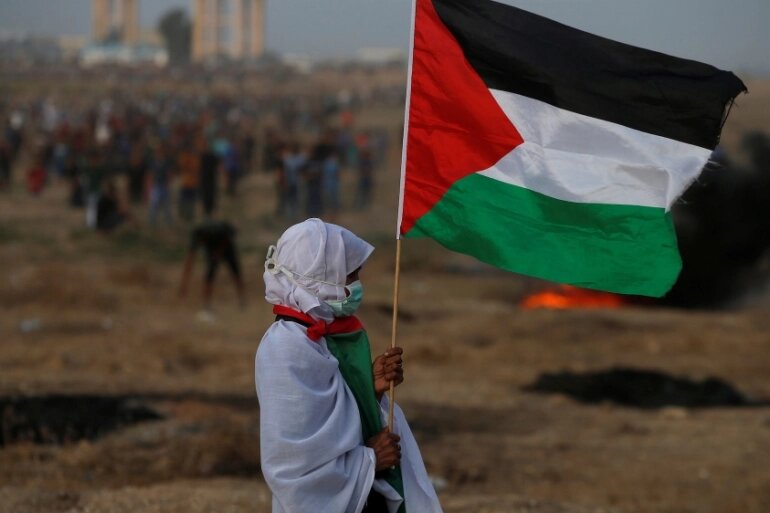
What can be done to address healthcare violations in Gaza?

On 29 February 2024, I presented in a panel at the Erasmus Medical Centre in Rotterdam on “The right to healthcare under fire”. The event was organised by Artsen Voor Gaza (Doctors for Gaza) a Dutch group of physicians, medical students and medical researchers. Alongside compelling presentations from Dr. Loes de Kleijn, Dr. Kamal El Mokayad and Haya Al Farra, I spoke of the legal context of the ongoing, genocidal violence in Gaza and more importantly what can be done.

CC BY-SA 3.0 via Wikimedia Commons

The War in Gaza has a context

Since the attacks in Southern Israel and Israel’s operation in Gaza called “Iron Swords” from October 2023, Israel has destroyed the majority of Gaza’s infrastructure, including its medical infrastructure. As I wrote already on 12 October 2023, the war in Gaza has an important context. Unfortunately, as the Israeli Professor of History Ilan Pappe has observed, there is an active effort to de-historicize the conflict, which serves as a backing to Israel in its genocidal violence against Palestinians in Gaza.

Despite Israel’s withdrawal of settlements and redeployment of forces in 2005, Israel has continued to occupy the 365 km2 territory of Gaza, including mounting a siege that has severely restricted basic needs. The majority of Gazans are under the age of 20 and have never left the territory. Most are refugees (and their descendants), forcibly displaced from their homes in 1948, which are maintained by what a Palestinian Professor of History, Nur Masalha describes as a politics of denial.

From a humanitarian angle, most Gazans have been largely dependent on direct United Nations assistance ever since the ‘Nakba’ in 1948, and in particular the United Nations Relief and Works Agency (UNRWA). This makes it all the more concerning that states have been seeking to defund UNRWA, following (as yet unfounded) Israeli allegations that its staff were complicit in the October attacks, a move described as “reckless” by a senior, Washington-based analyst.


“I am so scared”

So often we hear Palestinians referred to as statistics. While this potentially enables people to process the horrors of what is happening, as the poet and commentator Ramsey Nasr reminds us, those who have been killed had names, and we must remember them.

Two names and stories of two Gazans among the more than 30.000 (at the time of writing) who have been killed since October 2023 were recalled during the Event at Erasmus Medical Centre. One who was remembered was Hind Rajab. She was 5 or 6 years old when her family car came under fire by Israeli soldiers in Gaza City on 29 January 2024, she made a phone call to the Palestinian Red Crescent. “I am so scared,” she said. “Call someone to come get me, please.” Sadly, after more than two weeks of frantic efforts to reach her, Hind’s body was recovered a few days later on 3 February, along with those of relatives and two Red Crescent rescue workers that had been sent to find her. Their family car was riddled with bullets.

Another Gazan who was remembered was Refaat Alareer, a Palestinian Professor, poet and activist from Gaza who taught English literature at the Islamic University of Gaza.


The Functions of International Law in relation to Atrocity Crimes

The case brought by South Africa against Israel on genocide charges has raised the prospect of international law, and international legal institutions, finally serving to help end the bloodshed and longstanding impasse between Israel and the Palestinians. In this context, it is worthwhile to understand the functions of international law in seeking to prevent, protect against and seek accountability for atrocity crimes.

First, in its regulatory function, international law sets limits on military conduct, in particular to prevent the commission of atrocity crimes, including the crime of apartheid and the crime of genocide. Secondly, in its protection function, international law aims to protect civilians and humanitarian workers (and civilian and humanitarian infrastructure). Finally, and perhaps most importantly in the present context, international law has an accountability function; this comprises a collective obligation to investigate and prosecute individual violators, including war crimes directed against civilian medical personnel and the crime of genocide.

Accordingly, various, specific measures protect medical personnel and infrastructure, including Article 19 of the Geneva Conventions that they “may in no circumstances be attacked, but shall at all times be respected and protected by the Parties to the conflict”. Article 8 of the Rome Statute of the International Criminal Court provides that individuals who are found to have been “intentionally directing attacks against buildings, material, medical units and transport, and personnel using the distinctive emblems of the Geneva Conventions in conformity with international law” have committed war crimes.


Preliminary Measures by the International Court of Justice

After two days of oral hearings on 11 and 12 January 2024 from legal teams representing South Africa and Israel, the ICJ came back on 26 January with a set of Provisional Measures, as requested by South Africa. Each of the Provisional Measures were separately voted upon, all of which received an overwhelming majority, including the following:

“The State of Israel shall take immediate and effective measures to enable the provision of urgently needed basic services and humanitarian assistance to address the adverse conditions of life faced by Palestinians in the Gaza Strip.”

In justifying these measures, the Court “took note” of several statements by United Nations officials, including a statement made by the United Nations Under-Secretary-General for Humanitarian Affairs and Emergency Relief Coordinator, Mr Martin Griffiths, on 5 January 2024:

“Gaza has become a place of death and despair… Medical facilities are under relentless attack. The few hospitals that are partially functional are overwhelmed with trauma cases, critically short of all supplies, and inundated by desperate people seeking safety.  A public health disaster is unfolding. Infectious diseases are spreading in overcrowded shelters as sewers spill over. Some 180 Palestinian women are giving birth daily amidst this chaos… “the health-care system in Gaza is collapsing”.


So, what can be done, beyond the Courts?

It’s hard not to feel sceptical about the potential of the Courts to change Israel’s behaviour. Israel’s responses since the 26 January 2024 Preliminary Measures were issued suggest that the ICJ has little to no deterrent effect. In fact, Israel not only failed to comply with these preliminary measures, it actually stepped up its military campaign. 5-year old Hind died a mere 3 days after the ICJ issued its judgement.

But international law has relevance beyond the courts. As legal mobilization researchers argue, international law can be seen as not only an imperial project, as Erakat eloquently explains, but also as a legitimate source of disruption, resistance and liberation.

For example, international law represents a legitimate basis for boycotting corporations that are complicit in atrocity crimes, such as Israeli Universities and McDonalds, just as was done during the South African anti-apartheid movement.

Another form of legal mobilization, as Dr. Claudia Saba has argued, is the delivery of humanitarian aid, as the “Free Gaza” movement have been doing, using small civilian boats to try and alleviate the desperate circumstances caused by Israel’s decades-long siege of Gaza.

Further forms of legal mobilization are protests and sit-ins, as the Public Interest Litigation Project has been preoccupied with, and what Doctors for Gaza in The Netherlandshave been engaged with since October 2024.

In other words, addressing violations of the right to health care through legal mobilization involves more than just “winning” in court. It takes on many different forms. These different forms of legal mobilization serves to galvanise social justice struggles.

What legal mobilization will not do is bring back the hundreds of health workers who have been killed in Gaza, let alone Hind Rajab or Refaat Alareer. However, it may serve to hold those responsible for killing them.

Opinions expressed in Bliss posts reflect solely the views of the author of the post in question.

About the author:

Dr. Jeff Handmaker is Associate Professor of Legal Sociology, based at the International Institute of Social Studies in The Hague.


Are you looking for more content about Global Development and Social Justice? Subscribe to Bliss, the official blog of the International Institute of Social Studies, and stay updated about interesting topics our researchers are working on.

[/vc_column_text][vc_column_text][newsletter][/vc_column_text][vc_separator color=”custom” accent_color=”#a80000″ css=”.vc_custom_1594895181078{margin-top: -15px !important;margin-bottom: 10px !important;}”][/vc_column][/vc_row]

Give Israel an ultimatum: “A ceasefire, and open the borders for aid, or else”

In this blog, Professor of Humanitarian Studies Dorothea Hilhorst assesses the situation in Gaza and the lack of humanitarian aid entering the territory. With various countries, including the US, now launching campaigns of air-dropping food aid, Hilhorst looks to the only durable solution to avert further loss of life: an immediate ceasefire. With Israel still enjoying the support of many Western countries, she calls for pressure to be put on by the Netherlands, telling Israel to lift its blockade or lose aid and support.

Image by Palestinian Red Crescent

Gaza is hungry and needs assistance. People are surviving by eating cattle feed or grass, children are starving to death and searches for food often end in injury or death through Israeli shelling. The international community is looking for complicated solutions to get food into the country: using aircraft to drop pallets of aid, or building an emergency port for the supply of ships that can bring food to Gaza. These are bogus solutions, and it is time to go for the real solution: a ceasefire and the opening of the borders for unhindered access of aid-delivery by the hundreds of trucks waiting in Rafah.

Food-drops are expensive, dangerous and make little difference. The amount of food is far too small and the first accident has already happened. People died as a result of a drop that crashed when the parachute did not open. Building an emergency port also costs time and money, and there is no guarantee that any food brought in would reach people unhindered (food from an emergency port would need trucks to distribute it). Air drops and a maritime route are false solutions that distract attention from the real problem: namely that Israel is not being held responsible for the hunger that the country causes among two million men, women, children and elderly Gaza people.


International Pressure is Needed

We are being told every day by Israel-friendly countries such as the Netherlands, the EU and the United States that are putting pressure on Israel to call a ceasefire and to open its borders for aid trucks. This is apparently not enough pressure, because Israel continuously refuses and is allowed to come up with new excuses every time. There has been a ruling by the International Court of Justice that Israel must facilitate humanitarian aid. Israel did not comply. Since that ruling, the number of trucks allowed to bring aid to Gaza has actually decreased, not increased.

Israel’s defence for the closure of the borders is that this is necessary for Israel’s security. Israel first did not want weapons to be smuggled into Gaza for use by Hamas – which is extremely unlikely as the control of aid supplies is by the United Nations and other organizations. Israel is now shifting the goals: no food is allowed to go to Hamas. It is pointing at the chaos surrounding the distribution of food, glossing over its own role in that chaos. Firstly, Gazan police cannot maintain order because Israeli troops fire on everybody with a uniform and secondly, the chaos results from the fact that people are hungry because the borders are closed. Most importantly, it is not allowed by international law, nor by any moral standard, to starve an entire population to withhold food from a limited number of enemy troops.

The basic principle of International Humanitarian Law is that warring parties must spare civilian lives. This refers to acts of war as much as to acts of commission or omission that result in the blocking of access to food or medical care. While this is the basic principle, Resolution 2417, unanimously adopted in 2018 explicitly forbids using hunger as a weapon of war. Israel’s responsibilities to protect civilians furthermore stem from its role as the occupying force in the Palestine Occupied Territories, putting the onus on the country to care for the occupied population.

The pattern I see is that the international community continually lets Israel get away with dodging these responsibilities. Israel keeps the border closed, and as a response the international community jumps to make every effort to reach the population. It is the international community that is dreaming up (impossible) solutions like air drops and an emergency harbour and is also picking up the bills for these efforts. In the first weeks of the war, Israel destroyed the port in Gaza. The Netherlands contributed 83 million Euros towards constructing that port in the past. Instead of sending an invoice to Israel in the framework of reparation of war-related destruction, the Netherlands has offered to help pay again for an emergency port that would not even be needed if Israel would open its borders for aid.

My conclusion is that the international community must break this pattern and stop finding bogus solutions. The time to politely request Israel to call a cease fire and to open its borders for aid is over. It is time for Israel to take responsibility as an occupier of Gaza and a warring party and pay the price. Israel is completely stuck in war rhetoric. Little can be expected from the United States in this election year. Therefore, the key lies with Europe and especially with the Netherlands, which claims to be one of the best friends of Israel. Issue an ultimatum: “A ceasefire and unhindered aid by tomorrow, and otherwise all ties will be cut: no trade, no weapons and no diplomatic support for a country that is willing to starve 2 million people for its war targets”.

Opinions expressed in Bliss posts reflect solely the views of the author of the post in question.

About the Author:

Dorothea Hilhorst is professor of Humanitarian Studies at the International Institute of Social Studies of Erasmus University.


Are you looking for more content about Global Development and Social Justice? Subscribe to Bliss, the official blog of the International Institute of Social Studies, and stay updated about interesting topics our researchers are working on.

When genocide is reduced to a war of emotions: Personal reflections on academic debates and the war in Palestine by Dina Zbeidy

Recently, universities and other institutions in the Netherlands have put a lot of focus on emotions of people in Europe when discussing the ongoing war on the Palestinians in Gaza. In this blog, Lecturer and Researcher Dina Zbeidy points out that while it is important to create space for emotions, this focus has the danger of shifting attention away from the actual atrocities happening on the ground, the topic these institutions should mainly talk about.

Photo by Mohammed Abubakr on Pexels

In a meeting about organizing events on the current war on Gaza, I noticed how I flinched and had an almost allergic reaction to the (over)use of the word ‘emotions.’ I have been reflecting on my reaction for the last few days to try and understand what exactly bothered me so much, as it was pointed out to me during that meeting that I myself have been very emotional these last three months.

And that is true. I have been an emotional wreck. How can you not be, when you wake up to the images of grey body parts sticking out of concrete rubble and go to bed with images of screaming burnt children and a more families wiped off the face of the earth.  I have felt it all: anger, sadness, frustration, powerlessness, exhaustion.


Reducing talking about war crimes to just emotive discussions

Recently, the Dutch minister of education sat with students and staff of academic institutions to discuss how best to organize and talk about what is happening. He urges academic institutions to keep the discussions open, as “you provide many students with an outlet to express their feelings and emotions”. He continues to say: “keep sharing knowledge, have discussions, and create understanding for each other’s perspective.”

From the first sentence, one can deduce that these events, whether panels, teach-ins, sit-ins or other activities, are mainly important as an outlet for emotions – more so than talking about facts on the ground and educating students in the Netherlands on grave ongoing violations of human rights and international law.

(Another thing one can deduce, that I will not address further here, is that talking about the war is framed as a ‘difference in perspective’).

During our meeting, we all agreed that there should be space for emotions. What I think is harmful, however, is reducing the war to a war of emotions (of some) rather than a war on Palestinians.

One example is the following argument that has been repeated in front of me several times these last months: we should refrain from using the term genocide because it might be hurtful to some people.

The assumption usually being that ‘some people’ refers to Israelis in the Netherlands or Dutch people of Jewish background or with family in Israel.

In other words: talking about an ongoing genocide can be hurtful to the feelings of others. That we should be very careful how we talk about the actual loss of life of children, families, parents, and grandparent, and refrain from naming it by what it is, as the feelings of others might be hurt.

My frustration came largely by realizing that civilians being killed in the thousands have to compete with other people’s emotions, and that in educational and academic institutions, these emotions seem to have the upper hand.

Nevertheless, more than 800 genocide scholars have already warned of the possibility of genocide, and the International Court of Justice will deliver its ruling tomorrow (26 January) on  whether in the legal sense, we can speak of genocide.


There is a big difference between creating space for expressing and letting out emotions, and reducing the talk about an unfolding genocide to emotions. 

One great place for me to let out and share my emotions have been protests and demonstrations. How powerful it is to know that what you feel is shared by thousands of others. The aim of such events is to show the public, including politicians, that we, in the thousands and globally in the millions, want this war, and the ongoing colonization and oppression, to stop.

When I participate at events, mainly organized by students and staff at academic institutions, I have found myself several times in tears, unable to finish a sentence because of these overwhelming emotions. And I decided early on during this war that I will not force myself to hide and suppress these emotions, not anymore. I loved that people told me that they understood my emotions, and that I should not apologize for having and showing them.

Nevertheless, the content of my talks and my contributions is not on what the war does to my emotions, or anybody else’s emotions for that matter. The topic at hand is not that of (our – we here, safe in Europe) emotions, but about Palestine and the genocide of a people.

I hope that academics, journalists, researchers, teachers, and students, remain vigilant to this distinction. Don’t let the talk about emotions distract us from what we, as part of society, can and should contribute to: facts, analysis, studies, and academic debates.  And yes, there should always be space for emotions – but they should never be (mis)used to oppose, or be silent on, genocide.


Photo Credit: Mohammed Abubakr: https://www.pexels.com/photo/people-with-palestinian-flags-protesting-on-the-street-19028556/


Opinions expressed in Bliss posts reflect solely the views of the author of the post in question.

About the author:


Dr. Dina Zbeidy is a Dutch-Palestinian anthropologist. She is a social science lecturer and researcher at the Leiden University of Applied Sciences. Having conducted research on various topics including  Zionism, settler colonialism, displacement, human rights and development work, mainly in the Middle East, her current research focuses on human rights education in the Netherlands.

Are you looking for more content about Global Development and Social Justice? Subscribe to Bliss, the official blog of the International Institute of Social Studies, and stay updated about interesting topics our researchers are working on.


Fallout from Gaza: An academic community’s responses to the situation in Palestine

Few regional conflicts have had as much of a global impact as the conflict between Israel and Palestine. Outbursts of violence, like the terrorist Hamas attacks and taking of hostages of October 7 and Israel’s massive retaliatory attacks since then, have sparked strong responses everywhere, including in our academic community at the International Institute of Social Studies. Having experienced those dynamics for two months now, it is time for some reflections. I offer mine, as rector of ISS, but obviously also as one human being among all.

Feeling

The first layer of responses in our academic community post-October 7 were emotional in nature. A number of students, PhD-candidates, and staff were not simply shocked or “uncomfortable” about what they saw. They were enraged by the sheer magnitude of the Israeli military response and the enormous humanitarian consequences for the Gazan population, including for so many children. This sense of rage stays on until today, fueled by what they regard as a lack of responsibility by other countries, by international organizations, and also by universities, including the ISS. ‘Why’, they asked, ‘do universities not explicitly condemn Israel’s actions that punish the whole Palestinian population in response to a terrorist act, speak out against genocide and apartheid, join the BDS-movement (boycott, disinvest, sanction Israël), and choose the side of the Palestinian victims of oppression?’

For me, this emotional layer is an important one, because it deals with our gut feelings, our moral intuitions, our fundamental stance when human dignity is trampled upon. It cannot be dismissed as ‘mere feelings’. It is also important because it signifies that we are all affected as human beings. To a degree we are experiencing a form of indirect and collective traumatization, which means that we don’t respond only rationally, but also from our fundamental instincts. Just like we cannot expect people in Gaza and Israel to respond in a purely rational manner to a life-threatening situation, we cannot expect those within our academic community to be fully rational when the foundations of morality and security are shocked.

Hence, the first thing we needed at the outset, to process this rage, was care and safety, not debates and fights. This holds true for those who have been personally affected because they have family and friends who have been living in Israel and Palestine. As university leaders, we immediately reached out to our staff, PhD candidates and students who we knew had a direct connection with the region. For example, we learned that one member of our academic community has lost more than 45 members of their family in Gaza in the past two months. We obviously missed a few people, because we didn’t always know each other’s connections, and this is something for us to reflect on for the future.


Thinking

Offering care for these feelings is not enough. As an academic institution, we are called to bring our knowledge and insight to a troubled and complex world. We have supported our scholars who have engaged in public appearances, for example on humanitarian issues and international rights and who have published opinion pieces. We organized a Teach-In just two weeks after 7 October at both our Hague (ISS) and Rotterdam (Woudestein) campuses, in which lecturers shared their insights on trauma, human rights, the position of children, the political economy and also the role of media in filtering information. These Teach-Ins, held at Erasmus University and other academic institutions, in which our faculty members also participated, helped not only to share knowledge. They also helped to transform a primarily emotion-driven response into one that also incorporated an academic and analytical attitude. By engaging with psychological, legal, humanitarian, historical, developmental and economic insights, we moved to a second layer of responses in which we asked ourselves how academics can contribute to thinking about a meaningful way of coping with the tragedies and cruelties we witness in the world.

The Teach-Ins were valuable, but not easy. The process of challenging each other to reflect, academically was not self-evident. Emotions still played a major role in framing peoples’ responses within our community, but also triggered a plea for institutional action. Here we faced a dilemma in that many of those participating in these and similar events shared a particular perspective on the situation in Gaza; this made the opportunities for dialogue less diverse and inclusive than they could have been. Students and staff who might be inclined to sympathize with Israeli population or to critique Palestine leadership were less visible. Some students approached me at different moments asking why we showed less interest in other conflicts, oppressions, and human rights violations in the world. They felt excluded that events focused only on Gaza, especially when accompanied by strong moral messaging. This remains a dilemma: how to accommodate and support, on the one hand, our community members who feel that we should speak out and act, and on the other hand, respond to members who feel that attention should also be given to Yemen, Sudan, Azerbaijan, Ethiopia or Myanmar.


Acting

That brings me to a third layer of responses: action. This took shape already in the early days of the post-October 7 surge of violence when students protested on our doorstep and remained visible in posters and messages distributed among our community. It was presented to the ISS leadership in the form of a request to issue explicit statements and break ties with Israeli institutions. Anything less than that would be understood by a substantial part of our community as neglecting our moral responsibility as an institution devoted to social justice. At the same time, we had to look critically at the role of academics and institutions in the midst of massive disinformation that sometimes also limits our potential to reach conclusions about what is happening.

Navigating these demands, it was clear for me and colleagues  in university leadership positions that we indeed needed to act. Neutrality in the face of violence is not an option. But we were also very clear that our role had to be knowledge-based and that our primary task was and remains to preserve academic freedom and to facilitate our scholars – from students to professors – to contribute their academic insights to society. We are grateful for the courage of all our scholars to do so and for the wisdom they bring to the world. We have witnessed how they have condemned the Hamas atrocities and also addressed Israeli atrocities, including violations of humanitarian law, and especially the cruelty of punishing an entire population with – as they argued – genocidal intent.

As an academic institute, we exercise restraint in speaking out by way of performative statements, especially because the protection of academic freedom is necessary to safeguard the space for our scholars to speak the truth. When the university itself defines what counts as true, just, and right, that immediately restricts the freedom of other academics. We do not remain neutral because we are afraid to take a stand. It is absolutely clear that as an institution committed to researching Global Development and Social Justice, we stand for the protection of human rights, for the assertion of humanitarian responsibilities, and for the need to ensure peace, justice and accountability. However, the Institute refrains from speaking out beyond these general principles. This will always remain a balancing act between saying too much and saying too little.

The fallout from the present tragedy in Gaza will continue to affect us. It leaves us with dilemmas on how to act. We will continue to organize care for the members of our community who are suffering. We will facilitate learning and nurture critical thinking. We will build our networks internationally and stimulate joint academic contributions towards a just world. We will not be unaffected. Indeed, we feel there should be more done than what we are capable of doing as academics. And when we operate as an institution with this kind of restraint, we are aware it will not be enough in the eyes of a substantial part of our community. But, we may be most effective if we contribute what suits our role: universities protecting academic freedom, so that scholars can share their knowledge and insights with the world, and scholar-activists take the firmer stand. The dialogue between those roles can hold us together in working toward a peaceful future.

Opinions expressed in Bliss posts reflect solely the views of the author of the post in question.

About the author:

Prof. dr. (Ruard) RR Ganzevoort is the rector of the International Institute of Social Studies in Den Haag (part of Erasmus University Rotterdam) as well as professor of Lived Religion and Development.


Are you looking for more content about Global Development and Social Justice? Subscribe to Bliss, the official blog of the International Institute of Social Studies, and stay updated about interesting topics our researchers are working on.


In supporting Israel’s genocide, Germany has learnt nothing from history

It is becoming increasingly clear that as the German government targets migrants and cracks down on pro-Palestine protests, some lives are more valuable than others. In this blog, Josephine Valeske—a project officer with the Transnational Institute’s War and Pacification programme—calls on the German Government to rethink its stance in both domestic and foreign policy.

Image by Author

Earlier this month, amid the unfolding genocide in Gaza, German leaders convened in a Berlin synagogue to mark the 85th anniversary of the 1938 November pogrom that formed part of the genocide perpetrated by Germany against Jews in Europe.

But it seems they have failed to learn from their own history. In a memorial speech for the victims of that night and the Holocaust that followed, German Chancellor Olaf Scholz affirmed that “Germany’s place is on Israel’s side”.

Referring to pro-Palestine solidarity protests, he said: “Any form of antisemitism poisons our society, just like Islamist demonstrations and rallies,” before going on to threaten migrants with deportation if they exhibited antisemitic behaviour.

The German government habitually conflates Judaism with the Zionist project in Israel, and has adopted a working definition of antisemitism that includes hatred of or attacks against the state of Israel. Its crackdown on Palestinian solidarity – from protests to memorials to cultural events – and the dangerous curtailment of freedom of speech have been well documented.

But as Scholz’s speech revealed, this crackdown also has an Islamophobic, anti-migrant dimension, at a time when the Social Democrat-led government has adopted a hard stance on migration in a desperate attempt to recapture votes from the right.

On 25 October, following a surge in support for the far-right AfD party and a panicked debate about rising numbers of immigrants, the government agreed on a legislative proposal that would expand police powers to search, detain and deport people without papers.

Two weeks later, a summit between the federal and state governments ended with the announcement of further cuts to financial support for asylum seekers and the possible outsourcing of asylum procedures to third countries – a potentially illegal process similar to the UK’s infamous, and ultimately failed, Rwanda deal.


Rights restricted

But for many centre-to-right politicians, this does not go far enough. They frame Palestinian solidarity protests as antisemitic, and instrumentalise them to demand further restrictions of rights.

In a recent video, Vice Chancellor Robert Habeck from the Green Party called on Muslim associations to explicitly distance themselves from Hamas, and threatened deportations and revocation of residency permits for those who voice support for the group.

Meanwhile, Germany’s largest opposition party, the centre-right Christian Democratic Union (CDU), is proposing legislation that would increase the sentence for antisemitic crimes, and lead to the loss or denial of international protection for refugees if they commit such crimes, including possible deportation.

Similar moves already seem to be taking place in practice: Zaid Abdulnasser, coordinator of the Samidoun Palestinian Prisoner Solidarity Network, which was recently prohibited in Germany, reportedly received a deportation order because of his activism.

Under the CDU proposal, people applying for German citizenship would have to pledge their support for Israel’s right to exist and could be denied citizenship if they fail to do so, or if they are deemed to have an “antisemitic mindset”. Germans who hold dual citizenship and commit an antisemitic crime would stand to lose their German passport if convicted and sentenced to more than a year in prison.

Two weeks ago, explicitly citing pro-Palestine demonstrations, the CDU demanded the cancellation of a pending law that would make it possible for foreigners to fast-track their citizenship applications. In addition, former justice minister, Sabine Leutheusser-Schnarrenberger, of the Free Democratic Party has proposed to limit freedom of assembly to German citizens only.

While German politicians are outdoing each other in blaming antisemitism on immigrants, Muslims, Arabs or anyone who is not white, they conveniently ignore the fact that antisemitism among white, Christian and atheist Germans is actually a widespread problem. More than 80 percent of antisemitic crimes in 2022 were committed by people on the right-wing spectrum, continuing a trend from previous years.

When it became public in August that Hubert Aiwanger, the deputy governor of the state of Bavaria, had shared antisemitic propaganda in the 1980s, his party’s vote share increased in the following elections, and the government rewarded him with a fourth ministry.


Historical responsibility

If the German government is genuinely concerned about protecting Jews, it should address antisemitism coming from the majority white, right-wing population, instead of inciting hatred against minority groups. A similar message was recently conveyed by the Jewish Bund during an action called “You do not protect us” in front of parliament.

Right-wing violence has traditionally gone unchecked by authorities, whether it takes the form of antisemitism or other hate crimes.

The government failed to take any comparable action when it became known in 2011 that neo-Nazis had been on a seven-year murder spree while shielded by the intelligence service; when from 2014 onwards, tens of thousands of right-wingers started Monday marches against the “Islamisation of the West”; when a right-wing fanatic fatally shot nine people with migrant backgrounds in Hanau in 2020; or when a 2023 study showed that racism against Black people in Germany had risen by nearly 50 percent since 2016, among other examples. White, Christian and atheist Germans were never asked to distance themselves from any of these incidents.

Indeed, it is becoming increasingly clear in both internal and external policy discourses that for the German government, some lives are more valuable than others. The demonisation of (those perceived to be) Muslims or immigrants, and the crackdown on solidarity protests goes hand in hand with Germany’s political and financial support for Israel.

While many countries, including France, are calling on Israel to cease fire amid its relentless military assault, which has killed more than 11,000 Palestinians in Gaza, Scholz has reaffirmed his resistance to any such calls. Instead, his government has increased arms exports to Israel tenfold over 2022, with 85 percent of the permits granted after the Hamas attack and the ensuing military campaign.

Eighty-five years after the November pogrom, Germany should have learned that a genocide cannot be atoned for by enabling another genocide. Similarly, those who think that stoking Islamophobic and anti-migrant sentiments will fulfill Germany’s historical responsibility to fight antisemitism have learned nothing from history.

The German government must stop paying mere lip service to its commitment to human rights, and drastically change its stance in both domestic and foreign policy.


This article was originally published on Middle East Eye.


Opinions expressed in Bliss posts reflect solely the views of the author of the post in question.

About the author:

Josephine Valeske is a project officer with The Transnational Institute’s War and Pacification programme.

Are you looking for more content about Global Development and Social Justice? Subscribe to Bliss, the official blog of the International Institute of Social Studies, and stay updated about interesting topics our researchers are working on.


How was life in Gaza before October 7th?

The war between Israel and Palestine has saturated the media with many views on the resulting effects. What about the state of things in Gaza prior to this violent conflict? In this blog, Irene Van Staveren — a professor of pluralist development economics at the International Institute of Social Studies — tickles our imagination to consider the complexities of social problems evident in Gaza prior to October 7, 2023 when the war broke out.

Image Source: Natalia Cieslik/World Bank, 2010.

Imagine you were a 13-year-old girl growing up in the Gaza Strip under ‘normal’ circumstances until a few weeks ago. Statistically, you would have made up over 40% of the total population along with all the other children up to the age of 14. You had three siblings. The likelihood of living below the poverty line was 53%. Just last year, hundreds of buildings were hit by rockets, including the power plant. Over the past years, you had experienced various bombings in and around Gaza City. As a result, like all the other children in your neighbo, you had an 87% chance of developing post-traumatic stress disorder according to the latest Human Development Report (p.89). There haven’t been any elections in 16 years, and your parents feel powerless.

You often didn’t have enough to eat because your parents had a high risk of unemployment (40% for men, 64% for women). One of your uncles had a fairly well-paying job outside of Gaza, which put him in the one percent who managed that. Unfortunately, he didn’t get to keep much of his salary as an UNCTAD report (p. 6) suggests that 30% of the earnings for such work go into the pockets of labour brokers. Your grandfather had a small olive grove and could sell some olive oil to foreign markets. However, he was increasingly stopped when trying to reach his grove. According to the same UNCTAD report (p.8), olive production had dropped by 60%.

So, you most likely shared a small living space with many people. This was quite challenging when you had to do your homework, especially because there was only electricity available half of the time. Often, there was no light in the evenings. Learning was a struggle, and the destruction of several schools led to the surviving children being divided among the remaining schools, making your class overcrowded.

The only escape from this situation might have been marriage. According to the Palestinian Authority’s statistical bureau, one in five girls gets married before their 18th birthday. You knew some of these girls – they dropped out of school early and became mothers at a young age. Finding a job was out of the question for them. Not that you would have had it much better. More than half of the youth in Gaza can’t find a job.

In the past, there used to be international aid to rely on. However, over the past ten years, it has plummeted from 18% of Gaza’s income to 2%, according to the World Bank (figure 2). Fortunately, most schools and many hospitals are run by the UN and aid organizations. But they face significant shortages of medicine and parts for medical equipment like X-ray machines. The WHO calculated that almost 70% of permit requests for importing these medical goods are denied. When your grandmother needed surgery at a hospital outside of Gaza, her doctor’s request wasn’t processed on time, putting her at a high risk of passing away. Thankfully, she survived. But you didn’t. Fourty percent of the victims of the current bombings in Gaza are children.


This column appeared in the Dutch newspaper Trouw, on 31 October 2023.

Image Credit: CC BY-NC-ND 2.0 DEED


Follow Bliss on LinkedIn.


Opinions expressed in Bliss posts reflect solely the views of the author of the post in question.

About the author:

Irene van Staveren is a professor of pluralist development economics at the Institute of Social Studies (ISS) of Erasmus University Rotterdam. Professor van Staveren’s theoretical interest is in feminist economics, social economics, institutional economics and post-Keynesian economics. Her key research interest is at the meso level of the economy with topics such as social cohesion, social exclusion, inequality and discrimination, as well as ethics and values in the economy and in economics.


Are you looking for more content about Global Development and Social Justice? Subscribe to Bliss, the official blog of the International Institute of Social Studies, and stay updated about interesting topics our researchers are working on.


Jewish scholars refuse to be silent about Gaza

Source: Afbeelding van Hosny Salah via Pixabay

There have been many statements, petitions, Op-Eds and other forms of concern and condemnation from scholars following the resurgence of violence around the impasse between Israel and the Palestinians. This also includes Jewish scholars, such as an open letter from Jewish students at Brown University and another from Jewish writers. Moreover, there have been critical Jewish organisations that have long-supported a Palestinian-centred narrative, including the Promised Land Museum, and in particular their tribute to the late German-Dutch phycisist Dr. Hajo Meyer, Zochrot and Jewish Voices for Peace. In the same spirit, as Jewish employees and students at Dutch universities, universities of applied science and research institutions, we also refuse to stay silent about Gaza, and so present the following statement.

We, Jewish employees and students in Dutch universities, universities of applied science and research institutions, refuse to stay silent about the recent surge in violence in Gaza.

We raise our voices to speak out against Israel’s war of destruction against the over two million Palestinians in Gaza, and demand an immediate cease fire. The high numbers of civilian victims of the Israeli bombardments so far, including the killing of thousands of children, a complete blockade for primary necessities of life in Gaza by Israel, and the actions and words of Israeli officials all justify the fear of a second Nakba; ethnic cleansing or genocide of the Palestinian population. “Never again” for us means never again for anyone.

We feel deep pain for the many civilian casualties during the attacks by Hamas on 7 October 2023. Precisely because we want to see an end to such gruesome violence, we refuse to abide by the logic of revenge that already has cost the lives of multiple times as many Palestinian civilians. We understand that the current wave of violence did not start with the actions of 7 October 2023, but is rooted in a long history of colonization, occupation and unequal treatment targeting the Palestinian people. If ending the current war against Gaza will only lead to a return to the status quo ante, this will mean a continuation of the violence that for Palestinians is a permanent reality. Peace, in this situation, will just be the prelude to the next major war.

Lasting peace is only possible on the basis of justice. At the very least, this means the recognition that the rule of law and human rights apply to all inhabitants of historic Palestine. It means recognizing the right of self-determination of the Palestinians, ending the blockade of Gaza and the occupation of the West Bank, acknowledgement of the right of return for all Palestinian refugees, and equal rights between Palestinians and Jews from the Mediterranean to the river Jordan.

We promise to continue our efforts in this direction, during and after the current war. We support the call from Palestinian civil society for ceasing all forms of cooperation with Israeli institutions that contribute to the occupation of Palestinian territories and the unequal treatment of the Palestinian population.

As long as the injustice for Palestinians persists, we demand that our institutions speak out against this as firmly as they did one and a half years ago at the start of Russia’s invasion of Ukraine. We forcefully resist any form of racism, islamophobia, antisemitism or other types of hate speech. We are inspired by the many Jewish voices in and outside of Israel that take a principled stance for Palestinian rights. As Jewish opponents of the Israeli actions, we are indignant about the attempts to equate criticism of the Israeli state and support for Palestinian rights with antisemitism. Islamophobia and antisemitism in response to the current war are very real problems. We ask our institutions to take active measures against a climate of threats, polarization and discrimination. However, to do so does not give a free pass to censor critical anti-war voices.

A safe learning environment does not preclude a firm stance against war and injustice. On the contrary, such a firm stance is our shared duty.


This statement was first published in Dutch in the NRC Handelsbad on13 November 2023.


Image Source: Wikimedia CC BY-SA 3.0 Deed, Destruction in Gaza, October 2023.


Opinions expressed in Bliss posts reflect solely the views of the author of the post in question.

About the authors:

Dr. Alessandra Benedicty-Kokken (Lecturer, Amsterdam School for Cultural Analysis, University of Amsterdam).

Prof. dr. Pepijn Brandon (Professor of Global History, Free University of Amsterdam).

Alcide Breaux (Student, Sandberg Institute and Gerrit Rietveld Academie).

Zazie van Dorp (BA Philosophy, LLB Law & employee University of Amsterdam).

Dr. Jacob Engelberg (Lecturer, Film, Media and Culture, University of Amsterdam).

Dr. Sai Englert (Lecturer, University of Leiden).

Gabriel Gottlieb (Student, Econometrics, Erasmus University Rotterdam).

Dr. Aviva de Groot (Postdoctoral researcher AI & Human Rights, TILT, Tilburg University).

Sophia Haid (Student, Media studies, University of Amsterdam).

Dr. Jeff Handmaker (Associate Professor of Legal Sociology, ISS, Erasmus University Rotterdam).

Levi Hilz (Student, Sociology, Erasmus Universiteit Rotterdam).

Dr. Joost Kircz (Emeritus Lector Electronic Publishing, Amsterdam University of Applied Sciences).

Naomi Kreitman (Student, Sandberg Institute).

Dr. Anna Mai (Postdoctoraal researcher, Max Planck Institute for Psycholinguistics).

Yuval Molina Obedman, Ma (Recently graduated in Philosophy, University of Amsterdam, and International Relations, University of Leiden).

Dr. Tzula Propp (Postdoctotaal researcher, TU Delft).

Dr. Patricia Schor (Postdoctoral researcher, Free University of Amsterdam).

Juliet Tanzer (Student, Utrecht University).

Dr. Anya Topolski (Associate Professor, Ethics and Political Philosophy, Radboud University Nijmegen).

Dr. Markha Valenta (Lecturer, American Studies, Utrecht University).

Itaï van der Wal (Student LLM, Utrecht University).

Are you looking for more content about Global Development and Social Justice? Subscribe to Bliss, the official blog of the International Institute of Social Studies, and stay updated about interesting topics our researchers are working on.

Militaries can’t target essential infrastructure during war—so why can they target telecoms?

In this blog, Tom Ansell looks through an International Humanitarian Law lens at cutting mobile network and internet access, such as recent targeting of telecoms by the Israeli military during their ongoing retaliation against Palestinian people in Gaza. Whilst the cutting off of utilities such as electricity and water are considered to fall under a ban on collective punishment, International Humanitarian Law does not mention cutting off communication infrastructures. When we consider how vital phone and internet services are for human dignity, organizing relief efforts, and documenting war crimes or countering misinformation, it might be time to consider the deliberate cutting off internet and telecoms access as a breach of International Humanitarian Law and so a war crime.

During the Israeli ground invasion unfolding in Gaza, and the accompanying aerial bombing campaign, there have been widespread reports of internet and communications blackouts – caused by heavy and deliberate bombardment of telecoms infrastructure, and confirmed by the UN. Whilst slightly different compared to ‘switch offs’ by governments, and paling in comparison to the bombing of civilians, cutting off people’s (particularly non-combatants) means of communications and creating a ‘blackout’ is nevertheless an important and under-reported element of modern warfare. International Humanitarian Law (IHL), the so-called ‘laws of war’ which are made up of a number of legal conventions and treaties (most famously the 1949 Geneva Conventions, itself signed by Israel) and have been signed by most countries around the world, don’t mention preserving civilian communications.

So, considering how important mobile and internet access is not only for keeping in touch, but also coordinating societal responses to disasters such as war and documenting the associated chaos, should we consider telecoms infrastructure in a similar way to how we consider water infrastructure in war, as something off-limits for military targeting and thus protected?


Cutting off water, medical systems, and electricity are already War Crimes

During a war, an occupying power (i.e., the military or armed forces that has invaded) has several legal obligations set out in IHL. Breaking these are considered ‘war crimes’, and are punishable at the International Criminal Court or a special tribunal. Cutting off water, medical systems, electricity, food, aid, and unnecessarily targeting civilian infrastructure are considered War Crimes because they amount to ‘collective punishment’ of a civilian population. This is expressly forbidden by Article 33 of the 1949 Geneva Convention on Civilians – and since then there have been various updates and treaties that form part of IHL that also expressly forbid targeting or deliberately destroying ‘Objects Indispensable to the Survival of the Civilian Population’. These generally refer to foodstuff, water, and medical supplies (evidently vital to survival), and whilst telecommunications aren’t on the same existential level of food and water, with an estimated 6.7 billion smartphone subscriptions worldwide in 2023 (according to Statista), and the embeddedness of mobile phones in our lives, I’d suggest that smartphones have become indispensable to the survival of civilians in general.

Telecommunications and internet access is fast-becoming seen as a human right, too; closely linked to existing rights of Assembly, Expression, and Development. For example, in 2023 the High Commissioner for Human Rights at the UN said that “It may be time to reinforce universal access to the Internet as a human right, and not just a privilege” . Various countries around the world are also enshrining the right to internet access and connection in their laws, from its inclusion within the constitution of Greece , the Kerala High Court in India upholding access to the internet as covered by the right to education in the Indian Constitution, to Costa Rica’s Constitutional Court ruling that all Costa Ricans have the fundamental right to access information technology, especially the internet. Whilst it is true that Human Rights Law and International Humanitarian Law are different (for several legal reasons), IHL intends to protect the life and dignity of innocent people in warmeaning that there is at least a strong relationship and affinity in their intent.


Smartphones are vital for connecting and coordinating, especially in times of conflict

Let’s not forget that when we talk about cutting off all means of communication and access to the internet, we aren’t just looking at people not being able to contact their loved ones or the outside world (as bad as that is). People’s lives are put at risk by a ‘communications blackout’, because emergency relief is very often coordinated via mobile data and internet connections. When communications were cut off in Gaza on October 27, the Palestinian Red Crescent society reported that it had lost contact with its control room in Gaza, and that people were unable to call the 101 emergency number. If emergency aid organisations are unable to keep in contact with their staff, they can’t know if their staff are safe – nor can they know if their efforts to deliver food, medical, or other relief has been successful or needs to be targeted elsewhere.

A 2012 Save the Children report (completed in partnership with the Vodafone Foundation) makes it clear how important mobile phones are for providing information during a disaster. For example, after the 2010 Haiti earthquake, information messages were sent out via the mobile network ‘Voila’ by the International Federation of the Red Cross –95% of recipients said that the information they received was useful, and 90% said that the information they received helped them make a preparation or change as a result. And it’s not just information that’s sent through mobile networks, either, with emergency cash transfers often sent in this way.

We can see the value of access to mobile data in the current violence in Gaza (and previous instances too), with Israel apparently warning civilians in Gaza of impending military action or airstrikes by phone call or automated text message. Quite how these warning messages can be received without mobile network access, though, is an open question.


Documenting serious war crimes and countering false information

It’s certainly true that cutting off mobile communications and access to the internet is an act with fewer direct deaths and injuries than other more grave offences, yet having access to mobile data is important in documenting and ‘proving’ these other serious crimes. This has become extremely clear during the conflict in Ukraine following Russia’s invasion in February 2022, with the Ukrainian government even setting up an online service (‘e-Enemy’) for people to submit their pictures, videos, and messages that document brutality against civilians and other war crimes. This crowd-sourced evidence could prove vital in securing convictions for crimes should Russian military commanders or even politicians end up in front of the ICJ or a tribunal. And, as AccessNow warns, cutting off the internet could lessen the chances of Palestinians documenting serious war crimes. Allowing people to access social media and present their own documentary-style proof of their lived experience gives people voices, and also allows the countering of false and dangerous narratives with documentary evidence.


So, should cutting off the internet and telecommunications be a war crime?

International Humanitarian Law specifies a wide spectrum of ‘war crimes’, and whilst we often immediately think of the most grievous, any breach of IHL is a criminal act. Hence, and considering mobile connectivity’s important role in preserving human dignity, coordinating emergency aid response, documenting war crimes, perhaps the deliberate targeting of telecommunications should be included in the definition of ‘collective punishment’.


Image by Troy Squillaci on Pexels.


About the author:

Tom Ansell is the Coordinator of the Humanitarian Studies Centre and International Humanitarian Studies Association.


Are you looking for more content about Global Development and Social Justice? Subscribe to Bliss, the official blog of the International Institute of Social Studies, and stay updated about interesting topics our researchers are working on.

International Humanitarian Studies Association conference roundtable and North South University statement on Gaza: “As scholars and practitioners of Humanitarian Studies, we strongly condemn acts of widescale and indiscriminate violence against civilian populations”

By Posted on 3438 views

[vc_row css=”.vc_custom_1592900783478{margin-right: 0px !important;margin-left: 0px !important;}”][vc_column css=”.vc_custom_1592900766479{margin-right: 10px !important;margin-left: -10px !important;}”][vc_column_text]This blog is part of a series about the International Humanitarian Studies Association (IHSA) conference in Dhaka, Bangladesh. In this piece, Dorothea Hilhorst (Professor of Humanitarian Studies at ISS, outgoing IHSA President) and Sk. Tawfique M Haque (Professor and Chair of Political Science and Sociology, North South University) present a statement made by participants of a roundtable held at the conference to take stock of the humanitarian situation in Gaza.[/vc_column_text][vc_separator color=”custom” accent_color=”#a80000″ css=”.vc_custom_1594895181078{margin-top: -15px !important;margin-bottom: 10px !important;}”][vc_single_image image=”25834″ img_size=”full” add_caption=”yes” alignment=”center”][vc_separator color=”custom” accent_color=”#a80000″ css=”.vc_custom_1594895181078{margin-top: -15px !important;margin-bottom: 10px !important;}”][vc_column_text]At the IHSA biennial conference in Dhaka, Bangladesh, a roundtable took place on the ongoing violence and humanitarian catastrophe in Palestine. The roundtable included contributions from Professor Dorothea Hilhorst (outgoing IHSA President), Research Professor Antonio De Lauri (incoming IHSA President), Professor Sk. Tawfique M. Haque (North South University), Professor Shahidul Haque (North South University), Professor Mohamed Nuruzzaman (North South University), and Dr Kaira Zoe Canete (International Institute of Social Studies).

During the roundtable, several aspects of the ongoing humanitarian situation were discussed, including access for humanitarian aid, the interests and positions of stakeholders in the conflict more generally, ways to counter the situation being used to further polarize society, and what the role of Humanitarian Scholars is in the face of the situation.

The International Humanitarian Studies Association and Center for Peace Studies (CPS) at North South University would like to share this statement, following the roundtable:

We extend our solidarity and sorrow towards those grieving loved ones in Palestine and Israel, and deplore violence carried out during this conflict. As scholars and practitioners of Humanitarian Studies, we strongly condemn acts of widescale and indiscriminate violence against civilian populations. This extends not only to ongoing military violence, but the blocking of humanitarian aid and assistance.

These actions by the Israeli state and military amount to multiple breaches of International Humanitarian Law (IHL), including the 1949 Geneva Convention that was signed by Israel. We condemn the collective punishment of over two million people in Gaza, of which more than half are children.

We also highlight UN Security Council (UNSC) Resolution 2417, which condemns the use of starvation as a weapon of war, and confirms that any blocking of humanitarian aid breaks IHL. Further, we draw attention to Israel’s role as an occupying power in the Palestinian Territories, and its commitments to maintain medical services and infrastructure under IHL.

We call for respect for and adherence to IHL, International Criminal Law (ICL) and UNSC 2417 to prevent starvation (due to blocking access to food, water, electricity, health care and other items essential to survival) and death of civilians. This means allowing immediate access to aid for those who need it and protecting civilians.

Humanitarian Studies scholars need to use their knowledge and evidence to speak truth to power and counter any silencing mechanism that jeopardizes academic freedom and the freedom of expression. One of the challenges of wide-scale violence, wherever it happens, is that it makes us question the value of humanity. We need all voices in this discussion to maintain dignity and respect, and we condemn the use of antisemitic and Islamophobic language, as well as narratives of dehumanization and polarization especially when they come from powerful institutions, political leaders, and states.

For more information about the IHSA Conference, check out their website.


[/vc_column_text][vc_separator color=”custom” accent_color=”#a80000″ css=”.vc_custom_1594895181078{margin-top: -15px !important;margin-bottom: 10px !important;}”][vc_column_text]Opinions expressed in Bliss posts reflect solely the views of the author of the post in question.[/vc_column_text][vc_separator color=”custom” accent_color=”#a80000″ css=”.vc_custom_1594895181078{margin-top: -15px !important;margin-bottom: 10px !important;}”][vc_column_text css=”.vc_custom_1699612513242{margin-top: 0px !important;}”]About the authors:

Dorothea Hilhorst is professor of Humanitarian Studies at the International Institute of Social Studies of Erasmus University.


Professor Sk. Tawfique M. Haque is the Director, Center for Peace Studies (CPS), South Asian Institute of Policy and Governance (SIPG), North South University.

[/vc_column_text][/vc_column][/vc_row][vc_row][vc_column css=”.vc_custom_1596795191151{margin-top: 5% !important;}”][vc_separator color=”custom” accent_color=”#a80000″ css=”.vc_custom_1594895181078{margin-top: -15px !important;margin-bottom: 10px !important;}”][vc_column_text]

Are you looking for more content about Global Development and Social Justice? Subscribe to Bliss, the official blog of the International Institute of Social Studies, and stay updated about interesting topics our researchers are working on.

[/vc_column_text][vc_column_text][newsletter][/vc_column_text][vc_separator color=”custom” accent_color=”#a80000″ css=”.vc_custom_1594895181078{margin-top: -15px !important;margin-bottom: 10px !important;}”][/vc_column][/vc_row]

Israel’s blocking of humanitarian assistance breaches international humanitarian law

Gaza is under constant blockade and subject to multiple airstrikes every day — with little regard for avoiding civilian harm. This is a breach of international humanitarian law, which places specific legal imperatives on combatants not only during war but also as occupying forces after war. In this article, Professor of Humanitarian Studies Dorothea Hilhorst critically discusses Israel’s responsibilities in its role as a combatant, as an occupying force, and as a neighbouring country.

Image by Palestinian Red Crescent

International humanitarian law (IHL) has suddenly become a very popular phrase in political discourse. The Dutch government, in its support of Israel, notes that it expects the country to uphold ‘international humanitarian law’ (sometimes referred to as ‘the law of international war’). These conventions and laws cover various aspects of how a country can act during combat, for example around questions of whether Israel can target civilian infrastructure if it is located above a Hamas tunnel. More specifically, though, IHL relates to strengthening and maintaining humanitarian help for civilians.

The humanitarian situation in Gaza is catastrophic. Within the space of just a few days, around one million elderly people, men, women, and children have been driven from their homes. Around half of these people have sought shelter in a UN building, for example a UNWRA school, which are now so overcrowded that most people sleep outside on the street. There is less and less food, and water has had to be limited to under one liter per person per day — for those that are lucky to get anything at all. Operations and medical treatments are no longer being carried out, or if they are it is without anesthetic.

At the same time, there is a huge queue of trucks waiting at the Rafah crossing between Egypt and Gaza. These are full of humanitarian aid supplies: medicines, fuel, and food. At the time of writing, 20 trucks have been allowed in Gaza, but that is far short of the minimum of 100 trucks needed on a daily basis. Other than that, the border between this convoy and the people of Gaza remains closed, with the WHO saying that the supplies could help doctors at medical institutions operate on 1,500 people daily — if they reach the people of Gaza in time. It is Israel that holds the key to unlocking this aid, with the border deemed unsafe (and so kept closed) due to rocket attacks and air strikes. Last week dozens of people were killed in such strikes at the border.

It is usual to speak of and work towards ‘humanitarian corridors’ during conflicts, i.e. specific routes that are safe for people to evacuate through, or for aid to travel via. Under IHL, combatants in war are required to work towards creating and maintaining these corridors. This, and much of IHL, is based on the principle that citizens are innocent during conflicts and that civilian deaths should be avoided at all costs. This principle applies both to minimizing civilian death from combat and also maximizing access for life-saving humanitarian aid. Israel has stated it maintains Gaza under siege to avoid aid being captured by Hamas. However, this fear cannot be a reason to abandon Gazanian civilians and let them perish. UN Under-Secretary-General for Humanitarian Affairs Martin Griffith commented on Wednesday that humanitarian access and help have become a question of life and death, that withholding help can cost countless innocent lives.

Israel has various legal responsibilities both as a combatant and as an occupying force (both Gaza and the West Bank are occupied territories and have been since 1967). Marco Sassoli, an internationally renowned expert in IHL at the University of Geneva, has made it clear that Israel’s blocking and cutting off of electricity, water, aid, and food from Gaza since October 9 is in clear breach of the 1949 Geneva Convention, which Israel has signed. The 1949 Convention makes clear that an occupying force cannot collectively punish civilians, whilst it also specifically requires an occupying force to maintain medical systems such as hospitals. Then, we must look at Israel’s role as a neighbour — with a moral imperative to allow access and open borders to humanitarian assistance — whilst the border between Israel and Gaza remains hermetically sealed.

It is not clear how much pressure various countries are putting on Israel behind the scenes to open the Rafah border crossing (and other borders), but it is time for this pressure to be reflected in public statements that condemn the withholding of humanitarian aid and directly state that preventing humanitarian help breaches international humanitarian law.

Opinions expressed in Bliss posts reflect solely the views of the author of the post in question.

About the author:

Dorothea Hilhorst is professor of Humanitarian Studies at the International Institute of Social Studies of Erasmus University.


Are you looking for more content about Global Development and Social Justice? Subscribe to Bliss, the official blog of the International Institute of Social Studies, and stay updated about interesting topics our researchers are working on.

Belonging to and longing for the village: how the earthquake in Morocco reveals the importance of the homeland in shaping diaspora identity

What happens when a country gets hit by an unexpected, highly damaging earthquake? How does the aid this country receives afterwards look like when it has a diaspora community of more than one million people? And how does a tragic event such as an earthquake affect those million people and their diaspora identity? While diaspora identity is often defined by referring to the country of origin, in this article Malika Ouacha discusses how the earthquake in Morocco affected her and led her to foster a deeper understanding of her identity as member of the Moroccan diaspora.

Image by freepik

As I was preparing myself for another day of Family Constellation theory, I heard my husband scream from the living room: “What? An earthquake last night in Marrakech on the scale of 6.8 Richter?!” I didn’t really understand what he meant. “An earthquake? This heavy? But that has never happened before in our region,” I was thinking. At the same time, I remembered that there had been one in 1960 in Agadir, a city some 250 kilometres to the south of Marrakech.

The longer Nicolaas, my husband, continued to read the news article out loud, the more I understood that the news was real, that it really had happened. And that I had to start searching for my phone and call as many people as possible to find out whether they were safe. After trying several times and not being able to reach them, we decided to wait a bit longer. In the following hours, friends and relatives confirmed their safety, but they had a hard time describing what had happened. It was scary, unreal, and immensely tragic. Lives were lost, but initially, no-one knew how many. Thoughts started mulling through my head, and I found myself asking: How do you grieve such an event when you have just recovered from a pandemic which your country [Morocco in my case] barely survived?

Although I feel like I found my home in both two countries, I was fascinated by the instant feeling I experienced right after the news reached us. I live my life miles away, and so do many other diasporans, yet I felt that the affected people’s need for shelter and protection was my own need for a second or two.

Does this mean that one of the two countries is more important? Or that I am emotionally more attached to one compared to the other? I don’t think so, but I wouldn’t want to experience a natural disaster to find out. Therefore, I continued trying to go about life as usual that day, and in the days that followed, while also trying to process what had happened and what this could mean for the future. All the while, I kept having a feeling deep down that nothing would be the same after an earthquake like this one. Because although I was born and raised in Europe and only lived in Marrakech and the High Atlas Mountains for a few years, the annual return of my family and myself to the village we hail from each summer during my childhood and early adulthood resulted in a feeling of everlasting belonging to this specific region.

It made sense to me to respect my parents’ rules to speak only Tachelhiyt, the South-Moroccan language, in our household, even though we lived in the Netherlands, so we could return to the village safely every summer, knowing that my siblings and I spoke the language of the village. I could independently have conversations with my grandparents and cousins, walk to my uncle Mohamed alone, and talk to people on the streets.

My parents were assured of my safety in the village because I could ask a stranger on the street to assist me if I needed help. I could do this in the Netherlands, too, but I always sensed that my parents felt that my siblings and I were safer in the village in the Atlas Mountains, more protected. It seemed as if, even fifty years after having moved, the Netherlands kept feeling like a temporary place of residence to them. They never called it home like I did, although the two places both always felt like home to me.


Diaspora identity: how far is too close?

This lack of a sense of belonging in the Netherlands and the corresponding sense of still belonging in Morocco, which is how many diasporans still feel, is the reason why the earthquake affected more than just properties, workplaces, and human lives that were lost — it also affected diaspora identity despite the distance between those countries we were born and raised in and those countries we originate from. The earthquake made me ask whether we, as Moroccan diaspora, still belong there and whether our roots affect our lives here in Europe.

This left me to question whether our understanding of diaspora identity has really hit the core of both the phenomenon and the theoretical concept. Or if we still hover above its official definitions in academic and political debates. Is it truly just ethnicity and cultural norms and values? Or is it the combination of these three concepts, and our sentiments, our individual emotional household, and the way we view and experience the homeland? I tend to lean towards the latter conclusion given my reflections and analysis of the recent earthquake in Morocco and Turkey earlier this year.


Do we need saving from a permanent saviour?

I’m still reading one after the other request for donations from people who ask for money, food supplies, tents, and other things needed to survive. Yet, a long-term plan from the authorities remained absent until September 14th, when King Mohamed VI, Morocco’s current ruler, according to MAP donated USD 100 million to implement a long-term resettlement plan to rebuild the homes and lives of the victims of the earthquake. Where victims will be relocated to remains unclear, but affected friends and relatives spoke of the king’s act as a “a ray of sunshine during a heavy thunderstorm”.

In a country where the king has the last word in every decision needing to be made, this gesture signifies the presence of the government in a way that the region has never seen, as South Morocco has been and continues to be one of the least developed regions in its entire kingdom. I sensed an unexpected feeling of relief, although I saw many volunteers and philanthropists devote their time and means to the victims much earlier than the king did.

So perhaps the king’s ruling superseded the efforts of international NGOs and other non-profit organizations who were helping the affected people with their best intentions but within their own terms. And perhaps he therefore embodies a permanent saviour, as the king remains the king whose moral responsibility it is to look out after its own citizens. Maybe a permanent saviour saves this part of my identity, too, and therefore that of a diaspora as a collective, as the country is left in better hands now that a long-term plan has been demonstrated. Or maybe he saves, the least to say, only the memory of a country we once knew and still hold on to. Even if it is just in our nostalgic minds.

This could mean that the place my parents call home is left in better hands, and therefore a part of me, too, as it is a place close to my heart where I spent fruitful years in my early twenties and studied anthropology, volunteered at an orphanage, and did my first real ethnographic fieldwork after my graduation. A place where my late parents, grandparents, and ancestors were finally laid to rest, where close friends and relatives have their homes, where they enjoy their workplaces in the (finally post-pandemic) popular touristic medina and the ancient kasbah, and where we continue to meet several times a year. A place where I showed my Dutch husband the forever solid foundation of my Moroccan values and norms, which no lifetime outside of South Morocco could ever suppress.

Opinions expressed in Bliss posts reflect solely the views of the author of the post in question.

About the author:

Malika Ouacha is a Lecturer & Researcher at Rotterdam School of Management, Erasmus University, the Netherlands.

Are you looking for more content about Global Development and Social Justice? Subscribe to Bliss, the official blog of the International Institute of Social Studies, and stay updated about interesting topics our researchers are working on.


The recent upsurge of violence in Israel and Palestine signifies a “prelude to genocide”. How could this happen?

The tragedy that has been continually unfolding in Palestine for the past 75 years recently took a dramatic turn when Palestinian armed groups broke through the steel gates closing off Gaza and entered Israel on 7 October 2023. While the details of what occurred are gruesome, but also very unclear, their actions led to a further escalation by Israel, with senior figures in the Israeli government vowing revenge in terms that are tantamount to an incitement to commit genocide. The massive loss of human life and deliberate targeting of civilians has been accompanied by feelings of incredulity. People are asking: How could this happen? In this article, human rights and legal mobilisation scholar Jeff Handmaker provides some context.

Boiling point reached after many years of oppression

Even for someone like myself who has been closely following the situation in Palestine for more than 25 years, the human cost of what we have been seeing in the past few days has been difficult to fathom. Veteran Ha’aretz journalist Amira Hass in describing the sheer scale of what’s currently happening noted that:

In a few days Israelis went through what Palestinians have experienced as a matter of routine for decades, and are still experiencing – military incursions, death, cruelty, slain children, bodies piled up in the road, siege, fear, anxiety over loved ones, captivity, being targets of vengeance, indiscriminate lethal fire at both those involved in the fighting (soldiers) and the uninvolved (civilians), a position of inferiority, destruction of buildings, ruined holidays or celebrations, weakness and helplessness in the face of all-powerful armed men, and searing humiliation.

Hass’s statement captures why it is so challenging for Israelis and Palestinians (and their supporters) to recognise the other’s humanity. Israelis find it hard to see the other’s humanity, as they have been promised that they would be safe and secure behind colonial borders and have only now experienced atrocities at this scale. Palestinians also find it hard to see the other’s humanity as they have never suffered the illusion that they were safe and secure behind colonial borders and have been experiencing atrocities at this scale for more than 75 years.


The Hamas attack didn’t come out of the blue

It is important in this context to understand what was behind the attacks by Hamas-affiliated groups, purportedly in response to Israel’s appalling treatment of Palestinians who remain under occupation in the Gaza Strip. It was purportedly also linked to the Israeli government’s open support of settler colonialism in the West Bank, as well as brutal attacks against largely peaceful demonstrators during the “Great March of Return”  in 2018 and recent provocations around the Al-Aqsa Mosque in Jerusalem. One should remember what life in Palestine looks like at present, particularly in the Gaza Strip, and how it got there.

To begin with, Gaza is one of the most densely populated regions in the world, with more than two million people living in an area of approximately 362 square kilometres (smaller than the Caribbean island of Curacao, which has a population of 153,000). Moreover, Gaza has been subject to a strict military blockade since 2007 that has limited the freedom and opportunities of Palestinians in a fundamental way. It is frequently described as an open-air prison, and many have called the oppressive governance of the area by Israel as nothing other than an apartheid state. This is why the attack on 7 October has been referred to by commentators such as Israeli journalist Amira Hass as part of a “cycle of violence” that “shouldn’t surprise anyone”. In other words, it should be seen in context and not as an isolated event.


Reacting to a long history of domination and oppression

To grasp the deeper context of the current violence, it’s also important to understand three key historical moments, none of which obviously excuses the committing of international crimes. Each of these historical moments has involved extensive human rights violations and international crimes in the context of Israel’s long record of domination and oppression of Palestinians.

The first key moment was in 1948, when Zionist founders of the State of Israel committed a series of operations which, according to scholars such as Walid Khalidi, Ilan Pappe, and Nur Masalha, amounted to a mass expulsion and ‘ethnic cleansing’ of historical Palestine. This is referred to by Palestinians as the ‘Nakba’, or ‘Catastrophe’. Approximately one-third of uprooted and dispossessed Palestinians ended up living in refugee camps in Gaza, the West Bank, Jordan, Syria, and Lebanon, assisted by the United Nations and other humanitarian agencies. Around one-quarter of these refugees today reside in refugee camps in Gaza, and comprising around two-thirds of the population of Gaza.

The second key moment was the Israeli military’s capture of additional territories in 1967, including the West Bank, East Jerusalem, Golan, and Gaza. This resulted in further and forced displacement, movement restrictions, and other daily restrictions as Israel established settlements in the occupied territory. Israel withdrew the settlers 38 years later but has continuously maintained its occupation of the Gaza territory by air, sea, and land.

The third and most recent moment is Israel’s blockade of the territory starting 2007 in its current, extreme form, whereby it has been extremely difficult, and at times impossible, for Palestinians living in Gaza to access medicine, building materials, food, humanitarian assistance, and even electricity and water. Patients requiring advanced medical care that the overstretched hospitals in Gaza cannot provide have limited options due to the blockade, and as a result, many – including children – have died of easily treatable ailments. According to Physicians for Human Rights, the deteriorating healthcare situation has been particularly straining for women in Gaza. The ability of students to study abroad has also been extremely limited. Moreover, according to the United Nations, during the course of several brutal military operations, Israel has killed more than 6,400 Palestinians.

While these were key moments in what many commentators have characterised as Israel’s settler-colonial and apartheid regime against Palestinians, it is impossible to explain all dimensions. Suffice it to say that numerous documented violations that have been committed throughout these periods are currently the subject of an international criminal investigation by the International Criminal Court, albeit greatly delayed.


From oppression to onslaught

This brings us to 9 October 2023, when the government of Israel announced a “total” blockade of the Gaza Strip, including cutting off the electricity, food, and water supply to the area. Gazans were warned by Israeli Prime Minister Benjamin Netanyahu that they are to pay an “immense price” for the actions of Hamas and have warned Palestinians to “get out of there [Gaza] now” as the Israeli military was going to “turn all Hamas hiding places … into rubble”.

Of course, Netanyahu knows full well that Palestinians in Gaza have nowhere to go; Israel’s military have even bombed the one remaining exit route, the Rafah Crossing, and have refused to set up a humanitarian corridor. Thus, at a bare minimum, Israel’s actions amount to the war crime of collective punishment, directed at a captive population with nowhere to go. And with 300,000 Israeli reservists having been called up to serve in active military duty, fears are that the consequences for the people of Gaza could be far greater than they have ever been before.


A prelude to genocide?

Some years ago, Richard Falk, a Princeton University professor and former United Nations Special Rapporteur on the situation of human rights in the Palestinian territories, was said to have characterised the ongoing siege of Gaza as a “prelude to genocide”.[i] It is immensely worrying that more and more parties are starting to believe that Falk’s sober prediction might be coming true. Human rights NGOs have long referred to the oppression of the Palestinians and the control of Gaza as a crime against humanity.[ii] However, it is especially recent events and public proclamations of retaliation by Netanyahu as well as by military commanders referring to Gazans as ‘human animals’ and vowing to give them ‘hell’, that are making Falk’s claim seem more and more believable.

Taken together, the evidence suggests there are very well-founded fears that what we are now witnessing are very explicit intentions to accomplish the genocide of the Palestinian residents of Gaza. Rather than simply asking how this could happen and extending unconditional diplomatic support and military aid to Israel, observers of this carnage should also ask themselves how the carnage can be stopped. The answer is certainly not to commit further atrocities.


[i] These developments should also be seen in light of the ethnic cleansing of Armenians in Nagorno Karabakh in September 2023, in which Israel also played a central role in and for which there have been limited consequences for the government of Azerbaijan, could readily be seen as a prelude to genocide in and of itself.

[ii] While Gazans have long characterised that what they are experiencing as a ‘slow-motion genocide’ that has created an almost uninhabitable situation for many of its two million inhabitants, Human Rights Watch, Amnesty International, B’tselem and others have characterised as the oppression of Palestinians in Gaza as an apartheid regime, which like genocide is also a crime against humanity. Reinforcing these concerns, a group of eight renowned Palestinian research institutes and human rights organizations, including Al Haq, have further explained how Israel’s discriminatory and exclusionary polices are an explicit and expansive tool of settler-colonialism and ‘structural and institutionalised racism’.


Follow Bliss on LinkedIn.


Opinions expressed in Bliss posts reflect solely the views of the author of the post in question.

About the author:

Dr. Jeff Handmaker is Associate Professor of Legal Sociology at the International Institute of Social Studies of Erasmus University Rotterdam and has published widely on topics concerning Israel’s decades-long impasse with the Palestinians. He conducts research on legal mobilization.


Are you looking for more content about Global Development and Social Justice? Subscribe to Bliss, the official blog of the International Institute of Social Studies, and stay updated about interesting topics our researchers are working on.


Could we have prevented the disaster in Libya?

New research published this month gives a better understanding of how and why countries affected by armed conflict are more vulnerable to disasters. In this post, two of the co-authors of this research argue that much of the loss caused by Hurricane Daniel could have been prevented in Libya.

Image by Hans from Pixabay

As Libya’s death toll rises over the thousands due to the massive floods triggered by Hurricane Daniel, it’s normal to wonder if such a catastrophe could have been prevented. Over 5,000 people lost their lives in Libya as torrential rain caused two dams to burst near the coastal city of Derna. Relentless rain devastated much of the city, washing entire neighbourhoods into the sea and claiming thousands of lives while leaving tens of thousands of people without shelter.

While authorities and the media have largely attributed the catastrophe to a disaster caused by climate change, evidence suggests that it could have been largely prevented or its impacts mitigated. New research we published this month gives a better understanding of how and why countries affected by armed conflict are more vulnerable to disasters. In this post, based on this study we show how conflict increases human vulnerability to natural hazards and how this could also be the case for Libya — a situation that could have been prevented.

A country ill prepared

Libya has been torn apart by years of conflict, rendering it ill prepared to face the devastation of Hurricane Daniel. The nation is now governed by two rival administrations — in other words two rival governments forming a transitional unity government with strong rivalry, which complicates and slows rescue and aid efforts. In addition, Libya’s infrastructure has suffered from neglect over more than a decade of political turmoil.

A study we just published along with Dorothea Hilhorst on how armed conflict contributes to disaster vulnerability shows that in countries experiencing armed conflict, disasters occur 5% more frequently and that the death rate due to disasters is an incredible 34% higher in such contexts. While most accounts of disaster occurrence focus on their associated death toll or people affected, their higher chance of occurrence should not be taken lightly, especially in places affected by conflict: while people might survive a disaster, the impact of these on their livelihoods can be significant, with their opportunities to recover also reduced.

We found multiple reasons why disasters occur more often, result in higher numbers of deaths, and can significantly impact people’s lives in places affected by conflict.


Poorly maintained and ageing infrastructure

First, conflict causes destruction and prevents the development and maintenance of infrastructure essential to prevent disasters, such as the dams that have been left in disrepair throughout Libya. As we now know, experts had already noted that the first of the two dams to fail, which was finished in 1977, had not undergone any maintenance over the last years.


A lack of financial protection from disasters’ effects

Protracted wars also damage a country’s economy, reducing opportunities to invest in building and maintaining low-risk livelihoods and increasing people’s vulnerability, making them more susceptible to be affected by natural hazards such as flooding and wildfires. For example, people are less likely to have savings or reserves in place when a disaster hits. Communities often do not have the resources to commit to longer-term planning to build more resilient livelihoods away from risk zones. Two large dams built in the narrow valley in Derna were highly vulnerable because the area was filled with poorly constructed high-rise buildings.


Already displaced and with nowhere to flee to

In addition, wars often force people to flee their homes, leaving them in displacement camps and sheltering with families or friends. This increases their vulnerability to disasters. For example, when flooding hit the world’s largest refugee site in Bangladesh, Rohingya families sheltering there had nowhere to flee to and were stuck living in flooded areas, which made them susceptible to illnesses and disease.

The above examples all show that it is not exposure to hazards driving their devastating effects; rather people’s socio-economic vulnerability and social and political decisions affecting built environments, financial security, and overall stability play an equally great role. Climate change can affect the frequency and intensity of these hazards, but if communities are well prepared for them, these events do not have to become disasters. In the case of Libya, while the civil war ended in 2020, the political situation in the country remains fragile. The UN-facilitated ceasefire in 2020 succeeded in ending militarized clashes between eastern and western armed groups, but much remains to be done to disarm, demobilize, and reintegrate militants, stabilize the economy, and reduce the vulnerability of the population resulting from a lack of financial opportunities and weakened infrastructure.


Disasters are not natural

What we argue is that vulnerability created through conflict and fragility conditions play a bigger role in disasters’ occurrence than ‘exogenous’ natural events. As many scholars have already observed, disasters are socially constructed phenomena that can be prevented. And while climate change can increase the frequency and intensity of events like storms and heatwaves, proper preparation can prevent them from turning into disasters.


Barriers to preparedness

Unfortunately, conflict settings can create significant barriers to preparedness, leading to catastrophic outcomes, as seen in the recent events in Libya. Therefore, in addition to ending the violence, conflict-affected communities also need to be provided with a safe environment that enables them to prepare and which reduces the risk of being affected by disasters.

Finally, the disaster in Libya also highlights another aspect of the interaction between conflict and disaster. Not only should addressing disaster risks receive more immediate attention in the aftermath of war; conflict prevention, resolution, and peacebuilding should be priority approaches to disaster risk reduction anywhere in the world.


Further information

If you would like to know more about the research into how armed conflict contributes to disaster vulnerability, watch this short one-minute video.


Disclaimer

This post was originally published in PRIO Blogs.


Opinions expressed in Bliss posts reflect solely the views of the author of the post in question.

About the authors:

Nicolás Caso is a Research Assistant at PRIO’s Migration Centre. His research covers diverse aspects of human development including migration, disaster, and conflict studies. At PRIO he currently works mainly conducting quantitative analyses for two high-profile large projects Aligning Migration Management and the Migration–Development Nexus (MIGNEX) and Future Migration as Present Fact (FUMI). Before joining PRIO he researched the interaction between conflict and disasters as part of the NWO funded project “When disasters meet conflict“.


Rodrigo Mena is Assistant Professor of Disasters and Humanitarian Studies at The International Institute of Social Studies of Erasmus University Rotterdam. Dr. Mena has studied and worked in humanitarian assistance/aid, disaster governance, and environmental sociology for almost twenty years, especially in conflict-affected and vulnerable settings. He lectures on humanitarian action, disaster risk reduction, methodology, and safety and security for in-situ/fieldwork research.


Are you looking for more content about Global Development and Social Justice? Subscribe to Bliss, the official blog of the International Institute of Social Studies, and stay updated about interesting topics our researchers are working on.


Earth Day Series / Honour thy financial commitments: climate funds promised at COP27 won’t reach vulnerable countries unless these things are done

When the COP27 summit was kicked off in Egypt in November last year, there was hope that some progress would finally be made in financing climate action. But Hao Zhang, who attended the summit, observes that although efforts seem to have been stepped up, there is not yet reason for optimism. In fact, COP27 was marked by the failure of government leaders to truly commit financially to meeting climate goals. While the past year has witnessed devastating disasters, a potential economic downturn and energy crisis, the war in Ukraine, geopolitical unrest, and the aftermath of Covid pandemic, this is not enough to justify the lack of commitment, she writes.

Source: Hao Zhang

While countries have increasingly prioritized the financing of climate action in the last years, talks at recent COP summits seem to indicate that an even greater financial commitment was made to mitigate the effects of climate change. This also seemed to be the case for the recent COP27 summit that took place in Egypt at the end of last year, and which I attended. For example, on November 9 last year, the COP27 presidency explicitly scheduled a Financing Day to emphasize finance as the key to achieving climate policies and increasing climate ambition.[i]

And at the summit, attention was draw to the huge gap between climate adaptation financing and loss and damage commitments, the latter referring to the negative consequences of climate change risks that cannot be or are not mitigated in time.[ii] Thus, at the summit, developing nations banded together to urge wealthy nations to increase their financial commitment to addressing these urgent problems. The somewhat positive news is that parties at the summit in the end agreed to create a specific fund on loss and damage that aims to provide financial assistance to countries most vulnerable to the effects of climate change.

However, even if the issue of loss and damage is now being added to the official agenda and for the first time has explicitly been discussed at a COP meeting,[iii] there is still a long way to go in enacting the commitments. Here are some of the things I have observed while at the COP27 summit showing that at present, it’s still all talk and no trousers when it comes to implementing climate funds:


  1. It has not yet been decided exactly “who should pay into the fund, where this money will come from, and which countries will benefit”. [iv] This may raise concerns that negotiations around specific issues related to how the fund will operate are likely to go on for years, with no concrete investments being made. Another central question in the funding of climate action is linked to the allocation of funds: which issues or activities should be allocated funds first, and by whom? Apart from scale-up commitments, national governments should also consider the strategic allocation of funds for climate action. An effective strategy is needed to assess and prioritize different agendas and issues and distribute funds among those countries requiring financial resources.


  1. Previous commitments first need to be honoured. It is reasonable to have to somewhat curb our optimism about getting something done when we recall that the financial commitment wealthy countries made in 2009 to mobilize USD 100 billion a year by 2020 for climate adaptation still hasn’t been fully honoured. In fact, COP27 opened with a rallying call for countries who’d previously committed money to pay up.


  1. The discussion on climate financing also revolves around how much money we will need to keep global warming within the 1.5°C limit and how countries and people who need the money most can get access to it. On one hand, climate operations seem not to be receiving nearly enough funding. Although at COP27, we witnessed nations constantly announcing new finance plans to close the funding gap, including 10 million euro from the Netherlands for the Africa Adaptation Acceleration Plan upstream financing facility, a USD 150-million package from the US for adaptative measures, 11.6 billion pounds from the UK for international climate finance, and an increase by Germany of its climate contribution to USD 6 billion a year by 2025,[v] to name a few, these are by no means sufficient to keep us on the 1.5°C


  1. On the other hand, it appears that access to climate funding remains a problem for those in need all around the world. There are certainly a variety of financial and technical resources floating around in the system given that party representatives from wealthy and developing countries alike have pledged to allocate even more funds. However, how to locate and access funds can be tricky. At the summit, civil society leaders from the developing world pushed for more streamlined access to financial resources. Representatives of NGOs from China, Angola, Bangladesh, and India for example stated at a side event that it is crucial to ensure and provide better access to NGOs and other entities who fully comprehend local needs and priorities and who closely collaborate with the local communities who suffer the most from the climate crisis.


What can we learn from this? Although there is increasing pressure on parties to scale up their ambitions, the execution thereof may actually be the bigger problem, as leaders of developing nations have stated that keeping existing promises is more vital than making more pledges. Despite the fact that the Egyptian presidency defined this meeting as the “Together for Implementation” COP,[vi] there are still more promises than a clear implementation strategy for financing aid initiatives.

To this end, I have made a number of suggestions based on my observations, which are detailed below.


The private sector should be encouraged to invest

First, it has become strikingly clear that public funds from national governments cannot be the sole source of climate financing, first of all because of their hesitance or inability to commit sufficient funds. Here, the private sector can play a significant role. Governments must develop policies to encourage private sector investment in addition to increasing their own investments in various initiatives. One of the most crucial things governments can do according to Mark Carney, UN special envoy for climate change and finance, is to “provide clear signals on where they want to go in key industries” and supplement these with “targeted and effective incentives”.[vii]


Local realities need to be heeded and technical support provided

Second, whether funds for climate action are international, national, regional, or local, it is essential to maintain a flow of information, provide clear application guidelines, and support staff capacity building. However, as the representatives pointed out during the side event, those who engage with local stakeholders targeted by climate action lack clear instructions on how to access these resources, and those negotiating financial packages, are likely to have little understanding of local requirements. It appears that the top politics may already be detached from the bottom-up realities.


The climate crisis should not be used as a geopolitical bargaining chip

Lastly, certain issues such as the level of mitigation efforts and NDCs appear still to be overlooked by the parties. Talks on finance cannot dictate the narrative at the negotiations. Moreover, the disconnected offers and needs may serve as a wake-up call for all parties that the multilateral talks are not and cannot be the sole solution to our climate catastrophe. Parties cannot use the climate crisis as a geopolitical bargaining chip; civil society and business actors may not be best served by sitting at the table and talk or shouting some slogans outside the meeting rooms.


[i] Refer to the COP27 website

[ii] Refer to UN Environment Programme

[iii]  Refer to the UNFCCC website

[iv] Refer to UNEP’s website

[v] Refer to the Global Center on Adaptation

[vi] Refer to the UNFCCC Climate Champions website

[vii] Refer to Mckinsey Insights

[vii] Watch the recording on YouTube


Opinions expressed in Bliss posts reflect solely the views of the author of the post in question.

About the author:

Hao Zhang is a PhD candidate at the International Institute of Social Studies (ISS), Erasmus University Rotterdam (EUR). Before joining ISS, she was a master’s student majoring in international affairs at School of Global Policy and Strategy at University of California, San Diego. Her current research focuses on policy advocacy of Chinese NGOs in global climate governance. Her research interests lie in global climate politics and diplomacy, and NGO development in China.

Are you looking for more content about Global Development and Social Justice? Subscribe to Bliss, the official blog of the International Institute of Social Studies, and stay updated about interesting topics our researchers are working on.

Why and how the City of Amsterdam should be opposing Israel’s apartheid regime

Numerous Palestinian, Israeli, international and UN organizations as well as scholars have called Israel an apartheid and settler-colonial regime. The City of Amsterdam has historically acted against South Africa’s apartheid regime, yet the same is not happening now in relation to Israel’s apartheid regime. At a recent panel discussion on anti-racism, Jeff Handmaker talked to renowned anti-apartheid activists about the role the city could and should play in condemning Israel’s oppressive and racist actions. It is important that Amsterdam affirm its cultural heritage as a space for solidarity anti-racism, he writes.

Since 2005, several discussions, films and solidarity events have been organized globally and annually around the theme ‘Israeli Apartheid Week’. Eighteen years ago, it was a lot more difficult to argue that Israel’s regime should be called racist, apartheid and settler-colonial, even though Palestinian organizations for years had been showing this was the case. At present, owing to years of discussions on the topic, there is greater agreement on the nature and consequences of Israel’s human rights transgressions and forceful oppression of the Palestinian people.

But there is still a long way to go in getting countries and organizations to condemn Israel as it did South Africa. And so, last week, as part of Israeli Apartheid Week activities, I participated in a panel at an anti-racism conference in Amsterdam at Pakhuis De Zwijger to dialogue about the involvement of the City of Amsterdam during the South African anti-apartheid movement back in the 1970s and 1980s and whether it should be doing the same at present in relation to Israel’s apartheid regime.

Together with Layla Katterman, renowned German-Palestinian student activist and founder of Students for Palestine, veteran anti-apartheid activists Corrie Roeper (formerly of the Holland Committee for Southern Africa) and Bart Luirink (formerly of the Anti-Apartheid Movement in the Netherlands), as well as veteran Palestinian solidarity activist and writer Robert Soeterik, we reflected on the city of Amsterdam’s stance on apartheid dating back several decades. This stance featured solidarity linkages and concrete projects between the municipality and anti-apartheid groups in South Africa. In reflecting on this history, we hoped to understand the dynamics of the anti-apartheid movement initiated by the city and to contemplate what scope there was for the formation of a similar anti-apartheid movement in respect of Israel’s racist, brutal, and colonial treatment of Palestinians. Here are some thoughts that were shared during the panel discussion.


Dutch and South African resistance movements had different roles

In the first part of the panel, the panellists reflected on the Netherlands’ role in the anti-apartheid movement in South Africa. I emphasised that black liberation groups led the movement, while others, including white liberal organizations such as lawyers’ groups, student groups and women’s groups supported it.  Eventually, many of these groups came together during the establishment of the United Democratic Front in 1983, led by anti-apartheid activists Yusuf Dadoo, Allan Boesak and others.

Accordingly, white liberal groups in South Africa such as Lawyers for Human Rights, the women’s-led group Black Sash and others, as well as groups from the global anti-apartheid movement, trade unions and others played key roles in helping to liberate South Africa. However, these roles were very different from those of the African National Congress and Pan-African Congress and black consciousness groups (though they were banned and operated underground) and eventually the United Democratic Front.  Black consciousness leader Steve Biko articulated this clearly in 1970:


The South African white community is a homogeneous community. It is a community of people who sit to enjoy a privileged position that they do not deserve, are aware of this, and therefore spend their time trying to justify why they are doing so. Where differences in political opinion exist, they are in the process of trying to justify their position of privilege and their usurpation of power.


Each group must be able to attain its style of existence without encroaching on or being thwarted by another. Out of this mutual respect for each other and complete freedom of self-determination … (there will arise) a true integration.


In other words, white liberal groups needed to understand the perspective of black liberation groups; the possibility for unity existed, although the former needed to learn how to listen. A similar dynamic exists in relation to liberal Israeli groups.


Both Palestinians and South Africans have experienced oppression

As a crucial point of comparison, Palestinians, like black South Africans, have been engaged in a longstanding struggle for self-determination against oppressive regimes. A further comparison to be made is that both in Palestine and in South Africa, there has been considerable fragmentation of the land, of political systems, and of the people themselves. In Israel-Palestine, a so-called “two-state solution”, which has been the official, albeit naïve position of most states to resolve the conflict between Israel and the Palestinians, is truly an illusion.

Both systems of apartheid have involved layers of racial(ized) and legalized discrimination, undermining one’s access to equal / equitable education, health care, jobs, and livelihoods, as well as access to justice.

Yet, there are also key distinctions to be made; in particular, there is no such thing as Israeli nationality. By contrast, South Africa never imposed different nationalities; it did, however, classify and treat people differently based on racial(ized) legal categories.


The City of Amsterdam hasn’t (yet) declared Israel an apartheid state

We then sought to understand the current partnership between the cities of Amsterdam and Tel Aviv. In the latter half of the twentieth century, the City of Amsterdam explicitly opposed South Africa’s apartheid regime by severing former linkages with South African institutions and supporting anti-apartheid groups, both financially and politically. However, the same is not happening in the case of Israel. Despite Amnesty’s 2022 report, another by the Israeli NGO B’tselem and numerous others, including the most recent by Al Haq all declaring Israel to be an apartheid state, the mayor of Amsterdam and the Dutch government have considered the declaration of Israeli apartheid to be invalid. Moreover, both city and national government officials feel that such a matter should be decided by the court; there thus has been no official recognition by the city administration of Israel’s status as apartheid regime.

However, this is a blatantly incorrect position. The matter has in fact already been decided by several international courts, including the International Court of Justice in 2004 that affirmed Israel was violating international human rights.[1] This was followed by the opening of an international criminal investigation by the International Criminal Court following a decision by the Pre-Trial Chamber in 2021. [2] Thus, as an integral organ of the Dutch state, the municipality of Amsterdam is obliged to act in accordance with international law, including the outcomes of these two courts.


Amsterdam should formally sever its relationship with Tel Aviv

Lastly, we explored what could be done about this dismal situation. It was clear to most in the room that as long as there were not consequences for Israel’s criminal behaviour (as there frequently have been for Palestinians), there would be continued impunity. Consequences for state and individual violations are an essential feature of both state and individual accountability – this indeed is one of the principal reasons why treaties were concluded to establish the Geneva Conventions, the UN and more recently the ICC.

Hence, the speakers on the panel felt it was important to affirm, on the basis of both moral and legal obligations, that the City of Amsterdam is obliged to respect international law and not to assist an illegal situation. Accordingly, we felt it should sever its formal relationship with the city of Tel Aviv. In other words, beyond being a matter of legal obligation, in accordance with both the United Nations Charter and the Rome Statute of the International Criminal Court, it is important that Amsterdam affirm its cultural heritage as a space for solidarity anti-racism.

At a broader level, we found that it is crucial to unpack what the role of settler-colonialism has been as a historical force, including how spatial segregation has occurred on the basis of race and ethnicity. In Israel-Palestine, certainly, this has principally been marked by the well-planned and systematic ethnic cleansing of Palestinians.


The latest event taking place on 24 March 2023 at the ISS sought to address how one can legitimately resist this regime. A report of this event is forthcoming.


[1] The International Court of Justice affirmed in its 2004 Advisory Opinion that: (1) there is a Palestinian people with a right to self-determination; (2) the West Bank and Gaza, including E. Jerusalem, are occupied territories under international law, and Israel is an occupying power with legal obligations towards all civilians in the territory (i.e. PRINCIPAL obligations are aimed at Israel); (3) Israeli settlements violate international law and Wall is illegally constructed; (4) Conventions of International Humanitarian Law are fully binding on Israel, and must govern all Israeli actions in the Occupied Palestinian Territories and (5) Israel’s occupation practices (associated regime) violate both international humanitarian law and human rights.

[2] On 3 March 2021, the Prosecutor of the International Criminal Court announced it was opening an investigation into the Situation in the State of Palestine. This followed a decision on 5 February 2021 by the Pre-Trial Chamber of the Court that the ICC could exercise its criminal jurisdiction in the Situation, including alleged war crimes and crimes against humanity (which includes the crime of apartheid).


Opinions expressed in Bliss posts reflect solely the views of the author of the post in question.

About the author:

Jeff Handmaker is Associate Professor of Legal Sociology at the International Institute of Social Studies and, together with Margarethe Wewerinke-Singh at the University of Amsterdam Law School, a member of the Steering Group of the Legal Mobilization Platform

Are you looking for more content about Global Development and Social Justice? Subscribe to Bliss, the official blog of the International Institute of Social Studies, and stay updated about interesting topics our researchers are working on.

Is the legacy of the Arab Spring greater oppression? Twelve years after the Egyptian Revolution, Egypt’s civil society has been all but nationalized


The popular uprising that swept across Egypt exactly twelve years ago was supposed to herald a new era marked by greater political freedom and the end of state oppression. But optimism that things would change for the better quickly evaporated after the resurgence of authoritarian practices. In this blog article, we argue that ever since the 2011 Egyptian Revolution, the Egyptian government has taken steps to nationalize civil society, turning it into yet another administrative machinery under its direct control.

From hope to horror

This week marks the 12th anniversary of 2011 Egyptian Revolution, or the 25 January Revolution – the popular uprising that led to the fall of President Hosni Mubarak and ended his 30-year period of rule. In the aftermath of the Arab Spring that took place in the 2010s in the wider MENA region, hopes were high that civil society would be able to play a stronger role in the socio-political realm; the same was hoped for Egypt’s civil society.

And for a moment it did seem that this could be happening: the number of NGOs in Egypt increased from 42,000 in 2013 to 52,000 in 2022. But this optimism quickly evaporated with the resurgence of authoritarianism in the country and continued efforts by successive governments to control and stifle activities in the civic space. Notable measures the Egyptian government has taken are:

Such measures have led to the prohibition of all efforts of civil society actors independent of the state to mobilize collectively. Thus, since the 2011 uprising, the Egyptian government has actually successfully consolidated its authoritarian control over the operation of the civil society sector, making it hard to identify any independent NGO activity.

In the past decade, as development practitioners and scholars[1], we have been closely monitoring the status of state-civil society relations in Egypt. The revolution was supposed to change state-civil society relations for the better, but during this period, we have witnessed increasing state control of the independence of NGOs through its bureaucratic apparatus and attempts to nationalize the efforts of civil society and place it under strict oversight by the government. We argue that the Egyptian government has been able to do this by:

  1. blurring the state-civil society divide
  2. controlling foreign and domestic funds, and
  3. demonizing independent civil society organizations.


Blurring the state-civil society divide

On 9 January, just two weeks ago, current Egyptian President El Sisi launched the first conference of the so-called National Alliance for Civil Development Work (NACDW) after his announcement in September 2021 that 2022 would be “the year of civil society”. The alliance was founded in March 2022, comprising 30 local NGOs – mostly relief organizations – that are closely linked to the state. Since its establishment, the NACDW has been mostly working under the umbrella of the Ministry of Social Solidarity (MoSS) to support the implementation of two flagship social protection programs, the ‘Takaful’ and ‘Karama’ (‘Solidarity’ and ‘Dignity’) Cash Transfer Programs, as well as the presidential initiative ‘Haya Karima’ (‘Dignified Life’).

Over the years, it has become near impossible to distinguish between the efforts of the MoSS and NGOs cooperating with the state in implementing such programs. Overall, the MoSS has succeeded in co-opting the sector by engaging certain organizations in their programs that have the state blessing and operate as the ministry implementation machinery. Since 2011, the ministry also has the upper hand in deciding how national or foreign aid should be spent and which priorities they see as more viable. Mostly, it has been able to expand its territory of controlling funds allocated for NGO activities and has the ultimate say on what NGOs can do or not, leaving most of the sector paralyzed if they don’t agree to collaborate with the state or abide by its narratives. This control has had negative implications for the freedom of association for the broader sector, especially organizations whose activities are oriented towards policy, advocacy, and human rights.


Closing the money tap: foreign and domestic funding struggles

In an attempt to hijack funding traditionally earmarked for NGOs, on 1 May last year, the Egyptian Cabinet on its official Facebook page published an announcement forbidding the collection of donations on social media without a permit. The post stated the need to apply for a license three days before the collection of donations, whether financial or material. It also threatened legal consequences for anyone who collected such donations without a license.

Similarly, as part of the increasingly restrictive environment and state control over NGO activities, the MoSS recently launched a new campaign that limits any collective donation through social media channels or any other online platform unless approved by the ministry. The campaign emphasized that in case of breaking the law, organizations or individuals would be legally investigated for violating article 26 of the civil society law no. 149 of 2019.

The government’s ongoing efforts to control the funding of NGOs can be traced back to 2011, when previous Minister of International Cooperation Faiza Abu El Naga emphasized the need for the government to be the gatekeeper of foreign funding; she argued that the state should allocate this funding according to its vision and national interest.

While these narratives primarily targeted foreign funding at the time, the current decisions of MoSS to control domestic sources of funding and how it should be spent forms part of the state’s strategy to control both domestic and foreign sources of funding for NGOs and other civil society groups. This increasing control of MoSS on both the domestic and foreign sources of funding has placed civil society groups under ongoing pressure by the ministry to continuously align civil society efforts to the interests of the ministry and the current political regime.


Demonizing independent civil society organizations

In our previous book chapter titled ‘Reinvention of nationalism and the moral panic against foreign aid in Egypt’ in the book Barriers to Effective Civil Society Organizations, we argue that the Egyptian state and its successive military regimes have tried over time to act as moral entrepreneur in society in an attempt to control narratives of patriotism, which in turn have shaped state discourses and policies towards civil society and foreign aid. Since the birth of the post-colonial Egyptian state, the reception of foreign funds, in particular by civil society organizations in Egypt, has always been presented as an act akin to treason, demonstrating a lack of patriotism and a threat to national unity.


New tactics, same objectives

The state’s recent focus on controlling how civil society groups organize themselves and domestically try to collect money for collective action is worrying. In light of the criticism of foreign aid in supporting local NGOs, domestic fundraising for civil society efforts provides a viable alternative to fill the gap produced by the government’s failure to provide quality public services for its citizens. The government’s determination to continue stifling any innovative ways of financing civil society initiatives poses a great risk to the existence of independent civil society organizations.

To conclude, the state in Egypt is dominating civil society by means of its direct control and is co-opting it while controlling money flows to NGOs and vilifying whoever seeks independence. This control will have a lasting effect on the structure of civil society in Egypt and will greatly reduce citizen participation in public affairs. Thus, 12 years after the revolution, we are witnessing a civil society sector that is under siege and has been nationalized by the government. The case of Egypt presents a vivid example of how authoritarian regimes evolve their tactics to clamp down on civil society spaces through various formal and informal practices.

[1] Over the past decade, we have been working with number of local and international development and human rights organizations in Egypt and across the MENA region. We have reflected on this experience in various publications on how CSOs navigate the restrictive environment in Egypt.

Opinions expressed in Bliss posts reflect solely the views of the author of the post in question.

About the authors:

Ahmed El Assal is a PhD Candidate at the International Institute of Social Studies. His current research focuses on governance, political economy of aid assistance, and accountability of public service provision.


Amr Marzouk is a PhD Candidate at the Erasmus School of Law.

Are you looking for more content about Global Development and Social Justice? Subscribe to Bliss, the official blog of the International Institute of Social Studies, and stay updated about interesting topics our researchers are working on.

How can heatwaves be governed more effectively? A look at the Middle East and North Africa

As the FIFA World Cup in Qatar is well under way, the controversy around the exact number of migrant workers’ deaths continues. There is little doubt that illnesses related to the physical and mental strain of working long hours in extreme heat played a significant role in the surge in untimely deaths. How heat is governed in the Middle East and North Africa strongly influences its effects on public health, writes Sylvia I. Bergh, who argues that heat plans and traditional adaptations can help overcome governance deficiencies.

For centuries, badgirs (wind catchers) have helped Yazd residents stay cool despite desert temperatures that can reach 40 C in summertime (Credit: Shervin Abdolhamidi)

Rising temperatures in the MENA region present serious threats to human health 

Heatwaves are a ‘silent killer’ around the globe, and the MENA region is no exception. Since the 1970s, warm days and nights have almost doubled in frequency.[1] Many cities already experience temperature and humidity maximums that make it difficult to find acceptable levels of comfort outdoors during most of the day in summer, and midday in temperate seasons.[2] Temperatures across the Middle East region are predicted to increase by 3°C by 2050,[3] while the number of people experiencing major heatwaves is predicted to quadruple between 2010 and 2050.[4] Indeed, peak temperatures during future heatwaves could exceed 56°C in some locations in the Middle East.[5]

Urban areas are climate vulnerable hotspots in Middle East and North Africa (MENA) countries, and urban dwellers are expected to make up 68% of populations in Arab countries by 2050.[6] Warming will be felt more in cities because of the urban heat island (UHI) effect that makes cities 2-6°C warmer than their surroundings.[7] The increase of UHI will cause heat-related health problems, including mental and physical fatigue, an increased likelihood of exhaustion, heart attacks, and more deaths.[8] As the immune system weakens due to heat stress, susceptibility to disease will also further increase.[9] Indeed, heat stress from more severe and longer-lasting heatwaves may be the most serious threat to human health caused by climate change in the MENA region.[10]

The most vulnerable population groups in cities include the elderly, people with chronic conditions such as cardio-vascular diseases and disabilities, those working outdoors (construction workers, street vendors, etc), homeless people, and refugees and IDPs living in camps. On top of that are those who cannot afford air conditioning or any other form of protection.[11] Due to the economic disparities between richer and poorer people, as well as peaceful and conflict-affected MENA countries, there is an ‘adaptation divide’ in which there is a disproportionate impact on vulnerable countries as well as on vulnerable populations within many MENA countries.[12]

Weak policy responses and unhelpful governance practices

While climate awareness and action are increasing across the MENA region, a lack of specific legislation on climate change has been observed. According to Olawuyi,[13] there is no coherent development of climate change principles, norms, and standards across the region. UN-Habitat has drawn particular attention to the potential role of ‘urban law’, whether national laws or local regulations. Unfortunately, city planning and management regimes are still often disconnected from disaster risk and resilience building, while countries lack legislation to integrate city resilience into broader development planning.[14]

Some cities’ Strategic Development Plans do link development, urban renewal and resilience plans under a broader vision. But to implement these plans successfully there is a need for improved coordination between central and local levels and more devolution of responsibilities to local authorities and local budgets for implementation.[15] Indeed, in practice we see overlapping mandates along with limited exchange of information across institutions within and beyond government, hampering multi-hazard risk analysis and forecasting.[16] This also undermines the effectiveness of early warning systems (to the extent that the latter exist at all).[17] As Peters et al. argue,[18] enhancing forecasting (including of heatwaves) to enable timely action is relevant for the MENA region and should be part of an agenda that accelerates and scales up anticipatory action.

It seems so far that cities in the MENA region have failed to respond effectively to the huge challenges posed by heatwaves. Apart from some research and development (R&D) in alternative sources to carbon-based energy, investment has concentrated in high-income real estate and global business competitiveness. In Dubai, for example, one of the hottest climates on the planet, the construction of many high-rise structures of concrete and glass, and black-top roads and car-parks has darkened what was near-white sand, thus absorbing and releasing more heat.[19] Similar trends are visible in Casablanca and Mecca.[20] Yet increasing temperatures mean more demand for air conditioning and cooling systems. For example, due to unbearable heat, Qatar has already begun to air-condition the outdoors.[21]

Possible solutions: traditional building and urban design adaptations 

Green Building Councils across the MENA region provide reports and best practices that support informed policy making on low-carbon, energy-efficient, and environmentally sustainable practices in building design and construction.[22] Scholars and experts also recommend retrofitting buildings by installing reflective and green roofs, window shading, and solar cooling. Jordan is reported to be the first developing country to use solar thermal energy to cool buildings and to reduce cooling power consumption.[23]

Other commonly proposed interventions include both planning and architectural solutions such as tree planting and increases in green or blue spaces,[24] green roofs, window treatments and window placement, architectural materials which are thermally responsive,[25] and lightening roads, roofs, and buildings to increase light reflection.[26]

In this respect, the MENA societies’ centuries-old traditional adaptations to deal with water scarcity and hot climate offer a valuable repository of human knowledge. Examples include the wind catcher or wind tower (known as malqaf in the Arab Gulf countries). These passive cooling towers capture cooler winds aloft, directing them into the living space and displacing warm air. Where possible, these were used in conjunction with the falaj irrigation tunnels, providing an exceptionally effective air conditioning system. Another example is the carved mashrabiya screen. Carved from wood or stone or cast in plaster, often with Islamic geometric patterns, these block and diffuse sunlight, allow fresh air to pass into living space, and provide privacy.[27]

Some of these vernacular bioclimatic designs have been used in contemporary sites, such as Abu Dhabi’s ambitious urban project Masdar City, which started in 2007. Its compact design was inspired by traditional Islamic architecture to maximise passive shading and air circulation in the extreme dry, hot, and windy desert conditions. Short (no longer than 70 m) and narrow streets are blocked off at the end by a building, creating turbulence and a flushing effect. As a result, the temperature in the streets is as low as 20°C, whereas just meters away in the desert sand, the temperature is as high as 35°C.[28] These examples show that if buildings are adapted to the local climate and use passive cooling techniques, they can keep cool naturally. Policies to curb cooling demand often concentrate on promoting the use of efficient cooling technologies and appliances. This is not enough. There is a need to foster (and enforce) improved building designs which take into account the climatic and cultural context.[29]

Policy recommendation: develop comprehensive Local Heat Plans

Although national Heat Health Action Plans (HHAPs) are important frameworks that can guide local action,[30] it is at the local level that such plans can really make a difference for particular vulnerable population groups. A Local Heat Plan is first and foremost a communication plan that activates an early warning system about an impending heatwave. It is directed towards vulnerable population groups and coordinates the actions of various local stakeholders.

As part of a recent research project on the effects of heatwaves on vulnerable populations in The Hague,[31] we developed some policy recommendations that are relevant also for local governments in the MENA region. For example, local governments and their non-governmental partners should run community-awareness campaigns about the heat-related health risks, as well as about low-cost solutions such as cooling scarves. Local governments should amend building regulations that prohibit the installation of awnings for aesthetic reasons (especially in social housing estates), and give subsidies to install such awnings or sunscreens to improve temperature regulation in private residences and care or elderly people’s homes. During a heatwave, they should provide cooling centres (in malls, libraries, and community centers) and telephone helplines for vulnerable people in need of help, treatment and support.[32]

For the cities in the MENA region, stronger national and regional networks of local authorities are key in order to exchange experiences with local adaptation planning and implementation.[33] There is a huge untapped potential for knowledge exchange here to improve the governance of heatwaves in the region.


This piece was originally published by Alternative Policy Solutions (APS), a non-partisan, public policy research project at the American University in Cairo. The original article is available here (English and Arabic).

This research was further presented during the #COP27 during an interview: https://www.climate-change.tv/12095, and a roundtable: https://www.climate-change.tv/12064


[1] Lelieveld, J., Proestos, Y., Hadjinicolaou, P., Tanarhte, M., Tyrlis, E., & Zittis, G. (2016). Strongly increasing heat extremes in the Middle East and North Africa (MENA) in the 21st century. Climatic Change, 137(1), 245-260. doi:10.1007/s10584-016-1665-6

[2] Skelhorn, C. (2019). Planning and design for sustainable cities in the MENA region. Smart and Sustainable Built Environment, 8(2), 98-102. doi:10.1108/SASBE-05-2019-071

[3] Lelieveld, J., Proestos, Y., Hadjinicolaou, P., Tanarhte, M., Tyrlis, E., & Zittis, G. (2016). Strongly increasing heat extremes in the Middle East and North Africa (MENA) in the 21st century. Climatic Change, 137(1), 245-260. doi:10.1007/s10584-016-1665-6

[4] See Lahn and Shapland, 2022 and Varela et al., 2020; see also Namdar et al., 2021.

[5] Zittis, G., Hadjinicolaou, P., Almazroui, M., Bucchignani, E., Driouech, F., El Rhaz, K., . . . Lelieveld, J. (2021). Business-as-usual will lead to super and ultra-extreme heatwaves in the Middle East and North Africa. Npj Climate and Atmospheric Science, 4(1), 20. doi:10.1038/s41612-021-00178-7

[6] Saghir, J. (2021). Adaptation to climate change in the Middle East and North Africa , Joint Commentary Series: Viewpoint.The Payne Institute for Public Policy at the Colorado School of Mines and the Issam Fares Institute for Public Policy and International Affairs at the American University of Beirut.

[7] United Nations Development Programme Regional Bureau for Arab States, (UNDP). (2018). The Arab cities resilience report. Retrieved from https://www.undp.org/arab-states/publications/arab-cities-resilience-report

[8] (Kjellstrom et al., 2016; Loughnan et al., 2010; Ross et al., 2018; all cited in Ahmadalipour and Moradkhani, 2018, p. 215)

[9] United Nations Development Programme Regional Bureau for Arab States, (UNDP). (2018). The Arab cities resilience report. Retrieved from https://www.undp.org/arab-states/publications/arab-cities-resilience-report

[10] Zittis, G., Hadjinicolaou, P., Almazroui, M., Bucchignani, E., Driouech, F., El Rhaz, K., . . . Lelieveld, J. (2021). Business-as-usual will lead to super and ultra-extreme heatwaves in the Middle East and North Africa. Npj Climate and Atmospheric Science, 4(1), 20. doi:10.1038/s41612-021-00178-7

[11] See Al-Bouwarthan et al., 2019; Benzie, Davis and Hoff, 2012; Waha et al 2017.

[12] Rabinowitz, 2020, p. 5; Sowers et al., 2011; Sowers, 2019; all cited in Daoudy et al, 2022, p. 7.

[13] Olawuyi, D. S. (2022). Nature and sources of climate change law and policy in the MENA region. In D. S. Olawuyi (Ed.), Climate change law and policy in the Middle East and North Africa region (pp. 3-20). Milton Park, Abingdon: Routledge.

[14] Home, R. (2022). Urban law and resilience challenges of climate change for the MENA region. In D. S. Olawuyi (Ed.), Climate change law and policy in the Middle East and North Africa region (pp. 153-168). Milton Park, Abingdon: Routledge.

[15] Saghir, J. (2019). Urban resilience: The case of the Middle East and North Africa region, Payne Institute Commentary Series: Viewpoint.The Payne Institute for Public Policy at the Colorado School of Mines.

[16] See also Zea-Reyes et al., 2021 for the case of failing climate change adaptation in Beirut.

[17] Peters, K., Weingärtner, L., Mall, P., Balcou, C., & Overseas Development Institute. (2022). Anticipatory action in the MENA region: State of play and accelerating action.World Food Programme Regional Bureau for the Middle East, Northern Africa, and Eastern Europe; Overseas Development Institute. Retrieved from https://www.wfp.org/publications/anticipatory-action-mena-region-state-play-and-accelerating-action

[18] Peters, K., Weingärtner, L., Mall, P., Balcou, C., & Overseas Development Institute. (2022). Anticipatory action in the MENA region: State of play and accelerating action.World Food Programme Regional Bureau for the Middle East, Northern Africa, and Eastern Europe; Overseas Development Institute. Retrieved from https://www.wfp.org/publications/anticipatory-action-mena-region-state-play-and-accelerating-action

[19] Home, R. (2022). Urban law and resilience challenges of climate change for the MENA region. In D. S. Olawuyi (Ed.), Climate change law and policy in the Middle East and North Africa region (pp. 153-168). Milton Park, Abingdon: Routledge.

[20] Home, R. (2022). Urban law and resilience challenges of climate change for the MENA region. In D. S. Olawuyi (Ed.), Climate change law and policy in the Middle East and North Africa region (pp. 153-168). Milton Park, Abingdon: Routledge.

[21] Mufson, S. (2019). Facing Unbearable Heat, Qatar Has Begun to Air-Condition the Out­doors,  Washington Post, October 16,  Retrieved from: https://www.washingtonpost.com/graphics/2019/world/climate-environment/climate-change-qatar-air-conditioning-outdoors/

[22] Olawuyi, D. S. (2022). Nature and sources of climate change law and policy in the MENA region. In D. S. Olawuyi (Ed.), Climate change law and policy in the Middle East and North Africa region (pp. 3-20). Milton Park, Abingdon: Routledge.

[23] Duygu Sever, S. (2022). Climate change and the energy transition in the MENA region. In D. S. Olawuyi (Ed.), Climate change law and policy in the Middle East and North Africa region (pp. 82-105). Milton Park, Abingdon: Routledge.

[24]  See for example Oliveira et al., 2011, Qiu et al., 2017, Upreti et al., 2017.

[25] Santamouris, M., Synnefa, A., & Karlessi, T. (2011). Using advanced cool materials in the urban built environment to mitigate heat islands and improve thermal comfort conditions. Solar Energy, 85(12), 3085-3102. doi:https://doi.org/10.1016/j.solener.2010.12.023

[26] Radhi et al., 2017; Kyriakodis and Santamouris, 2018; all cited in Skelhorn, 2019, p. 99.

[27] Hobbs, 2017, pp. 58-59; Home, 2022, p. 154, see also PEEB, 2020, p. 21.

[28] Home, 2022, p. 159 and UNDP, 2018, p. 78.

[29] Programme for Energy Efficiency in Buildings, (PEEB). (2020). Better design for cool buildings: How improved building design can reduce the massive need for space cooling in hot climates. PEEB Working Paper.

[30] See WHO, 2008.

[31] Bergh, S. I., Longman, A. R., & van Tujil, E. (2022). Heatwaves and vulnerable populations: Mapping their needs in The Hague. Final Report, February 2022. The Hague: Centre of Expertise on Global Governance, The Hague University of Applied Sciences. Retrieved from https://www.thehagueuniversity.com/research/centre-of-expertise/projectdetails/project-launch-understanding-the-effects-of-heatwaves-on-vulnerable-population-groups-in-the-municipality-of-the-hague

[32] See also van Loenhout et al., 2021, p. 11.

[33] Bergh, S. I. (2020). Building a Euro-Mediterranean partnership with, not for, cities. CIDOB briefings nº 24. Barcelona: Barcelona Centre for International Affairs (CIDOB). Retrieved from https://www.cidob.org/en/publications/publication_series/cidob_policy_brief/building_a_euro_mediterranean_partnership_with_not_for_cities

Opinions expressed in Bliss posts reflect solely the views of the author of the post in question.

About the author:

Sylvia I. Bergh, Associate Professor in Development Management and Governance, International Institute of Social Studies (ISS), Erasmus University Rotterdam (EUR), and Senior researcher, Centre of Expertise on Global Governance, The Hague University of Applied Sciences (THUAS).

Are you looking for more content about Global Development and Social Justice? Subscribe to Bliss, the official blog of the International Institute of Social Studies, and stay updated about interesting topics our researchers are working on.


Rethinking Transactional Sex in Humanitarian Settings: Reflections for the way forward

Transactional Sex (TS) is often used as an umbrella term to encompass a wide range of practices ranging from sex work to sexual exploitation and abuse. TS is typically framed in humanitarian settings through reductive lenses that portray the person engaged in them as without agency, forced into “negative coping strategies” by a larger crisis. Academics and practitioners have challenged these dominant framings in the Transactional Sex in Humanitarian Contexts panel as part of the 6th International Humanitarian Studies Conference. The presentations highlighted both the complexity and the nuanced nature of TS in different contexts, and common trends spanning a broad spectrum of humanitarian and displacement settings, including Bangladesh, the Democratic Republic of the Congo (DRC), France, Greece, Jordan, Lebanon, Pakistan, Sudan, Switzerland, Syria, and Turkey. The panel offered a reflection of the ideologies and frameworks implicit in humanitarian operations, which can blind us to the diverse needs and strategies of those engaged in transactional sex.

Transactional sex in humanitarian contexts: contemporary paradigms and interpretations

Transactional sex is the exchange of sex for cash, goods, services, commodities, or privileges. It is often framed by humanitarians as a form of violence in and of itself. Characterised by victim/saviour relationships and rescue narratives, these problematic and essentialising representations can have real world implications on policy and programming, along with unintended, often negative impacts on the lives of those engaged in them. To further complicate matters, there is a lack of conceptual clarity, and standardised and consistent use of terminology, such that what many describe as “transactional sex” is commonly conflated and used interchangeably with survival sex, sexual exploitation and abuse, sex work or sex trafficking.

Transactional sexual relationships exist on a spectrum encompassing various states of consent, power, emotional attachment, economic compensation, and social acceptability. All panelists highlighted that the lived experiences of those engaged in transactional sex do not align well with these monolithic representations, and are rather shaped by numerous structural factors, relating to historical pathways of patriarchy, conflict conditions, and other social, economic, and individual factors that often intersect with intimate consensual relationships. There is growing recognition that interpretations of transactional sexual relationships are culturally determined and constructed, and that this work involves complex negotiation of strategies of agency. Transactional sex occurs against a backdrop of gendered social norms, which are constantly shifting, and may vary between and within countries and communities.

Limitations and challenges of the current discourse

This is not to say that transactional sex is necessarily a safe or desirable livelihood strategy. Transactional sexual relationships are shaped by various structural drivers and conditions that are often created by migration, and aid policies and politics, among other inherent power disparities that entail risks of gender-based violence, and negative impacts on sexual and reproductive health. However, it is crucial to recognise that individuals weigh such risks in relation to their own lives and define what safety and protection means for them. This is further shaped by other factors relating to sexual orientation, gender identity and expression, social and cultural factors, and disability, for example. Research and empirical insights from practitioners are increasingly challenging the erasures of non-heteronormative experiences of transactional sex and calling for more intersectional approaches in research and programming.

People engaging in transactional sex and civil society groups, including human rights defenders, health advocates, sex worker-led organisations, NGOs, and grassroots movements, have already provided rich empirical insights and recommendations across a wide-range contexts, which, however, have not been taken up meaningfully by the humanitarian community. For example, in the post-panel Q&A it was highlighted how the Women´s Refugee Commission (WRC) Working with Refugees Engaged in Sex Work: A Guidance Note for Humanitarians, issued in 2016, might have been overshadowed by the #Aidtoo movement in 2017, and how a moral panic seldom allows for nuance and complexity. Moreover, we may also need to recognise that not all those who engage in TS identify as sex workers, and humanitarian actors do not necessarily see TS as sex work, which may be why such guidance can be interpreted very narrowly.  More recently, UNHCR and UNFPA launched the operational guideline Responding to the health and protection needs of people selling or exchanging sex in humanitarian settings  (2021) which will hopefully provide a clearer framework going forward in this regard.

The way forward: Rethinking transactional sex policy and programmes.

It is crucial to examine whose knowledge, voice, and power drives policy – or lack of it – on issues around TS, and how people engaged in TS in humanitarian settings, including migrants and refugees, become problematised, supported, and intervened upon by institutions based on vulnerabilities associated with and/or biases regarding gender, sexual behaviour and orientation. It is worth reflecting on why some experiences are omitted or marginalised, and how conditions of vulnerabilities are created by these very same institutions.

Transactional sex will continue to be a coping strategy for many individuals who make complex decisions and tradeoffs in humanitarian and displacement settings. Sometimes it may be the least risky option compared to the available alternatives. Bringing in the perspectives from and lived experiences of people engaging in transactional sex offers a crucial step in understanding their lives, decision-making process, desires, needs, or wants, and understanding. This includes, for example, the structural conditions and policies imposed by governments and humanitarian institutions that drive people into this practice, as well as considerations about whether they want to continue to engage in transactional sex safely or find other strategies. Ensuring sustainable and inclusive programming, and refraining from causing harm by perpetuating stigma and exclusion, centres on this more holistic reimagining of the issue of transactional sex as a complex social phenomenon.

Opinions expressed in Bliss posts reflect solely the views of the author of the post in question.

About the authors:

Clea Kahn has nearly 25 years of experience in the humanitarian sector in Africa, South Asia, and Southeast Asia. She holds an LL.M. in international human rights law, an MSc in psychology, and is currently pursuing a doctorate in counselling psychology. Clea focuses on protection of civilians, gender-based violence and migration/refugee issues, and is a member of the ListenH project: Livelihoods and transactional sex in Humanitarian Crises. She can be contacted at cleakahn@cleakahn.com.

Michelle Alm Engvall is a cultural anthropologist with a specialty in sex work and humanitarian action. Her research focuses on how framed understandings of transactional sex influence policy and programming and how this can lead to unintended consequences for affected populations. She can be contacted at michelle.a.engvall@gmail.com

Shirin Heidari is a senior researcher at the Global Health Centre, and research affiliate at the Gender Centre, Graduate Institute of International and Development Studies in Geneva. She is the principal investigator of a multi-country multi-disciplinary research on transactional sex and health repercussions in forced displacement. She can be contacted at: shirin.heidari@graduateinstitute.ch

Megan Denise Smith is a humanitarian worker and gender-based violence specialist with ten years of experience working with migrants and refugees in Bangladesh, Egypt, Lebanon, Rwanda, and the UK. She is currently based in Cox’s Bazar, Bangladesh with the International Organization for Migration (IOM) where she has managed IOM´s GBV programming as part of the Rohingya refugee response since 2017. She can be contacted at megandenisesmith@gmail.com

Dorothea Hilhorst

Dorothea Hilhorst is professor of Humanitarian Studies at the International Institute of Social Studies of Erasmus University. Her focus is on aid-society relations: studying how aid is embedded in the context. She coordinates the ListenH project: Livelihoods and transactional sex in Humanitarian Crises. Email: hilhorst@iss.nl Twitter: @hilhorst_thea

Are you looking for more content about Global Development and Social Justice? Subscribe to Bliss, the official blog of the International Institute of Social Studies, and stay updated about interesting topics our researchers are working on.

Palestinian Human Rights Defenders need protection: what can we do?

On 19 October 2021, the government of Israel issued a military order that designated six, renowned and award-winning Palestinian human rights groups as “terrorist organisations”. The reason for this military order, and the evidence for making such designations, have not been disclosed. This is the latest of Israel’s longstanding efforts to undermine the work of these organisations. It also seems clear that this action is intended to intimidate donors and supporters of these organisations.
Source: Pixabay


The Palestinian human rights organisations under threat

The six organisations affected by Israel’s military order are: Addameer, Al-Haq, Bisan Center for Research and Development, Defence for Children International-Palestine, Union of Agricultural Work Committees, and Union of Palestinian Women Committees. The work of these six organisations is both crucial to a future peace in Israel and Palestine, and has been invaluable for the work of United Nations human rights treaty bodies, as well as Special Rapporteurs and Commissions of Inquiry, and for the International Criminal Court that is currently investigating international crimes in Palestine. Declaring the work of these organisations as “terrorist” not only undermines efforts at peace, but also places individuals who work for them in a potentially very dangerous situation, and potentially creates dilemmas for states, individuals, and organisations who have supported them (financially or otherwise) regarding the continuity of that support. This combination of (possible) effects forms an existential threat to the work of the six organisations, which no doubt is intended by the government of Israel.

Addameer was founded in 1992 and advocates for Palestinian political prisoners who suffer long-term arbitrary detention, without charge or trial. Al-Haq, founded in 1979, is the West Bank affiliate of the International Commission of Jurists-Geneva, and has issued dozens of meticulously documented reports on the countless human rights violations that Palestinians experience daily. These violations include denials of the right to housing and freedom of movement, lack of protection against settler violence, and a long list of international crimes, most of which are connected to Israel’s regime of apartheid, itself a crime against humanity. The Bisan Center for Research and Development, in operation since the late 1980’s, focuses on the most marginalised communities in Palestine, including women, youth, and workers in the most rural and deprived areas, and advocates for their development needs. Defence for Children International-Palestine has, since 1991, documented serious human rights violations directed against children, including inhuman and degrading punishment and treatment, arbitrary detention, torture, and unlawful killings. The organisation also provides legal assistance and representation to these children in Israeli military tribunals.

The Union of Agricultural Work Committees (UAWC) is one of the oldest Palestinian NGOs that advocates for Palestinian farmers’ rights to sovereignty of their land and products. They have played a leading role in documenting settler violence against Palestinian farmers, work that is especially important now as Palestinians across the West Bank are facing massive settler violence when they try to harvest their olive crops. This is confirmed by reports from the International Committee of the Red Cross, which have documented that from August 2020 up until August 2021, settlers destroyed over 9000 Palestinian olive trees, in addition to increased levels of violence and harassment directed against Palestinian farmers. The Union of Palestinian Women Committees (UPWC), established in 1980, is the umbrella organisation for all Palestinian women’s groups in the Occupied Territories. Its staff have supported Palestinian women’s rights, equal opportunities for men and women, and equity between social classes. UPWC has been a major force in the women’s rights movement in Palestine, and plays an active role in the global movement for women’s rights, including in relation to attention for gender-based violence.

Global reaction to the designation

B’tselem was among the first Israeli organisations to condemn the Israeli government’s designation as a ‘draconian’ measure. In addition, the Office of the United Nations High Commissioner for Human Rights condemned the designations as “an attack on human rights defenders, on freedoms of association, opinion and expression and on the right to public participation”, and called for the designations to be “immediately revoked”. International human rights NGOs Human Rights Watch and Amnesty International also issued strong statements condemning the designations. They have been joined by international legal experts, including the celebrated South African law professor John Dugard, who also reflected on the similar treatment of human rights organisations by South Africa’s apartheid regime in the 1980s.

On 3 November 2021, more than 30 Dutch organizations addressed the Dutch Minister of Foreign Affairs and the Dutch Parliament; they called on the Netherlands to:

  • publicly speak out against and condemn Israel’s decision as an unjustified violation against civil society;
  • appeal to Israel to retract this military order with immediate effect;
  • continue its support to Palestinian partner organisations and ensure that Dutch banking and financial institutions disregard Israel’s order;
  • openly support the work of these affected organisations.

Above all, the Netherlands has been called upon to ensure support to civil society, and especially to human rights defenders who speak out in defence of the rights of Palestinians.

All of these demands by Israeli, international, and Dutch human rights organisations are fully in-line with the United Nations Declaration and the European Union Guidelines on Human Rights Defenders. Referring to these sources, the Dutch government has openly declared that it “supports human rights defenders, so that they can do their work effectively and safely”.

Valuable time, however, has been lost since 19 October. Even worse, in January 2022, the Dutch government announced that it was stopping its support to one of the six designated organisations (UAWC), even despite their admission that they lacked evidence of a link to terrorist activity.

Action is needed NOW

Respect for international law, and the UN and EU guidelines on human rights defenders, should compel the government of the Netherlands to reverse its decision to defund UACW, and to urge the European Union to join United Nations experts, the UN High Commissioner on Human Rights, and others, in irrefutably condemning Israel’s designations.

So, what can we do now?

Both financial and diplomatic support are crucially needed during this time when Palestinian civil society is under great pressure from Israel’s military and apartheid regime. This is why we produced a letter for individual sign-on, to protest the Dutch government’s decision, and why we will be organising a webinar on 27 January 2022 to discuss this further. For more information, please register here, or alternatively contact our network.


An earlier version of this article, which we provide key updates to above, was published in the Dutch newspaper Trouw.

Opinions expressed in Bliss posts reflect solely the views of the author of the post in question.

About the authors:

Jeff Handmaker is Associate Professor in Legal Sociology at the International Institute of Social Studies, Erasmus University Rotterdam.

Christian Henderson is Assistant Professor of International Relations of the Middle East at Leiden University. Both are supporters of Dutch Scholars for Palestine.

Marthe Heringa is a student at Leiden University and an organiser of Students for Palestine.

Are you looking for more content about Global Development and Social Justice? Subscribe to Bliss, the official blog of the International Institute of Social Studies, and stay updated about interesting topics our researchers are working on.

The noise never stops: life in Palestine during the Israeli occupation – a conversation with Rana Shubair

The noise never stops. The sky is filled with the buzzing of drones, echoing on and on, and with the sound of buildings collapsing as they are bombed. It’s not safe anywhere. There’s nowhere to flee to. And amidst a crumbling country and the chaos that is life in Palestine, people are trying to keep themselves upright. Rana Shubair in this article talks about life under the Israeli occupation and how parents have to stay strong as they watch their children face the hardships the occupation and grow up before their eyes.

A woman holds a Palestinian flag during a protest demanding the right to return to their homeland, at the Israel-Gaza border fence in Gaza October 19, 2018 [File: Mohammed Salem/Reuters]
Credits: Al Jazeera, available at: https://www.aljazeera.com/opinions/2019/3/30/how-the-great-march-of-return-resurrected-palestinian-resistance
Since the 1948 Nakba, Palestinians have been resisting colonial aggression from Israel at the cost of risking their lives. Over the past decades, the intensity of violence by Israel appears to have been rapidly increasing. The Israeli aerial bombardment of Palestine, especially of Gaza, has claimed many lives of innocent Palestinians. For example, the 2008-09 air attacks and ground invasion by Israel led to at least 1,100 Palestinian deaths. The 2014 air attack and ground invasion resulted in the killing of 2,100 Palestinian civilians in Gaza. And the aerial, sea and land bombardment that happened weeks ago ended in the killing of 254 persons in Gaza, including 39 women and 66 children.

These numbers are important for revealing the extent of violence and brutality on Palestinians by Israeli occupation, but it should not diminish other aspects of the daily struggle of those Palestinians who live under siege and occupation of Israeli forces. Apart from these killings and air attacks, Palestinians resist, struggle against, and experience everyday aggression, restrictions, and sanctions that affect their economy, wellbeing, health, and every other aspect of their life. The most vulnerable among them are children and women. This piece thus focuses on the life and struggles in Gaza and learns from the lens and perspective of a Palestinian woman, Rana Shubair, whom I interviewed about her lived experiences of the conflict and life in Gaza.

Rana Shubair is a survivor of latest aggression of 2021 in the Gaza Strip. She is an activist, mother of three, and author of two books. Her first book ‘In Gaza I Dare to Dream’ recounts details of her own life under the Israeli Occupation and the Gaza Siege. She presents Gaza as “a land where joy and grief are entwined, yet its people dare to dream, dare to love and struggle to gain their basic human rights”. Her second book, ‘My Lover Is A Freedom Fighter’, is a historical fiction that reflects about romance in Palestine while living under occupation.

While her narrative and personal experiences are heartfelt and reflect the hardship of Palestinians in present, in this interview she also reveals how Palestinians express their agency and determine their resilience and their power of resistance. You can listen to the entire interview (in English) at Global Development Review Podcast or watch it here. A shortened version of the interview follows.

Jaffer: How do you experience of being mother in Gaza at present, and what does it mean to be a mother in Gaza?

Rana: A mother in Gaza is a hero. We are stereotyped in the Western world as having domestic roles, but this is not the case. Mothers, wives, daughters, sisters – they all have a critical role in the Palestinian society and Palestinian resistance. So when I first had my children, I had hoped that by the time they grew up, this occupation would have ended. But I found myself confronted with new realities and much harsher ones. I grew up under occupation, but it wasn’t as brutal as the occupation my kids and their generation are witnessing. Because there was no aerial bombardment at that time.

So as my children grew up, they started asking me questions that sometimes I couldn’t find answers to.

One of my most famous entries I wrote in my book is when my two daughters were arguing with each other. One was saying, “we live in Gaza” and other was saying, “no we don’t live in Gaza, we live in Palestine”. I overheard it and my heart was broken because my own kids who live in their own country don’t know where they are located. They think that Palestine is a foreign land. They learn about Palestinian cities in their schools. But they have never seen those cities and were never allowed to go and visit their own country. So there was this dilemma that if we are living in Gaza, if we are living in Palestine, how come we can’t see it? As a mother I have come across situations where I can’t explain to them why we can’t go there.

This was one issue. Another issue that they were faced with the issue of Palestinian prisoners. One day my son came and wanted to make a poster that teachers often ask children to do for extra credit. When he came back, he brought a poster that was about a girl Wafa who was recently released from Israeli prison. And my son asked me innocently why she went prison. So I had to explain why they were in prison.

When we are walking down on the street, we see pictures of martyrs that are pasted on the walls. And they would ask you who these people were. Then you would have to say them that they are martyrs and explain what a martyr is. So one day my son came home and said, ‘mom I wanna go and see the hole where they put the martyrs in’. I was really shocked, because I don’t know where he got the information from.

For me, you can’t prevent your children from going outside. And this is something that is very painful for us as parents and as mothers. They don’t go through the normal phases of childhood that other children go through. They can tell you what kind of warplane is flying over them or what kind of rocket or missile is being launched. So as a Palestinian parent, you have to be strong, you have to be resilient, and you have no choice. It’s a heavy burden that we shoulder.

Jaffer: When people’s houses are destroyed, where do they go?

Rana:  Those whose houses are targeted – the one that were recently targeted – were not as lucky as those who were prewarned. People living in the tall towers were warned. They could flee from their homes, some of them going to nearby relatives and some of them going to UNRWA schools (United Nations Relief and Work Agency Schools). And I believe that many of them took refuge in UNRWA schools because it is presumably safer, as it was assumed that Israel would not target a UN school. But in 2008 and 2014, Israel did target schools and they killed people who took refuge there. There is no safe place. If I want to leave my home and go to another home, it doesn’t mean that I am going to a safer place. Because what happened to two families that I know is that one of the women went to her parents’ house and she was killed there. So it’s like another displacement in the Gaza Strip and these people really have nowhere to go.

I would like to say that ordinary Palestinian life here is not ordinary. Israeli drones don’t leave our skies. And these drones are the surveillance drones, but they can also shoot and kill. So it’s not safe. So you think that it’s a surveillance drone, but a few years ago children were playing at the nearby park and they were killed and targeted by the drone on the spot. So by day and night, you can’t ignore the noise; you can’t pretend that it’s not there. I can’t really pretend that nothing is going to happen. So life here is very unstable and unpredictable.

Jaffer: As an international community, how can we support Palestine or how can we stand in solidarity with the Palestinians?

Rana: What I see is that the media outlets in the Western world is that they block the Palestinian narrative or twist the facts. So number one, I think we need to promote awareness about the Palestinian cause, no matter how small your role is. For me, connecting through this kind of online webinar or meeting between you and I is one way in which to do so.

In the recent attacks on Gaza, I have seen dozen of protests across the world, such as in America, in Britain, and even in Arab countries. They were people who responded to the protests and they are people who still protest to this day. And this is something that is very crucial. I think we have to keep making noise. Tell your government to keep making noise and keep being vocal about what the Palestinians are going through.


This article comes as a collaboration between Jaffer Latief Najar and Rana Shubair with an aim to spread awareness about the life and struggles in Palestine, especially Gaza. The collaboration was in the form of interview with Rana Shubair.

Opinions do not necessarily reflect the views of the ISS or members of the Bliss team.

About the author:

Jaffer latief Najar is a PhD researcher at International Institute of Social Studies, and Rana Shubair is a Palestinian survivor, activist and author of two books.

Are you looking for more content about Global Development and Social Justice? Subscribe to Bliss, the official blog of the International Institute of Social Studies, and stay updated about interesting topics our researchers are working on.