A revolution for land and life in Colombia – and the world

By Posted on 2215 views

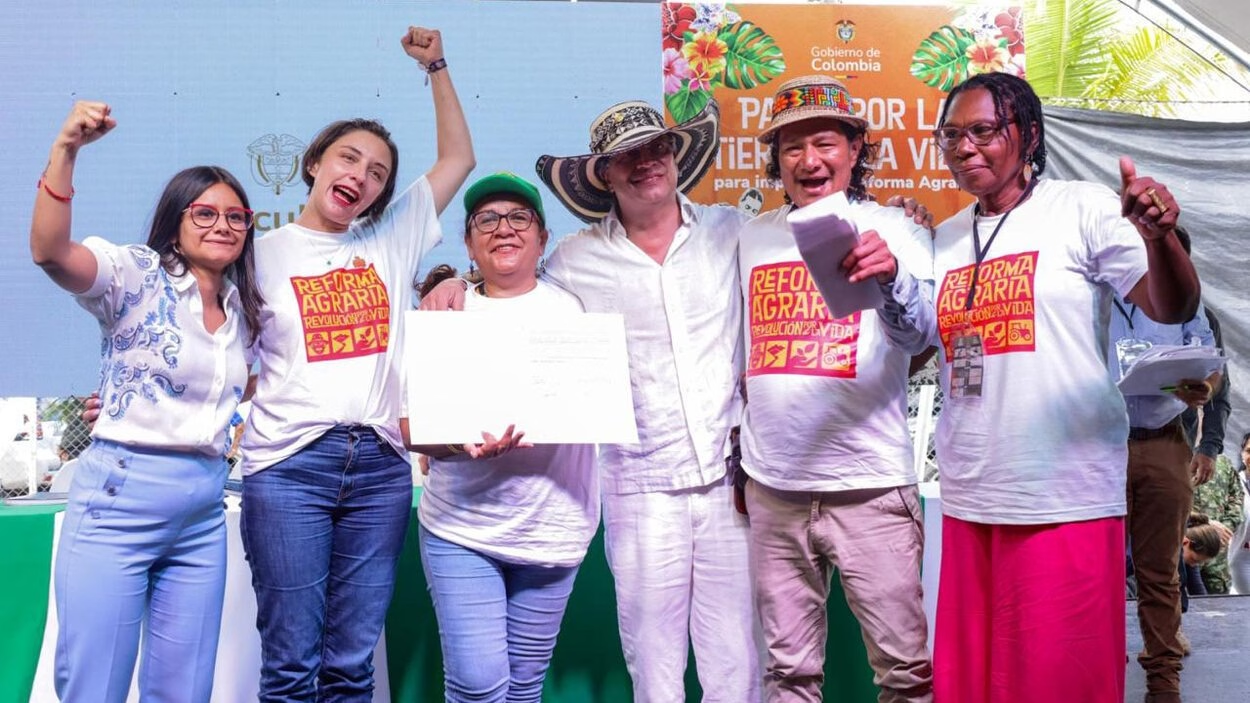
Colombian President Gustavo Petro signs a Pact for Land and Life; Revolution for Life, committing to carry out land redistribution, restitution, and recognition to enable rural working people to pursue economically and ecologically regenerative livelihoods. In this blog, Prof. Jun Borras and Itayosara Herrera discuss the implications of this pact.

Photo Credit: Ministry of Agriculture, Colombia

In February 2025, in Chicoral, Tolima, Colombia, 5,000 campesinos, Afrodescendants, Indigenous and government officials gathered for two days, and made a pact: Pacto fpr la Tierra y la Vida – Pact for Land and Life; Revolution for Life. The 12-point agreement signed by President Gustavo Petro and representatives of grassroots social movements revolved around the commitment to carry out land redistribution, restitution, and recognition to enable rural working people to pursue economically and ecologically regenerative livelihoods, with meaningful representation. The Chicoral event tries to undo a past in Colombia, and confronts a difficult challenge in the present world.

Undoing the past

In 1972 in Chicoral, landed elites and traditional political parties conspired to dismantle the 1960s redistributive land reform. They pushed to relax the criteria for defining unproductive land and inadequate land use to effectively avoid expropriation. This agreement became known infamously as the Pacto de Chicoral. It marked the definitive burial of Colombia’s redistributive land reform. It was, in essence, a pact of death—the death of land reform in Colombia—whose consequences continue to shape society today. Instead of redistribution, Colombia experienced more than half a century of counter-land reform, which led to increased violence in rural areas and the unprecedented expansion of the agricultural frontier with internal colonization in lieu of redistribution. This would also contribute to the rise of coca cultivation under the control of narco syndicates. Ultimately, it fed into the divide-and-rule strategy of the elites toward campesinos, Indigenous, and Afrodescendants.

Chicoral2025 is historic as it flips Chicoral1972: from the death of land reform to a commitment to redistributive land policies. It is ground-breaking as it is a pledge for a common front of struggles for land among campesinos, Afrodescendants and the Indigenous, aspiring to put an end to the divide-and-rule tactic employed by counter-reformists.

Confronting current challenges

The contemporary climate of land politics is extremely hostile to redistributive land policies, reflected in the continuing global land grabs. The condition is marked a global consensus among reactionary forces celebrating land grabbing, while maligning redistributive land reforms, as exemplified in Trump’s plan for the Gaza land grab while rejecting a modest liberal land reform in South Africa that land reform advocates in that country are not even happy about.

This current condition did not emerge from nowhere. It is a direct offshoot of decades of neoliberalization of land policies. The neoliberal consensus has deployed coordinated tactics.

  1. First, rolling back gains in redistributive land policies, largely through market-based economic policies hostile to small-scale farmers.
  2. Second, containing the extent of implementation of existing redistributive land policies where these exist.
  3. Third, blocking any initiative to pass new redistributive land policies in societies where these are needed.
  4. Fourth, reinterpreting existing laws and narratives away from their social justice moorings and towards free market dogmas; thus, land tenure security means security for the owners of big estates and capital.
  5. Finally, all four are being done in order to promote market-based, neoliberal land policies: justification and promotion of market-based land policies, formalization of land claims without prior or accompanying redistribution which simply ratifies what exists.
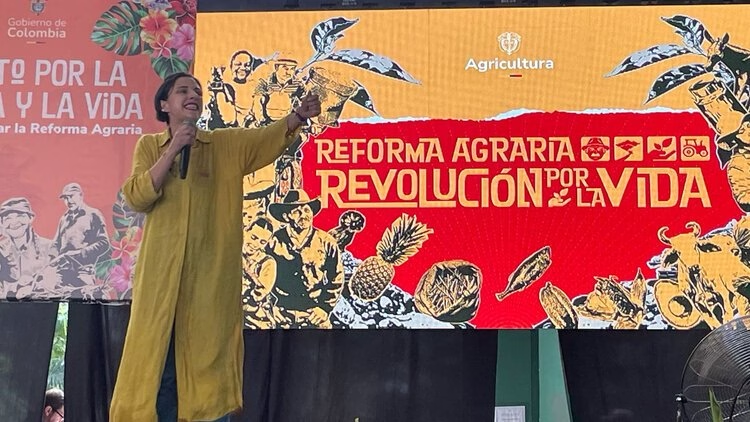
Minister of Agriculture Martha Carvajalino, Chicoral, February 2025 Photo Credit: Jun Borras

When neoliberalism gained ground in the 1980s, among the first casualties was redistributive land policies. The heart and soul of classical land reform were:

  • (a) land size ceiling, a cap to how much land one can accumulate and
  • (b) the right to a minimum access to an economically viable land size, or land for those who work it.

Today, land size ceiling is a taboo. Thus, programmes for providing minimum access to land to build-scale farms have difficulty finding land to redistribute.

During the past four decades, there have been only a handful of countries that managed to pursue redistributive land reforms: Bolivia, Brazil, Colombia, the Philippines, and Zimbabwe. Significant programs have provided collective land titles for the Indigenous such as the one in Colombia, although many of these lands are in isolated, marginal geographic spaces.

The more common accomplishments are a variety of petty reforms. Small reforms are not inherently good or bad, and they are good especially when they provide immediate relief to ordinary working people. They constitute ‘petty reformism’, a negative term, when small reforms were done in lieu of systemic deep reforms. Thus, limited land titling, formalization of land claims, and individualization and privatization of the commons – often labeled under a misleadingly vague banner: land tenure security, which is often about the security of the owners of big estates and capital.

Globalizing Chirocal2025

The need for land redistribution, restitution and recognition remains urgent and necessary, for Colombia and the world. This is even more so in the current era when dominant classes other than agrarian elites aggressively grab land from peasants and Indigenous: profiteers behind market-based climate change mitigation and adaptation strategies, corporate actors in renewable energy sector, global food system giants and financial capital. The forces against reforms have multiplied. But so as the potential forces in favour of reforms. The main alliance for redistributive land policies today is no longer limited to agrarian classes and state reformists; rather, it has to necessarily include social forces in food, environmental and climate justice, as well as labour justice, movements and struggles.

In 1979, FAO convened in Rome the World Conference on Agrarian Reform and Rural Development (WCARRD) hoping to bring new energy to global land reformism. The following year turned out to be beginning of the end of classic land reforms as neoliberalism kicked in and put an end to state-driven redistributive land policies. In March 2006, FAO convened a follow-up to WCARRD, the International Conference Agrarian Reform and Rural Development (ICARRD) in Porto Alegre, Brazil, with the goal of reviving efforts at democratizing land politics. The following year, the global land rush exploded that led to the dispossession of millions of peasants and Indigenous worldwide. In February 2026, twenty years after Porto Alegre, ICARRD+20 will be convened by the Colombian government. It is a very timely international initiative. Chicoral2025 signals what kind of agenda the Colombian government wants to emerge at ICARRD+20: a deep commitment to democratic land politics for regenerative renewal of life.

Several researchers from the ISS-based ERC Advanced Grant project RRUSHES-5 and the Democratizing Knowledge Politics Initiative under the Erasmus Professors program for positive societal impact of Erasmus University Rotterdam are engaged in the Pact for Land and Life process.

About the Authors:
Saturnino (‘Jun’) M. Borras Jr.

Saturnino (‘Jun’) M. Borras Jr. is a Professor of Agrarian Studies at the International Institute of Social Studies (ISS), The Hague. He served as Editor-in-Chief of the Journal of Peasant Studies for 15 years until 2023 and is part of the Erasmus Professor Program for Societal Impact at Erasmus University Rotterdam. He holds an ERC Advanced Grant for research on global land and commodity rushes and their impact on food, climate, labour, citizenship, and geopolitics. He is also a Distinguished Professor at China Agricultural University and an associate of the Transnational Institute. Previously, he was Canada Research Chair in International Development Studies at Saint Mary’s University (2007–2010).

Itayosara Rojas Herrera

Itayosara Rojas is a PhD Researcher at International Institute of Social Studies (ISS), Erasmus University Rotterdam. She is member of a European Research Council (ERC) Advanced Grant awarded project “Commodity & Land Rushes and Regimes: Reshaping Five Spheres of Global Social Life (RRUSHES-5)” led by Professor Jun Borras. As part of this project, Itayosara examines how the contemporary global commodity/land rushes (re)shape the politics of climate change, labour, and state-citizenship relations in the Colombian Amazon.


Are you looking for more content about Global Development and Social Justice? Subscribe to Bliss, the official blog of the International Institute of Social Studies, and stay updated about interesting topics our researchers are working on.

Scholar-activist research method – challenging but indispensable

By Posted on 1697 views

Although challenging, scholar-activism is a crucial analytical and political endeavor today.

In some particular settings, perhaps the best way to advance social science research is to engage in collaboration with social groups whose vision you are broadly sympathetic to. Yet the challenge is that you may find yourself politically supporting and advocating the very social practices you are studying. Does this make your research biased? Like many other development practitioners, I do not feign to practice disinterested research. Ultimately, ethical and political commitments permanently inform our practice: why we study certain phenomena and not others, why we consider some as problems but not others. Thus, no social science research is politically neutral; it all has a bias. But a certain level of political bias and scientific rigor are two different things.

Acknowledging that social research is biased does not imply a lack of rigor. As scholar-activists, our duty is to ensure that the visions we identify with are also subjected to theoretical scrutiny and peer review, and to practice honest reporting. The challenges are enormous. For instance, can you disagree with your local collaborator? Does scholar-activism mean ‘anything goes’ in terms of accepting uncritically whatever is being claimed by your local researcher partners? In this blog, Lorenza Arango reflects on collaborating with the Norman Pérez Bello Claretian organization (The Claretians, for short) in the eastern plains of Colombia.

The savanna landscape in Puerto Gaitán, Meta. Photo by author, June 2022.

It was in the middle of the 2022 rainy season in the Altillanura, Colombia.

Anita, a member of the Claretian organization and the leader of the field visit, was facing a tough decision: to cancel the visit halfway through – with several of the tasks we had agreed on still incomplete – or to move to another area within the region to finalize our mission. Heavy rains had made several of the roads impassable and navigating the Meta River to reach our next destination seemed the only way out. But travelling by river poses other security concerns, especially to social organizations such as the Claretians, whose members have become targets of threats and persecution.

‘How do you want to proceed? Shall we cancel the visit?’, I asked.

‘Let me think through… People are already waiting for us’, Anita replied.

After hours on the phone with members of the communities we were to visit, and with the head of the Claretian organization, to validate the security conditions in the area, the decision was made: to get on the first boat departing at 4:00 am, and to stick together during the approximately 8-hour journey, as well as to remain alert and cautious.

In recent years, the eastern Altillanura (high plains) in Colombia – encompassing the department of Vichada and portions of Meta – have turned into a major frontier destination for lucrative investments in land. Over a short period of time, the region changed from being a far, scattered and poorly developed landscape of tropical savannas bordering Venezuela to become the greatest and ‘last agricultural frontier’ of the country and even the new ‘promised land’.

The Colombian Altillanura was part of a broader phenomenon of spectacular, multi-faceted land grabs across the world known as the ‘global land rush’. Roughly between 2004 and 2017, multiple corporate land deals were pursued in the area. Other land deals were halted at early stages of implementation or never really touched the ground, but nevertheless contributed to fuel the investment frenzy. Meanwhile, land accumulation by stealth, effected by low-profile actors, progressed apace – taking part in the bandwagon effect driven by the land rush.

For the indigenous peoples and the peasantry inhabiting the Altillanura, the tropical savannas were not an investment target. They were their home sites and key a source of livelihoods. For decades now, both communities have suffered from the effects of multiple iterations of land dispossession and forced displacement by different actors (including the state, economic elites, armed guerrilla groups, narcotraffickers and paramilitary). The recent land rush in the area, and the ensuing social and environmental crisis, further exacerbated the precarious living conditions experienced by these – making them the poorest strata of the rural population.

An improvised kitchen at the indigenous settlement of ‘Iwitsulibo’ (Puerto Gaitán, Meta). Photo by author, June 2022.

Against this background, the work of the Norman Pérez Bello Claretian organization (Corporación Claretiana Norman Pérez Bello – CCNPB) is fundamental. The Claretians is a Colombian non-profit organization that promotes social justice and peace and accompanies peasant and indigenous communities who assert their rights through non-violent mechanisms. It offers legal advice, as well as psychological, pedagogical and communications support. Since around 2003, the Claretians has continually supported efforts by various rural peoples to improve their living conditions in Colombia’s eastern plains and other regions of the country. To date, it is perhaps the only organization in the area whose work in the defence of rural communities has endured the test of time and the brutality of various forms of violence – including persecution of its members and threats against their lives.

As a PhD researcher within the European Research Council (ERC) Advanced Grant-funded RRUSHES-5 project, based at the International Institute of Social Studies (ISS) of Erasmus University Rotterdam, I am pleased to have collaborated with the Claretians and to have learned first-hand from the work it does in the Altillanura. My first engagement with its work happened when I accidentally came across short online publications by the organization, in which it denounced recent land grabs in the area and the effects these had on Sikuani indigenous peoples. I later heard about the organization from other researchers and investigative journalists and became an admirer of its work.

On the basis of collaborative agreements, the Claretians facilitated a significant part of my fieldwork in the Altillanura for my doctoral dissertation. Together we visited what had become key investment sites by large corporations and political and economic elites in the municipality of Puerto Gaitán in the Meta department and in La Primavera and Santa Rosalía in Vichada. We listened to and documented people’s retelling of harsh stories of dispossession associated with the investment rush and the consequences to their livelihoods of land lost.

While collaborating with the Claretians, the alleged boundaries between scholarly research and activism suddenly becoming less rigid. This collaboration has also taught me the often-challenging practice of scholar activism and how indispensable it is today.

Traversing the open plains and water springs by foot in rural Puerto Gaitán, Meta. Photos by author, June 2022.

On a number of occasions, I inevitably performed tasks closer to advocacy work – which clearly influenced my research outcomes. For instance, at most field sites we visited, I cooperated in setting up meetings and assemblies between indigenous community members and government officers, hoping these could result in the challenges faced by the indigenous people (for example, in terms of their land access and their living conditions) being better addressed. I also helped draft press releases denouncing abuse and threats of coercion by the local police and illegal armed groups against community members and the Claretians and demanding that the state ensure the fundamental rights of the indigenous peoples. I also devised tools that could help to leverage indigenous peoples’ decision-making power in response to state authorities, such as printed maps of their territories.

Public assembly converging indigenous communities across the eastern plains and government functionaries from the National Land Agency in La Primavera, Vichada. Photos by author, March 2023.

At the same time, the collaboration allowed the Claretians to systematize much of the evidence it had collected over the years about the politics of land access in the Altillanura, as well as to reach larger audiences – through reports and other publications that came out of our partnership.

Of course, experiences of scholar-activism such as this are not exempt from challenges. How could both parties ensure that the research project I was representing would be useful and impactful to the people on the ground? What other research strategies should I employ to validate the conclusions resulting from the collaborative work, apart from fieldwork? Also, were the Claretians – given its knowledge of the area and of the communities it accompanies – entitled to set the objectives and terms of our collaboration? Could I object to the organization’s practices or disagree with the behaviour of some of its members in the field? If so, could that risk our collaboration or compromise particular outcomes from it? In the end, all of us, both the members of the organization and myself,  had to deal with these questions and several other contradictions arising along the way.


All in all, the underlying message is clear: in contexts of widespread land dispossession, such as the one shaping the Colombian Altillanura, struggles over land remain a key axis of mobilization, which in turn make of scholar-activism an analytically crucial and politically empowering undertaking and method of work – despite of (or even because of) the difficulties surrounding it.

***

Nowadays in academia, research with positive societal impact has gained wide support. It is often interpreted to mean that academic work impacts and transforms society and societal actors. This is certainly valid and important. But in my case, another dimension is also clear: non-academic societal actors can profoundly impact and transform academics and academic work. While the first interpretation  is significantly explored in academic circles, the impact of society and societal actors in academia is relatively less so. Yet I believe it is equally important to think about how non-academic societal actors, especially social justice activists like Anita and her Claretian colleagues, positively impact and transform academic researchers like me, and, for that matter, academia and academic work I am embedded in. And that feels right.


Opinions expressed in Bliss posts reflect solely the views of the author of the post in question.

About the Author

Lorenza Arango is a PhD researcher at the International Institute of Social Studies (ISS, The Hague) of Erasmus University Rotterdam. She is a member of the research team of the European Research Council (ERC) Advanced Grant awarded project ‘Commodity & Land Rushes and Regimes: Reshaping Five Spheres of Global Social Life (RRUSHES-5)’, led by Jun Borras. As part of this project, she is working on the interactions between contemporary commodity/land rushes and the spheres of labour and food politics, as well as on state-citizenship relations in Colombia.

Are you looking for more content about Global Development and Social Justice? Subscribe to Bliss, the official blog of the International Institute of Social Studies, and stay updated about interesting topics our researchers are working on.

Migration Series | Precarity along the Colombia–Panama border: How providing healthcare services to transit migrants can foster new logics of inclusion and exclusion

Transit migrants journeying the Americas to North America often pass through Necoclí, a seaside town close to the Colombia–Panama border and the Darien Gap. Upon their arrival, they frequently require medical attention but can only access emergency medical services. In this article, Carolina Aristizabal shows how a limited healthcare provisioning system designed for immobile populations has been reworked by humanitarian organizations to help transit migrants receive the care they need. She argues that new logics of inclusion and exclusion emerge as a result of such reconfigurations — a development that may lead in some cases to xenophobia in local communities.

Image by Author

Traversing the Americas

On their way to Mexico, the United States, and Canada, irregular migrants coming from as near as Venezuela, Haiti, and Ecuador and as far as India and Senegal arrive at Necoclí, a seaside town located near to the Colombia–Panama border. Here, after crossing the Gulf of Urabá, they enter the Darien Gap, a geographic region in the Isthmus of Panama that connects South America with Central America. From there they travel further north. In 2022, around 250,000 migrants arrived in Panama through the Darien Gap; this year, by July 2023, around 252,000 people have already undertaken this journey.[1]


Health care provisioning: for whom?

When in Necoclí, transit migrants often require assistance, especially in the form of healthcare services. However, even though they may stay in the town for weeks on end, transit migrants are frequently seen as outsiders of ‘immobile’ social provisioning systems usually underpinned by citizenship. As a result, they have access only to limited medical services, which adds to the precarity they already face. Several humanitarian organizations have stepped in to fill the gap left by a lack of government healthcare services for this group of people. Yet, the local implications of this workaround remain underexplored.

For this reason, I decided to conduct research on the topic in the framework of the research paper for my Master’s degree in Development Studies. I observed and conducted interviews with healthcare providers and inhabitants of Necoclí last year because I wanted to understand the different ways in which the Colombian government and non-governmental actors organize and legitimize the provisioning of healthcare services to these transit migrants, especially in a context in which local communities are living under precarious conditions with unsatisfied basic needs. Some of my findings about precarity, categorization, and humanitarian action are highlighted below.


Continued precarity while waiting

When migrants arrive in Necoclí, a lack of reception facilities in the town add to the already existing, often precarious traveling conditions they face when making their way there. For example, while some of them can stay at hotels once they’ve arrived in the town, others have to sleep in tents and hammocks on the beach, close to the two municipal docks.

Staying close to the sea allows them to wash their clothes and bathe in its waters. However, they do not have a roof over their heads or access to running water or sanitary facilities, and they are less safe in public spaces. The border zone between Colombia and Panama is characterized by a weak governmental presence and the dominance of armed groups, especially the Gulf Clan (El Clan del Golfo), which controls drug and arms trafficking routes along this Colombian border (Garzón et al., 2018) as well as the migration dynamics in the territory to a large extent.[2]

Moreover, while some migrants are immediately able to buy boat tickets from a company offering transportation through the Urabá Gulf once they arrive, others must stay in Necoclí as long as needed to gather the necessary money to buy these tickets. This means that hundreds if not thousands of migrants may be stuck in the town for days or weeks on end before being able to travel further.


A lack of adequate healthcare services

Transit migrants typically undergo long and arduous journeys and upon their arrival in Necoclí may require medical attention to treat amongst others mental health issues, HIV infections, Covid-19 infections, rabies, and food or water poisoning. Pregnant women also need prenatal care. In 2022, Necoclí had one public hospital where migrants could receive emergency services for free, as well as some ‘low-complexity’ services such as vaccinations and laboratory tests for prioritized populations.

However, many of their health issues remain untreated partly because the government’s Principle of Universality does not apply to non-citizens. According to the Healthcare Law (Law 100 of 1993), under this principle everyone in Colombia has the right to access healthcare services at any moment of their lives, without any type of discrimination. Colombian nationals and migrants with resident permits can access any available public healthcare service. However, given the citizen requirement, migrants in transit can only access emergency services — highlighting the boundaries to the ‘Principle of Universality’.


A dual role for humanitarian actors

In 2022, to make up for the gap in the provisioning of healthcare services to transit migrants, non-governmental actors such as the Colombian Red Cross, the Colombian Institute of Tropical Medicine with the International Organization for Migration (IOM), Mercy Corps, UNICEF, and HIAS started providing healthcare services that extend beyond emergency care. These services included 1) psychological assistance, 2) sexual and reproductive health services, 3) children’s growth and development programmes, and 4) dentistry — services that are considered ‘non-essential’ and were therefore not provided to transit migrants by the government.

In this way, humanitarian actors assumed two different roles: on the one hand, they supported the state in its responsibility to provide emergency services, and on the other hand, they complemented this service based on a more dynamic reading of the needs of transit migrants and of the types of health provisioning necessary.

For humanitarian actors, these services were provided based on the Principle of Humanity, which refers to the aim of saving lives “in a manner that respects and restores personal dignity”[3] for any person, as well as the IOM’s mission to promote “humane and orderly migration that benefits migrants and societies”.[4] Moreover, non-governmental actors also made use of the resident/migrant binarity to define their criteria of eligibility, since some of them provide healthcare services just for transit migrants, while others also provide medical attention to permanent residents under particular circumstances.

As an example from my fieldwork, a Colombian child living in Necoclí could not be part of the Red Cross growth and development programme, even though she or he had been insufficiently attended to by the Colombian health system due to a lack of resources. On the other hand, both a Colombian woman living in Necoclí and a transit migrant had access to Mercy Corps’s programme on sexual and reproductive health.


The need to maintain a delicate balance

The dynamics of transit migration changed the healthcare system in Necoclí since governmental and non-governmental responses to the needs of transit migrants are based on their principles and their capacities. They made use of the resident/transit migrant duality as an eligibility criterion to define medical attention. The importance of this research lies in the possibility to understand how governmental and non-governmental actors, as well as Necoclí residents, reconfigure and problematize the criterion that is used to define the accessibility of transit migrants to the healthcare provisioning system.

In a context in which inhabitants face big challenges to access basic healthcare services, the use of this criterion requires maintaining a delicate balance between responding to the needs of transit migrants and the needs of residents. The provisioning of medical attention for transit migrants arriving to Necoclí allows us to understand not only how an immobile social system responds to the needs of a mobile population but also to analyze how the precarious conditions of migrants and residents shape and legitimize the eligibility criterion to this system. When non-governmental actors exclude residents from their services, this can lead to perceptions of unfair treatment and acts of xenophobia by residents, which could deteriorate even more the precarious conditions of transit migrants.

In the framework of migration governance, the eligibility criterion that is used by governmental and non-governmental actors to provide healthcare services should go beyond their principles to also consider the imaginaries and relationships that they reinforce in local communities and that end up (de)legitimizing health provisioning for transit migrants.


[1] https://www.migracion.gob.pa/inicio/estadisticas

[2] https://voragine.co/las-victimas-de-la-selva-asi-trafican-con-migrantes-en-necocli/

[3] United Nations High Commissioner for Refugees, 2022

[4] International Organization for Migration, 2022


This is part of and concludes the Migration Series. Read the previous topics on the migration series:

How does a place become (less) hostile? Looking at everyday encounters between migrants and non-migrants as acts and processes of bordering.

From caminantes to community builders: how migrants in Ecuador support each other in their journeys.

From branding to bottom-up ‘sheltering’: How CSOs are helping to address migration governance gaps in the shelter city of Granada

“Us Aymara have no borders”: Differentiated mobilities in the Chilean borderlands


Opinions expressed in Bliss posts reflect solely the views of the author of the post in question.


About the author:

Carolina Aristizabal is a Colombian political scientist and holds an master’s degree in Development Studies from the ISS. She has worked with non-governmental organizations and the local government in the city of Medellín, her hometown.

Are you looking for more content about Global Development and Social Justice? Subscribe to Bliss, the official blog of the International Institute of Social Studies, and stay updated about interesting topics our researchers are working on.


Will Colombia ever witness peace?

By Posted on 3407 views

The most recent wave of state violence against Colombian citizens that culminated in the killing of 47 demonstrators during a single week of protests taking place across the country is extremely worrying given the massive human rights violations it signifies. Yet far from being an isolated episode, the events that recently transpired are rooted in a deeper socio-economic and political crisis that has been exacerbated by the COVID-19 pandemic. State violence that has plagued the country for so long can be interpreted as the expression of institutional imbalances and may signify a worrying move toward securitisation – one that should be avoided at all cost.

Picture taken from El Espectador 01.05.2021.

“If the people go out to protest within a pandemic, it is because the government is more dangerous than the virus.”
Slogan of the most recent (28A) protests

As a country known for having undergone decades of social unrest and political tensions, Colombia has been hurled back into the spotlight in the past two weeks as police and military forces cracked down on protesters. A current national strike against a tax reform starting on 28 April – aptly called 28A – has since escalated massively, leading to international calls for peace as repression fuelled further protests and tensions. Disturbing and painful images and audio clips of the police shooting demonstrators seemingly indiscriminately in different Colombian cities, hitting human rights defenders, and even threatening a humanitarian and verification mission in Cali have now been spread all over the world.

What led to these protests?

The answer is not straightforward. On 5 April 2021, a tax reform was proposed by Ivan Duque’s government. Given the enormous social tensions in Colombia, the proposed regressive tax reforms, through which the upper classes would benefit from tax cuts, and middle- and low-income classes would pay more for public services and consumption, fuelled a runaway fire, leading to a national protest scheduled for 28 April, but lasting much longer. This act of defiance should be interpreted not as a reckless act during a pandemic, but a desperate effort of protesters to protect their own futures. The tax reform proposal was finally withdrawn on 4 May, but only after 31 demonstrators had been killed, 814 had been arbitrarily detained, and 10 cases of sexual violence by police representatives had been reported.

The use of state violence against Colombian citizens is unfortunately not new. The recent round of protests was preceded by a national strike on 21 November 2019 called 21N, which was also met with force. Yet each moment of resurgence of violence is equally devastating for Colombia, a Latin American nation that has been struggling hard to shake its image as politically unstable. What’s more worrying are hints of a move toward securitisation that can normalise violence. Instead of strengthening the independence and capacity of the country’s judiciary and other bodies that are supposed to hold the state accountable for its deployment of force and citizens for the private use of the violence, securitisation would reinforce the vulnerability of social leaders and human rights defenders who play an important role in helping maintain the country’s democratic system and who can press for structural change.

Picture taken from BBC News Mundo 03.05.2021

Why is this so worrying?

Besides protesting against a proposed tax reform, Colombian society is using the 28A protests to urge a fundamental change in the socio-economic policies driven by a neoliberal government logic. Young people are advocating for affordable, good-quality, public higher education institutions and access to decent jobs. Workers and pensioners are rejecting the growing ‘flexibiliation’ of the labour market and the increased age of retirement. Public sanitation workers and health workers are asking for better working conditions and better public health care given the strain placed on them by the COVID-19 pandemic. It was never only about the tax reforms. Citizens feel betrayed by a government that does not seem to govern in their interests.

The right to protest (peacefully) to make such concerns heard is thus crucial for many groups across Colombia. Unfortunately, protests have taken place against a backdrop of violence that has haunted the country for decades. Continued state violence against protesters can be linked to the country’s violent history. Repression following the rejection of the 2016 Peace Agreement is also visible in the dramatic increase of other violent events, including recent massacres in rural areas of Colombia fuelled by broken promises of strengthening the state’s civil infrastructure for those residing in rural areas. And after the end of the Colombian conflict, new armed factions have sprung up to dispute the territories formerly controlled by FARC guerrillas. The result has been a predictable resurgence in illegal market activity and violence against civilians. Afro-Colombian, indigenous, and peasant communities are caught in the crossfire or are direct targets.

Pictures taken by Juliana Poveda during the demonstrations in front the Colombian Embassy in The Hague 07.05.2021

What’s worse, during COVID-19, the government has demonstrated a growing inclination towards authoritarianism, imposing curfews and militarising control of the lockdown. The pandemic has exacerbated the country’s socio-economic crisis, and both escalating violence in rural areas and lockdowns in cities intensified ordinary citizens’ socio-economic vulnerability. In effect, a decade of social policies to reduce poverty were reversed in a single year given the government’s erratic handling of the pandemic. Reducing ordinary people’s vulnerability and addressing inequalities were simply not priorities for this government. The proposed tax reform was the last straw, signifying to Colombians a government that was not doing its duty to make their lives better, both when it comes to the safety of civilians and their welfare.

What needs to be explored once the violence has been stopped is whether this inclination toward violent repression signifies the securitisation of state institutions and an even greater risk for social leaders and human rights defenders in the cities and rural areas of Colombia to continue keeping the state accountable. This would be devastating for Colombia, which has long sought peace and freedom, and whose citizens thought that the end of its conflict some five years ago signified a new era in which the state and citizens would be able to co-exist in harmony. The government should also take a long, hard look at whether it is actually actively pursuing peace – recent events seem to indicate the opposite.

Thanks go to Lize Swartz for helping shape this article.

Opinions do not necessarily reflect the views of the ISS or members of the Bliss team.

About the author:

Juliana Poveda is a lawyer specialized in human rights and international humanitarian law of the National University of Colombia. She is currently pursuing her master’s degree at the ISS. Prior to that, she received her M.A. in Political Studies at the Institute of Political Studies and International Relations (IEPRI).


Are you looking for more content about Global Development and Social Justice? Subscribe to Bliss, the official blog of the International Institute of Social Studies, and stay updated about interesting topics our researchers are working on.


#SOSColombia: A call for international solidarity against the brutal repression of protestors in Colombia

By Posted on 4102 views

The recent surge in violence against Colombian citizens has led to thousands of reports of police brutality in a matter of days as the state cracked down on protesters taking to the streets starting 28 April. This has prompted a global outcry and pressure from international organisations and several countries on the Colombian government to end the violence so that the human rights of the protesters remain guaranteed. In this article, Ana María Arbelaéz Trujillo and Diego Hernández Morales present a brief overview of the situation and propose some ways in which the general public can get involved in raising awareness about the events and what they mean.

Photo: Fabio Tejedor

Over the past weeks, Colombians have been witnessing the brutal repression of their legitimate right to protest. According to reports by non-governmental actors, between 28 April and 9 May, at least 1,876 cases of police brutality had been recorded. This includes 39 deaths (34 caused by the use of firearms)[1], 963 arbitrary detentions, 278 instances of physical violence, 12 acts of sexual violence, and the disappearance of at least 500 protestors. The severity of the situation has led the United Nations, the European Union, Amnesty International, and several other international organisations to express their concern about the situation and remind the Colombian government that in any democracy, the state must protect the human rights of protesters and the public assembly of its people, not prevent and purposefully undermine it. The crackdown was particularly severe because of its swiftness – the police managed to threaten or cause harm to thousands of people in a matter of days.

Why were people protesting?

The spark that ignited the fire was a tax reform. The government upon initiating a tax reform argued that the new package of taxes was necessary to fund social policies to protect vulnerable people. However, the proposal included new taxes on essential goods which would had put additional pressure on the working and middle classes[2] who were already struggling to cope with the economic impacts of the pandemic.

Last year, the living conditions of the population, who already lived precarious lives before COVID-19 swept across the globe, worsened as the pandemic raged on. Colombia is the second most unequal country of South America, with a GINI coefficient of 0.53. In the last year, the monetary poverty rate increased from 37.5% to 42.3%, and 21 million people now live on less than USD 2 per day. Additionally, the unemployment rate for March 2021 was 14.2% and informal workers remain disproportionately affected by the restrictions imposed during the pandemic.

To oppose the tax reform and overall decreases in welfare, the National Strike Committee called for a national strike on 28 April. This call was supported by trade unions, indigenous groups, students, and social organisations that also protested against the persistent killing of social leaders and new proposals to reform Colombia’s health and pension schemes. Thus, what started with a tax reform ended in a massive protest about both old and new problems that led to thousands of people taking to the streets.

Following widespread popular discontent, the proposal was retired, and the Minister of Finance resigned. However, after several days of protests, people continue to protest, in part due to the outrage caused by the state’s violent response to the protest and the persistence of the additional reasons that motivated the national strike.

Why is the Colombian case different?

The introduction of new or higher taxes has led to discontent and triggered protests everywhere. But these changes need to be put into context in order to understand their significance. Social protest has historically been criminalised  in Colombia. The dominant discourse of the political and economic elites of the country is that protesters are violent and associated with illegal groups. This narrative is harmful for democracy and puts at risk the life and health of peaceful protestors.

Recently, former president Alvaro Uribe used his Twitter account to delegitimise the national strike and encourage the use of deadly force against protestors:

Let’s support the right of soldiers and police to use their firearms to defend their integrity and to defend people and property from criminal acts of terrorist vandalism.”

Twitter deleted this tweet due to the violation of its rules – a welcome step.  The former president is also using the controversial concept of a ‘dissipated molecular revolution’ to discredit the demonstrations. According to this theory, social protests, even when peaceful, are deemed crimes against state institutions; protestors accordingly must be treated as internal enemies.

The spread of this hate speech, which defines protestors as military objectives, is especially problematic in a country with a long history of armed conflict where the military forces have been involved in several human rights violations against civilians, such as the ‘false positive scandals’. The violent oppression of protesters thus serves as a stark reminder of the power of the Colombian state and how the signing of the peace agreement may not be a guarantee for peace or political reforms.

Moreover, such rhetoric is especially dangerous in a country in which social leaders are routinely murdered with impunity. The ‘Front Line Defenders Global Analysis 2020’ reported that in 2020, half of social leaders killed in the world were assassinated in Colombia. According to Indepaz,[3] between the signing of the peace agreement in November 2016 and December 2020, 1,088 social leaders have been killed. The stigmatisation of social leaders and human rights defenders increases their level of risk, preventing the social transformation that Colombia needs. It is thus in light of this that the protests and state retaliation should be understood.

How can the international community contribute?

The solidarity of the international community is key for placing pressure on the Colombian government to stop using violence against protesters and to prevent impunity. Raising awareness through sharing this or other articles is a key starting point in getting the message out there. There are multiple ways in which you could contribute:

  • By promoting the creation of a public statement of solidarity at the organisation where you work
  • By sending a message to your government asking them to urge the Colombian state to respect the rights of protesters
  • By signing this petition from citizens worldwide addressed to OAS, OEA, the United Nations High Commissioner for Human Rights, and President Joe Biden to conduct a thorough investigation of the human rights violations during the recent protest in Colombia
  • By signing this Open Letter to the Colombian Government and the International Community from professionals of public international law
  • By signing this letter from Colombian academics and students calling for an inclusive dialogue to end the recent violence in Colombia
  • By donating to independent organisations reporting the current situation such as Temblores, Cuestión Pública and Mutante 
  • By simply following reliable sources of news and sharing the information with the hashtag #SOSColombia on social media.

Footnotes

[1] According to Temblores and Indepaz, 47 people have been killed since 28 April 2021. Of these cases of homicidal violence, it has been possible to determine that 39 of them were due to police violence.

[2] Among the most controversial points were extending the income tax to people earning more than 684 USD per month, charging VAT tax on public and funerary services, and eliminating tax exemptions on essential goods and products such as eggs, milk, tampons, sanitary towels, and menstrual cups.

[3] Founded in 1984, INDEPAZ is part of the national network of peacebuilding organisations in Colombia. Its work is focused on researching and spreading information about the conflict, and it contributes to the peace process through the promotion of dialogue and non-violence.

Opinions do not necessarily reflect the views of the ISS or members of the Bliss team.

About the authors:

Ana María Arbeláez Trujillo

Ana María Arbeláez Trujillo is a lawyer, specialist in Environmental Law, and holds an Erasmus Mundus Master in Public Policy. She works as an environmental consultant on climate change policies and forest governance. Her research interests include the political economy of extractivist industries, environmental conflicts, and rural development.

Diego Hernández Morales is a Colombian lawyer with 25 years of experience in various fields.  In Colombia, he was a professor of Democracy Theory at the Universidad Libre of Bogotá, and a professor of Politics and International Relations at the Universidad Santo Tomás.  He has a Master’s degree in Development Studies from the ISS, conducting a research paper on the media representation in the Netherlands of the Colombian conflict.  At this moment he is in the process of publishing a book on his testimonies and his appreciations related to the events in Colombia in the last half-century.


Are you looking for more content about Global Development and Social Justice? Subscribe to Bliss, the official blog of the International Institute of Social Studies, and stay updated about interesting topics our researchers are working on.


COVID-19 | Remembering the ongoing assassination of human rights defenders in Colombia

By Posted on 3731 views


When a peace agreement was signed in 2016 in Colombia between the government and armed forces (FARC), citizens and activists seized the opportunity to make longstanding grievances heard and press for change. But between September 2016 and March 2020, 442 social leaders were assassinated. As death becomes part of the daily discourse, especially during the COVID-19 pandemic, we should look beyond these shocking numbers and understand that the massive killing of social leaders is not only a humanitarian crisis, but also a threat to the process of social transformation and local empowerment.

Postales para la memoria

Hope for change

The peace agreement signed in 2016 in Colombia signaled change. Since the political exclusion of government dissidents and others critical of the political regime is considered to have been one of the root causes of the conflict, the agreement sought to create spaces to promote the organization and participation of diverse actors with diverse voices and included a series of provisions to strengthen the presence of the state in marginalized areas to address issues such as poverty, inequality, and unequal distribution of land. In this context, the signature of the peace agreement opened a window of opportunity for activists and citizens to present to the state their long overdue demands for changes related to such issues, which had taken the back seat during the conflict.

The persistence of violent repression

In the period shortly before the peace agreement was signed in 2016, a reduction in homicidal violence and conflict-related deaths following the de-escalation of violence seemed to signify the end of an era characterized by violence. This reduction in violent acts provided space for activists and citizens to present their demands to the state in a way that was not possible in the preceding years, when violence made mobilization riskier. However, sectors within the country not interested in peace talks started to exert violence on citizens, continuing a growing trend since 2016. Consequently, during the post-agreement period, Colombia has experienced a dramatic increase in the cases of murders and threats against social leaders. According to figures from the NGO Somos Defensores, between September 2016 and March 2020, 442 social leaders had been killed. According to a recent report of the U.N., which we analyzed in a previous article, these worrying figures situate Colombia as the country with most killings of human right defenders in Latin America.

Assassinated activists and human rights defenders were individuals linked to organizations attempting to mobilize society for the implementation of the peace accords and strengthening of statehood. Those maimed were peasant leaders, environmentalists, land defenders, women, indigenous leaders, and afro-descendants representing marginalised communities.

COVID-19: obscuring intensified killings

This trend has worsened in Colombia during the COVID-19 pandemic, as illustrated by a sharp increase in assassinations of social leaders by 53% between January and April this year[1]. However, as the attention of political leaders and citizens is focused on the response of the government to address the crisis of the COVID-19 pandemic, civil society groups fear that the assassination of community leaders will go unnoticed and unpunished. As the attention of political leaders and citizens is focused on the response of the government to protect and ensure the health of their citizens from COVID-19, groups often resorting to violence in Colombia (right-wing paramilitary groups, drug traffickers, dissident guerrilla members, and other armed organizations) are taking advantage of the pandemic to divert attention from violence that would otherwise be observed.

As people are getting used to seeing figures of death daily, it is critical to remember that we need to see beyond the numbers and understand that the massive killing of social leaders is a humanitarian crisis with different impacts. At the individual level, the right to life of the leader is violated, and at the social level, the assassinations affect the representation of collective interests, becoming a threat to the process of social change and local empowerment.

Social leaders are the voice of the communities that have been historically forgotten. Hence, when they are threatened, there is a further weakening in the social fabric of these groups. According to the testimonies of several social leaders who were interviewed in a recent study by CNC, CODHES and USAID, after an attack, the members of the community became afraid to participate, to organize, and the formation of new leaders was also obstructed. That is how the killing of social leaders has a long-term effect that impacts the deepening of democracy in Colombia, benefiting the interests of those who want to maintain the status quo and continue to use violence to do so.

The effect of the COVID-19 response on social organization

Whereas civil society has improved its capacity to hold the government accountable with regards to the assassination of social leaders, their capacity to pressure the government has been diminished due to the restrictions on gatherings due to the pandemic, and due to the focus of public opinion on the risk of COVID-19. This makes it more difficult for organizations to centre the defence of the lives of social activists in public discourse and increases the likelihood of the assassination of community leaders being obscured.

In this context, we want to contribute to an ongoing campaign started by civil society groups in Colombia to use opinion articles and other spaces of communication to raise awareness about the severity of this situation and to tell the stories of those who are at risk. As part of this initiative, the newspaper El Espectador on its front page of June 14th 2020 published a list with the names of the 442 people who have been killed with the title “Let’s not forget them” (“No los olvidemos” in Spanish). Let this become the start of a movement to continue highlighting mass killings of social leaders and to problematize them. It is not okay, and we will not accept it. #NoLosOlviDemos.

[1] In comparison with the number of assassinations taking place between January and April 2019.

This article is part of a series about the coronavirus crisis. Read all articles of this series here.

About the authors:

Fabio Andrés Díaz PabónFabio Andres Diaz Pabon is a Colombian political scientist. He is a research associate at the Department of Political and International Studies at Rhodes University in South Africa and a researcher at the ISS. Fabio works at the intersection between theory and practice, and his research interests are related to state strength, civil war, conflict and protests in the midst of globalisation.


Ana María Arbeláez Trujillo

Ana María Arbeláez Trujillo is a lawyer, specialist in Environmental Law and holds an Erasmus Mundus Master in Public Policy. She works as a legal consultant in Climate Focus, where she focuses on climate change policies and forest governance. Her research interests are the political economy of extractivist industries, environmental conflicts, and rural development.

EADI/ISS Series | Resource Grabbing in a Changing Environment

By Posted on 2345 views

By Adwoa Yeboah Gyapong, Amod Shah, Corinne Lamain, Elyse Mills, Natacha Bruna, Sergio Coronado and Yukari Sekine

We are living in an era where people’s daily lives are deeply intertwined with the impacts of global markets and the threats of climate change. Even good intentions for mitigating and adapting to climate change can jeopardise natural resources and rural livelihoods. Examples from Mozambique, Colombia, and the Eastern Himalayas show how local communities affected by resource grabbing engage in both overt and covert responses against dispossession and exploitation.


We are living in an era where people’s daily lives are deeply intertwined with the impacts of global markets and the threats of climate change. Even good intentions for mitigating and adapting to climate change can jeopardise natural resources and rural livelihoods. These seemingly abstract issues are becoming increasingly clear through both research and the role of the media, sparking questions such as: How do attempts to address climate change prevent farmers from working their lands, or negatively affect the livelihoods of forest users? Why are fishers organising themselves to resist interventions intended to protect marine areas? How do human rights groups and indigenous communities resist the state and powerful companies despite civil society space being increasingly limited?

The rapid rise in the scale and scope of the commodification and exploitation of natural resources can be linked to four broad, interlinked drivers: the expansion of the industrial food system; increasing privatisation of the commons; changes in governance mechanisms; and the growing prominence of climate mitigation and adaptation responses. Both local and global issues shape and complicate the dynamics of contemporary resource grabbing, many of which are still not fully understood – and will be explored further in our workshop on  “Resource grabbing: impacts and responses in an era of climate change” at the EADI/ISS General Conference 2020.

The social and environmental impacts of resource grabbing

Resource grabbing impacts can include limited access to resources, insecure livelihoods, diminishing ecological sustainability, and restricted participation and political incorporation, all of which are embedded in broader power dynamics. In some cases, governance instruments (e.g. labour laws) can further exacerbate the impacts of resource grabbing. Four examples illustrate these diverse impacts.

Conservation in global fisheries

Small-scale fishers globally are facing an overlap of existing and newer processes of exclusion. Existing forms of exclusion caused by industrialisation and privatisation in fisheries have more recently overlapped with exclusionary processes stemming from climate change mitigation and adaptation initiatives. Prominent examples include the increasing establishment of Marine Protected Areas (MPAs) and blue carbon initiatives, which are presented as approaches to conserve and protect marine ecosystems. Such initiatives are often established close to the shallow coastal domains of small-scale fishers and involve the banning of fishing activities, leaving them with limited access to fisheries resources, territories and markets to sustain their livelihoods.

Climate funds in Mozambique

With 25% of its territory designated as conservation areas, Mozambique is the third-largest recipient of climate funds in Sub-Saharan Africa, having received approximately US$ 147.3 million in 2016. Most of these funds are directed to land-based conservation and climate change mitigation and adaptation projects. The Gilé National Reserve, a decade-old REDD+ project, combines such policies with the implementation of Climate-Smart Agriculture (CSA) in the reserve’s buffer zone. This has limited rural livelihood strategies and local people’s control over land and decision-making processes, due to restrictions placed on fishing, hunting, cattle rearing and gathering forest resources (e.g. charcoal, medicinal plants).

Mining in Colombia

Since the 2008 commodity-boom, open-pit coal mining in the Colombian Caribbean region of La Guajira has expanded rapidly, leading to intensified land and environmental conflicts between mining companies, the state, and the affected communities. Land previously used for agriculture and grazing livestock is no longer accessible. Both the landscape and the local economy are now dominated by mining, which has consumed more than 12,000 hectares of land and displaced 16 local villages.

Hydropower dams in the Eastern Himalayas 

In the Eastern Himalayas (North-East India and Nepal), numerous hydropower dams are being planned or are already being constructed. Many of these are funded through the Clean Development Mechanism (CDM), an internationally developed climate finance initiative aiming to stimulate the development of renewable energies. However, evidence suggests that dams contribute significantly to greenhouse gas emissions through the creation of reservoirs and changes in land-use. Large dams particularly disturb ecological systems, upstream and downstream river flows, and limit people’s access to riverside lands.

Political responses generated by resource grabs

Local people and communities affected by resource grabbing engage in both overt and covert responses against dispossession and exploitation. Overt responses include formal, organised actions, often by social movements. In contrast, covert responses may include everyday acts of resistance and adaptation through different livelihood strategies, such as migration or incorporation into projects. The dynamics of such political responses have implications for solidarity with and building alliances between affected groups, particularly those seeking social and environmental justice. Three examples illustrate these diverse responses.

Using legal tools in India and Colombia

Indigenous communities facing displacement stemming from hydropower and mining in India have effectively stalled land acquisition processes through court action.  These rulings have enforced existing laws mandating their prior consultation and consent. Similarly, in Colombia, more than ten popular consultation processes have been carried out at the provincial level since 2010. In each of them, large numbers of local people voted against the installation and expansion of mining or oil extraction projects. Legal battles have also taken place between companies, the state, and human rights defenders over the implementation of consultation results.

Scaling-up ‘agrarian climate justice’ struggles in Myanmar

The recent re-emergence of overt, organised resistance related to land, environment and climate mitigation issues in Myanmar has ranged from advocacy aiming to influence national-level land laws and policies that facilitate privatisation and concentration, to more localised resistance against large-scale oil palm concessions, mines and forest conservation initiatives that exclude small-scale farmers and forest users. Scaling up across struggles for agrarian climate justice has become imperative to counter elite power at national and regional levels. However, it sometimes triggers external threats, like repression, and ‘divide-and-rule’ strategies from above. Fault-lines within movements may also emerge, particularly due to competing political tendencies and legacies of ethnic conflicts.

Everyday strategies in Ghana

Farmworkers on an oil palm plantation in Ghana have engaged in covert strategies such as absenteeism, non-compliance to rules, and continuous production to resist exploitation. Workers on farms near the plantation occasionally use company vehicles on their own farms, while they absent themselves from plantation work. Casual workers use various tactics to obtain paid medical leave, while others do shoddy work, knowing there are few monitoring supervisors.  Through these everyday individual responses, workers can maintain a small supply of staple foods (e.g. corn and cassava), earn extra income, and rest.  However, their everyday actions also restrict their upward workplace mobility, such as moving from casual to permanent contracts, and productive autonomy on their own farms in terms of scale and crop choices.


This article is part of a series launched by the EADI (European Association of Development Research and Training Institutes) and the ISS in preparation for the 2020 EADI/ISS General Conference “Solidarity, Peace and Social Justice”. It was also published on the EADI blog.

About the authors:

Adwoa Yeboah Gyapong, Amod Shah, Corinne Lamain, Elyse Mills, Natacha Bruna, Sergio Coronado and Yukari Sekine are all PhD researchers in the Political Ecology research group at the International Institute of Social Studies (ISS).


Image Credit: Maarten van den Heuvel on Unsplash

Marie Antoinette rules in Colombia as the masses protest against inequality

By Fabio Andrés Díaz Pabón and María Gabriela Palacio

Since late November, Colombia has seen unprecedented mass protests, the longest since 1977. These protests illustrate the awakening of a muffled civil society. Protests in Colombia are part of a Latin American “spring”. Demonstrations have, since September, swept across Haiti, Mexico, Nicaragua, Venezuela, Panama, Uruguay, Peru, Ecuador, Bolivia and Chile. But Colombia’s protests are not merely following a regional trend, nor can they be attributed to a single ideological leaning.


Who is protesting and why

Colombians are protesting against inequality, because the country has the most unequal society among the 36 Organisation for Economic Co-operation and Development (OECD) countries. In addition, recent government measures, such as cuts in taxes to wealthy investors and an increase in taxes for the middle classes, have generated a significant backlash in a failed attempt to implement “trickle-down economics”.

Though the Colombian economy has experienced resilient economic growth despite the fall in commodity prices, there is little to no redistribution taking place. The richest 1% of the population captures more than 20% of the total labour income.

Because measures recently adopted by the government probably exacerbate inequalities, peasants, student, urbanites, labour unions and indigenous groups have taken to the streets. Their grievances might differ but the persistence of inequality has led to a reduction of their tolerance to measures that maintain the status quo.

Protesters are demanding the implementation of the provisions signed in the 2016 by the Revolutionary Armed Forces of Colombia — People’s Army Colombian peace agreement. For some factions in the government, demanding the fulfilment of the promises of the Constitution and demanding peace is seen as a subversive act. Yet Colombians are not demanding a revolution; they are demanding the right to a dignifying life and the fulfilment of the promises made by the government.

In a country that is in an armed conflict and is home to one of the highest shares of internally displaced populations in the world, the dismissal of protesters’ grievances constitutes a threat to civil society and democracy. The number of assassinated social and indigenous leaders and activists illustrate these risks.

The motivation for protests relates to the deepening of inequalities and levels of precarity in terms of access to education, health and social protection and the weariness of armed conflict. The strength of the protests can be explained as the result of the transition of the Colombia society towards peace — the peace accords with paramilitaries in 2006 and guerrillas in 2016 opened different venues for political participation — and the strengthening of social movements.

Government’s response

The response from the government of Iván Duque has been one of denials, accusations and failed attempts to regain control over public discourse.

He took office thanks to the political backing of politicians and sectors in society who opposed the peace negotiations with guerrillas and the state reforms taking place since 2010. Once in power, Duque found himself having to comply with state policies his support base did not agree with.

But these groups do not represent the majority of the population. Because of this, Duque faces a 70% disapproval rate and only 24% approval rate, according to a recent Gallup poll. This also means he has no control over the congress, posing a dilemma to his government. Either Duque tries to clear his policies to receive the broader support of society and face the alienation of his core supporters or he loses the capacity to lead the country. Because of this, media such as The Economist have depicted Duque as a president without direction.

Given this limited political space, the government attempted a propaganda campaign that tried to cast protesters as not contributing to the development of the country and drove Duque to plan the first meeting after the national strike with the industrials and business people rather than with the protestors.

This illustrates that the government cannot see that the protests span across race, location and class. Protests have brought together diverse actors that have found in the streets a space of encounter. Social groups are refusing government measures concerning social security, pensions and labour reforms, because they would have a pervasive effect on the livelihoods of the majority of the population. This explains why protests are supported by 74% of the population.

The disconnection between self-interested elites and the rest of society is evident. The proposal for a tax break, such as allowing consumption without value-added tax for three days a year and an extended “Black Friday” as a solution to the protests illustrate how little the government understands its citizens. Initiatives such as these reflect the aloofness of Maria Antoinette; a “let them eat cake” response.

Economists have opposed other proposals tabled by the government as lacking any technical basis. Populist economic measures aim to increase the acceptability of Duque’s government but can drive inequality and further grievances. The elimination of a 2% tax for buying houses worth more than $260 000 shows that the government is not undertaking reforms to improve the livelihood of the majority of Colombians, neither are improving state revenues.

Policy challenges

The debate can be framed about the availability of public resources and how to spend these, but data shows that the country is growing faster than any other OECD country. Nevertheless, the gains of growth are not evenly distributed, because the cost of living for the middle class is growing faster than their incomes.

The state is facing a long-standing problem of export-dependent economies. As the global economy cools down, the demand for Colombian exports has declined. In response to an imminent trade deficit, the state must increase its revenues but is afraid of taxing the wealthy — its remaining support base. This scenario takes place in a country in which informal employment is rising, and the size of industrial production is declining. The country is also going through a demographic transition, with an ageing population adding pressure to the pension system. As the population grows older, fewer contributors can sustain the social security system, and the costs for public health and pension fees increase.

One of the government proposals was to reduce employment costs and make youth employment flexible. Driving the most significant segment of the population into precariousness cannot be sound politics or economics, especially if the government is thinking about financing the pension system for future generations. Duque’s government praises the discourse of innovation and entrepreneurship, but it should consider that people in insecure employment are less likely to take risks and innovate.

Policies need to tackle the sources of inequality in Colombia and work to the benefit of the growing youth and middle class. The policy dilemma the government has is either to increase taxes to the bulk of the population, or reduce exemptions to wealthy citizens. Given the little political capital that the government has, increasing taxes for the wealthy might mean the government could run out of support. But failing to create the fiscal space that could sustain the economy and redistribute income might exacerbate inequalities in the future.

Moving towards an equal society is not only an ethical response to the grievances of diverse social groups but also a necessary condition for accelerating economic growth. Structural changes should be considered. The government should shift its attention towards innovation and industrial policies that can internalise and disseminate technological gains while driving domestic demand towards the local industry. Redistributive reforms are a prerequisite for progress because they help to close structural gaps and lead to higher levels of productivity, full use of capacities and resources, a fairer distribution of income and wealth and provide all citizens with the right to embark on the plans that they consider worthwhile.

Transition from violence

Protests remain spaces of uncertainty and crisis, but they also are spaces of representation, democracy and opportunity. Protesters bypass the structures of representation and send signals to institutions when they do not work. Furthermore, they allow governments to hear different voices and provide valuable feedback on the workings of the economy. Yet privileged actors invest energy and resources in preventing positive dissent and protecting the status quo.

Inequality and precariousness hinder economic growth and social cohesion. The mass protests, in the Colombian case, not only demonstrate how public voice emerges when violence is declining, but also how inequalities can be exposed once violence decreases, because people demand basic rights for the losers of development processes. As the country tries to leave violence behind, the nature of the conversations changed from armed conflict to citizens’ rights. Nevertheless, Colombia is a country that remains in fear of violence, the legacy of a 70-year war. The leadership of the government or its lack thereof remains central in blocking the transition away from violence.


Picture credit: Roboting on Wikimedia Commons


This article was originally published by Mail and Guardian.


UntitledAbout the authors:

Fabio Andrés Díaz Pabón is a researcher at the African Centre of Excellence for Inequalities Research, a research associate in the department of political and international studies at Rhodes University and a researcher at the International Institute of Social Studies in the Netherlands.

200x200María Gabriela Palacio is an Ecuadorian political economist interested in social policy, inequality and exclusion, who works as an Assistant Professor at the Faculty of Humanities of Leiden University. She holds a PhD in Development Studies by the International Institute of Social Studies (ISS).


Governance in the Colombian Amazon: Heavy-handed and lacking coherent policies by Ana María Arbeláez Trujillo

By Posted on 2222 views

The President of Brazil, Jair Bolsonaro, has been at the forefront of the critiques for his dismissive attitude towards the fires in the Amazon. Although a significant portion of the rainforest (40%) is contained in Brazil, it is key to consider that eight more countries share the Amazon and are responsible for its preservation. What are these other states doing to preserve the largest rainforest on the planet? This article analyzes how the policies promoted by Colombia’s president, Iván Duque, are insufficient to protect the rights of the Amazon[1] and its inhabitants. 


Colombia’s share of the Amazon covers 41% of its territory and constitutes 10% of the Amazon rainforest. According to official numbers[1], in 2018 the annual deforested area in Colombian Amazonia amounted to 1381 km2  (almost twice the size of New York City)[2]. Moreover, according to data from the World Resources Institute, the country ranked 4th in the list of states losing the most tropical primary rainforest in 2018[3].

Paradoxically, this peak in deforestation in the Colombian Amazon is closely linked to the signature of the 2016 peace agreement between the government and the FARC-EP[4]. The demobilization of the guerillas and the persistent absence of official institutions allowed land grabbers to take advantage of this sovereignty gap[5]. People from different areas of the country are paying peasants to cut down trees from the Amazon to create new pastures for cattle production and palm oil plantations[6]. Furthermore, other key drivers of deforestation in the country are the expansion of the agricultural frontier in protected areas, illicit crops, extraction of natural resources, non-planned infrastructure, and illegal logging[7].

So, what is the Colombian government doing to address the factors triggering deforestation? Duque’s stance to this issue is to understand nature as one of the main assets of the country and to implement an approach of environmental security[8]. Under this logic, the military forces and the police play the central role in the protection of natural resources, while socio-political policies are undermined.

Accordingly, ‘Operación Artemisa’[9] which is the main program to stop deforestation, follows a hard hand approach: military interventions and criminalization. So far this year, at least 64 military operations had taken place, and 117 people were captured for committing environmental crimes[10]. However, many civil organizations have criticized these procedures because during their implementation authorities have disregarded the rights of peasants and local communities, while the identity of the culprits who are financing the process of deforestation remains unknown[11].

By focusing policy responses to environmental problems on military actions, the government neglects that deforestation in the Amazon is a manifestation of structural issues like inequality and political exclusion. Historically, the Colombian state has ignored the peripheric regions of the country, and this legacy of marginalization has created precarious living conditions and minimal economic opportunities for the inhabitants of the Amazon region.

Furthermore, as mentioned in a previous post, the current Colombian government neglects the multidimensional character of the rural problem in Colombia. Hence, the enforcement of laws with the potential of delivering real change in periphery areas such as the Land Restitution Law enacted in 2011 and the Rural Reform agreed within the context of the peace accord in 2016, is being obstructed[12].

All in all, policies for protecting the rights of the Amazon and the Amazonian people should not focus primarily on strengthening the military force. A real effort to halt deforestation implies, on the one hand,  recognizing the holistic nature of the problem, and on the other,  applying existing distributive policies and proposing alternatives aligned with the rights and needs of the communities. Also, it is vital to acknowledge that industries such as cattle and palm oil are playing a leading role in the destruction of  Amazonia. Thus, it is necessary to rethink ideas about development in the region.

The increasing awareness of the importance of Amazonia is a timely opportunity to push forward effective policies to protect the lungs of the world and to empower local communities. However, the extent to which this opening would contribute to transformational change and improved governance is still unclear and will depend significantly on the political will to do so.


References
[1] The Colombian Suprem Court, through and historical ruling, declared the Amazon subject of rights. However the government has failed to implement the orders to impement it:  https://www.dejusticia.org/en/the-colombian-government-has-failed-to-fulfill-the-supreme-courts-landmark-order-to-protect-the-amazon/
[1] https://pidamazonia.com/content/resultados-monitoreo-de-la-deforestaci%C3%B3n-2018
[2] For an analysis of the 2018 deforestation report see: https://www.pidamazonia.com/content/la-reducci%C3%B3n-de-la-deforestaci%C3%B3n-en-la-amazon%C3%ADa-no-es-significativa
[3] https://www.wri.org/blog/2019/04/world-lost-belgium-sized-area-primary-rainforests-last-year
[4]https://sostenibilidad.semana.com/medio-ambiente/articulo/cual-es-la-relacion-entre-cambio-climatico-paz-y-deforestacion-en-colombia/44862
[5] https://sostenibilidad.semana.com/medio-ambiente/articulo/deforestacion-una-politica-de-ocupacion-del-territorio/43647
[6] See for example: https://www.pidamazonia.com/content/el-invisible-acaparamiento-de-tierras
https://www.semana.com/opinion/articulo/los-intocables-por-margarita-pacheco/601367
https://www.semana.com/opinion/articulo/la-cadena-criminal-de-la-deforestacion-columna-de-daniel-rico/615305
https://www.pidamazonia.com/content/deforestacion-y-acaparamiento-de-tierras-en-guaviare
[7] https://pidamazonia.com/content/resultados-monitoreo-de-la-deforestaci%C3%B3n-2018
[8] https://www.pidamazonia.com/content/%C2%BFse-militariza-la-gestion-ambiental-y-territorial
[9] https://id.presidencia.gov.co/Paginas/prensa/2019/190428-puesta-marcha-Campana-Artemisa-buscamos-parar-hemorragia-deforestadora-ha-visto-ultimos-anios-pais-Duque.aspx
[10] https://www.elcolombiano.com/colombia/el-mundo-mira-a-la-amazonia-y-que-se-hace-en-colombia-IC11467582
[11] https://www.elespectador.com/noticias/nacional/denuncian-falso-positivo-judicial-en-captura-de-campesinos-en-el-parque-nacional-chiribiquete-articulo-853626
https://www.coljuristas.org/nuestro_quehacer/item.php?id=213
[12] https://www.researchgate.net/publication/334814048_Rights_in_the_Time_of_Populism_Land_and_Institutional_Change_Amid_the_Reemergence_of_Right-Wing_Authoritarianism_in_Colombia

Image Credit: Efraín Herrera – Presidency of Colombia


perfil PID (2)About the author:

Ana María Arbeláez Trujillo is a lawyer, specialist in Environmental Law and holds an Erasmus Mundus Master in Public Policy. She works as a researcher for PID Amazonia, a civic society platform to address deforestation in the Colombian Amazon. Her research interests are the political economy of extractivist industries, environmental conflicts, and rural development.


The Netherlands and Colombia: A Blurry Alliance by Ana María Arbeláez Trujillo

By Posted on 2968 views

The Netherlands may have found in Colombia a strategic partner to help expand its commercial activities, but Colombia’s complex social context needs to be carefully considered. Whether this alliance will benefit both countries, or will reinforce the dynamics of the longest conflict in Latin American history, will depend greatly on the Dutch stance towards very sensitive issues that affect the Colombian rural sector.


The Netherlands has found in Colombia a strategic partner to expand its commercial activity in Latin America. In 2017, the exports of the South American country to the Netherlands amounted to 1.542 million US dollars, situating the Dutch economy as the fourth most important destination of Colombian products worldwide, and the first within the European Union[1].

This partnership is presented as a win-win scenario. While the Netherlands could benefit from Colombia’s 40 million hectares of land suitable for agriculture[2], Colombia could fully develop its rural potential through an alliance with the world leader in agricultural innovation. This cooperation holds a great deal of promise. Thus, there are grand expectations regarding the meeting that took place last November in Bogotá between Prime Minister Mark Rutte and President Iván Duque, who came to power in August 2018.

However, some caution is needed. The Prime Minister’s visit occured in a context of uncertainty and digression given Duque’s lack of political will to comply with the peace agreement reached between the former government and the FARC, as well as his dismissive attitude towards structural problems of the rural sector such as the excessive concentration of land, extreme poverty, and inequality.

In this regard, a study conducted by Oxfam in 2017[3] revealed that currently, concentration of land in Colombia is much higher than it was in the 1960s when the conflict started. The statistics show that while 80% of rural land in the country is controlled by 1% of the large estates, small farmers have lost most of their territory. As evidence, 80% of small peasants have a landholding smaller than 10 hectares, which do not occupy even 5% of the census area. Moreover, official data shows that the Gini coefficient of rural property is 89,7% (with 0 corresponding to complete equality and 100 corresponding to complete inequality)[4].

The government’s approach, however, has been to neglect the multidimensional character of the rural problem. Since his presidential campaign, Duque has been skeptical of the peace process. Therefore, although the first point of the peace agreement is to push forward a comprehensive agrarian reform, the policy of the new government has focused mainly on supporting agro-business, implementing modernisation measures, and protecting the property rights of large landowners[5].

This official position has raised a deep concern among many civil society actors who have fears pertaining to the success of historical compromises reached in La Habana. The initiatives that are at risk include: the creation of a Land Fund for the distribution of land that was illegally acquired; the development of procedures to formalise property rights of small and medium farmers; and the establishment of ‘Territorial Spaces for Training and Reincorporation Spaces’ (ETCR in Spanish), which are places dedicated  to training the former members of the FARC for their reincorporation into civil life through productive projects[6]. To this day, the government has not shown a serious commitment to advance any of these strategies, threatening the future of the post-conflict phase.

Most worryingly, the Office of the Ombudsman in Colombia reported that 331 community leaders were killed between January 2016 and August 2018[7], and that the number keeps growing[8]. The seriousness of the situation led the UN[9] and IACHR[10] to urge the Colombian government to strengthen protection measures to guarantee the integrity of social leaders. Although the government has denied the systematic character of these killings,  in the face of strong national and international pressure, the creation of an integral policy to tackle this urgent situation was announced[11].  It is worth noting that 80% of the leaders that have been killed were involved in the defense of the territory and restitution of land efforts[12].


In this regard, on 5 April more than 500 Colombians gathered in The Hague to march peacefully from the Colombian Embassy to the Headquarters of the ICC[13]. Their aim was to denounce that the lack of action of the Colombian State is leading to impunity of crimes against humanity, and to raise awareness among the international community[14].

This complex social context must be seriously considered by the Dutch commission that will advise the Prime Minister on his negotiations with Colombia. Whether this alliance will foster both countries, or will reinforce the dynamics of the longest conflict in Latin American history, will depend greatly on the Dutch stance towards these very sensitive issues that affect the Colombian rural sector.


References
[1]http://www.mincit.gov.co/loader.php?lServicio=Documentos&lFuncion=verPdf&id=80988&name=OEE_MA_JM_Estadisticas_de_comercio_exterior_ene-ago_2018.pdf&prefijo=file
[2] https://www.elespectador.com/economia/colombia-tiene-40-millones-de-hectareas-para-producir-alimentos-articulo-795814 and http://es.presidencia.gov.co/noticia/180621-Gobierno-definio-Frontera-Agricola-Nacional-para-avanzar-hacia-el-desarrollo-rural-sostenible-y-proteger-la-biodiversidad
[3] https://d1tn3vj7xz9fdh.cloudfront.net/s3fs-public/file_attachments/colombia_-_snapshot_of_inequality.pdf
[4] https://www.eltiempo.com/economia/sectores/desigualdad-en-la-propiedad-de-la-tierra-en-colombia-32186
[5] https://lasillavacia.com/silla-llena/red-rural/historia/los-programas-agrarios-de-los-candidatos-en-campana-un-analisis  and https://semanarural.com/web/articulo/elecciones-presidenciales-2018-las-propuestas-para-el-campo/504 and https://www.portafolio.co/economia/propuestas-de-los-candidatos-presidenciales-en-el-agro-y-lo-rural-son-incompletas-517480
[6]https://semanarural.com/web/articulo/que-le-espera-a-la-colombia-rural-en-la-presidencia-de-ivan-duque/550 and https://elpais.com/elpais/2018/08/30/planeta_futuro/1535660220_091882.html
[7] https://colombia2020.elespectador.com/pais/agresiones-contra-lideres-sociales-antes-y-despues-del-acuerdo-de-paz
[8] https://www.rcnradio.com/colombia/durante-el-gobierno-duque-22-lideres-sociales-han-sido-asesinados
[9] https://colombia.unmissions.org/en/un-rejects-and-condemns-killings-human-rights-defenders-and-leaders-colombia
[10] http://www.oas.org/en/iachr/media_center/PReleases/2018/065.asp
[11] https://www.elheraldo.co/politica/no-podemos-decir-que-asesinato-de-lideres-sociales-sea-sistematico-mininterior-543998 and https://www.elespectador.com/noticias/politica/gobiernos-de-santos-y-duque-coinciden-asesinato-de-lideres-sociales-no-es-sistematico-articulo-813250
[12] https://www.rcnradio.com/colombia/durante-el-gobierno-duque-22-lideres-sociales-han-sido-asesinados
[13] https://paxencolombia.org/la-cpi-recibio-documentacion-sobre-asesinato-de-lideres-sociales-en-colombia/
[14] https://www.resumen-english.org/2019/04/march-to-the-international-criminal-court-to-stop-the-murders-of-social-leaders-in-colombia/

Ana Maria ArbelaezAbout the author:

Ana María Arbeláez Trujillo is a recent graduate from the Erasmus Mundus Program in Public Policy. She is a lawyer and a specialist in Environmental Law. Her research interests are the political economy of extractivist industries, environmental conflicts, and rural development.


No choice but to grow: debt and economic growth in rural Colombia by Lorenza Arango Vásquez

By Posted on 2107 views

A majority of Colombia’s rural areas now hold large levels of interest-bearing debt as a result of the increased popularity of bank credits. This article through interviews with debtor peasants shows that their lives have been transformed by the debts they have incurred—debt has generated an imperative to grow. In producing the necessary amount to fulfil debt, small-scale producers are pressed to follow principles of accumulation and profit maximisation that characterises the capitalist society.


The boom of bank credit and debt

Across rural Colombia, bank credit has become the major instrument for financing productive activities. This boom is relatively recent and it was marked by the 1989 National System of Agricultural Credit (Sistema Nacional de Crédito Agropecuario: SNCA), a law aimed to increase the availability of bank credit in the countryside.

In 2016, as part of my previous collaboration with rural credit institutions, I was sent to El Carmen de Chucurí (Colombia) to attest the expansion of bank credit and to document the types of creditors in the area. El Carmen de Chucurí is a municipality located in the northeast of the country that had recently been named Colombia’s most important hub for cocoa production. During my stay, I found that the rising production of cocoa had to do with specific rural development policies, but also and more generally with the necessity to produce in order to repay loans.

For debtor peasants in El Carmen de Chucurí, debt repayment is a constant source of fatigue and concern. The majority of their time and efforts is devoted to growing cocoa, a “commodity” that represents the necessary “liquidity” to fulfil their credit obligations. While the expansion of rural bank credit continues to be the subject of many studies, discussions of the nature of debt and being a debtor are neglected.

The growth-imperative debate: a research topic

In my MA research paper, I focused on the expansion of interest-bearing debt in El Carmen de Chucurí rather than on that of credit. I interviewed a number of cocoa growers – all members of a local cocoa marketing association– whose lives have been forever transformed by their relationship with debt. In order to repay the principal and the interests of the bank credits, debtor peasants have been forced to increase the quantity of their cocoa produce and its value. Put another way, debt has generated an imperative to grow.

This apparent straightforward correlation is at the core of an ongoing scholarly debate on the role of credit interests for economic growth[i] (Strunz et al., 2015). While some scholars argue for a nexus between credit interests and economic growth, the more standard narrative on money and growth seems to largely neglect this relation. Still within the first current, there are differentiated stances. One set of scholarly work is based on the assumption that there exists a natural propensity towards growth and that credit is only the conduct through which the latter materialises[ii] [iii](King and Levine, 1993; Schumpeter 1983). Another body of academic literature more critically engages with this correlation and departs from the recognition that there is nothing natural or inherent in modern paths of economic growth. Instead, the imperative to growth relates to a very specific mode of production, capitalism, that was marked by “deep and painful social transformations”[iv] (Wood, 2009: 37).

Debt as a disciplining device

The research found that in the case of El Carmen de Chucurí (Colombia), the pressures to repay and remain solvent have significantly transformed the lives of peasants. They have been forced to adopt “maximizing strategies” based on a specific (capitalist) form of economic rationality, which I labelled as a transformation of their mindsets. In parallel, debtor peasants have also been pressed to intensify their work routines at the expense of their health, as part of turning debtors into “flexible and docile” to meet repayment deadlines. I called this a transformation of their bodies. Theoretically, I argued that these changes could be understood as part of the overarching disciplining effects of debt.

Debt and development trajectories

The behavioural and social changes in the lives of debtor peasants have, in turn, shaped their own trajectories of development. In producing the necessary amount to fulfil debt, they are pressed to follow principles of accumulation and profit maximisation that characterises the capitalist society. Rather than an odd case in which rural household indebtedness commingles with high productivity margins and large rates of returns, this reading is pertinent to other contexts where debt, too, constitutes a mechanism that propels capitalist logic. In an attempt to unpack the disciplining effects of debt, my research tried to point at the close ties between debt repayment and economic growth, and among this correlation and the expansion of capitalism more broadly.


References
[i] Strunz S, Bartkowski B and Schindler H (2015) Is There a Monetary Growth Imperative? In: Leipzig, 2015. UFZ. Available at: http://www.ufz.de/export/data/global/67091_DP_05_2015_Strunzetal.pdf.
[ii] King R and Levine R (1993a) Finance and Growth: Schumpeter Might Be Right. The Quarterly Journal of Economics 108(3): 717–737. DOI: 10.2307/2118406.
[iii] Schumpeter JA, Opie R and Elliott JE (1983) The Theory of Economic Development: An Inquiry into Profits, Capital, Credit, Interest, and the Business Cycle. New Brunswick, New Jersey: Transaction Publishers.
[iv] Wood E (2009) Peasants and the Market Imperative: The Origins of Capitalism. In: Akram-Lodhi AH and Kay C (eds) Peasants and Globalization: Political Economy, Rural Transformation and the Agrarian Question, pp. 38-56. London: Routledge.

Image Credit: Alice Pasqual on Unsplash


About the author:

lorenzaLorenza Arango Vásquez is a recent master graduate from the ISS (December 2018).


Enacting transitional justice in Colombia and South Africa by Fabio Andres Diaz Pabon

By Posted on 1565 views

Debates on the provision of justice in countries transitioning from armed violence to peace often fail to reflect on how the objective of justice must be linked with its practice. A recently published volume explores this through reflecting on the challenges facing the implementation of the transitional justice framework established in the recently signed peace agreements in Colombia.


Considering the practice of development and justice is as important as reflecting on what development is and what its relation is to justice. However, when we write about justice and development, we often assert what should be done, leaving aside questions on how to do it. This is commonly the case with initiatives related to the implementation of peace agreements, and in particular transitional justice frameworks. Justice and development are intertwined concepts, as discussed by Sen and De Greiff.

“Transitional justice” initiatives form a central part of the transition processes designed to move countries away from war and violence (recall that around 60% of armed conflicts relapse in under five years following a peace agreement). However, debates remain regarding what kind of justice should be sought through these processes: restorative (a system of justice that aims to heal and restore social relations within communities) or retributive (a system of justice based on the punishment of offenders), and whether local or national justice initiatives work better. Initiatives for justice and transitional justice face the challenge of bringing about development in different contexts and of integrating different, even competing, stories. This must be achieved in the face of the risk of overgeneralisation regarding what works and what does not work.

The truth is that we still lack an understanding of what really works in bringing about justice; we have opinions and beliefs on what form of justice is better, but no assessment of this has been done on a long-term basis across territories in transitional contexts—at most we have evidence specific to particular contexts in bounded time frames. However justice and development are endeavours that extend over long time periods. In addition, we must recognise that the study and practice of transitional justice is a fairly recent field; the evidence on what works or does not work is not as clear as we would like.

South Africa’s Truth and Reconciliation Commission—all talk and no action?

The South African case, and especially its Truth and Reconciliation Commission, lauded in the 1990s and early 2000s as a mechanism of transition able to bring justice to victims of atrocities and human rights abuses and to advance reconciliation, is illuminating. The case clearly illustrates the interlinkages between justice and development: marginalised black South Africans were promised empowerment, emancipation and development as an outcome of the transition away from the Apartheid regime, and this was understood as necessary to reconcile the country. However, over time the “ideal” nature of the South African Transitional Justice framework has been critiqued, and gaps in the implementation of the promises of the transition embraced by South Africa have emerged, raising questions regarding failures to realise the vision of justice the country pursued.

From this, it is clear that it is not only important to reflect on what justice is and how it is envisioned, but also on how visions of justice should be implemented. An ideal framework for justice that cannot be materialised is a mirage that erodes the legitimacy of institutions and may create or exacerbate grievances that fuel further conflicts and affect the legitimacy of the state. South Africa did not only face challenges in arriving at its vision of justice; it faced challenges in translating this particular view of justice into practice.

Colombia’s transition: facing similar problems

The transitional justice framework and the promise of justice espoused in general the peace agreements between the Colombian government and the FARC-EP illustrates the complexities of and contestations involved in determining a shared vision of justice, as well as the critical importance of the need to reflect on the challenges of how to affect this justice. Peace agreements are mere pieces of paper—they need to be enacted and realised in order to for countries to achieve peace.

Practitioners, bureaucrats and academics wanting to understand and effectively respond to the implementation challenges of development and justice work must engage the link between theory and practice and focus explicitly on practice. In the case the transitional justice components of the peace agreements in Colombia, this requires consideration of multiple elements. Academics and practitioners in Colombia and elsewhere in the global South have attempted such an exercise over the last two years—captured in the recent publication “Truth, Justice and Reconciliation in Colombia– Transitioning from Violence.

The volume considers how the context of Colombia conditions the possibility of the justice agreements being implemented and the practical implications and requirements of the concepts of justice mobilised in the agreements. The text engages with the challenges ahead for the implementation of the transitional justice agreements, particularly in relation to rural reform, reincorporation and reconciliation, historical memory and symbolic reparation, as well as feminist and intergenerational approaches to justice and reconciliation. The volume also brings together lessons applicable to Colombia from other countries’ experiences with transitional justice—notably from South Africa, Sri Lanka, Peru and Bosnia and Herzegovina.

This kind of analysis will always face the constant tension between theory—the legislative frameworks guaranteeing human rights—and practice—the realisation of these ideas—in complex settings in which generalisations are difficult, evidence is limited, and information is limited. This is the challenging space in which Transitional Justice frameworks will succeed or fail in bringing about development in Colombia, South Africa, and elsewhere.


Picture credit: Camilo Rueda López


UntitledAbout the author: 

Fabio Andres Diaz Pabon is a Colombian political scientist. He is a research associate at the Department of Political and International Studies at Rhodes University in South Africa and a researcher at the ISS. Fabio works at the intersection between theory and practice, and his research interests are related to state strength, civil war, conflict and protests in the midst of globalisation.