Experiences and observations of Hurricane Melissa’s path through Cuba: preparations, sanctions, and citizen networks

By Posted on 686 views

In this blog, humanitarian practitioner and researcher Carla Vitantonio reflects on the immediate experiences of people in Cuba affected by the path of Hurricane Melissa, which slowly approached the Caribbean nation in mid-October 2025. As the Hurricane approached Cuba, various (international) NGO, citizen-led, and civil defence preparations were triggered, despite issues with international sanctions and internal bureaucracy. Though regularly battered by tropical storms and hurricanes, the experiences of Cuban people and institutions with Hurricane Melissa reveal some timely developments in the country.

Photo Credit: Esteri

We began observing Melissa on October 21st. It was a tropical storm, one step below hurricane level, according to Saffir-Simpson hurricane wind scale. However, we knew that its slow pace did not bode well, and realized that it wasn’t a matter of predicting whether it would pass through Cuba, but simply of understanding where.

I have been working in disaster risk prevention and management for fifteen years, seven spent in Cuba. I know the protocols and am well aware of my role in a situation like this. I have studied the preparedness system developed by the EMNDC (Estado Mayor de la Defensa Civil) in Cuba, and which many around the world admire. This system has allowed this small country in the Caribbean to survive  annual hurricanes and storm seasons since the triumph of the Revolution in 1959.
Yet I live here and know that, beyond the official propaganda and its many detractors, Cuba is no longer what it once was.

Like many, I still sting with the memory of Hurricane Oscar, which devastated eastern Cuba a year ago. Last year, when a colleague from Brussels called me the day before Oscar made landfall in Cuba, to ask if we needed support, I responded with a bit of bravado: “Cubans brush their teeth with a Category 2.” And I was wrong. Even today, a year later, there is no clarity on the number of deaths or the damage caused by Oscar and the human errors that followed, and many believe that the historically efficient Early Warning System failed that time.

I’m not the only one who bitterly remembers October last year, the 3 (for some up to 7) days without electricity, refrigerators left open, as if gutted, while the luckiest ones tried to cook their stored food in an attempt to save at least some of it, the chaos of information and misinformation and the clear feeling, listening to the fragmented accounts of colleagues from the affected areas, that beyond the usual duel between the regime and dissident press, something really hadn’t worked in the preparation and response.

Unfortunately, we were not involved in any learning exercises after the fact: we don’t know whether the Civil Defense  analyzed what happened and learned any lessons, nor can we hope to know: living in Cuba means oscillating between a scandal-mongering and delegitimizing press that is mostly funded by the diaspora and quoted by international media, and a state-controlled press, which publishes only sanitized and repackaged news, increasingly detached from what we see every day on the streets.

But let’s go back to October 21st. Melissa’s slow approach allowed everyone to organize. The Civil Defense evacuated approximately 500,000 people. In Cuba, preventive evacuations have historically been managed along two lines: anyone who finds themselves in a situation where they need to leave their homes, first looks to family members nearby living in areas designated as safe by the Civil Defense. Only a small portion go to shelters, which are generally schools temporarily set up as shelters. Cuba’s civilian evacuation mechanism does not allow for individual objections.

Recently,  a Cuban doctor that helped interrupt mother-to-child transmission of HIV told me about Cuba’s approach to HIV: “Because in Cuba, the life of every citizen is worth more than anything else. And to save it, we do everything, sometimes without caring whether someone agrees with our methods, or not. As if we had these lives at our disposal.”

I personally experienced the truth of this statement during COVID, when the state, to protect its citizens, imposed measures that would have been deemed unacceptable in many countries around the world. This was done precisely because of this duty to protect, which sometimes goes even beyond recognizing the agency of citizens. Evacuations during hurricane preparations, a painful process in which people are forced to leave behind what is most precious to them, and often even their livelihoods, work in the same way. We must save what is most precious to us: our lives. Everything else can come later.

International Reactions and Preparations

Meanwhile, mindful of the events of 2024, several European donors, including Germany, announced a couple of days before the hurricane hit that they would donate several hundred thousand euros to CERF, the United Nations emergency fund that will most likely handle the response. This is a sign of confidence in multilateralism. Unfortunately, the sixty-years long embargo (unilateral sanctions with extraterritorial effect imposed by the US), combined with the notoriously lengthy and complex internal bureaucracy in Cuba, make it virtually impossible to import any goods in less than three months—an interminable time for those who have lost their homes, and even for those wishing to provide almost immediate relief. And so, we are now witnessing creative appeals from the United Nations urging local entrepreneurs and individuals willing to respond, and who have access to products already on the local market, to come forward and join forces.
Beyond the commendable coordination effort, it is clear that the crisis the humanitarian sector has reached this country too.

Meanwhile, on October 29th, after 24 hours of intense rain and wind, Melissa made landfall as a Category 3 hurricane, hitting the provinces of Holguin, Granma, Santiago, and Guantanamo. The latter two are regions that have become extremely socially and economically impoverished in recent years, and are still struggling following the impact of Hurricane Oscar in 2024. Furthermore, these are the areas of Cuba hardest hit by the deterioration of the national electrical system and the infamous and lengthy apagones, blackouts that last for days, punctuated only by a few hours of power, which now plague the country relentlessly.

This year, the Early Warning System did not fail, and everyone is already prepared: international NGOs have alerted their local partners of the need to gather information as quickly as possible, the United Nations has activated its coordination system, and above all, the Cuban Civil Defense has mobilized the complex network of military and civilian personnel (including the Red Cross) that will handle the response in the hours immediately following Melissa’s passage. Within 24 hours, the hurricane receded, leaving behind destruction and fear, but the consequences continued for days to come: rivers, swollen by the rain, began to overflow their banks on October 31st, especially in the province of Granma, forcing the Civil Defense to launch a massive rescue operation that even included a mass transportation of people by train.

As I write this article, it seems we have emerged from the most critical phase and that we can all deal with the very delicate recovery phase.

What have we learned, as citizens and people involved in disaster preparedness and response?

  • Times have changed, and the Cuban government is slowly shifting to a different approach: on November 1st, an official gazette formally established that the government would pay 50% of the reconstruction costs for all citizens who need to rehabilitate their homes. We are therefore moving away from the “the state will take care of it” approach, which in recent years had sadly turned into empty rhetoric, given that the state no longer had the resources to handle everything. We are moving toward a supportive approach, where the state recognizes the citizens’ leading role while still striving to offer participation and support. The feasibility and sustainability of this offer remain to be seen.
  • Beyond the national and international agencies traditionally responsible for response, we need to rely on all those networks of private citizens who, from areas of Cuba less affected by the hurricane and often even from abroad, offer material support and donations. This change in trend began, I recall, with the tornado that hit Havana in 2019. Just a few months earlier, Cubans had gained access to 3G connectivity on their cell phones. Thanks to it, citizen movements rapidly mobilized to provide aid beyond and regardless of the official response.
  • That climate change is not an opinion, and we must think in terms of systems: for the first time we are witnessing a joint effort by agencies based in different countries (Cuba, Jamaica, Bahamas) to reflect on the impact of the event and combine their energies, not only for the response, but for future preparations.
  • That climate change is not an opinion (reprise), potentially disastrous events are intensifying in frequency, becoming more unpredictable in nature and, therefore becoming difficult to prepare according to the “business as usual” model.

In short, it would be interesting, beyond the usual ideological controversies that inevitably emerge when discussing Cuba, to look at this recent event as a source of learning, a pilot, something that can point us in the right direction for the future of preventing and responding to disasters.


Originally published in Italian on Left.


Opinions expressed in Bliss posts reflect solely the views of the author of the post in question.


About the author:

Carla Vitantonio is a humanitarian practitioner and researcher who has worked across a number of contexts and organisations, including CARE (as country Director for Cuba), and Handicap International (including as country Director for North Korea). She contributes to academic research initiatives at institutes including the Vrije Universiteit Brussel, the European University Institute, and ODI. Carla hosts the podcast ‘Living Decoloniality’, and also serves on the Board of the International Humanitarian Studies Association, as well as regularly contributing blogs, think pieces and papers – in English, Spanish, and Italian.


Are you looking for more content about Global Development and Social Justice? Subscribe to Bliss, the official blog of the International Institute of Social Studies, and stay updated about interesting topics our researchers are working on.

Early Warning is one of the most important components of Disaster Risk Reduction – and one of the most successful!

In this blog to mark the International Day of Disaster Risk Reduction (October 13), HSC Coordinator Tom Ansell dives into the role of ‘Early Warning’ systems and policies as part of Disaster Risk Reduction initiatives. They fit within greater DRR programming to make sure that people are warning in advance and can take precautions, or other measures, to prepare for an upcoming shock or hazard. The 2004 Asian Tsunami highlighted the need for more early warning systems for countries with Pacific and Indian Ocean coasts – these systems were triggered earlier this year after an 8.8 magnitude earthquake off the coast of Russia.

Photo Credit: UNDRR

Introduction – DRR on multiple levels

Managing the risks to people’s lives and livelihoods before, during and after a disaster (whatever the cause) requires looking beyond just ‘responding to a disaster’. Since the 1990’s, and the UN’s ‘International Decade for Natural Disaster Reduction’, attitudes towards the disaster cycle have matured and within many emergency management agencies there is some reference to several ‘phases’ of a disaster in a ‘cycle’. For example, the Australian Emergency Management Agency refers to the ‘prevention, preparedness, response, recovery’ phases (now considered a bit old fashioned!). The ‘risk management approach’ is currently the most modern frame for disaster preparation for and responding to a disaster, which focuses on risks rather than timelines: “establish contexts, identify risks, analyse risks, assess risks, treat risks” – and repeat!

Risks are themselves a mixture of hazards/shocks (something that might cause a disaster), vulnerability (socioeconomic conditions that might exacerbate the hazard), exposure (how close people, livelihoods, etc, are to the hazard), and coping capacity (the resources and protocols in place to manage risk).

It’s all put together as the following formula:

Risk = Hazard x Vulnerability x Exposure
Coping capacity

To make a risk assessment, practitioners consider the severity of a risk, and the likelihood of it occurring, to make a compound ‘score’. Disaster Risk Management involves activities, policies, procedures and so on to mitigate risks (DRR), often by reducing vulnerabilities or exposure, or by increasing coping capacity.

So a systematic approach to DRR will approach all of these various components. It’s easy to see why knowing about a hazard early might make it easier to protect people and livelihoods. Or, in technical language: Early Warning increases coping capacity, by giving more time to prepare for a hazardous situation (by taking anticipatory action), thereby decreasing exposure! Within the humanitarian sector, programmes and interventions around this are usually referred to as Early Warning, Early Action (EWEA). Ideally, these activities should be contextual, appropriate, ‘people-centred’, community-based and/or managed, and inclusive.

What do Early Warning systems look like?

What an early warning system looks like is completely dependent on the context and hazard in question. The logic behind most early warning systems, though, is monitoring a hazard (say, a river level) and then triggering information sharing and next steps once a certain level of immediacy has been reached.

For example, the Syria Civil Defence (the White Helmets) co-developed an app-based early warning system for airstrikes, military activities, and knock-on emergencies during the Syrian civil war. A central command room processes incoming reports of, say, jets taking off from an air base, and then sends a warning via app and SMS to mobile phones in the region, with instructions to take cover. Prior to this system, early warnings of air strikes were spotted by people in watch-towers, and communicated by word of mouth and a walkie-talkie radio network, which led to delays in warning people about incoming danger. This app-based system could be used to warn of other incoming hazards, for example a particularly violent winter storm, upstream flooding, or seismic activity. The Netherlands utilizes a similar system for all manner of hazards, NL-Alert.

But whilst tech-enabled Early Warning systems have grown in the last 15 years, there are plenty of contexts where word-of-mouth, radio broadcasting, or an emergency network (the ‘telephone tree’ method) is the most effective way of getting information to people in time to evacuate, take precautions, or otherwise prepare. For example, if there is a river close to a community that periodically floods, people ‘upstream’ can monitor river levels, and spread the words to communities ‘downstream’ if there is particularly high water. This is also the case for knowledge passed down through the generations: if a particular species of animal usually leaves just before a violent storm, for example, this can serve as the ‘trigger’ to warn people.

Early Warning systems are equally useful for slow-onset disasters. An example here is part of the Productive Safety Net Programme (PSNP) in Ethiopia, which is designed to reduce the risk of famine during poor harvests by offering cash-for-work and cash transfers for people that mainly rely on local agriculture for income and to maintain access to food. The programme is ‘activated’ when drought has been detected for a certain number of months, depending on the region.

Early Warning for Tsunami since 2004

On 26 December 2004, a large underwater earthquake off the coast of Indonesia triggered 50-metre high waves that killed over 220,000 people, as well as leaving more than 2 million people homeless in 15 countries. At the time, Indonesia was not considered an especially high-risk country for tsunami, meaning that the at the time there was little monitoring of underwater seismic activity, or sea level surface. The Pacific Tsunami Warning Centre was only able to find out about the impending disaster through internet news stories about devastation in Thailand (itself also unprepared for underwater earthquakes or tsunami at the time), and so couldn’t warn countries with Indian Ocean costs in time.

Following the destruction of the 2004 tsunami, national governments, UN agencies, and NGOs all put renewed efforts into reducing exposure to tsunami and oceanic hazards. At an intergovernmental level, the tsunami sped up development and adoption of the Hyogo Framework for Risk Reduction (now surpassed by the Sendai Framework). At a national level, Thailand created a multi-hazard oceanic early warning system, with tsunami detection buoys and information sharing with Indonesian, Australian, and Indian detection buoys. These signals are sent to a national coordination centre, whereupon various operating procedures are activated. A warning is then broadcast in five languages by fax, SMS, through ‘warning box’ speakers, radio relay towers, public tannoys, social media and through radio and TV warnings. The system will be developed further to give direct to mobile phone warnings in the coming decades.

Indonesia, meanwhile, has developed a network of 553 seismographs, as well as using oceanographic modelling and local hazard mapping for low-lying coastal areas. Once this network detects seismographic activity, procedures include public announcements, vertical evacuation routes, and evacuation signage.

Outside of the Pacific region, the destruction of the 2004 tsunami impelled Caribbean governments to put together the Tsunami and other Coastal Hazards Warning System for the Caribbean Sea and Adjacent Regions (ICG/CARIBE EWS), a multi-hazard coastal early warning system, and since 2011 have integrated the CARIBE WAVE exercise, which simulates a tsunami or underwater earthquake evacuation. In 2024, over 700,000 people were ‘evacuated’ during the exercise.

Unfortunately, well-functioning early warning systems are not enough to completely mitigate the risk of a large disaster, as the 2011 Tohoku earthquake and tsunami demonstrates. More than 20,000 people died during the quake and 39-metre tsunami wave, with knock-on effects including the Fukushima Daichi nuclear accident, despite Japan having a well-developed tsunami early warning system. The worth of all of this preparation work was evident this July, though. An 8.8 magnitude offshore earthquake occurred off the coast of Russian Kamchatka, triggering early warning systems and causing precautionary policies in several countries (including Japan, Indonesia, Russia, and China), including evacuations. The earthquake did cause tsunami-like waves, though did not have the same destructive force as the 2004 tsunami.

Conclusion – early warning as part of a multi-level DRR framework

Early warning systems, then, are a key part of reducing disaster risk, especially to climactic and environmental hazards. But we shouldn’t equate that with completely eradicating risks, or indeed think that early warning is the only part of risk management and reduction that should be concentrated on. Early warning systems work best as part of a full multi-level DRR framework, with training and education on detecting hazards, well-developed protocols for early action, evacuation, or other mitigation measures; and a general policy to reduce societal vulnerability through equitable policies, reducing socio-economic inequalities, and strong governance structures.

Opinions expressed in Bliss posts reflect solely the views of the author of the post in question.


About the Author

Tom Ansell

Tom Ansell is the coordinator and programme manager of The Hague Humanitarian Studies Centre, and the Coordinator of the International Humanitarian Studies Association. He has a study background in religion and conflict transformation, as well as an interest in disaster risk reduction, and science communication and societal impact of (applied) research.


Are you looking for more content about Global Development and Social Justice? Subscribe to Bliss, the official blog of the International Institute of Social Studies, and stay updated about interesting topics our researchers are working on.

Governing through expulsion: rise in U.S. deportations quiets the Darién Gap, shifting burdens south

By Posted on 1669 views

In this blog, Dr Maria Gabriela Palacio uses the example of The Darien Gap (a jungle crossing formerly utilised by forced migrants and refugees to travel North towards the USA) to consider the effects of recently changed and more brutal deportation policies put into place by the USA. More and more Ecuadorians are being forcefully returned to a country suffering from multiple damaging geopolitical currents, which is being asked to process large numbers of deportees whilst grappling with its patterns of out-migration.

Photo Credit: Akpan, 2024 Simulated by ChatGPT

Barely months ago, Ecuadorians were the second-largest group braving the perilous Darién Gap on their way to the United States; today, the trail is almost silent. Their abrupt disappearance is not just the outcome of a new deportation rule-set. It exposes a deeper political-economy in which mobility and immobility are governed by structures that render certain lives dispensable.

At the centre of this shift is the renewed U.S. deportation regime. Since Trump’s return to office, more than 100,000 people have been deported in just ten weeks. Over 2,000 Ecuadorians have been forcibly returned, many without hearings, detained in private facilities and flown home under armed guard. This is governance through expulsion.

Ecuadorians today are not “deciding” to stay or return. For many, the journey ends not at the border but on a deportation flight, disoriented and handcuffed, arriving with a plastic bag of belongings at Guayaquil airport. They are not returning to opportunity but to the same political and economic structures that first pushed them out.

This is not just the arithmetic of migration: it is the logic of a global regime of accumulation that produces and manages surplus populations. A critical political economy perspective reveals that migration is not just a reaction to hardship but a structural outcome wherein labour becomes mobile, governable, and dispensable due to long-established patterns of dependency, dispossession, and coercive governance. Deportation, in this light, is not a policy failure but a tool that sorts, removes, and disciplines those made surplus by design.

Ecuador sits at the crossroads of this regional machinery. Dollarised and locked into extractive exports, the country relies heavily on remittances, yet now faces budget cuts and austerity at home. It has long sent populations abroad, but it has also become where multiple flows collide or return. VenezuelansHaitians, and others caught in overlapping crises have passed through or been stranded within Ecuador’s borders. The state is now expected to absorb not just returnees but the violence of the very system that expelled them.

That violence is reflected in the routes themselves, which have begun to bend and shatter. Some Ecuadorians now fly to El Salvador to bypass Darién. Others remain in limbo in Mexican shelters. A growing number of people apply for asylum in Spain. But more and more are returning, voluntarily or not. The International Organization for Migration reports a record spike in Ecuadorians requesting return assistance. We are witnessing less of a voluntary reverse migration but a form of forced and adverse absorption into a country already under immense strain, where access to secure jobs, welfare, and infrastructure is deeply uneven.

Others, unable to return or continue northward, remain like many other Latin American migrants trapped along the Andes–Central America–North America corridor, caught between increasingly punitive migration regimes and the uncertain protection of overstretched asylum systems. As migration routes are militarised and digital tools for asylum access are cancelled or restricted, a growing number of migrants are forced into reverse movement, undertaking costly and dangerous journeys back south. Some, like those arriving in the Colombian port town of Necoclí, spend thousands of dollars only to find themselves unable to continue or return, stranded without money, documents, or shelter. For others, the journey halts mid-route, creating new bottlenecks in Panama, Guatemala, or southern Mexico.

In these spaces of stalled mobility, migrants navigate a dense ecosystem of state and non-state actors: smugglers, private contractors, ferry operators, humanitarian organisations, and municipal authorities, forming a transnational migration industry. This industry manages not just “flows” but also immobility. It offers temporary passage, paperwork, food, or credit, often at a high cost, while blurring the line between protection and extraction. As formal protections shrink, mobility becomes commodified, mediated through precarious arrangements that feed off uncertainty and the shifting contours of migration policy.

What happens when a country simultaneously expels and receives its people, when labour is demanded abroad yet unprotected, and its return is funnelled into informal survival? These trajectories are not individual mishaps; they are produced by a regime that displaces populations through extraction, polices them through securitised borders, and repatriates them under the veneer of humanitarian policy.

In Ecuador, that regime is palpable: rolling blackouts stall hospitals and markets, armed violence reaches classrooms, and Indigenous territories are carved up by legal and paralegal extractive fronts. None of this is accidental. It stems from the dismantling of public infrastructure and the transfer of land and power to corporate actors, all within a global order that treats impoverished, racialised populations as surplus problems to be contained, displaced or discarded.

The question, then, is not only why Ecuadorians are returning but what kind of world is making this return inevitable.

The empty Darién trail is not the end of a journey but proof that a border system built on expulsion works as intended. It shifts responsibility from the global North to Latin American states and turns human mobility into a profitable detention, surveillance and return market. Deportation, in this context, is not an exception.

We must begin by asking different questions. Not only how to make migration safer or more “orderly,” but how to dismantle the global structures that produce dispensability in the first place. Migration regimes do not simply fail; they succeed in what they are designed to do: sort, discipline, and displace surplus populations created by extractive capitalism and securitised governance. In this view, deportation is not an aberration; it is the tangible expression of a world order that governs through expulsion. It legitimises neglect, turns mobility into criminality, and transforms human lives into data points in a market of detention, surveillance, and return.

The return of Ecuadorians is not the end of a journey; it is proof that a border regime built on expulsion works exactly as designed.

Notes:

For readers who want to trace the argument from Ecuador’s current return-migration crisis back to its structural roots, start with Jara, Mideros and Palacio (eds.) 2024, Política social, pobreza y desigualdad en el Ecuador, 1980-2021 my co-edited volume that charts four decades of welfare retrenchment, labour precarity and territorial inequalities. Then situate those findings within the broader politicaleconomy canon: W. Arthur Lewis’s (1954) seminal essay on surplus labour, Celso Furtado’s (1966) classic dependency analysis, Saskia Sassen’s (2014) study of “systemic expulsions” under global capitalism, and Tania Murray Li’s (2010) account of how neoliberal governance renders populations surplus.

Opinions expressed in Bliss posts reflect solely the views of the author of the post in question.

About the author

María Gabriela Palacio

Maria Gabriela Palacio is an Assistant Professor in Development Studies at the Institute for History, Faculty of Humanities, Leiden University. Her research asks how political-economic forces, social policy and migration regimes shape poverty, inequality and (in)security in Latin America. Trained as an economist, she holds a PhD and MA in Development Studies (ISS, Erasmus University Rotterdam), an MSc in NGO Management and Social Economy (Universitat de València) and a BA in Economics (Pontificia Universidad Católica del Ecuador).


Are you looking for more content about Global Development and Social Justice? Subscribe to Bliss, the official blog of the International Institute of Social Studies, and stay updated about interesting topics our researchers are working on.

A revolution for land and life in Colombia – and the world

By Posted on 1919 views

Colombian President Gustavo Petro signs a Pact for Land and Life; Revolution for Life, committing to carry out land redistribution, restitution, and recognition to enable rural working people to pursue economically and ecologically regenerative livelihoods. In this blog, Prof. Jun Borras and Itayosara Herrera discuss the implications of this pact.

Photo Credit: Ministry of Agriculture, Colombia

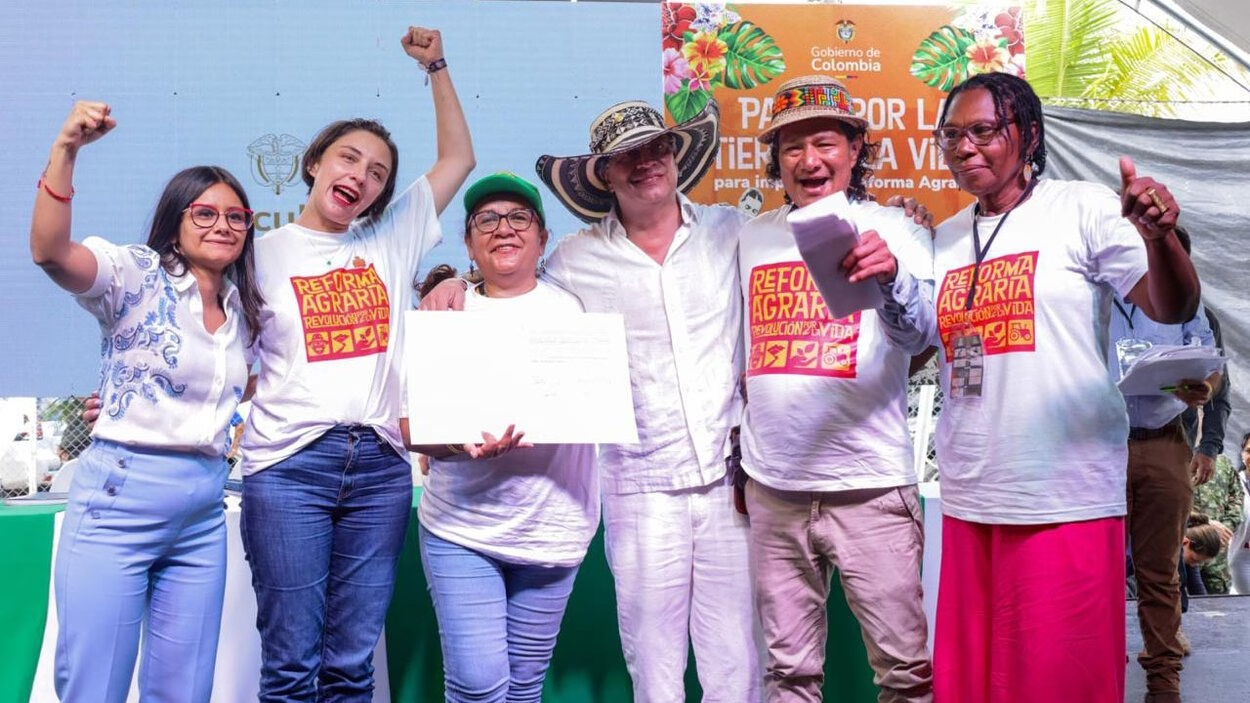
In February 2025, in Chicoral, Tolima, Colombia, 5,000 campesinos, Afrodescendants, Indigenous and government officials gathered for two days, and made a pact: Pacto fpr la Tierra y la Vida – Pact for Land and Life; Revolution for Life. The 12-point agreement signed by President Gustavo Petro and representatives of grassroots social movements revolved around the commitment to carry out land redistribution, restitution, and recognition to enable rural working people to pursue economically and ecologically regenerative livelihoods, with meaningful representation. The Chicoral event tries to undo a past in Colombia, and confronts a difficult challenge in the present world.

Undoing the past

In 1972 in Chicoral, landed elites and traditional political parties conspired to dismantle the 1960s redistributive land reform. They pushed to relax the criteria for defining unproductive land and inadequate land use to effectively avoid expropriation. This agreement became known infamously as the Pacto de Chicoral. It marked the definitive burial of Colombia’s redistributive land reform. It was, in essence, a pact of death—the death of land reform in Colombia—whose consequences continue to shape society today. Instead of redistribution, Colombia experienced more than half a century of counter-land reform, which led to increased violence in rural areas and the unprecedented expansion of the agricultural frontier with internal colonization in lieu of redistribution. This would also contribute to the rise of coca cultivation under the control of narco syndicates. Ultimately, it fed into the divide-and-rule strategy of the elites toward campesinos, Indigenous, and Afrodescendants.

Chicoral2025 is historic as it flips Chicoral1972: from the death of land reform to a commitment to redistributive land policies. It is ground-breaking as it is a pledge for a common front of struggles for land among campesinos, Afrodescendants and the Indigenous, aspiring to put an end to the divide-and-rule tactic employed by counter-reformists.

Confronting current challenges

The contemporary climate of land politics is extremely hostile to redistributive land policies, reflected in the continuing global land grabs. The condition is marked a global consensus among reactionary forces celebrating land grabbing, while maligning redistributive land reforms, as exemplified in Trump’s plan for the Gaza land grab while rejecting a modest liberal land reform in South Africa that land reform advocates in that country are not even happy about.

This current condition did not emerge from nowhere. It is a direct offshoot of decades of neoliberalization of land policies. The neoliberal consensus has deployed coordinated tactics.

  1. First, rolling back gains in redistributive land policies, largely through market-based economic policies hostile to small-scale farmers.
  2. Second, containing the extent of implementation of existing redistributive land policies where these exist.
  3. Third, blocking any initiative to pass new redistributive land policies in societies where these are needed.
  4. Fourth, reinterpreting existing laws and narratives away from their social justice moorings and towards free market dogmas; thus, land tenure security means security for the owners of big estates and capital.
  5. Finally, all four are being done in order to promote market-based, neoliberal land policies: justification and promotion of market-based land policies, formalization of land claims without prior or accompanying redistribution which simply ratifies what exists.
Minister of Agriculture Martha Carvajalino, Chicoral, February 2025 Photo Credit: Jun Borras

When neoliberalism gained ground in the 1980s, among the first casualties was redistributive land policies. The heart and soul of classical land reform were:

  • (a) land size ceiling, a cap to how much land one can accumulate and
  • (b) the right to a minimum access to an economically viable land size, or land for those who work it.

Today, land size ceiling is a taboo. Thus, programmes for providing minimum access to land to build-scale farms have difficulty finding land to redistribute.

During the past four decades, there have been only a handful of countries that managed to pursue redistributive land reforms: Bolivia, Brazil, Colombia, the Philippines, and Zimbabwe. Significant programs have provided collective land titles for the Indigenous such as the one in Colombia, although many of these lands are in isolated, marginal geographic spaces.

The more common accomplishments are a variety of petty reforms. Small reforms are not inherently good or bad, and they are good especially when they provide immediate relief to ordinary working people. They constitute ‘petty reformism’, a negative term, when small reforms were done in lieu of systemic deep reforms. Thus, limited land titling, formalization of land claims, and individualization and privatization of the commons – often labeled under a misleadingly vague banner: land tenure security, which is often about the security of the owners of big estates and capital.

Globalizing Chirocal2025

The need for land redistribution, restitution and recognition remains urgent and necessary, for Colombia and the world. This is even more so in the current era when dominant classes other than agrarian elites aggressively grab land from peasants and Indigenous: profiteers behind market-based climate change mitigation and adaptation strategies, corporate actors in renewable energy sector, global food system giants and financial capital. The forces against reforms have multiplied. But so as the potential forces in favour of reforms. The main alliance for redistributive land policies today is no longer limited to agrarian classes and state reformists; rather, it has to necessarily include social forces in food, environmental and climate justice, as well as labour justice, movements and struggles.

In 1979, FAO convened in Rome the World Conference on Agrarian Reform and Rural Development (WCARRD) hoping to bring new energy to global land reformism. The following year turned out to be beginning of the end of classic land reforms as neoliberalism kicked in and put an end to state-driven redistributive land policies. In March 2006, FAO convened a follow-up to WCARRD, the International Conference Agrarian Reform and Rural Development (ICARRD) in Porto Alegre, Brazil, with the goal of reviving efforts at democratizing land politics. The following year, the global land rush exploded that led to the dispossession of millions of peasants and Indigenous worldwide. In February 2026, twenty years after Porto Alegre, ICARRD+20 will be convened by the Colombian government. It is a very timely international initiative. Chicoral2025 signals what kind of agenda the Colombian government wants to emerge at ICARRD+20: a deep commitment to democratic land politics for regenerative renewal of life.

Several researchers from the ISS-based ERC Advanced Grant project RRUSHES-5 and the Democratizing Knowledge Politics Initiative under the Erasmus Professors program for positive societal impact of Erasmus University Rotterdam are engaged in the Pact for Land and Life process.

About the Authors:

Saturnino (‘Jun’) M. Borras Jr.

Saturnino (‘Jun’) M. Borras Jr. is a Professor of Agrarian Studies at the International Institute of Social Studies (ISS), The Hague. He served as Editor-in-Chief of the Journal of Peasant Studies for 15 years until 2023 and is part of the Erasmus Professor Program for Societal Impact at Erasmus University Rotterdam. He holds an ERC Advanced Grant for research on global land and commodity rushes and their impact on food, climate, labour, citizenship, and geopolitics. He is also a Distinguished Professor at China Agricultural University and an associate of the Transnational Institute. Previously, he was Canada Research Chair in International Development Studies at Saint Mary’s University (2007–2010).

Itayosara Rojas Herrera

Itayosara Rojas is a PhD Researcher at International Institute of Social Studies (ISS), Erasmus University Rotterdam. She is member of a European Research Council (ERC) Advanced Grant awarded project “Commodity & Land Rushes and Regimes: Reshaping Five Spheres of Global Social Life (RRUSHES-5)” led by Professor Jun Borras. As part of this project, Itayosara examines how the contemporary global commodity/land rushes (re)shape the politics of climate change, labour, and state-citizenship relations in the Colombian Amazon.


Are you looking for more content about Global Development and Social Justice? Subscribe to Bliss, the official blog of the International Institute of Social Studies, and stay updated about interesting topics our researchers are working on.

The need for ‘Impact’: whatever ‘Impact’ means

By Posted on 1180 views

What happened to the scholar that didn’t embrace new media? They ran out of cassette tapes! Awful jokes aside, it’s more and more important for scientists, and particularly social scientists, to be plugged in to society to better interact with it. A recent Economist article highlighted that academic research papers in the humanities and social sciences are getting harder to read, more convoluted and stuffed full of jargon and incomprehensible sentences. There is a perception in the ‘outside world’ (perhaps pushed by populist political currents!) that academics are starting to talk more just to other academics rather than to society at large, which is at the very least not conducive to a high level of public discourse. In some cases, it has led to the removal of experts from the policymaking process. At the same time, and partially thanks to the growing legions of science communications officers and the phenomenon of ‘cool geeks’, there are more opportunities than ever for (social) scientists to spread their ideas and research in accessible, bite-sized and socially engaged ways. Even the Lowlands Festival has a science pavilion to show off the latest research on everything from the psychology of perceptions of equality, quantum physics, the creative possibilities of generative AI and much more besides.

Tom Ansell,  Sarah Njoroge (MSc) and Gabriela Anderson intend this blog as a call to academics to think along, repackage their work into fun and digestible gobbets and make use of the science communications talent available to help boost our collective ‘impact’… whatever ‘impact’ means!

This image was taken at Research InSightS LIVE #4 Conflict Compounded: Implications of the war in Ukraine on global development challenges

Social science is best when it’s in conversation with society

Aside from the self-fulfilment element, and the satisfaction of personal curiosity, social scientific research has a function of providing evidence-based approaches to societal questions that can inform various stakeholders in how they act. That could be the government, organizations, businesses or people themselves. Like many forms of scientific enquiry, it serves to further human knowledge, and so (indirectly and ideally) improve people’s lives or the society that they live in. The link between the academic and the society in which they function should be one of constant conversation, where ideas are presented to people, and then validated or reconsidered through their experiences and their interaction with the everyday (this is also expressed by Anthony Giddens as the ‘double hermeneutic’). Of course, this sentence may spark flashing lights in the minds of many academics reading this, but in short – social science is rooted in society and so should seek to be in conversation with ‘real’ people all the time. A social scientist that hides away in a university is an isolated one! This means that researchers must have a way of being in conversation with people. At least part of that conversation must be a clear transmission of social science theories in a compelling and clear way, and knowledge sharing in a form that is digestible, interesting and (hopefully) means that people in the ‘real world’ can see their own lives and questions in cutting-edge research.

This is especially true in the last few years , where a significant portion of the world’s institutions face ‘alternative facts’ and the rise of public discourse strongly influenced by a ‘post-truth’ world. During the COVID-19 pandemic, for example, the need to provide accurate and evidence-based advice to the general public was literally a matter of life and death. Knowledge of the mechanisms of how an mRNA vaccine worked (the Moderna one) helped ensure that enough people went and received the jab to reach the critical mass of vaccinated people. Now imagine if the various biologists had remained hidden behind a wall of jargon and specific terminology, and all the while remained in their labs and refused to speak to the public in understandable language. Naturally, the immediate risks aren’t quite the same in social science research uptake, but the need for public trust and mandate is the same. Where the influence of rigorous social scientific research would help, however, is in government policymaking. Imagine how the new Dutch international aid policy would look had various members of ISS’ work been consulted in its drafting. We can’t make policymakers listen to good research, but we can make it as easy as possible for them to find, digest and be interested by it.

Avoiding extractivism and ‘closing the loop’

Considering the other side of the conversation between research and the public, we need to move beyond the effort of making sure our writing reflects our values as researchers to be ethical and non-extractive only during the research process. Research even in these most critical and conscious of times still teeters on the lines of opinion-mining, often masquerading through notions such as ‘collaboration’ and ‘co-creation’. Jamie Gorman expresses this quite well in the quote (almost jokingly): ‘What does a social researcher have in common with an oil rig operator? The answer is that both can be miners engaged in the extraction of a precious resource’. For social science researchers, that precious resource is knowledge. A key part of making sure that research is non-extractive is ‘closing the loop’ and making sure that the people that have contributed to the research are both involved and can get something out of it (something called participatory research).

The potential impact of research does not stop before and during the research process, it needs to extend into the dissemination and communication of said research. By looking beyond the production of a research to how it can be shared to an audience outside of the academic community, we allow for a greater reach through inclusivity, accessibility and even opening up for future potentials in participation and, most importantly, allowing research to be useable (from theory to practice and vice versa). How is this done? By sharing research in different mediums and through different mediums and media. Examples include translated versions, both in terms of language and even the softening of academic and ‘waffle’ jargon, different (relevant) and contextual forms of outputs, such as radio broadcasts (in the case of the Democratic Republic of Congo), video abstracts, infographics, posters, dialogue cafes, podcasts, etc. In doing so, we reach people at their different levels in all their differences of backgrounds, making room for a greater impact from our research.

Moving from inaccessible papers to socially engaged media

So, how do we actually move from rigorous, well-researched ideas to public discourse and policy that reflect them? The best science communication doesn’t just ‘simplify’ research, it translates, distils, demystifies and engages. It meets people where they are, using formats that are accessible without compromising complexity, and applies sky high thinking to everyday life.

Take podcasts, for instance. The Good Humanitarian bridges the gap between academic research and humanitarianism and the real-world challenges practitioners face. MOOCS, or open access-learning, allows people – whether they have an educational background in social sciences or not – to engage with contemporary debates. Written and visual storytelling, from in-depth interviews, infographics and posters to interactive web experiences, has made complex and socio-political topics more digestible for a general audience. Live shows, such as Research InSightS LIVE or dialogue cafes invite people to listen and engage on topics in enjoyable, yet succinct formats. In addition, social media is increasingly becoming more important for visibility, and as a way to link research that proposes an alternate world to the people that can achieve it. Even platforms like TikTok have been effectively used to debunk misinformation and explain key social science concepts in under a minute, but all face potential challenges of course.

At the same time, researchers must be empowered to engage in these spaces. Not everyone who can run a hefty statistical model or analyse complex patterns can seamlessly translate these insights for public consumption. This is precisely where science communicators come in – not to dilute these ideas but to ensure that big ideas are clarified and shared widely. Closing the loop isn’t just an ethical responsibility in participatory research – it’s a vital step toward ensuring that knowledge serves people by feeding back into their livelihoods.

Science communicators do more than just support researchers. They can be catalysts for expanding the reach and impact of academic work at its inception. Research can often benefit from creativity and audience awareness that can make it resonate beyond academia. In other words, researchers and science communicators can make an excellent team – if they truly collaborate. That means not just seeing communicators as an ‘add-on’, but valuing their input, trusting their instincts and recognizing their ability to turn rigorous research into compelling narratives that engage policymakers, practitioners and the public alike, also extending their inclusion to before and during the research process, not only after.

If universities and research institutes truly want to make an impact, they need to rethink the way they communicate knowledge. The challenge isn’t just about writing readable research papers. It’s about shaping public discourse, informing policy and making social science a living, breathing conversation. After all, what good is knowledge if it’s locked away in academic journals?


Opinions expressed in Bliss posts reflect solely the views of the author of the post in question.


About the authors:

Tom Ansell

Tom Ansell is the coordinator and programme manager of The Hague Humanitarian Studies Centre, and the Coordinator of the International Humanitarian Studies Association. He has a study background in religion and conflict transformation, as well as an interest in disaster risk reduction, and science communication and societal impact of (applied) research.

Sarah Njoroge

Sarah Njoroge (MSc) is a multi-skilled communications professional who tells stories on societal issues through videos, articles, podcasts and more. She has extensive experience writing, designing and co-producing content on international development. Sarah is currently a Digital Content Manager at RNW Media and formerly worked as a Communications Officer at ISS.

Gabriela Anderson

Gabriela Anderson is the community manager of The Hague Humanitarian Studies Centre and coordinates the Humanitarian Observatories Network. Graduating with a Master’s from the International Institue of Social Studies in 2022 with a focus on the Governance of Migration and Diversity, her research focuses on notions of (self-)representation, placemaking and the importance of inclusive communication in its various forms and through its different mediums, especially in areas of Conflict & Peace with both academic and practitioner related organizations.


Are you looking for more content about Global Development and Social Justice? Subscribe to Bliss, the official blog of the International Institute of Social Studies, and stay updated about interesting topics our researchers are working on.


Scholar-activist research method – challenging but indispensable

By Posted on 1606 views

Although challenging, scholar-activism is a crucial analytical and political endeavor today.

In some particular settings, perhaps the best way to advance social science research is to engage in collaboration with social groups whose vision you are broadly sympathetic to. Yet the challenge is that you may find yourself politically supporting and advocating the very social practices you are studying. Does this make your research biased? Like many other development practitioners, I do not feign to practice disinterested research. Ultimately, ethical and political commitments permanently inform our practice: why we study certain phenomena and not others, why we consider some as problems but not others. Thus, no social science research is politically neutral; it all has a bias. But a certain level of political bias and scientific rigor are two different things.

Acknowledging that social research is biased does not imply a lack of rigor. As scholar-activists, our duty is to ensure that the visions we identify with are also subjected to theoretical scrutiny and peer review, and to practice honest reporting. The challenges are enormous. For instance, can you disagree with your local collaborator? Does scholar-activism mean ‘anything goes’ in terms of accepting uncritically whatever is being claimed by your local researcher partners? In this blog, Lorenza Arango reflects on collaborating with the Norman Pérez Bello Claretian organization (The Claretians, for short) in the eastern plains of Colombia.

The savanna landscape in Puerto Gaitán, Meta. Photo by author, June 2022.

It was in the middle of the 2022 rainy season in the Altillanura, Colombia.

Anita, a member of the Claretian organization and the leader of the field visit, was facing a tough decision: to cancel the visit halfway through – with several of the tasks we had agreed on still incomplete – or to move to another area within the region to finalize our mission. Heavy rains had made several of the roads impassable and navigating the Meta River to reach our next destination seemed the only way out. But travelling by river poses other security concerns, especially to social organizations such as the Claretians, whose members have become targets of threats and persecution.

‘How do you want to proceed? Shall we cancel the visit?’, I asked.

‘Let me think through… People are already waiting for us’, Anita replied.

After hours on the phone with members of the communities we were to visit, and with the head of the Claretian organization, to validate the security conditions in the area, the decision was made: to get on the first boat departing at 4:00 am, and to stick together during the approximately 8-hour journey, as well as to remain alert and cautious.

In recent years, the eastern Altillanura (high plains) in Colombia – encompassing the department of Vichada and portions of Meta – have turned into a major frontier destination for lucrative investments in land. Over a short period of time, the region changed from being a far, scattered and poorly developed landscape of tropical savannas bordering Venezuela to become the greatest and ‘last agricultural frontier’ of the country and even the new ‘promised land’.

The Colombian Altillanura was part of a broader phenomenon of spectacular, multi-faceted land grabs across the world known as the ‘global land rush’. Roughly between 2004 and 2017, multiple corporate land deals were pursued in the area. Other land deals were halted at early stages of implementation or never really touched the ground, but nevertheless contributed to fuel the investment frenzy. Meanwhile, land accumulation by stealth, effected by low-profile actors, progressed apace – taking part in the bandwagon effect driven by the land rush.

For the indigenous peoples and the peasantry inhabiting the Altillanura, the tropical savannas were not an investment target. They were their home sites and key a source of livelihoods. For decades now, both communities have suffered from the effects of multiple iterations of land dispossession and forced displacement by different actors (including the state, economic elites, armed guerrilla groups, narcotraffickers and paramilitary). The recent land rush in the area, and the ensuing social and environmental crisis, further exacerbated the precarious living conditions experienced by these – making them the poorest strata of the rural population.

An improvised kitchen at the indigenous settlement of ‘Iwitsulibo’ (Puerto Gaitán, Meta). Photo by author, June 2022.

Against this background, the work of the Norman Pérez Bello Claretian organization (Corporación Claretiana Norman Pérez Bello – CCNPB) is fundamental. The Claretians is a Colombian non-profit organization that promotes social justice and peace and accompanies peasant and indigenous communities who assert their rights through non-violent mechanisms. It offers legal advice, as well as psychological, pedagogical and communications support. Since around 2003, the Claretians has continually supported efforts by various rural peoples to improve their living conditions in Colombia’s eastern plains and other regions of the country. To date, it is perhaps the only organization in the area whose work in the defence of rural communities has endured the test of time and the brutality of various forms of violence – including persecution of its members and threats against their lives.

As a PhD researcher within the European Research Council (ERC) Advanced Grant-funded RRUSHES-5 project, based at the International Institute of Social Studies (ISS) of Erasmus University Rotterdam, I am pleased to have collaborated with the Claretians and to have learned first-hand from the work it does in the Altillanura. My first engagement with its work happened when I accidentally came across short online publications by the organization, in which it denounced recent land grabs in the area and the effects these had on Sikuani indigenous peoples. I later heard about the organization from other researchers and investigative journalists and became an admirer of its work.

On the basis of collaborative agreements, the Claretians facilitated a significant part of my fieldwork in the Altillanura for my doctoral dissertation. Together we visited what had become key investment sites by large corporations and political and economic elites in the municipality of Puerto Gaitán in the Meta department and in La Primavera and Santa Rosalía in Vichada. We listened to and documented people’s retelling of harsh stories of dispossession associated with the investment rush and the consequences to their livelihoods of land lost.

While collaborating with the Claretians, the alleged boundaries between scholarly research and activism suddenly becoming less rigid. This collaboration has also taught me the often-challenging practice of scholar activism and how indispensable it is today.

Traversing the open plains and water springs by foot in rural Puerto Gaitán, Meta. Photos by author, June 2022.

On a number of occasions, I inevitably performed tasks closer to advocacy work – which clearly influenced my research outcomes. For instance, at most field sites we visited, I cooperated in setting up meetings and assemblies between indigenous community members and government officers, hoping these could result in the challenges faced by the indigenous people (for example, in terms of their land access and their living conditions) being better addressed. I also helped draft press releases denouncing abuse and threats of coercion by the local police and illegal armed groups against community members and the Claretians and demanding that the state ensure the fundamental rights of the indigenous peoples. I also devised tools that could help to leverage indigenous peoples’ decision-making power in response to state authorities, such as printed maps of their territories.

Public assembly converging indigenous communities across the eastern plains and government functionaries from the National Land Agency in La Primavera, Vichada. Photos by author, March 2023.

At the same time, the collaboration allowed the Claretians to systematize much of the evidence it had collected over the years about the politics of land access in the Altillanura, as well as to reach larger audiences – through reports and other publications that came out of our partnership.

Of course, experiences of scholar-activism such as this are not exempt from challenges. How could both parties ensure that the research project I was representing would be useful and impactful to the people on the ground? What other research strategies should I employ to validate the conclusions resulting from the collaborative work, apart from fieldwork? Also, were the Claretians – given its knowledge of the area and of the communities it accompanies – entitled to set the objectives and terms of our collaboration? Could I object to the organization’s practices or disagree with the behaviour of some of its members in the field? If so, could that risk our collaboration or compromise particular outcomes from it? In the end, all of us, both the members of the organization and myself,  had to deal with these questions and several other contradictions arising along the way.


All in all, the underlying message is clear: in contexts of widespread land dispossession, such as the one shaping the Colombian Altillanura, struggles over land remain a key axis of mobilization, which in turn make of scholar-activism an analytically crucial and politically empowering undertaking and method of work – despite of (or even because of) the difficulties surrounding it.

***

Nowadays in academia, research with positive societal impact has gained wide support. It is often interpreted to mean that academic work impacts and transforms society and societal actors. This is certainly valid and important. But in my case, another dimension is also clear: non-academic societal actors can profoundly impact and transform academics and academic work. While the first interpretation  is significantly explored in academic circles, the impact of society and societal actors in academia is relatively less so. Yet I believe it is equally important to think about how non-academic societal actors, especially social justice activists like Anita and her Claretian colleagues, positively impact and transform academic researchers like me, and, for that matter, academia and academic work I am embedded in. And that feels right.


Opinions expressed in Bliss posts reflect solely the views of the author of the post in question.

About the Author

Lorenza Arango is a PhD researcher at the International Institute of Social Studies (ISS, The Hague) of Erasmus University Rotterdam. She is a member of the research team of the European Research Council (ERC) Advanced Grant awarded project ‘Commodity & Land Rushes and Regimes: Reshaping Five Spheres of Global Social Life (RRUSHES-5)’, led by Jun Borras. As part of this project, she is working on the interactions between contemporary commodity/land rushes and the spheres of labour and food politics, as well as on state-citizenship relations in Colombia.

Are you looking for more content about Global Development and Social Justice? Subscribe to Bliss, the official blog of the International Institute of Social Studies, and stay updated about interesting topics our researchers are working on.
Navigating Polarization through Empathy: Insights from Research on Venezuelan Migration

By Posted on 1481 views

In this blog post, Fernando Garlin and Juliana Poveda explore the ethical and methodological dilemmas faced by researchers working with forced Venezuelan migrants in politically polarized contexts in Latin America. Through personal reflections, they delve into how the researcher’s identity shapes their relationship with the research participants and the interpretation of migratory realities, highlighting the tension between neutrality, authenticity and adaptability. They suggest that building human relationships and recognizing local complexities are essential for overcoming the double standards of engaged academics and fostering a deeper understanding of the migratory situation.


Image by Authors

In contexts marked by violent conflicts, institutional crises, fast changes and high degrees of political polarization, researchers encounter varying degrees of distrust, suspicion and openness from participants in the field. In our case, both of us have worked with Venezuelan migrants in Colombia, Spain and the United States. Amidst polarizing right- vs. left-wing politics and sentiments, the question constantly arises about how to present ourselves to our research participants: Is it important to disclose fully our personalities and positionalities? Should we embrace the neutrality and formality expected from researchers? Or ought we perform a mixture of authenticity and detachment to open the dialogue with our interviewees?

In this blog post, we use dialogue to explore how each one of us has addressed this situation. Our dialogue is itself a necessary collaboration to enrich our standpoints. Fernando is Venezuelan and Juliana is Colombian and we have both worked with Venezuelan migrants in the same region. However, we have noticed how our nationalities condition our gaze on forced migration.

Fernando: I spent more than a year on the Colombia-Venezuela border, between 2020 and 2022, mostly in Cúcuta. Over time, the whole issue of my ‘position’ gradually lost relevance in my reflections. Not because it stopped being important, but because, little by little, I started blending into my relationships, my surroundings and my belonging to an organization of Venezuelans in the region. So people already knew what my role was and where I stood before even agreeing to an interview: ‘Oh, he’s the guy who works with that aid organization and is interested in those issues.’

While researching violence, abuse and extreme precariousness, I think people cared less about my political stance and focused much more on evaluating my personality – for example, how witty, available or sensible I was. Those things gradually became way more important for coexisting and building human relationships. It helped me move beyond the usual observer-observed/participant mould.

That being said, my political position did matter in institutional spaces with humanitarian officers from the government and international cooperation sectors. My push for more quotas, aid and responses to the situation was seen as ‘left-wing; I pointed out things that needed improvement, to be denounced or reformed. But was I merely a ‘useful leftist’ being used to justify right-wing policies? In governmental or international cooperation settings, people even asked me ‘Are you here to help or not?’ Or was I just here to criticize, a ‘bad leftist’. Being aware of and discussing these issues allows us to be more critical of the role of the researcher in the field, not just as an observer but also as an actor.

I feel that my positionality has been shaped by these two tensions: local sensitivities and national policy discussions in each country. What about your experience, Juliana?

Juliana: I also arrived at the Norte de Santander region in Cúcuta in 2019. One of my first learnings was that authorities and NGOs make distinctions and present measures and procedures for Venezuelans as ‘novel, special and temporary’. Yet these legal measures were very disconnected from the daily life and reality of people forced to migrate into Colombia and join local communities. For example, it was enough to step away from the desk to figure out that the distinction between different types of ‘populations’ and ‘migrations’ might be artificial and pernicious. People with similar needs, newcomers and locals, were competing for attention and resources. Although it was undeniable that an extra layer of vulnerability came from the lack of regular migratory status of Venezuelans in Colombia, their needs and risks were similar to Colombian civilians within the context of armed conflict. This is not novel in forced migration dynamics; similar problems were experienced by Syrians and local communities in Turkey and Lebanon (Müller-Funk 2021).

My second learning was that, although bilateral relations shape migration policies, irrespective of whether there was a right- or left-wing government in Colombia, the change of political wing does not necessarily imply higher compliance with migrants’ rights. Pragmatism informs decision-making. Neither fiercely opposing Maduro’s authoritarian regime nor keeping cautiously silent about it has translated into an open recognition of Venezuelans as refugees or into higher standards of economic and social rights protection.

So, observing the dynamics of Colombian and Venezuelan migrant communities more broadly enabled me to seek a new stance from where I could take a critical and panoramic view of the law and its social context. Thus, I chose social research as a tool to address the law-context interaction. Fernando, how did ethnography help you to be closer to your research participants from an academic standpoint?

Fernando: In my ethnography, I try to distance myself from opinions or reactions that might make me seem like an outsider, as this could jeopardize trust. I prefer to get to know people and adapt to them, rather than taking a fixed stance. After all, every relationship is human, even in research. I find it hard that we must constantly remind ourselves and our colleagues of this. My job as an anthropologist is to explore what people think and how they think. And you have to allow space and time for that to happen.

This doesn’t mean I can’t speak out against authoritarian acts, violence or state terror in Venezuela, but when I’m doing research, all of that is just the backdrop so that the real protagonists – people – can come forward with their beliefs, ideas, opinions, sensitivities and emotions. So, my position leans more towards figuring out where to understand from, with whom and how to make sense of the confusion.

In your experience as a lawyer and researcher, how do you choose to position yourself? Do you have different behaviours, attitudes or decisions that you make depending on the people you’re meeting?

Juliana: From a socio-legal lens, I look at migration and refugee law from the opposing and interacting view of diverse stakeholders. These perspectives have enabled me to develop more reflexivity in my own gaze: conditions, experiences and assumptions. Thus, I can find nuances amidst the binaries suggested by the context and recognise my standpoint. Beyond the partisan right- vs. the left-wing binary (Roht-Arriaza y Martínez 2019), others have struck me: the attention and resources given to Venezuelan migrants undermine those for peacebuilding in Colombia. Or, its analogue, but from another side: the Colombian peace talks with the ELN and the FARC dissidents validate Maduro’s regime and neglect forced migrants.

I also find myself constantly justifying not only why I am researching from a Global North University but also why I am not researching my country’s affairs (Abasli and Elassal 2021). I find only ‘empathy’ as the answer. The experience of Colombian internally displaced people and forced migrants abroad should have also taught us to recognise vulnerability and depart from there. Hence, it is senseless to argue about whether the Colombian or Venezuelan crisis in the region deserves more attention, or should attract more international condemnation and cooperation. They are now entwined. I would rather begin with the fact that both civil societies deal with deep traumas due to polarization, failed democracies, inequality and violence (Bejarano 2011).

Once the polarization noise lowers, it is necessary to spotlight the main role of forced migrants (Clark-Kazak 2021). Nobody can speak on their behalf about how they face challenges such as ‘anti-migrant’ expressions in Global North countries (Achiume 2022). Hence, the researcher, alongside reflexivity, should collaborate with local organizations to protect the interests of forced migrants and amplify their voices (Harley, T. and Wazefadost 2023). Have you found another dichotomy? How did you solve it, Fernando?

Fernando: This might sound abstract and a bit lukewarm, but for me, anthropology isn’t activism or politics; it’s about building connections, relationships and concepts to understand activism and politics. Unfortunately, I’m not sure that understanding makes us ‘better’ at anything – maybe that’s just a knowledge-based illusion. That’s why I believe the role of the ethnographer and anthropologist is to accompany, shape and give meaning and strength to social experiences.

Beyond slogans about defending the most vulnerable – which I consider obvious unless you’re some kind of colonial exploiter – it’s about constantly searching for the spaces where the seeds of change, new futures and hopes for humanity can grow.

Our conclusion

Finally, we both agree that our positionalities are flexible. They evolve as we interact with our research participants and colleagues and reflect on our contexts and biases. We avoid identifying ourselves with binaries or exclusionary positions. That does not mean that we are ambivalent or vague. On the contrary, we believe that rather than being a bystander we should engage with others and collaborate, especially with those on the move. The more researchers can allow themselves to listen to any argument, trying to understand why someone may think or act in a particular way, the more their  work might be collaborative with migrants and local communities. In this sense, socio-legal approaches may be informed by ethnography. We thus believe that the most challenging positionality is imagining new horizons with others: constantly stepping outside oneself, time and again, and returning with multiple perspectives. Every researcher carries something of the migrant, always seeking to understand the other; and every migrant carries something of the researcher, in their own search for understanding.

References

Abasli,I. and Elassal A. (2023) “Why are you not doing research in your home country?” – The complexities of being from and doing research in the Global South. Impact of Social Science. Available from: https://blogs.lse.ac.uk/impactofsocialsciences/2023/12/05/why-are-you-not-doing-research-in-your-home-country-the-complexities-of-being-from-and-doing-research-in-the-global-south/ [Accessed Jul 21, 2024].

Achiume, E.T. (2022) Empire, borders, and refugee responsibility sharing. California Law Review, 110 (3), 1011-1040.

Bejarano A. (2011). Democracias precarias: Trayectorias políticas divergentes en Colombia y Venezuela (Precarious democracies: Divergent political paths in Colombia and Venezuela). Bogotá, D. C., Colombia: Universidad de los Andes, Colombia. Retrieved September 4, 2021, from http://www.jstor.org/stable/10.7440/j.ctt18crz6b

Harley, T. and Wazefadost, N. (2023) Guidelines for Co-Produced Research with Refugees and Other People with Lived Experience of Displacement. UNSW.

Müller-Funk, L. (2021) Research with refugees in fragile political contexts: How ethical reflections impact methodological choices. Journal of Refugee Studies, 34 (2), 2308–2332.https://doi.org/10.1093/jrs/feaa013.

Roht-Arriaza, N. and Martínez, S. (2019) Grand corruption and the international criminal court in the Venezuela situation. Journal of International Criminal Justice, 17 (5), 1057–1082.


Opinions expressed in Bliss posts reflect solely the views of the author of the post in question.

About the Authors:

Fernando Garlin

Fernando Garlin is a PhD candidate at Université Paris Cité (CEPED, IRD, INSERM). His research intersects border studies, violence, and migration. Using ethnographic methods, he seeks to understand hate narratives within the governance regimes where they emerge. His publications focus on the political and aesthetic forms that alternative or marginalized groups adopt during sanitary and political crises.

Juliana Poveda

Juliana Poveda is a PhD student in the Law Department at Ulster University. Her research project addresses the linkages between reparative justice, responsibility-sharing, and durable solutions, addressing the case of Venezuelans forced to migrate to Colombia, the United States and Spain (EU). She is interested in sociolegal and interdisciplinary research that engages forced migration, human rights protection, and peacebuilding.


Are you looking for more content about Global Development and Social Justice? Subscribe to Bliss, the official blog of the International Institute of Social Studies, and stay updated about interesting topics our researchers are working on.

Frugality Beyond Scarcity: Challenging Universal Narratives in Frugal Innovation

By Posted on 1635 views

This blog series, Rhiannon Matthias and Peter Knorringa aims to spotlight diverse cultural values related to frugality, their alignment with sustainable practices, and touch on questions linked to the legitimacy of frugal innovation. By incorporating indigenous perspectives and cultural narratives alongside other global viewpoints, this initiative seeks to bridge academic insights with public understanding, inspiring a more inclusive and nuanced dialogue on frugality.

Ruins on the Bolivian side of Lake Titicaca by Rhiannon Mathias

Frugal innovation is making headway as a relatively new concept in global discourses on sustainability, development, and ethical living. As outlined in the Handbook for Frugal Innovation (2023), this approach generally involves reducing the complexity and cost of goods and production processes while maintaining essential functionality and performance. While frugal innovation as a formal area of study is relatively new, the virtue of frugality and its associated practices have deep roots in many cultures worldwide. The Global South, encompassing regions and populations historically disadvantaged by global economic and political systems, has often been viewed as a primary target ‘market’ for or beneficiaries of frugal innovation(s).

Yet, simultaneously, the Global South holds a wealth of philosophical traditions that offer nuanced and potentially radical reconceptualization of frugality. These include concepts such as Ubuntu from Southern Africa and Buen Vivir from the Andean region, which emphasize interconnectedness, community, and prioritizing collective well-being over individual excess. However, these perspectives are frequently overlooked in the new frugal innovation discourse, which at times tends towards ahistorical and universalist takes. This universalizing tendency is, on the one hand, somewhat understandable in a new area of study that is also concerned with practical outputs and outcomes. On the other hand, it is not without consequences. As one contributor to the handbook astutely observes, “in trying to create a more universalized narrative the specific and local is erased.”

Challenging the Universal: The Importance of Local Perspectives 

The erasure of local nuances is not merely a theoretical concern; it has tangible implications for how frugal innovations are conceived, developed, and implemented across diverse contexts, potentially affecting their success and impact. To move beyond a simplistic “West vs. Rest” dichotomy, it is crucial to engage with the deeper ideological and cultural roots of frugality in the Global South. This engagement can stretch the discursive walls that encase frugality as a concept, allowing for more nuanced understandings.

These perspectives on frugality have evolved in different contexts of historical struggle and resilience. Through their exploration, it becomes possible to better see the potential pitfalls in practical outcomes and challenge notions of universality in frugal innovation discourse. How do societies that have long grappled with resource constraints and colonial legacies understand and practice the virtue of frugality?

African Humanism and Ubuntu: Collective Frugality Rooted in Interconnectedness 

At the heart of many Southern African philosophical traditions lies a profound understanding of human interconnectedness, most famously articulated in the concept of Ubuntu. Rooted etymologically in Tswana, Sotho, Tonga, Zulu, and many other Southern African languages, Ubuntu has a rich and evolving history that defies easy categorization. Gade (2011) demonstrates that the term ‘ubuntu’ has appeared in writing since at least 1846, with its meaning shifting significantly over time.

Initially defined as a human quality, Ubuntu later expanded to encompass notions of African humanism, philosophy, ethics, and worldview. The now-ubiquitous Nguni proverb ‘umuntu ngumuntu ngabantu’ (often translated as ‘a person is a person through other persons’) only became widely associated with Ubuntu between 1993 and 1995, coinciding with South Africa’s transition to democracy. Ubuntu’s emphasis on interconnectedness and collective well-being presents a philosophical framework that fundamentally challenges individualistic notions of virtue. As Ramose (2003) explains, Ubuntu embodies a nuanced philosophy of human interdependence and collective well-being that goes far beyond its often-simplified translation, “I am because we are.”

This raises important questions: Does Ubuntu suggest a form of ‘collective frugality’ where virtue lies not in individual restraint, but in the equitable distribution and use of resources within a community? It is crucial to recognize that Ubuntu’s resurgence in post-apartheid South Africa has been deeply political. Eze (2010) argues that there’s a risk of Ubuntu being used as a “conceptual trick” to promote a false sense of reconciliation without addressing underlying structural issues. Moreover, the application of Ubuntu principles in modern, urbanized contexts presents challenges. How can ideas of communal resource-sharing be implemented in societies marked by significant economic disparities and individualistic economic structures?

Viewing frugality through the lens of Ubuntu can open new possibilities for addressing resource management and sustainability challenges. It prompts us to consider how communal values, and interconnectedness can inform more holistic and equitable approaches to resource use, potentially offering solutions to the environmental and social challenges faced by modern societies.

Buen Vivir: Redefining Prosperity in Harmony with Nature 

Shifting focus to the Andean region reveals a complex set of concepts that offer profound challenges to dominant paradigms of progress and innovation. While often used interchangeably in academic and political discourse, the Kichwa concept of Sumak Kawsay (often translated as “Life in Plenitude”) and the more widely known Buen Vivir (Good Living) have distinct meanings and implications. At its core, Buen Vivir emphasizes harmony between humans and nature, community solidarity, and a broader conception of wealth beyond material accumulation. Gudynas (2011) describes Buen Vivir as suggesting that true well-being can only be achieved in the context of community, including the broader community of nature. In this framework, frugality isn’t about deprivation or scarcity, but about finding fulfillment in balance and reciprocity rather than excess.

Buen Vivir enriches the frugality discourse by reframing it within a holistic worldview that prioritizes ecological balance and communal well-being. It challenges us to consider frugality not merely as a means of resource conservation, but as a pathway to harmonious coexistence with nature and community. This perspective invites us to reimagine frugal practices as tools for fostering sustainable relationships between humans and their environment, rather than just methods for reducing consumption. It suggests that community-based, nature-aligned approaches to innovation and resource use can lead to more holistic and sustainable solutions. This paradigm offers potential alternatives to the environmental and social challenges posed by conventional models of economic development, emphasizing balance and reciprocity over unchecked growth and consumption.

Relatedly, the Spanish term for frugal innovation, “innovación popular,” evokes notions of community involvement and grassroots innovation. This linguistic connection invites consideration of frugality not just as individual restraint, but as a collective practice, aligning with the principles of Buen Vivir. It implies a bottom-up, community-led approach to innovation that resonates with the core tenets of Buen Vivir.

However, like Ubuntu, Buen Vivir has also been subject to political reconfiguration and co-option. Several Andean countries, notably Ecuador and Bolivia, have incorporated Buen Vivir principles into their constitutions and national development plans. While this represents a significant recognition of indigenous philosophies, it has also led to tensions and contradictions. Villalba (2013) points out that there’s often a gap between the rhetoric of Buen Vivir and the continuation of extractive economic policies that conflict with its principles. The concept has sometimes been used to legitimize government actions without fundamentally altering economic structures or power dynamics. This raises complex questions: How can a philosophy that emphasizes harmony with nature be reconciled with the pressures of economic development and modernization?

Reflections on Collective Frugality 

The examples of Ubuntu and Buen Vivir illustrate the richness and complexity of Global South perspectives on frugality and well-being. They offer profound challenges to dominant narratives of development and innovation, suggesting alternative ways of conceptualizing progress, community, and humanity’s relationship with nature. At the same time, their real-world applications reveal the challenges of translating philosophical principles into practice, especially in the face of entrenched economic systems and power structures.

Examining these philosophies, including their complexities and contradictions, allows for a more nuanced understanding of frugality as a virtue. This understanding goes beyond simplistic notions of “doing more with less” to encompass questions of equity, community, and ecological harmony. Approaching these ideas requires both an open mind and a critical eye. It is essential to resist the temptation to romanticize “local ways of life” or “indigenous knowledge systems.” Many people in Africa and the Andean region live in cities and participate in capitalist economies. The goal is not to present these philosophies as untouched alternatives to modernity, but to understand how they continue to evolve and inform contemporary debates about resource use, community, and well-being.

Expanding philosophical horizons and resisting the erasure of local specificities may provide new ways to think about frugality, innovation, and sustainable living in our interconnected world. As this series continues, subsequent entries will delve deeper into philosophical traditions from the Global South, exploring their implications for frugal innovation, sustainability, and global development.

This article was first published by the International Centre for Frugal Innovation

Opinions expressed in Bliss posts reflect solely the views of the author of the post in question.

About the Authors

Rhiannon Matthias

Rhiannon Matthias

Peter Knorringa is a Professor of Private Sector & Development at the International Institute of Social Studies (ISS) at Erasmus University Rotterdam. His Chair focuses on the diverse roles and impacts of business on development. He does not perceive private firms as either the ‘enemy’ or the ‘heroic deliverer’ of development. Instead, he aims to advance a more empirical and nuanced debate on where and when entrepreneurs and firms are more likely to contribute to achieving more inclusive and sustainable development.


Are you looking for more content about Global Development and Social Justice? Subscribe to Bliss, the official blog of the International Institute of Social Studies, and stay updated about interesting topics our researchers are working on.
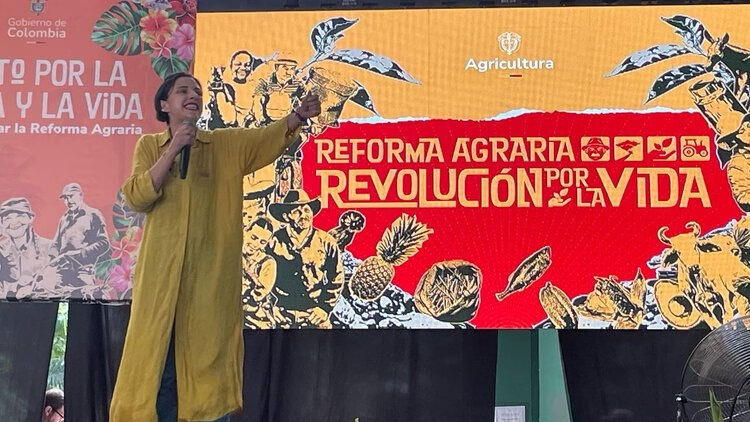
Why is it important to start a cycling culture with small children?

By Posted on 2185 views
Photo Credit: Amanda Padilla, 2022

Significant issues have been affecting children from early childhood, such as passive habits, reduced social interaction and poor health conditions with obesity being a serious global health problem. In 2022, obesity affected one in eight people worldwide, impacting 3 million children under five years old in South America. In Ecuador, a study shows that 36% of children between five to eleven years old are obese or overweight. Likewise, this problem escalates in young people and adults, leading to inactive and solitary lifestyles that impede social, mental and physical development.

In the context of child health, cycling not only addresses obesity, enhances social interaction and strengthens physical skills, but also positively impacts urban environments by decreasing air pollution and bridging socio-economic gaps. However, developing countries lack a robust urban cycling culture and school cycling programmes for children.

In 2022, only 0,6% of the population of Quito uses cycling as a mode of transportation. Inadequate and insecure cycling lanes, a weak cycling culture and a car-oriented lifestyle hinder the shift towards sustainable transportation. Despite local and national laws prioritizing active mobility and the efforts of activists and cycling organizations, a new cycling vision with strong and integrated cycle programmes will lead to a deep-routed cycling culture and policies.

Despite these challenges, promising practices are addressing these issues and contributing to urban solutions. In 2019, I learned about child-friendly cycling activities in Copenhagen and Quito, coordinating the project of the Cycling Games at the INEPE school from 2019 to 2024, an activity based on the Danish ‘Learning by playing’ methodology. This experience has underscored the importance of starting with young children to cultivate a cycling culture. The benefits observed from this activity include:

1. Long-term impact

In Quito, children and caregivers rarely cycle, reflecting a modest cycling habit. Introducing cycling to young children can help establish it as a lifelong habit. An activity that begins in early childhood will persist throughout the kid’s life and early childhood cycling experiences prepare children for urban cycling dynamics, promoting safety and confidence. Learning cycling skills can help them navigate and better cope with insecure cycle infrastructure in Quito.

2. Spreading the Cycling Practice

When children enjoy an activity, their parents often follow suit. In fact, ’cycling creates connections at many different levels and the value that young children and caregivers derive from these connections‘. When children start cycling, their fascination often motivates caregivers to participate and encourages them to spend time with their children. Thus, this culture is increasing and a deep-routed cycling culture can be achieved.

Photo Credit: Amanda Padilla, 2023

3. Development of social and physical skills through Cycling Games. 

Cycling activities emphasize the development of various capacities and balance through play. This approach implemented both in Copenhagen and Quito, encourages active routines that foster the development of social and physical skills, tackling obesity and passive habits. The results are evident as children apply these skills in other areas of their lives. In Quito, for example, children are required to complete certain assignments before they can go out and play. This practice helps them establish a routine that cultivates a sense of responsibility and goal-oriented behavior. In Copenhagen, the frequent use of public spaces allows children to navigate through obstacles and urban furniture, which not only enhances their understanding of street dynamics but also strengthens their physical abilities. Public spaces are key elements on the child growth. Sporadically, in Quito, the activity is developed in streets, creating new relationships between the city and children, yet Quito doesn’t guarantee road safety and secure cycling infrastructure to expand it frequently.

4. Teachers develop new ways to educate

Training children in diverse contexts and cultures presents unique challenges, yet the educational benefits gleaned from activities like the Cycling Games are universally significant. Educators have adapted and enhanced their teaching methods based on these activities, demonstrating remarkable flexibility and creativity to meet the varying needs of their students. Each group of students presents different dynamics and requirements, necessitating a tailored approach to teaching. For instance, teachers at Hylet Kindergarten in Copenhagen have devised new games that require children to memorize elements with different colours, shapes and routes to prove skills simultaneously. In Quito, trainers have developed cycling games that minimize physical contact or develop soft games, specifically to accommodate and protect children with physical or mental disabilities.

5. Interaction contributes to socialization

The Cycling Games significantly contribute to the development of socialization skills. By promoting group play, mutual support and peer learning, the games create an environment where children can interact and build relationships with their classmates. This interaction fosters respect and teamwork, qualities that extend beyond the cycling activities into other areas of their lives, including interactions with family and schoolmates.

Photo Credit Amanda Padilla, 2023

Broad Impact of the Cycling Games in Quito: ‘Please, bus driver, stop at the yellow light’

The Cycling Games in Quito have significantly influenced the community, particularly through their educational impact on road safety. Children of the Cycling Games project at the INEPE school, for example, teach adults important safety measures like stopping at yellow lights, demonstrating the programme’s success in instilling these habits. Over several years, the Cycling Games have fostered a strong cycling culture, with students, caregivers, teachers and school authorities all recognizing the programme’s benefits such as improving health and promoting sustainable mobility.

 The Cycling Games is a key initiative in promoting mobility in Quito, fostering children’s development, health outcomes* and contributing to long-term changes in mobility. Data from 2021 shows a strong desire among children to cycle outside of school, indicating a positive shift towards incorporating cycling into daily routines. This enthusiasm suggests a broader impact on community behaviors and future city policies, promoting a more active and environmentally conscious urban lifestyle.

Photo Credit Amanda Padilla, 2023

New infant-care public policies are being developed in Quito, presenting a great opportunity to introduce children’s cycling projects to address significant issues such as obesity or passive habits, contribute to increasing sustainable mobility and enhance urban cycling lifestyles. Those powerful contributions will create a new city scenario with a secured cycle infrastructure, a robust cycling culture and a healthy community.

Bibliography:

Padilla, A. (01 de July de 2020). A seed in the Mobility of Quito. Quito, Ecuador.

World Health Organization. (01 de March de 2024). One in eight people are now living with obesity. https://www.who.int/news/item/01-03-2024-one-in-eight-people-are-now-living-with-obesit

United Nations Children’s Fund. (2023). 2023 Report. Childhood overweight on the rise. Is it too late to turn the tide in Latin America and the Caribbean? Panama City: UNICEF Latin America and the Caribbean Regional Office (LACRO).

The Bernard van Leer Foundation & BYCS. (2020). Cycling Cities for Infants, Toddlers, and Caregivers. Amsterdam.

(Tello, Ocaña, García-Zambrano, Enríque-Moreira, & Dueñas-Espín, 2023)

The Municipality of the Metropolitan District of Quito. (March de 2024). Plan Maestro de Movilidad para el Distrito Metropolitano de Quito 2009-2025. Quito, Ecuador.

C40 Cities. January 2021. Ciclovías en la capital. https://www.c40.org/case-studies/ciclovias-en-la-capital/

Pucher, J., & Buehler, R. (2012). City Cycling. Massachusetts: The MIT Press.

Charlotte Basiliadis (Pedagog and educator at Kindergarten Hylet) in discussion with the author, May 16, 2024.

Guisella Pintag (Pedagog and educator at the INEPE school) in discussion with the author, April 30, 2024.

Opinions expressed in Bliss posts reflect solely the views of the author of the post in question.

About the author

Amanda Padilla

Amanda Padilla is an architect who graduated from the Polytechnic University of Milan. She is into developing child-care projects, develops public policies and manages public space projects and urban plans at public departments. Amanda has collaborated with Urban Cycle Planning of Denmark, coordinating the Cycling Games project in Quito, supporting data collection of this activity in La Havana, and assisting the Bikeable City Masterclass in Copenhagen. She represents Quito in the Bicycle Major Network Programme of BYCS.

Are you looking for more content about Global Development and Social Justice? Subscribe to Bliss, the official blog of the International Institute of Social Studies, and stay updated about interesting topics our researchers are working on.
Verdict upheld against former president in Suriname (Part II)

On 20 December 2023, Suriname’s highest court of appeal, the Hof van Justitie issued a judgement, confirming the conviction and twenty-year prison sentence of Desiré Delano Bouterse in what has been the longest criminal trial in the history of Suriname. In this article, which forms the second of two parts, Jeff Handmaker explains how the trial has been accompanied by a great deal of political drama and legal manipulations, but also judicial courage and perseverance by the victims of what has been referred to as the 1982 December Murders.

Image by We El at Dutch Wikipedia

Procedural delays

Back in 2012, there were hopes among many colleagues, including myself as a trial observer for the International Commission of Jurists (ICJ) who supported the trial observation mission, that the Court would issue a definitive judgement on the constitutionality of the Amnesty Law (or not). This proved to be too optimistic. The process was hampered by further delays, most of which were triggered by the accused’s defence counsel raising procedural obstacles in lieu of substantive arguments, each of which demanded a decision by the Court and hence served to undermine the rule of law.

The ICJ responded by issuing a press release in 2013 outlining concerns over how ‘unacceptable’ the delays were, and in particular how delays caused great uncertainty. Eventually, the Court concluded on 9 June 2016 that the Amnesty Law was unconstitutional and therefore the trial ought to resume. President Bouterse responded shortly afterwards with an Executive Order determining the trial to be a threat against the country’s national security (with specific reference to economic grounds) and ordered the prosecutor to halt their efforts. Rather than stopping the trial entirely, this merely served as a further source of delay. In the meantime, the Inter-American Commission on Human Rights expressed its ‘deep concern’ about persistent delays in the resumption of the trial.

After another four years of procedural obstacles, the ICJ eventually issued a second report and statement on 8 May 2017 on the ‘Importance of Resuming the Trial Without Undue Delay’. In this report, the ICJ emphasised how ‘justice delayed is justice denied’. The ICJ did not engage in the substance of the allegations against Bouterse and his co-accused, but instead focussed on two issues. Firstly, the ICJ’s statement focussed on the context in which the trial was taking place, in particular the social and political climate which included statements by Bouterse that those who had opposed the Amnesty Law were ‘enemies of the people’. Secondly, the statement presented arguments drawing on international law that emphasised the need for a fair and speedy trial and an effective remedy for victims of human rights violations.

After a further round of further delays, including illness by one of the judges, the trial eventually resumed on the merits, in other words the substantive nature of the atrocity crimes that Bouterse and others were charged with.


Judgement and sentence for atrocity crimes

The Court issued a judgement on 29 November 2019. To the surprise of many, the Court found Bouterse and several of the accused (though not all) to be guilty of atrocity crimes.  Bouterse was sentenced to a prison term of twenty years. However, in a noticeable exception to criminal procedure, the court did not order an arrest warrant to be issued.

Unable to send a follow-up, in-person trial observation mission, the ICJ issued a press statement, both in English and in Dutch, calling ‘on all parties to respect the rule of law and to allow the legal system to run its course, in accordance with international fair trial standards, without further delays, threats or other forms of executive interference’.

Bouterse’s lawyers decided to appeal both the conviction and sentence and a new trial resumed in the country’s appeals court. Six months later, in July 2020, Bouterse stepped down as President of Suriname after his political party lost the election to the opposition party, led by Chandrikapersad Santokhi.


Appeal

In October 2020, the ICJ once again expressed its concern and gave new impulse to its trial observation mission by announcing a new trial observer, the former Attorney-General of Belize and senior barrister, Godfrey Smith, SC. Physical attendance was impossible at this stage due to Covid-related lockdown regulations.

Despite his inability his inability to attend in person, Smith continued to monitor the trial from afar, emphasising, in September 2021, how important it was that the trial proceed ‘without delay, ensuring due impartiality, independence and fairness to all concerned in the interests of the victims, the accused and the rule of law’.


Historic judgement on 20 December 2023

After 15 years, anticipation that Suriname Appeals Court would issue a final judgement was high. On this occasion, the ICJ decided to again send another, experienced in-person trial observer, Reed Brody, one of the Commissioners of the ICJ and a veteran human rights lawyer who had been involved in cases against previous heads of state, including: Augusto Pinochet of Chile, Hissène Habré of Chad and Jean-Claude Duvalier of Haiti, among others.

The decision of the Appeals Court on 20 December 2023 to confirm the conviction and twenty-year prison sentence of Bouterse was again not accompanied by an arrest warrant.  While in the first instance this was regarded as understandable given the likelihood that Bouterse would appeal (along with his significant public profile). In the second instance, especially the legal justification was less clear, and while Bouterse did not, as a last resort, apply for the final domestic remedy available, which was to seek a pardon from President Santokhi, he did submit a last-ditch appeal to the prosecutor, with new lawyers, to avoid being arrested (which was unsuccessful).

At the time of writing, the Court eventually issued an order that those accused of crimes were expected to report to the prison in Paramaribo. Some of the accused honoured this. Former president Bouterse did not and there remains a great deal of speculation where he may be.

Irrespective of this, the judgement of the Appeals Court in Suriname can be regarded historic. As Brody confirmed:

Today’s decision is a victory for the families of Bouterse’s victims, who never gave up, and for all those around the world seeking to bring powerful abusers to justice. It should serve as another reminder that accountability for the most serious crimes has no expiration date.


Read the first part of the blog: https://wp.me/p9fvbD-76v


Image by We El at Dutch Wikipedia: https://creativecommons.org/licenses/by-sa/4.0/deed.en


Opinions expressed in Bliss posts reflect solely the views of the author of the post in question.

About the author:

Dr. Jeff Handmaker is Associate Professor of Legal Sociology at the International Institute of Social Studies of Erasmus University Rotterdam and has published widely on topics concerning Israel’s decades-long impasse with the Palestinians. He conducts research on legal mobilization.


Are you looking for more content about Global Development and Social Justice? Subscribe to Bliss, the official blog of the International Institute of Social Studies, and stay updated about interesting topics our researchers are working on.


Monitoring an atrocity crimes trial in Suriname (Part I)

On 20 December 2023, the Hof van Justitie, Suriname’s highest court of appeal, issued a judgement confirming the conviction and twenty-year prison sentence of Desiré Delano Bouterse in what has been the longest criminal trial in the country’s history. In this article, which forms the first of two parts, Jeff Handmaker explains the background to the trial, and why the International Commission of Jurists started to actively monitor this trial since 2012.

Image by Antonisse, Marcel / Anefo (CC Zero)

The 1982 December Murders

What makes this trial unique and special is not only the severity and nature of the crimes being charged, but the fact that the principal accused is a former head of state. The charges against Bouterse and other accused comprised atrocity crimes, including torture and extra-judicial executions of fifteen men, allegedly committed in 1982 under the leadership of then Sergeant Desi Bouterse during a military coup that allegedly also included the complicity of the Dutch government.

According to Amnesty International, which has been following the case already since 1982, the killings were ‘never properly investigated’. This understanding aligned with other human rights organisations, including the Netherlands Lawyers Committee for Human Rights (NJCM) which released a report on 14 February 1983, and the International Commission of Jurists (ICJ) which conducted a mission and issued a report on 4 March 1983.

While the opportunities for seeking justice at the time were virtually non-existent, the events of December 1982 have certainly not been forgotten. In particular, the victims’ families of those men who lost their lives have refused to remain silent and remained committed in securing redress. Their advocacy was accompanied by a growing academic scholarship on atrocity crimes, including by Suriname jurist Gaetano Best, who later completed an (unrelated) doctoral thesis in 2016 at the University of Amsterdam on ‘Fair and Accurate Fact-Finding in Dutch Atrocity Crimes Cases‘ and subsequently returned to practice law in Suriname, which later also included frequent commentary on the Bouterse trial.


The trial begins

On November 2007, in the midst of advocacy by the victims of those killed in December 1982, a trial was initiated against Bouterse and twenty-four other individuals, including sitting government officials. The court was located on a naval base in Boxel just outside the capital city of Paramaribo, and comprised two chambers: a civilian chamber (criminal court) and a military chamber (court-martial) each with a three-judge panel. Both chambers had the same, highly experienced judge-president, Justice Cynthia Valstein-Montnor.

Three years later, Bouterse was elected as president of Suriname. Remarkably, the trial continued, largely unhindered by these developments. Eventually, the Suriname parliament passed an Amnesty Law in 2012 that aimed to extend immunity for prosecution to Bouterse and other co-accused. Emboldened by this, Bouterse’s lawyers argued that the prosecutor had no authority to purse the charges against him.

After five years of delays, and little tangible progress in the trial on its merits, doubts began to emerge as to whether the Court had the capacity to consider this matter in a free, impartial and objective manner.


ICJ trial observation

Confronted with persistent delays as well as some reports of intimidation against journalists, court officials and the public prosecutor, the ICJ, as one of the largest and most established human rights organizations in the world based in Geneva, decided to launch a trial observation mission. This was in anticipation of a judgement that the Court was due to issue in May 2012.

The ICJ’s first, in-person trial observation mission took place from 8 – 12 May 2012. As a British lawyer, with some years of experience teaching post-graduate students in the country and with a knowledge of Dutch (the official language of Suriname), I was asked to lead the mission. This comprised a combination of tasks, set-out in a trial observation manual that the ICJ had produced earlier, which drew on the experiences of earlier ICJ trial observation missions. This included meeting with officials, making clear to all actors that they were under scrutiny, collecting findings about the context in which the trial was being held in order to ensure compliance with international due process requirements, issuing press releases, speaking to the media and of course issuing a report.


Court’s first Judgement in 2012

The occasion of an in-person mission in May 2012 was to attend the trial itself and to speak with various key stakeholders to get a sense on whether international standards of due process were being respected. Based on its findings and a comprehensive analysis of both Suriname law and international law, the conclusions that we drew in the report were fourfold. First, while the Government of Suriname had co-operated fully with the trial observation mission and did not hinder the work of the mission, the court had not yet clearly decided on the implications of the Amnesty Law. Second, there appeared to be space for a fair trial in Suriname, although continued procedural delays raised questions about this. Third, the role of a free, professional and independent media was seen to be crucial. And finally, public interest in the trial from diplomatic missions, as well as international organizations, promoted greater visibility of the outcome and integrity of the process.

In other words, while there was no overt effort to subvert the rule of law by force, even by Bouterse, as both the sitting President of the country and the principal accused, the main legal issue at stake had not been conclusively established. This was namely: whether (1) the passing of an Amnesty Law was valid, which implied that the trial ought to be stopped altogether or alternatively, (2) the Amnesty Law was not consistent with the constitution and therefore the trial should proceed.

As discussed in Part II, the next stage in this legal drama proved to be both eventful and for us as trial observers, very frustrating.


Read the Second part of this blog: https://wp.me/p9fvbD-76E


Image by Antonisse, Marcel / Anefo (CC Zero): https://commons.wikimedia.org/w/index.php?search=december+moorden+suriname&title=Special:MediaSearch&go=Go&type=image


Opinions expressed in Bliss posts reflect solely the views of the author of the post in question.

About the author:

Dr. Jeff Handmaker is Associate Professor of Legal Sociology at the International Institute of Social Studies of Erasmus University Rotterdam and has published widely on topics concerning Israel’s decades-long impasse with the Palestinians. He conducts research on legal mobilization.


Are you looking for more content about Global Development and Social Justice? Subscribe to Bliss, the official blog of the International Institute of Social Studies, and stay updated about interesting topics our researchers are working on.


Migration Series | Precarity along the Colombia–Panama border: How providing healthcare services to transit migrants can foster new logics of inclusion and exclusion

Transit migrants journeying the Americas to North America often pass through Necoclí, a seaside town close to the Colombia–Panama border and the Darien Gap. Upon their arrival, they frequently require medical attention but can only access emergency medical services. In this article, Carolina Aristizabal shows how a limited healthcare provisioning system designed for immobile populations has been reworked by humanitarian organizations to help transit migrants receive the care they need. She argues that new logics of inclusion and exclusion emerge as a result of such reconfigurations — a development that may lead in some cases to xenophobia in local communities.

Image by Author

Traversing the Americas

On their way to Mexico, the United States, and Canada, irregular migrants coming from as near as Venezuela, Haiti, and Ecuador and as far as India and Senegal arrive at Necoclí, a seaside town located near to the Colombia–Panama border. Here, after crossing the Gulf of Urabá, they enter the Darien Gap, a geographic region in the Isthmus of Panama that connects South America with Central America. From there they travel further north. In 2022, around 250,000 migrants arrived in Panama through the Darien Gap; this year, by July 2023, around 252,000 people have already undertaken this journey.[1]


Health care provisioning: for whom?

When in Necoclí, transit migrants often require assistance, especially in the form of healthcare services. However, even though they may stay in the town for weeks on end, transit migrants are frequently seen as outsiders of ‘immobile’ social provisioning systems usually underpinned by citizenship. As a result, they have access only to limited medical services, which adds to the precarity they already face. Several humanitarian organizations have stepped in to fill the gap left by a lack of government healthcare services for this group of people. Yet, the local implications of this workaround remain underexplored.

For this reason, I decided to conduct research on the topic in the framework of the research paper for my Master’s degree in Development Studies. I observed and conducted interviews with healthcare providers and inhabitants of Necoclí last year because I wanted to understand the different ways in which the Colombian government and non-governmental actors organize and legitimize the provisioning of healthcare services to these transit migrants, especially in a context in which local communities are living under precarious conditions with unsatisfied basic needs. Some of my findings about precarity, categorization, and humanitarian action are highlighted below.


Continued precarity while waiting

When migrants arrive in Necoclí, a lack of reception facilities in the town add to the already existing, often precarious traveling conditions they face when making their way there. For example, while some of them can stay at hotels once they’ve arrived in the town, others have to sleep in tents and hammocks on the beach, close to the two municipal docks.

Staying close to the sea allows them to wash their clothes and bathe in its waters. However, they do not have a roof over their heads or access to running water or sanitary facilities, and they are less safe in public spaces. The border zone between Colombia and Panama is characterized by a weak governmental presence and the dominance of armed groups, especially the Gulf Clan (El Clan del Golfo), which controls drug and arms trafficking routes along this Colombian border (Garzón et al., 2018) as well as the migration dynamics in the territory to a large extent.[2]

Moreover, while some migrants are immediately able to buy boat tickets from a company offering transportation through the Urabá Gulf once they arrive, others must stay in Necoclí as long as needed to gather the necessary money to buy these tickets. This means that hundreds if not thousands of migrants may be stuck in the town for days or weeks on end before being able to travel further.


A lack of adequate healthcare services

Transit migrants typically undergo long and arduous journeys and upon their arrival in Necoclí may require medical attention to treat amongst others mental health issues, HIV infections, Covid-19 infections, rabies, and food or water poisoning. Pregnant women also need prenatal care. In 2022, Necoclí had one public hospital where migrants could receive emergency services for free, as well as some ‘low-complexity’ services such as vaccinations and laboratory tests for prioritized populations.

However, many of their health issues remain untreated partly because the government’s Principle of Universality does not apply to non-citizens. According to the Healthcare Law (Law 100 of 1993), under this principle everyone in Colombia has the right to access healthcare services at any moment of their lives, without any type of discrimination. Colombian nationals and migrants with resident permits can access any available public healthcare service. However, given the citizen requirement, migrants in transit can only access emergency services — highlighting the boundaries to the ‘Principle of Universality’.


A dual role for humanitarian actors

In 2022, to make up for the gap in the provisioning of healthcare services to transit migrants, non-governmental actors such as the Colombian Red Cross, the Colombian Institute of Tropical Medicine with the International Organization for Migration (IOM), Mercy Corps, UNICEF, and HIAS started providing healthcare services that extend beyond emergency care. These services included 1) psychological assistance, 2) sexual and reproductive health services, 3) children’s growth and development programmes, and 4) dentistry — services that are considered ‘non-essential’ and were therefore not provided to transit migrants by the government.

In this way, humanitarian actors assumed two different roles: on the one hand, they supported the state in its responsibility to provide emergency services, and on the other hand, they complemented this service based on a more dynamic reading of the needs of transit migrants and of the types of health provisioning necessary.

For humanitarian actors, these services were provided based on the Principle of Humanity, which refers to the aim of saving lives “in a manner that respects and restores personal dignity”[3] for any person, as well as the IOM’s mission to promote “humane and orderly migration that benefits migrants and societies”.[4] Moreover, non-governmental actors also made use of the resident/migrant binarity to define their criteria of eligibility, since some of them provide healthcare services just for transit migrants, while others also provide medical attention to permanent residents under particular circumstances.

As an example from my fieldwork, a Colombian child living in Necoclí could not be part of the Red Cross growth and development programme, even though she or he had been insufficiently attended to by the Colombian health system due to a lack of resources. On the other hand, both a Colombian woman living in Necoclí and a transit migrant had access to Mercy Corps’s programme on sexual and reproductive health.


The need to maintain a delicate balance

The dynamics of transit migration changed the healthcare system in Necoclí since governmental and non-governmental responses to the needs of transit migrants are based on their principles and their capacities. They made use of the resident/transit migrant duality as an eligibility criterion to define medical attention. The importance of this research lies in the possibility to understand how governmental and non-governmental actors, as well as Necoclí residents, reconfigure and problematize the criterion that is used to define the accessibility of transit migrants to the healthcare provisioning system.

In a context in which inhabitants face big challenges to access basic healthcare services, the use of this criterion requires maintaining a delicate balance between responding to the needs of transit migrants and the needs of residents. The provisioning of medical attention for transit migrants arriving to Necoclí allows us to understand not only how an immobile social system responds to the needs of a mobile population but also to analyze how the precarious conditions of migrants and residents shape and legitimize the eligibility criterion to this system. When non-governmental actors exclude residents from their services, this can lead to perceptions of unfair treatment and acts of xenophobia by residents, which could deteriorate even more the precarious conditions of transit migrants.

In the framework of migration governance, the eligibility criterion that is used by governmental and non-governmental actors to provide healthcare services should go beyond their principles to also consider the imaginaries and relationships that they reinforce in local communities and that end up (de)legitimizing health provisioning for transit migrants.


[1] https://www.migracion.gob.pa/inicio/estadisticas

[2] https://voragine.co/las-victimas-de-la-selva-asi-trafican-con-migrantes-en-necocli/

[3] United Nations High Commissioner for Refugees, 2022

[4] International Organization for Migration, 2022


This is part of and concludes the Migration Series. Read the previous topics on the migration series:

How does a place become (less) hostile? Looking at everyday encounters between migrants and non-migrants as acts and processes of bordering.

From caminantes to community builders: how migrants in Ecuador support each other in their journeys.

From branding to bottom-up ‘sheltering’: How CSOs are helping to address migration governance gaps in the shelter city of Granada

“Us Aymara have no borders”: Differentiated mobilities in the Chilean borderlands


Opinions expressed in Bliss posts reflect solely the views of the author of the post in question.


About the author:

Carolina Aristizabal is a Colombian political scientist and holds an master’s degree in Development Studies from the ISS. She has worked with non-governmental organizations and the local government in the city of Medellín, her hometown.

Are you looking for more content about Global Development and Social Justice? Subscribe to Bliss, the official blog of the International Institute of Social Studies, and stay updated about interesting topics our researchers are working on.


Migration Series | “Us Aymara have no borders”: Differentiated mobilities in the Chilean borderlands

In Chile, recent initiatives to manage migration have been based on nation-state and sedentary imaginaries. These approaches to migration are challenged by the traditionally mobile and trans-national lives of the Aymara indigenous population residing in Colchane and Pisiga Carpa. Focusing on the Aymara residents of these so-called transit communities and initial reception points for migrants and refugees upsets pre-supposed differences between ‘migrants’ and ‘non-migrants’ and invites us to reconsider approaches to mobility.

Although ‘migration’ in all its guises is part and parcel of our human condition and world, there has been increasing surveillance of human mobility and normalization of difference between ‘citizens’ and (undocumented) ‘migrant others’ since the inception of nation-states.[1] The focus on difference not only justifies securitization and deterrence approaches to the governance of migration, but it also fails to acknowledge how ‘migrants’ and ‘non-migrants’ co-exist in societies characterized by everyday forms of violence, marginalization, and displacement. Following a de-migranticization approach,[2] my research that took place in 2022 and focused on the traditionally mobile lives of Aymara border residents of Colchane and Pisiga Carpa (villages located close to the Colchane-Pisiga border crossing between Bolivia and Chile) is particularly useful because Aymara narratives and cross-border practices challenge sedentary and nation-state assumptions that underpin mainstream approaches to migration. By juxtaposing a traditionally mobile indigenous population with discourses on the governance of migrants and refugees, this article invites us to reconsider approaches to mobility and the structures that render movement normal for some but ‘abnormal’ for others.


Trans-national mobilities in the borderlands

The Aymara are an indigenous community that has historically engaged in mobility practices that seek to take advantage of the variety of ecological floors present in the Andean space, which transcends rigid national borders and includes territories from northern Chile, Argentina, Bolivia, and Peru. As Aymara communities were arbitrarily separated following the establishment of nation-state borders after the War of the Pacific (1879–1884), the Aymara in Chile have historical or familial ties with their neighbouring countries Bolivia and Peru.  Moreover, due to a history of cultural and social exclusion of Aymara indigenous identity and practices, their territorial marginalization from the centres of the Chilean State, and their neglect in terms of infrastructure and public services, Aymara border residents have traditionally been  dependent on their relationships across the border.

Thus, for them, instead of representing concrete and non-negotiable physical demarcations, borderlands are places of interaction and connection: “Us Aymara have no borders,” an Aymara woman working at the health centre of Colchane stated. An example of this dynamic is the bi-national market, which an Aymara woman from Pisiga Carpa described as follows:

“Every other week, here in the border with Bolivia, between Pisiga Bolívar (Bolivia) and Colchane, we have an ancestral market where we barter and exchange things. We also bring things from the Iquique Free Trade Zone, and things also arrive from Ururo that we buy, like pasta, rice, and things, to not have to go down to Iquique.”

Since the 1990s, Chilean central governments have acknowledged the historical and cultural practices of indigenous peoples (with varied ethnicities) and their right to self-determination and maintenance of cross-border practices. The approval of the Indigenous and Tribal Peoples Convention No. 169 in 2008 demonstrates the acceptance of Aymara mobility, as the international system and its actors including the Chilean State recognize their responsibility to facilitate the economic, social, spiritual, and environmental contacts of indigenous groups across borders.[3] However, the lives and traditional practices of highly mobile Aymara residents of Colchane and Pisiga Carpa increasingly co-exist with different migrant populations from outside the Andean region and related Chilean securitization dynamics that create disruptions to indigenous livelihoods.


The arrival of increased migration and securitization dynamics

Ongoing displacement (particularly from Venezuela since the late 1990s) and amendments to Chilean legislation on visa policies in 2018 already gradually led to an increase in ‘irregular’ migrant entry, but with the closing of borders due to Covid-19 this reached a new height in 2020. The majority of the unauthorized paths of entry to northern Chile are concentrated near the villages Colchane and Pisiga Carpa, making these towns places of (interrupted) ‘transit’ for people crossing the Colchane-Pisiga border. In a context of local incapacity for reception and limited to no assistance from the central government, the increasing numbers of border crossers initially sparked empathy and acts of solidarity by border residents. However, they soon began to feel disappointment about the role that they felt forced to assume due to limited legal, logistical, and infrastructural preparation by the Chilean government, whom they considered ultimately responsible for border crossers’ fate.

On 18 October 2021, the government provided a response by merging migration and Covid-19 as one ‘crisis’ to be managed to protect the nation-state. The government’s health department moved groups of people camping in Colchane and Pisiga Carpa to a refuge located at the border. People who entered Chile through unauthorized paths were redirected by police officers to the refuge to self-report their ‘irregular’ entry to the Police of Investigations (PDI).[4] This meant that people could only access healthcare, shelter, food, and transportation services by self-reporting themselves as ‘irregular,’ a process that facilitates immediate expulsions that disregard the right to asylum established in international treaties (such as the 1951 Refugee Convention and 1967 Protocol) and Chilean Law (No. 20.430 of 2010). Moreover, expulsions were made legal by the government when it approved the new Migration Law No. 21.325, backed by a state of emergency in 2022 and increased militarization at the Colchane-Pisiga border. The government also financed the construction of a zanja (ditch) at the border to increase barriers for crossing.

This response coincides with the securitization of migration, which considers mobility as threatening.[5] The mobility (of some) becomes synonymous to criminality, and thus the migrant is criminalized due to difference – for being a ‘dangerous other’ in opposition to national citizens. This practice creates perverse consequences, which an NGO worker in migrant reception at Iquique described as follows:

“The focus is set on expulsions, delinquency, security, and at the end we know that [this response] does not deter mobility nor the root of migration. […] There is no commitment to the lives of people who are dying at the desert […]. The government needs to admit that we are allowing the death of women, children, newborns, elderly… Están dejando morir.”


Differentiated mobilities, interrupted livelihoods

While migrants are the group most visibly vulnerable to securitization measures, increased militarization and border control directly affect the dynamics and previous agreements of the Aymara living at the border. Several Aymara explained that especially initially, officials policing the border did not understand the traditional practices and exchanges that happen at events like the bi-national markets:

“We couldn’t do our markets, they didn’t let us cross to buy a kilo of rice, vegetables, meat… and nothing po, we have to tell complete stories to the officials and show our identification cards. And we began to think, how is it that Venezuelans are crossing with no documents, and we have Chilean nationality, but they start implementing rules for us?”

Coupled with poverty and exclusion, these controls on mobility exacerbated resentment and hostility particularly towards Venezuelan migrants. Border residents stopped previous acts of solidarity and often reproduced state concerns by portraying migrants as ‘others’ to protect their own belonging to the nation-state and sustain traditional border crossings. Moreover, with time, officials policing the border have become acquainted with Aymara culture and features that distinguish them from supposedly ‘dangerous migrant others,’ effectively creating a border that is marked by differentiated mobilities. While mobility is an essential aspect of human life, government actors define categories, infrastructures, and hierarchies that organize the practices and experiences of (im)mobilities at the borderlands.

Ultimately, while traditional Aymara mobility in the borderlands has been challenged by nation-state and sedentary approaches, enhanced border securitization leads residents to disassociate from other people on the move and subscribe to state and media narratives that criminalize mobility. These narratives reinforce the securitization logics that, paradoxically, disrupt the trans-national practices of Aymara border residents, making their lives, livelihoods, and mobilities less secure.


[1] Malkki, L. (1992) ‘National geographic: The rooting of peoples and the territorialization of national identity among scholars and refugees,’ Cultural Anthropology, 7(1), pp. 24–44. doi: 10.1525/can.1992.7.1.02a00030; Thanh-Dạm, T. and Gasper, D. (2011) ‘Transnational migration, development and human security,’ in Thanh-Dam, T. and Dasper, D. (eds.) Transnational migration and human security: The migration-development-security nexus. Heidelberg: Springer, pp. 3–22.  doi: 10.1007/978-3-642-12757-1.

[2] Dahinden, J. (2016) ‘A Plea for the ‘de-migranticization’ of Research on Migration and Integration,’ Ethnic and Racial Studies, 39(13), pp. 2207-2225. doi: 10.1080/01419870.2015.1124129.

[3] Gundermann Kröll, H. (2018) ‘Los Pueblos Originarios Del Norte De Chile Y El Estado,’ Diálogo andino, 55(55), pp. 93–109.

[4] Leal, R. (2021) COVID-19, the migration crisis and Chile’s new immigration legislation: Chile’s powerful get richer and its poor more outraged. Penrith, N.S.W.: Western Sydney University. doi: 10.26183/0j4y-jy05.

[5] Glick Schiller, N. and Salazar, N.B. (2013) ‘Regimes of mobility across the globe,’ Journal of Ethnic and Migration Studies, 39(2), pp. 183–200. doi: 10.1080/1369183X.2013.723253.


Read the other topics on the migration series:

How does a place become (less) hostile? Looking at everyday encounters between migrants and non-migrants as acts and processes of bordering.

From caminantes to community builders: how migrants in Ecuador support each other in their journeys.

From branding to bottom-up ‘sheltering’: How CSOs are helping to address migration governance gaps in the shelter city of Granada

Precarity along the Colombia–Panama border: How providing healthcare services to transit migrants can foster new logics of inclusion and exclusion


Opinions expressed in Bliss posts reflect solely the views of the author of the post in question.

About the author:

Mariela Miranda van Iersel is a social scientist, economist, and researcher dedicated to ethically responsible mixed-methods research and currently working as an Intern at the Division for Gender Affairs of the United Nations Economic Commission for Latin America and the Caribbean (ECLAC) in Santiago, Chile. She graduated in December 2022 from the International Institute of Social Studies (ISS), specializing in Human Rights, Gender and Conflict Studies: Social Justice Perspectives, where she received the Best Research Paper Award of the academic year 2021/2022.


Are you looking for more content about Global Development and Social Justice? Subscribe to Bliss, the official blog of the International Institute of Social Studies, and stay updated about interesting topics our researchers are working on.


Migration Series | From caminantes to community builders: how migrants in Ecuador support each other in their journeys

With the deep political and socio-economic crisis, a large number of Venezuelans have fled to other countries, including Ecuador. Many people have journeyed on foot, earning them the name caminantes (walkers/hikers), and have encountered various challenges but also forms of solidarity along the way. This blog centres on the experiences of different actors who have provided aid to caminantes as they traverse Ecuador, turning the one-dimensional idea of migrants and refugees as victims on its head.

Picture of a family arriving the shelter in August 2022.

Since 2014, Venezuela has been grappling with a deepening political and socio-economic crisis. The situation has quickly deteriorated to the point where poverty, food, and medicine shortages, violence, and political oppression have caused thousands of Venezuelans to flee the country and seek refuge in other Latin American countries, as well as in the United States and Spain. However, due to the challenging economic circumstances, many migrants cannot afford traditional modes of transportation or access the documents needed to travel. Consequently, walking has become a viable option for low-income families, giving rise to the term ‘caminantes’ to describe them.1

During my fieldwork,2 I had the privilege of meeting both solidarity actors and migrants who were still on their journey. What surprised me the most was the high level of organisation and knowledge-sharing among the solidarity actors, many of whom are migrants themselves, which challenges the commonly held belief that migrants are solely aid recipients. By sharing legal information, food, shelter, and emotional support, they created a safe space for those navigating the uncertainties associated with migration.


Venezuelan migration dynamics in Ecuador

Ecuador has become a significant destination for the Venezuelan diaspora, with nearly half a million Venezuelans settling in the country. At the same time, families continue to walk along Ecuadorian roads, seeking a new home in Ecuador or further south. Despite the impact of the Covid-19 pandemic and a weakening economy, migration has persisted – in 2022 alone, more than 250,000 people crossed through Ecuador to reach countries like Peru or Chile, according to the United Nations.3

Notwithstanding Ecuador’s own sizable diaspora in the United States and Europe, the country presents various challenges for and levels of hostility towards migrants. Since 2017, Ecuador has implemented stricter migration policies, which has contributed to the limiting of access to public services and the formal labour market. Moreover, criminal violence in Ecuador has sharply risen by 82.5% since 2021, exacerbating inequalities and instability migrant groups face and contributing to xenophobic acts and attitudes towards Venezuelans.4 Following national protests in June 2022, when Venezuelan citizens were associated with violent criminal activities, xenophobic messaging increased by over 343%.5 These hostilities are not only directed at migrants but also those supporting them, including former migrants themselves. Consequently, approximately 110,000 Venezuelan migrants have left Ecuador in the past two years in search of better opportunities in neighbouring countries.6


Exploring solidarity networks among caminantes and solidarity actors in Ecuador

Caminantes played a crucial role in my research, which sought to understand the impact of solidarity initiatives on their journeys. During my fieldwork in four towns in the summer of 2022, I met the Gomez family*, whose members migrated as caminantes in 2017 and settled in a small rural coastal town in Ecuador. They established a shelter to provide food, legal advice, and medical aid to fellow caminantes despite facing extortion, discrimination, and economic instability themselves. Roberto, a member of the Gomez family, emphasised their commitment to helping other migrants, drawing from his own experiences: “I know how it feels to be an emigrant because it is not easy to live that life, to live a life where you do not have a fixed journey or a point of arrival. And that is an intense experience. It really is.”

Although they have limited resources and face numerous challenges, Venezuelan migrants in this part of Ecuador have formed community networks. Eight solidarity actors I encountered during my fieldwork have established foundations that offer legal advice, support for informal businesses and job-seeking efforts, and support accessing social benefits through international organisations. They assist migrants of various nationalities, including Venezuelans, Colombians, Cubans, and Haitians. These actors face physical and legal threats but demonstrate solidarity with those who defy borders in search of a better life, just as they do. Their journey continues as they provide support to countless unknown people, offering shelter and seeking opportunities and safety for their own families. Other migrants with stable jobs or access to services now contribute significantly to the activities of actors like the Gomez family.

Solidarity is also practised among migrants who are walking to reach their new destination. Andres, a 22-year-old Venezuelan migrant, stressed that “we would also help each other on the road. We would sit in a place, a little park to rest … we would share – if I had and you did not, mine was yours. So, we all helped each other”. The interactions that occur during the journey also provide a sense of community and belonging to a network that can be sustained in time, as Martha recalls about her experience with a family they met on the journey: “I met the boy and the family I told you [about]. The man came in a wheelchair. He came with his wife and his child. In fact, my husband was a beacon of light to them. And they were a beacon of light to us. We became a family”.


Solidarity and resilience: a common factor in migrant communities

Despite facing significant challenges, the Gomez family and other interviewees dedicate their limited resources to helping others. Their resilience and determination serve as a powerful example of how migrants can come together and support each other to overcome obstacles such as a lack of access to services and high levels of violence. Their strength and resourcefulness allow them to provide crucial assistance to others in similar situations while also trying to start their new life in a different country, creating new opportunities for themselves and their families but also being an essential source of support for thousands who are still on their journey.


*A pseudonym.


Read the other topics on the migration series:

How does a place become (less) hostile? Looking at everyday encounters between migrants and non-migrants as acts and processes of bordering.

From branding to bottom-up ‘sheltering’: How CSOs are helping to address migration governance gaps in the shelter city of Granada

“Us Aymara have no borders”: Differentiated mobilities in the Chilean borderlands

Precarity along the Colombia–Panama border: How providing healthcare services to transit migrants can foster new logics of inclusion and exclusion


Opinions expressed in Bliss posts reflect solely the views of the author of the post in question.

About the author:

Fernanda González Ronquillo is a graduate of ISS, specialising in Human Rights within the Social Justice Perspectives major. Currently, she is interning at a local scale-up that supports women with a migrant background to enter the Dutch labour market.


Are you looking for more content about Global Development and Social Justice? Subscribe to Bliss, the official blog of the International Institute of Social Studies, and stay updated about interesting topics our researchers are working on.

Humanitarian Observatories Series | Humanitarian observatories – seeking change from below

In the past few months, several humanitarian observatories have been set up in Africa, Latin America and the Caribbean, and South Asia as part of a project on humanitarian governance and advocacy. These observatories review humanitarian action in the countries they’re located in and aim to contribute to humanitarian reform from below. In this post, Dorothea Hilhorst introduces this exciting new development and the Bliss blog series that will show what’s happening at the different observatories.
Launch DRC observatory 30 October 2022
Humanitarian governance is associated with many challenges related to the effectiveness of aid, accountability and trust, and the huge power imbalance between large humanitarian agencies and national aid providers, for example. Questions abound. How is the effectiveness of aid perceived by affected communities? How are funds allocated? Who are the people most in need? What is the role of the state in service provision? How is aid politicized, and whose interests are at stake? What is the role of national NGOs and civil society, and how are their voices heard? Whereas many of these questions are addressed in international policies and debates, the influence of actors from the countries that are mostly affected by crisis – recipients of aid, national aid providers and others – on these policies and debates is wanting. As part of a humanitarian governance project hosted at the ISS, we have launched a series of humanitarian observatories for such actors to help monitor humanitarian governance processes in locales of humanitarian aid interventions with the aim of improving effectiveness and accountability. The project is briefly introduced below.   Creating networks, enhancing dialogue and collaboration In an era of growing humanitarian needs, international advocacy has been focused on improving the effectiveness of aid, accountability, and the role of national actors. But these initiatives usually take place at the global level. We want to turn this around and reform humanitarianism by creating spaces for actors affected by aid interventions to monitor these in the places where they are enacted. The project ‘Humanitarian governance. Accountability, advocacy, alternatives’ that seeks to do this is a five-year programme funded by the European Research Council. The programme is hosted at the International Institute of Social Studies (ISS) in The Hague and is organized as a network with the following partners: the Universidad de los Andes in Colombia, Addis Ababa University in Ethiopia, and KUTAFITI and the CREGED in the Democratic Republic of the Congo. It is a culmination of aspirations and activities of my previous work where I have always aimed to enhance dialogue and create networks of people across different parts of the humanitarian field, especially with people living through and working on humanitarian crises in their own setting. The project hopes to create a space where people from those countries can meet and reflect on the challenges facing humanitarian governance in their country. For this reason, and following several exploratory discussions in the team, our partners have set up humanitarian observatories, which can be broadly defined as networks of a variety of actors that observe trends and processes in humanitarian governance and propose changes when needed. They can be imagined as spaces in which these actors keep an eye on how the humanitarian aid system functions in a specific context, providing an impression of the overall functioning of the system while also functioning amid all the humanitarian activities taking place. The observatories include representatives of affected communities, civil servants, members of civil society, and researchers from within and outside of academia. Why focus on national or regional contexts? There are several reasons why it is important to focus observatories on national or regional contexts:
  • National or regional observatories help observe humanitarian governance in its context. Due to reforms in the humanitarian sector, its organization is moving away from being centred on international actors and toward becoming more embedded in the countries of implementation. It is therefore important to observe humanitarian governance in its context, as it is affected by contextual issues such as the histories of governance development in a country, the relative strength of state and non-state institutions, and the level of economic development.
  • National or regional observatories amplify the voices of a variety of actors. International policy fora typically include voices of actors from different countries, but these are usually the same handful of humanitarian actors. By organizing the observatories locally, a larger range of actors can be involved and can make themselves heard, including actors from affected communities, researchers, and journalists.
  • National or regional observatories can become effective vehicles for promoting change on humanitarian governance in their context. Humanitarian advocacy can be defined as the activities of affected communities and their advocates to articulate, advance, and protect their rights (i.e. entitlements to assistance and citizenship rights more broadly), needs, views, and interests. This can be advocacy targeted at different actors and levels, including the humanitarian community. This works best when advocacy messages are context-specific, concrete, and implementable.
  Spaces for learning and dialoguing The observatories have further added value beyond monitoring the state of the humanitarian aid sector. For the members, they are a space for learning. Interestingly, the desire is also to learn beyond the context. The South Asia observatory, for example, is currently organizing a session about the situation in Sudan. The observatories are a space for exchange. In meetings of the observatory, members can exchange their experiences and insights and can learn from each other. This was for example paramount in the sessions held in the DRC about sexual abuse in the sector – participants shared their personal observations and ideas. The observatories can also be a space for strategic thinking to consider what the changes are that people wish to see in humanitarian governance. With this purpose in mind, the Ethiopian observatory has had several sessions to review a new piece of legislation on internally displaced persons and make recommendations on how this can include more accountability to affected people. And, finally, the observatories can be a space for action and influence. To some extent, this is built into the observatory, as participants can take the recommendations back to their own organizations. And the observatory meetings usually end in agreeing on points of action, such as entering into conversation with authorities on a certain topic or seeking exposure by writing a blog post.   From conceptualization to implementation There are currently four observatories: in the DRC, Ethiopia, Latin America and the Caribbean, and South Asia. A fifth observatory will be launched in The Philippines coming September. Each of the current observatories has held initial meetings. The agenda of the meetings is determined by the participants; hence, they all have a different agenda that is relevant to the context. In the DRC, the observatory is currently dealing with the role of the state and the issue of sexual abuse in the humanitarian sector. In Latin America, the focus is on the role of civil society and affected communities, in Ethiopia on accountability towards Internally Displaced Persons, and in South Asia on heatwaves. While activities are planned in the context, insights will also be shared internationally. They will, amongst others, be discussed at conferences and events of the International Humanitarian Studies Association, and they will be shared in this series of blog posts. The series will consist of blogs of members of the observatories about the issues of their concern and the reforms they wish to see. The observatories are a young initiative, and their development is open-ended. So far, the experiences have been very promising, and I very much look forward to seeing how the observatories evolve and what we will learn from them through the future contributions to BLISS.
The Humanitarian Governance project has received funding from the European Research council (ERC) under the European Union’s Horizon 2020 research and innovation programme (grant agreement No 884139).   Opinions expressed in Bliss posts reflect solely the views of the author of the post in question.

About the author:

Dorothea Hilhorst is professor of Humanitarian Studies at the International Institute of Social Studies of Erasmus University.  

Are you looking for more content about Global Development and Social Justice? Subscribe to Bliss, the official blog of the International Institute of Social Studies, and stay updated about interesting topics our researchers are working on.

This blog is part of the  Humanitarian Governance: Accountability, Advocacy, Alternatives’ project. This project has received funding from the European Research Council (ERC) under the European Union’s Horizon 2020 research and innovation programme under grant agreement No. 884139

Mujeres Indígenas Profesionistas Trabajando para Transformar las Ciudades en México: Reflexiones Metodológicas

Las prácticas de investigación continúan sin reconocer la multiplicidad de puntos de vista, experiencias y conocimientos de las diversas personas involucradas en los procesos investigativos, pasando muchas veces por alto los significados que las personas dan a sus propias vidas y a la realidad, y silenciando así las interpretaciones subjetivas. En este blog compartimos algunas reflexiones sobre la metodología desarrollada en el marco de un proyecto sobre el Derecho a la Ciudad con mujeres indígenas en Guadalajara, México. Pensar la investigación como un sistema vivo, compuesto por numerosos engranajes movilizados por el trabajo colaborativo, puede ayudarnos a investigar de forma más consciente y responsable, escriben Azucena Gollaz y Marina Cadaval.

Photo taken by the authors

En 2022, iniciamos un proyecto de investigación enfocado en comprender las principales barreras que enfrentan las mujeres indígenas profesionistas para acceder a los bienes y servicios en las ciudades, especialmente aquéllos relacionados con la educación superior, el trabajo y la movilidad. Nuestro punto de partida fue la exclusión sistémica por razones de género que existe en las metrópolis latinoamericanas, y en particular la discriminación por cuestiones de raza que se vive en Guadalajara, Jalisco, México. El proyecto fue financiado por el International Institute of Social Studies – Erasmus University Rotterdam (ISS-EUR).

En el marco del proyecto, trabajamos con cinco mujeres indígenas profesionistas: E.B. (Rarámuri) del estado de Chihuahua, A.G. y S.G. (Ñoo da´vi) y N.O. (Zapoteca) del estado Oaxaca, y D.E. (Totonaca) del estado de Veracruz. Todas nacieron o se mudaron a Guadalajara en donde se han involucrado en acciones específicas para construir espacios urbanos diversos y equitativos. En nuestros diálogos, individuales y colectivos, problematizamos el concepto del “Derecho a la Ciudad”. Desde una perspectiva feminista interseccional, buscamos comprender y cuestionar las limitaciones que enfrentan las mujeres mientras viven y se mueven en las ciudades, en especial con relación a las estructuras de poder de género, de raza y de clase social. Juntas buscamos nuevas formas de entender y transformar tales realidades. Uno de nuestros acuerdos comunes fue la pertinencia de resaltar los aportes que las mujeres indígenas profesionistas realizan para la transformación de los espacios urbanos como participantes activas, en lugar de mirar exclusivamente las barreras que enfrentan.

Esto nos llevó a reflexionar sobre nuestro proceso metodológico de manera más amplia, y pensamos en el concepto de “engranajes colaborativos” como una analogía de un mecanismo que pone en marcha formas innovadoras de hacer investigación mientras se actúa frente a los problemas sociales. En nuestro proyecto, esta premisa se materializó trabajando con mujeres comprometidas a pensar críticamente sobre cómo crear espacios urbanos culturalmente diversos y equitativos. Los diferentes contextos, profesiones, posiciones y entendimientos sobre el Derecho a la Ciudad de cada una de nosotras, fueron los puntos de partida y fortalezas para construir nuestros argumentos y propuestas comunes. Este enfoque es lo que consideramos una metodología transformadora, que también se puede utilizar para revelar los aportes de las personas que son menos reconocidas, tanto en las redes colaborativas como en los procesos de investigación. Para nosotras, el reconocimiento, el cuidado y el respeto fueron factores esenciales para movilizar un sistema vivo de producción de conocimiento.


Engranajes transformadores

El engranaje inicial fue nuestra conexión como dos mexicanas haciendo doctorado en el ISS-EUR en los Países Bajos. Como colegas y amigas pudimos compartir y discutir nuestros proyectos académicos en múltiples ocasiones. Las dos hemos trabajado con metodologías feministas. La investigación de Marina se basa en la colaboración, el respeto y el cuidado y la de Azucena en el valor de las experiencias encarnadas de las mujeres para transformar los espacios y las movilidades urbanas. Nuestros intereses comunes nos llevaron a desarrollar el proyecto “El Derecho a la Ciudad y las Mujeres Indígenas: Mapeando el Racismo”.

Posteriormente, el engranaje siguió avanzando con el apoyo de la Prof. Karin Arts (ISS-EUR) quien se unió y nos ayudó a materializar la iniciativa. La experiencia de la Prof. Arts como investigadora y su asesoramiento puntual guiaron nuestras reflexiones generales y ayudaron a consolidar el marco conceptual. Su asistencia en la navegación de los procesos institucionales (administrativos) también fue importante.

Al mismo tiempo, las trayectorias, conocimientos y perspectivas de cada una de las cinco mujeres indígenas profesionistas con las que interactuamos constituyeron bases invaluables para dar forma y re-direccionar la investigación. E.B. es estudiante de la licenciatura en Diseño Urbano y forma parte de NUCU (Nuestras Culturas), un colectivo de estudiantes universitarios de comunidades indígenas y afromexicanas. A.G. obtuvo una licenciatura en Ciencias de la Educación y S.G. tiene una licenciatura en Administración de Empresas. Ambas forman parte de los colectivos JIU (Jóvenes Indígena Urbanos) y ÑOI, Cultura en tus Manos, un colectivo de mujeres indígenas. N.O. cursó la licenciatura en Historia y la maestría en Género y Desarrollo; trabaja como bibliotecaria en la universidad estatal. D. E. es licenciada en Pedagogía y tiene una maestría en Investigación Educativa; trabaja en una entidad pública que coordina y promueve políticas públicas para el desarrollo sostenible de los pueblos indígenas de Jalisco.


Transformar también significa actuar

El movimiento de los engranajes ha sido sostenido por los aportes y esfuerzos conjuntos de todas las colaboradoras del proyecto. Cuatro acciones y productos específicos resultaron del proceso metodológico. 1.- Un artículo colectivo para el blog Resistencias y Mujeres Profesionistas Indígenas con propuestas concretas para construir ciudades inclusivas y diversas. 2.- La creación y publicación de los mapas de movilidad urbana y experiencias de cada participante en Carftofem 3.- Este texto que todas revisamos y acordamos todas, y 4.- Un artículo académico coescrito.


Elementos que seguir reflexionando

Identificamos varias complejidades en el proceso de llevar a cabo una investigación colaborativa y contextual. La academia en general no considera suficiente tiempo, materiales y recursos financieros para desarrollar prácticas basadas en las experiencias de las comunidades indígenas. Por ejemplo, tejer redes, iniciar y mantener diálogos, reflexionar, repensar los matices derivados de escuchar y colaborar con las participantes de la investigación; escribir, validar borradores con cada participante, traducir entre diferentes idiomas y considerar las zonas horarias. Todo ello requiere mucha atención, tiempo y recursos económicos que no corresponden a los plazos y a los presupuestos académicos.

Sin embargo, si bien es un desafío, la colaboración desde y a través de la diversidad también es un proceso de aprendizaje y una contribución a las metodologías feministas y transformadoras. Las metodologías transformadoras deben implicar una forma respetuosa y solidaria de producir conocimiento que asegure que los contextos y las realidades se representen desde múltiples perspectivas. Es por ello que todas las participantes y colaboradoras fueron reconocidas y tuvieron injerencia en los procesos y resultados de la investigación. Para nosotras, este es solo el primero de una serie de engranajes necesarios para generar una forma alternativa y necesaria de realizar investigaciones y transformar las prácticas académicas actuales.


The translation of this article has not been checked by ISS Blog Bliss; it is therefore not responsible for factual or other errors that may occur in the translation process.


Opinions expressed in Bliss posts reflect solely the views of the author of the post in question.

About the authors:

Azucena Gollaz Morán is a PhD researcher at the International Institute of Social Studies of Erasmus University Rotterdam and an Associate Professor at ITESO University. Her research interests focus on gendered embodied experiences, gendered mobilities and sustainable cities. She has specialized in mobile feminist mapping methods to understand gendered and intersectional geographies of exclusion. Azucena is currently conducting research about Gendered and Intersectional Embodied Daily Urban Mobilities Experiences in Guadalajara, Mexico. More information about the project can be found at: https://cartofem.com/en_us/.


Marina Cadaval Narezo is a Mexican PhD candidate in Development Studies at the International Institute of Social Studies -Erasmus University Rotterdam (ISS-EUR) in The Netherlands where she also completed a master’s degree in Social Policies for Development. Her action-research passion around the tensions of gender, race and class in education policies derive from her involvement in the first graduate scholarship programs in Mexico aimed at indigenous people. She is interested in producing knowledge from a collaborative and feminist perspective considering diversity and care as main values (https://link.springer.com/chapter/10.1007/978-3-030-82654-3_7).  She has also participated in several selection committees in higher education and advised educational policies.

Are you looking for more content about Global Development and Social Justice? Subscribe to Bliss, the official blog of the International Institute of Social Studies, and stay updated about interesting topics our researchers are working on.

Transformative Methodologies | Professional indigenous women acting to transform urban spaces in Mexico: methodological reflections

Research practices often still do not adequately recognize the multiple points of views, experiences, and knowledges of those we work with. In the process, the meanings that people give to their own lives and to reality are often overlooked, which silences subjective interpretations. In this blog, we share some reflections on the methodological process developed while carrying out a project about the right to the city with indigenous women in Guadalajara, Mexico. Thinking of research as a living system comprising numerous collaborative gears turned and interlocked by different types of support can help us do research more mindfully and responsibly.

Photo taken by the authors

In 2022, we started a research project focused on understanding the main barriers professional indigenous women face in accessing goods and services in cities, especially relating to higher education, work, and mobility. Our point of departure was the systemic gender-based exclusion that exists in Latin American metropolises, and more in particular the gender-based discrimination experienced in Guadalajara in the state of Jalisco, Mexico. The project was financed by ISS-EUR.

We interacted with five professional indigenous women: E.B. (Rarámuri) from the state of Chihuahua, A.G. and S.G. (Ñoo da´vi) and N.O. (Zapoteca) from Oaxaca, and D.E. (Totonaca) from Veracruz. They either moved to or were born in Guadalajara. All of them have been involved in specific projects to build diverse and gender-equal urban spaces. In both individual and collective encounters, we jointly problematized the concept of the ‘Right to the City’.[1] We did this from a feminist intersectional perspective to understand and question the constraints women face while living and moving around in cities, particularly in relation to gender, social class, and race power structures. Together, we looked for new ways of understanding and  transforming such realities. One of our common agreements was the relevance of highlighting the contributions that professional indigenous women as active participants make to modifying urban spaces, instead of exclusively looking at the barriers faced.

This triggered us to reflect on our methodological process more broadly, and we came across the concept of ‘collaborative gears’ as an analogy for a mechanism that sets in motion innovative ways of doing research while acting towards addressing social problems. In our project, this premise was materialized by working with women who engaged in critically thinking about how to create culturally diverse and equitable urban spaces. Our different contexts, professions, positions, and understandings about the Right to the City were the points of departure and strengths from which we built our common arguments and proposals.

This approach is what we consider a transformative methodology – one that can also be used to reveal the role of those who are less recognized, both in collaborative networks and in research processes. For us, recognition, care, and respect were essential factors to mobilize a living system of knowledge production.


Transformative Gears

The initial gear we identified was our connection as two Mexicans doing PhD research at ISS-EUR in The Netherlands to each other. As colleagues and friends, we were able to share and discuss our academic projects on multiple occasions. We have both worked using feminist methodologies – Marina’s research is based on collaboration, respect, and care and Azucena’s on the value of the embodied experiences of women to transform urban spaces and mobilities. Our common interests led us to develop ‘The Right to the City and Indigenous Women: Mapping Racism’.

Then, the gears kept moving with the support of Prof. Karin Arts (ISS-EUR) who joined and helped us to materialize the initiative. The experience of Prof. Arts as a researcher and her punctual advice guided our general reflections and helped us to consolidate the conceptual framework of the project. Her assistance in navigating institutional (administrative) processes was important, too.

At the same time, the trajectories, knowledges, and perspectives of every one of the five professional indigenous women with whom we interacted constituted invaluable bases for shaping and shifting the research. E.B. is a bachelor student in Urban Design and is part of NUCU (Our Cultures), a collective of college students from indigenous and Afro-Mexican communities. A.G. obtained a BA degree in Educational Sciences and S.G. has a BA  in Business Administration. Both A.G. and S.G. are part of the collectives JIU (Indigenous Urban Youth) and ÑOI, Cultura en tus Manos (Culture in your Hands), a collective of indigenous women. N.O. has a BA in History and an MA in Gender and Development. She works as a librarian at the state university. And D.E. has a BA in Pedagogy and an MA in Educational Research. She works in a public entity that coordinates and promotes public policies for the sustainable development of indigenous peoples in Jalisco.

The motion of the gears has been sustained by the joint inputs and efforts of every collaborator in this project.


‘Transformative’ also means action

Four concrete actions and outputs resulted from the methodological process:

  1. a collective article for the blog Resistencias y Mujeres Profesionistas Indígenas (Resistances and Professional Indigenous Women) with concrete proposals to build inclusive and diverse cities.
  2. the creation and publication of the maps of urban mobility and experiences of each participant in Cartofem.
  3. this text which all revised and agreed with, and
  4. a co-written academic article.


To think further… things to consider

We identified several complexities in the process of carrying out collaborative and contextual research. Academia in general does not provide sufficient time, material, and financial resources for developing practices grounded in the experiences of marginalized communities such as indigenous women. For instance, the weaving of networks, initiation and maintenance of dialogues, reflection, rethinking nuances derived from listening to and collaborating with research participants, writing, validating drafts with every participant, translating between different languages, and considering time zones all require a lot of time and economic resources that do not correspond to academic deadlines and budgets.

Yet, while being a challenge, collaboration from and through diversity is also a learning process and a contribution to feminist and transformative methodologies. Transformative methodologies should entail a respectful and caring way of producing knowledge that ensures that contexts and realities are represented from multiple perspectives. That is why we organized our project in such a way that all the participants and collaborators were recognized and had a say in what the research was about, how it was carried out, and why it took place. For us, this is just the first of many (sets of) gears necessary for a very much-needed alternative way of conducting research and transforming current academic practices.


[1] We understand the Right to the City as the entitlement to access, inhabit, transit, and to participate in urban settlements.


Opinions expressed in Bliss posts reflect solely the views of the author of the post in question.

About the authors:

Azucena Gollaz Morán is a PhD researcher at the International Institute of Social Studies of Erasmus University Rotterdam and an Associate Professor at ITESO University. Her research interests focus on gendered embodied experiences, gendered mobilities and sustainable cities. She has specialized in mobile feminist mapping methods to understand gendered and intersectional geographies of exclusion. Azucena is currently conducting research about Gendered and Intersectional Embodied Daily Urban Mobilities Experiences in Guadalajara, Mexico. More information about the project can be found at: https://cartofem.com/en_us/.


Marina Cadaval Narezo is a Mexican PhD candidate in Development Studies at the International Institute of Social Studies -Erasmus University Rotterdam (ISS-EUR) in The Netherlands where she also completed a master’s degree in Social Policies for Development. Her action-research passion around the tensions of gender, race and class in education policies derive from her involvement in the first graduate scholarship programs in Mexico aimed at indigenous people. She is interested in producing knowledge from a collaborative and feminist perspective considering diversity and care as main values (https://link.springer.com/chapter/10.1007/978-3-030-82654-3_7).  She has also participated in several selection committees in higher education and advised educational policies.

Are you looking for more content about Global Development and Social Justice? Subscribe to Bliss, the official blog of the International Institute of Social Studies, and stay updated about interesting topics our researchers are working on.

The politics of ethnicity: are political elites in Bolivia using indigenous discourses to win elections?

In Bolivia and elsewhere in Latin America, indigenous peoples have sought greater inclusion and more rights and freedoms for many decades. While it appears that they have been somewhat successful in doing so, in reality, their lives have not changed much. Political promises to act on their behalf have not been honoured and they remain excluded and marginalized. The link between poverty and being indigenous persists. In this article, Alvaro Deuer Cenzano, ISS 2018-2019 Alumni, shows why it’s important to study the role of elites in perpetuating these social injustices, arguing that the instrumental use of ethnic discourses to win elections may be strongly contributing.

In the past few decades, more attention has been paid to the plight of Bolivia’s indigenous peoples, which form a significant part of its total population.[1] This emerged following several global developments, including the United Nations’ approval in 1989 of the Declaration on the Rights of Indigenous Peoples under the Indigenous and Tribal Peoples Convention (no. 169). And so, after years of discussing the rights of indigenous people, in 1995, the Bolivian Congress approved a Constitutional reform that redefined its state as a “pluricultural and multi-ethnic republic”. At that time, the country’s Constitution was considered progressive in that it recognized the importance of the indigenous population, and other countries in Latin America such as Ecuador followed suit.

While this Constitution meant the official recognition of Bolivia’s multi-ethnic and pluricultural society and the expansion of indigenous people rights, it did not make provision for territorial self-government, however. In other words, government policies in the 1990s failed to enact the territorial autonomy that was desired.

This observation prompted me to ask why proposed policies and the realities of indigenous peoples remain misaligned. As a Bolivian, I have witnessed promises being made by political elites while campaigning,[2] their coming to power by claiming to represent the indigenous population, and their failure to act on their promises once they assumed office. Yet they retain power despite not delivering on their promises.

The need to understand how and why this is happening prompted me to register for a PhD study at the Graduate School of International Development at Nagoya University. Last month, I managed to successfully present my research proposal titled ‘The instrumentalization of indigenous discourse as a political strategy to win elections’. Through my PhD research, I want to explain how the discourses that political elites use in representing indigenous populations help maintain their power. The study will focus on Bolivia, but its theoretical framework can be applied to other Latin-American countries where significant segments of the population self-identify as indigenous (e.g. Guatemala, Chile, Colombia, and Peru), as well as to European countries that have undergone ethnic wars linked to nationalist sentiments driven by the discourses of political elites.

Several people tried to convince me to choose a different topic, one linked to my work experience, for example in the fields of territorial planning, health governance, or even decentralized governance. In this article, I will explain why I decided to stick to this topic and what I’m planning to do.


Discourses, discrepancies, and disillusionment

For most of the 197 years since its independence from Spain, Bolivia has been governed mainly by political parties comprising representatives drawn from white or mestizo (mixed) ethnic groups. In this period, the rights of indigenous people were neither recognized, nor assured.[3]

Things seemed to improve when the Movimiento al Socialismo (MAS – Movement for Socialism) came to power in 2005 with the support of social movements and the votes of indigenous people.[4] Among its first measures was to convene a Constitutional Assembly that dealt with the indigenous demand for autonomy, self-determination, and self-government. And thus, in 2009, the new Constitution granted indigenous people territorial self-government rights. They were also assigned a number of other political, economic, linguistic, and democratic rights.[5]

Moreover, to keep the support of social movements, it combined indigenous and peasant identity categories, giving rise to the Autonomias Indigena Originario Campesinas (AIOC – Native Indigenous Peasant Autonomies), the second layer of Bolivian local governments. This would allow indigenous communities to become autonomous governments given the fulfillment of requisites overseen by the Bolivian Electoral Court and the Vice Ministry of Autonomies.

However, despite the government’s acknowledgment of indigenous people’s desire to rule their own territories, at present, only six indigenous territories have become AIOCs. Given that indigenous self-government constitutes the core of indigenous movements’ demands made to the Constitutional Assembly, a faster implementation of it would have been envisioned, which goes hand in hand with MAS power consolidation. This has raised questions about MAS’s commitment to indigenous struggles and principles despite its strong claims to represent the country’s indigenous population.


Conceptually linking ethnic and populist discourses

I therefore seek to analyze how marginalized groups’ demands for self-government, specifically the demands of indigenous peoples, are used by political elites to consolidate their hegemony and as a strategy to obtain electoral success. I believe that this results in societal polarization based on a process of ethnic identification (‘us’ vs. ‘the others’). While indigenous discourses allow so-called ethnic parties to succeed in the electoral arena, it likely also leads to the appearance (or deepening) of populist leadership traits, which represents a hazard to the consolidation of democracy. All in all, I hope to identify the mechanisms that enable ethnic parties to swing toward the populist side of an ethno-populist pendulum and its effect on the consolidation of democratic institutions.


[1] In 2021, Bolivia ranked second in Latin America when it comes to the percentage of people who claimed to be indigenous, with 41% of the total population self-identifying as such (Statista, 2022). The two biggest indigenous groups, the Quechuas and Aymaras, together represent just under 82% of the country’s indigenous population, comprising together 34% – or around one-third – of Bolivia’s total population.

[2] In the last years, Bolivia’s corruption perception index has worsened despite every candidate’s promise to fight corruption (Fides, 2022).

[3] Indigenous groups started to develop their own current of thought in Bolivia in the early 1970s when they realized that mainstream politics of the time used them and that Marxist parties were factually rendering them invisible. Thus, in the late 1980s, the first indigenous political parties were formed and started to participate in national elections, obtaining minor victories (Madrid, 2012)

[4] MAS was created in 1995 as a political instrument of different indigenous and peasants’ organizations, the latter with a strong union tradition, to access spaces of political power, initially at the local level and later, given its electoral success, on a national scale. (Valdivia, 2016, pág. 24).

[5] See Articles 30 – 32 of the current Constitution (Plurinational Legislative Assembly of Bolivia, 2009).

Opinions expressed in Bliss posts reflect solely the views of the author of the post in question.

About the author:

Alvaro Deuer Cenzano is a Business Administrator and Political Scientist with 10 + years of professional experience in public policy implementation in local development, territorial and institutional planning, and comparative research in decentralization, public finance, education, and ethnic politics.  Currently, pursuing a Ph.D. in Development Studies at Nagoya University and looking for opportunities to expand his networks and join Think Tanks or NGO industries in the development and public policy-related areas.

Are you looking for more content about Global Development and Social Justice? Subscribe to Bliss, the official blog of the International Institute of Social Studies, and stay updated about interesting topics our researchers are working on.

Brazilian democracy – an aberration or a challenge?

The invasion of government offices in Brasília on 8 January by mobs of protestors and vandals forces us to revisit a fundamental question: is Brazil’s relatively recent move to democracy too fragile, or is this just part of its evolution? The protestors’ support for a far-right politician who would prefer to see the demise of the country’s indigenous peoples (and others marginalized groups) points to their lack of understanding of democratic processes. The country’s hierarchical and exclusionary social structures and political processes also play a significant role in how and why things played out as they did. Can these change?

Brazil’s transition in the mid-1980s from an authoritarian regime to an aspiring democracy was a slow process marked by lumps and bumps, for instance the death of a leader and installation of caretaker ex-military regime supporters. The year 1988 saw the presentation of a new Brazilian Constitution, one marked by significant civil society participation and a swathe of proposed clauses and provisions that were quite progressive and socially inclusive. The early 1990s, on the other hand, saw a national referendum on the desired form of state (including a monarchy option!) and the effective impeachment of Brazil’s most recent democratically elected president, Fernando Collor de Mello.

All in all, this suggests that the road to democracy has been one of turmoil and questioning. When I interviewed workers in the 1990s, they even questioned what democracy meant. Would it bring better times for them and their families compared to the earlier period of military rule? The answer wasn’t so obvious to them.

The most recent rise and level of popularity of former president Jair Bolsonaro suggests that many are still not so sure what value there is to a social democratic model. Are people blinded or ignorant to the benefits of a thriving social democracy, or is a view that democracy represents the undeniable centre ground upon which society must be based in fact misfounded? Both presidents of the post-Labour Party era (Temer and Bolsonaro) consistently questioned the appropriateness of the 1988 Constitution given “Brazilian realities”. Certainly, if income distribution figures, the level of genocides/ imprisonment of blacks and domestic violence are noted, Brazil is still not doing so well in the racial/ social equity and social ‘voice’ departments. What this may underline is why the Bolsonaro movement has managed to sway a large number of people to support its idea of a ‘democracy’.

What, then, do we make of Bolsonaro’s continued popularity and the latest attacks on the country’s democratic institutions? This does not seem to be a call for democracy – it seems to be more like a call for “the way things were” before the (still very moderate) social welfare/social justice advances of the Labour Party (PT) presidencies of Lula da Silva and Dilma Rousseff. The question is whether there is enough groundswell out there to say, “No, this is not the way. Let’s move forward in a different way!” Much will be seen in coming weeks pro-democracy protests (already starting) and from (anticipated) further local or national-level protests/espionage by the so-called ‘Bolsominions’.

It was always risky putting Lula (PT) up for another try at president – Brazil is very divided. Yet it probably had to be done as a high-level sign of resistance, as both he and Dilma had been slandered and dismissed (effectively removed from public affairs) by a network of conservative forces. While strong grassroots and broad-based factions and members of the population no doubt exist who are strongly committed to democracy and social justice reform, it takes massive force to fight against such embedded hierarchies and authoritarian, elitist views. Even if the Brazilian state apparatus, e.g. Itarmarty (the Ministry of Foreign Affairs) or the Supreme Federal Court (SFT) has sometimes shown its fighting spirit, it is not just the ‘foot soldiers’, but also important elements of the state and military who have offered support to the right, for example by stopping voters or letting protesters get past security barriers.

Arguments emerging are that key promoters of the riots should be identified and charged, but also that Bolsonaro should be deported from the USA, charged with inciting violence in Brazil, and then sent to The Hague to face charges for crimes against humanity for his response to the COVID pandemic.

Yet we will have to see how the many wheels of protest and politics turn, as has been the case many times before. Moving towards greater social healing and a more solidified democratic outcome may require considerable compromise and will only be brought about by those with great political skills.

Opinions expressed in Bliss posts reflect solely the views of the author of the post in question.

About the author:


Lee Pegler currently works as Assistant Professor (Work, Organisation and Labour Rights) at the ISS. He spent his early career working as an economist with the Australian Labour Movement. More recent times have seen him researching the labour implications of “new” management strategies of TNCs in Brazil/ Latin America. This interest expanded to a focus on the implications of value chain insertion on labour, both for formal and informal workers.

Are you looking for more content about Global Development and Social Justice? Subscribe to Bliss, the official blog of the International Institute of Social Studies, and stay updated about interesting topics our researchers are working on.

Fashion and Beauty in the Tower of Babel: how Brazilian companies made sustainability a common language at COP27

 Fashion is one of the most polluting industries in the world, plagued by sky-high greenhouse gas emissions, mountains of excess clothing manufactured and cast away each year, and the widespread use of fossil fuels in producing synthetic fabrics. A roundtable organized at COP27 drew together Brazilian companies who are leading the pack when it comes to sustainable fashion and beauty. Panel conveners Luciana dos Santos Duarte and Sylvia Bergh summarize the main takeaways and what it implies for the role these industries can play in helping address the challenges posed by climate change.

Tower of Babel. Source of image: Ancient Origins

The Conference of the Parties (COP) to the United Nations Framework Convention on Climate Change (UNFCCC) can be compared to the biblical Tower of Babel. Stretching into the sky, in the tower thousands of people suddenly had their speech confused by God and could no longer understand each other. But still they continued to talk. COP can be seen as a metaphorical Tower of Babel, convening thousands of people from different contexts who speak different political and economic languages to continue talking about climate change, a phenomenon that is as contested as it is complex.

COP represents the most ambitious event in the world to deal with the challenges posed by climate change. Most recently, COP27 brought 35,000 people to Sharm El-Sheikh in Egypt. The private sector was well represented, with a range of companies sharing their diverse approaches to pursuing sustainability and demonstrating their commitment to corporate social (and environmental) responsibility and their adherence to one or several Sustainable Development Goals (SDGs). In attending the conference, on the one hand they were able to position the discourse on sustainable business practices at the UN level, while on the other, no references were made to unsustainable practices. In the end, obscuring these seemed to point to greenwashing. In other words, the myriad approaches to and vocabularies around private sector sustainability make it difficult to separate fact from fiction.

The fashion industry alone is responsible for 10% of annual global carbon emissions – more than that of all international flights and maritime shipping journeys combined. Yet this is often obscured, with the responsibility to reduce, reuse, and recycle placed on individual consumers instead. In light of this, we hosted a roundtable on fashion and beauty at COP27. The aim of the ‘Sustainable Fashion Made in Brazil’ roundtable, one of just three main events on fashion at the conference, was to critically understand how companies approach sustainability.

We chose to focus on Brazil, as it is one of the main producers of fibers, textiles, leather, and apparel in the world. While the country is still trying to regulate the fashion sector towards sustainable practices, its biggest corporations are adapting to international requirements and to what they believe is sustainable. We believed that the discussions could help the companies learn from each other while perhaps also helping ignite similar discussions in other contexts.

Roundtable about fashion and beauty at the UN Climate Change Conference COP27 hosted by Luciana Dos Santos Duarte. Source image: Sylvia Bergh

In partnership with the NGO Responding to Climate Change, the Ethical Fashion Brazil agency, and the Civic Innovation research group of ISS,[1] the roundtable brought together fashion corporations Grupo SOMA, Lojas Renner, and Malwee, as well as beauty companies Laces and Hair and Simple Organic to talk about efforts to make fashion sustainable in Brazil. Okeanos, a Miami-based supplier of plastic made from Brazilian stones that is producing sustainable hangers for the fashion industry, was also present.

Here’s what the companies who participated in the roundtable have been doing:

Grupo SOMA has a market value of close to 1,8 billion Euro. Although it owns several brands which are not known to be sustainable,[2] at COP27 it showcased a project by one of its brands, Farm Rio, which produces jewelry made by the Yawanawá indigenous women in the Amazon rainforest.

Like Grupo SOMA, Lojas Renner is one of the 150 companies in the world to have signed the Fashion Industry Charter for Climate Action, an initiative[3] of the UFCCC through which fashion companies pledge to achieve net zero emissions by 2030.

Malwee is one of the biggest fashion companies in Brazil. With “six brands [4],” it manufactures 45 million pieces of clothing each year. It is moving toward sustainability through textile engineering, and the company is carbon neutral (due to the 1,5 million square meters of preserved nature of its own Malwee Park, which is open to the public).

Beauty companies Laces and Hair and Simple Organic are two cases of sustainable entrepreneurship focused on innovation. At the conference, Laces and Hair referred to nature to describe their business practices, for example their goal to “repair damaged hair with nature”. Simple Organic was a beauty startup until it was bought by Hypera Pharma so it could scale up its production of organic skincare and make-up. The product communication expresses values of diversity and gender neutrality. Among its innovations, it developed biodegradable plastic bags that will become fish food if they end up in the ocean, and they are launching a sunscreen that is reef friendly.

After a round of presentations, there was time for discussing problems companies face and ways of overcoming these. Based on a fashion report compiled by high-school students for the Model United Nations educational simulation (MUNISH 2022), we developed some questions to guide the discussion. Why? Because high-school students represent the generation who is (and will be) most affected by climate change, and who should have the right to dialogue with the big players. Two solutions they suggested and that we then discussed were 1) taxing fast fashion, and 2) identifying products that are not sustainable (like the letter T for Transgenics on food packaging in Brazil).

The roundtable participants believed that before taxing companies that are not engaging in sustainable production practices, the government should do more for those companies that are sustainable. “We need more regulation, inspection, control, and certification,” said Malwee’s representative, in addition to “investing not only in buying carbon (credits) but reducing the environmental impact of the production processes”. Lojas Renner’s representative said that “almost all regulations come from Europe and North America” and acknowledged the efforts of the Brazilian Textile Retail Association (ABVTEX) to regulate the fashion retail chain in Brazil. She also said that her company is trying to comply with the new requirements before they become a regulation.

When asked about the National Policy for Solid Waste, a policy enacted by the Brazilian government in 2010 that criminalizes the disposal of textile waste as ordinary waste despite lacking enforcement, participants argued that the companies should be responsible for their own environmental impact. For instance, they could choose not to work with suppliers who are not certified according to the regulations.

Most participants agreed that they need to educate their consumer about what is sustainable. In this sense, they are selling not only products, but also creating a service to raise awareness on sustainability. Social media is a vector for education, but at the same time, it is a tool to create desire, which in turn creates revenue. In this sense, growth and degrowth are related to the consumer acceptance of the brand and to business as usual, not to an environmental movement.

When asked about the paradigm that 90% of the consumers buy a product because it is trendy, and only 10% because it is sustainable, they agreed that sustainability should become an intrinsic motivation. They need to change the way in which they produce, but not the product, or at least not the product aesthetic, in order to engage in the ethics of sustainability.

“We don’t need to make sustainable fashion, but fashion sustainable” – Malwee representative

Roundtable Sustainable Fashion made in Brazil at COP27. Source image: Greg Reis for Harper’s Bazaar Brazil

Although the presentations and the discussion during the roundtable showed different approaches to sustainability, the companies’ representatives converged on some topics like taking responsibility for the climate impacts of the fashion value chain and not expecting the government or consumers to lead the transition to sustainability. From a single project of jewelry in the Amazon to neutralizing the carbon footprint of the whole value chain, their different strategies serve as inspiration for our understanding of the role of fashion and beauty industries in addressing the challenges of climate change.


Please see this page for a longer version of this article.


[1] The event along with a social media campaign forms part of the activities of our research project ‘Transmedia Sustainable Fashion made in Brazil – Documenting the Roundtable at COP27 UN Climate Change Conference and exploring creative strategies to communicate scientific research’, sponsored by the Civic Innovation research group of the International Institute of Social Studies (Erasmus University Rotterdam).

[2] Grupo SOMA includes the following Brazilian brands: Farm, Farm Global, Fabula, Animale, Cris Barros, Foxton, NV, Maria Filó, Off Premium, Hering, Hering Kids, Hering Intimates, and Dzarm.

[3] It is not clear whether the initiative fosters genuine dialogue among companies, and whether it undergoes any external (independent) evaluations.

[4] Malwee, Enfim, Malwee Kids, Carinhoso, basico.com, basicamente.


Opinions expressed in Bliss posts reflect solely the views of the author of the post in question.

About the authors:

Luciana dos Santos Duarte is doing a double-degree PhD in Production Engineering (Federal University of Minas Gerais, Brazil) and Development Studies (International Institute of Social Studies, ISS/EUR). She holds a master’s degree in Production Engineering, and a Bachelor degree in Product Design. She is also a lecturer in Industrial Design Engineering at The Hague University of Applied Sciences (THUAS).


Sylvia I. Bergh, Associate Professor in Development Management and Governance, International Institute of Social Studies (ISS), Erasmus University Rotterdam (EUR), and Senior researcher, Centre of Expertise on Global Governance, The Hague University of Applied Sciences (THUAS).

Are you looking for more content about Global Development and Social Justice? Subscribe to Bliss, the official blog of the International Institute of Social Studies, and stay updated about interesting topics our researchers are working on.