Tag Archives Uganda

Development Dialogue 19 | Why we need alternatives to mainstream education — and how the ‘Nook’ model of learning can show us the way

By Posted on 2373 views

Contemporary education models continue to reflect and perpetuate colonial educational priorities and by virtue are intricately tied to goals of shaping ‘children as future adults’ and creating a ‘productive’ workforce through education. In the process, they exclude marginalised groups of people, denying them the opportunity to learn and thrive. Alternatives to mainstream education models have been sought all over the world and are gaining traction. In this blog article, Anoushka Gupta discusses ‘Nooks’, alternative community learning spaces that non-profit organisation Project DEFY has introduced in several Asian and African countries, and shows how they are transforming the way in which people approach learning.

Learners working on projects during the design phase. Source: Project DEFY.

Situating systemic challenges within mainstream education models

The outdatedness of several mainstream education models in their failure to enable individuals and communities to respond to emerging challenges have long been recognised. Yet, not much has been done in terms of questioning the foundational principles of these models and in finding enduring alternatives. Such alternatives are needed particularly in Asia and Africa, where several systemic challenges confront educational systems.

It is well known, for example, that the founding principles of schooling systems rest on the assumption that child development is a linear process — it is thereby assumed that a child of a particular age must learn certain skills and competencies before progressing further[1]. As a result, as children move through school, their worth is increasingly tied to their performance in standardized examinations, placing immense pressure on them to do well and limiting opportunities to explore interests or enjoy the process of learning. Metrics to understand what constitutes ‘success’ over the years (through assessment results or further educational trajectories) have standardised experiences and divorced education from its local context[2].

Moreover, differences in material wealth and social location play an important role in understanding variations in ‘success’ defined through assessment results. For example, Dalit and Adivasi communities in India who were historically excluded from economic resources and formal educational systems face challenges in meeting the uniform testing criteria, which puts them at a disadvantage in many disciplines and professions even today[3]. In Uganda, high rates of teenage pregnancy and associated stigma reproduce exclusion and drive girls to drop out[4].

These instances demonstrate that mainstream schooling is built on rigid eligibility rules and criteria for success that fail to secure an environment where learners feel safe and heard and where they can explore their interests instead of sticking to uniform curricula, often detached from their own realities. In the next section, I will show how the Nook learning model seeks to contend with such hegemonic education models and creates safe spaces in which learners can thrive without excessive pressure to perform.

Questioning why we learn

First conceptualised in 2016 by Abhijit Sinha, founder of the India-based non-profit organisation Project DEFY,[5]Nooks are physical community learning environments located in under-resourced places that are accessible to learners irrespective of their age, gender, marital status, and socio-economic background. These spaces are built on questioning the fundamental purpose of learning, which for mainstream models often is creating a productive workforce by teaching them standardised knowledge and skills instead of centring interest as the main driver of learning.

Sinha’s experiment started in a small village in Karnataka, India. Disillusioned with his own educational experiences in one of India’s top engineering colleges, he envisioned a space equipped with basic tools and without strict instructions or rules that would push learners to really explore their interests and would encourage resourcefulness, teamwork, and innovation. These spaces later expanded, went through several iterations, and became the ‘Nooks’ they are today. And they continue to be adapted to new conditions and the needs of learners and communities. Since 2016, 41 Nooks have been set up and 32 are currently operational through partnerships with local organisations across Uganda, Rwanda, Zimbabwe, India, and Bangladesh.

The freedom to choose how (and what) to learn

Nooks follow ‘self-designed learning’ as the pedagogical orientation where the core belief rests on learners defining and designing their own educational goals in an enabling environment. Each space is equipped with basic tools, raw materials, the internet, and laptops and has two fellows who act as mentors.

The Nook follows a cycle-based structure comprising four stages:

  1. Exploration — fellow-guided sessions that introduce learners to diverse learning areas (from robotics to art to storytelling).
  2. Goal Setting — the identification and articulation by learners of a specific learning goal based on their interesteither from areas in the exploration stage or something totally different, as well as their definition of the steps and resources required to translate the goal into a project.
  3. Design — the execution by learners of the project, which they spend approximately three to six months on (the length of the cycle differs depending on the Nook).
  4. Exhibition — the presentation of their work at an event known as an ‘external exhibition’, which is used as a platform for showcasing learner projects to community members and external stakeholders.

Conversations, reflections, and enjoyment

In each cycle, beyond working on projects, learners gather twice a day in opening and closing circles to discuss any troubles they have faced, be it related to their project or something that bothers them in general. Reflections during these designated discussion hours are meant to build a sense of community in the Nook. Many learners have chosen to take up problems in their community – for instance, learners are trying to tackle environmental pollution in the Barishal Nook in Bangladesh. This approach to learning allows individuals to share challenges without judgment and allows them to flexibly explore their interests without assessments or pressures of completion. It intends to recentre the role of learners’ agency and to foster an understanding of individuals as part of a larger collective.

An opening circle in one of the Nooks. Source: Project DEFY.

The Nooks have also had a wider impact. First, self-designed learning naturally implies that projects differ across and within Nooks. A common thread, however, is that learners tend to pick up problems they see in their surroundings or delve deeper into an area they were curious about. In the Bulawayo Nook in Zimbabwe, for example, a learner articulated his desire to build an artificial limb, explaining,Personally, I need it. I would also want to help other people in my community who are disabled once I achieve this goal. The cost of artificial legs is very expensive in the country so that is why I decided to make a cheaper and innovative one”.

Several learners also revealed that their goals challenged normative gendered ideas of learning and work. For instance, in the Gahanga Nook in Rwanda, a female learner spoke of how she intended to learn tailoring initially. However, with exposure to different areas, she discovered her interest in welding despite initial resistance from her family. With time and through encouragement from peers and fellows, she created a hanger and a garden chair, ultimately convincing her family to support her.

Lastly, Nooks foster a community identity. Before Nooks are set up, a community mapping exercise is carried out to understand how the space potentially adds value to the lives of community members. The eventual goal of each Nook is for learners to drive the concept independently. While Nooks are still young and learners running the Nook independently are yet to be located, several seeds of leadership from within Nooks have been sown. Beyond taking on day-to-day responsibilities, steering opening and closing circles, and mentoring fellow learners, the transition of several learners to Nook facilitator roles is encouraging.

Expanding the ‘idea’ behind and beyond Nooks — some final takeaways

Globally, enhancing access to schooling is hailed as a marker of development. Yet, the exclusion and disempowerment that are part of both the design and implications of such beliefs are rarely questioned. In contexts where disempowerment stems from wider socio-economic barriers that trickle down to schooling, Nooks demonstrate the value of learning spaces that allow flexibility to explore one’s interests without imposing restrictions on what to learn. In turn, the emphasis on contextual learning and engagement with community challenges as part of the learning journey seeks to upturn individualised notions of education.

Finally, while ‘community-led development’ is increasingly used as the go-to buzzword among development practitioners and donors, very few are truly willing to let go of predetermined criteria to measure the ‘output’ and ‘outcomes’ of education interventions. Truly recognising the agency of the learners and communities means first questioning our own metrics of what constitutes ‘success.’


This blog article draws on a recent working paper published by Project DEFY that can be accessed here


References:

[1] Prout, A. & James, A. (1997) ‘A New Paradigm for the Sociology of Childhood? Provenance, Promise and Problems’ in Prout, A. & James, A. (ed.) Constructing and Reconstructing Childhood: Contemporary Issues in the Sociological Study of Childhood. Second edition. London: Falmer Press. pp. 7-32.

[2] Ydesen, C. and Andreasen, K. (2020) “Historical roots of the global testing culture in education,” Nordic studies in Education, 40(2), pp. 149-166. DOI: 10.23865/nse.v40.2229

[3] See Ch2 ‘School Education and Exclusion’ in India Exclusion Report 2013-14. pp.44-75. Available at: IndiaExclusionReport2013-2014.pdf (idsn.org)

[4] Study-report-on-Linkages-between-Pregnancy-and-School-dropout.pdf (faweuganda.org)

[5] For more on Project DEFY, see https://hundred.org/en/innovations/project-defy-design-education-for-yourself


About the author:

Anoushka Gupta is a researcher based out of India. Her research interests include child and youth wellbeing, understanding social exclusion, and utilising participatory methods in community-based research. She has worked extensively with non-profit organisations primarily in India on educational quality and community-based learning models. She previously majored in Social Policy as part of the MA in Development Studies from the International Institute of Social Studies, Erasmus University Rotterdam and holds a Bachelor’s degree in History from St. Stephen’s College, University of Delhi.
Women’s Week 2023 | From young girls to “bush wives”: Armed conflicts are traumatising girl soldiers in Africa, and post-conflict peacebuilding and rehabilitation efforts could be making it worse

As armed conflicts persist across the world, children are repeatedly recruited into armed groups as soldiers, robbing them of their childhood. While some estimates reveal that girls comprise almost half of all child soldiers, they feature less prominently in post-conflict peacebuilding and rehabilitation efforts. Esther Beckley in her research explores the disproportionate impacts of war on girl soldiers, exposes the gender blindness of post-conflict peacebuilding efforts, and calls into question the legitimacy of peacebuilding programmes.

I joined the army by force in 2004. I was still a minor and married. I was harassed by the chief and it traumatised me a lot. I have a 7-year-old daughter who was born from this harassment.”

These are the words of Charlene Kahrikalembu, a young woman from Goma in the Democratic Republic of the Congo (DRC) who shared her experience with my co-researcher and I[1] about how she was forcefully recruited into the Patriotes Résistants Congolais (PARECO) armed group as a child soldier. Charlene’s narrative echoes that of the thousands of girls who are recruited across the world as fighters, chefs, sex slaves, brides, messengers, spies, and for other reasons in armed conflicts, yet remain unaccounted for during the post-conflict peacebuilding period.

Armed conflicts, wherever they occur, severely affect both people and material resources. Regrettably, the conscription of children, some as young as seven years old, into warring factions is a recurring tendency in armed conflicts, which affects their physical, mental, spiritual, emotional, and material well-being. In most situations, children are recruited to replace adults because they are vulnerable, subservient, and easily controlled.

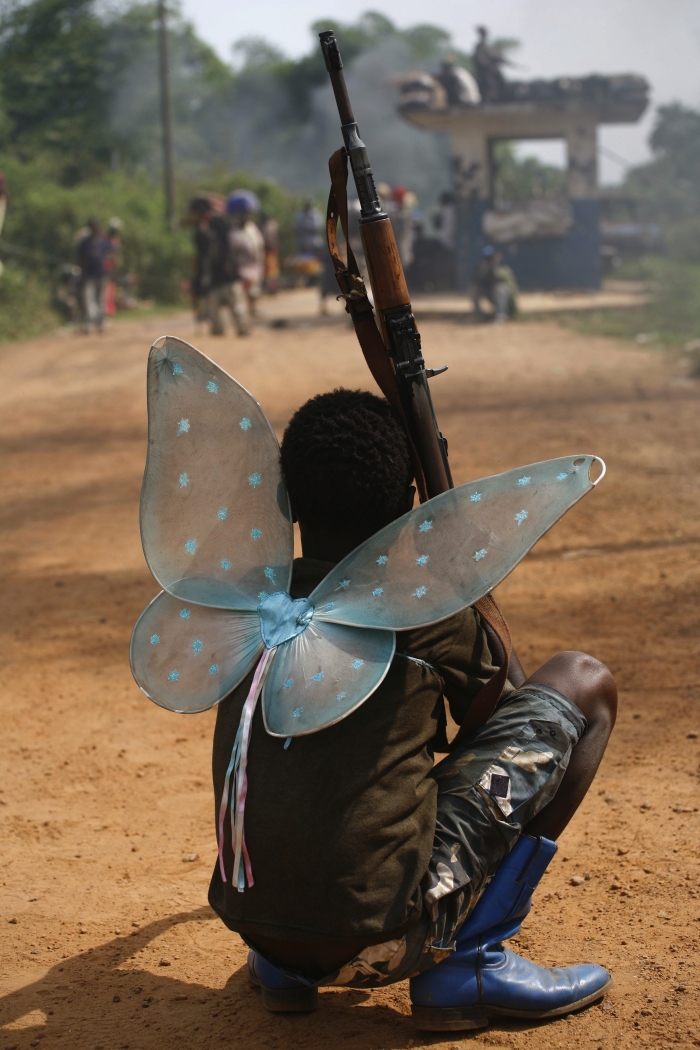
Nonetheless, when the problem of child soldiers is examined, it is often depicted as a masculine phenomenon, i.e. the enlistment of boys. In researching this topic, I have found that this action is mostly influenced by mainstream perceptions of armed conflict as a phenomenon occurring between males who are ‘naturally’ strong and warrior-like. As Tickner (1992:2) puts it, “International Relations is a man’s world where war and power politics are special positions reserved for men”. This perception is further reinforced in the media with popular images of boys holding rifles, whereas girls are frequently deemed insignificant and rendered invisible within fighting forces. However, studies have shown that in contemporary wars, girls comprise 40% of children associated with fighting factions (Haer 2017).

More so, compared to girls not associated with fighting factions, girl soldiers are disproportionately affected by war. This is due to the lengthy period girl soldiers spend in the captivity of their respective armed groups, making them susceptible to persistent sexual violence, torture, drug use and abuse, and illness (Beckley 2021). For example, in Sierra Leone, the Revolutionary United Front (RUF) led by notorious rebel leader Foday Sankoh used the taboo on women’s nakedness as a weapon of war. This was done by parading naked girls on the frontlines in an attempt to nullify the traditional ‘juju’ (voodoo) used by the Civil Defence Forces (CDF), also known as ‘Kamajors’, who should not see naked women on the frontlines (Oluwaniyi 2019).

From my conversations with female ex-combatants in Goma, eastern DRC, I learnt that girl soldiers were distributed amongst commanders of armed groups to serve as wives, which entailed constant sexual violence and forced pregnancies. This was also the case for the Lord’s Resistance Army (LRA) led by rebel leader Joseph Kony in northern Uganda, which I studied as part of my Master’s research. In the north-eastern part of Nigeria, girls constitute most of the suicide bombers, performing a strategic role for Boko Haram terrorists (Oluwaniyi 2019).

Despite these prominent roles played by girl soldiers in various armed conflicts, they remain marginalised in peacebuilding efforts. Peacebuilding typically comes as a disappointment to most girl soldiers, since they are faced with an identity crisis of whether they should be considered soldiers or mere sex slaves and wives of commanders. This bolsters their exclusion from peace processes like the United Nations’ Disarmament, Demobilization, and Reintegration (DDR) programmes. DDR is the very first stage of the peacebuilding process, aimed at dissolving warring factions, retrieving weapons from ex-combatants, and providing trauma healing and socio-economic opportunities to ex-soldiers to facilitate their reintegration into civilian life.

Rhetorically, gender issues are pertinent to these tasks, but in reality, this is not always the case. First, the design of DDR programmes in most countries requires ex-soldiers to present a weapon to prove their participation in the conflict before they are eligible for DDR benefits. Now,

how does a girl soldier whose body was used as a weapon of war ‘prove’ that she was a soldier?

In Liberia, for instance, commanders had to testify to a girl soldier’s participation in their armed group before she could benefit from the DDR programme.

Consequently, most girl soldiers do not benefit from the DDR procedure due to its masculinist design. They are forced to self-reintegrate into their communities with no physical, mental, social, or economic support. They return to communities where they previously killed their neighbours and relatives with no form of community reintegration, which is included in the DDR package. Hence, they are stigmatised and labelled as ‘damaged goods’, ‘bush wives’, ‘unmarriageable’, etc. It is much worse for girl mothers who return with children labelled ‘bush babies’ and are rejected by their community members.

All in all, peacebuilding efforts remain gender-blind, and one must consider whether the end goal of so-called peacebuilding ventures like the DDR is long-term peace. This raises critical unanswered questions, such as: What are the underlying knowledge and principles used to address gender issues in peacebuilding? How are the categories of difference constructed? By whom and for what purpose? What are the implications of these on girl soldiers and sustainable peace in general? Such questions need to be urgently addressed in studies aimed at investigating gender imbalances in post-conflict peacebuilding.


References

Beckley, E.M and Oluwaniyi O.O (Forthcoming). ‘The Rhetorics of Education for Girl Ex-Combatants in Sierra Leone’s DDR Programme’. Africa Spectrum: SAGE.

Beckley, E.M. 2021, “DDR and the Education of Ex-Combatant Girls in Africa” in The Palgrave Handbook of African Women’s Studies, eds. O. Yacob-Haliso & T. Falola, 1st edn, Springer Nature, Switzerland, pp. 178.

Haer, R. 2017, “The study of child soldiering: issues and consequences for DDR implementation”, Third World Quarterly, vol. 38, no. 2, pp. 450-466.

Oluwaniyi, O. 2019, “Women’s Roles and Positions in African Wars” in The Palgrave Handbook of African Women’s Studies, eds. O. Yacob-Haliso & T. Falola, First edn, Palgrave Macmillan, Cham, Switzerland, pp. 85-105.

Tickner, J.A. 1992, Gender in International Relations: Feminist Perspectives on Achieving Global Security, Columbia University Press, United States of America.

[1] This blog article is based on research I conducted for my Master’s degree five years ago, on further research I am conducting in pursuit of a PhD on gender, conflict, and peacebuilding, as well as that of other researchers in this field.


Opinions expressed in Bliss posts reflect solely the views of the author of the post in question.

About the author:

Esther M. Beckley is a final-year PhD researcher at the University of Malta. She is also a visiting Research Fellow at the International Institute of Social Studies (ISS). Her areas of expertise include gender, conflict, child soldiers, postconflict peacebuilding and development, international interventions in conflict contexts, etc., with a regional focus on sub-Saharan Africa.

Are you looking for more content about Global Development and Social Justice? Subscribe to Bliss, the official blog of the International Institute of Social Studies, and stay updated about interesting topics our researchers are working on.

From sacred to clinical: how the lack of proper burials during the Covid-19 pandemic affected communities in Uganda

When Covid-19 started spreading across the globe, the World Health Organization issued strict burial guidelines in a bid to curb the spread of the virus. In Uganda, the national health department took over the burial of Covid-19 victims, interring them quickly and without adhering to proper cultural and religious procedures. In a country where death rituals form a central part of the grieving process, the undignified burials that took place during the pandemic have had severe psychological consequences for bereaved families and communities.

In the Global South and in Africa particularly, most development studies research concentrates on survival issues; economic needs and death/loss are generally discussed in relation to poverty or AIDS, while the few available bereavement studies focus on the grieving experiences of individuals or groups.[1] However, injustices are also apparent in processes of grieving; unpacking the way in which grief is collectively and individually experienced is a necessary first step in addressing these injustices. Here, I show how the strict burial guidelines imposed during the Covid-19 pandemic were received in Uganda and why we should take note.


The many facets of death rituals

Death rituals, defined as “forms of expressions and connections performed by individuals, groups of people or communities in communication with the living-dead and the Supreme Being”[2], connect the dead and living in Africa. These rituals serve to mediate between the physical and spiritual worlds as the spirit of the deceased crosses between worlds. Many African families for example have a graveyard within the compound they live in because they believe that the dead remains part of the living family.[3]

During death rituals, the bereaved family plays a direct role in preparing the body, washing the body and shaving the deceased’s head; domestic animals are also slaughtered for ritual purposes. Slaughtering a sheep, for example, is meant to please the ancestors so that they do not demand another death.[4] And a death is communicated to the entire community as part of the ritual. A study of death rituals in Bugumba in Uganda shows how community members participate in death rituals once a large bonfire has been lit in the compound of the deceased to communicate bereavement to everyone in the community.[5]

Other death-related rites and beliefs include a belief among the Ethur of northeastern Uganda in life after death, with the spirit of the dead person travelling to the realm of ‘Obanga’, as well as the common belief that the dead are spirits that can send curses if disturbed.[6] Not performing death rituals would be considered one way of disturbing the dead. Similarly, in northern Uganda, a harmonious relationship between the living and dead is maintained to avoid ‘cen’, or vengeful spirits, by performing rituals.[7]

Death rituals are considered so important that in cases where a bereaved family lacks adequate resources to perform crucial rituals, community members may contribute the required resources – something that is reciprocal. In studying bereavement, the concept of Ubuntu[8] helps us to understand how cohesion and solidarity are maintained during and after burial through communal rituals and mourning. People travel from far away to participate in death rituals or attend funerals because death comes with misfortune for those who don’t participate in rituals. Paying close attention to the rituals while maintaining solidarity is a key healing factor from loss due to death.[9]


The inability to say goodbye properly

Limitations on death rituals during the Covid-19 pandemic and the interment of Covid-19 victims by health authorities thus caused great distress in Uganda and beyond. During the pandemic, following protocols issued by the World Health Organization (WHO) to curb the spread of the virus, strict guidelines for burials were issued by the government of Uganda under its Ministry of Health. They included limiting the handling of the deceased body to health/burial teams only, wrapping the body in waterproof plastic bags before handing it over for burial, and preventing the public from seeing the body. Family members and other mourners had to stay two meters away from the body.

Many district governments came up with further burial guidelines that included the time at which the burial was to take place, the prohibition of death announcements over radios to prevent the burials from attracting crowds, and ensuring a burial would take no more than two hours. The burial team, dressed in white wellington boots, full plastic protective suits, goggles, face shields, and gloves besides preparing the body secured the burial sites, dug the graves, and conducted the burials. They were nicknamed ‘Angels’ because they appeared mystical to the community members.


Indignation and defiance

Besides leading to personal suffering, these clinical burials also led to political dissatisfaction. The burial teams were heckled and some attacked for not following burial traditions. This is because in Uganda, a dead person is very special to the community and must be treated with full respect during the entire burial process. Burials were considered undignified because of the rough handling of the dead and the mourning of those close to the deceased in isolation, when this would usually take place as part of the burial process.[10] The departure from the traditional rituals led to psychosocial suffering (distress for bereaved families) that affecting healing, since no space was provided to express grief.

The community felt that the creation of distance between the deceased person and mourners, the wrapping of the body in artificial materials, and the handling of the body by seemingly alien entities did not ensure sufficient respect. The mystery and criticism was inspired by a deep distrust of the government during the pandemic, leading to allegations such as government’s burying of empty coffins and speculation that Covid-19 deaths concealed the trafficking of individuals.

“How could the spirit of the dead be reached and engaged when it is so trapped? Can the spirit be able to escape its ‘plastic prison’ and join the ancestors, or remain locked in captivity?” asks Brian Mukalazi in the Daily Monitor newspaper, describing how the burial of Covid-19 victims in a ‘scientific’ way angered the communities and led them to defying the burial guidelines by secretly exhuming the bodies to conduct decent burials. Communities such as the Budaka in eastern Uganda, the Buikwe, and the Palissa who resorted to this claimed they needed to ensure decent burials for their departed kin since their spirits had started disturbing their living relatives and some community members.


Conclusion

It is clear from the above that the suffering stemming from the loss of a loved one can be compounded by the lack of proper treatment of the deceased, in this case by the absence of proper burial rituals. However, these emotional impacts of injustices linked to bereavement processes on those close to the deceased and their communities are not yet sufficiently understood. It is crucial to address the psychosocial needs of those that lost loved ones to the pandemic. To prevent recurrence, and to help the bereaved find closure, academic research should focus more deliberately on cultural and psychological needs that arise during bereavement processes.


[1] McCarthy, J. R., Evans, R., Bowlby, S., & Wouango, J. (2020). Making sense of family deaths in urban Senegal: Diversities, contexts, and comparisons. OMEGA-Journal of Death and Dying82(2), 230-260.

[2] Baloyi, L., & Makobe-Rabothata, M. (2014). The African conception of death: A cultural implication.

[3] Umoh, D. S. (2012). Death is not natural: The African story.

[4] Haram, L. (2021). Bodily grief work meets Christian interiority: The Meru case. Death studies, 45(1), 51-60.

[5] Vokes, R. (2018). Before the call: Mobile phones, exchange relations, and social change in south-western Uganda. Ethnos, 83(2), 274-290.

[6] Wayland, E. J. (1931). Preliminary studies of the tribes of Karamoja. The Journal of the Royal Anthropological Institute of Great Britain and Ireland61, 187-230.

[7] Kembel, A. S. (2015). When the Dead Are Not Silent: The Investigation of Cultural Perspectives Concerning Improper Burials in Northern Uganda.

[8] As a theoretical perspective, Ubuntu is expressed in many languages in African communities but with the same meaning (Mugumbate and Chereni, 2020). Ubuntu caring solidarity translates to Uganda’s context through a saying which literally means “today it’s me, tomorrow someone else”.

[9] Lee, R., & Vaughan, M. (2008). Death and dying in the history of Africa since 1800. The Journal of African History, 49(3), 341-359.

[10] Lubega, M., Nakamya, C. S., Namugumya, E., & Najjemba, J. (2022). The effect of COVID-19 public health guidelines on the funeral traditions and burial rituals among the Baganda, a tribe in Central Uganda. PAMJ-One Health7(7).


Opinions expressed in Bliss posts reflect solely the views of the author of the post in question.

About the author:

Henry Okidi Okoth holds a MA Development Studies degree from the International Institute of Social Studies of Erasmus University Rotterdam. Currently, he is a researcher and consultant with Collaborative Social Change. His research interests are death and bereavement studies from a decolonial perspective, marginalization and poverty, gender, conflict, and human rights.

Are you looking for more content about Global Development and Social Justice? Subscribe to Bliss, the official blog of the International Institute of Social Studies, and stay updated about interesting topics our researchers are working on.

From Awareness to Action: World Heritage in Young Hands

By Posted on 6360 views

At a workshop in Bulange, Uganda, held in August 2021 the focus was on how to engage youth in protecting, preserving, and promoting World Heritage. The goal was to sensitise youth about heritage through learning from past legacies, understanding what elders live with today, and what they will pass on to the future generations. With a focus on the UNESCO World Heritage Kasubi Tombs site (No.1022), this workshop was important because cultural and natural heritage are both invaluable sources for life and inspiration, that require actionable innovations to transmit heritage knowledge, create heritage-related employment, and preserve the moral development of societies, while promoting young people’s cultural and intellectual development in a globalised world. In this blog, I make the case for increasing grassroots funding for youth-led activities to protect and preserve heritage, as well as to integrate information computing technology (ICT) to help disseminate heritage knowledge globally in a variety of digital formats.

Tombs of Buganda Kings at Kasubi (Uganda) © UNESCO

What is World Heritage?

World heritage includes places as diverse and unique as the Pyramids of Egypt, the Galápagos Islands in Ecuador, the Taj Mahal in India, the Great Barrier Reef in Australia, the Grand Canyon in the USA, or the Kasubi Tombs in Uganda.[i] They are designated as places that are of outstanding universal value to humanity, and as such have been inscribed in the World Heritage List. Nevertheless, these sites face major problems, such as pollution, earthquakes, and other natural disasters, poaching, armed conflict and war, uncontrolled urbanisation, and unchecked tourist development. Young people, as the future generation, still lack knowledge to contribute to the sustainability of heritage in all forms. But they are the ones who can innovate, through local activities, that can offer potential solutions to protect, preserve, and promote Heritage around them. Moreover, they are also skilled at using new digital communications tools, which, if used effectively, can help in implementing concrete solutions to protect these sites.

As a UNESCO initiative, developed in 1998, the World Heritage in Young Hands Educational Resource Kit, for secondary school teachers, advances heritage sensitisation in schools as one approach towards raising awareness among youth.[ii] This has contributed to the transnational conception of heritage protection, preservation, and promotion. While providing a global tool for schools, those not enrolled are, however, excluded from various forms of engagement in preserving local, national, and world heritage. It is important to equally involve out-of-school youth in the protection of our common cultural as well as natural heritage through increasing youth-led initiatives to protect, preserve, and promote heritage.

Varying Forms of World Heritages

The UNESCO Convention concerning the protection of the World cultural and Natural Heritage[iii], describes heritage in varying forms – the cultural and natural heritage. These two, furthermore vary in the forms of tangible and intangible aspects. Tangible cultural heritage is movable and immovable. Immovables include archaeological sites, architectural works, historical centres, monuments, cultural landscapes, historical parks, and botanical gardens as well as sites of industrial archaeology. Movable tangible heritage on the other hand, includes museum collections, libraries, and archives. Examples of intangible cultural heritage include music, dance, literature, theatre, oral traditions, traditional performances, social practices, traditional know-how, crafts, cultural spaces, and religious ceremonies and for natural heritage. Examples of tangible and immovable heritage are natural and maritime parks of ecological interests, geological and physical formations, and landscapes of outstanding natural beauty.

Protect, Preserve, and Promote

In a UNESCO-funded workshop on “Empowering Ugandan Youth through Culture and Heritage” held in Bulange, Uganda, in August 2021, 35 cultural leaders discussed the role of youth in protecting, conserving, and promoting the Kasubi Tombs built in 1882 (UNESCO’s World Heritage Site No. 1022). Utilising the World Heritage in Young Hands Educational Resource Kit, they concluded that:

  • There is a risk that future generations no longer know much about cultural heritage preservation. If youth are not actively engaged in protecting and promoting heritage sites, they will sooner or later be littered with hotels, stadiums, and arcades that exploit the touristic potential of cultural sites.
  • We need to preserve heritage sites as an expression of humanistic values that ancestors created with the intention of telescoping them to the future, allowing generations to interpret their symbolic meaning, and investigate past customs of human interaction globally.
  • Heritage may not immediately appeal to younger generations. Still, knowledge gaps ought to be addressed, and misconceptions dispelled as an inclusive transition to promote an authentic heritage value system among youth.

The Youth Have Their Say

Workshop participants suggested that a regional transnational governance framework under UNESCO be supported, one that would be designed to promote a grassroots-based system driven by all categories of young people to enable them to act beyond awareness in support of promoting heritage. There could be a potential intra-regional role for the African Union in such an initiative.

While alternatives for young people to protect, preserve, and promote tangible heritage sites were made by speakers, it was also suggested that outreach initiatives such as using cartoons to mobilise youngsters in support of World Heritage protection and promotion be used. In addition, it was proposed that families engage young people in extra-curricular events such as excursions to nearby heritage places of interest, youth camps, cultural festivals, and exhibitions, as well as participate in role play activities to recreate traditional social events, such as processions, ceremonies, youth camps and festivals, using tradition to enable, integrate, and promote youth development for continued World Heritage preservation for future generations.

The way forward

Participants recommended various ways to move from sensitisation to action to protect, preserve, and promote world heritage from the perspective of youth engagement. Firstly, nation states should give responsibility for overseeing the security needs of cultural sites to youth through integrating them more into heritage management. While teaching based on the World Heritage kit by practitioners should include more about the provision of security as an essential factor for youth to innovate in relation to heritage related projects, global leaders should also ensure adequate budgets for heritage funds for youth to tap into and protect world heritage.

Moreover, the UNESCO World Heritage Centre should support custodians of heritage sites in transforming the intangible value of heritage sites into written descriptions. In addition, youth learning centres, or interpretive centres, should be constructed by nation states at bigger sites to facilitate the preservation of heritage. Lastly, there is an urgent need for better use of ICT and social media by Ministries of Culture among member states of UNESCO. This will facilitate the digitalisation of knowledge dissemination on heritage across the world, along with inviting youth to engage in diverse and creative ways for promotion, protection, and preservation of world heritage for the future generations.


[i] Definition of World Heritage by UNESCO. (see https://whc.unesco.org/en/faq/19/  retrieved on 11 November 2021)

[ii] UNESCO, World Heritage in Young Hands Educational Resource Kit for secondary school teachers (1998). The resource kit complement other initiatives including World Heritage Youth Forums, World Heritage Adventures cartoon series, Training seminars for educators on the use of the resource Kit, On-site skills-development courses for young people, workshops & conferences, and the World Heritage Volunteers initiative.

[iii] Varying Forms of Heritage are described in the UNESCO Convention concerning the protection of the World cultural and Natural Heritage (1972) see https://whc.unesco.org/en/conventiontext/. Retrieved on 06/12.2021


Opinions expressed in Bliss posts reflect solely the views of the author of the post in question.

About the author:

Umar Kabanda holds a PhD and a master’s degree in Governance and Regional Integration, as well as a Post Graduate Diploma in Human Rights and a Bachelor’s degree in Psychology. Currently he is the Managing Director of Kalube consults limited and a Policy leader Fellow with the School of Transnational Governance in the European University Institute in Italy.  

Are you looking for more content about Global Development and Social Justice? Subscribe to Bliss, the official blog of the International Institute of Social Studies, and stay updated about interesting topics our researchers are working on.

Reporting or turning a blind eye? Police integrity in Uganda by Wil Hout and Natascha Wagner

By Posted on 3086 views

Imagine that you are a police officer and witness a close colleague accepting a bribe. Would you report this behaviour or turn a blind eye to it? 600 police officers in Uganda answered similar questions relating to a variety of cases of undesirable police conduct. A series of recent publications by Dr Natascha Wagner and Professor Wil Hout, with ISS alumna Dr Rose Namara, shows that officers who participated in an accountability project were influenced positively in their attitudes towards desirable and undesirable police behaviour.


The arrest of Ugandan musician, businessman and opposition politician Bobi Wine in August 2018 caused world-wide attention to the brutal behaviour of the Ugandan police force. This crackdown on a popular figure in the country added to the already bad reputation of Uganda’s police, which is commonly seen as violent and corrupt.

Democratic theory sees the police, next to the army, as the ‘strong arm’ of the state. These institutions are faced with a ‘paradox of power’: they possess important coercive tools that should be used to protect the state and its citizens, but could also be employed to attack those whom they should protect. For this reason, accountability mechanisms are created to ensure that police behaviour respects the principles of the rule of law. Countries with a robust rule of law mechanism, such as The Netherlands, subject the police to strict political and legal oversight. Police officers who ‘cross the line’ and engage in unacceptable behaviour will likely be punished, although recent reports on the code of silence in the police force in The Hague suggest that this may not always be self-evident.

Similar mechanisms do not apply to the same extent to Uganda, which is widely seen as an imperfect democracy, with many traits of so-called ‘competitive authoritarianism’. The country holds regular elections, but political liberties are seriously impeded by the rulers of the country. President Yoweri Museveni’s regime, which has ruled Uganda since the removal of Obote in 1986, regularly uses the police force to repress oppositional forces that may threaten its hold to power. The recent setup of a Field Force Unit for handling riots and demonstrations, according to some observers, is one example of the militarisation the Ugandan police, and could represent a further step to using the police for regime support.

In this seemingly hostile context, the Police Accountability and Reform Project was implemented by the Ugandese NGO HURINET with the financial help of the Dutch Embassy in Kampala. The project aimed to improve relations between civil society, the media and the police by organising dialogues, and inform the public about the work of the police. These activities were meant to strengthen police accountability mechanisms.

The evaluation department of The Netherlands Ministry of Foreign Affairs brought in a team from ISS to assess, among others, the police accountability project. The ministry was interested to see to what extent its ‘good governance’ policies in various countries had been effective. Our aim in relation to the project on police accountability was to estimate whether it impacted the attitudes of Ugandan police officers. We concluded that the project in all likelihood contributed positively to the attitudes of police officers regarding desirable and undesirable police activities.

Our research project consisted of different activities. One important element was a survey among a large group of police officers, drawn from districts across Uganda, with the help of a dozen cases of police behaviour. Based on earlier research on police integrity, we let police officers evaluate a variety of cases (or ‘vignettes’), among others relating to police officers who take bribes, steal from a burglary site, and refuse to record a complaint about torture by one of the officer’s colleagues, and, to a District Police Commander who orders a violent response to a demonstration, leaving 20 people dead. Police officers who participated in the project appeared on average much more critical about the misbehaviour depicted in the cases, while they were also more likely to report a colleague for misbehaving. They were more inclined to see the behaviour as a violation of official policy and were more supportive of disciplinary action against misbehaving colleagues.

Interviews with 23 police officers, selected from the higher ranks, supported the findings from the survey. Overall, officers who participated in the accountability project had clearer ideas about human rights norms, the proper treatment of arrestees and relations with the community. The responses of those police officers were credible signs of the norm-setting impact of the accountability project.

Overall, our findings show that it pays off to engage police officers in discussions about acceptable and non-acceptable behaviour, even in a difficult environment such as Uganda. Obviously, the spreading of norms about police behaviour is just one element in creating a better functioning police apparatus. A shift in attitudes does not necessarily represent a reversal of behaviour, since the latter is influenced by many factors other than attitudes. The accountability project in Uganda demonstrated the usefulness of working with the police, although longer-term collaboration may be necessary for achieving permanent results. This may be an important lesson for improving police operations in other countries where accountability and rule of law are a concern.


Publications:
Wil Hout, Ria Brouwers, Jonathan Fisher, Rose Namara, Lydeke Schakel and Natascha Wagner (2016) Policy Review Good Governance: Uganda Country Study, Report for the Policy and Operations Evaluation Department (IOB), Ministry of Foreign Affairs, available at http://hdl.handle.net/1765/102964. This report contains the vignettes that were used in the survey among police officers.
Natascha Wagner and Wil Hout (2019) ‘Police Integrity and the Perceived Effectiveness of Policing: Evidence from a Survey among Ugandan Police Officers’, in Sanja Kutnjak Ivković and M.R. Haberfeld (eds) Exploring Police Integrity: Novel Approaches to Police Integrity Theory and Methodology, New York: Springer, pp. 165-191, available at http://hdl.handle.net/1765/115822.
Natascha Wagner, Wil Hout and Rose Namara (2020, forthcoming) ‘Improving Police Integrity in Uganda: Impact Assessment of the Police Accountability and Reform Project’, Review of Development Economics, available at http://hdl.handle.net/1765/121705.
Wil Hout, Natascha Wagner and Rose Namara (2020, forthcoming) ‘Holding Ugandan Police to Account: Case study of the Police Accountability and Reform Project’, in Sylvia Bergh, Sony Pellissery and Christina Sathyamala (eds) The State of Accountability in the Global South: Challenges and Responses, Cheltenham: Edward Elgar, available at http://hdl.handle.net/1765/115862.

_DSC4072-3.jpgAbout the authors:

Wil Hout is Professor of Governance and International Political Economy at the International Institute of Social Studies (ISS) of Erasmus University Rotterdam. His research interests relate to international political economy, regionalism, development policies and issues of governance and development.

natascha.JPG


Natascha Wagner is associate professor of Development Economics at the ISS. Her research interests lie in international economics, development, health and education. She has participated in various impact evaluation projects and large scale data collections in Africa and Asia ranging from public health to good governance and sustainable development.

Why history matters to understand rebellion: the Rwenzururu Movement in Uganda by Martin Doornbos

By Posted on 3299 views

About the author:
pasfotoMartin Doornbos is a retired professor of the ISS, and this post is based on his new book The Rwenzururu Movement in Uganda: Struggling for Recognition, published by Routledge in 2017.


A few years ago, the self- styled kingship of the Rwenzururu movement in Uganda was recognized by the government. When in 2016 armed clashes between the Rwenzururu king’s bodyguard and a patrol of the Uganda army erupted, the new king was held responsible and he is currently being kept under house arrest. Fascinated by this movement that few people outside Uganda know about, I had set out to explore and write about the origins and evolution of this movement.


The Rwenzururu movement was a case of sub-nationalism emerging in the early 1960s and seeking liberation for the Bakonzo and Baamba people from Batoro overrule, all of these representing ethnic groups in Western Uganda. It soon gave rise to a highly complex and in some respects spectacular situation which would endure for decades to come.

The Rwenzururu movement originated on and around the Mountains of the Moon, on the borders between Uganda and Congo (DRC). At the establishment of British rule in the early 20th century, Bakonzo and Baamba had been included into Toro Kingdom, which became a district within the Ugandan colonial set-up together with three other (neo-traditionalized) kingdoms. The Bakonzo and Baamba constituted sizeable minorities (just under 40%) in this district that was dominated by the Batoro. Throughout the colonial period Bakonzo and Baamba had been treated as second-class citizens by the dominant strata of Batoro within Toro kingdom. They lacked equitable representation and were seriously neglected in terms of educational opportunities and elementary government services.

Unsurprisingly, as independence approached and a possibility of redrawing of district boundaries seemed in reach, the two groups joined hands in a movement of protest, Rwenzururu, that first sought recognition of equal status within Toro. When this was refused they demanded a separate district. At the micro level at that time, a separate district was perceived almost like attaining independence. As these demands received negative and rather high-handed responses from the Toro district government and the central Uganda government, protest soon gained momentum, and in subsequent years led to numerous violent encounters with Batoro militias and Uganda government troops.

One wing of the movement took the more radical step to secede from Uganda and set up its own, rudimentary government. Its leader, Isaya Mukirane, first became President, later King of Rwenzururu. Upon his death in 1966, his young son Charles Wesley Mumbere was nominated to succeed him. The other wing of the movement continued to struggle, under considerable hardship and harassment from both Ugandan army and police forces and from Rwenzururu militias, for equal recognition within the Uganda political framework by way of a separate district.

In 1967, the Uganda government of Milton Obote abolished the (neo-)traditional kingdoms within Uganda, thus removing the Toro kingship which had been one of the sources of discontent and envy to Rwenzururians. The next government, that of Idi Amin, resolved another key source of frustration by granting the Baamba and Bakonzo a separate district each. Then, after the toppling of the Idi Amin regime and the (controversial) return of Obote as president in the 1980s, the secessionist Rwenzururu kingdom, now with Mukirane’s son Charles Wesley as its leader, showed itself responsive to overtures for reconciliation and agreed to a settlement. The deal involved the ceremonial laying down of arms by Rwenzururian forces and the resignation of Charles Wesley as ‘king’, in return for promises of development funds for social welfare and education. For the ex-king himself there were material incentives including a bus, a shop, and a government scholarship for study abroad, which was to materialize in the United States.

The Rwenzururu saga continued, however, for mainly two reasons. One, not all secessionist Rwenzururians were supportive of the idea of reconciliation and some who had initially been in favour slipped back into armed resistance, lured by larger profits and powers offered in an environment ideally suited for contraband and guerrilla activities. Second, Uganda in 1986 once again saw a change of regime with Yoweri Museveni taking over. Having its power base in the National Resistance Army, his new government in due course felt it had to accommodate pressures from Buganda(the largest of the neo-traditional kingdoms incorporated within Uganda) pleading for restoration of its kingship. As it is legally difficult to restore a single kingship where all had been ‘banned’, parliament in 1993 passed a ‘un-banning’ order allowing the restoration of ‘cultural leaders’, provided ‘the people so wish’. In emulation of the restoration of Toro’s kingship and out of a strong wish to be at par with that, however, Rwenzururians claimed that their own kingship, albeit a novel institution, should also be restored. Thus a popular movement swell to have Rwenzururu’s ex-king, Charles Wesley, return from the United States where he still lived and be recognized by Museveni’s government. He did indeed come for a visit in 1998, but this was not immediately followed by official recognition. Charles Wesley at that time preferred to return to his job in the United States.

But Rwenzururu involved much more than the kingship issue. Many or most other Bakonzo and Baamba, living in the more accessible plains and on the lower mountain spurs, were equally strongly engaged in ‘Rwenzururu’ without subscribing to the idea of secession or the newly invented royalty. Associating Rwenzururu mainly with the secessionist wing and its (indeed spectacular) history amounts to a narrowing of perspective and leaves underexposed the struggles fought at another level, and with altogether different objectives, by a majority of Bakonzo (and Baamba) for whom secession was no realistic option or target.

More broadly, looking back at the conditions in the region at the time the Rwenzururu movement emerged, there can be little doubt that these were then just ‘ripe’ for a rebellion to break out and would have spurred that in one way or the other, just like they did elsewhere in Uganda at the time – in Sebei, Ankole, and Kigezi, in particular. Such social dynamics are of crucial importance in understanding why a protest movement emerges and what course it may take. In the case of Rwenzururu, it is interesting to note that decisions made about the future shape of ethnic relations and ethnic subordination at the time of the establishment of colonial rule in Uganda, would now, more than a century later, backfire and lead to renewed ethnically inspired violence between the groups concerned and even involving the central government.