Tag Archives protection

Human Trafficking | Overregulated, but unprotected? Human trafficking governance is not protecting sex workers in the Netherlands

Furthering the discussion on the negative consequences for sex workers[1] of the regulatory conflation of sex work and human trafficking, this post reflects on how regulation focused on identifying cases of human trafficking in the Dutch sex industry has failed to protect sex workers, whose primary concerns remain an unsafe working environment and a lack of job security. Government surveillance of the sex industry does not produce better working conditions – what is needed is increased dialogue for evidence-based policy-making that ensures that immediate needs of sex workers are met without further ado.

“I don’t want security – I want that window to be changed. It’s unsanitary, it’s dirty,” says Vanessa[2], a transgender sex worker from Ecuador who has been working in the sex industry for 30 years, when I ask her what would make her feel safer at work. After reflecting a bit about what safety means and how we understand it, we start to talk about working conditions. What ‘good conditions’ means in the practice of sex work does not seem to be a priority for the authorities in charge of supervising this industry in the Netherlands, Vanessa and other sex workers tell me. Their objective is mainly to identify cases of human trafficking and illegal forms of sex work.

According to the sex workers I interviewed and observations in both window-based sectors in The Hague that I carried out for my master’s thesis, the working conditions vary from place to place. One afternoon, in the internal windows of one of the Doubletstraat passages, I could feel the dense, heavy, and hot air that many sex workers live with during the summer, as well as the dust that accumulates. Martha, who has been in the industry for 10 years, says: “Of course, there is no air here, here you are like a fish out of water”. For others, bad working conditions are also related to:

  • The lack of access to a clean bathroom with a shower;
  • The lack of access to clean changes of bedding;
  • The lack of a clean and sanitary work environment;
  • The lack of separate spaces for eating and resting;
  • High rental amounts;
  • The precarity of the business;
  • The possibility of being left without a workplace, as the number of licenses issued for sex work are still decreasing; and
  • The (im)possibility of working from home in cities where home-based sex work is illegal.

From bad to worse…

Sex workers’ insecurities were exacerbated by COVID-19-related government measures, which due to the extended lockdown and limitation of face-to-face contact left a big group of sex workers, especially immigrants, without work for longer periods than any other worker, and without financial help. Yet resisting the difficult working conditions is not straightforward. The fear of the consequences of their airing grievances is preventing sex workers from doing so. Vanessa tells me: “I have talked to the others about it, but they tell me not to mess with it because I am going to have problems”. Like her, several sex workers tell me that they would not be taken seriously if they complained about their working conditions, or that they could be retaliated against by the operators, who would no longer rent the site to a ‘troublemaker’. A member of the support organisation Spot 46 says that sex workers can go to the municipality to complain, but nobody really hears them.[3] Thus, the path to changing their precarious working conditions is unclear to window-based sex workers in The Hague.

Focused on legality, not on working conditions

“If you have your papers in order, there is no problem” – Martha (name changed)

Matters of legality seem to take precedence over the wellbeing of sex workers. When I talked to the sex workers I interviewed for my study, inevitably, the discussion turned to the controls and supervision of this industry that are carried out by municipalities. In The Hague, a team called HEIT (The Hague Economic Intervention Team), made up of members of the police and the municipality, oversees the sex industry. Interestingly, this team only focuses on identifying cases of human trafficking and eradicating criminality (City Council 2019:10). When I asked about their perception of government supervision, the first response of all sex workers was that the government was worried about ensuring their legality through document control: by checking their immigration status, work permit, and registration at the Chamber of Commerce. In addition, municipal health service GGD also monitors the industry, but its focus is on public health and therefore is directed at the sexual practices of sex workers, who are considered a risk group (City Council 2019: 10).

Overregulated, but unprotected

From sex workers’ experiences with the controls and from what is stipulated in public policy, it can be argued that government surveillance of the sex industry does not produce better working conditions. Although there are specific and very strict regulations for sex workers, and although multiple institutions are involved in their enforcement, sex workers’ own concerns, and hence their protection as workers, are not a priority. Experiences on the ground reveal that what sex workers need is not more repressive surveillance that frames them as powerless victims of trafficking, but regulation that takes their demands for decent working conditions seriously.


References

[1] See: Heumann et al. (2017); Heumann et al. (2016); Hubbard et al. (2008); Outshoorn (2012); Pitcher and Wijers (2014) Verhoeven (2017).

City Council (2019) ‘Algemene Plaatselijke Verordening Voor De Gemeente Den Haag (APV) [General Local Regulation for the Municipality of the Hague]’. Local Regulation – Public order and safety, Municipality of The Hague.

Heumann, S., Coumans, SV., Shiboleth, T., Ridder-Wiskerke, M. (2017) ‘The Netherlands: Analysing Shifts and Continuities in the Governing of Sexual Labour’, in Ward, E., Wylie, G. (ed.) Feminism, Prostitution and the State, pp. 46-65. New York: Routledge Studies in Gender and Global Politics.

[2] Pseudonyms were used to protect sex workers’ identities.

[3] Interview, member of Spot 46, 2019.

Opinions expressed in Bliss posts reflect solely the views of the author of the post in question.

About the author
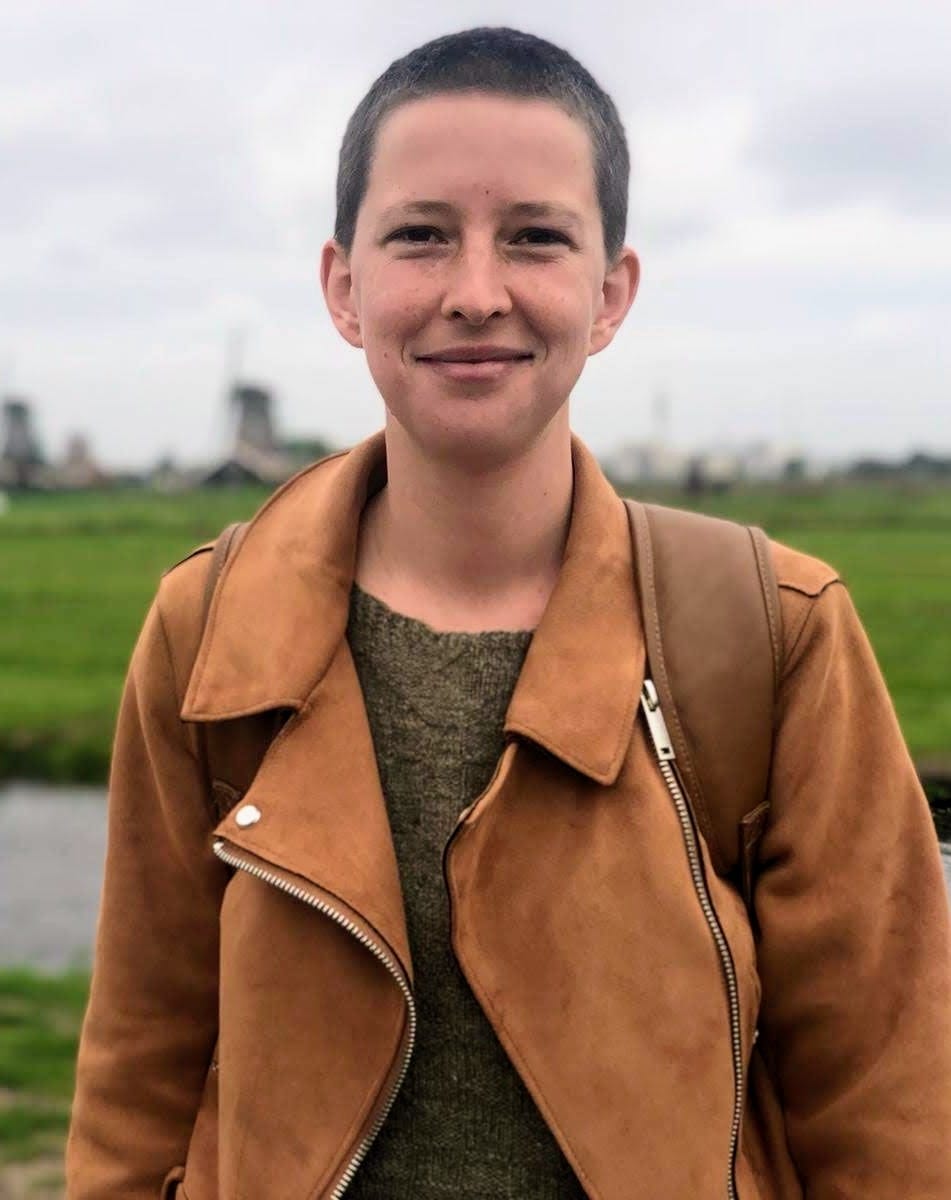
María Inés Cubides Kovacsics is Professional in Development Studies with an ISS major in human rights, gender, and conflict studies. I have a particular interest in gender and sexuality, labour rights, sex workers’ rights, youth, security, and restorative justice. I have worked for identifying and fighting discrimination, exclusion and rights violations suffered by historically marginalized people and communities, alongside LGBTQ communities, imprisoned transgender women, homeless people, sex workers, drug users, street vendors, teenagers and young people with deprivation of liberty sanction.

Are you looking for more content about Global Development and Social Justice? Subscribe to Bliss, the official blog of the International Institute of Social Studies, and stay updated about interesting topics our researchers are working on.

How do grassroots networks in Kenya tackle violence against children?

In the absence of state infrastructure, grassroots networks play a crucial role in addressing the prevalence of violence against children in Kenya. How do these networks work and how can they be supported to overcome their challenges?

In much of Africa, where the state plays a limited role in preventing child vulnerability and in-service provision, grassroots informal community-based networks play an important role in addressing violence against children (VAC). I draw on research carried out in 2019-20 with Civsource Africa that focused on the role of different types of networks on the prevention of violence against children in Kenya, showing that while different actors at different levels are networked in the prevention of VAC, grassroots networks are on the front line of preventing and responding to this violence.

However, our research notes that there are challenges in the functionality of these networks, including in the way they interact with other more formal networks working to prevent VAC. These issues need to be addressed, taking care that grassroots networks do not lose their unique identity.

How do grassroots networks work?

Networks are conceptualised as interconnected webs of actors, pooling together for mutual reciprocity in addressing VAC. In our research, there were formal and structured networks that comprised non-state actors like NGOs and other state institutions such as Kenya’s Department of Children Services, the Ministry of Health and actors in the court system.

At the community level, the unstructured grassroots networks included individual community volunteers, child protection volunteers, community-based organisations and community health workers. They also include community-based paralegals, who support children and caregivers in legal redress, as well as opinion leaders who are consulted in issues of violence against children.

These grassroots individuals and groups either worked separately within their communities or were networked with other actors, to whom they reported to or referred issues of child protection. For example, they were working with local community leaders in charge of sub-counties (known as chiefs), the Department of Children’s Services, the Ministry of health, the police and with different NGOs.

Some of these grassroots actors worked as appendages to the state system of child protection. For example, child protection volunteers are selected by the community but vetted by the Children Office and are expected to monitor issues of violence in the community and report to the Children Officers. The community health workers are appointed and vetted by the community during meetings known as Barazas. While some worked independently, they were part of the Ministry of Health strategy for delivering services to the grassroots and therefore expected to take up issues of child abuse and violence and referral to appropriate services. Being selected by the community reinforces the codes of trust that make them accountable to the local population. These actors were therefore expected to give periodic reports on VAC through public meetings.

The financing and capacity arrangements of these structures are diverse. For example, the community-based networks pool together their resources and energy to carry out dialogue in the community and follow up after cases of VAC. Some of them receive funding from the organisations they are affiliated with. Some volunteers working with the NGOs were receiving training, small funding for targeted activities and transport to follow up after cases of VAC. Some of the volunteers and CBOs were also working with several organisations at the same time.


The benefits of community networks

Working independently or through other structures, these grassroots networks of community volunteers build the resilience of children by training them on their rights, offering psychosocial support and identifying cases of violence. They also build bonds that make it easier to address violence, by encouraging the development of positive norms and an ethos of child protection through dialogue on responsibility towards children. They also enhance the community’s collective efficacy in caring for their children through training on income generating activities. The grassroots actors also build bridges by connecting children with the police and other leaders who enforce laws, and probation and children officers who ensure state child protection.

Vertical collaborations with larger networks addressing violence against children enables these networks to draw synergies since some NGOs provide services addressing structural causes of VAC. For example, a CBO in an informal settlement in Nairobi noted that one of the NGOs supported the development of a community VAC alert system. Such collaboration ensures that effort in violence prevention is not just a local exercise but is connected at different nodes, thus ensuring that broader interventions are based on children’s everyday experiences of violence. For example, the child protection volunteers are part of the local Children Area Advisory Council, which is part of the National Council for Children Services, the highest oversight body on children’s issues.

These networks are homegrown and rely on community trust relations and, therefore, enhance faster dissemination of information on VAC at the grassroots level. They also act as first responders or what is seen as the first mile on issues of violence against children in their communities.

Similarly, our research finds that grassroots actors are acknowledged by other actors such as the police, children’s officers and local administrations, who listen to them. This validation is important in accountability to children’s rights since it might help the grassroots actors to check for excesses by such leaders when handling issues of violence, without fear of reprisals.

Overall, these simultaneously local and place-based, vertically integrated and culturally competent responses to violence emerged as important in addressing violence against children. They also, however, face challenges.

Challenges the networks face in addressing violence against children

Due to a lack of adequate resources, including for transport and in some cases support to children facing violence, our research found that some volunteers stopped following up after cases of violence. While some were receiving support from other organisations, most of them used their own resources; some of the larger networks they work with often rely on donor funding and so, when funding ceases, the NGOs moved on, breaking the VAC referral pathways. The NGOs that participated in the research explained that community volunteers are not remunerated since they were seen as serving their communities.

In cases where community-based networks were linked to other structured networks, the playing field was uneven. The volunteers felt that they only participated nominally in these networks and were being ‘used’ as cogs by providing their services and information for writing grants, and then ‘dumped’ after the NGOs received them. This should also be seen through the lens of the philanthropy-wide shifts in Africa where funders require NGOs to demonstrate that they are working with community structures, which supports van Stapele’s research in Kenya where community based organisations characterised the relationship with NGOs as colonialist and saw themselves as ‘donkeys’, engaged in drudgery for the NGOs’ benefit.

In our research, the grassroot actors reported that, to get even, they would hoard information or register their own organisations to access the largesse of donor funds. Such tensions weaken the synergies that would accrue from networking, ultimately affecting efforts to address violence against children.

Even more, while proximity to the community is a resource, it also has a downside; some volunteers reported that they are victimised by the perpetrators of violence.

How to support grassroots networks

Grassroots networks in Kenya play an important role in preventing violence against children, and their work can be a basis for testing innovative models in child protection, and take to scale the prevention of VAC, and therefore they need to be supported. Care should, however, be taken so that systems in these networks that rely on trust are enabled to respond to violence without being undermined.

Efforts should also be made to ensure that collaborations are not only geared towards meeting the needs of external catalysts, such as NGOs, without tangible benefits for children. Further, these networks should not be co-opted into donor funding cycles which may not allow space for innovation because of their short-term and competing motivations.

To address the skewed power dynamics between actors, there is a need for strengthening the accountability of these grassroots organisations, as this will enhance accountability to the community and ultimately to children. There is an imperative for revisiting the very terms on which these organisations are crowded in by other actors.


 This post is an output from LSE’s Centre for Public Authority and International Development at the LSE’s Firoz Lalji Centre for Africa and first appeared here

About the author:

Elizabeth Ngutuku has a PhD in Development Studies from the International Institute of Social Studies of Erasmus University Rotterdam. Her work investigates young people’s experience of poverty, vulnerability, citizenship claims and sexual and reproductive health.


Are you looking for more content about Global Development and Social Justice? Subscribe to Bliss, the official blog of the International Institute of Social Studies, and stay updated about interesting topics our researchers are working on.