Tag Archives peace agreement

Humanitarian Observatories Series | Why it’s crucial for internally displaced persons to participate in the peace process following Ethiopia’s Oromia Conflict

Like the conflict in Tigray, one of the gravest consequences of the conflict in Ethiopia’s Oromia region has been the disastrous level of internal displacement it has given rise to. In this blog, Alemayehu B. Hordofa provides an overview of the situation of Internally Displaced Persons (IDPs) in Oromia and shows why ensuring their rights should be at the heart of the peace process in the region. He contends that the peace process in Oromia should give adequate space to the viewpoints of at-risk populations, including IDPs, and that including their concerns in a peace agreement is critical for safeguarding sustainable peace and preventing future conflict-induced displacements.

Photo Source: Personal Collections

The political transition that occurred in Ethiopia in 2018 was hoped to bring peace to this deeply divided country; however, guns failed to be silenced, and Ethiopia continues to be ravaged by several conflicts that have uprooted millions of civilians from their homes. One such conflict is the one being waged in Oromia, the largest of the country’s eleven regions stretching across central, western, and southern Ethiopia.

The conflict has its roots in decades-old clashes between the Ethiopian government and the Oromo Liberation Front (OLF), a nationalist political party established in 1973 to struggle for the right to self-determination of the Oromo people. The party was proclaimed a terrorist organization under the country’s former draconian Anti-terrorism Proclamation, and its leaders lived in exile in Eritrea until their return following the political transition in 2018. After the transition, the Ethiopian parliament lifted the OLF’s terrorist label and subsequently made significant amendments to the previous repressive anti-terrorism law. The new administration also signed the Asmara Agreement with the OLF and released political prisoners.

All these actions seemed to mark the start of a period of peace and stability for people whose livelihoods had been disrupted because of the decades-long conflict. But despite efforts to peacefully end the conflict, it flared up again shortly after the OLF leadership’s return to Ethiopia. This happened as the Oromo Liberation Army (OLA), the military wing of the OLF, accused the Ethiopian government of failing to address major political demands made by the Oromo people. It subsequently refused to lay down arms, severed its relationship with the OLF, and continued its insurgencies, first in western and southern Oromia and then also in its central and northern parts following the military void created by the Tigray conflict.

This led to the short lifespan of the Asmara Agreement, as the government soon reverted to verbal clashes with the OLF and open military confrontation with the OLA. Below, I argue that durable peace can be ensured only by heeding the demands of the millions of IDPs that have not been met by the warring parties in their previous agreement, which has failed to truly resolve anything, and which does not seem to be at the center of the two parties’ ongoing negotiation.


How peace was sought—and why it proved ineffective

According to the 2023 Global Report on Internal Displacement, Ethiopia is the country in Africa with the second-highest number of IDPs after the DRC, with some 3.8 million people displaced. Conflict is the main driver of displacement, both at the national level and in the Oromia region. The latest data from OCHA show that over 800,000 people have been displaced in Western Oromia alone due to conflict. The number of people displaced because of conflict in the whole of Oromia is much larger, but displacement data is difficult to access.

The devastating impact of the ongoing conflict in Oromia compelled personalities, both inside and outside the government, to advocate for a peaceful solution of the Oromia conflict in a bid to stop displacement. In December last year, MPs from Oromia called on the Ethiopian Prime Minister to reach a peaceful settlement with the rebels, and opposition parties and independent civil society organizations made the same demands. The conflict in Oromia became such an important human rights and security issue that US Secretary of State Antony Blinken stressed the need to end the “ongoing instability in the Oromia region” in his talks with the Ethiopian prime minister earlier this year.

Despite these internal and external pressures, the need to repair the crippled economy, and the increasing intensity threshold of the conflict, efforts to enter into a peace agreement remain futile. The first round of negotiations, mediated by Kenya and Norway, took place between April 24 and May 2 this year in Zanzibar and ended with no agreement having been reached to cease the hostilities. The two parties subsequently released similar statements describing the ‘unfortunate’ situation, claiming that “it was not possible to reach an agreement on some issues” during the first round of negotiations, and vowing to continue the negotiations to resolve the conflict “permanently and peacefully.”


No peace is possible without heeding the demands of IDPs

One of the main reasons for the failure of the Asmara agreement is its top-down orientation and failure to adequately engage the vast number of people who became victims of the impacts of the conflict, including the IDPs.[1] The agreement brought the political leaders of the two warring parties to the negotiation table without heeding the victims’ demands. The current peace process should learn from the failure of its predecessor and take practical measures to address the rights of IDPs, including the right to obtain sustainable solutions in the form of return, resettlement, or local integration; restoration of their damaged properties and livelihoods; and reinstatement of the provisions of social services in displacement or resettlement areas. These measures would break the conflict cycle, realize inclusiveness, ensure local ownership, and address vulnerability that could otherwise led to long-lasting instability and undermine the success of the process.

For example, the conflict between the government forces and OLA in the Horo Guduru Wollega Zone of the Oromia region was intersected with cross-border attacks against civilians by militias and armed vigilante groups from the neighbouring Amhara region, causing the large-scale displacement of civilians and the destruction of civilian properties. Likewise, many IDPs from western Oromia have crossed regional administrative borders to seek protection and assistance in other regions out of the fear of being targeted along ethnic lines. Other IDPs were forced to flee their homes out of fear of human rights violations by the government’s security forces.

The peace process should address the root causes that triggered these cross-border attacks on civilians, ethnic targeting, and human rights violations. It should comprehensively respond to these issues; not integrating the interests and rights of these IDPs in the peace process would detrimentally affect its success and durability.

Indeed, conversations I had with IDPs confirmed the importance of the peace process for the millions of Ethiopians living in or displaced from conflict areas in Oromia. For example, Muluneh (name changed)[2], who used to lead an independent life as a local businessperson and has now become an IDP because of the conflict in Oromia, explained:

“If the peace process is to become a reality, it must provide for some tangible mechanisms to address our [IDPs’] needs and interests. We [IDPs] endure the brunt of conflict in the region, having lost all our belongings and fled to save our lives. Any viable peace process in the region should address the root causes of the problems that made us vulnerable in the first place. We need compensation for our property looted, burned, and destroyed.”

Similar demands were made by other IDPs and human rights organizations to prevent arbitrary displacement, provide protection for IDPs and peacefully end the conflict in Oromia. The Ethiopian Humanitarian Observatory organized its second workshop on the topic of ‘Effective Governance Architecture for Managing Responses to Internal Displacement: The Role of Displacement Affected Communities and Humanitarian Organizations’ in March this year, during which workshop participants confirmed the low level of IDPs’ participation in humanitarian, development, and peace processes and underscored the positive correlation between IDPs’ participation, the effectiveness of humanitarian aid, and the sustainability of peace. Yet, these victims have not been consulted at any stage of the peace process in Oromia, their right to a remedy for their destroyed livelihoods has not been acknowledged, and the restoration of their property rights has not been prioritized.

Thus, it becomes clear that the participation of IDPs in the peace process is a cornerstone in ensuring its sustainability, warranting local ownership, and improving the implementation of its terms. The peace process must involve IDPs at all stages, and any potential peace agreement must include measures to ensure the specific human rights of IDPs and must reflect their interests. It must give a mandate for CSOs’ following up and monitoring of its enforcement.

Lastly, accountability is another cornerstone for lasting peace in the region. Peace becomes durable when it is combined with accountability and reparations. Accountability for causing, contributing to, or failing to address internal displacement should be an integral part of the peace process in Oromia.


[1] The other reasons include a lack of transparency in the negotiation process, as the terms of the agreement remain opaque until today and due to the absence of spaces for CSOs’ engagement in its implementation and monitoring.

[2] I spoke to Muluneh (name changed) in the town of Burayu in the last week of February as part of my efforts to define the focus of the Ethiopian Humanitarian Observatory that forms part of the ISS-hosted ‘Humanitarian Governance: Accountability, Advocacy, Alternatives’ project. Just a few days prior, the president of Oromia at a regional council meeting revealed, for the first time, the government’s intention to make peace with the OLA.


The post is part of the humanitarian observatories series that received funding from the European Research Council (ERC) under the European Union’s Horizon 2020 research and innovation programme [Advance grant number 884139].”


Opinions expressed in Bliss posts reflect solely the views of the author of the post in question.

About the author:


Alemayehu B. Hordofa is a Ph.D. researcher at the International Institute of Social Studies (ISS), Erasmus University Rotterdam (EUR). He obtained his LLM in International Human Rights Law from the Irish Center for Human Rights (ICHR), University of Galway, Ireland. He is currently working on the role of Civil Society Organizations and Crisis-affected People to shape humanitarian governance ‘from below’ in the context of the humanitarian response to IDPs in Ethiopia. His research interests lie in forced displacement, localization of humanitarian aid, transitional justice, and the development of CSOs in Ethiopia.


Are you looking for more content about Global Development and Social Justice? Subscribe to Bliss, the official blog of the International Institute of Social Studies, and stay updated about interesting topics our researchers are working on.
 

Women’s Week 2023 | From young girls to “bush wives”: Armed conflicts are traumatising girl soldiers in Africa, and post-conflict peacebuilding and rehabilitation efforts could be making it worse

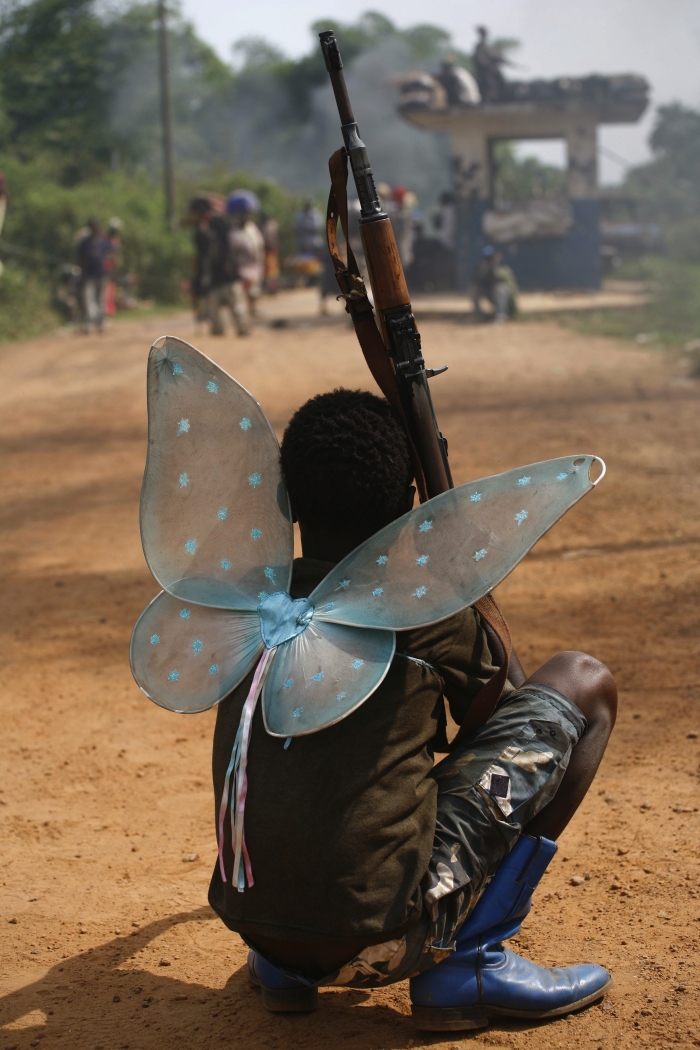
As armed conflicts persist across the world, children are repeatedly recruited into armed groups as soldiers, robbing them of their childhood. While some estimates reveal that girls comprise almost half of all child soldiers, they feature less prominently in post-conflict peacebuilding and rehabilitation efforts. Esther Beckley in her research explores the disproportionate impacts of war on girl soldiers, exposes the gender blindness of post-conflict peacebuilding efforts, and calls into question the legitimacy of peacebuilding programmes.

I joined the army by force in 2004. I was still a minor and married. I was harassed by the chief and it traumatised me a lot. I have a 7-year-old daughter who was born from this harassment.”

These are the words of Charlene Kahrikalembu, a young woman from Goma in the Democratic Republic of the Congo (DRC) who shared her experience with my co-researcher and I[1] about how she was forcefully recruited into the Patriotes Résistants Congolais (PARECO) armed group as a child soldier. Charlene’s narrative echoes that of the thousands of girls who are recruited across the world as fighters, chefs, sex slaves, brides, messengers, spies, and for other reasons in armed conflicts, yet remain unaccounted for during the post-conflict peacebuilding period.

Armed conflicts, wherever they occur, severely affect both people and material resources. Regrettably, the conscription of children, some as young as seven years old, into warring factions is a recurring tendency in armed conflicts, which affects their physical, mental, spiritual, emotional, and material well-being. In most situations, children are recruited to replace adults because they are vulnerable, subservient, and easily controlled.

Nonetheless, when the problem of child soldiers is examined, it is often depicted as a masculine phenomenon, i.e. the enlistment of boys. In researching this topic, I have found that this action is mostly influenced by mainstream perceptions of armed conflict as a phenomenon occurring between males who are ‘naturally’ strong and warrior-like. As Tickner (1992:2) puts it, “International Relations is a man’s world where war and power politics are special positions reserved for men”. This perception is further reinforced in the media with popular images of boys holding rifles, whereas girls are frequently deemed insignificant and rendered invisible within fighting forces. However, studies have shown that in contemporary wars, girls comprise 40% of children associated with fighting factions (Haer 2017).

More so, compared to girls not associated with fighting factions, girl soldiers are disproportionately affected by war. This is due to the lengthy period girl soldiers spend in the captivity of their respective armed groups, making them susceptible to persistent sexual violence, torture, drug use and abuse, and illness (Beckley 2021). For example, in Sierra Leone, the Revolutionary United Front (RUF) led by notorious rebel leader Foday Sankoh used the taboo on women’s nakedness as a weapon of war. This was done by parading naked girls on the frontlines in an attempt to nullify the traditional ‘juju’ (voodoo) used by the Civil Defence Forces (CDF), also known as ‘Kamajors’, who should not see naked women on the frontlines (Oluwaniyi 2019).

From my conversations with female ex-combatants in Goma, eastern DRC, I learnt that girl soldiers were distributed amongst commanders of armed groups to serve as wives, which entailed constant sexual violence and forced pregnancies. This was also the case for the Lord’s Resistance Army (LRA) led by rebel leader Joseph Kony in northern Uganda, which I studied as part of my Master’s research. In the north-eastern part of Nigeria, girls constitute most of the suicide bombers, performing a strategic role for Boko Haram terrorists (Oluwaniyi 2019).

Despite these prominent roles played by girl soldiers in various armed conflicts, they remain marginalised in peacebuilding efforts. Peacebuilding typically comes as a disappointment to most girl soldiers, since they are faced with an identity crisis of whether they should be considered soldiers or mere sex slaves and wives of commanders. This bolsters their exclusion from peace processes like the United Nations’ Disarmament, Demobilization, and Reintegration (DDR) programmes. DDR is the very first stage of the peacebuilding process, aimed at dissolving warring factions, retrieving weapons from ex-combatants, and providing trauma healing and socio-economic opportunities to ex-soldiers to facilitate their reintegration into civilian life.

Rhetorically, gender issues are pertinent to these tasks, but in reality, this is not always the case. First, the design of DDR programmes in most countries requires ex-soldiers to present a weapon to prove their participation in the conflict before they are eligible for DDR benefits. Now,

how does a girl soldier whose body was used as a weapon of war ‘prove’ that she was a soldier?

In Liberia, for instance, commanders had to testify to a girl soldier’s participation in their armed group before she could benefit from the DDR programme.

Consequently, most girl soldiers do not benefit from the DDR procedure due to its masculinist design. They are forced to self-reintegrate into their communities with no physical, mental, social, or economic support. They return to communities where they previously killed their neighbours and relatives with no form of community reintegration, which is included in the DDR package. Hence, they are stigmatised and labelled as ‘damaged goods’, ‘bush wives’, ‘unmarriageable’, etc. It is much worse for girl mothers who return with children labelled ‘bush babies’ and are rejected by their community members.

All in all, peacebuilding efforts remain gender-blind, and one must consider whether the end goal of so-called peacebuilding ventures like the DDR is long-term peace. This raises critical unanswered questions, such as: What are the underlying knowledge and principles used to address gender issues in peacebuilding? How are the categories of difference constructed? By whom and for what purpose? What are the implications of these on girl soldiers and sustainable peace in general? Such questions need to be urgently addressed in studies aimed at investigating gender imbalances in post-conflict peacebuilding.


References

Beckley, E.M and Oluwaniyi O.O (Forthcoming). ‘The Rhetorics of Education for Girl Ex-Combatants in Sierra Leone’s DDR Programme’. Africa Spectrum: SAGE.

Beckley, E.M. 2021, “DDR and the Education of Ex-Combatant Girls in Africa” in The Palgrave Handbook of African Women’s Studies, eds. O. Yacob-Haliso & T. Falola, 1st edn, Springer Nature, Switzerland, pp. 178.

Haer, R. 2017, “The study of child soldiering: issues and consequences for DDR implementation”, Third World Quarterly, vol. 38, no. 2, pp. 450-466.

Oluwaniyi, O. 2019, “Women’s Roles and Positions in African Wars” in The Palgrave Handbook of African Women’s Studies, eds. O. Yacob-Haliso & T. Falola, First edn, Palgrave Macmillan, Cham, Switzerland, pp. 85-105.

Tickner, J.A. 1992, Gender in International Relations: Feminist Perspectives on Achieving Global Security, Columbia University Press, United States of America.

[1] This blog article is based on research I conducted for my Master’s degree five years ago, on further research I am conducting in pursuit of a PhD on gender, conflict, and peacebuilding, as well as that of other researchers in this field.


Opinions expressed in Bliss posts reflect solely the views of the author of the post in question.

About the author:

Esther M. Beckley is a final-year PhD researcher at the University of Malta. She is also a visiting Research Fellow at the International Institute of Social Studies (ISS). Her areas of expertise include gender, conflict, child soldiers, postconflict peacebuilding and development, international interventions in conflict contexts, etc., with a regional focus on sub-Saharan Africa.

Are you looking for more content about Global Development and Social Justice? Subscribe to Bliss, the official blog of the International Institute of Social Studies, and stay updated about interesting topics our researchers are working on.

Marie Antoinette rules in Colombia as the masses protest against inequality

By Fabio Andrés Díaz Pabón and María Gabriela Palacio

Since late November, Colombia has seen unprecedented mass protests, the longest since 1977. These protests illustrate the awakening of a muffled civil society. Protests in Colombia are part of a Latin American “spring”. Demonstrations have, since September, swept across Haiti, Mexico, Nicaragua, Venezuela, Panama, Uruguay, Peru, Ecuador, Bolivia and Chile. But Colombia’s protests are not merely following a regional trend, nor can they be attributed to a single ideological leaning.


Who is protesting and why

Colombians are protesting against inequality, because the country has the most unequal society among the 36 Organisation for Economic Co-operation and Development (OECD) countries. In addition, recent government measures, such as cuts in taxes to wealthy investors and an increase in taxes for the middle classes, have generated a significant backlash in a failed attempt to implement “trickle-down economics”.

Though the Colombian economy has experienced resilient economic growth despite the fall in commodity prices, there is little to no redistribution taking place. The richest 1% of the population captures more than 20% of the total labour income.

Because measures recently adopted by the government probably exacerbate inequalities, peasants, student, urbanites, labour unions and indigenous groups have taken to the streets. Their grievances might differ but the persistence of inequality has led to a reduction of their tolerance to measures that maintain the status quo.

Protesters are demanding the implementation of the provisions signed in the 2016 by the Revolutionary Armed Forces of Colombia — People’s Army Colombian peace agreement. For some factions in the government, demanding the fulfilment of the promises of the Constitution and demanding peace is seen as a subversive act. Yet Colombians are not demanding a revolution; they are demanding the right to a dignifying life and the fulfilment of the promises made by the government.

In a country that is in an armed conflict and is home to one of the highest shares of internally displaced populations in the world, the dismissal of protesters’ grievances constitutes a threat to civil society and democracy. The number of assassinated social and indigenous leaders and activists illustrate these risks.

The motivation for protests relates to the deepening of inequalities and levels of precarity in terms of access to education, health and social protection and the weariness of armed conflict. The strength of the protests can be explained as the result of the transition of the Colombia society towards peace — the peace accords with paramilitaries in 2006 and guerrillas in 2016 opened different venues for political participation — and the strengthening of social movements.

Government’s response

The response from the government of Iván Duque has been one of denials, accusations and failed attempts to regain control over public discourse.

He took office thanks to the political backing of politicians and sectors in society who opposed the peace negotiations with guerrillas and the state reforms taking place since 2010. Once in power, Duque found himself having to comply with state policies his support base did not agree with.

But these groups do not represent the majority of the population. Because of this, Duque faces a 70% disapproval rate and only 24% approval rate, according to a recent Gallup poll. This also means he has no control over the congress, posing a dilemma to his government. Either Duque tries to clear his policies to receive the broader support of society and face the alienation of his core supporters or he loses the capacity to lead the country. Because of this, media such as The Economist have depicted Duque as a president without direction.

Given this limited political space, the government attempted a propaganda campaign that tried to cast protesters as not contributing to the development of the country and drove Duque to plan the first meeting after the national strike with the industrials and business people rather than with the protestors.

This illustrates that the government cannot see that the protests span across race, location and class. Protests have brought together diverse actors that have found in the streets a space of encounter. Social groups are refusing government measures concerning social security, pensions and labour reforms, because they would have a pervasive effect on the livelihoods of the majority of the population. This explains why protests are supported by 74% of the population.

The disconnection between self-interested elites and the rest of society is evident. The proposal for a tax break, such as allowing consumption without value-added tax for three days a year and an extended “Black Friday” as a solution to the protests illustrate how little the government understands its citizens. Initiatives such as these reflect the aloofness of Maria Antoinette; a “let them eat cake” response.

Economists have opposed other proposals tabled by the government as lacking any technical basis. Populist economic measures aim to increase the acceptability of Duque’s government but can drive inequality and further grievances. The elimination of a 2% tax for buying houses worth more than $260 000 shows that the government is not undertaking reforms to improve the livelihood of the majority of Colombians, neither are improving state revenues.

Policy challenges

The debate can be framed about the availability of public resources and how to spend these, but data shows that the country is growing faster than any other OECD country. Nevertheless, the gains of growth are not evenly distributed, because the cost of living for the middle class is growing faster than their incomes.

The state is facing a long-standing problem of export-dependent economies. As the global economy cools down, the demand for Colombian exports has declined. In response to an imminent trade deficit, the state must increase its revenues but is afraid of taxing the wealthy — its remaining support base. This scenario takes place in a country in which informal employment is rising, and the size of industrial production is declining. The country is also going through a demographic transition, with an ageing population adding pressure to the pension system. As the population grows older, fewer contributors can sustain the social security system, and the costs for public health and pension fees increase.

One of the government proposals was to reduce employment costs and make youth employment flexible. Driving the most significant segment of the population into precariousness cannot be sound politics or economics, especially if the government is thinking about financing the pension system for future generations. Duque’s government praises the discourse of innovation and entrepreneurship, but it should consider that people in insecure employment are less likely to take risks and innovate.

Policies need to tackle the sources of inequality in Colombia and work to the benefit of the growing youth and middle class. The policy dilemma the government has is either to increase taxes to the bulk of the population, or reduce exemptions to wealthy citizens. Given the little political capital that the government has, increasing taxes for the wealthy might mean the government could run out of support. But failing to create the fiscal space that could sustain the economy and redistribute income might exacerbate inequalities in the future.

Moving towards an equal society is not only an ethical response to the grievances of diverse social groups but also a necessary condition for accelerating economic growth. Structural changes should be considered. The government should shift its attention towards innovation and industrial policies that can internalise and disseminate technological gains while driving domestic demand towards the local industry. Redistributive reforms are a prerequisite for progress because they help to close structural gaps and lead to higher levels of productivity, full use of capacities and resources, a fairer distribution of income and wealth and provide all citizens with the right to embark on the plans that they consider worthwhile.

Transition from violence

Protests remain spaces of uncertainty and crisis, but they also are spaces of representation, democracy and opportunity. Protesters bypass the structures of representation and send signals to institutions when they do not work. Furthermore, they allow governments to hear different voices and provide valuable feedback on the workings of the economy. Yet privileged actors invest energy and resources in preventing positive dissent and protecting the status quo.

Inequality and precariousness hinder economic growth and social cohesion. The mass protests, in the Colombian case, not only demonstrate how public voice emerges when violence is declining, but also how inequalities can be exposed once violence decreases, because people demand basic rights for the losers of development processes. As the country tries to leave violence behind, the nature of the conversations changed from armed conflict to citizens’ rights. Nevertheless, Colombia is a country that remains in fear of violence, the legacy of a 70-year war. The leadership of the government or its lack thereof remains central in blocking the transition away from violence.


Picture credit: Roboting on Wikimedia Commons


This article was originally published by Mail and Guardian.


UntitledAbout the authors:

Fabio Andrés Díaz Pabón is a researcher at the African Centre of Excellence for Inequalities Research, a research associate in the department of political and international studies at Rhodes University and a researcher at the International Institute of Social Studies in the Netherlands.

200x200María Gabriela Palacio is an Ecuadorian political economist interested in social policy, inequality and exclusion, who works as an Assistant Professor at the Faculty of Humanities of Leiden University. She holds a PhD in Development Studies by the International Institute of Social Studies (ISS).