Tag Archives Nigeria

Bodies Designed for Profit

By Posted on 1681 views

Gender inequality and the discrimination of sexual and gender minorities in Nigeria are often attributed to sociocultural norms and unfavourable state policies. However, reflecting on body politics reveals a deeper entanglement with state control, colonial legacies, and capitalism. Our bodies are not just personal, they are sites of regulation, commodification, and profit. From the exploitation of women in the corporate sector, often referred to as ‘corporate prostitution’, to the policing of gender nonconforming and the sexualisation of bodies in the creative industry, capitalism thrives on controlling and monetising bodies. In this blog, Eno-Obong Etetim reflects on these dynamics and highlights body politics activism in Nigeria, arguing that a decolonial lens is crucial for reclaiming bodily autonomy. 

Photo Credit: Unsplash

Gender inequality and the discrimination of sexual and gender minorities in Nigeria are often attributed to sociocultural norms and unfavourable state policies. However, my reflection on body politics reveals a deeper entanglement with state control, colonial legacies, and capitalism. Our bodies are not just personal, they are sites of regulation, commodification, and profit. From the regulation of the body by the state to the utilisation of certain bodies to drive profits, the body is a canvas for the expression of capitalism and state power. This commodification and socio-political regulation of human bodies encompasses what is termed ‘body politics’ and has birthed the need for activism to reclaim bodily autonomy.

I reflect on my evolving understanding of body politics and its intersection with capitalism through three illustrative examples:  The commodification of women within the Nigerian banking sector – often referred to as ‘corporate prostitution’; The state’s regulation of sexual minorities and gender non-conforming individuals, and; The sexualisation of bodies within the creative industry. With these examples, I explore instances of body politics activism in Nigeria, ultimately concluding with how decoloniality serves as a relevant framework for conceptualising and fostering resistance.

Examples of Body Politics at Work

‘Corporate Prostitution’

The Nigerian banking sector has faced criticism for its gender-specific hiring practices, particularly in marketing roles. For these roles, women are often recruited based on certain physical characteristics, like height, slimness, and lighter skin tone. These traits are frequently perceived as advantageous for attracting high-net-worth clients, mostly men, to the bank’s customer base. This recruitment approach is grounded in the belief that female marketers can use their appearance to boost customer engagement and grow the bank’s clientele. Many financial institutions have been alleged to impose unrealistic sales targets on these marketers, with monthly quotas sometimes reaching millions of Naira. Reports suggest that management may advocate for morally ambiguous practices, evidenced by phrases like “do what you must [to bring in customers],” which could pressure women to utilise their physical appeal in questionable ways to meet these benchmarks. In turn, this trend of sexualising women in the workplace has led some male clients to expect sexual favors in exchange for financial services, such as opening accounts or depositing funds. The systemic focus on profit generation has shifted attention away from ethical considerations, linking career advancement directly to the ability to meet these aggressive targets. Employees who fail to meet these expectations face job insecurity or dismissal.

In response to this commodification of women’s bodies and the pressing need for reform, the Nigerian Senate introduced proposals for an anti-corporate prostitution and exploitation bill in 2010 and again in 2016. These legislative efforts aimed to address the intersection of gender, employment practices, and corporate responsibility within the financial sector.


LGBTIQ+ and State Control

Another significant aspect of body politics lies in how the state regulates sexuality. Harcourt, in her work, connects the discourse on body politics to Foucault’s idea of Biopolitics, which pertains to the socio-political control and regulation of life, often leading to the reinforcement of gendered identities. A closely related concept is Mbembe’s necropolitics, which discusses the sovereignty of the body, often manifesting as state threats to life and death. For instance, in Nigeria, the government enforces discrimination and threatens the lives of LGBTIQ+ individuals through the same-sex prohibition act, which criminalises all forms of same-sex relationships. This law serves as a clear illustration of body politics since it dictates how bodies must exist. The systematic control of bodies as a means to uphold state order has been the subject of academic discourses.  According to  Alexander the state normalises heterosexuality while condemning any sexual orientation that does not contribute to the reproduction of the nation. In this way, the state views bodies merely as sites for reproduction. By placing LGBTIQ+ rights within the context of capitalism and body politics, we can better understand that state regulation of sexuality is also tied to the need to maintain a future labor force. Historically, states have opposed non-traditional family structures because women’s bodies have been seen as essential for population growth. Furthermore, capitalism thrives on hierarchies and a gendered division of labor, but gender non-conforming individuals challenge these established roles and responsibilities. By reinforcing heterosexuality, the state seeks to secure future populations and, ultimately, the labour workforce.


Body Politics and the Creative Industry

The creative industry thrives on the sexualisation of women’s bodies. ‘Sex sells’ is a capitalist phrase utilised in the marketing and entertainment industry as a rationale to portray women’s bodies in an overtly sexualised manner under the guise of sexual liberation. Female talent and capacity for career advancement in the creative industry are measured not by artistic merit, but by whatever erotic heights the body can achieve.
Female artists are subjected to systemic pressures where their physical appearance significantly influences their career opportunities; for instance, actresses are overlooked for roles due to insufficient sexual appeal, and music videos often feature scantily dressed women as vixens, reinforcing a narrative that prioritises hyper-sexualised imagery. This trend reflects a capitalist agenda aimed at profit maximisation, where increased viewership translates into increased financial returns for both the artist and their management. One example is the music video for Cardi B and Megan Thee Stallion’s WAP song – that featured five minutes of ‘twerking’ – which gained 26 million views, within 24 hours of its release, establishing the record for the most views in a day. This is no attempt to condemn the artists themselves but rather to buttress societal response to the hyper-sexualisation of women in contemporary media. The societal pressure to adhere to these narrowly defined body standards has consequently fostered a global market for cosmetic surgeries, with many women opting for surgical interventions to meet these expectations.

Body Politics Activism in Nigeria

Anti-corporate Prostitution and Exploitation Bill

In 2010 and 2016, members of the Nigerian Senate attempted to address the troubling commodification of female workers in commercial banks by proposing the Anti-Corporate Prostitution and Exploitation Bill. This legislation aimed to prevent employers from taking advantage of employees and compelling them to engage in ‘iniquitous’ acts that undermine their integrity for profit. While many hailed this bill as a positive step, it faced significant pushback from the banking sector and ultimately was not passed by the Senate.
Activism may often fail but ‘succeed’ in creating the needed effort to spark public interest in certain issues and catalyse new forms of activism. Although the Anti-Corporate Prostitution Bill has yet to become law, it succeeded in raising awareness and inspired female-led organisations to push for anti-harassment legislation in workplaces and educational institutions within the Senate. One notable example is the anti-harassment bill in tertiary institutions.

Queer Activism

Same-sex unions [and relationships] are illegal in Nigeria, punishable with up to 14 years of imprisonment. This law not only targets same-sex relationships but also criminalises any support offered to individuals within this community. Despite these harsh restrictions, many individuals and organisations are actively fighting for the basic rights to life, health, and social services for queer individuals. Anti-capitalist queer activism in Nigeria has taken on various forms, including campaigns for reproductive justice and opposition to healthcare systems that prioritise profit over essential, life-saving medical care for gender non-conforming individuals, all while facing considerable state resistance. Additionally, efforts to promote inclusion in the workforce for queer individuals, improve representation in organisations and institutions, and advocate against workplace exploitation are all crucial components of body politics activism in the region.

Decoloniality as a Lens for Body Polities Activism

The categories in which we define ourselves – including our understanding of gender and sexuality – are rooted in Universalist perspectives and the “colonial matrix of power”. In her groundbreaking work, The Invention of Woman, Nigerian decolonial feminist scholar Oyéronké Oyewùmí explores how Western discourses have shifted the local socio-cultural understandings of pre-colonial Nigerian societies. She argues that the ongoing debate surrounding the gender binary is, in fact, an imported issue. Oyewùmí highlights how Western privileges tied to the visual perception of bodies created a gendered gaze that systematically categorised certain bodies, perpetuating a narrative of inferiority in comparison to the so-called ‘ideal’ of the white, civilised male. Similarly, Latin American feminist decolonial writer Maria Lugones elaborates on how colonialism has reproduced gendered identities. She contends that binary concepts of gender were used as tools of colonial control, undermining and invalidating the existing understandings of identity. These binaries have played a significant role in sustaining not only capitalism but also patriarchy, effectively serving the Eurocentric agenda aimed at population growth for labour reproduction. Positioning decoloniality in body politics activism requires delinking from Western ideologies of gender and humanness. Activists can benefit from situating their resistance in narratives that do not encourage or conform to Eurocentric and colonial dominant narratives. For instance, recent queer activism by Nigerians has been rooted in re-telling the stories of old Yoruba cosmology by relating its gender complexities and gender-fluid nature through anthropological research and modern art.

Conclusion

Body politics is the commodification and control of human bodies and experiences often through hegemonic power relations, and body politics resistance aims to challenge capitalist, colonial, and socio-political discourses that have shaped hegemonic perceptions of the body. If our bodies are sites that are transformed by hegemonic social relations and “hetero-patriarchal capitalism” we must sever from those ties and learn alternative ways of being, doing, and thinking. Body politics activism provides an opportunity to dispel colonial and hegemonic gendered behaviour that has resulted in the categorisation of women and gender non-conforming persons in the lower global pyramid of power.

This blog was first published as part of the Exercise In World Making 2023-2024.

Opinions expressed in Bliss posts reflect solely the views of the author of the post in question.

About the author:

Eno-obong Etetim

Eno-Obong Etetim is a researcher and recent graduate of the Master’s in Development Studies program at the International Institute of Social Studies. She has several years of experience working on projects focused on gender, health equity, sexual and reproductive rights, and social norms. Her research interests also extend to sustainability and policy interventions that promote social justice.

Are you looking for more content about Global Development and Social Justice? Subscribe to Bliss, the official blog of the International Institute of Social Studies, and stay updated about interesting topics our researchers are working on.

Building Peace Through Time: Reflections on Post-Civil War Nigeria

Over fifty years later, the Nigerian Civil War, a pivotal conflict in the nation’s history, continues to influence contemporary discourse. The recent publication of A Journey in Service by former military Head of State General Ibrahim Babangida has reignited discussions on the war’s legacy and its enduring impact. In this Blog, ISS recent MA graduate, Emaediong Akpan explores the Civil War’s complexities, peacebuilding efforts, and the relevance of time in these processes. She highlights how historical narratives shape current realities and the lessons they offer for the future.

Source: Pixabay

Nigerian Civil War: Causes, Participants, and Casualties

The Nigerian Civil War was a violent conflict between Nigeria, led by General Yakubu Gowon, and the secessionist Republic of Biafra, led by Lt. Colonel Odumegwu Ojukwu (Late).  The war ensued after the breakdown of the Aburi accord, which was designed to promote inclusive governance, leading the Igbos to lose faith in the possibility of existing together as a nation.

The war lasted about 30 months and resulted in the death of approximately two million civilians. There are several accounts of the Nigerian civil war. These accounts often have ethnic, political, and colonial undertones in their presentation of the root causes, the judgment of its outcomes, and the peacebuilding efforts. However, it is important to note that the root causes of the war are numerous. It begins with a colonial history that forced diverse nations with distinct cultures, languages, and identities into a single entity known as Nigeria.

Relevant political causes of the war include the coup on July 15, 1966, which resulted in the deaths of several northern leaders. This event fostered the perception of ethnic motives behind the coup, leading to widespread violence, looting, and a mass exodus of Igbos back to the south.

In the aftermath, Aguiyi Ironsi, the new military leader and an Igbo man, was overthrown and assassinated in another coup led by northern military officers. This coup further exacerbated the ongoing ethnic tensions in Nigeria, as the northern and southeastern regions clashed over power and representation. Ironsi’s removal marked a significant shift in leadership, replacing him with Lieut. Col. (later Gen) Yakubu Gowon, a northerner.

The Relationship Between Time and Peacebuilding


a. The Role of Time in Lasting Peace


In building peace, there is often an expectation for warring parties to negotiate and leave the past behind. Even the Bible says, “do not remember the former things, nor consider the things of old” (Isaiah 43:18). However, peace scholar John Paul Lederach argues that sustainable peace requires acknowledging historical grievances

For those who experienced conflict firsthand, history remains influential in shaping perspectives and interactions. If peace initiatives fail to account for these lived experiences and address root causes, peace remains fragile and susceptible to renewed tensions. The post-war experience of the Igbos illustrates this dynamic; economic hardship, loss of property, and exclusion from federal positions created lasting grievances that were not adequately addressed.

b. There is No Prescription for Peace


Usually, people impose their own ideas of peace on others. In navigating the transition from crisis to a peaceful future, it is crucial to avoid essentialist views, allowing for creativity and acceptance that post-conflict, ‘peace’ may not be easily achieved. Recognizing and acknowledging the experiences of others opens opportunities to imagine a future together. The future is deeply intertwined with the past, forming a continuum where individuals remain connected to their experiences. Agonistic peace becomes relevant here because it fosters non-essentialist perspectives that unlock the creativity needed to imagine the future. It provides space for differences and resistance, holding transformative power.

However, a fixation on uniformity can hinder the healing process, driving a hasty disregard for differences in favor of assimilation. This ultimately ignores basic human needs and sets the stage for disaster. In Nigeria’s case, post-civil war peacebuilding prioritized national unity over addressing structural inequalities. This approach framed the preservation of “One Nigeria” as the primary goal, sidelining discussions of marginalization. The persistence of groups advocating for Biafra today reflects these lingering divisions.

Analysis of Time and Peacebuilding in the Nigerian Civil War

i. Gowon’s Reconciliation vs. Igbo Realities

Following the war, Lieut. Col. (later Gen) Yakubu Gowon introduced a policy of Reconciliation, Reconstruction, and Rehabilitation, ‘forgiving’ the secessionist state, assuming this approach would foster national cohesion. For Gowon, it was natural for peace to follow war, and forgiveness was key to achieving that. However, for the Igbos, peace was not a straightforward transition after war, and ‘forgiveness’ was not as significant to them. They believed that forgiveness was not Nigeria’s to grant; it belonged to them. Genuine forgiveness would require confronting historical events such as the forced amalgamation of Nigeria, coups, mass murders, and the disregard for the Aburi accord. Gowon’s actions thus led to a clash between immediate demands and historical narratives.

Post-war, Gowon focused on restoring the country’s unity, implying that the war’s aim was to preserve territorial integrity. The slogan during the war was, “to keep Nigeria one, is a task that must be done,” reinforcing the idea that Nigeria exemplifies a successful colonial legacy. Instead of fostering genuine peace, the policies adopted were more about maintaining a singular national narrative.

Governments often misunderstand the critical role of time in peacebuilding, focusing solely on the present without considering historical narratives. Gowon’s limited understanding of time caused him to concentrate on the most recent manifestation of conflict which was the civil war while ignoring the longstanding tensions that led to it.

ii. Nigeria Must Be One: Dictating Peace for Others

Violence does not occur in isolation; it is deeply embedded in broader power dynamics. This reality makes agonistic peace appealing, as it fosters the necessary objectivity for conflict transformation. Such transformation enables us to reimagine ‘enemies’ as opponents and ‘antagonism’ as difference, embracing resistance.

The enduring song, “Ojukwu wanted to separate Nigeria, But Gowon said Nigeria must be one…” which I learnt as a child echoes this sentiment and reinforces the belief that the Nigerian civil war was a “just war”. However, it also highlights the failure of Nigerian leaders to recognize that there was a time when the Igbos existed separately. It appears as if the leaders had forgotten this reality, leading to a forced unity.

The historical context I have provided illustrates how political actions transcend time and shape the future. Gowon’s prioritization of political stability over addressing historical grievances has fueled ongoing “structural dimensions of violence,” including the marginalization of Igbos and others aligned with Biafra long after the war ended. This prioritization creates a peace narrative that Mbembe describes as the ‘mutation of war’ that perpetuates violence even after conflict resolution.

In Nigeria, peacebuilding was coerced, and anyone or group who opposed the re-assimilation of all ethnic groups faced criminalization.

Conclusion: Reflections on Transformation

Peacebuilding is a commitment to the future, one that requires a reflective understanding of the past as its foundation. For the Igbos, the civil war is not just history; it is an enduring narrative that continues to shape their identity and lived experiences. Lt. Colonel Ojukwu and Biafra live on through the stories passed down to their children. The dominant narratives of the Nigerian civil war often overlooks the rich history of the Igbos, threatening their existence as a distinct community. To ensure their experiences are recognized, the stories of resilience, survival, and suffering must be told from their own perspective.

I acknowledge that these narratives may not guarantee peace, but it is a crucial step toward understanding the roots of conflict and transforming perceptions of enemies into opportunities for dialogue. A truly inclusive approach is essential for fostering reconciliation. This approach must embrace diverse narratives to address the historical complexities that continue to challenge national unity in Nigeria.

As long as Nigeria’s peacebuilding efforts remain primarily state-driven, these challenges will persist. A more inclusive framework, one that directly engages affected communities and meaningfully acknowledges historical grievances, may offer a more sustainable path forward.

Opinions expressed in Bliss posts reflect solely the views of the author of the post in question.

About the author:

Emaediong Akpan

Emaediong Akpan is a legal practitioner, called to the Nigerian Bar in 2015. She recently graduated from the MA programme Development Studies with a specialization in Women and Gender Studies at the International Institute of Social Studies, Erasmus University Rotterdam. Read her blogs here 

Are you looking for more content about Global Development and Social Justice? Subscribe to Bliss, the official blog of the International Institute of Social Studies, and stay updated about interesting topics our researchers are working on.

Risks and rewards: How travelling with children shapes migrant decision-making

Travelling with children is more complex than travelling alone. It is also more expensive. Yet the impact of children on migration decision-making – and the dilemmas faced by parents and caregivers on the world’s major migration routes – are poorly understood.

In this blog, Chloe Sydney draws upon recent survey data to share initial insights into how parents and caregivers make decisions about migration when children are accompanying them on their journey.

Photo Credit: PACES

Surveying migrant decision-making

Between March and October 2024, the Mixed Migration Centre (MMC) surveyed 1,557 people on the move in Italy, Niger, and Tunisia for PACES, a 40-month Horizon Europe project that aims to understand migration decision-making and thereby also inform migration policymaking (1). Among people surveyed, 11.5% were travelling with children(2).

A gendered and geographical distribution

Women surveyed were nearly four times more likely than men to travel with children, with 24% of women travelling with children compared to just 6.5% of men – and their migration decision-making accordingly constrained.

Geographically, the percentage of respondents travelling with children drops progressively along the route: 16% in Niger,  10% in Tunisia, and just 8% in Italy(3).  As can be observed on MMC’s 4Mi Interactive, a similar trend emerges when broadening the scope beyond PACES to all data collected in the three countries. This may be because parents and caregivers are wary of exposing children to the significant risks found in the Sahara, Libya, and the Mediterranean Sea.

How the risks inform the route

Recommendations and past experiences of family or friends were the most common factor informing choice of route for all respondents. For those travelling with children, safety and familiarity also played an important role in informing decision-making: as illustrated below, those travelling with children were somewhat more likely than others to prioritize safety (30% compared to 26%) and to choose routes they knew best (36% compared to 27%).

However, cost matters too, especially since travelling with children makes things more expensive. ‘My journey here with my children has not been easy at all, I had to spend a lot of money between Benin and Niger’, shared a Togolese father. In the face of limited resources, 35% of those travelling with children chose their route at least partly because it was the cheapest option, compared to 26% of other respondents. Conversely, parents and caregivers travelling with children were less likely to prioritize the fastest route, possibly because faster routes tend to be more expensive.

If the cheapest route involves greater risks, parents and caregivers face a difficult dilemma. Should you expose your children to danger in the hope of finding safety? In the words of British poet Warsan Shire,

you have to understand,
that no one puts their children in a boat
unless the water is safer than the land […]


Keeping safe en route

In the absence of safe alternatives, parents and caregivers take steps to mitigate the risks. As shown below, to protect themselves from crime and abuse, people travelling with children were more likely to travel in a group (58%), stop in places with trusted contacts (42%), and use safer methods of transport (36%). These precautions aim to reduce risks related to crime and abuse, but may also increase the cost of travel.

Despite efforts to protect children from harm, over two-thirds (68%) of respondents travelling with children felt children had been highly or very highly exposed to serious risks such as physical violence, sexual violence, kidnapping or death during the journey.

‘I cannot encourage anyone to take this route, because I lost my daughter during the journey, and I miscarried as a result of the pressure’, shared a Nigerian woman in Tunisia. ‘If you want to go, you should leave your children at home’, warned a father who saw his daughter being raped on their journey from Chad to Tunisia.

Where to go and whether to stay

Just as travelling with children can influence the route taken and the means of travel, it also influences decision-making with regards to choice of destination.

Reflecting parents’ and caregivers’ safety concerns, among those who specified a destination, over half (54%) of respondents travelling with children said they chose it at least partly because it was the safest option(4). This was the case for just 44% of those not travelling with children.

Perhaps to provide for their families, people travelling with children were more likely to mention their choice of destination was influenced by economic opportunities, at 80%. They were also more likely to mention the social welfare system, at 41%. Access to better education mattered somewhat more to them as well, as shown in the figure below.

Finally, travelling with children impacts whether and why people might one day return to their countries of origin. Those travelling with children were more likely to say they would return only if they believed it was safe (26% compared to 18% for other respondents). ‘The security situation is much better here than in our country of origin’, explained a man from northeast Nigeria, surveyed in Niger.

What we’ve learned

Among the people we interviewed, the presence of children impacts migration decision-making. Those travelling with children more often prioritise safety when selecting a destination, deciding whether to return, or to a certain extent when choosing a route. However, as travel becomes more expensive, costs also play a more important role in decision-making, potentially forcing some families to forsake safer, costlier routes in favour of more affordable, perilous journeys.

Our data also highlights the risks faced by children on the move, and their resulting need for specialised protection services. ‘My daughter has suffered many injustices on this route, she will be forever traumatised’, said a mother from Tigray in Ethiopia. ‘She has seen things beyond her years.’ Those who embark on dangerous journeys with their children, however, often have few alternatives: opportunities for safe, regular migration from Tigray, for example, are limited, even though the region is beset by high levels of food insecurity, limited access to essential services including education, and continued political instability.

Endnotes:

1. Since we rely on non-probability sampling, our findings cannot be generalized to all people on the move. Our baseline data collection will be complemented by two rounds of longitudinal data collection, enabling us to examine decisions to stay and migrate over the course of a year and a half.

2. One respondent refused to say whether they were travelling with children.

 3. The proportion of women surveyed remains relatively stable across the three countries, so this does not explain the drop in respondents travelling with children.

4. 177 respondents travelling with children and 1,344 of other respondents had specified a destination.

Funded by the European Union. Views and opinions expressed are those of the authors only and do not necessarily reflect those of the European Union. Neither the European Union nor the granting authority can be held responsible for them.


Opinions expressed in Bliss posts reflect solely the views of the author of the post in question.

About the author

Chloe Sydney

Chloe Sydney is the Mixed Migration Centre’s Global 4Mi and Data Coordinator. She has nearly a decade of research experience, with a particular focus on forced migration. Chloe has a PhD on refugee decision-making with regards to return, and a master’s degree in International Migration and Public Policy.


Are you looking for more content about Global Development and Social Justice? Subscribe to Bliss, the official blog of the International Institute of Social Studies, and stay updated about interesting topics our researchers are working on.

When the State Doesn’t love you back: Navigating identities as a Nigerian woman

Does the State have a character? And is it Gendered?

“The state is a masculine institution,”  assigning rights and belonging along gendered patterns. In allocating these rights, the state decides who belongs in the state and to what extent a person can lay claim to their citizenship. This is both a legal and social decision that affects the feeling of belonging and inclusion The struggle for inclusive citizenship is not new, and from voting rights to property rights, women have had to constantly negotiate with the state about what rights they can enjoy, but not in the same way that men do. This is because Nigerian women are often at a disadvantage, working against multiple levels of assumption, and negotiating male-dominated spaces.

The state is not a neutral entity, only concerned with the maintenance of law and order, rather it descends like a biased umpire into the arena of private life, regulating bodies and relationships. This is what French philosopher, Michael Foucault describes as bio-politics: [state] regulation of its people, taking the form of control over social interaction, health and reproductive rights, and the right to life amongst many others. For radical feminists, bio-politics is an indication of the state’s masculinity and commitment to protecting patriarchy. 

The organisation of state affairs does not occur accidentally, rather it is a deliberate effort to exert a positive influence on life, that endeavors to administer, optimize, and multiply it, subjecting it to precise controls and comprehensive regulations.’ This deliberate effort of the state generally works though subjection that is guided by economic structures and cultural norms that dictate gender roles.

In Nigeria, citizenship occurs at the national level, state, and local government levels. While a woman in Nigeria can claim citizenship  (on paper), true citizenship that is characterized by access to citizenship rights, including social benefits and political participation. True citizenship, then, is something she must consistently negotiate through the course of her life. This negotiation is limited by the state’s decision to favor patriarchy, and this results in the differential capacity of men and women to claim the benefits and privileges that come with being a citizen.

Gender and Citizenship in Nigeria:  Women as Outsiders Within

The 1999 Nigerian Constitution (As Amended) is the reference point for who can be conferred the status of a citizen and who can transfer citizenship. In the country, citizenship is conferred at the national level by birth, where either parents or a grandparent is a citizen of Nigeria or from a tribe indigenous to Nigeria. Under section 26(2), only a man can confer citizenship to his wife through marriage, in essence, a Nigerian woman who marries a non-Nigerian cannot confer this citizenship on her husband or her children. In this way, a Nigerian woman’s citizenship can be considered inferior in the sense that it cannot be transferred to another.

The situation becomes more dire with single mothers who try to navigate citizenship, especially when the father of their child is no longer present or refuses to be in their lives. Women in this situation must attach themselves to a Nigerian male if their child is to identify as a citizen of the country, even with the most basic form of identity, a certificate of birth. These women are left with no other choice than to give their children the names of absentee fathers, or that of a male member of their family to retrieve these certificates from the state. Citizenship is sexual, in the way that, it ‘empowers’ the genders that are beneficial to the state – men. In doing so, the state considers the man as the entity who is able to give life, and the woman’s role is reduced to a body that houses the uterus suitable to carry a (male) Nigerian child, but not confer citizenship upon that child.

Another way the state is implicit in fostering gendered power relations is in the refusal to enact policies to address forms of disempowerment such as protecting the rights of single women who are navigating the rental market in Nigeria. For decades, there has been an outcry of single women in the country with complaints of facing prejudice from property owners because “single women should not rent houses independently.” My first-hand experience as a single woman renting a home in 2014 lends credence to this conversation. My search for a home in Abuja, the country’s capital, was met with several rejections because of my status, but interestingly, this changed when I returned with a ‘hired partner’ and flaunted a shiny make-shift engagement ring. Surprisingly, the property owner was female. As noted by Sathiamma patriarchy is produced by a system, meaning that both men and women can be active gatekeepers of patriarchal norms and practices, albeit sometimes unknowingly. These attitudes are rooted in persistent patriarchal socio-cultural norms that view women as property belonging to men.

While national citizenship is relevant for macro-level discourses, a different form of citizenship also exists within the margins – state citizenship. This is perhaps the most challenging for Nigerian women to navigate. Identities within the Nigerian state are defined in a masculine way. As a Nigerian woman, your identity is often contested and changing in many ways. For instance, at the point of marriage, Nigerian women must pay a fee to the state to change their names to that of their new partner, while notifying the public through print media – in a change of name announcement – that her previous name (father’s name) has been abandoned. These changes must also be replicated across every identity document that she possesses – bank details, international passport, and state and local government identity documents. In the case that her state and local government of origin differs from her husband’s, she continues to be denied indigeneity (rootedness), never fully belonging to her father’s home or her husband’s.

Reflection

The redefinition of a state – as masculine and non-neutral – through a feminist lens provides the needed objectivity to ask critical questions on the state’s role in regulating the public and private lives of its citizens. By looking at how the Nigerian state interacts with Nigerian women through this lens, we can better understand its preconceived roles for female Nigerian citizens.

The Nigerian state is masculine and would continue to subject women’s identities to the whims and caprices of patriarchy whilst denying men who do not fit the ideals of masculinity the right to citizenship. This is operationalized in its administrative processes, how women can (or cannot) access basic needs like housing, and the way that women are treated when they participate in public affairs.

Unless we begin to interact with foundational institutions like the state using a feminist lens to dismantle the assumptions of its rationality, these current efforts at addressing gender inequality will not yield much.

Opinions expressed in Bliss posts reflect solely the views of the author of the post in question.

About the Author

Emaediong Akpan

Emaediong Akpan is a legal practitioner, called to the Nigerian Bar in 2015. She is currently pursuing a Master’s in Development Studies with a specialization in Women and Gender Studies at the International Institute of Social Studies ,Erasmus University Rotterdam. With extensive experience in the development sector, her work spans gender equity, social inclusion, and policy advocacy. Her research examines the effects of technology-facilitated gender-based violence on women and social movements, highlighting how digital spaces serve as sites for power contests and the policing of gender norms.


Are you looking for more content about Global Development and Social Justice? Subscribe to Bliss, the official blog of the International Institute of Social Studies, and stay updated about interesting topics our researchers are working on.

Women’s Week 2023 | From young girls to “bush wives”: Armed conflicts are traumatising girl soldiers in Africa, and post-conflict peacebuilding and rehabilitation efforts could be making it worse

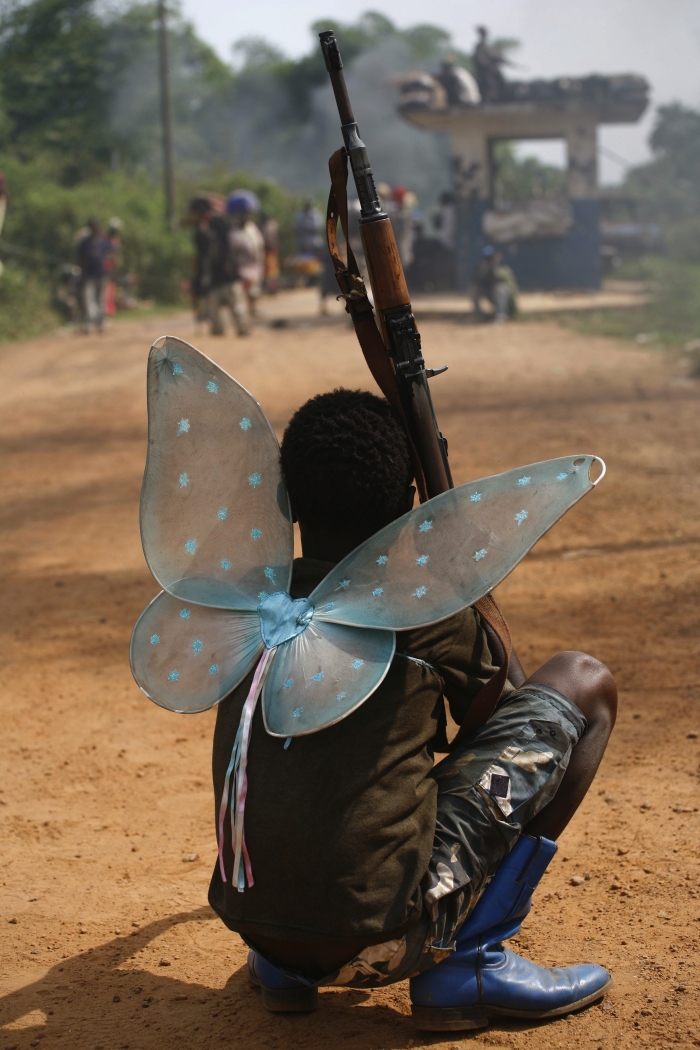
As armed conflicts persist across the world, children are repeatedly recruited into armed groups as soldiers, robbing them of their childhood. While some estimates reveal that girls comprise almost half of all child soldiers, they feature less prominently in post-conflict peacebuilding and rehabilitation efforts. Esther Beckley in her research explores the disproportionate impacts of war on girl soldiers, exposes the gender blindness of post-conflict peacebuilding efforts, and calls into question the legitimacy of peacebuilding programmes.

I joined the army by force in 2004. I was still a minor and married. I was harassed by the chief and it traumatised me a lot. I have a 7-year-old daughter who was born from this harassment.”

These are the words of Charlene Kahrikalembu, a young woman from Goma in the Democratic Republic of the Congo (DRC) who shared her experience with my co-researcher and I[1] about how she was forcefully recruited into the Patriotes Résistants Congolais (PARECO) armed group as a child soldier. Charlene’s narrative echoes that of the thousands of girls who are recruited across the world as fighters, chefs, sex slaves, brides, messengers, spies, and for other reasons in armed conflicts, yet remain unaccounted for during the post-conflict peacebuilding period.

Armed conflicts, wherever they occur, severely affect both people and material resources. Regrettably, the conscription of children, some as young as seven years old, into warring factions is a recurring tendency in armed conflicts, which affects their physical, mental, spiritual, emotional, and material well-being. In most situations, children are recruited to replace adults because they are vulnerable, subservient, and easily controlled.

Nonetheless, when the problem of child soldiers is examined, it is often depicted as a masculine phenomenon, i.e. the enlistment of boys. In researching this topic, I have found that this action is mostly influenced by mainstream perceptions of armed conflict as a phenomenon occurring between males who are ‘naturally’ strong and warrior-like. As Tickner (1992:2) puts it, “International Relations is a man’s world where war and power politics are special positions reserved for men”. This perception is further reinforced in the media with popular images of boys holding rifles, whereas girls are frequently deemed insignificant and rendered invisible within fighting forces. However, studies have shown that in contemporary wars, girls comprise 40% of children associated with fighting factions (Haer 2017).

More so, compared to girls not associated with fighting factions, girl soldiers are disproportionately affected by war. This is due to the lengthy period girl soldiers spend in the captivity of their respective armed groups, making them susceptible to persistent sexual violence, torture, drug use and abuse, and illness (Beckley 2021). For example, in Sierra Leone, the Revolutionary United Front (RUF) led by notorious rebel leader Foday Sankoh used the taboo on women’s nakedness as a weapon of war. This was done by parading naked girls on the frontlines in an attempt to nullify the traditional ‘juju’ (voodoo) used by the Civil Defence Forces (CDF), also known as ‘Kamajors’, who should not see naked women on the frontlines (Oluwaniyi 2019).

From my conversations with female ex-combatants in Goma, eastern DRC, I learnt that girl soldiers were distributed amongst commanders of armed groups to serve as wives, which entailed constant sexual violence and forced pregnancies. This was also the case for the Lord’s Resistance Army (LRA) led by rebel leader Joseph Kony in northern Uganda, which I studied as part of my Master’s research. In the north-eastern part of Nigeria, girls constitute most of the suicide bombers, performing a strategic role for Boko Haram terrorists (Oluwaniyi 2019).

Despite these prominent roles played by girl soldiers in various armed conflicts, they remain marginalised in peacebuilding efforts. Peacebuilding typically comes as a disappointment to most girl soldiers, since they are faced with an identity crisis of whether they should be considered soldiers or mere sex slaves and wives of commanders. This bolsters their exclusion from peace processes like the United Nations’ Disarmament, Demobilization, and Reintegration (DDR) programmes. DDR is the very first stage of the peacebuilding process, aimed at dissolving warring factions, retrieving weapons from ex-combatants, and providing trauma healing and socio-economic opportunities to ex-soldiers to facilitate their reintegration into civilian life.

Rhetorically, gender issues are pertinent to these tasks, but in reality, this is not always the case. First, the design of DDR programmes in most countries requires ex-soldiers to present a weapon to prove their participation in the conflict before they are eligible for DDR benefits. Now,

how does a girl soldier whose body was used as a weapon of war ‘prove’ that she was a soldier?

In Liberia, for instance, commanders had to testify to a girl soldier’s participation in their armed group before she could benefit from the DDR programme.

Consequently, most girl soldiers do not benefit from the DDR procedure due to its masculinist design. They are forced to self-reintegrate into their communities with no physical, mental, social, or economic support. They return to communities where they previously killed their neighbours and relatives with no form of community reintegration, which is included in the DDR package. Hence, they are stigmatised and labelled as ‘damaged goods’, ‘bush wives’, ‘unmarriageable’, etc. It is much worse for girl mothers who return with children labelled ‘bush babies’ and are rejected by their community members.

All in all, peacebuilding efforts remain gender-blind, and one must consider whether the end goal of so-called peacebuilding ventures like the DDR is long-term peace. This raises critical unanswered questions, such as: What are the underlying knowledge and principles used to address gender issues in peacebuilding? How are the categories of difference constructed? By whom and for what purpose? What are the implications of these on girl soldiers and sustainable peace in general? Such questions need to be urgently addressed in studies aimed at investigating gender imbalances in post-conflict peacebuilding.


References

Beckley, E.M and Oluwaniyi O.O (Forthcoming). ‘The Rhetorics of Education for Girl Ex-Combatants in Sierra Leone’s DDR Programme’. Africa Spectrum: SAGE.

Beckley, E.M. 2021, “DDR and the Education of Ex-Combatant Girls in Africa” in The Palgrave Handbook of African Women’s Studies, eds. O. Yacob-Haliso & T. Falola, 1st edn, Springer Nature, Switzerland, pp. 178.

Haer, R. 2017, “The study of child soldiering: issues and consequences for DDR implementation”, Third World Quarterly, vol. 38, no. 2, pp. 450-466.

Oluwaniyi, O. 2019, “Women’s Roles and Positions in African Wars” in The Palgrave Handbook of African Women’s Studies, eds. O. Yacob-Haliso & T. Falola, First edn, Palgrave Macmillan, Cham, Switzerland, pp. 85-105.

Tickner, J.A. 1992, Gender in International Relations: Feminist Perspectives on Achieving Global Security, Columbia University Press, United States of America.

[1] This blog article is based on research I conducted for my Master’s degree five years ago, on further research I am conducting in pursuit of a PhD on gender, conflict, and peacebuilding, as well as that of other researchers in this field.


Opinions expressed in Bliss posts reflect solely the views of the author of the post in question.

About the author:

Esther M. Beckley is a final-year PhD researcher at the University of Malta. She is also a visiting Research Fellow at the International Institute of Social Studies (ISS). Her areas of expertise include gender, conflict, child soldiers, postconflict peacebuilding and development, international interventions in conflict contexts, etc., with a regional focus on sub-Saharan Africa.

Are you looking for more content about Global Development and Social Justice? Subscribe to Bliss, the official blog of the International Institute of Social Studies, and stay updated about interesting topics our researchers are working on.

Border communities in Nigeria continue to remain unsafe: Are border security forces to blame?

Imeko border town remains a significant border area in Nigeria, due to the sizeable economic activity that is carried out there, which contributes to the country’s revenue base. However, despite the economic benefit that the border area provides Nigerian states, it remains marginalised and in a state of heightened insecurity. This article argues that the large presence of various Nigerian security forces, has in no way, ameliorated the security situation in the border area. However, this anomaly can be addressed if proper monitoring of the border area is carried out by relevant authorities.

Marginalisation of border communities in Nigeria: the case of Imeko

Globally, border communities have a long history of marginalisation. These are communities situated on the edge of formal states. Inhabitants of these communities continue to remain the victims of various forms of criminality that occur at the borders, mostly because of a lack of police presence or failure of the security personnel posted to such locations to perform their duties. In Nigeria, border communities have faced various forms of marginalisation, which results mainly from the lack of basic infrastructure like schools, hospitals, health care facilities, potable water and, importantly, protection. Border regions in Nigeria are notoriously dangerous due to cross-border criminalities ranging from smuggling and trafficking activities to the presence of terrorist organisation i.e. the Boko Haram mainly found in the North-Eastern region of the country.

A case in point is the border town of Imeko in Nigeria. Imeko is a traditionally recognisable Yoruba town densely populated  in southwest Nigeria, close to the country’s border with Benin. Most of its inhabitants are farmers, hunters, and traders who take part in predominantly informal cross-border trade (ICBT) activities, otherwise viewed by the government as smuggling, which hence serves as a justification for the deployment, by the government, of a Special Force, known as the Joint Border Patrol, at the border town to curtail such activities.

When I visited Imeko in April 2021 and interviewed inhabitants for my study on the perpetual marginalisation of Imeko border town, it became evident that this border area has been challenged in many ways, ranging from a lack of basic infrastructure to failure to protect the citizens of the border communities. Aside from the fact that they are neglected by the government, there are instances where projects are being approved in the community’s name at the national level, without the community leadership even being informed. As revealed by a local, who was also my guide, the majority of the few schools in the town were built by the community itself before the government took over their management. Yet, these schools are not in good shape, and are short-staffed. An example is the Nazareth High School, where the current Oba[1] of Imeko taught before he became a traditional ruler.

The double burden of marginalisation and violence in Imeko

However, what is perhaps most concerning is how insecure the border area is. Given that Imeko is foremost an agrarian community, the presence of nomadic or semi-nomadic Fulani[2] herdsmen, who roam the region with their cattle, has been a curse according to farmers I interviewed, who claimed that the cattle had destroyed their farmland. Complaints from the people to the security forces stationed in the community about this, and other issues, have fallen on deaf ears, even after the traditional ruler’s interventions. In fact, there have been accounts of complainants being arrested by police officers instead, on the grounds that they are not being accommodating of the Fulani herdsmen, and have also been made to pay for their release from police custody.

While the traditional ruler plays an important role in ensuring that the community mobilises its local resources and strategies to address issues facing the community, the constant state of insecurity puts a strain on the limited resources, given the failure of the police and other security forces, deployed in the border town,  to ensure the security of life and property, and  the prevention of various forms of cross-border criminalities. For example, Figure 1 and 2 below, show burnt vehicles and motorcycles, often used by the local guards when on a search mission for kidnapped persons in the forest.

Figure 1: Motorcycles burnt by their attackers

Source: My Guide, April 12, 2021(Imeko Town)

Figure 2: Cars burnt by their attackers

Source: My Guide, April 12, 2021 (Imeko Town)

Without sufficient protection from the police and other security forces in the area, these acts of violence are likely to continue. It is also worth noting that such violence continues even though this border area is heavily securitised by the government due to cross-border activities that are carried out along the borders such as importation, smuggling, and human trafficking. In fact, at the time of my visit, there were more than fifty checkpoints manned by heavily armed security officers along the stretch of road between Kara (an area known for cattle market in Abeokuta), some 90 kilometres away from Imeko border town. This further confirms the assertion by various researchers of the entrenchment of the border guards and security personnel in the potent mix of poverty and corruption that plagues the border areas.

Are border security forces to blame?

Thus, this also raises the question about the role of the security forces towards addressing the issue of kidnappings of innocent civilians in the border area. Can their presence make a difference? Or are they complicit in the kidnappings? On various occasions, community members, traders, and skilled workers have been kidnapped. While some were released after paying huge sums as ransom, others were found dead.

Based on the interviews I conducted, I concluded that despite the presence of security forces, they are not likely to make a difference, as they are only focused on cross-border activities, while completely neglecting the problems that face communities in the border region. One would assume that the presence of the police and other security forces on the long stretch of road, and in the border town, should have brought some level of safety to the people, however, the opposite has been the case, as the border communities see the deployment of the security forces as part of the problem. Instead of protecting them, the security forces are perceived as aiding and engaging in smuggling activities themselves. According to some locals, while the locals who go to buy items such as rice, cereals, and vegetable oil for personal consumption across the border are stopped by security operatives and their items are confiscated, smugglers are known to offer and pay bribe to the same security forces, sometimes right in the presence of the locals, and are then allowed to drive off with impunity.

Moreover, most robbery and kidnappings happen on the road which is manned by heavily armed security operatives. According to one kidnapping victim, who had been kidnapped in 2019, he was not only dispossessed of huge sum of money which he went to withdraw in Abeokuta, but he was also a witness to women being sexually assaulted, by those he identified as Fulani herdsmen. Therefore, the people in the border communities feel that if this has been happening over the years, and it has not been addressed, then the presence of the security forces manning various check points on the road is futile.  During my time in Imeko, I also observed that as you move into the border town, immigration officers who check foreigners, mostly Fulani, were willing to take bribes from those who did not have any official identification. Even at the checkpoints for items such as rice, cereals, and vegetable oils, officers demanded bribes from the drivers and traders, and if they were unable to pay the bribe, their items were confiscated.

The way forward: what can be done?

The role of security agencies in border communities, therefore, cannot be overstated. As it stands, the communities have lost hope in the ability of the police and security forces deployed in their communities to secure life and property as they are perceived to only come in and engage in activities for personal gains. It is important to note here that this feeling is in no way different from what has also been documented in Nigeria cities. The people do not feel safe as police officers continue to extort money from them. This shows that there is a fundamental structural problem vis-à-vis the salaries/ wages of security personnel, which if paid on time and are a liveable wage, might also motivate them to do their job diligently and objectively. Security experts and concerned citizens have in the past, and continue to this day ,raise and stress this issue for the government to investigate and address.

It is in this light that I would equally add to their voices to say that it is imperative for the federal government to address this concern, as it is the common populace, and often those most vulnerable, who are bearing the brunt. The government, through coordination and leadership of various security organisations, must strictly monitor the activities of officers posted in the border area. In the case where special forces are deployed specifically for curtailing smuggling activities, they must be utilised and enforced to maintain and ensure security and order in the community, rather than waiting for special intervention from the state whenever there is a case of violence and kidnapping. Only when such measures are implemented with urgency, will the border communities, such as Imeko, be safe, and their confidence restored in the ability of the government to protect them.


[1] An Oba is a traditionnal ruler who rules over a Yoruba town or city in southwest Nigeria.

[2] A nomadic tribe found in Northern Nigeria.

Opinions do not necessarily reflect the views of the ISS or members of the Bliss team.

About the author:

Samuel Okunade is a borderlands scholar who researches on borders and migration most especially as it concerns human trafficking and migrant smuggling in Africa. He is also interested in thinking through ways in which social and ethnic cleavages in border communities could be used for economic integration and social cohesion in Africa. He equally advances the course of border communities that have an age long history of marginalization and neglect by the government.

Are you looking for more content about Global Development and Social Justice? Subscribe to Bliss, the official blog of the International Institute of Social Studies, and stay updated about interesting topics our researchers are working on.