Tag Archives development practice

Development Studies cannot become an apology for the status quo

By Posted on 2329 views

Development Studies must always be critical, or it becomes just an apology for the status quo, for exploitation, for the reproduction of inequality within and between nations, and for the destruction of the conditions of life on Earth.

We live in times of converging crises, across the economy, democracy, health, the environment and more, with sprawling implications for ways of living around the globe. These crises and their mutual relationships offer the opportunity for new understandings of the problems of development and possible ways forward, which will inevitably be contested. These debates can be examined historically, focusing on the implications for our discipline.

An overview can start from the period before the Washington Consensus. Politically, it was marked by a strong anti-communism, with the Soviet model offering a plausible alternative to developing countries going through a rapid process of decolonisation and intense left activity. Economically, the dominant notion of development in the West was related to the idea of modernisation as the pathway to an ideal-type advanced capitalism, illustrated by the USA. In turn, economic policy referred to state intervention to provide the economic infrastructure for industrialisation, including public ownership of key industries, substantial aid distributed according to Western policy imperatives and commercial interests, and support for authoritarian regimes aligned with the West. Although the pre-Washington Consensus would now appear extraordinarily progressive, it was heavily contested by scholarship, with Latin American structuralism and dependency theory figuring prominently, and highlighting the inequitable economic structures, social relations and processes that systematically disadvantaged countries in the Global South.

The Washington Consensus emerged in the late 1970s as a dramatic right-wing reaction against the perceived economic and political weaknesses of the previous Keynesian-developmentalist consensus. The Washington Consensus included three main elements. First, the hegemony of mainstream economics within development theory. Second, the hegemony of the World Bank and the IMF setting the agenda for the study of development and the implementation of development policy and, third, ideologically, the attachment of the Washington Consensus to neoliberalism, including the commitment to a notion of ‘free markets’ standing inconsistently between Hayek and Friedman, but unified in claiming that governments were the source of both inefficiency and corruption. While the Washington Consensus claimed to be leaving as much as possible to the market, what it really did was to rebuild the state to intervene on a discretionary basis to promote a globalising and financialised capitalism.

The Washington Consensus was followed, in the 1990s, by the post-Washington Consensus, which was more sensitive to the non-economic domain, and rationalised the ongoing transitions to political democracy in the Global South through appeals to institution-building and the imperative of good governance to limit corruption. Presumably, these goals would be better achieved in a democracy, leading to the conclusion that democracy was good for growth. The promotion of democracy in the South was supported by a development industry parasitic on the poor countries which, suddenly, found reasons to support the World Bank and the IMF, instead of criticising them from financially parched margins.


Financialisation and the degradation of state capacity

Retrospectively, it appears that, from a mainstream perspective, the Washington institutions had stumbled upon the best of all possible worlds: the neoliberal reforms transferred the power to allocate resources to a globalised financial market, while political democracy legitimised the neoliberal state. At the same time, the neoliberal reforms degraded state capacity; multiparty legislatures weakened the Executive; and a supposedly independent judiciary ensured that the neoliberal reforms, an independent central bank, inflation targeting regimes and the conditionalities imposed in return for aid were locked in – all in the name of “democracy” and the “rule of law”.

This arrangement was criticised heavily within Development Studies. The first criticism came through the notion of the developmental state, that was shown to have violated Washington’s prescriptions across the board, for example, through protectionism, directed finance, price and wage controls, and so on. The second criticism focused on the notion of adjustment with a human face, and the impact of the neoliberal reforms on the poor. The third criticism came through the notion of post-development, which highlighted the value and agency of the subaltern.

The field of development has now been transformed again, by the ongoing slowdown in the advanced economies, with global repercussions: even former star performers have been affected, especially since their own transitions to neoliberalism. In parallel, we notice the degradation of neoliberal democracies. They were already circumscribed by an institutional apparatus to insulate economic policy from any form of “interference” by the majority, which dramatically reduced the policy space available to nominally democratic states. The consequence in practice was that those who lost out the most under neoliberalism also tended to be ignored by its institutions.

With the destruction of the left in the previous period, these tensions opened spaces for anti-systemic forces polarised by what may be called ‘spectacular’ authoritarian leaders. These are supposedly ‘strong’ people, that cultivate a politics of resentment, appeal to common sense, claim to be able to ‘get things done’ by force of will, and promise to confront the outsiders who undermine ‘our’ nation and harm ‘our’ people. But, when they reach power, those spectacular leaders always impose policies intensifying neoliberalism, under the veil of nationalism and a more or less explicit racism, and they are often shadowed by the rise of neo-fascist movements. This was the situation until early 2020, and the pandemic only intensified those tensions. Economies imploded, and authoritarian neoliberal systems became catastrophically perverse, often imposing health policies that killed millions and entrenched Covid-19 so it will never be eliminated.


Authoritarianism and Environmental Collapse call for a Transformation of Development Studies

Contemporary economic and political systems are being slowly but relentlessly overwhelmed by the environmental crisis. This crisis relates, fundamentally, to the contradiction between the limitless search for profits and the limited capacity of the Earth to sustain a climate compatible with the continuation of life as we know it. In turn, the search for solutions is limited by tensions between the accumulated emissions by leading Western economies and the rising emissions in developing countries claiming the right to development today, and by the structure of the global economy, in which several countries are invested in the production of fossil fuels even though this is unsustainable, but they refuse to exit. These tensions have been intensified by financialisation, that tends to raise emissions and block mitigation because financialisation feeds procyclical behaviours that reinforce existing economic structures, increase volatility, and concentrate income, wealth and power. This is incompatible with climate adaptation, strategic industrial policy, or redistribution.

Development Studies must always be critical, or it becomes just an apology for the status quo, for exploitation, for the reproduction of inequality within and between nations, and for the destruction of the conditions of life on Earth. Today, Development Studies faces a neoliberal modality of capitalism whose prosperity relies on speculation, despoliation, extraction and fraud, and which may be sliding into permanent economic underperformance, new forms of fascism and environmental collapse. It is urgent to advance a transformative agenda from within Development Studies. These crises ought to be confronted together for reasons of practicality and legitimacy, through a democratic economic strategy, including political democracy, focusing on the restoration of a collective sphere of citizenship, the expansion of rights, the distribution of income, wealth and power (focusing on the decommodification and definancialisation of social reproduction, starting with universal public services), and a green transition in the economy.

The difficulty is that those alternatives must be underpinned by new social movements and new structures of representation, from political parties to trade unions to community associations, corresponding to the current mode of existence of a society that has been extensively decomposed domestically, imperfectly integrated globally, that has distinct cultures but is connected through internet-based tools. There is nothing more important for Development Studies, today, than to support these critiques of neoliberalism, and support the new movements to reshape our mode of existence.


This blog was first published by EADI.


Opinions expressed in Bliss posts reflect solely the views of the author of the post in question.

About the author:

Alfredo Saad-Filho is Professor of Political Economy and International Development at the Department of International Development, King’s College London.

Are you looking for more content about Global Development and Social Justice? Subscribe to Bliss, the official blog of the International Institute of Social Studies, and stay updated about interesting topics our researchers are working on.

Studying the aspirations of youth can tell us a lot more about their worlds

By Posted on 3655 views

[vc_row css=”.vc_custom_1592900783478{margin-right: 0px !important;margin-left: 0px !important;}”][vc_column css=”.vc_custom_1592900766479{margin-right: 10px !important;margin-left: -10px !important;}”][vc_column_text]Aspiration is an implicit element of development that inspires action for change. Yet there are increasing concerns about the individualised and instrumental use of aspirations in development practice. In a recent special issue of the European Journal of Development Research focusing on youths’ aspirations that I guest-edited along with Nicola Ansell and Peggy Froerer, we argue that aspirations should be recognised as socially produced and as positionings by young people in presents shaped by remnants of pasts and the uncertainty of futures. In this post we detail what’s inside the special issue.[/vc_column_text][vc_separator color=”custom” accent_color=”#a80000″ css=”.vc_custom_1594895181078{margin-top: -15px !important;margin-bottom: 10px !important;}”][vc_single_image image=”19793″ img_size=”full” add_caption=”yes” alignment=”center”][vc_separator color=”custom” accent_color=”#a80000″ css=”.vc_custom_1594895181078{margin-top: -15px !important;margin-bottom: 10px !important;}”][vc_column_text]Development discourse is thick with aspirations (Frye 2012; Jakimow 2016). Planning for and bringing about desired change is key to development practice and the longing for a better life constitutes a main driving force for people’s continued engagement with development interventions despite their all-too-frequent disappointments (De Vries 2007; High 2014). Thus, aspiration is an implicit element of the very idea of development.

Yet, increasingly the concept of aspiration has come to feature explicitly in the development studies literature. Reflecting trends in the Global North, this is perhaps most evident in studies focusing on children and youth (see for example: Morrow 2013). Now that some years of schooling have become the norm for most young people the world over, raising aspirations has become a policy mantra to increase learning outcomes, while in other contexts young people’s aspirations are seen as unrealistic because they are ‘aiming too high’.

The academic challenge of working with aspirations is that it may end up promoting ‘individual investment in institutional pathways for self-improvement while protecting these same institutions from blame when these pathways do not lead to the imagined outcomes’ (Frye 2019: 724). At the same time, futures do matter and are unavoidable. This is especially true for children and youth who often spend considerable time in future-oriented institutions such as schools.

These challenges necessitate the need to discuss aspirations more deeply, appraise what it has to offer for studying children and youth in context of development, while also being mindful of problematic uses of the concept. To this end, the European Journal of Development Research has created a Special Issue titled ‘Youth, aspiration and the life course: development and the social production of aspirations in young people’s lives’ that Nicola Ansell, Peggy Froerer and I guest-edited.

We recognised the need to find some answers to basic questions that include:

  • What do we mean when talking about the term ‘aspiration’?
  • How do we conceptualise it from a social sciences perspective?
  • And what is its analytical value in studying young people’s aspirations in contexts of development?

The collection builds on Arjun Appadurai’s (2004) oft-cited text ‘The capacity to aspire’. He pointed out that aspirations ‘are never simply individual’, but ‘always formed in interaction and in the thick of social life’ (2004: 67). We have developed this starting point further on the basis of recent philosophical, sociological and anthropological work on theorising aspiration and desire.

On this basis, the Special Issue takes a critical stance against strands of development research that merely treat aspirations as ‘mental models’ that can be tweaked easily by having people watch certain videos, send them regular text messages, etc. The case in point is the 2015 World Development Report titled ‘Mind, Society, and Behavior’ (World Bank 2015). The World Development Report draws on behavioural economics, neuroscience and social psychology and presents interventions seeking to raise or redirect aspirations as a relatively inexpensive addition to the development practitioner’s toolkit.

The articles in the Special Issue are based on research that problematises the normative and instrumental approach to aspirations that underpins the World Development Report. Rather than judging young people’s aspirations as too high, too low, or of the wrong kind, the authors set out to understand young people’s orientations towards desired futures – whatever these might be, and however these might be expressed. These could be longer-term futures related to desired occupations, but also more immediate futures in which an orientation towards a desired future emerges as important for asserting a particular identity in the present.

Ultimately, we sought to make a balanced intervention in research and practice focusing on aspirations in relation to young people in development. One of the questions that was asked (and answered) is:

How are aspirations socially produced as part of young people’s lives? And what can we learn from this?

Young people’s aspirations do not predict futures. In fact, the work of aspirations is an ever-unfolding dynamic through which possible futures and particular pasts come to have a bearing on the lived moment of the present. Gaining some control over this, however fragile, vague or illusive this may be, is key to making life meaningful, perhaps especially so in adverse and rapidly changing circumstances.

These points were unravelled on the basis of research with widely diverse groups of children and young people, and in relation to varying development issues. The list of contributing articles includes research with:

In addition, two articles focus on youth in China. One concentrates on youth in vocational schools who are often considered as ‘non-aspirational’ (Ole Johannes Kaland), whereas the other focuses on young people who did enter university. This latter illuminates the high price young people end up paying for realising China’s national aspiration of educational expansion (Willy Sier).

And finally, one article moves the lens away from young people themselves and critically discusses development organisations’ knowledge claims about rural youth’s aspirations about farming futures (Ben White).

Collectively, the articles underscore the importance of appreciating aspirations as socially produced, and therefore never just an individual property. In contexts of development characterised by rapid and dramatic change, strategies for realising a realistic future that were valid in the recent past are rapidly becoming irrelevant, obsolete, or may have become closed-off altogether. This emphasises the importance of conducting research with young people themselves and taking seriously their aspirations as they are positioning themselves in presents shaped by remnants of the past and uncertain futures. The Special Issue is a dedicated effort to furthering this research agenda.


This text is a highly condensed version of the editorial introduction of the Special Issue.


References

Appadurai, A. 2004. “The Capacity to Aspire: Culture and the terms of recognition.” Pp. 59-84 in Culture and Public Action, edited by V. Rao and M. Walton. Stanford: Stanford University Press.

De Vries, P. 2007. “Don’t Compromise Your Desire for Development! A Lacanian/Deleuzian rethinking of the anti-politics machine.” Third World Quarterly 28(1):25-43.

Frye, M. 2019. “The Myth of Agency and the Misattribution of Blame in Collective Imaginaries of the Future.” The British Journal of Sociology 70(3):721-730.

High, H. 2014. Fields of Desire: Poverty and policy in Laos. Singapore: NUS Press.

Morrow, V. 2013. “Whose Values? Young people’s aspirations and experiences of schooling in Andhra Pradesh, India.” Children & Society 27(4):258-269.

World Bank. 2015. “World Development Report 2015. Mind, Society, and Behavior.” Washington: International Bank for Reconstruction and Development / The World Bank.[/vc_column_text][vc_separator color=”custom” accent_color=”#a80000″ css=”.vc_custom_1594895181078{margin-top: -15px !important;margin-bottom: 10px !important;}”][vc_column_text css=”.vc_custom_1616067807407{margin-top: 0px !important;}”]About the author:

Roy Huijsmans is a teacher/researcher at the ISS.[/vc_column_text][/vc_column][/vc_row][vc_row][vc_column css=”.vc_custom_1596795191151{margin-top: 5% !important;}”][vc_separator color=”custom” accent_color=”#a80000″ css=”.vc_custom_1594895181078{margin-top: -15px !important;margin-bottom: 10px !important;}”][vc_column_text]

Are you looking for more content about Global Development and Social Justice? Subscribe to Bliss, the official blog of the International Institute of Social Studies, and stay updated about interesting topics our researchers are working on.
[/vc_column_text][vc_column_text][newsletter][/vc_column_text][vc_separator color=”custom” accent_color=”#a80000″ css=”.vc_custom_1594895181078{margin-top: -15px !important;margin-bottom: 10px !important;}”][/vc_column][/vc_row]

Norms: How can we start tackling something so often ignored in governance work? by Katie Whipkey

By Posted on 1574 views

What do you get when you cross university researchers, development aid practitioners, and a few people somewhere in between? This sounds like it could be the start to a good joke, but it could actually be the start of something much more meaningful. A group of 19 researchers and practitioners got together at the CARE Nederland office to talk about a major gap in the research literature and development practice: governance norms.


Yes, norms are a hot topic in research and development and much attention has been given to considering gendered norms, corruption, and other very important topics. But, thinking about how norms interact with governance systems is something that is rarely addressed head-on. CARE Nederland decided to convene this group to start the conversation.

So, what do norms have to do with governance? Perhaps more than you might think! Governments and public authorities worldwide are faced with norms every day. It could be something as simple as community members at the village level being expected to buy a drink for their local representative in order to get a small need met or as complex as maintaining power for an ethnic group at the national level. Regardless of what it is, many studies have been undertaken to try to understand different types of norms in a variety of sub-themes and numerous interventions have been launched to change them. Despite this variety of studies and interventions, few have directly tackled the theme of norms in governance directly.

There are many definitions of what constitutes a norm, but for the sake of this conversation, we’re using a shared understanding that a norm is a collective belief that influences what behaviors people do. A norm is a norm because it relies on others, whereas an attitude, for example, could be an independently-held belief. Norms could be about what people believe others are doing and about what people believe others think they should be doing. Norms can directly translate into a behavior or there could be many norms that collectively influence a behavioral outcome. Certainly, some norms are stronger than others; norms can range from being essentially obligatory in a society to something just relatively common or possible. All this in mind, of course, public authorities will encounter norms every day in many aspects of their jobs.

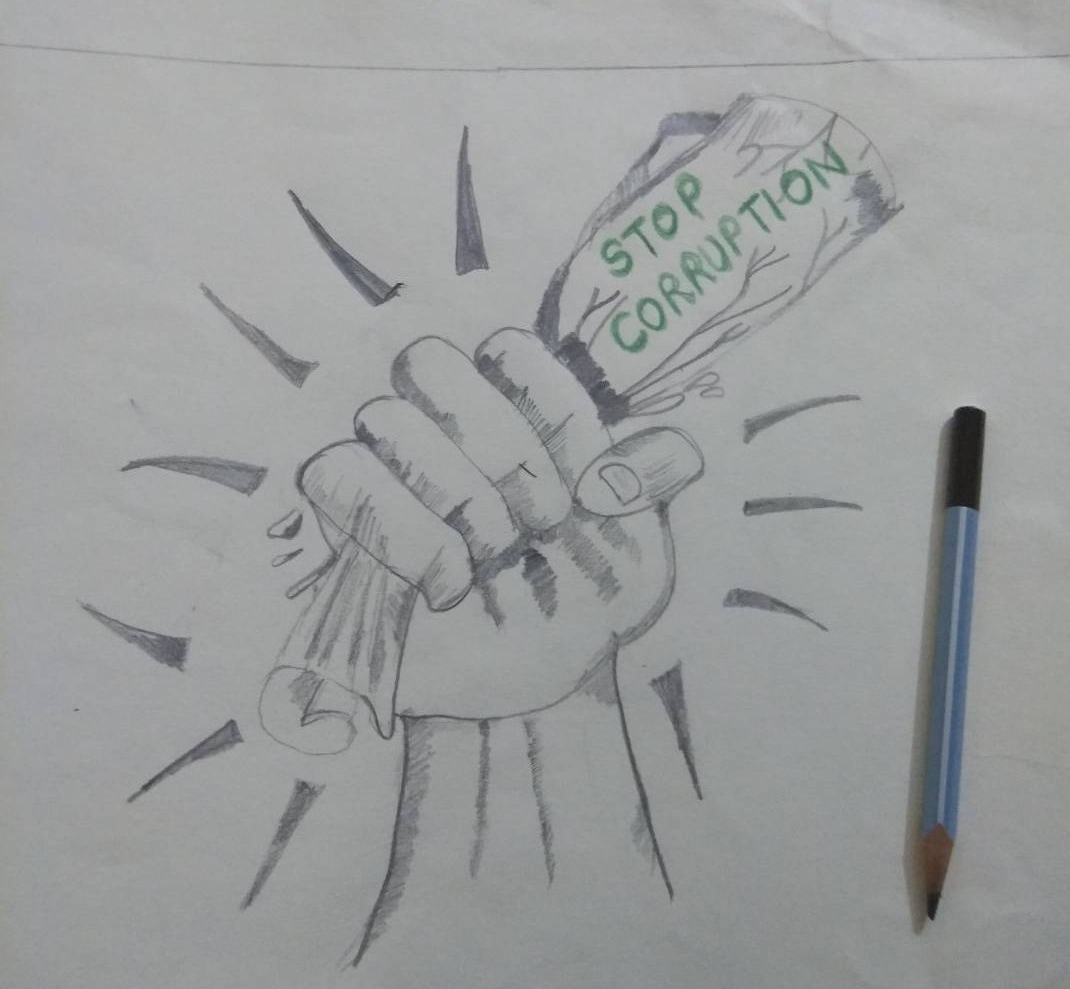
Norms often persist due to the propensity for solidarity, reciprocity, and a sense of obligation. In other words, corruption norms often persist because officials are expected to take care of their own. If a norm is socially accepted, it is legitimized and likely to persist even if it is damaging. For example, if a norm exists that public officials must take bribes and a new, well-meaning public official decides to break this norm, then he/she could risk being ostracized from colleagues or even risk losing his/her job. Regardless, norms require reference groups (these are the people who others believe dictate whether a norm is accepted) and sanctions (punishments or rewards for breaking or upholding the norm). In our example here, the reference group would be peer public officials and the sanction would be being ostracized or losing the job.

We should consider putting power at the center with many forces such as institutions, individuals, resources, social structures, and societal morals and values all working to create and maintain norms. And of course, people experience power dynamics and inequalities differently, so the intersectionality of power is also a driver of governance norms.

In general, norms are part of an ecosystem. They persist from the macro to the micro and can be experienced differently in different parts of the ecosystem. Norms can be changed by drivers such as the economy, through official mechanisms such as law changes, or through personal motivations from awareness raising or other activities. In fragile and conflict settings, there may be a mismatch between traditional and modern norms that could create tensions between sub-groups. In governance processes, this could create a fundamental divide between more modern or national government systems and more traditional or local governance processes, which could be a driver for enabling such norms to persist.

We have a lot of considerations if we want to tackle this issue together. Not least of all are our ethical considerations: Who are we to change a deeply-held norm? How do we balance incentives such as development aid if we tie them to norm change? How do we ensure that we’re not entangling our personal values with what is truly best for communities? How do we generate internal motivations for communities to change norms on their own? These questions and so many more are important considerations for both researchers and practitioners.

By the end of the first meeting, it was quite clear that we still have a lot of work to do to understand governance norms. We must first understand and then seek to challenge governance norms if we want to make meaningful progress toward sustainable and inclusive governance processes worldwide.


This blog was based on a working group event for experts in the topic of social norms in The Netherlands on 1 July 2019 and was originally published here. The event was sponsored through the Every Voice Counts project of CARE Nederland, funded by the Dutch Ministry of Foreign Affairs.

Members of the social norms expert group include: Emmely Benschop (The Hague Academy of Local Governance), Sylvia Bergh (International Institute of Social Studies, Erasmus University Rotterdam), Lori Cajegas (CARE Nederland), Ben Cislaghi (London School of Hygiene and Tropical Medicine), Jacopo Costa (Basel Institute on Governance and University of Basel), Ine Cottyn (Clingendael Institute), Marleen Dekker (Leiden University African Studies Center), Volkert Doop (VNG International), Edin Elgsaether (Netherlands Institute for Multiparty Democracy), Elsbet Lodenstein (Royal Tropical Institute), Berlinda Nolles (CARE Nederland), Pavithra Ram (RNW Media), Ambra Scaduti (Oxfam Novib), Reintje van Haeringen (CARE Nederland), Merlijn van Wass (CARE Nederland), Fatma Wakil (CARE Nederland), Katie Whipkey (CARE Nederland), Karin Willemse (Erasmus School of History, Culture and Communication) and Franz Wong (Royal Tropical Institute).


Image Credit: Mehzabi on Wikimedia. The image was cropped.


About the author:

katie whipkeyKatie Whipkey is the Policy, Research, and Communications Officer for the Every Voice Counts programme at CARE Nederland. Katie joined CARE in February 2019 to work on promoting inclusive governance and expanding the voice of women and youth in fragile and conflict-affected settings through evidence-based research. Prior to CARE, Katie worked at RAND Corporation as a policy analyst. Katie has an MSc in Public Policy and Management from Carnegie Mellon University.