Development Dialogue 19 | Why we need alternatives to mainstream education — and how the ‘Nook’ model of learning can show us the way

By Posted on 2371 views

Contemporary education models continue to reflect and perpetuate colonial educational priorities and by virtue are intricately tied to goals of shaping ‘children as future adults’ and creating a ‘productive’ workforce through education. In the process, they exclude marginalised groups of people, denying them the opportunity to learn and thrive. Alternatives to mainstream education models have been sought all over the world and are gaining traction. In this blog article, Anoushka Gupta discusses ‘Nooks’, alternative community learning spaces that non-profit organisation Project DEFY has introduced in several Asian and African countries, and shows how they are transforming the way in which people approach learning.

Learners working on projects during the design phase. Source: Project DEFY.

Situating systemic challenges within mainstream education models

The outdatedness of several mainstream education models in their failure to enable individuals and communities to respond to emerging challenges have long been recognised. Yet, not much has been done in terms of questioning the foundational principles of these models and in finding enduring alternatives. Such alternatives are needed particularly in Asia and Africa, where several systemic challenges confront educational systems.

It is well known, for example, that the founding principles of schooling systems rest on the assumption that child development is a linear process — it is thereby assumed that a child of a particular age must learn certain skills and competencies before progressing further[1]. As a result, as children move through school, their worth is increasingly tied to their performance in standardized examinations, placing immense pressure on them to do well and limiting opportunities to explore interests or enjoy the process of learning. Metrics to understand what constitutes ‘success’ over the years (through assessment results or further educational trajectories) have standardised experiences and divorced education from its local context[2].

Moreover, differences in material wealth and social location play an important role in understanding variations in ‘success’ defined through assessment results. For example, Dalit and Adivasi communities in India who were historically excluded from economic resources and formal educational systems face challenges in meeting the uniform testing criteria, which puts them at a disadvantage in many disciplines and professions even today[3]. In Uganda, high rates of teenage pregnancy and associated stigma reproduce exclusion and drive girls to drop out[4].

These instances demonstrate that mainstream schooling is built on rigid eligibility rules and criteria for success that fail to secure an environment where learners feel safe and heard and where they can explore their interests instead of sticking to uniform curricula, often detached from their own realities. In the next section, I will show how the Nook learning model seeks to contend with such hegemonic education models and creates safe spaces in which learners can thrive without excessive pressure to perform.

Questioning why we learn

First conceptualised in 2016 by Abhijit Sinha, founder of the India-based non-profit organisation Project DEFY,[5]Nooks are physical community learning environments located in under-resourced places that are accessible to learners irrespective of their age, gender, marital status, and socio-economic background. These spaces are built on questioning the fundamental purpose of learning, which for mainstream models often is creating a productive workforce by teaching them standardised knowledge and skills instead of centring interest as the main driver of learning.

Sinha’s experiment started in a small village in Karnataka, India. Disillusioned with his own educational experiences in one of India’s top engineering colleges, he envisioned a space equipped with basic tools and without strict instructions or rules that would push learners to really explore their interests and would encourage resourcefulness, teamwork, and innovation. These spaces later expanded, went through several iterations, and became the ‘Nooks’ they are today. And they continue to be adapted to new conditions and the needs of learners and communities. Since 2016, 41 Nooks have been set up and 32 are currently operational through partnerships with local organisations across Uganda, Rwanda, Zimbabwe, India, and Bangladesh.

The freedom to choose how (and what) to learn

Nooks follow ‘self-designed learning’ as the pedagogical orientation where the core belief rests on learners defining and designing their own educational goals in an enabling environment. Each space is equipped with basic tools, raw materials, the internet, and laptops and has two fellows who act as mentors.

The Nook follows a cycle-based structure comprising four stages:

  1. Exploration — fellow-guided sessions that introduce learners to diverse learning areas (from robotics to art to storytelling).
  2. Goal Setting — the identification and articulation by learners of a specific learning goal based on their interesteither from areas in the exploration stage or something totally different, as well as their definition of the steps and resources required to translate the goal into a project.
  3. Design — the execution by learners of the project, which they spend approximately three to six months on (the length of the cycle differs depending on the Nook).
  4. Exhibition — the presentation of their work at an event known as an ‘external exhibition’, which is used as a platform for showcasing learner projects to community members and external stakeholders.

Conversations, reflections, and enjoyment

In each cycle, beyond working on projects, learners gather twice a day in opening and closing circles to discuss any troubles they have faced, be it related to their project or something that bothers them in general. Reflections during these designated discussion hours are meant to build a sense of community in the Nook. Many learners have chosen to take up problems in their community – for instance, learners are trying to tackle environmental pollution in the Barishal Nook in Bangladesh. This approach to learning allows individuals to share challenges without judgment and allows them to flexibly explore their interests without assessments or pressures of completion. It intends to recentre the role of learners’ agency and to foster an understanding of individuals as part of a larger collective.

An opening circle in one of the Nooks. Source: Project DEFY.

The Nooks have also had a wider impact. First, self-designed learning naturally implies that projects differ across and within Nooks. A common thread, however, is that learners tend to pick up problems they see in their surroundings or delve deeper into an area they were curious about. In the Bulawayo Nook in Zimbabwe, for example, a learner articulated his desire to build an artificial limb, explaining,Personally, I need it. I would also want to help other people in my community who are disabled once I achieve this goal. The cost of artificial legs is very expensive in the country so that is why I decided to make a cheaper and innovative one”.

Several learners also revealed that their goals challenged normative gendered ideas of learning and work. For instance, in the Gahanga Nook in Rwanda, a female learner spoke of how she intended to learn tailoring initially. However, with exposure to different areas, she discovered her interest in welding despite initial resistance from her family. With time and through encouragement from peers and fellows, she created a hanger and a garden chair, ultimately convincing her family to support her.

Lastly, Nooks foster a community identity. Before Nooks are set up, a community mapping exercise is carried out to understand how the space potentially adds value to the lives of community members. The eventual goal of each Nook is for learners to drive the concept independently. While Nooks are still young and learners running the Nook independently are yet to be located, several seeds of leadership from within Nooks have been sown. Beyond taking on day-to-day responsibilities, steering opening and closing circles, and mentoring fellow learners, the transition of several learners to Nook facilitator roles is encouraging.

Expanding the ‘idea’ behind and beyond Nooks — some final takeaways

Globally, enhancing access to schooling is hailed as a marker of development. Yet, the exclusion and disempowerment that are part of both the design and implications of such beliefs are rarely questioned. In contexts where disempowerment stems from wider socio-economic barriers that trickle down to schooling, Nooks demonstrate the value of learning spaces that allow flexibility to explore one’s interests without imposing restrictions on what to learn. In turn, the emphasis on contextual learning and engagement with community challenges as part of the learning journey seeks to upturn individualised notions of education.

Finally, while ‘community-led development’ is increasingly used as the go-to buzzword among development practitioners and donors, very few are truly willing to let go of predetermined criteria to measure the ‘output’ and ‘outcomes’ of education interventions. Truly recognising the agency of the learners and communities means first questioning our own metrics of what constitutes ‘success.’


This blog article draws on a recent working paper published by Project DEFY that can be accessed here


References:

[1] Prout, A. & James, A. (1997) ‘A New Paradigm for the Sociology of Childhood? Provenance, Promise and Problems’ in Prout, A. & James, A. (ed.) Constructing and Reconstructing Childhood: Contemporary Issues in the Sociological Study of Childhood. Second edition. London: Falmer Press. pp. 7-32.

[2] Ydesen, C. and Andreasen, K. (2020) “Historical roots of the global testing culture in education,” Nordic studies in Education, 40(2), pp. 149-166. DOI: 10.23865/nse.v40.2229

[3] See Ch2 ‘School Education and Exclusion’ in India Exclusion Report 2013-14. pp.44-75. Available at: IndiaExclusionReport2013-2014.pdf (idsn.org)

[4] Study-report-on-Linkages-between-Pregnancy-and-School-dropout.pdf (faweuganda.org)

[5] For more on Project DEFY, see https://hundred.org/en/innovations/project-defy-design-education-for-yourself


About the author:

Anoushka Gupta is a researcher based out of India. Her research interests include child and youth wellbeing, understanding social exclusion, and utilising participatory methods in community-based research. She has worked extensively with non-profit organisations primarily in India on educational quality and community-based learning models. She previously majored in Social Policy as part of the MA in Development Studies from the International Institute of Social Studies, Erasmus University Rotterdam and holds a Bachelor’s degree in History from St. Stephen’s College, University of Delhi.

COVID-19 and Conflict | How pandemic regulations are being used to target the political opposition in Zimbabwe

Introduction to ‘Covid-19 and Conflict’ Blog Series: When Disasters, Conflict and Covid-19 Collide

Responding to the international Covid-19 pandemic is particularly complex in settings of (post) conflict and/or conflict settings underpinned by authoritarian political regimes. In such scenarios, the national responses to the pandemic may be weakened, the infrastructure to respond adequately may be lacking, and power games may easily ensue where response to the pandemic get instrumentalised to serve political interests. To get a better grasp of the interaction and dynamics of top-down and bottom-up Covid-19 responses in such settings, research was conducted in seven different contexts over the summer of 2020, and the findings will be showcased on Bliss through several blog articles. 

The research underlying the blogs was facilitated by the Netherlands Organisation for Scientific Research (NWO) and made possible by a NWO grant (number 453-14-013). It is linked to the research project ‘When Disaster Meets Conflict’ (Discord) hosted at the ISS. More comprehensive findings of the case studies will be shared in different formats, including working papers or articles, on the VICI research webpage: www.iss.nl/whendisastermeetsconflict


Covid-19 and Conflict | How pandemic regulations are being used to target the political opposition in Zimbabwe

By James Kunhiak Muorwel, Lara Vincent and Lize Swartz

Relatively few Covid-19 infections and deaths have been registered in Zimbabwe, yet the Southern African country has been hit hard by the pandemic. Our recent research on Covid-19 responses in Zimbabwe shows that in the face of a strict lockdown and ongoing economic repercussions, one of the biggest worries for Zimbabwean citizens ironically is falling prey to the instrumental and strategic use of laws meant to protect them from the virus, which are apparently being used to continue decades-long political repression.

prison covid corona


While Zimbabwe has registered relatively few Covid-19 cases since the virus first appeared here on 20 March this year, the country’s political and socio-economic situation has ensured that the pandemic’s impact has been severe despite low infection and death rates. A country in Sub-Saharan Africa notorious for years of misrule and economic mismanagement under Robert Mugabe following independence from Britain in 1980, Zimbabwe’s challenges have been severe. Now, hopes of progress in the country’s ongoing bid to free itself from the chains of dictatorship that have bound it for decades and the consequent economic effects that continue to haunt the country following the transition to a new government have been dashed by the onset of the pandemic in March. Critical voices have been forcefully silenced by the current regime, which has used the pandemic as a pretext for renewed political repression.

Research on Covid-19 responses in Zimbabwe carried out between June and August this year by James Kunhiak Muorwel and Lara Vincent sought to provide a compact overview of grounded experiences of life in Zimbabwe during the lockdown. For the research, the greatest challenges for civil society, in particular given Zimbabwe’s fragile political context, were investigated by conducting online interviews with some key informants and studying reports, news articles, and other sources. A few key findings are detailed below.

Like most other countries, following the first registered case of Covid-19 in March this year, Zimbabwe introduced stringent measures to slow the spread of the virus. Measures were rolled out in two phases: first, in April, the country was placed under a total lockdown lasting for 21 days. All economic activity ceased as people were confined to their houses, forced to eke out a living and survive on the bare minimum. Then, the economy was partially reopened and the movement of people eased in a bid to prevent the economy from suffering further and to counter hunger and increased poverty.

But especially in the first lockdown phase, many Zimbabweans were forced to break lockdown regulations—with severe consequences. A majority of Zimbabweans rely on the informal sector for their living. In 2020, the World Bank estimated that extreme poverty in the country is on the rise – “from 29 percent in 2018 to 34 percent in 2019”. It could even get worse when you add to the mix the impact of the pandemic and lockdown on the country.

The impact has already been significant, compounded by health and sanitation problems, poor economic performance, high unemployment rates, droughts, food insecurity, corruption, and the general political climate in the country. Closing businesses and restricting free movement of the majority of the population who rely on informal jobs for survival as part of the lockdown might have been economic suicide for the country. As lockdown measures took effect and most businesses remained closed, many families went hungry, without money to stock enough food. Basic staple food items such as mealie meal (maize meal) became scarce. Cases of gender-based violence have spiked during this period partly because families are confined to one living environment for longer periods than before the lockdown. It may have also exacerbated anxiety and mental health problems.

Many Zimbabweans thus felt they had no choice but to disobey the regulations, our research shows. Their actions attracted a disproportionate response from the government. In July 2020, the BBC reported that 105,000 people said to have breached restrictions were arrested. These numbers quoted are between March (when the lockdown came into effect) and July, but more people might be behind bars. Parliamentarians representing the opposition party, the Movement for Democratic Change (MDC), a renowned journalist, as well as a prominent novelist were arrested in July for organizing an ‘illegal’ gathering to protest against the lockdown measures, exposing corruption, and demand for the resignation of President Emerson Mnangagwa. The government has called those arrested “dark forces,” and the protesters a “few bad apples”.

Our interviews[1] with research participants, as well as a study of NGO reports and continuous allegations by human rights groups, have revealed widespread arrests and money extortion by the state’s security apparatuses during the lockdown. As Peter[2], one of the research participants, bluntly stated, “for me, the lockdown was a convenient political state of emergency, not necessarily a public health statement.” He also expressed his frustration that citizens who were being arrested for breaking lockdown regulations were being placed in crowded cells where social distancing was not possible.

The phenomenon of arresting opposition figures is not new. For over four decades, the political regime headed by former president Robert Mugabe was characterized by violent suppression of political dissent. The opposition was targeted under the pretext of bogus laws that made their actions appear illegal. His successor, current President Manangagwa, has also been accused by human rights groups and the opposition party of using old tactics to exploit the current situation. Yet the transition to a new political regime following Mugabe’s toppling brought hope to many Zimbabweans. It now seems overshadowed by the threat of violent repression—the spectre seems to have not disappeared, after all.

Staying at home is not an option for most Zimbabweans, especially when they do not have savings or social protection measures to help them bear the economic burden of the pandemic lockdown. As they continue moving around, they continue putting themselves at risk of arrest and torture by the police, first, and of infection with Covid-19, second. What will the consequences be?

Zimbabwe is not the first country to treat a pandemic or a disasters triggered by natural hazards as a national security issue, but it is the consequences of the government’s actions at this particular time that are worrying. We anticipate that harassment and illegal arrests of political opponents and vendors by police in the name of lockdown violations will leave the society polarised more than ever before thereby setting the stage for more street confrontations between the security apparatuses and the demonstrators. It is troubling that there is a brutal crackdown on the violation of lockdown regulations without taking into account the circumstances, and we see that street vendors, commuters and the like are treated as political opponents. It is imperative to continue sharing grounded experiences of political repression in Zimbabwe and to speak out against it so that it does not undo all the progress that has been achieved in the last few years in reversing the devastating impacts of Zimbabwe’s rule under Mugabe’s dictatorial regime.


[1] A research project on Covid-19 in Zimbabwe that was conducted by Lara Vincent and James Kunhiak Muorwel between June and August 2020 was part of the International Institute of Social Studies of Erasmus University Rotterdam’s “When Disaster Meets Conflict” project that looks at ‘informing better linkages between top-down, external measures and local, socially and culturally appropriate initiatives’. NWO project number 453/14/013

[2] Name has been changed to protect interviewee’s identity.

About the authors:

James Kunhiak Muorwel holds an MA degree in Development Studies from the International Institute of Social Studies of Erasmus University Rotterdam and BA in Business Administration from Makerere University. His recent research was on the Covid-19 situation in Zimbabwe. He also has many years of work experience with international development organisations, including the UN. Follow him on Twitter @JKunhiak

Lara Vincent holds an MA degree in Development Studies from the International Institute of Social Studies of Erasmus University Rotterdam. While at ISS she majored in Agrarian, Food and Environmental Studies, with a specialisation in Environment and Sustainable Development.

Lize SwartzLize Swartz is the editor of ISS Blog Bliss and a PhD researcher at the International Institute of Social Studies of Erasmus University Rotterdam. She researches the biopolitics of water scarcity in South Africa.
Are you looking for more content about Global Development and Social Justice? Subscribe to Bliss, the official blog of the International Institute of Social Studies, and stay updated about interesting topics our researchers are working on.


The ‘Economic Trauma’ that Zimbabwe faces by Susan Wyatt

By Posted on 3007 views

Zimbabwe, once considered the breadbasket of Africa, now lies in an economic flux. A new term, ‘Economic Trauma’, is proposed in this blog to draw attention to the societal impacts of historical, perpetuating, and contextual lines of trauma that influence the current situation.  


We use language like economic hardship, economic turmoil, or economic crises, but seldom if at all do we talk about Economic Trauma. We think of trauma in terms of confronting direct, physical acts and their consequences. We recognise emotional and mental trauma as being damaging to a person’s psyche. However, bubbling away in Zimbabwe for some time is something I’ve recently experienced a first-hand assault in – Economic Trauma.

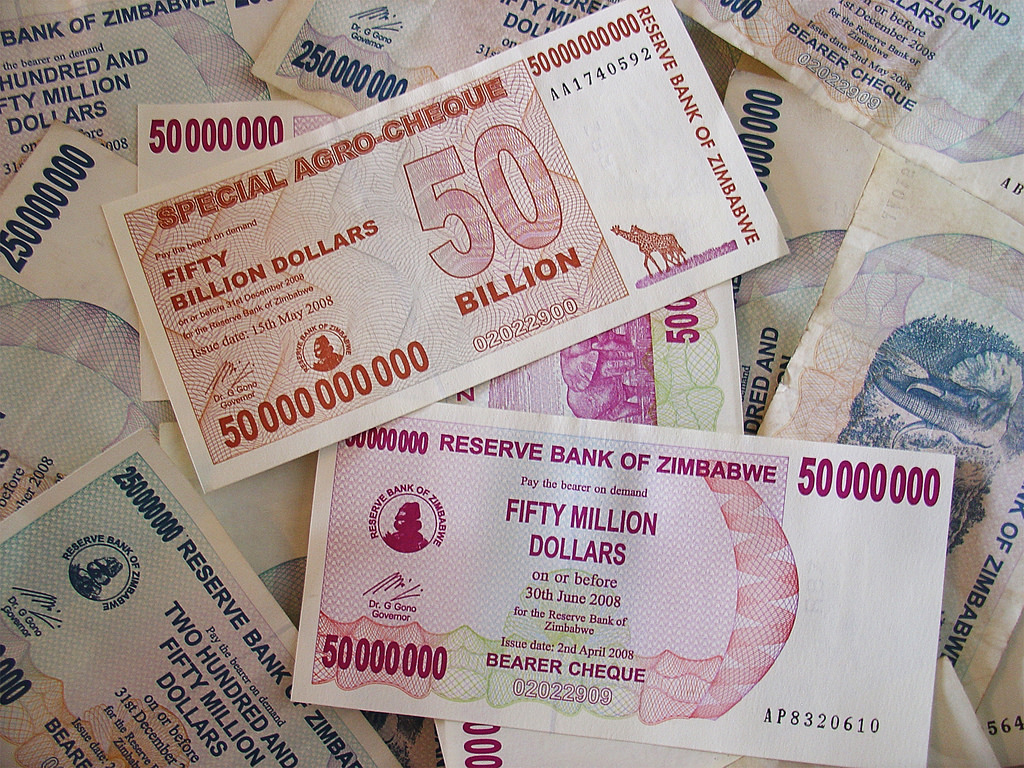
Quite literally one morning we woke up and the money in our bank account was valued at less than a quarter of its worth compared to the day before. Wait … what? How does that happen? Well, it’s complicated and depends on many variables. Most of these the average citizen doesn’t understand, not because they’re uneducated, but because it’s complex and layered between propaganda, historical and cultural narratives, speculation, ineffective processes, and fear. A lot of fear. So aren’t we just talking about bad economics here? The short answer is no. And here’s why.

Back in the 2000s the Zimbabwean economy went through an almost total collapse. There have been attempts at reform since, and in recent years improvements have been made. But in September and October this year (2018), there was episodic hyperinflation again due to various reasons including short-sighted government decisions, unwavering national debt, a fluctuating import/export market and, again, fear. Even though the economy was still better than it had been in recent years, Zimbabwean citizens had a severe reaction to the situation. There was panic buying, queues at fuel stations, and general despair across the nation. The people were experiencing Economic Trauma … but what is this, and how does it affect the economy?

Trauma is a circumstance that brings about a feeling that your safety has been violated and your trust broken. It causes anxiety, shame, intense reactions when triggered, ambivalence about hope for the future, and a sense of vulnerability and lack of control. These feelings or outcomes are currently exhibited in most citizens in Zimbabwe relating to the economy and decision made about it.  The hysterical stocking up of basic commodities. The dread at the news of daily rates and inflation. The deep anticipation and apprehension of what the next day brings—will there be relief, or more relentless, disappointing news?

If this extent of hyperinflation hadn’t been seen for a few years, why are the people across the country experiencing such extreme reactions? Well, they’re reacting based on how they felt when facing the dire economics of 2008 or the banking crisis of 2015.

It is collective trauma, with endless parallels to other recognised traumas. We see a societal level symptomatology akin to Post-Traumatic Stress Disorder. A trauma that makes you personally invisible in the sea of economic trauma around you. It makes your strife and hardship inconsequential and, for the most part, ineffective. It de-identifies you in your own personal struggle because everyone is going through it, too. The ripple effects of economic trauma into one’s relationships, business interactions, community, and eventually one’s society are palpable. Yet we don’t see a human rights declaration that places value or weight on safeguarding individuals from the impacts of economic trauma (even though it’s manmade and therefore could and should be controllable.) Instead, we see headlines blaming the ‘economic migrant’ for searching for a better life. And, let’s be honest, wouldn’t you? It’s a much more passive and discrete way of stripping away a person’s dignity and self-determination. It allows for blame to be shifted and diluted away from the epicentre of where the trauma stems from and how it is perpetuated.

The Zimbabwe situation, like many other old colonies and young countries, is in its entirety a complex one. By no means can it be unpacked and understood in one blog post. But in an effort to understand what we see happening in front of us, and to unashamedly open a dialogue to facilitate healing within our societies, I offer up three simplified points as navigational milestones relating to this current economic trauma. Although written as separate points, they require interrelated projects:

  1. Historical lines of Economic Trauma:

Colonisation, tribal conflicts, historical disempowerment, and intergenerational trauma are all significant contributors to our current situation. There is an incredible need for different avenues of reconciliation and healing, inclusive of pathways into economic opportunities through structural reforms to rectify the loss experienced by the previous generations.

  1. Perpetuating lines of Economic Trauma:

Aid, investments, development funds, and international monetary systems are structured to advantage the western, corporate business model, or are used for political gain. They are in fact harming and taking advantage of our economy. What we need are mutually beneficial profit-sharing agreements, business and environmental accountability, and safeguarded local investment and development, inclusive of pan-African business, and social support structures to facilitate resilience.

  1. Contextual lines of Economic Trauma:

Understanding the factors that have and continue to contribute to our turbulent situation is critical. But at some stage we need to take control of our own healing. We can no longer blame everyone else for all our current issues. Current-day corruption, lack of accountability or transparency, and unmet basic human needs are prevalent. We cannot heal as a nation until we are all healed.

It’ll never be a quick and easy recovery, but it’s what is needed in Zimbabwe. Without it, our economy continues to suffer, and in turn, so do we. We cannot do one type of healing or recovery without the other. We cannot expect people to participate in reconciliation programs, anti-corruption programs and development programs when they are struggling economically. And we cannot expect the country to make a sustained economic recovery with unhealed trauma’s lurking. They are the two sides of the same coin that is Economic Trauma.


susanAbout the author:

Susan Wyatt is Zimbabwean born and raised. She is a Mental Health Occupational Therapist, with a Master’s degree in Anthropology and Development, specialising in Conflict and Development. Her expertise is in transcultural mental health, reconciliation, peace building and development practices. Susan is the director of Tana Consulting, which currently operates out of Harare, Zimbabwe.