Truth on demand: The politics of using and dismissing migration research (PACES Blog Series)

Despite claims of evidence-based policymaking, migration research is often sidelined – except when it serves political goals. In this blog, Riccardo Biggi explores how governments at national and local levels selectively use expert knowledge, depending on the policy area at stake.

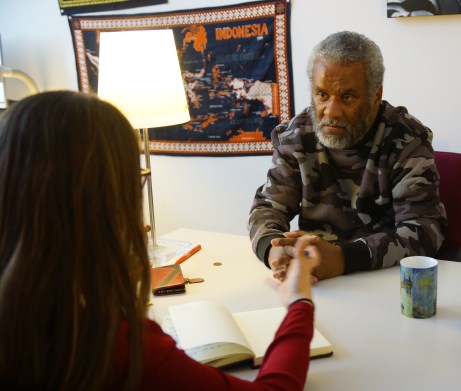
Photo Credit: PACES Project

On 10 September 2024, U.S. President Donald Trump claimed that Haitian migrants were “eating dogs” as he ramped up the anti-immigration rhetoric during his election campaign. As absurd and dehumanising as that statement was, it reflects a broader political trend: migration politics are shaped not by facts, but by fear, myths, and political opportunism. The EU is no exception. From asylum laws to criminalisation of irregular entry, many European policies are built on dehumanising and patronising ideas about migrants, as well as discredited ideas about why people move, how they take decisions, and what works to manage migration.

As part of the PACES project, the research conducted at Leiden University by Katharina Natter, Niels Ike, Merel van Assem and myself shows that despite governments’ commitments to evidence-driven policymaking, expert knowledge is often ignored or distorted. Simplistic assumptions about migrants’ motivations dominate policymaking, disregarding up-do-date knowledge and evidence resulting from research. In some cases, knowledge is taken into account selectively, as it is primarily used in policies concerning migrant groups admitted to EU countries – such as essential workers and resettled refugees – highlighting the opportunistic nature of knowledge use in migration policy.

Common but flawed assumptions

Our study examined 180 policy documents – including laws, evaluations, and legislative debates – spanning from 1998 to 2024 in Austria, Italy, and the Netherlands, across three key policy areas: counter-smuggling, protection of refugees abroad, and attraction of essential workers. This was complemented by 35 interviews with Italian policymakers, NGOs and researchers. Our analysis found that despite different migration histories and political cultures, all three countries showed similar patterns in how they use (or don’t use) research. The degree of issue politicisation, as well as the institutional actors involved, crucially shape the extent to which policymakers draw on expert knowledge.

We identified a dozen of these recurring assumptions that continue to dominate in migration policymaking, for example, that smugglers are extensive, international criminal networks; that increased border controls are effective in reducing smuggling; that migrants are unaware of the dangers associated with irregular migration; that refugees will easily integrate in the region of reception outside Europe, contributing as an economic resource if well managed; that transit countries are willing to host refugees and migrants; that development in regions of origin can reduce onward migrant flows; and that migrants’ decision making is influenced by small-scale adjustments to entry criteria and the efficiency of regularisation procedures for foreign workers policies.

All these assumptions have long been debunked by detailed academic research on the counter-productive effects of sanctions and securitisation, on the difficulties of reception in the region, on the effects of development aid, and on the nuanced realities of migrant decision making.

Disregard of knowledge in politicized areas

Counter-smuggling policies, as well as policies for the protection of refugees outside the EU, are particularly prone to disregard or misuse research. Take the following examples of Dutch migration policymaking, which displays dynamics also visible in Austria and Italy. In 2016, the Dutch Ministry of Justice and Security commissioned a report from the Centre for Research and Documentation (WODC) that concluded that EU information campaigns to deter irregular migration were ineffective and ethically questionable, considering the limited actual possibilities to apply for asylum. The following year, the Ministry cited this same report to justify the continuation of information campaigns, arguing vaguely that ‘new campaigns will provide new insights’. This type of symbolic use of research – to substantiate decisions already made – is widespread. Christina Boswell described it as the “symbolic function” of expert knowledge, where institutions boost their credibility by citing science, without acting on its findings.

At other times, knowledge is completely disregarded. The WODC report identified several unrealistic assumptions behind information campaigns, for instance that irregular migrants are not aware of travel risks and that more information will make them decide differently. Yet seven years later these same assumptions, previously discredited by the study, were still present in a letter from the State Secretary of Justice and Security to the Parliament. The letter stated: ‘informing potential migrants about irregular migration, as well as the possible associated risks and possible alternatives enables them to make more informed choices. This may lead a potential migrant to decide to avoid irregular travel, choose a regular route, or reduce risks’ (p. 9).

When knowledge matters

In contrast, research is used in policy areas that involve categories of migrants admitted to the state, such as resettled refugees and essential workers. For instance, Italian documents related to resettled refugees consider refugees’ vulnerabilities with increased nuances, including their psychological well-being – completely disregarded by policymakers within documents regarding irregular migrants or refugees outside Europe. A pattern emerges: when dealing with migrants who have entered EU territory through formal resettlement channels, policy documents explicitly mention refugees’ needs and expectations, showing the state’s stronger interest in understanding how to adapt policy for this target group, rather than for irregular migrants.

Similarly, policies for attracting high-skilled migrant workers to the Netherlands make regular use of research to adjust the criteria and parameters to make the country attractive for international migrants. For instance, the 2009 Dutch ‘Regeling Hoogopgeleiden’ – designed to encourage foreign top talent to move to the Netherlands to bolster the Dutch knowledge economy – was adjusted two times following evaluations to enhance its transparency and effectivity in attracting more migrants.

The local and the bureaucratic level: a different story

A central finding of our research project was that local governments often use expert knowledge in a more instrumental manner than national policymakers. In one Italian town with a large foreign population, civil servants – not politicians – initiated policies using insights from collaborations with universities and NGOs. The city’s immigration office itself originated as a university research project in the 1990s.

Our research showed that city-level actors in Italy, closer to the ground and less influenced by (inter)national political interests, often seek evidence to solve real problems, especially in areas concerning work permits and refugee integration. The same attention to evidence and to efficacy is found within the bureaucratic level of national policymaking – especially within the Ministry of Work and Social Policy (Ministero del Lavoro e delle Politiche Sociali), responsible for elaborating and implementing foreign workers’ regularization procedures. Indeed, civil servants are not as directly impacted by party politics and voter dynamics as are elected politicians, granting them more room to consider expert knowledge in their work. At the municipal administration level particularly, civil servants’ objective is to provide good services and ensure the correct functioning, improvement and problem-solving capacities of the local system. As one Italian civil servant put it, ‘At the municipality level there are experienced and motivated people, while the political level has little awareness of reality.’

Conclusions: what spaces for research in policymaking?

In 2024, 2,454 people died or went missing in the Mediterranean, lacking safe ways to travel due to restrictive EU visa policies. These deaths are not accidental – they are the tragic outcome of policies that have not succeeded in limiting mobility, despite increased funding to border control in North-Africa and elsewhere. Focused on a paradigm of border security and fighting human trafficking, EU governments in the last 30 years have been developing policies based on flawed assumptions and ignored evidence.

The result for research and expert knowledge? Gradually, and especially since the so-called refugee crisis of 2015, ‘evidence-based policymaking’ has become a buzzword more than a reality. Legal professionals, researchers and even policy makers themselves often know better, but their insights are often ignored or filtered through political convenience.

Our research is not meant to just speak to academics interested in knowledge dynamics around migration – we believe our findings matter for anyone concerned with democratic governance and human rights. Understanding how, when, and why knowledge is used or ignored in migration policy helps expose the dynamics behind policy failures. Until evidence is taken seriously, Europe’s borders will remain deadly, and policies to tackle migration will continue to be dishonest.

This blog is part of the PACES project funded by the European Union. Views and opinions expressed are those of the authors only and do not necessarily reflect those of the European Union. Neither the European Union nor the granting authority can be held responsible for them.


Opinions expressed in Bliss posts reflect solely the views of the author of the post in question.

About the Author

Riccardo Biggi

Riccardo Biggi is a Junior Researcher at the Institute of Political Science, Leiden University. His academic interests lie at the intersection of migration politics, border regimes, and European governance. At Leiden, he contributes to research on transnational political structures and the socio-political implications of migration control. In addition to his scholarly work, Biggi co-produces City Rights Radio, a podcast examining European border politics and migrant justice, with a focus on grassroots perspectives.

Are you looking for more content about Global Development and Social Justice? Subscribe to Bliss, the official blog of the International Institute of Social Studies, and stay updated about interesting topics our researchers are working on.


Governing through expulsion: rise in U.S. deportations quiets the Darién Gap, shifting burdens south

By Posted on 1669 views

In this blog, Dr Maria Gabriela Palacio uses the example of The Darien Gap (a jungle crossing formerly utilised by forced migrants and refugees to travel North towards the USA) to consider the effects of recently changed and more brutal deportation policies put into place by the USA. More and more Ecuadorians are being forcefully returned to a country suffering from multiple damaging geopolitical currents, which is being asked to process large numbers of deportees whilst grappling with its patterns of out-migration.

Photo Credit: Akpan, 2024 Simulated by ChatGPT

Barely months ago, Ecuadorians were the second-largest group braving the perilous Darién Gap on their way to the United States; today, the trail is almost silent. Their abrupt disappearance is not just the outcome of a new deportation rule-set. It exposes a deeper political-economy in which mobility and immobility are governed by structures that render certain lives dispensable.

At the centre of this shift is the renewed U.S. deportation regime. Since Trump’s return to office, more than 100,000 people have been deported in just ten weeks. Over 2,000 Ecuadorians have been forcibly returned, many without hearings, detained in private facilities and flown home under armed guard. This is governance through expulsion.

Ecuadorians today are not “deciding” to stay or return. For many, the journey ends not at the border but on a deportation flight, disoriented and handcuffed, arriving with a plastic bag of belongings at Guayaquil airport. They are not returning to opportunity but to the same political and economic structures that first pushed them out.

This is not just the arithmetic of migration: it is the logic of a global regime of accumulation that produces and manages surplus populations. A critical political economy perspective reveals that migration is not just a reaction to hardship but a structural outcome wherein labour becomes mobile, governable, and dispensable due to long-established patterns of dependency, dispossession, and coercive governance. Deportation, in this light, is not a policy failure but a tool that sorts, removes, and disciplines those made surplus by design.

Ecuador sits at the crossroads of this regional machinery. Dollarised and locked into extractive exports, the country relies heavily on remittances, yet now faces budget cuts and austerity at home. It has long sent populations abroad, but it has also become where multiple flows collide or return. VenezuelansHaitians, and others caught in overlapping crises have passed through or been stranded within Ecuador’s borders. The state is now expected to absorb not just returnees but the violence of the very system that expelled them.

That violence is reflected in the routes themselves, which have begun to bend and shatter. Some Ecuadorians now fly to El Salvador to bypass Darién. Others remain in limbo in Mexican shelters. A growing number of people apply for asylum in Spain. But more and more are returning, voluntarily or not. The International Organization for Migration reports a record spike in Ecuadorians requesting return assistance. We are witnessing less of a voluntary reverse migration but a form of forced and adverse absorption into a country already under immense strain, where access to secure jobs, welfare, and infrastructure is deeply uneven.

Others, unable to return or continue northward, remain like many other Latin American migrants trapped along the Andes–Central America–North America corridor, caught between increasingly punitive migration regimes and the uncertain protection of overstretched asylum systems. As migration routes are militarised and digital tools for asylum access are cancelled or restricted, a growing number of migrants are forced into reverse movement, undertaking costly and dangerous journeys back south. Some, like those arriving in the Colombian port town of Necoclí, spend thousands of dollars only to find themselves unable to continue or return, stranded without money, documents, or shelter. For others, the journey halts mid-route, creating new bottlenecks in Panama, Guatemala, or southern Mexico.

In these spaces of stalled mobility, migrants navigate a dense ecosystem of state and non-state actors: smugglers, private contractors, ferry operators, humanitarian organisations, and municipal authorities, forming a transnational migration industry. This industry manages not just “flows” but also immobility. It offers temporary passage, paperwork, food, or credit, often at a high cost, while blurring the line between protection and extraction. As formal protections shrink, mobility becomes commodified, mediated through precarious arrangements that feed off uncertainty and the shifting contours of migration policy.

What happens when a country simultaneously expels and receives its people, when labour is demanded abroad yet unprotected, and its return is funnelled into informal survival? These trajectories are not individual mishaps; they are produced by a regime that displaces populations through extraction, polices them through securitised borders, and repatriates them under the veneer of humanitarian policy.

In Ecuador, that regime is palpable: rolling blackouts stall hospitals and markets, armed violence reaches classrooms, and Indigenous territories are carved up by legal and paralegal extractive fronts. None of this is accidental. It stems from the dismantling of public infrastructure and the transfer of land and power to corporate actors, all within a global order that treats impoverished, racialised populations as surplus problems to be contained, displaced or discarded.

The question, then, is not only why Ecuadorians are returning but what kind of world is making this return inevitable.

The empty Darién trail is not the end of a journey but proof that a border system built on expulsion works as intended. It shifts responsibility from the global North to Latin American states and turns human mobility into a profitable detention, surveillance and return market. Deportation, in this context, is not an exception.

We must begin by asking different questions. Not only how to make migration safer or more “orderly,” but how to dismantle the global structures that produce dispensability in the first place. Migration regimes do not simply fail; they succeed in what they are designed to do: sort, discipline, and displace surplus populations created by extractive capitalism and securitised governance. In this view, deportation is not an aberration; it is the tangible expression of a world order that governs through expulsion. It legitimises neglect, turns mobility into criminality, and transforms human lives into data points in a market of detention, surveillance, and return.

The return of Ecuadorians is not the end of a journey; it is proof that a border regime built on expulsion works exactly as designed.

Notes:

For readers who want to trace the argument from Ecuador’s current return-migration crisis back to its structural roots, start with Jara, Mideros and Palacio (eds.) 2024, Política social, pobreza y desigualdad en el Ecuador, 1980-2021 my co-edited volume that charts four decades of welfare retrenchment, labour precarity and territorial inequalities. Then situate those findings within the broader politicaleconomy canon: W. Arthur Lewis’s (1954) seminal essay on surplus labour, Celso Furtado’s (1966) classic dependency analysis, Saskia Sassen’s (2014) study of “systemic expulsions” under global capitalism, and Tania Murray Li’s (2010) account of how neoliberal governance renders populations surplus.

Opinions expressed in Bliss posts reflect solely the views of the author of the post in question.

About the author

María Gabriela Palacio

Maria Gabriela Palacio is an Assistant Professor in Development Studies at the Institute for History, Faculty of Humanities, Leiden University. Her research asks how political-economic forces, social policy and migration regimes shape poverty, inequality and (in)security in Latin America. Trained as an economist, she holds a PhD and MA in Development Studies (ISS, Erasmus University Rotterdam), an MSc in NGO Management and Social Economy (Universitat de València) and a BA in Economics (Pontificia Universidad Católica del Ecuador).


Are you looking for more content about Global Development and Social Justice? Subscribe to Bliss, the official blog of the International Institute of Social Studies, and stay updated about interesting topics our researchers are working on.

The need for ‘Impact’: whatever ‘Impact’ means

By Posted on 1180 views

What happened to the scholar that didn’t embrace new media? They ran out of cassette tapes! Awful jokes aside, it’s more and more important for scientists, and particularly social scientists, to be plugged in to society to better interact with it. A recent Economist article highlighted that academic research papers in the humanities and social sciences are getting harder to read, more convoluted and stuffed full of jargon and incomprehensible sentences. There is a perception in the ‘outside world’ (perhaps pushed by populist political currents!) that academics are starting to talk more just to other academics rather than to society at large, which is at the very least not conducive to a high level of public discourse. In some cases, it has led to the removal of experts from the policymaking process. At the same time, and partially thanks to the growing legions of science communications officers and the phenomenon of ‘cool geeks’, there are more opportunities than ever for (social) scientists to spread their ideas and research in accessible, bite-sized and socially engaged ways. Even the Lowlands Festival has a science pavilion to show off the latest research on everything from the psychology of perceptions of equality, quantum physics, the creative possibilities of generative AI and much more besides.

Tom Ansell,  Sarah Njoroge (MSc) and Gabriela Anderson intend this blog as a call to academics to think along, repackage their work into fun and digestible gobbets and make use of the science communications talent available to help boost our collective ‘impact’… whatever ‘impact’ means!

This image was taken at Research InSightS LIVE #4 Conflict Compounded: Implications of the war in Ukraine on global development challenges

Social science is best when it’s in conversation with society

Aside from the self-fulfilment element, and the satisfaction of personal curiosity, social scientific research has a function of providing evidence-based approaches to societal questions that can inform various stakeholders in how they act. That could be the government, organizations, businesses or people themselves. Like many forms of scientific enquiry, it serves to further human knowledge, and so (indirectly and ideally) improve people’s lives or the society that they live in. The link between the academic and the society in which they function should be one of constant conversation, where ideas are presented to people, and then validated or reconsidered through their experiences and their interaction with the everyday (this is also expressed by Anthony Giddens as the ‘double hermeneutic’). Of course, this sentence may spark flashing lights in the minds of many academics reading this, but in short – social science is rooted in society and so should seek to be in conversation with ‘real’ people all the time. A social scientist that hides away in a university is an isolated one! This means that researchers must have a way of being in conversation with people. At least part of that conversation must be a clear transmission of social science theories in a compelling and clear way, and knowledge sharing in a form that is digestible, interesting and (hopefully) means that people in the ‘real world’ can see their own lives and questions in cutting-edge research.

This is especially true in the last few years , where a significant portion of the world’s institutions face ‘alternative facts’ and the rise of public discourse strongly influenced by a ‘post-truth’ world. During the COVID-19 pandemic, for example, the need to provide accurate and evidence-based advice to the general public was literally a matter of life and death. Knowledge of the mechanisms of how an mRNA vaccine worked (the Moderna one) helped ensure that enough people went and received the jab to reach the critical mass of vaccinated people. Now imagine if the various biologists had remained hidden behind a wall of jargon and specific terminology, and all the while remained in their labs and refused to speak to the public in understandable language. Naturally, the immediate risks aren’t quite the same in social science research uptake, but the need for public trust and mandate is the same. Where the influence of rigorous social scientific research would help, however, is in government policymaking. Imagine how the new Dutch international aid policy would look had various members of ISS’ work been consulted in its drafting. We can’t make policymakers listen to good research, but we can make it as easy as possible for them to find, digest and be interested by it.

Avoiding extractivism and ‘closing the loop’

Considering the other side of the conversation between research and the public, we need to move beyond the effort of making sure our writing reflects our values as researchers to be ethical and non-extractive only during the research process. Research even in these most critical and conscious of times still teeters on the lines of opinion-mining, often masquerading through notions such as ‘collaboration’ and ‘co-creation’. Jamie Gorman expresses this quite well in the quote (almost jokingly): ‘What does a social researcher have in common with an oil rig operator? The answer is that both can be miners engaged in the extraction of a precious resource’. For social science researchers, that precious resource is knowledge. A key part of making sure that research is non-extractive is ‘closing the loop’ and making sure that the people that have contributed to the research are both involved and can get something out of it (something called participatory research).

The potential impact of research does not stop before and during the research process, it needs to extend into the dissemination and communication of said research. By looking beyond the production of a research to how it can be shared to an audience outside of the academic community, we allow for a greater reach through inclusivity, accessibility and even opening up for future potentials in participation and, most importantly, allowing research to be useable (from theory to practice and vice versa). How is this done? By sharing research in different mediums and through different mediums and media. Examples include translated versions, both in terms of language and even the softening of academic and ‘waffle’ jargon, different (relevant) and contextual forms of outputs, such as radio broadcasts (in the case of the Democratic Republic of Congo), video abstracts, infographics, posters, dialogue cafes, podcasts, etc. In doing so, we reach people at their different levels in all their differences of backgrounds, making room for a greater impact from our research.

Moving from inaccessible papers to socially engaged media

So, how do we actually move from rigorous, well-researched ideas to public discourse and policy that reflect them? The best science communication doesn’t just ‘simplify’ research, it translates, distils, demystifies and engages. It meets people where they are, using formats that are accessible without compromising complexity, and applies sky high thinking to everyday life.

Take podcasts, for instance. The Good Humanitarian bridges the gap between academic research and humanitarianism and the real-world challenges practitioners face. MOOCS, or open access-learning, allows people – whether they have an educational background in social sciences or not – to engage with contemporary debates. Written and visual storytelling, from in-depth interviews, infographics and posters to interactive web experiences, has made complex and socio-political topics more digestible for a general audience. Live shows, such as Research InSightS LIVE or dialogue cafes invite people to listen and engage on topics in enjoyable, yet succinct formats. In addition, social media is increasingly becoming more important for visibility, and as a way to link research that proposes an alternate world to the people that can achieve it. Even platforms like TikTok have been effectively used to debunk misinformation and explain key social science concepts in under a minute, but all face potential challenges of course.

At the same time, researchers must be empowered to engage in these spaces. Not everyone who can run a hefty statistical model or analyse complex patterns can seamlessly translate these insights for public consumption. This is precisely where science communicators come in – not to dilute these ideas but to ensure that big ideas are clarified and shared widely. Closing the loop isn’t just an ethical responsibility in participatory research – it’s a vital step toward ensuring that knowledge serves people by feeding back into their livelihoods.

Science communicators do more than just support researchers. They can be catalysts for expanding the reach and impact of academic work at its inception. Research can often benefit from creativity and audience awareness that can make it resonate beyond academia. In other words, researchers and science communicators can make an excellent team – if they truly collaborate. That means not just seeing communicators as an ‘add-on’, but valuing their input, trusting their instincts and recognizing their ability to turn rigorous research into compelling narratives that engage policymakers, practitioners and the public alike, also extending their inclusion to before and during the research process, not only after.

If universities and research institutes truly want to make an impact, they need to rethink the way they communicate knowledge. The challenge isn’t just about writing readable research papers. It’s about shaping public discourse, informing policy and making social science a living, breathing conversation. After all, what good is knowledge if it’s locked away in academic journals?


Opinions expressed in Bliss posts reflect solely the views of the author of the post in question.


About the authors:

Tom Ansell

Tom Ansell is the coordinator and programme manager of The Hague Humanitarian Studies Centre, and the Coordinator of the International Humanitarian Studies Association. He has a study background in religion and conflict transformation, as well as an interest in disaster risk reduction, and science communication and societal impact of (applied) research.

Sarah Njoroge

Sarah Njoroge (MSc) is a multi-skilled communications professional who tells stories on societal issues through videos, articles, podcasts and more. She has extensive experience writing, designing and co-producing content on international development. Sarah is currently a Digital Content Manager at RNW Media and formerly worked as a Communications Officer at ISS.

Gabriela Anderson

Gabriela Anderson is the community manager of The Hague Humanitarian Studies Centre and coordinates the Humanitarian Observatories Network. Graduating with a Master’s from the International Institue of Social Studies in 2022 with a focus on the Governance of Migration and Diversity, her research focuses on notions of (self-)representation, placemaking and the importance of inclusive communication in its various forms and through its different mediums, especially in areas of Conflict & Peace with both academic and practitioner related organizations.


Are you looking for more content about Global Development and Social Justice? Subscribe to Bliss, the official blog of the International Institute of Social Studies, and stay updated about interesting topics our researchers are working on.


Humanitarian Observatories Series | USAID suspension is a wake-up call to address fragility of Humanitarian Actions in Ethiopia

On the first day in office of his second presidential term, Donald Trump signed an executive order freezing the USAID for 90 days, reportedly to assess the programme’s ‘effectiveness and alignment with US foreign policy’. On 10 March 2025, US Secretary of State Marco Rubio ended the world’s most vulnerable communities’ slight hope by announcing the permanent suspension of the USAID’s 83% programme. This aggressive measure is the harshest blow to the organization’s operation since its establishment in 1961. The UK and Netherlands are also making similar moves, significantly diminishing their overseas development and humanitarian funding. The measure has a significant adverse impact in Ethiopia, where humanitarian aid is the only thread of hope, at least currently, for many affected communities, including millions of internally displaced persons (IDPs). In this blog, Alemayehu B. Hordofa and Marga F. Angerasa contend that humanitarian actors and donors have not achieved the necessary strengthening of local capacities to respond to the ongoing crisis in Ethiopia, and that they should redouble their efforts to take targeted normative and practical measures to enhance local resilience to counterbalance, in the long-term, the adverse impacts of policy changes in donor countries.
This photo was taken in April 2024 by the first author in Seba Care Internally Displaced Persons camp. Volunteers are giving medical support to IDPs as a part of the BilalAid health outreach programme in Seba Care IDP shelter in Mekele, Ethiopia. BilalAid was established in 2024 by local youths who were previously volunteering informally in their communities to respond to humanitarian causes.
Humanitarian funding in Ethiopia Ethiopia is one of the biggest recipients of humanitarian aid in Africa. According to the 2024 Ethiopian Humanitarian Response Plan, over 21.4 million people in Ethiopia needed humanitarian assistance due to complex humanitarian crises such as climate change-induced disasters, armed conflicts, political violence, epidemic outbreaks and landslides. The conflict in Northern Ethiopia (2020-2022), the ongoing armed conflict in the Oromia and Amhara regions and climate change-induced food insecurity in south and south-west parts of the country displaced millions of individuals from their homes and have made them dependent on humanitarian aid. In some parts of the country, conflict(s) have coincided with drought, exacerbating the crisis and worsening the vulnerability of the affected communities. In 2024, the humanitarian community in Ethiopia appealed for 3.24  billion USD to reach 15.5 million people. This appeal raised only 1.79 billion USD, with the US government contributing 405.3 million USD. Beyond responding to the crisis as the primary duty-bearer, the Government of Ethiopia (GoE) also contributed 264.5 million USD to the 2024 Ethiopian Humanitarian Fund (EHF). This year, the EHF has anticipated a requirement of 2 billion USD to respond to multiple crises in various parts of the country. Given the need for humanitarian support, the humanitarian fund in the country is visibly inadequate, and various humanitarian interventions in Ethiopia are being challenged by, among other things, inadequate funding and unfulfilled promises of localization. The USAID suspension is another recent significant blow to the country’s dwindling and inadequate humanitarian funding. The USAID aid suspension has placed the lives of vulnerable communities at risk The USAID funding cut has placed the lives of millions of people in need of humanitarian assistance in peril. The aid was stopped without any back-up, thus exposing vulnerable communities to exceptionally dangerous risks. Beyond the impact on people receiving aid, the decision has resulted in many aid workers being made unemployed. The Ethiopian Ministry of Health terminated 5000 employment contracts due to the USAID aid suspension. These health workers were supporting clinics on HIV-related programmes in various parts of the country. Likewise, even though a significant portion of Ethiopia’s development aid funding now comes from international development banks (World Bank, AfDB, IMF), which come with both punitive interest rates and market reforms, the suspension of USAID affects the country’s foreign currency reserve and flow – further minimizing the agency of Ethiopian policymakers and local organizations. In addition, the suspension of aid affects accountability relations in the humanitarian sector and beyond. Following the announcement of the funding suspension, over 85 percent of Civil Society Organizations suspended their programmes in Ethiopia. These CSOs were implementing programmes ranging from ensuring the right to access justice for displaced communities, advocating for accountability in the humanitarian sector and durable solutions and socio-economic recovery for conflict-affected peoples. The suspension decapitated CSOs operating in complex operational spaces and exacerbated the murky Ethiopian civil society environment. According to one humanitarian worker that we interviewed in Addis Ababa, ‘the suspension suppresses independent voices and shrinks the civic space as it inhibits vibrant CSOs from implementing programmes’. The CSOs that advance diverse perspectives are affected by the USAID suspension and only those that are supported by government will continue to operate in the country. This perspective was also shared by other participants during the interviews conducted by the first author for his PhD research on humanitarian governance in Ethiopia. The devastating impact that the USAID aid cut caused in the first few weeks of the announcement unveiled the fragmentation and fragility of Ethiopian formal humanitarian governance, its excessive reliance on foreign aid and its under-investment in supporting local humanitarian initiatives. Conversely, it allowed the government and the humanitarian actors to revisit and critically reflect on their practices around accountability and localization, as well as build the resilience of local actors to make humanitarian actors more predictable, effective and accountable. The role of local actors in responding to crises Ethiopia’s humanitarian action is noted for its plurality of actors. There are diverse humanitarian actors with their own practices and policies. However, the actors’ interventions vary in mandate, capacity and ability to respond to and cope with emergencies. They possess completely unequal power, leverage and authority, which are dependent on several factors including location, association and who they represent. Beyond targeted and institutionalized humanitarian interventions, humanitarianism by the ordinary citizenry, or vernacular humanitarianism, is a defining feature of Ethiopia’s humanitarian action. Millions of internally displaced persons are living with and supported by the host communities with no meaningful support from international or national formal humanitarian organizations. Ordinary citizens often organize themselves around social media such as TikTok, Facebook and Instagram and were able to mobilize millions in support of victims of disasters. For example, ordinary Ethiopians informally organized on social media and did commendable work in averting the devastating consequences of drought in Borena in 2023, supported IDPs displaced from their homes due to political violence around Oromia-Somali borders in 2018 and supported millions of IDPs in Horro Guduru and East Wallagga zones while the institutionalized humanitarians were unable to intervene (during the first phase of the crisis) due to access difficulties. Ethiopian diasporas and business communities also participate in humanitarian action in the country. Apart from these few examples, ordinary Ethiopians are the backbone of the country’s humanitarian efforts and first responders to crises. However, the contributions of local actors remain invisible, are not nurtured and there has been inadequate effort to genuinely strengthen their capacity. The dominant discourse has wrongly portrayed humanitarianism in Ethiopia as a monopoly field of international humanitarian actors belittling the local community’s effort to address their problems. The visibility of localized humanitarianism in Ethiopia has been overshadowed by the increased visibility of the ‘international humanitarian community’s’ response to crises. Likewise, despite the global movement and advocacy for accountability to affected communities, humanitarian practitioners we spoke to in Addis Ababa largely believed that the promises of localization have largely remained unfulfilled. The interviews that we conducted with humanitarian workers and independent observers revealed that humanitarian organizations were primarily preoccupied with service delivery rather than strengthening local capacity to transition to recovery and reconstruction. Thus, to make humanitarian efforts more predictable and effective, humanitarian actors should prioritize local initiatives to make the sector sustainable and least affected by external decisions. The recent policy changes in donor countries, spearheaded by the USAID suspension of foreign assistance, are a wake-up call for the country to strengthen its local humanitarian initiatives and advance and implement the humanitarian reform agenda in national and local contexts. Mobilizing local actors and domestic resources Mobilizing domestic resources can reduce the dependency on foreign countries overseas development and humanitarian aid policies. Local actors play a crucial role in filling the gaps created due to changes in the priorities and policies of donor countries. However, as local initiatives still lack targeted support, external donors finance a significant portion of formal humanitarian action, USAID being the major partner. Yet Ethiopia has recently started some venerable initiatives that could contribute to the country’s self-reliance in the long run. The country started a food sovereignty endeavour, dubbed by the Government of Ethiopia (GoE) as a ‘decisive path toward food self-sufficiency’. The initiative prioritizes investing in local innovations in agriculture and technology. The government planned to address food insecurity through funding by state-owned enterprises and large-scale farming coordinated by its national disaster risk management office, the Ministry of Agriculture and relevant regional offices. The country has also been implementing the Green Legacy Initiative to avert the negative impact of climate change. Similarly, the government has commenced other national initiatives, such as the Bounty of the Basket, which have a significant potential to strengthen local resilience and preparedness. The transitional justice and national dialogue mechanisms have also the potential to end or significantly reduce the humanitarian needs emanating from the devastating impacts of conflict or political violence. However, even though these initiatives have the potential, if appropriately implemented and subjected to rigorous accountability mechanisms, to minimize the impacts of climate change and end the need caused by conflict, they may not counterbalance the adverse impacts of the policy change in donor countries in the short term. Conclusion and the way forward Given the high level of need, it is tremendously challenging to respond to the current humanitarian crisis without support from the international community in general and USAID in particular. The theoretical rhetoric that regarded local actors as genuine partners with a meaningful role in leading and funding humanitarian responses has not yet been translated into practice. Affected communities are still considered passive recipients of aid by the majority of international humanitarian actors working in Ethiopia. The current initiatives by the GoE to satisfy humanitarian needs with local capacity are commendable and can change this narrative in the long run. Such initiatives need to show tangible progress on the ground. Ending conflicts with agreements and finding durable solutions for millions of IDPs currently stranded in various IDP shelters are some of the immediate measures that the government can take to relieve the pressure on humanitarian action in the country. Ensuring government efficiency and addressing rampant corruption that divert critical resources from the public are other measures that the government may immediately take to avert further crisis. Furthermore, local CSOs need to reassess their excessive reliance on international funding and devise innovative means to mobilize domestic resources, strengthen local giving and prioritize local innovations. The promises of localization remained unfulfilled. Donors and the INGOs currently operating in the country need to revisit their commitments to localization and hold themselves accountable for failing to honour the grand bargain’s promises. Opinions expressed in Bliss posts reflect solely the views of the author of the post in question.

About the Authors:

Alemayehu B. Hordofa
Alemayehu B. Hordofa is a Ph.D. researcher at the International Institute of Social Studies (ISS), Erasmus University Rotterdam (EUR). He obtained his LLM in International Human Rights Law from the Irish Center for Human Rights (ICHR), University of Galway, Ireland. He is currently working on humanitarian governance in Ethiopia focusing on the role of Civil Society Organizations and Crisis-affected People to shape humanitarian governance ‘from below’. His research interests lie in forced displacement, accountability in humanitarian context, localization of humanitarian aid, transitional justice, and the development of CSOs in Ethiopia.
Marga Fekadu Angerasa
Marga Fekadu Angerasa is a law lecturer at Wolkite University (Wolkite, Ethiopia) with research interest and specialty on human rights, forced displacement and transitional justice. He has an LLM in human rights law from Addis Ababa University (2021). Marga is a member of Ethiopia Humanitarian Observatory and advocates for the advancement of human rights and works with CSOs on human rights issues.    Are you looking for more content about Global Development and Social Justice? Subscribe to Bliss, the official blog of the International Institute of Social Studies, and stay updated about interesting topics our researchers are working on.

This blog is part of the  Humanitarian Governance: Accountability, Advocacy, Alternatives’ project. This project has received funding from the European Research Council (ERC) under the European Union’s Horizon 2020 research and innovation programme under grant agreement No. 884139

Beyond victimhood: The untold realities of Nepali brides in South Korea

By Posted on 4750 views

Nepali brides in South Korea are often portrayed as victims of violence, abuse, exploitation, slavery, and trafficking. But are these the only realities of Nepali brides? Nilima Rai in this article, challenges the dominant monolithic narrative of victimhood and sheds light on the other realities of these women – many of whom navigate such matrimonies with resilience, academic and professional achievements, and significant socioeconomic and cultural contributions in Korea and Nepal. Through patchwork ethnography, this article reveals Nepali brides’ overlooked agency, aspirations, achievements, and contributions beyond their image as victims.

Image by Sukanto Debnath

They call us Bhote ko budi,1 someone with Pothi Visa,2 who didn’t find a suitable man to marry, the victims of domestic violence and abuse, and someone who is miserably sitting in a corner and crying over their ill fate,’ one of the Nepali brides said. This illustrates the racist, sexist, and negative remarks the Nepali brides encounter in their day-to-day lives. This article discusses how the dominant narrative of victimhood further reinforces stigmas and prejudices of Nepali brides.

Transnational marriage in South Korea: Nepali brides

Transnational marriage between Nepali brides and Korean men began in the early 1990s when Nepali migrant workers entered Korea through the Industrial Trainee System.3 These brides, mainly belonging to socio-economically marginalised Tibeto-Burmese ethnic groups, are preferred4 due to their physical similarity to Korean people.

Nepali women participate in transnational marriage as an opportunity created by globalisation but with an expectation to fill the bride shortage vis-à-vis the ongoing crisis of social reproduction in South Korea. Like other foreign brides,5 Nepali brides make compromised choice of marrying foreign men and settling outside their country to escape poverty, attain upward mobility, or find access to labour markets that are otherwise denied to them.6  Conversely, Korean men7 rejected in the local marriage market due to their low socio-economic status and societal expectations of women seeking brides outside their racial/ethnic pool in countries such as China, Vietnam, the Philippines, Cambodia, Mongolia, and Nepal to name a few.

In Nepal, such marriages occur through commercial marriage brokers, mutual friends and relatives living and working in Korea. Since the early 2000s, Nepali women have entered transnational marriage through the marriage agencies/bureaus in Korea and Nepal.

The media’s victim narrative and its impact on Nepali brides

With the active involvement of the marriage brokers as matchmakers and the negative implications of such commercialised marriages, Nepali brides are often disparagingly depicted as ‘victims’ – the victims of trafficking, slavery, domestic violence, abuse, and deception. For more than a decade and even today, domestic and international news media have been replete with the sufferings of Nepali brides in Korea, portraying them as pitiful, bleak, wretched, sold, trafficked, and enslaved in Korean households. A rapid increase of unregulated marriage agencies in Nepal and Korea has resulted in increased numbers of fraudulent marriages engendering domestic violence and abuse of some of the Nepali brides. News media have widely reported cases of violence against Nepali brides along with their testimonies. Such efforts have highlighted the grave concerns of violence against those Nepali brides who experienced domestic violence and abuse. However, the paucity of research on the overall experiences of these brides, and the overwhelming representation of these women in media not only created their image as ‘women in peril’ and labelled them as ‘victims’ but also reinforced the already existing stigmas and prejudices against these women within the Nepali diaspora community in Korea.

These brides are subjected to gender-oppressive slurs by the Nepali diaspora community which sees them as ‘promiscuous’, ‘leftovers’, or someone who has a problem or is behaving strangely, thus ineligible to marry a man from their vicinity. The media’s tendency to depict Nepali brides merely as victims, the lack of research as well as the condescending attitudes of the Nepali diaspora community and the potential threat of oppressive slurs has often resulted in the silencing of Nepali brides.

Other Nepali brides in our community scolded me for allowing them to take my video and giving an interview to one of the media people,’ said one of the Nepali brides. This illustrates the negative implications of such narratives of Nepali brides fostering distrust and discontentment not only towards the media but also within the Nepali diaspora community. Some expressed their resentment through words, while others demonstrated it through their act of refusal, hesitation and constant need for reassurance that those approaching them were not affiliated with the media.

The realities of other Nepali brides

Narrating these women’s stories only through victimhood perspectives obscures the other realities of brides who claim to be empowered through economic gain, freedom of mobility and the acquisition of new knowledge and skills. These are the Nepali brides whose lived realities differ from those who suffer from violence and abuse.

Do we look like the victims of domestic violence or unhappy in our marital life, like how these journalists often portray us? Rather, I think I made the right decision getting married and coming here as I have more freedom to work, earn and live my life on my own terms,’ one of the Nepali brides said.

Similarly, another Nepali bride expressed her frustration, saying, ‘I am sick and tired of how these Nepali media represent us. A few years back, one of the journalists asked for our (her husband and her) photo, saying they wanted to cover the stories of Nepali brides. Still, in the end, they published our photo under the awful title and story that talked about how pitiful Nepali brides are. I am more than happy with my husband, who speaks fluent Nepali and actively contributes to Korean and Nepali literature and society. We both are hotel entrepreneurs. So, do you think my story fits into one of those stories published in the newspaper?’

Nepali bride with her husband tending their kitchen garden at Jeju-do, South Korea

The Nepali brides who were not victims of violence – and whose stories did not fit in with the articles published in news media – claimed to have made adjustments early on in their marriage, particularly in terms of language, food, and culture. They are now content with their familial relationships, have successfully established their professional careers, and are able to support their left-behind/natal families in Nepal.

These brides wish to be recognised as successful entrepreneurs, educators, nurses, police officers, poets, counsellors, interpreters, and promoters of Nepali culture, food, and language across the Nepali border. Instead of questioning their intentions in choosing a foreign spouse and vilifying them as ‘gold diggers’ – those who marry old Korean men for ‘card’/citizenship – and helpless victims of violence – who are beaten, battered, and abused by their husbands and in-laws – they want their achievements and contributions in both Korea and Nepal to be valued and acknowledged.

Furthermore, these women are often fluent in the Korean language and are pursuing/pursued further academic and professional endeavours in Korea; things they believe they could not have achieved in Nepal. Based on my research, Nepali migrant workers and students rely heavily on these brides to book public venues and bargain in local shops. They also rely on them for critical services such as translating/interpreting sensitive court cases and counselling in medical and mental health cases. Furthermore, these brides provide constant support and services as teachers and educators in schools, institutes, and migrant worker centres; provide health and safety orientations in factories and industries; act as counsellors to facilitate immigration procedures; work as nurses in hospitals, as police officers, established women’s shelters for migrant workers and provide all the necessary support in the rescue and repatriation of undocumented migrant workers.

Highlighting these women’s stories as achievers and contributors is not to trivialize the gravity of the issues related to violence against Nepali women/brides at all levels in and outside the country. The main aim of this article was to discuss the consequences of one-way narratives of victimhood that have negative implications on the lives of other Nepali brides who are happy with the positive outcome of their struggles in a foreign land. There is a need for in-depth research into the broader experiences of these women and for a multi-stakeholder dialogue and deliberation with state and non-state actors such as news media.

Endnotes

1. ‘Bhote’ is “a derogatory term for ethnically Tibetan people from northern Nepal (Gurung 2022, 1746). This kind of racial slur has been used against Nepali brides in Korea due to the resemblance or the similar physical features of Korean men with these ethnically Tibetan people.

Gurung, Phurwa.2023. ‘Governing caterpillar fungus: Participatory conservation as state-making, territorialization and dispossession in Dolpo, Nepal’ EPE: Nature and Space 6, No.3: 1745-1766.

2. In Nepal, the word ‘poth” or ‘hen’ is a derogatory colloquial term often used as an oppressional slur that evinces male dominance or superiority over women (Lama and Buchy 2002).

Lama, Anupama and Marlene Buchy. 2002. ‘Gender, Class, Caste and Participation: The Case of Community Forestry in Nepal’ Indian Journal of Gender Studies 9, No.1: 27-41.

3. Before the Employment Permit System (2004), Korea systematised the inflow of migrant workers by introducing the Industrial Trainee System in 1991. Nepali migrant workers entered Korea through this trainee system. In 1990, 43,017 Nepali migrant workers were recorded in Korea.

Rai, Nilima, Arjun Kharel, and Sudeshna Thapa.2019. Labour Migration from Nepal-Factsheet: South Korea, Centre for the Study of Labour and Mobility and Foreign Employment Board, Nepal. https://archive.ceslam.org/fact-sheets/factsheet-south-korea

Based on my research findings, some Nepali brides were found to enter Korea through the trainee system in the early 1990s and later married Korean men.

4. Kim, Kyunghak, and Miranda De Dios. 2017. ‘Transnational Care for Left-Behind Family in Nepal with Particular Reference to Nepalese Married Migrant Women in Korea’ Global Diaspora and the Transnational Community: Migration and Culture.

5. Kim, Minjeong.2018. Elusive Belonging: Marriage Immigrants and Multiculturalism in Rural South Korea. Honolulu: University of Hawaii Press.

6. Based on the findings of the study.

7. Kim, Hansung, Sun Young Lee, and In Hee Choi. 2014. ‘Employment and Poverty Status of Female Marriage Immigrants in South Korea’ Asian and Pacific Migration Journal 23, No.2: 129-154.

This blog post is based on the empirical evidence collected from field research in South Korea and Nepal (2023-24) for my doctoral study.


Opinions expressed in Bliss posts reflect solely the views of the author of the post in question.


About the author

Nilima Rai is a Ph.D. candidate in Gender Studies at Queen’s University, Kingston, Ontario. Her research explores the lived realities of Nepali brides in South Korea. She holds master’s degrees in Development Studies from Erasmus University, the Netherlands, and in Conflict, Peace, and Development Studies from Tribhuvan University, Nepal, and the University of Ruhuna, Sri Lanka. Her interests include migration, marriage and labor mobility, social justice, women’s rights, and the intersections of conflict, disaster, and gender.

Are you looking for more content about Global Development and Social Justice? Subscribe to Bliss, the official blog of the International Institute of Social Studies, and stay updated about interesting topics our researchers are working on.

Disaster Risk Reduction doesn’t (always) need to be expensive: introducing Frugal DRR

By Posted on 1856 views
Photo credit : Pixabay

In this blog, to mark global Disaster Risk Reduction Day, Tom Ansell (HSC Coordinator) considers whether disaster risk reduction activities can be made less-resource intensive through Frugal Innovation. Whilst Frugal DRR shouldn’t be considered a money-saving replacement for development and infrastructure work, it does provide an opportunity for communities to reduce their vulnerability and increase their capacity for dealing with the consequences of hazards that could include extreme weather, geological hazards, or other environmental hazards.

What is DRR? And what’s wrong with the term ‘natural disasters’?

Disaster Risk Reduction, according to the United Nations Office for Disaster Risk Reduction (UNDRR) is activities that are “aimed at preventing new and reducing existing disaster risk and managing residual risk, all of which contribute to strengthening resilience and therefore to the achievement of sustainable development.” So, in simple terms, activities that work to prevent and mitigate risks to reduce the effects of disasters. It’s important to note here that we use the term disaster in connection with hazards like earthquakes, floods and others while avoiding the ‘natural disaster’, as this ignores the social dimension of disasters.

People across the world live in places that have different levels of risk and have different vulnerabilities in the face of these risks. More than the hazard itself, a much larger defining factor for how much damage, social upheaval, and loss of life occurs is how vulnerable people are, and how prepared they are for when a potential hazard becomes a disaster. In other words, an earthquake of magnitude 8 will have significantly different effects in a wealthy country with a strong governance system, to a much poorer country with (for example) a fragmented government. In the words of Margaret Arnold at the World Bank, “the key lesson is that disasters are social constructs. People are vulnerable to the impacts of climate change and natural hazards due not just to their geographical context, but their financial, their social status, their cultural status, their gender status, their access to services, their level of poverty, their access to decision making, and their access to justice.”

For example, Tokyo often suffers from extreme stormy weather: as many countries with a Pacific coast do. The city of Tokyo, however, also has one of the largest storm drains in the world to help divert water resulting from storms or extremely heavy rainfall. The project, completed in the 1990s and costing around 3 billion US Dollars, means that though the city is often affected by tropical cyclones and typhoons, there is typically much less loss of life in the Tokyo area than others affected by the same typhoon – especially as the city of Tokyo has well-developed evacuation routes, early warning and information systems, and more besides.

This example serves to demonstrate the purpose of DRR activities: to prevent risks and – where this is not possible – to minimize the overall damage caused by extreme weather. As the ‘no natural disasters’ movement emphasizes, reacting after the event is a less intelligent way to respond to disasters, compared to prevention, pre-preparation, and planning is a much more productive and intelligent way to ‘respond’ to disasters. Various frameworks for ‘good’ risk management activities have been devised, including the Hyogo Framework (2005-2015) and Sendai Framework (2015-2030).

Are DRR activities always expensive?

In the example above, of the city of Tokyo, a major contributing factor to mitigating climate risks for the city involved constructing a large piece of public infrastructure. Similar projects have taken place around the world, for example the Delta Works in the Netherlands , the Thames Barrier in the UK, or the Gulf Intracoastal Waterway West Closure Complex in New Orleans in the USA. These three examples are all related to storm surges, flooding, or other water-related hazards. But (expensive) risk-reducing infrastructure also exists to mitigate the effects of rockfall (for example in Interlaken in Switzerland), avalanches (for example the Gazex system), or to stabilize land vulnerable to landslides through enormous retaining walls (for example in West Bengal, India).

At this point, it might seem that all DRR activities are exceptionally expensive, very large public infrastructure that are only available to the very wealthiest regions in the world. But that would be a serious oversimplification of what smaller groups of citizens, with or without the support of institutions, can achieve to mitigate risk and so reduce their vulnerability. DRR activities also include mapping areas that will be most affected by an extreme event, creating evacuation routes, developing information systems and early-warning systems, training citizens on flood-proofing their homes, or even making informational videos on what to do should a disaster strike.

This is not to say that large infrastructure projects aren’t important: indeed they can be transformational. However, it is important to emphasize that DRR activities are not always expensive: even though an all-round DRR plan for a place will likely include both more expensive infrastructure, less economically-expensive activities can also make a difference.

Can ‘Frugal Innovation’ inspire low-cost but effective interventions?

In order to develop new ideas around lower-cost (frugal) risk reduction activities, it is useful to dive into the world of Frugal Innovation. The International Centre for Frugal Innovation (ICFI), based at ISS and part of LDE, considers the practice and approach to be a potentially transformative way of finding new solutions to growing societal problems, in a non-excessive way. Andre Leliveld and Peter Knorringa, in an article from 2017 setting out the potential relationship between Frugal Innovation and development, note that the field sprouted from multiple sources but takes much inspiration from jugaad practices in South Asia. Jugaad is an excellent catch-all term (borrowed from Hindi, and with similar terms in Punjabi, Urdu, and various Dravidian languages including Telugu and Malyalam) for low-cost and often ingenious solutions to nagging problems; as well as the kind of mindset that allows the creative thinking around these solutions to occur. Whilst the term and thinking is often used in business (to create products for people with less purchasing power), it is very versatile.

Utilising some of the thinking inherent within Frugal Innovation in relation to DRR activities requires taking a solutions-oriented approach, and making use of existing resources, skills, or initiatives to reduce vulnerability by mitigating risk.

Painting and planning: Frugal Disaster Risk Reduction in action

How urban communities adapt to heatwaves across India is an interesting way to demonstrate how integrating Frugal Innovation techniques into Disaster Risk Reduction carries the potential for meaningful reduction in vulnerability.

Heatwaves have the potential to be very destructive, and one solution that is being rolled out across several areas that have a high number of informal dwellings in cities including Mumbai and Nagpur is the low-cost but high-yield technique of painting roofs white (to reflect the sun) and installing secondary ‘shade roofs’ on buildings. This can reduce inside temperatures by several degrees on the hottest of days. Similarly, a network of inexpensive recording devices has been installed to track ‘hotspots’ in the city, which can inform where communal ‘cooling zones’ need to be set up local city corporations or voluntary groups. And, in Ahmedabad in the north-west of India, a ‘Heat Action Plan’ was developed by the city corporation and scientific partners that is estimated to have prevented hundreds of fatalities.

Developing evacuation routes, making sure that citizens are prepared for what to do in a disaster, small and uncomplicated changes to people’s homes, or even utilising close-knit communities and communication networks as informal warning systems may not structurally reduce peoples’yet vulnerabilities yet can make a difference in preventing the worst of disaster impacts. And, whilst not as transformational as large public infrastructure projects, any gain in a communities’ resilience is an important step. Luckily ‘Frugal Innovation’ techniques show us that DRR doesn’t always need to be expensive.

Opinions expressed in Bliss posts reflect solely the views of the author of the post in question.

About the author

Tom Ansell

Tom Ansell is the Coordinator of the Humanitarian Studies Centre and International Humanitarian Studies Association.

Are you looking for more content about Global Development and Social Justice? Subscribe to Bliss, the official blog of the International Institute of Social Studies, and stay updated about interesting topics our researchers are working on.


“Happy cows without happy workers?” How Migrant Justice is fighting for improved labour conditions in the US’ dairy industry

Dairy production often relies on poorly paid and precarious migrant labour, but while the welfare of animals in the dairy sector is increasingly emphasized, that of the people working in the sector receives less attention. In this blog article, Hammal Aslam and Karin Astrid Siegmann discuss the efforts of migrant dairy workers’ organization Migrant Justice to highlight the precarious labour conditions migrant dairy workers face and to push for the sector’s transformation. The organization’s approach combines the expansion of workers’ associational capacity and the forging of alliances with other actors — a successful strategy that can inspire other movements.

Migrant workers formed more than half of the total work force in the US’ dairy sector in 2014. According to the farmworker solidarity organization Farmworker Justice, “[…] if this work force were to disappear, US dairy production would decrease by 48.4 billion pounds while the cost of milk would increase by an estimated 90.4%.” This suggests that the low prices of dairy are subsidized by the workers of the sector, a result of their systematically suppressed human and labour rights. In practical terms, downward pressures on dairy prices translate into a range of exploitative arrangements including but not limited to long working hours, low wages, and frequent exposure to occupational hazards.

The development of more complex global and regional production networks in and beyond agri-business has raised pressing concerns about labour rights. Therefore, marshalling public support and fostering connections between various segments and actors in society seems to be a viable alternative for promoting social justice, given the erosion of power of labour unions caused by neoliberal processes. In this blog article, we talk about Migrant Justice, a Vermont-based migrant workers’ organization that is seeking to change the US’ dairy industry from the inside out.

Pursuing dignified working conditions

In Vermont, a state in the northeastern US in which dairy sales represent more than two thirds of agricultural sales, a coalition of dairy farm workers, labour activists, and consumers have encouragingly tackled some of these long-suppressed issues after the death of a young Mexican farmworker, Jose Obeth, in a preventable accident in 2009. Organized under the banner of Migrant Justice, Vermont’s migrant dairy workers — many of whom are undocumented — and their allies in civil society have been campaigning for migrant workers’ rights.

The Milk with Dignity program that Migrant Justice implemented in 2018 has sought to engender corporate responses that assume some responsibility for injustices and to guarantee decent labour conditions in the dairy chain. The programme incentivizes improved working conditions at the farm level through a premium paid by upstream buyers for milk produced under conditions that comply with an agreed labour standard monitored by workers and a third party, the Milk with Dignity Standards Council.

In a legal context hostile to workers in the agricultural sector and to migrant labour in particular, and in the absence of collective bargaining power, labour rights activists associated with Migrant Justice have adopted a multi-pronged approach to address abuses in the dairy value chain. They mobilize popular support from civil society to pressure commercial buyers of milk such as the supermarket chain Hannaford for more dignified labour conditions. This advocacy has led to the Milk with Dignity program’s institutionalized mechanisms for settling workers’ grievances.

The expansion of associational capacity for workers and the formation of coalitions with other actors have also catalysed the passing of progressive legislations. Especially the recent landmark passing of Vermont PRO Act not only widens workers’ collective action rights but also extends bargaining rights to domestic workers, a group of workers devoid of labour rights since 1940s. Previously, Migrant Justice also lobbied for the Education Equity for Immigrant Students bill, which now ensures that migrants have access to higher education regardless of their legal statuses.

By holding accountable corporate actors and positioning workers centrally in their programs, Migrant Justice’s approach goes a step ahead of typical consumer-focused conceptions of ethical consumption and corporate social responsibility.

Lobbying the big players

When a delegation of Migrant Justice arrived at the ISS for a conversation on “Lobbying Ahold for Milk with Dignity” this April, they had just returned from an action in Amsterdam. The delegation had travelled from the US at the occasion of the Annual General Meeting of Dutch–Belgian multinational Ahold Delhaize to highlight human rights violations in their dairy chain, where the executives of the company convened to celebrate € 88.65 billion in 2023 sales. Ahold Delhaize’s subsidiary, the Hannaford chain of supermarkets in the northeastern US, sources dairy from farms in Vermont, where workers originating from Mexico and Central America work in inhumane conditions.

Building a counterhegemonic current

A Migrant Justice delegate opened the conversation at the ISS with the remark that “[w]e might have happy cows, but without happy workers.” His remark showed that in the dairy industry, corporates actors often talk about happy cows, but that the working conditions of the labourers are rarely part of the agenda. The conversation was a lesson in how modern-day global value chains have evolved, how they lock in cheap and exploited labour and continue making enormous profit, and what creative and effective strategies are needed to defend human and labour rights in such conditions.

Celebrating successes

So far, Migrant Justice has celebrated several successes:

  1. The expansion of associational capacity for workers and the formation of coalitions with other actors, including civil societyactors, employers, and public representatives, has been one successful strategy in Vermont.
  2. While global ice-cream manufacturer Ben & Jerry’s is the only company who currently participates in the Milk with Dignity programme, this nevertheless means that one fifth of Vermont’s dairy industry is covered by the programme.
  3. Five years into the programme, over US$ 3 million has been invested in boosting workers’ wages and bonuses as well as in improvements to their labour and housing conditions.

Migrant Justice members showed us that improved outcomes for workers have been made possible by building a broad-based counterhegemonic current and articulating demands through both cooperation and contestation. Their experience is an encouraging example for innovative ways to achieve justice at work and making small, yet meaningful gains for workers and their families at the bottom of the ladder. They can prefigure significant change that places those currently constructed as social, political, and economic ‘nobodies’ at the centre of an alternative vision of agri-food chains.

Opinions expressed in Bliss posts reflect solely the views of the author of the post in question.

Authors:

Hammal Aslam

Hammal Aslam is a PhD researcher at ISS. In his doctoral work he is focusing on rural transformations in Balochistan, Pakistan. Previously, he worked as a university lecturer and was actively involved with organizations that advocate for the rights of Afghan refugees in Pakistan.

Karin Astrid Siegmann is an Associate Professor in Labour and Gender Economics at ISS. In her research, she seeks to understand how precarious workers challenge and change the social, economic and political structures that marginalize labour.

Karin Astrid Siegmann

Are you looking for more content about Global Development and Social Justice? Subscribe to Bliss, the official blog of the International Institute of Social Studies, and stay updated about interesting topics our researchers are working on.

How the United States’s legacy of slavery influences unequal credit scores and what we can do about it

The credit scoring system in the United States, particularly the FICO score, significantly impacts individuals’ access to affordable financing, housing, and employment opportunities. In this blog article, recent ISS MA graduate Conor Farrell shows that though deemed “colour-blind,” the model inadvertently perpetuates racial disparities rooted in historical injustices, particularly slavery. Reforms, including AI-enabled credit scoring and policy changes like excluding medical debt from credit considerations, are essential to address these inequities and break the cycle of intergenerational poverty and racial inequality, he writes.

Acting as the economic gatekeeper in the United States, the credit score, most commonly known in its FICO form and that which is referenced throughout this blog article, scores individuals on a range from 300 to 850, with lower scores representing greater risk of default or missing payments, and higher scores the opposite. Within the FICO form, an individual’s score is primarily calculated across five components, each with an approximate weight (1):

  • Payment history (35%):an analysis of timely payments on outstanding debts and the severity of late payments (i.e., 30 or 60+ days late).
  • Amounts owed (30%):calculated as a percentage of total credit available and amount currently employed with a rule of thumb to keep this percentage lower than 10%.
  • Length of credit (15%):calculated as the amount of time an individual has accessed credit.
  • New credit (10%):how recently the individual opened a new account.
  • Type of credit(10%): considers the different revolving and installment loans you have active.

Poor credit scores almost always mean far fewer lending options and far more expensive options when available. Putting this into hard numbers, according to data from the Consumer Financial Protection Bureau, a change from a “subprime” 640 credit score to a 740 credit score in one example might allow a potential home buyer to access a mortgage interest rate as low as 5.75% instead of 7.625%, resulting in almost $90,000 in lower interest costs over the life of a thirty-year loan for the same house (2).

The five factors determining the level of risk are claimed not to consider demographic characteristics. However, the map of average percentages of county populations with subprime credit scores in the United States (Figure 1) shows the stark differences between the American south and north.

Figure 1: Subprime Credit Score Populations by County

The percentage of people per county with subprime credit scores in the United States. Orange indicates counties with fewer subprime credit scores and blue counties with more subprime credit scores. The red line on the map is the Mason-Dixon line and Ohio River extension, the traditional division between northern and southern states. Source: (Equifax and Federal Reserve Bank of New York, 2024).

In particular, given that over 60% of the total African American population resides in the American south, as we further break out the average credit score by race, it is therefore unsurprising to find a mirrored divergence in subprime credit scores, particularly between Black and White Americans (Figure 2).

Figure 2: Average Credit Scores by Race in 2021

Seen across race, there is a significant divergence between the average credit scores of White Americans (734) and Black Americans (677) with the average score for Black Americans averaging near the subprime threshold. Source: (Dual Payments, 2020)

This brings into question whether these differences can be explained by other factors not accounted for by the model. Given that credit scores play such a significant factor in one’s ability to obtain affordable finance and in certain cases may impact where one can live or rent or inhibit one’s ability to obtain employment opportunities, how is it then that such a “colour-blind” model appears to be disproportionately impacting Black Americans? In this blog article, I show that a historical institution fundamental to economic development of the United States and the racial and geographic divisions still present in the present — the institution of slavery — can provide an alternative explanation for injustices in the credit score system.

A quick history lesson

While present for the initial two centuries of colonial expansion in North America, slavery rapidly grew in the early 1800s as the United States solidified into a nation-state (Figure 3). Ultimately abolished after a bloody civil war, the history of the United States since slavery’s abolition in 1865 has been characterized by a various forms of institutionalized and explicit forms of race-based discrimination and exclusion, including the sharecropping system, housing discrimination in the form of redlining, and segregation in the education system. While each of these systems and institutions can each be understood to be extensions of the historically unequal forms of development in the United States with their own unique impact of the historical inequalities in their respective period of development, my research as part of my MA thesis set out to determine how is it that the Figure 3 and that of Figure 1 bear strikingly similarities to one another.

Figure 3: Relative Slave Populations by County (1860)

Figure 3 presents the relative slave population as a share of the total population in 1860. Counties with dark yellow shades have the largest slave population relative to the total county population, while light blue are the counties with lower slave populations. Counties in dark blue are either unreported or have zero slave population according to the census. It is important to note that this data may not be fully reflective of the actual slave population, but it is the best official data that is available. Source: (United States Census Bureau, 1864)

Current models are far too simplistic

Hypothesizing that the current model claims to be colour-blind in its analysis and that its simplistic model focuses solely on the present-day actions of an individual without acknowledging the persistent inequalities already present within our society, my research analysed 1860 census data alongside contemporary panel data from 2014–2021 through an instrumental variable specification. Through the most stringent specification applied,  I found a 10-percentage-point increase in the relative slave population of a county in 1860 results estimated average effect of 0.791 percentage point increase in the percentage of the current population with a subprime credit score in 2021, holding all else constant; a result that remains highly significant even in the most stringent model employed (3). Put simply, counties that had higher proportions of enslaved people in 1860 tend to have a higher percentage of residents with poor credit scores today, even after considering other factors that might influence this outcome.

Given the consistent but varying forms of discrimination experienced by Black Americans since the abolition of slavery, I also found that relative slave populations influence different channels’ persistence including through an education system that requires Black Americans to take on higher levels of debt to obtain the same education, only to earn consistently lower wages than their White counterparts. Unable to generate as much wealth as their White counterparts, Black Americans are often far more burdened by greater amounts of relative debt, limiting their ability to obtain larger assets like homes, which are so vital in generating and retaining intergenerational wealth (4).

Such findings demonstrate that the current credit scoring model, one that claims to be unbiased and does not explicitly penalize individuals based on race, fails to account for the multitude of contextual historical factors that continue to privilege certain groups while barring others from accessing the same system. Contemporary economic inequalities may be influenced by the lingering effects of historical factors emphasizing the complex interaction between race, inequality, historical factors, and contemporary economic outcomes.

As such, it also provides clear evidence that policies that do not adequately consider historical inequalities existing and persistent in the system may in fact serve only to continue to perpetuate such inequalities. Particularly in the context of the credit scoring model in the United States and similar systems of economic gatekeeping, not addressing the existing inequalities through the model restricts an individual’s ability to access affordable financing, housing, or decent employment prospects.

Significant reforms are the only way to address persistent injustices

The rapid introduction of artificial intelligence (AI) holds some promise in this context. A greater number of AI-enabled credit scoring algorithms are being tested that could vastly expand the number of variables influencing a credit score. This will hopefully allow a far more comprehensive picture of an individual current financial health. Models with a greater number of variables would increase the diversity of scoring criteria and de-emphasize the potentially discriminatory data points currently prioritized in the FICO model. The recent decision by the Biden administration to remove medical debt as a variable influencing credit scores also helps to address the burden of emergency care costs that can be detrimental to an individual’s ability to meet their financial responsibilities (5).

However, given that poor credit scores have the potential to make financing almost inaccessible for low- and middle-income individuals, additional social safety nets must be considered to ensure that drastic emergency expenses do not create cycles of intergenerational poverty resulting from poor credit scores. Without significant reform, the current credit scoring model will continue to punish low-income families, forcing them to take on more expensive financing to obtain the same assets as their neighbours, inhibit access to home ownership, make higher education less accessible without taking on larger debt, and continue to ensure a cycle of poverty that perpetuates racial inequalities within the United States.

Footnotes

(1) Pritchard, J., (2021) How the FICO Credit Score Is Composed. Available at: https://www.thebalancemoney.com/fico-credit-score-315552 (Accessed 28 July 2024).

(2) Consumer Financial Protection Bureau (CFPB), (2023). Explore interest rates. Available at: https://www.consumerfinance.gov/owning-a-home/explore-rates/ (Accessed 28 July 2024).

(3) Farrell, C. (2024). The lingering legacy of slavery: historical injustices and credit scores in the United States. International Institute of Social Studies (ISS). ISS working papers. General series No. 723

(4) Jones, J., & Neelakantan, U. (2022). How Big Is the Inheritance Gap Between Black and White Families? Richmond: Federal Reserve Bank of Richmond Economic Brief.

(5) The Consumer Financial Protection Bureau (CFPB) (2023). CFPB Kicks Off Rulemaking to Remove Medical Bills from Credit Reports. Washington, D.C.: CFPB. Accessed 4 July 2024.

Consumer Financial Protection Bureau (CFPB) (2023). CFPB Kicks Off Rulemaking to Remove Medical Bills from Credit Reports. Washington, D.C.: CFPB. Accessed 4 July 2024.

Consumer Financial Protection Bureau (2024). Explore Interest Rates. Retrieved from Consumer Financial Protection Bureau: https://www.consumerfinance.gov/owning-a-home/explore-rates/. Accessed 5 July 2024.

Dual Payments. (2020). Credit Score. Retrieved from Dual Payments: https://dualpayments.com/statistics/credit-score/#race. Accessed 28 July 2024.

Equifax and Federal Reserve Bank of New York, Equifax Subprime Credit Population, retrieved from FRED, Federal Reserve Bank of St. Louis; https://fred.stlouisfed.org/series/EQFXSUBPRIME036061. Accessed 28 July 2024.

Farrell, C. (2024). The lingering legacy of slavery: historical injustices and credit scores in the United States. International Institute of Social Studies (ISS). ISS working papers. General series No. 723

Jones, J., & Neelakantan, U. (2022). How Big Is the Inheritance Gap Between Black and White Families? Richmond: Federal Reserve Bank of Richmond Economic Brief.

United States Census Bureau, (1864). 1860 Census: Agriculture of the United States, Washington: United States Census Bureau. Available at: https://www.census.gov/library/publications/1864/dec/1860b.html

About the author: Conor Farrell

Conor Farrell

Conor Farrell is a graduate of the International Institute of Social Studies where he majored in Economics of Development. He is passionate about the intersection of history and contemporary economic outcomes understanding that history is not a set of fixed beginnings and ends, but continues to live on through the institutions we have created to shape our societies and influence our future.

Are you looking for more content about Global Development and Social Justice? Subscribe to Bliss, the official blog of the International Institute of Social Studies, and stay updated about interesting topics our researchers are working on.

What Biden’s Presidency Could Mean for Children

As soon as US president Joe Biden took office in January this year, he set about signing dozens of executive orders with the aim of reversing some of the most egregious policies instituted under the Trump administration. One was to reverse an order issued by Trump that had led to the forcible separation of thousands of migrant children from their parents at the Mexican border. In this post, Kristen Cheney details how this reversal order that will see families reunited and others signed by Biden can give us hope that conditions for children may finally improve in the US – but only if we make sure that the new administration is held to its promises.

While taking children from their parents is not exactly a new phenomenon in the US[1], the forced separation of children from their parents as part of the Trump administration’s ‘Zero Tolerance’ immigration policy was considered particularly inhumane, striking a nerve that led to a widespread public outcry and condemnation by national and international human rights defenders.[2]

Karen Rotabi and I warned in a 2018 Bliss blog that the policy could act as a legal front for trafficking children into unethical backdoor adoptions taking place without their parents’ consent. Just a few months later, The Associated Press released a report stating that this was exactly what was happening, “turning child abduction into de facto adoption”.[3]

Upon signing an executive order to reverse the Trump administration policy, Biden pledged to “undo the moral and national shame of the previous administration that literally, not figuratively, ripped children from the arms of their families, their mothers, and fathers, at the border, and with no plan – none whatsoever – to reunify.”[4] To correct this, Biden has commissioned a reunification task force to trace hundreds of the approximately 5,500 children who have been separated from their parents under the policy since 2017 and who have still not yet been reunited with their families[5] – but this won’t be so easy, given that most of the parents were immediately deported to Central America, and given that at least 628 children are still ‘lost’ somewhere in the US detention and foster care system.

Moreover, the Biden administration has drawn criticism for its continued detention of unaccompanied minors at some of the same sites used by the Trump administration that was decried for ‘locking kids up in cages’.[6] Biden’s administration is attempting to expedite the processing of unaccompanied minors’ and migrant families’ requests for asylum by converting Trump-era detention centers into processing facilities,[7] but with the number of children arriving at the border only increasing, they are still having trouble keeping up.[8] Though the Biden administration tried to distinguish these detention centers from those under Trump’s rule by highlighting the superior conditions of the facilities, critics claimed that “a cage is still a cage”.[9]

Yet even for those who are reunited with their families, the end of the nightmare signals the beginning of a long journey of healing from the trauma of separation. Decades of research has demonstrated the profound and long-term psychological, social, emotional, and developmental effects of such separation of children from their families.[10] The children and parents will have to get to know each other again after years of separation. Young children may even have forgotten their parents or their native language. They may struggle to cope with a sense of abandonment or may blame their parents for failing to protect them. The parents may in turn experience feelings of extreme guilt. All this will shape family dynamics for the rest of their lives. They will need years of support to heal, but at least for those families being reunited, the healing can begin. And hopefully policy will be developed around these reunifications that will also provide needed support.

Other positive developments

Despite the challenges at the southern border, there are a number of other policy measures emerging from the Biden administration that signal a turning point for children’s well-being:

First, immediately upon taking office, Biden reinstated the DACA (Deferred Action for Childhood Arrivals) program, prompting Congress to “enact legislation providing permanent status and a path to citizenship for people who came to this country as children and have lived, worked, and contributed to our country for many years.”[11]

Second, Biden’s economic relief plan includes a direct cash benefit of up to $3,000 per child, meant to reduce America’s high child poverty rate, which is one of the highest amongst wealthy countries.[12] Experts surmise that the credit, if permanently implemented, could cut US child poverty in half, especially in Black and Latinx communities.[13]

Third, Biden also signed an executive order once again rescinding the Republican “global gag rule” on public health funding that has repeatedly led to devastating effects on women’s and children’s health by negatively affecting access to pre- and post-natal care for millions of women and children around the world.

Finally, under Biden, America has rejoined the Paris Agreement and has promised to prioritise a science-based approach to tackling climate change, giving present and future generations some hope that they will be able to bear the brunt—and perhaps soften the blow—of the predicted impacts of climate crisis.

While Joe Biden may not have been the most progressive Democratic candidate, his administration—despite taking office at a time where the bar has been set historically low—may yet turn out to be one of the most child-friendly administrations of all time. But it is up to us to keep holding the Biden administration to ever-higher standards in order to ensure that an agenda that prioritises children’s rights and well-being is set and actively pursued.


References

[1] Briggs, L. (2020) Taking Children: A History of American Terror. Oakland: University of California Press.

[2] Monico, C., Rotabi, K. S. and Lee, J. (2019) ‘Forced Child–Family Separations in the Southwestern U.S. Border Under the “Zero-Tolerance” Policy: Preventing Human Rights Violations and Child Abduction into Adoption (Part 1)’, Journal of Human Rights and Social Work, 4(3), pp. 164-179.

[3] Monico, C. and Mendez-Sandoval, J. (2019) ‘Group and Child–Family Migration from Central America to the United States: Forced Child–Family Separation, Reunification, and Pseudo Adoption in the Era of Globalization’, Genealogy, 3(4), pp. 1-24.

[4] https://www.theguardian.com/us-news/2021/feb/02/biden-to-launch-task-force-to-reunite-families-separated-at-us-mexico-border

[5] https://www.theguardian.com/us-news/2021/jan/04/trump-administration-family-separation-immigrants-joe-biden

[6] https://www.theguardian.com/commentisfree/2021/feb/24/biden-is-locking-up-migrant-children-will-the-world-still-care-with-trump-gone?

[7] https://www.npr.org/2021/03/04/973860288/biden-administration-moves-to-speed-up-processing-of-migrants-in-family-detentio

[8] https://www.nytimes.com/live/2021/03/08/us/joe-biden-news#a-surge-in-migrant-children-detained-at-the-border-is-straining-shelters

[9] https://time.com/5945307/biden-end-detention-migrant-children/

[10] Monico, C., Rotabi, K., Vissing, Y. and Lee, J. (2019) ‘Forced Child-Family Separations in the Southwestern US Border Under the “Zero-Tolerance” Policy: the Adverse Impact on Well-Being of Migrant Children (Part 2)’, Journal of Human Rights and Social Work, 4(3), pp. 180-191.

[11] https://www.cnbc.com/2021/01/20/biden-executive-orders-rejoin-paris-climate-accord-revoke-muslim-ban.html

[12] https://www.washingtonpost.com/us-policy/2021/02/07/child-benefit-democrats-biden/

[13] https://19thnews.org/2021/03/child-tax-credit-poverty-bill/?

Opinions do not necessarily reflect the views of the ISS or members of the Bliss team.

About the author:

Kristen Cheney is Associate Professor of Children and Youth Studies at ISS. She is author of Crying for Our Elders: African Orphanhood in the Age of HIV and AIDS and co-editor of the volume, Disadvantaged Childhoods and Humanitarian Intervention: Processes of Affective Commodification, which was published in 2019.


Are you looking for more content about Global Development and Social Justice? Subscribe to Bliss, the official blog of the International Institute of Social Studies, and stay updated about interesting topics our researchers are working on.


The rise of Big Tech cements the fall of the US economy

While the US economy is going through its worst crisis in the last eight decades, with small businesses shutting down en masse and millions of Americans losing their jobs, one wouldn’t know anything is wrong solely from looking at the largest US companies. The crisis, triggered―but not caused―by the COVID-19 pandemic measures, has enabled some of the world’s largest corporations to amass record profits. It allows them to capture ever-larger shares of a market that is increasingly monopolised. How could that happen and what will it lead to?

The widening gap between the Big Five and the rest

It is no secret that Amazon has done well throughout the pandemic, with both the company’s profits and Jeff Bezos’ personal wealth shooting up to record highs in the middle of one of the worst recessions the US has ever seen. While brick-and-mortar retailers have suffered tremendous damage as a result of the measures implemented in response to COVID-19, Amazon has thrived off the accelerated shift to online services.

And it is not alone in this: The so-called US tech companies―also referred to as the Big Five―have all managed to keep increasing their profits while the US economy is contracting. Apple, Alphabet (Google’s holding company), Amazon, Facebook, and Microsoft saw their combined pre-tax profits rise by an annualised 5% in the second quarter; starkly contrasting profits of the rest of corporate America, which fell by an annualised 27% (excluding finance).

[/vc_column_text][vc_single_image image=”18703″ img_size=”full” alignment=”center”][vc_column_text]

A company experiencing profits growth during a recession is highly unusual, and the Big Five’s outperformance has led to a dramatic increase of their share in total non-financial profits made by US companies. Having already risen from 4% in 2011 to 11% in 2019, the Big Five have increased their slice of the pie to 16% in the first half of this year.

To put this into perspective: The concentration of US non-financial profits in the top five companies has historically been around 7-9% while the current top five, which includes three of the large tech companies, accounted for an astounding 19.3% in 2019. Since the onset of the pandemic, this figure is estimated to have risen further to 25%. This would mean that five companies now receive one quarter of all non-financial profits made in the US.

[/vc_column_text][vc_single_image image=”18704″ img_size=”full” add_caption=”yes” alignment=”center”][vc_column_text]A long-standing trend of market concentration

There is no question that the pandemic measures have accelerated the ever-widening gap between the Big Five and the rest, but at the same time it cannot be ignored that the US economy has seen a long-standing trend of market and profits concentration. Even before Big Tech came along, many of the major industries, ranging from beer to healthcare, had already seen the emergence of oligopolies (a few dominant firms), duopolies (two dominant firms) and even monopolies (one dominant firm).

A prime example is the case of high-speed internet provision in the US, for which the market is almost completely controlled by the three telecom giants AT&T, Verizon, and Comcast. By carving up the market, they have avoided competing in the same regions, forcing as many as 75% of US households to ‘choose’ from just one provider. Health insurance is another industry for which the market has been sliced up by the companies who dominate it, ensuring that competition is avoided as much as possible. As a consequence, in many states 80-90% of the health insurance market is controlled by just two companies.

Capitalism is a system in which competition drives innovation and growth. The natural strategy for a company to become dominant in an industry is to outcompete its rivals by producing better and cheaper products―i.e., by innovating. The problem in the US today is that more often than not, it has been a lack of competition which has allowed for high levels of market concentration and abnormally high profit margins in the US.

But it wasn’t always like this. The US government used to pay great attention to market concentration and threats to competition, which was why they had created antitrust regulation in the first place around the turn of the 20th century. According to Jonathan Tepper and Denise Hearn, who documented the vast extent of uncompetitive and increasingly concentrated industries in the US in ‘The Myth of Capitalism’, point to the dismantling of antitrust regulation since the 1980s as one of the major causes for the growing degree of what they refer to as ‘industrial concentration’.

An illustration of when antitrust was still applied in full force is the case of IBM in 1969. The US government brought an antitrust lawsuit to PC maker IBM who held 70% of the market at the time. The lawsuit instigated IBM to make its hardware compatible with software other than the programmes it sold itself, allowing for new companies such as Microsoft (founded in 1975) to emerge and produce software for IBM machines and, eventually, for those produced by other companies.

In 1998, when the number of antitrust cases was already much lower than before, the US government brought an antitrust lawsuit against Microsoft because it was starting to monopolise the PC software market. The tech giant was using its popular Windows operating system to favour its own programs such as the Internet Explorer. And with the internet on the rise, the company was also well positioned to block competitors from areas such as search engines. The lawsuit helped curb Microsoft’s growing power and allow other software companies to compete. Perhaps more importantly, it also allowed tech startups―such as a little company called Google―to grow.

The Big Five and the abandonment of antitrust regulation

The irony of Google owing its existence to antitrust is that the tech giant is currently one of the largest violators of antitrust principles, which appear to no longer be enforced by the US government. Apart from being a monopoly in the market for search engines, Google together with Facebook controls the market for online advertising with both companies actively barring new entrants to the industry. When Facebook bought social media rival Instagram in 2012, there was not a single antitrust case brought against them to block the acquisition.

Buying the competition certainly has been a favorite tool for retaining dominance. Since 2005, the Big Five have acquired 549 companies, which in many instances were direct competitors. From 1985 to 2017, the number of mergers and acquisitions completed annually rose from 2,308 to 15,361 nationwide. Unsurprisingly, Tepper and Hearn are able to show that the rise in acquisitions has a clear inverse relationship with the number of antitrust cases.

On top of acquisitions, the Big Five have found other ways to cement their market dominance. As US President Donald Trump correctly pointed out, Amazon is subsidised massively by their exclusive access to state-owned US postal services (USPS) at cheap rates. It is estimated that the USPS undercharges Amazon by $1.47 per package―no wonder Amazon accounts for more than 43% of online retail sales.

Boosting profits without being more competitive

Highly concentrated industries allow for two major distortions that boost corporate profits without the dominant companies having to be more competitive: price gouging and suppressing wages.

For price gouging, the internet provision industry serves as a good example. New York University economist Thomas Philippon found in a 2019 study that prices for a monthly broadband connection were almost twice as high in the US than in Europe or South Korea. Similar price differences were observed for air travel in the US when compared to Europe. Flights in the US are dominated by four major airlines that often enjoy regional monopolies and have solidified their market dominance since the US deregulated the airline industry in 1978. Having been fairly stable until that point, inflation-adjusted flight prices jumped by 50% in the first ten years after deregulation.

Being often one of the few employers (in some cases the only employer) in small-town America, monopolies also hold significant power over labour, which they exert through lobbying for laxer labour laws, inserting non-compete clauses in labour contracts, and consequently depressing wages. Marshall Steinbaum, Ioana Marinescu and Jose Azar found that wages are typically 10-25% lower in a ‘highly concentrated’ industry than in a ‘very competitive one’. Overall, wages adjusted for inflation have been stagnant in the US since the 1970s.

The suppression of wages has no doubt elevated profits margins, as Tepper and Hearn show in an almost perfectly inverse relationship between the two. What they further show is that the income distribution to the lower percentiles has a remarkably close correlation to union membership, the latter of which has been on a steady decline since the 1960s, implying that the large US corporations have successfully worn down the power of labour.

The consequences of not having to compete

Higher prices and lower wages are the reason for the exorbitant profit margins we see in today’s economy. But apart from that, they also lead to a complete loss of the capitalist drive that usually spurs companies to innovate. This decline in innovation is for a large part indicated by the number of US-American start-ups―which usually account for a large portion of total innovation―having fallen by nearly half since the 1970s.

What’s more, the large companies that dominate their industries are themselves not driven to innovate anymore. Instead, they have found a new way to inflate the value of their company: share buybacks. A study conducted by the Harvard Business Review found that between 2009-2018, companies listed on the S&P500 spent $4.3 trillion, or 52% of net income (profits), on share buybacks and $3.3 trillion, or 39% of net income, on dividends. This increases the wealth of both owners and managers, but does not make the company any more productive as little capital remains for research and development (R&D). In 2018, only 43% of all companies listed on the S&P500 index invested in any R&D.

Of the Big Five, the loss of competitiveness is perhaps the clearest in the case of Apple. The American electronics manufacturer that once pioneered and dominated the smartphone market for almost a decade has been knocked to the fourth place in global smartphone sales, losing out to East Asian competitors Samsung, Huawei and Xiaomi. The only market Apple still dominates is the US, although it is worth wondering whether this would be the case if Huawei were allowed to sell its phones in the American market.

It is not to say innovation in the US has completely left the scene (for instance, the US is still a leader in microprocessors), but that the dynamism that once allowed for rapid technological change and global dominance is in decline. Tesla is another good example of a monopoly born in the US and having received billions worth of government support (see Mazzucato’s 2013 book ‘The Entrepreneurial State’) that now has increasing difficulty remaining competitive in an international setting.

The concentration of profits in the largest US companies and their dominance of entire sectors is essentially not a reflection of their superior competitiveness, but the result of a system benefiting them disproportionately while allowing them to accumulate wealth without becoming more competitive.

The lack of innovation is significant because an economy thus hollowed out of its productive capacity is bound to crumble, and, in the case of the US, allow a new power to rise and take its place in the global economy. There is only one reason that the loss of international competitiveness has not yet fully translated itself into a deterioration of living standards for Americans: the Dollar.


Further reading

  1. Jonathan Tepper (2018): Why American Workers Aren’t Getting A Raise: An Economic Detective Story. https://www.mythofcapitalism.com/worker-s-wages
  2. Jay Shambaugh, Ryan Nunn, Audrey Breitwieser, and Patrick Liu (2018): The state of competition and dynamism: Facts about concentration, start-ups, and related policies. https://www.brookings.edu/research/the-state-of-competition-and-dynamism-facts-about-concentration-start-ups-and-related-policies/
  3. Patrick Bet-David and Jonathan Tepper (2019): The Missing Link To Modern Day Capitalism. https://www.youtube.com/watch?v=HTGzUVH9LsA
  4. John Coumarianos (2019): How corporate monopolies fuel wage stagnation, inequality, and populism. https://www.marketwatch.com/story/how-corporate-monopolies-fuel-wage-stagnation-inequality-and-populism-2019-05-06
  5. Walter Frick (2020): Big tech’s 15-year acquisition spree had a hidden cost. https://qz.com/1883377/how-big-techs-acquisition-strategies-suppress-entrepreneurship/

This article was originally published on Kapital Economics, the platform for evidence-based economic analysis.

Josephine Valeske

About the authors:

Josephine Valeske holds a MA degree in Development Studies from the ISS and a BA degree in Philosophy and Economics. Apart from contributing to Kapital Economics, she currently works for the research and advocacy organisation Transnational Institute.


Bram Nicholas holds an MBA from the University of Western Sydney and is in the process of writing a PhD on the subject of exchange rates and forex markets at the University of Colombo. He is the founder and CEO of Kapital Economics and currently lectures at HUTECH, Vietnam.


Are you looking for more content about Global Development and Social Justice? Subscribe to Bliss, the official blog of the International Institute of Social Studies, and stay updated about interesting topics our researchers are working on.


Are we in a crisis? Learning from Trump’s lawfare endgame

Is there a crisis in the United States, as many commentators would make us believe? If so, what is the nature of that crisis? It has become very fashionable to speak of innumerable ‘crises’ while most of these events can be traced to something far deeper, namely lawfare. It is becoming increasingly clear that the use of lawfare has been Trump’s game plan from the beginning until the end of his administration; accordingly, he is now seeking to bypass the will of the voters and entrench himself in the White House.

Marchers with signs at the March on Washington, 1963. Source: Library of Congress Archive https://www.loc.gov/pictures/item/2013648849/.

Americans, and indeed people around the world, have tried to make sense of the US election, in particular its incomprehensible system of tallying Electoral College votes, as well as a plethora of legal challenges to elections across the country. A quick scan of the latest news items from around the world reveal claims of a range of nebulous ‘crises’ in the US: a political crisis, a crisis of democracy, a constitutional and potentially post-election crisis, a crisis of bourgeois democracy, and even a crisis of the American Dream.

But do any of these depictions of ‘crisis’ really help us understand what has been happening? And why is it that the courts rather than the voter (or Electoral College for that matter) seem to end up deciding an election, as Trump hoped would happen for this presidential election when he complained about electoral fraud?

Simplistic descriptions of ‘crises’ without a deeper examination of the root causes won’t help us understand what is transpiring. As my ISS colleague Karim Knio has consistently argued, we should not waste a good crisis. Accordingly, he insists that one must resist the simplistic tendency to speak of a crisis IN or a crisis OF something, but rather should seek to understand the potential of such events to trigger political change.

To be sure, this is not to dismiss the importance of potentially calamitous events – whether they are political, economic, ecological, sociological or indeed medical (the COVID-19 pandemic comes to mind). However, the crucial thing is to learn from how such events have been (mis)managed to get to the underlying causes. In other words, explaining the pedagogy of crisis management is much more important than the crisis itself.

Amidst a cacophony of voices, each seeking to provide their own explanation of the ‘crisis’ in the US, and even how to solve it, very few speak of the underlying reasons why the US is in such a mess. This is a far more fundamental matter, including the insidious ways in which law is instrumentalised to suppress basic democratic and legal values, and indeed to suppress people as well. I argue that the illegitimate misuse of the legal system in the US through the use of lawfare is underpinning many of these ‘crises’.

It was evident from the very beginning of the Trump administration that it would use lawfare to accomplish its goals. Lawfare is about instrumentalising law to suppress people and to undermine rule of law values. This use of law assumes “delegitimising and oppressive forms, justifying retrogressive policies and even reinforcing the hegemonic actions of states”.

Throughout the four years of the Trump administration, there has been an expansive mis-use of the law through lawfare to accomplish what would otherwise have been impossible through legitimate legal procedures. All branches of government have been affected by it. In the legislature, following an impeachment by the Democrat-controlled House of Representatives, Trump’s strong alliance with key members of the Republican-held Senate ensured that, through lawfare, he would be duly acquitted in a sham trial that failed to call any witnesses. Trump also waged lawfare in the judiciary: he appointed two Justices with right-wing political views – Brett Kavanaugh and Amy Comey Barrett – to the US Supreme Court, the latter one week before the presidential election. But most of all, Trump made extensive use of lawfare by way of executive orders, from the so-called ‘Muslim ban’ to the separation of migrant children from their families after being detained at the US border.

Trump was hardly the first president to make use of Executive Orders—Bush and Obama made extensive use of them as well. Indeed, Trump capitalised on this expansion of executive power. Notwithstanding their shaky legality (they were frequently overturned after being challenged in court), it seems that this form of lawfare has mainly been intended as a source of distraction, for example from the administration’s ‘dangerously incompetent’ handling of the COVID-19 pandemic or the Republican party’s systematic unravelling of the US social safety net.

However, Trump arguably took lawfare to a whole new level in the context of the 2020 Election. In the run-up to the election and even as Biden was proclaimed victorious, lawfare has been Trump’s principal strategy, his endgame for attempting to win re-election in 2020 by way of voter suppression, which another commentator refers to as a ‘crisis’ in itself.

Voter suppression through lawfare has a long history that is rooted in the country’s racist past. This has involved the systematic use of lawfare at municipal and state levels, and has taken various specific forms. A common form has been to require voters to produce specific IDs, based on a spurious claim (i.e. little to no evidence) that voter fraud was rampant. A second form of lawfare has been to exclude those with a previous felony conviction (i.e. record of having committed a serious crime). A further form of lawfare has been to re-design voter districts so that Republicans have a greater chance of winning elections according to a particular set of demographics. Much of these lawfare aimed at voter suppression were pushed by a private organisation known as the American Legislative Exchange Council (ALEC).

In the weeks prior to election day on 3 November, Trump and his associates issued frequent warnings of the potential for voter fraud, citing mail-in ballots as a major cause. As often accompanies lawfare, there was little to no evidence for making such claims.

By 8 November, it became increasingly clear that Biden would win the US Presidential election by more than 4 million votes. By then he had already collected well more than the 270 electoral votes needed to win and was on track to secure more than 300 in total. Accordingly, every single major US news network—including the Trump-friendly FOX news— projected by 8 November that Biden would win the election.

The response of Trump and his associates was not to concede, but to step up their lawfare game by launching multiple lawsuits in different states, albeit lacking the support of large law firms that are required to mount such complex litigation. As with many other previous lawfare actions, this action was also led by former New York mayor Rudy Giuliani, again alleging ‘fraud’, though still based on little to no evidence. Nevertheless, these false allegations have been bolstered by Trump’s allies in the Senate—in particular Lindsey Graham and Ted Cruz—all aimed at questioning the legitimacy of the 2020 presidential election, or potentially at maintaining the Republican voter base.

This all reveals the importance of learning how lawfare has been used to undermine fundamental pillars of governance. Despite the claims of pundits that the US is facing innumerable, unspecified crises, the biggest crisis facing the US is much deeper and fundamental. It is a crisis in how lawfare is systematically used to undermine the very fundaments of liberal democracy and, most recently (and visibly), the integrity of the electoral system.

Learning from how Trump and his associates have misused the law through their disingenuous campaign of lawfare is also key to understanding why challenging the election is not as important as Trump’s lawyers make it out to be. Lawfare is used to exclude legitimate voters and to foster a deep and growing polarisation that will make it all the more possible for right-wing Republican candidates—even those with no qualifications or experience other than starring in a reality TV programme or running loss-making businesses—to seek presidential office in future.

In other words, Trump’s endgame of lawfare is a crude strategy for undermining basic principles of governance in order to secure re-election. While this strategy of polarisation is proving unlikely to work for this election, it may well secure a Republican victory in future.

About the author:


Jeff Handmaker


Jeff Handmaker is a senior researcher at the International Institute of Social Studies (ISS) and focuses on legal mobilisation.


Are you looking for more content about Global Development and Social Justice? Subscribe to Bliss, the official blog of the International Institute of Social Studies, and stay updated about interesting topics our researchers are working on.


Dignity Over Austerity in Puerto Rico’s Food Sovereignty Movement by Salena Fay Tramel

By Posted on 2584 views

As the Puerto Rican food movement looks into the future, Comedores Sociales has a slogan that says it all: ‘We don’t eat austerity; we cook dignity.’ This organization in Puerto Rico that runs community kitchens is an overtly political group that directly connects hunger and poverty to the island’s capitalist and colonial system, rebelling through alternative food provision mechanisms. Such communal initiatives have shown their importance in a time of rising precarity driven by the COVID-19 pandemic and its links to the global capitalist system, writes Salena Fay Tramel.


A few weeks ago, Grassroots International got word that a leading Puerto Rican food sovereignty activist was arrested while demonstrating against uneven political responses to the COVID-19 pandemic. As a fierce defender of social justice, Giovanni Roberto’s recent activities have included organizing food deliveries to people in lockdown, as well as island-wide ‘caravan for life’. Thankfully, he was released after a short time; however, the crackdown on social justice movements in Puerto Rico remains a cause for alarm.

Giovanni works with Comedores Sociales (community kitchens), a Grassroots International partner in the organization’s new Puerto Rico program. Comedores Sociales is an overtly political group that directly connects hunger and poverty on the Caribbean island to the capitalist and colonial system. In fact, Puerto Rico may be the oldest colony in the world; first, the island was wrested from the hands of the Indigenous Taíno peoples by Christopher Columbus and his marauding crew, and it was then acquired by the U.S. as booty after the Spanish-American war.

Today, the island remains an unincorporated territorial possession of the U.S. This means that while Puerto Ricans pay taxes and are encouraged to serve the interests of the ‘mainland’, for example as members of its armed forces, they are not entitled to congressional representation, nor are they able to vote in presidential elections.

Giovanni and his comrades at Comedores Sociales are well aware that it is food that is often weaponized by the powerful to ensure that subaltern classes remain subordinate. Puerto Rico imports some 85% of its food from the U.S., mostly through the hundred-year-old Jones Act, which stipulates that all goods entering the island must do so on ships that are built in the U.S. and owned and operated by Americans.

Cutting Puerto Rico off from its Caribbean neighbors not only forces its citizens to pay exorbitant prices for basic goods, but also causes food shortages when disasters like hurricanes strike, as they do more frequently in the contemporary era of climate chaos. When the eye of Hurricane Maria passed over Puerto Rico as part of its deadly march up the Antilles in 2017, the food disparities that followed unfolded along the existing lines of race, class, and gender and fed on U.S.-imposed dependence.

However, food sovereignty activists on the island are quick to point out that if Puerto Rico once grew most of its own food—not to mention the food that was extracted to satiate its colonizers, coffee for Spain and sugarcane for the U.S.—it can do it again.

Across the island, the food movement insists on meeting people where they are at. ‘Organization has to be based on people’s needs, not just an ideology,’ said Giovanni. He explained that movements have to ask themselves critical questions: ‘What could we do to fortify social change projects? How do we do it in a way that does not depend on anyone else: not on the state, not on the Federales (U.S. government), not on the foundations?’

Comedores Sociales hinges its work on the consumer side of food politics, such as through its delivery of food aid during the coronavirus lockdown. In times of free movement, the group operates Cocina Rebelde (rebel kitchen), a beautiful community space where people can access food for a fair price. The resources obtained through Cocina Rebelde, a solidarity economy project, help to sustain the Comedores Sociales permanently, as well as provide salaries. These projects intentionally involve young people, particularly by linking them to their island’s rich heritage of jíbaras and jíbaros (peasant farmers). Understanding these intersections between production and consumption is a way out of the impasse.

In addition to a rootedness in place and territory in Puerto Rico, the food movement is also branching out abroad with allies in the broader social justice space. For instance, activists from Comedores Sociales, La Colectiva Feminista en Construcción (the feminist collective under construction), and La Jornada se Acabaron las Promesas (the day the promises are over) have travelled to Brazil to participate in the Movimento dos Trabalhadores Rurais Sem Terra (Landless Workers Movement, MST) radical peasant organizing school.

There is still much to do, especially at a time in which almost everyone is worried about the impending economic fallout of an uncertain political moment. But as the Puerto Rican food movement looks into the future, Comedores Sociales has a slogan that says it all: ‘We don’t eat austerity; we cook dignity.’


This article was first published on Grassroots International. The title image shows Giovanni Roberto from Comedores Sociales Cocina Rebelde during a Grassroots International solidarity delegation to Puerto Rico in 2019. Photo Credit: Brooke Anderson, Movement Generation.


Salena TramelAbout the author:

Salena Fay Tramel is a journalist and PhD researcher at the International Institute of Social Studies (ISS) in The Hague, where her work is centered on the intersections of resource grabs, climate change mitigation, and the intertwining of (trans)national agrarian/social justice movements.

Revindicating the Black Power Movement by Bob Brown and Ana María Arbeláez Trujillo

By Posted on 4013 views

Ana María Arbeláez Trujillo in conversation with Bob Brown, organizer of the All-African People’s Revolutionary Party (GC)

Since the 1960s, the leaders of the Black Power Movement have fought tirelessly to challenge institutional racism, to reclaim and reinterpret the history of black people and for the right to establish and change the terms to define them and their relationships with society. Committed to this long legacy and revindication of black history, longtime activist and researcher Bob Brown visited the ISS in February 2020 to participate in an event titled  “Black Power and the Politics of Liberation, in comparative perspective”. He talked about the origins of the Black Panther Party for Self-Defense and the larger Black Panther Movement worldwide. We conversed afterward. Here is what he had to say.


Can the current presidential campaign make a difference for black people?

I have not been involved in any political campaign since the 1990s. I see no candidate right now who I can support. I do not think that conventional politics, right or left, is the way forward for the US. American society has, for centuries, deliberately and systematically excluded black people from political participation. We need more than regime change. What we need is a transformation in the values and the ideology upholding the racist political system.

The possibilities for black people to seize power through electoral politics in the US are virtually nonexistent. Obama was a black figurehead in a white racist and sexist system, which structurally limited what he could do. He could be the best guy in the world, but he implemented racist and sexist policies.

When we focus on the colour or the gender of the candidates, we are looking at individuals when we should be looking at the system. It is not only about having black people or women in power; it is about recognizing and addressing the racist and gendered dynamics within the institutions.

So, do you believe that politics have transformative potential?

Yes, everything is political, but I only believe in politics with revolutionary objectives and values. I helped Harold Washington to take the Mayor’s office in Chicago. He never controlled it. He fought to control the Democratic Party in Chicago. Unfortunately, he died within four years. We had revolutionary plans; we had the Black Panther clinics and many other ideas.

Politics can be changed, even if it is minimal and incremental. If nothing else, we got Obamacare. Obama did not create it, but it was passed during his time. The program has had a positive effect in our community, especially for older people like me who cannot afford health care and for young people who were previously not insured. That is incremental change. The Black Panther Party started programs for feeding children; these programs were and are also being funded by the government.

DSC02365 (2)
Bob Brown and Ana María Arbeláez Trujillo in conversation. Credit: Martin Blok

And what about academia: how do you see the role of academia in social change?

Academia is very problematic right now. The Black Panther Party for Self-Defense is predominantly regarded as an entertainment industry in academia. You don’t know how many people write books, articles, and PhD dissertations about it. When I read them, I laugh because they all reproduce the same lies.

First, I go to the index, and I see how many times the word ‘race’ and ‘class’ are mentioned. Yes, it is included one or two times, but the authors undermine, or are not aware of, their interconnection and role.

Another example is that academics are saying that Fred Hampton was killed because he was feeding children. That is not true. We did not only fight for black people; we also struggled for a different and true interpretation of history. So, if some people in academia are perpetuating the same old lies, then we must fight against those lies.

Do you think that social media have contributed to making social movements more horizontal? For example, is the Black Lives Matter movement more horizontal than the movement in the 1960s?

I have a problem with this concept of the horizontal versus the vertical. There is nothing leaderless in our culture, historically or currently. That is an illusion and ideological concept with which I don’t agree. I have a problem with those academics who are teaching that, because they are telling people something that is not true. How is the Black Lives Matter movement a leaderless organization when the Democratic Party and related forces are funding and controlling it?  They were potentially one of the most progressive movements in the country. Where are they now and what are they doing? I have a problem with the sector of the movement that says that they are a leaderless organization. That may be their ideal, but they are not there yet and never will be.

Black Lives Matter is not a monolithic or revolutionary movement. You cannot say that when the Ford or Soros Foundations offer funds to ten to fifteen of these organizations. They own the leadership of most of the movements in our community and around this country. Even if the Black Lives Matter people are not leaders, George Soros is. All we have to do is to follow the money trail. That shows confusion, and that is not a leaderless movement.

What do you think about the current focus of the media on white environmental activists?

The environmental movement is not white. It is a people’s movement with 7+ billion members worldwide. The overwhelming majority of the people worldwide are not white. The most funded and public version of it is white, but that is, again, a product of institutional racism.

This perception of the environmental movement being white has passed through generations, but it is wrong to say that. If you look from the invisible to top-down, it looks white. But you have to go through history. There are black people like Ben Chavis, Damu Smith and Connie Tucker. They coined the term “environmental racism” and were leaders of the “environmental justice movement.” Al Gore, the so-called leader of the green movement, brought “environmental justice movement” into the White House and coopted it. It is therefore disrespectful and racist to say that the environmental movement is white.


About the authors:

bob-brown1

Bob Brown is the co-founder and ex-member of the Chicago Chapter of the Black Panther Party (March 1968 to March 1969) and author of several books, including his most recent Malcolm X and Kwame Ture (Stokely Carmichael). He is currently a member of the A-APRP (GC).

perfil PID (2)Ana María Arbeláez Trujillo is a lawyer, specialist in Environmental Law and holds an Erasmus Mundus Master in Public Policy. She works as a researcher for PID Amazonia, a civic society platform to address deforestation in the Colombian Amazon. Her research interests are the political economy of extractivist industries, environmental conflicts, and rural development.


Title Image Credit: Martin Blok


Women’s Month 2019 | Seed keepers, memory keepers: native women and food sovereignty by Leila Rezvani

By Posted on 3693 views

When North America was colonised, the relationship of indigenous people with food was also colonised. But a group of women acting as seed keepers for their communities are fighting back, practicing decolonisation in their daily work and addressing the legacy of food colonisation through the reclamation of seeds and the traditions, practices, and affective relations that nurture human-plant-environment relationships and keep Native communities thriving, healthy, and connected.


Understanding the colonisation of North America begins with understanding food. Europeans thought that Natives could be ‘civilized’ through their stomachs. Targeting Native diets and methods of food provisioning was a way to control and disempower. Native populations of humans, non-human animals, and plants were decimated due to disease and violence. In what is now called the United States, native groups were forced onto individual allotments, often marginal land away from ancestral homes. Sedentary farming was viewed as the rational form of land use, shaping the native in the white yeoman farmer’s image.

And in residential schools, Native languages, dress and diets were forcefully repressed and replaced with English, European clothing and foods like wheat and dairy, which were largely absent from Native diets previously (Vernon 2015).

The legacy of this physical and cultural violence is clear: today, at least 60 Native reservations struggle with food insecurity, and Native families are four times as likely as other US families to report having not enough to eat (PWNA 2017). This places many Native communities in a relationship of dependence with the US Government: the USDA provides canned goods, powdered milk, processed cheese and white sugar, contributing directly to high rates of diabetes, heart disease, and obesity (Vernon 2015).

Fighting back

Native women are addressing the legacy of food colonisation by asserting their communities’ right to grow food for themselves—food that nourishes human bodies, cultural tradition, and the wider web of non-human species and environments. These women and the groups they work with not only promote food sovereignty but practice it: Winona La Duke of the Anishinnaabe founded the White Earth Land Recovery Project, which bought back 1,200 acres of tribal land that had been appropriated by the US government and began a project to revive the collection of wild rice, an important traditional food.

Rowen White of the Mohawk Nation founded Sierra Seeds, a company selling locally adapted and heritage varieties, and directs the Indigenous Seed Keepers Network (ISKN). In the winter of 2018, the ISKN came to an agreement with Seed Savers Exchange, a public access seedbank of rare and heritage varieties, to identify and rematriate[1] varieties of corn, beans and squash that originated in Native communities (White, n.d.).

Rufina Juarez, a Chicana Indigenous woman, helped organise the 14-acere South Central Farm, maintained by 350 primarily Central American families as a space to grow culturally appropriate, nourishing food in 20-by-30-foot plots. The farm was a haven for immigrants to grow food that connected them to the places they left behind: nopales, corn, squash, tlapanche and papalo greens, lettuces, strawberries, cabbages (Mark 2006). The farm was bulldozed in 2006 even after farm advocates were able to raise money to meet the $16 million asking price. (Juarez 2010, Gordon 2006).

And still, new challenges constantly arise: climate change alters traditional migratory routes of important game animals like caribou, land grabbing for industrial monocropping or extraction removes land from indigenous stewardship, and biopiracy[2] and corporate consolidation of the seed industry deteriorates crop biodiversity (Cultural Survival 2013). Native women continue to organise in the face of these challenges, recognising that colonisation is an ongoing, evolving process, deeply tied to the machinations of globalised capital.

Enduring practices

The work of seed keeping and the maintenance of community tradition it entails is often, but not exclusively, spearheaded by women. Collaboration between many stakeholders, Native or not, young and old, male, female, or otherwise, is key. I chose to highlight these initiatives because women are central and powerful, but are not burdened with speaking for ‘nature’, from an essentialised, gender-based position. Rather, their work builds on traditions of care, affectivity, and community network building that women and others have performed for generations, throughout the trauma of colonisation and the attempted, but unsuccessful, erasure of native foodways.

[1] “Rematriate” means returning the seeds to their place of origin. “Repatriate” is more commonly used, but here I chose to retain the word used in White’s article, which consciously imputes a feminine quality to the seed and the land to which it is returning.

[2] Biopiracy describes the process by which biological or genetic material (commonly from medicinal or crop plant or animal species) is obtained and exploited for commercial use without the knowledge or consent of the original ‘owners’ or stewards of the material. The most common situation is multinational pharmaceutical or agrochemical/seed companies using indigenous plant knowledge to locate commercially valuable species, stela them, and then patent them so they become exclusive property of the corporation. The term was originally coined by Pat Mooney of the ETC Group and popularized by Vandana Shiva of Navdanya.


References
‘Combating Food Insecurity on Native American Reservations'(2017) , pp. 1-4Partnership with Native Americans and Northern Plains Reservation Aid.
‘Maintaining the Ways of our Ancestors: Indigenous Women Address Food Sovereignty’ (Last updated 13 October 2013) (a webpage of Cultural Survival). Accessed 16 February 2019 <https://www.culturalsurvival.org/news/maintaining-ways-our-ancestors-indigenous-women-address-food-sovereignty>.
Alvarez, L. (Last updated 2019) ‘Colonization, Food, and the Practice of Eating’ (a webpage of The Food Empowerment Project). Accessed 13 February 2019 <http://www.foodispower.org/colonization-food-and-the-practice-of-eating/>.
Gordon (14 June 2006) ‘LA’s South Central Farm Shut Down and Bulldozed’ Tree Hugger. Accessed 16 February 2019 <https://www.treehugger.com/corporate-responsibility/las-south-central-farm-shut-down-and-bulldozed.html>.
Mark (9 June 2006) ‘Could the battle for South Central Farm be coming to a close?’ Grist. Accessed 25 February 2019 <https://grist.org/article/mark2/>.
Juarez, R. (2010) ‘Indigenous Women in the Food Justice and Sovereignty Movement: Lessons from the South Central Farm’, NACCS Annual Conference: Chicana/o Environmental Justice Struggles for a Post-Neoliberal Age, 1 April 2010. San Jose State University pp1-10.
Vernon, R.V. (2015) ‘A Native Perspective: Food is More than Consumption’, Journal of Agriculture, Food Systems, and Community Development 5(4): 137-142.
White, R. ‘Indigenous Seed Keepers Network: The Long Way Home; Seed Rematriation at Taos Pueblo’ (a webpage of Native Food Alliance). Accessed 13 February 2019 <https://nativefoodalliance.org/indigenous-seedkeepers-network/>.

This article is part of the series `Women´s Month 2019´, in which members of the ISS gender committee reflect on women´s issues on Bliss.


Image Credit: https://www.stopthewall.org/apartheid-wrong


About the author:

leilaLeila Rezvani is a Master’s student in the AFES major. She comes from Southern Vermont, USA, and is interested in the politics of scientific knowledge production, seed systems, plant breeding and thinking about how the agro-food system could be more just for plants, people and non-human animals. She misses the mountains and hopes to work for a small seed company or farm someday (soon).  


Insiders, outsiders, and the rise of populism in gated communities by Cathy Wilcock

Hillary Clinton recently claimed that to halt the spread of populism, Europe needs to get a handle on immigration and to stop migrants from crossing borders into Europe. But anti-immigration ‘solutions’ including the building of physical or symbolic walls will only contribute to the rise in populism, Cathy Wilcock argues.


Hillary Clinton ran for the US presidency against a man arguing that building a wall was the solution to so-called ‘migration problems’ in the USA. Having no clear alternative vision of her own, she lost ground even among voters with migration backgrounds. Strange, then, that her recent interjection into European politics is to recommend wall building over here.

Wall building – whether physical or symbolic – is not only a misapplied remedy to a misidentified problem, but it can exacerbate the very problems it claims to eliminate. Drawing on what we know of gated communities, it is clear that building walls around Europe will only add to its troubles. And it is worth pointing out that there are already walls being built within Europe – see for example the Hungarian wall at the border with Serbia and Romania.

Clinton has argued that in order to stem the spread of populism, Europe needs to get a handle on immigration and stop migrants from crossing borders into Europe. She links a rise in right-wing populism to fears around immigration and proposes drastically curbing immigration in order to assuage those fears and the appetite for populism that emerges from them.

I agree with her on only one point: that right-wing populism is dangerous for Europe and that fear around immigration is linked to its rise. The rest is woefully misguided. Her anti-immigration solution will only contribute to the rise in populism; the very thing she wants to eliminate.

FALSE FEARS OF IMMIGRATION

Her first mistake is to conflate the problem of fear of immigration with immigration itself. In doing so, she has misdiagnosed the disease and prescribed the wrong medicine. Fear of immigration manifests as ideas that migrants will erase economic, social, and cultural capital for native Europeans. However, by any objective standards, migration does not precipitate the erosion of any of these things.

Declining job opportunities and welfare budgets have not been caused by increased immigration, but by policies of austerity and poor economic redistribution. Despite incendiary tabloid headlines, migrants are statistically less likely to commit crimes than natives. The influx of migrant cultures does not erase native cultures, but rather hybridises with them to produce new cultural forms. In any case, there is no such thing as a pure native culture which pre-exists influences of immigrants. Fear of immigration is therefore a false fear – a phobia – much like my own tendency to scream at spiders. And these are ideas caused by right-wing populism, rather than the other way around.

GATED COMMUNITIES: A RESPONSE TO THREATS

We know from research on gated communities that building walls in order to protect communities from either real or imagined threats has deleterious social effects both inside and outside the walls. Importantly for our parallel with a walled Europe, gated communities create a form of citizenship which is founded in an imagined fear of the excluded other. Building physical or symbolic walls through curbing immigration in order to address the European phobia of immigration could actually make fears of immigrants worse and, in doing so, fuel the fire of right-wing populism.

Gated communities exist all over the world, but especially in urban contexts of high inequality where a rich minority wants to protect itself from threats associated with the poor majority. Usually it is the threat of crime that incentivises gating, but it can also derive from the need to preserve a particular lifestyle or culture. They are known as the enclaves of the rich or the ghettos of the affluent and, in most cases, there is also a racial dimension to who lives inside and outside the gates.

Much like the kind of Europe Clinton has recommended, gated communities offer their residents an opportunity to eliminate unwanted encounters with ‘others’: whether they are criminals, those of a lower socio-economic class, or those with different lifestyles. Life inside the gates promises protection from a litany of social ills which – while being structural in nature – are embodied in the excluded.

ARE GATED COMMUNITIES SUCCESSFUL?

After decades of research, gated communities have been found to contribute to social degradation both inside and outside the gates. Outside of gated communities, social fragmentation proliferates and this is not even offset by increased social cohesion inside the gates. Neighbourhood disputes are just as likely inside gated communities as they are outside. In fact, within gated communities, residents often report feeling controlled by the expectations that they will adhere to a particular ‘inside’ culture and are made to feel like they don’t belong if they don’t fit in with it. Imagine what it would be like if Europe became gated; people with ethic minority backgrounds could end up being viewed as the outsiders who sneaked in before the gates closed.

Particularly important for our parallels with Europe, constructions of gated communities have not conclusively resulted in either a reduction in real crime rates, or even a reduction in the fear of crime. Some studies even report increases in crime rates and increases in anxiety among residents. Ultimately, gated communities escalate, rather than diminish, fear of the other.

Within gated communities, a form of citizenship emerges which based on spatial exclusivity in which no social contract exists between those inside and those outside the walls – and in which those inside the walls are held to arbitrary and undemocratic cultural standards. They do not produce progressive rights-based political communities but instead generate elite enclaves comparable to medieval city states. You cannot imagine a more fertile ground for the rise of populism.


This article was originally published here.


CW bwAbout the author:

Cathy Wilcock is a postdoctoral researcher at the ISS, with a background in critical development studies. In her role at ISS, she is continuing her work on political belonging in the context of forced migration. 


Economic diplomacy: bilateral relations in a context of geopolitical change by Peter A.G. Bergeijk and Selwyn J.V. Moons

By Posted on 3320 views

Economic diplomacy, although perceived as marginally important by neoclassical economists, is a highly relevant topic first and foremost because it works in practice, but also because it provides an essential policy answer to the increasing uncertainty of international transactions. In this article, Peter A.G. van Bergeijk and Selwyn J.V. Moons, editors of the recently released Research Handbook on Economic Diplomacy, briefly introduce the topic of economic diplomacy and highlight the value of the new publication, to which several ISS researchers have contributed.


The eminent breakdown of multilateralism and supranationalism due to Trump and Brexit has led to a revival of the debate on economic diplomacy, properly understood as a broad field that comprises those aspects of diplomacy that are aimed at:

  • the opening of markets to stimulate bilateral cross-border economic activities such as imports, exports, mergers and acquisitions and greenfield foreign direct investments;
  • the building and use of bilateral cultural, political and economic relationships between countries in order to assist domestic companies; and
  • the use of bilateral economic relationships, including (the threat) to discontinue these activities, as a tool of diplomacy.

Neoclassically oriented economists in the past have considered this topic of marginal interest only. Their analysis typically heralds the costs of government intervention and the benefits of free international trade and investment flows. Consequently, the economic analysis of positive and negative diplomatic interactions did not feature prominently on their research agenda. But it is increasingly being recognised that economic diplomacy is  a highly relevant topic, especially in Development Studies, (a) because economic diplomacy works (Moons 2017, 2018, Muniz 2018), (b) because it is more important for developing countries and emerging markets (Rhana 2018) and (c) because it provides an essential policy answer to the increasing uncertainty of international transactions (Bergeijk and Moons 2018).

Surprise and confusion

The international economic reality of 2018 is surprising and confusing. Europe struggles with its trans-Atlantic ally, and the UK’s exit and a new Italian government with an anti-EU attitude contribute to this sense of confusion. America is separating itself from its traditional partners (the EU, NAFTA, and the OECD). The trade relationships between the world’s economic #1 and #2 are more strained than ever before. Trust in the multilateral backbone of the world economy evaporates and US hegemonism is weakening. Clearly a new and better understanding of the interactions between governments is necessary because of the changing playing field and dynamics.

Brave new world

Four key stylized facts that apply to this new environment make the Research Handbook on Economic Diplomacy: Bilateral relations in a context of geopolitical change timely and highly relevant:

  1. In the brave new world of Trump and Brexit, trade and investment uncertainty increases significantly with a negative impact on trade and investment;
  2. Trump’s open confrontational approach to foreign policy as a form of negative diplomacy bears costs both in the US and abroad;
  3. Bilateral relationships become more relevant and valuable, especially for developing and emerging economies; and
  4. Bilateral economic diplomacy needs to be carefully designed and properly managed in order to generate optimal impact.

9781784710835Representing a move away from Eurocentric books on the topic, the Research Handbook offers relevant and focused contributions that provide three valuable lessons for current and future policies. First, in addition to the full coverage of positive interactions, our contributors also explicitly consider the impact of negative interaction. Second, the Research Handbook in addition to the analysis of OECD markets provides a comprehensive set of detailed empirical analyses of developing and emerging economies in Africa, Asia and Latin America. The contributions by 31 leading experts from industrial nations, emerging economies and developing countries in five continents provide a unique perspective on both the heterogeneous dynamics of economic diplomacy and the tools to analyse the impact and efficiency of economic diplomats both qualitatively (case studies, interviews) and quantitatively (macro-economic gravity models, micro-economic firm level data, surveys, meta-analysis, cost benefit analysis). Third, the Research Handbook provides detailed discussions of information requirements, data coverage and the impact of (changes in) the level and quality of diplomatic representation. The studies in the Research Handbook thereby reveal how and under which conditions economic diplomacy can be effective, providing clear guidance for evidence-based policy.

Evidence base

What are the major findings and implications of recent research? First, economic diplomacy works and this is true both for positive and negative interaction. One can build on positive interaction to strengthen economic ties and similarly the twitter tsunami of the current US president and his increasing reliance on economic sanctions will carry a significant cost (Rose, 2018). Second, uncertainty itself already reduces international specialisation: the threat of trade disruption and discontinuation of treaties in itself influences perceptions and thereby the behaviour of consumers, firms and governments. Third, a one-size-fits-all approach does not work. Economic diplomacy should be aimed at the niche where its contribution can be most significant: complex products, complex markets and countries with diverging political, cultural and historical background (Moons 2017).

Relevance for developing countries and emerging markets

Bilateral economic diplomacy is important for building a good country image and to promote an emerging market as a reliable trading partner with high quality export products, especially in developing countries. It is a relatively more significant determinant of bilateral exports among African states compared to regional integration (Afesorgbor 2018). New modes of economic diplomacy and (development cooperation) are being developed based on China’s pioneering approach to development (De Haan and Warmerdam 2018). Economic diplomacy, however, is not a panacea as Maharani (2018) clarifies while discussing challenges such as lacking exporter preparedness, substandard logistic infrastructure and budgets that remain below those of neighboring countries.


References:
Afesorgbor, S.K., Economic Diplomacy in Africa: The Impact of Regional Integration versus Bilateral Diplomacy on Bilateral Trade chapter 20 in Research Handbook on Economic Diplomacy: Bilateral Relations in a Context of Geopolitical Change, editors P.A.G. van Bergeijk en S.J.V. Moons, Edward Elgar: Cheltenham, UK
Bergeijk, P.A.G. van en S.J.V Moons (2018) ‘Introduction to the Research Handbook on Economic Diplomacy’, chapter 1 in Research Handbook on Economic Diplomacy: Bilateral Relations in a Context of Geopolitical Change, editors P.A.G. van Bergeijk en S.J.V. Moons, Edward Elgar: Cheltenham, UK
Bergeijk, P.A.G. van, S.J.V. Moons en C. Volpe-Martincus (2018) ‘The future of economic diplomacy research’, chapter 23 in Research Handbook on Economic Diplomacy: Bilateral Relations in a Context of Geopolitical Change, editors P.A.G. van Bergeijk en S.J.V. Moons, Edward Elgar: Cheltenham, UK
Arjan de Haan and Ward Warmerdam China’s foreign aid: towards a new normal? chapter 22 in Research Handbook on Economic Diplomacy: Bilateral Relations in a Context of Geopolitical Change, editors P.A.G. van Bergeijk en S.J.V. Moons, Edward Elgar: Cheltenham, UK
Moons, S.J.V (2017) Heterogenous Effects of Economic Diplomacy: Instruments, Determinants and Developments. PhD thesis ISS.

pag van bergeijkAbout the authors: 

Peter van Bergeijk (www.petervanbergeijk.org) is Professor of International Economics and Macroeconomics at the ISS.

DJ_20170714_0642Selwyn Moons has a PhD in economics from ISS. His research focus is international economics and economic diplomacy. Selwyn is currently working as Partner in the public sector advisory branch of PwC the Netherlands. Previously he worked in the Dutch ministries of Economic Affairs and Foreign Affairs.

The Orphan Industrial Complex comes home to roost in America by Kristen Cheney and Karen Smith Rotabi

By Posted on 2807 views

The recent removal of migrant children from their parents at the southern US border has caused great public outcry, but Kristen Cheney and Karen Smith Rotabi argue that it could become another incarnation of the Orphan Industrial Complex that glorifies ‘child rescue’ and the charitable commodification of children without parental care—one that actually produces orphans for a hungry adoption market through dubious legal means.


What is happening to migrant children is egregious and yet predictable: children separated from their families and moved hundreds of miles away to foster homes—by an adoption agency with ties to US Secretary of Education Betsy de Vos.

To those who are appalled by this move by the Trump administration, the situation is unconscionable and ‘not who we are’ as Americans (though there are numerous historical cases of intentional family separation by the state).

To those of us in children’s studies, however—and particularly those of us who study orphanhood and adoption—it was only a matter of time before the Trump family separation policy crossed paths with the Orphan Industrial Complex.

The Orphan Industrial Complex

The Orphan Industrial Complex (OIC) is the charitable commodification of children without parental care. It is driven by persistent narratives of “orphan rescue” that not only commodify orphans and orphanhood itself but that frequently spurs the “production” of “orphans”, resulting in child exploitation and trafficking (Cheney and Ucembe forthcoming). The OIC includes such activities as fundraising for orphanages, orphanage volunteering, and international adoption.

The OIC has largely been operating internationally, driven by North American and European desires for children and/or experiences with orphans abroad (Cheney and Rotabi 2017). Now that we are seeing young children at the doorstep of the US, the next chapter in a long story of child abduction into adoption is currently being written—this time domestically.

Adoption scholars and children’s advocates have been speculating on social media that the plan is (and has likely been all along) that they move the young children far from their parents at the border, charge an absurd amount for fostering and/or reunification that the parents can’t pay—either because they just don’t have the money and/or are still in detention—then when they can’t pay, the authorities declare the children abandoned and available for adoption. This has happened before, and make no mistake, it is happening as we type. And it is perfectly “legal”, in that the courts are sanctioning these actions; indeed, they are enabling the stealing of children against the will of their parents.

Bethany Christian Services of Michigan, an adoption agency with ties to billionaire Education Secretary Betsy de Vos and a history of coercive adoptions, has placed approximately 80 children in foster care thousands of miles from the southern US border, where some of the parents are detained while other parents have already been deported to Central America. Bethany and other agencies have government contracts to provide so-called “foster care” while reunification strategies are sorted. We submit, why would a large-scale adoption agency be trusted with such a critical and essential task all those miles removed from the location where the child was separated from their parent(s)?

Tackle the enabling environment first

Because the courts are so often complicit in child stealing, it is difficult to actually talk of “illegal adoptions”. That is why Cheney told the UN HRC Council last year that using the law to battle “illegal adoptions” is not enough; we need to address the enabling environment that is undergirded by “child rescue” and “better life” narratives that justify helping ourselves to the children of the poor and desperate. These discourses are also what undergird the OIC, thus perpetuating such violence against children and families. As we know from previous experience, there are people out there who have no scruples about adopting the children separated from their detained and deported migrant parents—many of whom came to the US with their children to protect them from violence and instability at home—and in fact there are whole social movements dedicated to adoption.

Yet, a number of the families crossing the U.S. border are actually eligible to apply for asylum based on societal violence: asylum seekers from Guatemala, El Salvador and Honduras are over-represented in the recent influx. All three countries suffer notorious gang violence and other problems that rise to the definition of persecution when an individual or family is targeted. Ironically, US government policies have fueled poverty and violence underlying the requests for asylum from the region (Costantino, Rotabi and Rodman 2012). Gang violence is just one symptom that has, in turn, pushed some of the region’s most vulnerable people to immigrate northward for safety (Carlson and Gallagher 2015).

Rather than being welcomed at the border as asylum seekers, they are charged with a misdemeanor for illegal entry to the US. To make matters worse, there are credible stories of immigration agents coercing parents with threats of child adoption if they should file for their rights to seek refuge. As the U.S responds to asylum seekers and others with such a heavy and uncaring hand, Federal Judges are now weighing in: a recent court order requires the children affected and in foster care to be quickly reunited with their families. However, U.S. Attorney General Jeff Sessions fought the court order—and lost. Nonetheless, this mean-spirited delay of the court judgment being realized inevitably will prolong the waiting game which is a potential means of child abduction into adoption through the courts. All too often, when a challenge to separation finally comes to court, judges have ruled that a child has lived with a foster family for long enough that they have emotionally attached to the new family. On the basis of the best interests of the child, legal judgments favoring adoption rather than returning a child to their parents have prevailed. This has already happened in notorious cases of child abduction into US adoption from Guatemala (Rotabi and Bromfield 2017).

In the case of an organization like Bethany, they typically serve the very hungry adoption marketplace rather than facilitate parent-child. While Bethany can and should mobilize to change its case management model from adoption to reunification, the clock ticks on the family lives of vulnerable children.

The dark side of adoption

It may look like some of the children adjust well to their new homes and families, but let us tell you what is going to happen if we do not stop it: the older children will likely not adjust well to being ripped from their parents and told they have new families, so those adoptions are bound to “fail”, with kids running away, ending up cycling through multiple foster homes, or worse. For younger kids, the memories of their families and the harrowing journey they have made with them will likely fade over time as the children get adjusted to their new homes. But imagine how they will feel as they come of age and learn the true circumstances of their adoptions; that they were essentially stolen at the border from a parent(s) who carried them for thousands of treacherous miles seeking safety from the very violence instigated by the US. Older adoptees have been devasted to learn of such questionable reasons for their international adoptions, and it can lead to a dissolution of their relationships with their adoptive parents as well as incredible emotional difficulties that come with such a revelation: adoptees, for example, have high rates of depression and suicide.

Many adoptee advocates note that adult adoptees are often driven to learn more about their origins, as an integral part of their identities. In fact, origin tourism has become another facet of the OIC, marketizing adoptees’ need to search for their birth families (Dorow 2010, 78). Nonetheless, one of the strongest recommendations to come out of the International Forum on Intercountry Adoption and Global Surrogacy held at the ISS in 2014 was for preservation of records in adoption so that when the time comes for individual adoptees to search for their original families, they will have access to the vital information necessary.

If we cannot stop this from happening now, we need to make sure this injustice is well documented so that sooner or later, it can be righted, and these children can finally be reunited with their families.


References:
Carlson, Elizabeth, and Anna Marie Gallagher. 2015. “Humanitarian Protection for Children Fleeing Gang-Based Violence in the Americas.” Journal on Immigration and Human Security 3(2), 129-158.
Cheney, Kristen E., and Karen Smith Rotabi. 2017. “Addicted to Orphans: How the Global Orphan Industrial Complex Jeopardizes Local Child Protection Systems.” In Conflict, Violence and Peace, edited by Christopher Harker and Kathrin Hörschelmann, 89-107. Singapore: Springer Singapore.
Cheney, Kristen, and Stephen Ucembe. forthcoming. “The Orphan Industrial Complex: the charitable commodification of children and its consequences for child protection.” In Disadvantaged Childhoods and Humanitarian Intervention: Processes of Affective Commodification, edited by Kristen Cheney and Aviva Sinervo. London: Palgrave MacMillan.
Costantino, Rosalin, Karen Smith Rotabi and Debra Rodman. 2012. Violence against women and asylum seeking: Global problems and local practices applied to Guatemalan women immigrating for safety. Advances in Social Work 13(2), 431-50. Available at http://journals.iupui.edu/index.php/advancesinsocialwork/article/viewFile/1974/2465.
Dorow, Sara. 2010. “Producing Kinship through the Marketplace of Transnational Adoption.” In Baby Markets: Money and the New Politics of Creating Families, edited by Michele B. Goodwin, 69-83. Cambridge: Cambridge University Press.
Rotabi, Karen Smith, and Nicole F. Bromfield. 2017. From Intercountry Adoption to Global Surrogacy:  A Human Rights History and New Fertility Frontiers. Abingdon: Routledge.

About the authors: 

Headshot 02 17.pngKristen Cheney is Associate Professor of Children and Youth Studies at ISS. She is author of Crying for Our Elders: African Orphanhood in the Age of HIV and AIDS and co-editor of the forthcoming volume, Disadvantaged Childhoods and Humanitarian Intervention: Processes of Affective Commodification.

Headshot_Rotabi_CSUMB_Fall2017.jpgKaren Smith Rotabi is Professor and Chair of the Department of Social Work at California State University Monterey Bay. She is co-author of From Intercountry Adoption to Global Surrogacy: A Human Rights History and New Fertility Frontiers and co-editor of Intercountry Adoption: Policies, Practices and Outcomes.
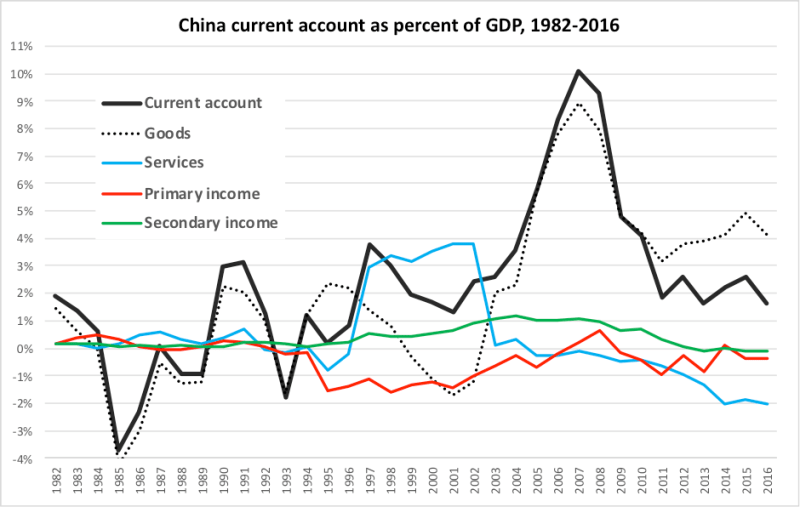
Cheney and Rotabi co-organized the 2014 International Forum on Intercountry Adoption and Global Surrogacy at ISS.

The imperial intentions of Trump’s trade war babble by Andrew M. Fischer

By Posted on 2711 views

In defence of his trade war with China, Trump claims that ‘when you’re $500bn down you can’t lose.’ The problem with this stance is that persistent US trade deficits with China are arguably a sign of US strength or even imperial privilege, not weakness. However, on this issue, he has much of conventional economics wisdom supporting him in his delusions that the US is being treated unfairly or is ‘behind’ based on these deficits.


Trump’s trade tirades are being vigorously disputed by liberal economists the world over, although the riposte is usually in defence of free trade and existing trade deals. However, many of these same economists have promulgated the underlying idea that US trade deficits are the result of some sort of disadvantage or decline.

For instance, as I discussed in 2009, 2010, 2011 and 2012, many prominent economists such as Paul Krugman argued then (and many still do now) that China’s undervalued currency gave it an unfair advantage, causing deficits and even financial bubbles in the US. Many economists on the left have taken a similar line of argument. For instance, Yanis Varoufakis argues that US trade deficits have planted the seeds for the downfall of the US ‘Minotaur’ because it has made the country increasingly dependent on the willingness of other countries to finance these deficits.

Beyond methodological nationalism

The problem with this reasoning is that international trade, income and financial data mostly represent the trade, income and asset movements made by corporations. Conversely, our system of international accounts is severely out of date given that these data are still reported on the basis of country residence rather than ownership. It also treats these flows as if they were arm’s length trades in final goods, or so-called ‘autonomous’ flows of income or finance, rather than the internalised operations of lead firms and their networks of subsidiaries, affiliates, or subcontractors.

The country-based framing of the international accounts serves to obscure the very resilient and virulent foundations of US power, based in the private corporate sector. Corporate ownership and/or control of trade, income and financial flows have become increasingly internationalised, even while remaining predominantly centred in the North and with a strong allegiance to maintaining US dominance. International efforts to track and govern these aspects of ownership or control from the 1970s onwards have also been systematically undermined, especially by the US. As a result, the antiquated international accounting system is very unfit for the task of tracking these corporate activities. Most of the discussion on global imbalances avoids this reality.

In this sense, as argued by Jan Kregel already a decade ago, the US shift to systemic trade deficits from the late 1970s onwards is best understood as a reflection of this internationalisation of US-centred corporations as well as the increased profitability of these US corporations operating in the international economy.

A simple stylised example is the iPhone. When Apple sends a production order to a subcontractor, this is not recorded as a service export from the US. However, the return export of the iPhone is reported as a goods export from China, even though the export is contracted by Apple, a US company. The iPhone is then sold in the US at many times its exported value, and the vast majority of the value of the final sale is accrued in the US. The US has a merchandise trade deficit in this production and distribution network, even though this deficit is associated with the immense value-added accrued in the US and the profitability of Apple. The same applies when Walmart exports from itself in China to itself in the US.

The idea that China’s surpluses and foreign exchange reserves constitute increasing power is similarly based on this flawed understanding of international accounts. As I have argued in 2010 and 2015, a rarely acknowledged attribute of the explosion of China’s surpluses in the 2000s was their rapid denationalisation. Foreign funded enterprises (FFEs)—most fully foreign funded—quickly came to dominate the exports of China, and then the trade surpluses themselves, to the extent that by 2011, FFEs accounted for over 84% of the merchandise trade surplus.

This share subsequently fell sharply due to a surge in exports from non-FFEs, although this was also in a context of falling current account surpluses as a proportion of GDP. As shown in the figure below, this was due to increasing deficits on China’s services account, which reached 2% of China’s GDP in 2014-16, knocking out about half of its goods surplus in 2014 and 2016.

China also returned to running deficits on its income account from 2009 onwards (with the slight exception of 2014), despite being a major international creditor. As explained by Yu Yongding, this is because China’s foreign assets mostly earn very low returns, such as in US treasury bills, whereas foreign investment in China is very profitable, possibly in excess of 20-30% per year, thereby cancelling out any of the balance of payments benefits that would normally accrue to being a major international creditor.

Graph Andrew Fischer article
Source: Author’s calculations from IMF balance of payments and international finance statistics (last accessed 21 March 2018).

Notably, the US is the mirror image of China: it is a major international debtor and yet it earns a surplus on its income account. Both situations were due to profit remittances, e.g. profits leaving China and entering the US. Indeed, Yilmaz Akyüz estimates that the net current account position of FFEs in China has been in deficit in recent years, meaning that their profit remittances were cancelling out their merchandise trade surpluses.

In other words, after the exceptional but historically brief period of running very large ‘twin surpluses’ (on both the current and financial accounts), the current account structure of China has reverted to a pattern that, as I explain in a recent article, is common among peripheral developing countries. The pattern is characterised by goods trade surpluses that counterbalance service account deficits (dominated by payments to foreign corporations) as well as the profit remittances of foreign corporations (and of other foreign investments, whether licit or illicit).

These rapid transformations have been reflective of the increasingly deep integration of China’s foreign trade into international networks dominated by Northern-based transnational corporations. The model has resulted in exceptional export performance, although this has occurred through the injection of considerable but underappreciated sources of vulnerability.

Indeed, as noted by Yu Yongding, from 2015 to 2017 the People’s Bank of China undertook the largest intervention in foreign exchange markets that any central bank has ever taken in order to prevent a run on the renminbi. This depleted its foreign exchange reserves by over 1 trillion US dollars. In another recent article, Yu adds that from 2011 to 2017, around 1.3 trillion US dollars of China’s foreign assets had effectively disappeared, probably reflecting capital flight. Together with the run on the renminbi, these were the principal reasons that the Bank of China put a hold on capital account liberalisation and tightened capital controls to an extent not seen since the East Asian financial crisis of the late 1990s.

Considering that much of such capital flight is destined for the US, either directly or indirectly via multiple offshore financial centres, in addition to the profitability that US corporations derive from China’s trade with the US, it is clear that the US is in the more powerful position in this bilateral relationship.

The imperial utility of trade decline discourses

From this perspective, the deep US trade deficits that have persisted since the early 1980s arguably represent a new form of advanced capitalist imperialism, the emergence of a system of tributes whereby states around the world effectively subsidise the expansion of US-centred capitalism. At the very least, the deficits are signs of a structural shift underlying global power relations, based on an increasingly predatory form of financialised capitalism, with the US still at its helm.

Much like with discourses of Soviet rivalry in the 1960s and 1970s, the current babble of US decline and lagging serve an ideological purpose within these continuing transmutations of US-centered power. It is effectively aimed at subordinating other countries and shifting the burden of adjustment onto them, while distracting attention away from the US-centered, corporate-led restructurings of global production systems that underlie US deficits in the first place.


Main photo: https://pixabay.com/en/donald-trump-politician-america-1547274/

About the author:

Andrew mug shot.JPGAndrew M. Fischer is Associate Professor of Social Policy and Development Studies at the ISS, and laureate of the European Research Council Starting Grant, which he won in the 2014 round. He is also the founding editor of the book series of the UK and Ireland Development Studies Association, published by Oxford University Press, titled Critical Frontiers of International Development Studies. He is also editor of the journal Development and Change. His forthcoming book, Poverty as Ideology, won the 2015 International Studies in Poverty Prize, awarded by the Comparative Research Programme on Poverty (CROP).


Deglobalisation Series | Backtracking from globalisation by Evan Hillebrand

By Posted on 2088 views

While globalisation still enjoys strong support in the Global South, major economies in the Global North now seem less enthusiastic about its purported benefits. This article explores how the United States through its previous policies came to backtrack from globalisation, showing that it is an altogether unsurprising development.


From the perspective of the United States (US), embodied in US president Donald Trump’s recent discourses, the liberal international trading system faces at least three major economic and socio-political challenges going forward: (1) income redistribution, (2) the rise of Asia and a potential shift in comparative advantage, and (3) the rise of China and the national security argument. Given the growing domestic unease with free trade and the fact that these exacerbating issues are worsening, I suggest that US policies will become less supportive of globalisation.

US withdrawal: surprising or expected?

In our 2011 article, “Backtracking from Globalization” (1), my coauthors and I discussed the declining support for globalisation in the United States and elsewhere. Since then the trend has gotten worse.

But why shouldn’t it? The US, after all, has only had a liberal trade policy for 60 or so years. In its early years, US policy focused on high tariffs, large subsidies to key industries, and infrastructure investment designed to create an industrial economy for the sake of military and economic power (sounds not too dissimilar to China today). The US moved to a freer-trade stance when the US was economically dominant and an expansion of global markets seemed as if it would be economically beneficial.

The US free trade strategy was also based on political theories and grand strategy. After World War II, trade expansion was seen as a good way to bolster Europe economically, tie it to the West, and strengthen the West against the Soviet Union. The US spurred the creation of the GATT/WTO in an effort to bring all countries into a democratic rule-based system under the assumption that trade would help all countries prosper under US leadership. Since 1980 or so, the US has tried to lure China into the world market system to foster interdependence and peace. In many respects, that policy can be considered a great success—ushering in a vast improvement in the material standard of living almost everywhere and many decades of great-power peace. China also did turn away from its Maoist phase of development.

 Ebbing enthusiasm for globalisation

Support for globalisation, however, is clearly headed in a negative direction and the ebbing of enthusiasm has been particularly dramatic in the United States. Recent polling data from the Pew Foundation and the Council on Foreign Relations (2) show that there is still support for international trade, but a majority worry that trade generates labor market costs in terms of job destruction and lower wages. This worry helped elect the current US president and his administration talks more about fair trade than free trade: ‘Nothing about the theory of comparative advantage would lend itself to a defense of a status quo that imposes higher barriers to exports on American producers than on foreign producers’ (Economic Report of the President 2018: 219) (3).

It is important to understand that it is not ignorance that has led US policy in this direction.

Many voters were lured to Donald Trump’s “America First” pitch because of a perception that wages were stagnant and communities were hurt because of globalisation. In reality it is more than just a hunch: income distribution in America has worsened and academic research by Paul Krugman (4) and others attributes some of that worsening to trade, although the magnitude of trade’s contribution is (and always will be) in dispute.

Support for globalisation has to some extent rested on the theory of comparative advantage, but that theory has never been the “slam dunk” argument that enthusiasts have made it out to be. It depends on so many assumptions that do not fit the current world economy, so the theory should only be relied upon as a general principle, not the decider of every policy dispute. Paul Samuelson (5) claimed in 1972 that the aggregate gains from trade are not necessarily positive. He expanded on this idea in his (2004) paper, ‘Where Ricardo and Mill Rebut and Confirm Arguments of Mainstream Economists Supporting Globalization’, saying that growth in the rest of the world can hurt a country if it takes place in sectors that compete with its native exports—where it has comparative advantage.

The rise of China

Relative, and even absolute, per capita GDP can fall in such a situation (6). Whether China’s rise can actually diminish the US is not clear, but the current Chinese government continues to employ active trade policies to push its industries up the value chain, aiming explicitly at sectors that have been the mainstay of US industrial pre-eminence. Samuelson says that ‘economic history is replete with examples like this, first insidiously, and later decisively’, pointing explicitly to British manufacturing being overtaken by US industry after 1850.

In addition to the economic threat posed by China, the US government has long worried about the security threat posed by China’s rise. The US-China Economic and Security Review Commission is an organisation chartered and funded by the US Congress and dedicated to the proposition that China poses a multifaceted threat to the US. It yearly issues a massive report that cites declines in the US defense industrial base, insecurity of defense supply lines, financial threats, Chinese ownership of critical US facilities, cyber threats, and other problems—all related to China. In the most recent report (7), it lists 26 recommendations for congressional action, many of which would amount to new trade restrictions.

Trade policies, while often rooted in interest groups scrambling for distributional gains, are also related to national economic and security concerns. In the past, pragmatic national interests have pushed trade policy in varying directions. There is no reason now to believe that the US is giving up on international trade, but there is every reason to believe that for a variety of national interests it will be much less enthusiastic about globalisation in the future.


References:
(1) Hillebrand, E.E., J. Lewer and J. Zagardo (2011) ‘Backtracking from Globalization’, Global Economy Journal 10(4).
(2) Poushter (2016) American Public, Foreign Policy Experts Sharply Disagree over Involvement in Global Economy. Pew Research Center, http://www.pewresearch.org/author/jpoushter.
(3) Council of Economic Advisors (2018) Economic Report of the President. Washington, D.C. https://www.whitehouse.gov/wp-content/uploads/2018/02/ERP_2018_Final-FINAL.pdf
(4) Krugman, P.R. (2008) ‘Trade and Wages, Reconsidered’, Proceedings of the Brookings Panel on Economic Activity. Spring conference. Available at: (http://www.princeton.edu/~pkrugman/pk-bpea-draft.pdf).
(5) Samuelson, P.A. (1972) ‘Heretical Doubts About the International Mechanism’, Journal of International Economics, 2(4): 443-453.
(6) Samuelson, P. (2004) ‘Where Ricardo and Mill Rebut and Confirm Arguments of Mainstream Economists Supporting Globalization’, Journal of Economic Perspectives 18(3): 135-146.
(7) U.S.-China Economic and Security Review Commission (2017) 2017 Report to Congress. Washington, D.C. Available at https://www.uscc.gov/sites/default/files/annual_reports/2017_Annual_Report_to_Congress.pdf

Also see: Deglobalisation Series | Is anti-globalisation only a preoccupation in the Global North? by Rory Horner, Seth Schindler, Daniel Haberly and Yuko Aoyama


UntitledAbout the author:

Professor Evan Hillebrand taught international economics at the Patterson School of Diplomacy and International Commerce at the University of Kentucky. His most recent book is Energy, Economic Growth, and Geopolitical Futures (MIT Press, 2015).


Trump’s ‘doublespeak’—why academics should speak out by Jeff Handmaker

By Posted on 2138 views

U.S. President Donald Trump in January 2018 delivered his first State of the Union Address (SOTU). At first glance, he sounded more presidential than ever following his tumultuous first year in office. However, his careful words hid an agenda that is hostile to most of us, and to academics in particular. As scholars, we have a responsibility to take notice, and to speak out. 


The SOTU Address – Trump’s doublespeak

During much of his SOTU address, Trump made an effort to reach Americans, beyond his more familiar, albeit dwindling ‘base’ of support, composed of evangelicals, the elderly and whites without a university degree. His presentation was peppered by American proverbs and even managed to come across as compassionate.

But gaps and contradictions blatantly revealed Trump’s doublespeak. While Trump refrained from referring to countries as “shitholes” as he had done a few weeks earlier, his contempt for foreign nations was evident. He praised the Iranian peoples’ “struggle for freedom”, while failing to mention the travel ban in place against all Iranians.

Trump also praised his decision to recognize Jerusalem as Israel’s capital, a decision condemned by most nations in the United Nations General Assembly. Trump said that “friends” of the US would receive support, while “enemies” would not. While these were not explicitly specified, there was a clear reference to how nations voted at the UN concerning Jerusalem.

Capping off a dizzying array of international law violations, Trump insisted that the notorious detention camp in Guantanamo Bay, associated with torture and indefinite detention without trial, would remain open. He affirmed that the US military would continue its operations in Afghanistan, ominously, under unspecified “new rules of engagement”.

So how is this all relevant for scholars?

The overall response from media commentators to Trump’s SOTU address was disappointing. Most focused on its tone rather than its content. In the Netherlands, some even referred to Trump’s address as “brilliant” and “politically, very clever”. The NRC Handelsblad offered perhaps the best commentary, emphasising its ‘polarising’ content, but this was an exception.

The fact remains that a significant majority of Americans have consistently disapproved of Trump’s job as president. There has been a public outcry in countries around the world, particularly after Trump’s decision to recognize Jerusalem as the capital of Israel. So why have there been so few critical analysts, particularly in the mainstream media?

In my own observations at academic gatherings in the US and abroad, since Trump first came to office in January 2017, it appears that most academics tend to dismiss Trump, rolling their eyes, ignoring his statements, mocking him, or even suggesting that he doesn’t really have all that much power. A handful of academics have even openly supported him.

There are, of course, notable exceptions. Those in the immigration law field have written persistently on the Trump administration’s persecution of immigrants. Apart from the alternative media, such as Mondoweiss, Democracy Now and MSNBC, The Conversation has produced in-depth articles by scholars condemning the Trump administration’s policies. But even critical media outlets, such as De Correspondent in The Netherlands have acknowledged that, while news outlets have tended to reflect daily indignation, they have rarely produced sustained resistance to the policies of the Trump administration.

A position of ambivalence in these circumstances is not tenable. As Professor Harris Beider has poignantly observed: “we live in an age of volatility and scepticism … As academics we find ourselves in the dock of public opinion too … we as universities and academics can also be part of the problem”.

Accordingly, with the rise of ethno-nationalist administrations in the USA and the United Kingdom, Beider has issued an appeal to academics to be less self-absorbed and “to question received wisdom and follow the people rather than expect them to follow us”.

What Trump says publicly should matter a great deal to us, if only in view of the vast military and nuclear arsenal at his disposal and the message to other world leaders that Trump’s behavior should in any way be regarded as acceptable.

Trump’s specific threats to academics

Alongside general concerns around Trump’s policies, there are at least three specific examples that are pertinent to academics worldwide.

First, Trump’s travel ban on nationals from specific countries has made it impossible, and even dangerous for academics from these countries, some of whom are regarded as scholars at risk, to share their knowledge and in extreme cases obtain safe refuge in the United States. Several vice chancellors (rectors magnificus) of Australian universities have protested Trump’s travel ban, joining thousands of other scholars worldwide.

Second, while Congress has so far pushed back on Trump’s proposals to slash health research, Trump’s refusal to accept the scientific consensus concerning a link between carbon emissions and climate change is having a devastating global impact in restricting access to crucial research funding. Research funding cuts in other areas are also likely.

Third, the harassment of scholars by right-wing groups has been steadily rising against scholars, particularly following the election of Donald Trump. Such harassment is even described as “becoming normal” by the American Association of University Professors, which has set up an on-line platform for reporting incidents of harassment.

6219961958_e15d5cdec6_b
Picture Credit: Newtown grafitti

This would not be the first time scholars have stood up in protest against regimes whose policies have threatened society at large, and academics specifically. This includes South Africa’s persecution of non-whites and critical scholars in the 1980s, the persecution of scholars by the government in Turkey and Israel’s persecution of Palestinian scholars.

Whether as scholars of climate change, international law, race relations or many other related areas, we should all be shocked. Alarmed. Indeed, appalled at Trump’s SOTU speech. And we should speak out at every opportunity, particularly outside our close-knit community that largely holds the same views we do.


Also see: Scholars at risk: precarity in the academe by Rod Mena and Kees Biekart


Picture credit: DonkeyHotey


JeffHandmakerISS_smallAbout the author:

Jeff Handmaker teaches law, human rights, development and governance and conducts research on legal mobilisation at the ISS. He is also an associate member of the Faculty of Law at the University of the Witwatersrand in Johannesburg, Editor-in-Chief of the South African Journal on Human Rights and a member of the EUR INFAR Project.