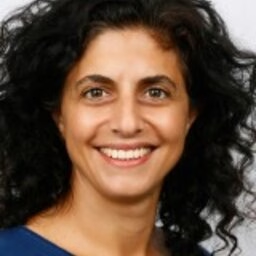
Huge development aid cut ‘also harmful for economic relations and Dutch asylum policy

By Posted on 2191 views

Development aid minister Reinette Klever is slashing the budget for NGOs. For the period 2026-2030, she is reducing the budget from 1.4 billion euros to around 0.4 billion euros, a 70 per cent cut. Thea Hilhorst, professor of Humanitarian Studies at ISS, fears major consequences, including for the Netherlands itself.  “Do we want to live behind high walls with snipers to protect our own prosperity?” In this blog Manon Dillen shares excerpts of this interview with Hilhorst.

Photo Credit: Bas van Der Schot

What was your first reaction when you heard about this cut?

“Unfortunately, I wasn’t surprised; it was to be expected, since it had already been announced in the General Agreement. What I found particularly painful at the time was how little response it generated. At the presentation of the General Agreement, all the attention was focused on migration, asylum and Minister Faber. Things were relatively quiet on development cooperation, even though a PVV minister was appointed there too, one who had previously indicated that she wanted to abolish development aid. Development cooperation as a political domain has apparently disappeared from people’s field of view.”

Photo Credit: Bas van Der Schot

What impact will this decision have globally?

“The impact will be huge, both in the Netherlands and internationally. Global effects are hard to measure directly. It’s not as simple as ‘The Netherlands stops and deaths happen immediately’, but it will create holes in NGO programmes, such as Oxfam, Pax, you name it. They will have a better picture and be able to demonstrate concretely what the damage will be, and what it will mean for people in the countries where they operate.

“As well as the NGOs’ programmes, these cuts will also have an impact on relationships. When you destroy those, the consequences are not always immediately visible, but they are there. For example, in the form of deteriorating economic relations or reduced goodwill to do things for each other.”

Can you give an example?

“Well, the cabinet thinks migration is super important, right? When dealing with migration, it’s important to negotiate with the countries the migrants come from. If you only focus on conversations about migration without maintaining broader relationships, it becomes much more difficult. Say the Netherlands is in the running to win a big order. It’s more likely to get it if the relationship is embedded in a broader narrative. An ambassador could give a nice speech about what the Netherlands is all about. But if you strip back those international relationships too much, then other countries would no longer have an incentive to award that order to the Netherlands. So it could hurt economic relations. But it might also be about something smaller: suppose a Dutch citizen is imprisoned somewhere. Without good relationships, it’s harder to get them released.”

So this government is harming itself on the migration issue?

“Yes, there’s a link between migration and development cooperation, but it’s not clear-cut. For example, countries will be less inclined to meet the Netherlands halfway in a migration deal if we no longer do anything for them.

“It was thought that development cooperation would slow down migration to Europe. But research shows a mixed picture: a slightly higher standard of living can also mean that people actually want to migrate. If people become more educated or have more money, they see more opportunities abroad. This kind of research is difficult because people rarely migrate for purely economic reasons; conflict, weak governance and other factors often play a role.

“At the same time, it’s clear that a lack of aid increases migration flows. When refugees find themselves in a precarious situation in their region, they’re forced to travel further to seek safety. While we’re not sure what the effects of aid on migration are, we do know that people will migrate if they don’t get any aid at all.”

What direct impact will the cuts have in the Netherlands?

“International commitments, such as contributions to the UN, cannot simply be cancelled. So what’s left? NGOs. Support to NGOs is being cut disproportionately. But it’s being wrapped up in a narrative that NGOs are inefficient, which is simply not true. If the government doesn’t want to spend money on NGOs, they should just say so, instead of telling a misleading story about these organisations not being effective. That’s very damaging.”

Why exactly is it so damaging?

“By suggesting that NGOs operate inefficiently, the minister is undermining civil society. Meanwhile, support for development organisations is actually huge, and that shouldn’t be underestimated. If civil society is undermined, it could come at the cost of supporting development, and the Netherlands would become an inward-looking country. That’s a dangerous development for a small country in a big world.”

Is that support really that high? I didn’t see it reflected in voting behaviour in the recent elections.

“If people voted on this issue alone, the political landscape would look very different. NGOs have huge numbers of supporters. Someone at Oxfam Novib told me that they alone have more donors than the membership of all political parties combined! We’re really engaged with the world. We see this in primary schools, and in the willingness to take action for Giro 555, for example. The Netherlands can be proud of that, and it’s very important to hold on to.”

Isn’t development aid a neo-colonial way of imposing our Western ideals? And in that light, perhaps it’s not such a bad thing to spend less money on it?

“It’s not like the Netherlands goes to a country and says ‘knock off the LGBTQ discrimination’. It’s often linked to international agreements to which the countries we work with have independently committed. These are topics that organisations in those countries are already working on, otherwise there would be no fertile ground for discussions.

“It’s also important to embed the theme in a wider web of relationships. If you only harped on about LGBTQ rights or gender equality, you might offend people. You have to address those themes with care. Assisting with cultural change is very nuanced and complex and you can indeed go wrong quickly. But doing nothing anymore is also not a solution. We owe it to these countries to at least do something.”

What do you mean by that?

“Poverty in some countries is linked to our wealth, both historically through colonial ties and through current economic structures. We bear responsibility for that. This becomes even more evident with climate change: countries like Bangladesh are hit hard, with millions of people losing their homes or land to floods, even though they contributed little to the causes. These are people who have never been on an airplane, who do not have a washing machine and eat little meat because they can’t afford it. But they’re the direct victims of climate change. And that climate change is caused by rich countries – by us. Structural, equitable solutions to social inequality and climate change are needed. That takes time. Until those solutions are in place, development cooperation remains crucial.”

The minister argues that NGOs should be better able to fend for themselves. What’s your view?

“Surely we don’t fund NGOs for the sake of the organisations’ survival, or because it makes Dutch people feel good? We fund them because these organisations do good things for target groups that we as a country consider important. That may interest this government less. If so, they should say so explicitly. Right now, I get the feeling that some sort of lightning rods have been put up, diverting attention to the idea that NGOs are inefficient or lack support. Whereas it should be about what we want to achieve with development cooperation, and what kind of budget we need for that.”

What do you think about this government choosing to cut development cooperation in the first place?

“The Netherlands should comply with international agreements. The norm is to spend 0.7 per cent of gross national product on development cooperation. With these cuts, we’re sinking far below that. At the same time, we’re committing to the NATO standard of 2 per cent on defence. That’s a choice.”

In the Letter to Parliament, the minister stated that she wants to focus on three themes: health, women’s rights and fair trade. What do you think of these themes?

“They’re not bad, but there are things missing. Why is there no focus on water management, when the Netherlands has so much to offer in that area? And where is climate adaptation, a theme that is crucial right now?

“I’m also worried about humanitarian aid, even though the minister says she’s setting aside money for that. Globally, there’s too little aid available. This is partly because international humanitarian law, which obliges countries to protect civilians and allow aid through in times of conflict, is being structurally violated. A glaring example is Israel blocking aid to Gaza, with few international consequences. Or Sudan, where entire refugee camps are being massacred.

“The erosion of development cooperation has direct consequences for humanitarian aid. Without investment in agriculture and irrigation, drought leads to hunger, which in turn means more humanitarian aid is needed. But humanitarian aid is meant for emergencies, not as a permanent solution. Recovery requires stable facilities such as local hospitals. And stable health care depends on regular aid.”

Photo Credit: Bas van Der Schot

What do you think this cut means for the future of Dutch development cooperation?

“If you break down institutions, you can’t easily rebuild them. We need to keep institutions on their feet as much as we can. That’s obviously what NGOs are trying to do. Not one of them is throwing in the towel. Instead of just hoping for better times, we must work for better times.

“Human rights and international humanitarian law were established after World War II to prevent a repetition of the atrocities of that war. Values such as human rights, conflict prevention and peace efforts are crucial here. If the Netherlands abandons them, which is what is happening with these cuts, we are contributing to a global trend of allowing more conflict and inequality. Do we want to live behind high walls with snipers to protect our own prosperity, or do we want to build a future based on mutual respect? We need to recognise that we depend on each other. They depend on us, but we also depend on them.”

This article was first published in the Erasmus Magazine
Dorothea Hilhorst
Dorothea Hilhorst

Dorothea Hilhorst is Professor of Humanitarian Aid and Reconstruction at the International Institute of Social Studies of Erasmus University Rotterdam.

Manon Dillen

Manon Dillen has a background in economics and philosophy at the Erasmus University in Rotterdam. After graduating she started working as a freelance journalist.


Are you looking for more content about Global Development and Social Justice? Subscribe to Bliss, the official blog of the International Institute of Social Studies, and stay updated about interesting topics our researchers are working on.

Risks and rewards: How travelling with children shapes migrant decision-making

Travelling with children is more complex than travelling alone. It is also more expensive. Yet the impact of children on migration decision-making – and the dilemmas faced by parents and caregivers on the world’s major migration routes – are poorly understood.

In this blog, Chloe Sydney draws upon recent survey data to share initial insights into how parents and caregivers make decisions about migration when children are accompanying them on their journey.

Photo Credit: PACES

Surveying migrant decision-making

Between March and October 2024, the Mixed Migration Centre (MMC) surveyed 1,557 people on the move in Italy, Niger, and Tunisia for PACES, a 40-month Horizon Europe project that aims to understand migration decision-making and thereby also inform migration policymaking (1). Among people surveyed, 11.5% were travelling with children(2).

A gendered and geographical distribution

Women surveyed were nearly four times more likely than men to travel with children, with 24% of women travelling with children compared to just 6.5% of men – and their migration decision-making accordingly constrained.

Geographically, the percentage of respondents travelling with children drops progressively along the route: 16% in Niger,  10% in Tunisia, and just 8% in Italy(3).  As can be observed on MMC’s 4Mi Interactive, a similar trend emerges when broadening the scope beyond PACES to all data collected in the three countries. This may be because parents and caregivers are wary of exposing children to the significant risks found in the Sahara, Libya, and the Mediterranean Sea.

How the risks inform the route

Recommendations and past experiences of family or friends were the most common factor informing choice of route for all respondents. For those travelling with children, safety and familiarity also played an important role in informing decision-making: as illustrated below, those travelling with children were somewhat more likely than others to prioritize safety (30% compared to 26%) and to choose routes they knew best (36% compared to 27%).

However, cost matters too, especially since travelling with children makes things more expensive. ‘My journey here with my children has not been easy at all, I had to spend a lot of money between Benin and Niger’, shared a Togolese father. In the face of limited resources, 35% of those travelling with children chose their route at least partly because it was the cheapest option, compared to 26% of other respondents. Conversely, parents and caregivers travelling with children were less likely to prioritize the fastest route, possibly because faster routes tend to be more expensive.

If the cheapest route involves greater risks, parents and caregivers face a difficult dilemma. Should you expose your children to danger in the hope of finding safety? In the words of British poet Warsan Shire,

you have to understand,
that no one puts their children in a boat
unless the water is safer than the land […]


Keeping safe en route

In the absence of safe alternatives, parents and caregivers take steps to mitigate the risks. As shown below, to protect themselves from crime and abuse, people travelling with children were more likely to travel in a group (58%), stop in places with trusted contacts (42%), and use safer methods of transport (36%). These precautions aim to reduce risks related to crime and abuse, but may also increase the cost of travel.

Despite efforts to protect children from harm, over two-thirds (68%) of respondents travelling with children felt children had been highly or very highly exposed to serious risks such as physical violence, sexual violence, kidnapping or death during the journey.

‘I cannot encourage anyone to take this route, because I lost my daughter during the journey, and I miscarried as a result of the pressure’, shared a Nigerian woman in Tunisia. ‘If you want to go, you should leave your children at home’, warned a father who saw his daughter being raped on their journey from Chad to Tunisia.

Where to go and whether to stay

Just as travelling with children can influence the route taken and the means of travel, it also influences decision-making with regards to choice of destination.

Reflecting parents’ and caregivers’ safety concerns, among those who specified a destination, over half (54%) of respondents travelling with children said they chose it at least partly because it was the safest option(4). This was the case for just 44% of those not travelling with children.

Perhaps to provide for their families, people travelling with children were more likely to mention their choice of destination was influenced by economic opportunities, at 80%. They were also more likely to mention the social welfare system, at 41%. Access to better education mattered somewhat more to them as well, as shown in the figure below.

Finally, travelling with children impacts whether and why people might one day return to their countries of origin. Those travelling with children were more likely to say they would return only if they believed it was safe (26% compared to 18% for other respondents). ‘The security situation is much better here than in our country of origin’, explained a man from northeast Nigeria, surveyed in Niger.

What we’ve learned

Among the people we interviewed, the presence of children impacts migration decision-making. Those travelling with children more often prioritise safety when selecting a destination, deciding whether to return, or to a certain extent when choosing a route. However, as travel becomes more expensive, costs also play a more important role in decision-making, potentially forcing some families to forsake safer, costlier routes in favour of more affordable, perilous journeys.

Our data also highlights the risks faced by children on the move, and their resulting need for specialised protection services. ‘My daughter has suffered many injustices on this route, she will be forever traumatised’, said a mother from Tigray in Ethiopia. ‘She has seen things beyond her years.’ Those who embark on dangerous journeys with their children, however, often have few alternatives: opportunities for safe, regular migration from Tigray, for example, are limited, even though the region is beset by high levels of food insecurity, limited access to essential services including education, and continued political instability.

Endnotes:

1. Since we rely on non-probability sampling, our findings cannot be generalized to all people on the move. Our baseline data collection will be complemented by two rounds of longitudinal data collection, enabling us to examine decisions to stay and migrate over the course of a year and a half.

2. One respondent refused to say whether they were travelling with children.

 3. The proportion of women surveyed remains relatively stable across the three countries, so this does not explain the drop in respondents travelling with children.

4. 177 respondents travelling with children and 1,344 of other respondents had specified a destination.

Funded by the European Union. Views and opinions expressed are those of the authors only and do not necessarily reflect those of the European Union. Neither the European Union nor the granting authority can be held responsible for them.


Opinions expressed in Bliss posts reflect solely the views of the author of the post in question.

About the author

Chloe Sydney

Chloe Sydney is the Mixed Migration Centre’s Global 4Mi and Data Coordinator. She has nearly a decade of research experience, with a particular focus on forced migration. Chloe has a PhD on refugee decision-making with regards to return, and a master’s degree in International Migration and Public Policy.


Are you looking for more content about Global Development and Social Justice? Subscribe to Bliss, the official blog of the International Institute of Social Studies, and stay updated about interesting topics our researchers are working on.

Scholar-activist research method – challenging but indispensable

By Posted on 1812 views

Although challenging, scholar-activism is a crucial analytical and political endeavor today.

In some particular settings, perhaps the best way to advance social science research is to engage in collaboration with social groups whose vision you are broadly sympathetic to. Yet the challenge is that you may find yourself politically supporting and advocating the very social practices you are studying. Does this make your research biased? Like many other development practitioners, I do not feign to practice disinterested research. Ultimately, ethical and political commitments permanently inform our practice: why we study certain phenomena and not others, why we consider some as problems but not others. Thus, no social science research is politically neutral; it all has a bias. But a certain level of political bias and scientific rigor are two different things.

Acknowledging that social research is biased does not imply a lack of rigor. As scholar-activists, our duty is to ensure that the visions we identify with are also subjected to theoretical scrutiny and peer review, and to practice honest reporting. The challenges are enormous. For instance, can you disagree with your local collaborator? Does scholar-activism mean ‘anything goes’ in terms of accepting uncritically whatever is being claimed by your local researcher partners? In this blog, Lorenza Arango reflects on collaborating with the Norman Pérez Bello Claretian organization (The Claretians, for short) in the eastern plains of Colombia.

The savanna landscape in Puerto Gaitán, Meta. Photo by author, June 2022.

It was in the middle of the 2022 rainy season in the Altillanura, Colombia.

Anita, a member of the Claretian organization and the leader of the field visit, was facing a tough decision: to cancel the visit halfway through – with several of the tasks we had agreed on still incomplete – or to move to another area within the region to finalize our mission. Heavy rains had made several of the roads impassable and navigating the Meta River to reach our next destination seemed the only way out. But travelling by river poses other security concerns, especially to social organizations such as the Claretians, whose members have become targets of threats and persecution.

‘How do you want to proceed? Shall we cancel the visit?’, I asked.

‘Let me think through… People are already waiting for us’, Anita replied.

After hours on the phone with members of the communities we were to visit, and with the head of the Claretian organization, to validate the security conditions in the area, the decision was made: to get on the first boat departing at 4:00 am, and to stick together during the approximately 8-hour journey, as well as to remain alert and cautious.

In recent years, the eastern Altillanura (high plains) in Colombia – encompassing the department of Vichada and portions of Meta – have turned into a major frontier destination for lucrative investments in land. Over a short period of time, the region changed from being a far, scattered and poorly developed landscape of tropical savannas bordering Venezuela to become the greatest and ‘last agricultural frontier’ of the country and even the new ‘promised land’.

The Colombian Altillanura was part of a broader phenomenon of spectacular, multi-faceted land grabs across the world known as the ‘global land rush’. Roughly between 2004 and 2017, multiple corporate land deals were pursued in the area. Other land deals were halted at early stages of implementation or never really touched the ground, but nevertheless contributed to fuel the investment frenzy. Meanwhile, land accumulation by stealth, effected by low-profile actors, progressed apace – taking part in the bandwagon effect driven by the land rush.

For the indigenous peoples and the peasantry inhabiting the Altillanura, the tropical savannas were not an investment target. They were their home sites and key a source of livelihoods. For decades now, both communities have suffered from the effects of multiple iterations of land dispossession and forced displacement by different actors (including the state, economic elites, armed guerrilla groups, narcotraffickers and paramilitary). The recent land rush in the area, and the ensuing social and environmental crisis, further exacerbated the precarious living conditions experienced by these – making them the poorest strata of the rural population.

An improvised kitchen at the indigenous settlement of ‘Iwitsulibo’ (Puerto Gaitán, Meta). Photo by author, June 2022.

Against this background, the work of the Norman Pérez Bello Claretian organization (Corporación Claretiana Norman Pérez Bello – CCNPB) is fundamental. The Claretians is a Colombian non-profit organization that promotes social justice and peace and accompanies peasant and indigenous communities who assert their rights through non-violent mechanisms. It offers legal advice, as well as psychological, pedagogical and communications support. Since around 2003, the Claretians has continually supported efforts by various rural peoples to improve their living conditions in Colombia’s eastern plains and other regions of the country. To date, it is perhaps the only organization in the area whose work in the defence of rural communities has endured the test of time and the brutality of various forms of violence – including persecution of its members and threats against their lives.

As a PhD researcher within the European Research Council (ERC) Advanced Grant-funded RRUSHES-5 project, based at the International Institute of Social Studies (ISS) of Erasmus University Rotterdam, I am pleased to have collaborated with the Claretians and to have learned first-hand from the work it does in the Altillanura. My first engagement with its work happened when I accidentally came across short online publications by the organization, in which it denounced recent land grabs in the area and the effects these had on Sikuani indigenous peoples. I later heard about the organization from other researchers and investigative journalists and became an admirer of its work.

On the basis of collaborative agreements, the Claretians facilitated a significant part of my fieldwork in the Altillanura for my doctoral dissertation. Together we visited what had become key investment sites by large corporations and political and economic elites in the municipality of Puerto Gaitán in the Meta department and in La Primavera and Santa Rosalía in Vichada. We listened to and documented people’s retelling of harsh stories of dispossession associated with the investment rush and the consequences to their livelihoods of land lost.

While collaborating with the Claretians, the alleged boundaries between scholarly research and activism suddenly becoming less rigid. This collaboration has also taught me the often-challenging practice of scholar activism and how indispensable it is today.

Traversing the open plains and water springs by foot in rural Puerto Gaitán, Meta. Photos by author, June 2022.

On a number of occasions, I inevitably performed tasks closer to advocacy work – which clearly influenced my research outcomes. For instance, at most field sites we visited, I cooperated in setting up meetings and assemblies between indigenous community members and government officers, hoping these could result in the challenges faced by the indigenous people (for example, in terms of their land access and their living conditions) being better addressed. I also helped draft press releases denouncing abuse and threats of coercion by the local police and illegal armed groups against community members and the Claretians and demanding that the state ensure the fundamental rights of the indigenous peoples. I also devised tools that could help to leverage indigenous peoples’ decision-making power in response to state authorities, such as printed maps of their territories.

Public assembly converging indigenous communities across the eastern plains and government functionaries from the National Land Agency in La Primavera, Vichada. Photos by author, March 2023.

At the same time, the collaboration allowed the Claretians to systematize much of the evidence it had collected over the years about the politics of land access in the Altillanura, as well as to reach larger audiences – through reports and other publications that came out of our partnership.

Of course, experiences of scholar-activism such as this are not exempt from challenges. How could both parties ensure that the research project I was representing would be useful and impactful to the people on the ground? What other research strategies should I employ to validate the conclusions resulting from the collaborative work, apart from fieldwork? Also, were the Claretians – given its knowledge of the area and of the communities it accompanies – entitled to set the objectives and terms of our collaboration? Could I object to the organization’s practices or disagree with the behaviour of some of its members in the field? If so, could that risk our collaboration or compromise particular outcomes from it? In the end, all of us, both the members of the organization and myself,  had to deal with these questions and several other contradictions arising along the way.


All in all, the underlying message is clear: in contexts of widespread land dispossession, such as the one shaping the Colombian Altillanura, struggles over land remain a key axis of mobilization, which in turn make of scholar-activism an analytically crucial and politically empowering undertaking and method of work – despite of (or even because of) the difficulties surrounding it.

***

Nowadays in academia, research with positive societal impact has gained wide support. It is often interpreted to mean that academic work impacts and transforms society and societal actors. This is certainly valid and important. But in my case, another dimension is also clear: non-academic societal actors can profoundly impact and transform academics and academic work. While the first interpretation  is significantly explored in academic circles, the impact of society and societal actors in academia is relatively less so. Yet I believe it is equally important to think about how non-academic societal actors, especially social justice activists like Anita and her Claretian colleagues, positively impact and transform academic researchers like me, and, for that matter, academia and academic work I am embedded in. And that feels right.


Opinions expressed in Bliss posts reflect solely the views of the author of the post in question.

About the Author

Lorenza Arango is a PhD researcher at the International Institute of Social Studies (ISS, The Hague) of Erasmus University Rotterdam. She is a member of the research team of the European Research Council (ERC) Advanced Grant awarded project ‘Commodity & Land Rushes and Regimes: Reshaping Five Spheres of Global Social Life (RRUSHES-5)’, led by Jun Borras. As part of this project, she is working on the interactions between contemporary commodity/land rushes and the spheres of labour and food politics, as well as on state-citizenship relations in Colombia.

Are you looking for more content about Global Development and Social Justice? Subscribe to Bliss, the official blog of the International Institute of Social Studies, and stay updated about interesting topics our researchers are working on.

Emphasizing locally-led knowledge interventions in cases of neglected humanitarian crises: Launching the Namibian Humanitarian Observatory

By Posted on 1532 views

In this blog, Sister Agrippina Nandjaa (Caritas Namibia) marks the opening of the Humanitarian Observatory in Namibia, considering the importance of ‘neglected crises’ and their intersection with climate change. The Observatory in Namibia joins a growing network of spaces for research, discussion, and advocacy, coordinated by The Hague Humanitarian Studies Centre (HSC).


Image by Unsplash : Bernd Dittrich

The Namibia Humanitarian Observatory was launched on 24 May 2024 to create a space for discussion with communities and stakeholders around vulnerability to disasters across the country. The self-governed Observatory aims to engage communities prone to recurrent climate-related shocks to share experiences and explore pathways toward creative and self-reliant communities, especially in the case of drought. The widespread impact and long duration of drought make it one of the most costly hazards in Namibia. However, the impacts of drought can often be lessened through preparedness and early action aimed at decreasing community vulnerability and exposure. Namibia is the most arid sub-Saharan country, experiencing very high evapotranspiration rates (Mendelsohn et al., 2002). Consequently, it is exposed to recurrent droughts, with historically devastating consequences. A growing population, persistent poverty, and climate change provide even greater threats in the future. And, with the situation in Namibia often falling into the category of ‘neglected humanitarian crises; affecting international support and aid, we are reminded of the importance of the everyday actions and practices that drive humanitarian action from the local and grassroots level.

A platform for discussion and analysis around drought

In partnership with The Hague Humanitarian Studies Centre (HSC) of the International Institute of Social Studies, the Namibia Humanitarian Observatory will be a platform for discussions that enable communities and authorities to respond to humanitarian crises. It will bring together communities to assess historical drought events and their extent and impacts in Namibia. It will facilitate the gathering and analysis of relevant data and explore the current institutions and systems involved in drought monitoring, forecasting, early warning, mitigation, and reduction in the country by subsistence farmers.

This space will also act as an early action initiative that initially focuses on rapid-onset hazards such as climate change awareness and strategies for subsistence farming. Agriculture is primarily the main activity for subsistence farming in Namibia. In its humanitarian work across the country, particularly now with the distribution of food parcels for vulnerable households, which includes undocumented people, Caritas Namibia has been thinking of what skills, training, and advocacy of recovery programs are needed in the long term in order to cope with protracted drought in the 14 regions of Namibia. Traditional farmers seem unable to cope with the changing weather and climate that has resulted in low rainfall during the farming season compared to 50 years ago. Now, Caritas Namibia, together with the local government authorities, wants to explore the way of rethinking lost skills, new skills, advocacy, and training for subsistence farmers to improve their household livelihood to counter dependence syndrome and increase the communities’ adaptive capacities. The Namibia Humanitarian Observatory will contribute to this objective and will also safeguard the importance of local and indigenous knowledge and practices when it comes to disaster preparedness, response, and prevention.

The launch was hosted in the Zambezi Regional Councils and was attended by the Governor of Zambezi region, the Councilors, and council staff, Joseph Moowa Kalokela, member of Namibia Observatory, Gabriela Anderson, community manager of HSC, Joram Tarusarira from the University of Groningen and member of the Namibia Observatory, and Agrippina Nandjaa, Coordinator of the Namibia Humanitarian Observatory and Caritas coordinator. The attendees of the launch were able to leave reflecting on how countries like Namibia, who are adversely and continuously vulnerable to the effects of climate change, can play a vital role in international politics in holding other countries accountable for their own roles in the changing climate, like the environmentally damaging consequences of warfare in Israel and Russia.

Together, the presenting team at the launch of the Namibia Humanitarian Observatory were able to gain the support of the local government in the Zambezi region of Namibia and further the roots of the Humanitarian Observatories. That is, the importance of discussing the role of different actors within the humanitarian field and how they work together (or not) in addressing humanitarian needs in a highly contextual and locally relevant way.

For more information about the Humanitarian Observatories, check out The Hague Humanitarian Studies Centre website, and the information pages around the Humanitarian Governance (HUM-GOV) project. The Humanitarian Observatories regularly contribute interesting articles to BlISS. 

Opinions expressed in Bliss posts reflect solely the views of the author of the post in question.

About the Author

Sister Agrippina Nandjaa

Sr. Agrippina Nandjaa is a Catholic religious sister lives and work in Namibia, and directing Caritas Namibia-Namibian Catholic Bishop’s Conference. Agrippina hold a master degree in development Studies-Social Policy from International Institute of Social Studies-Erasmus Rotterdam University, Honor degree in adult education and community development and Diploma in community education from the University of Namibia. She has experience over ten years. Agrippina is also coordinating the Namibia observatory which was lunched on 24 May 2024 in Zambezi region-Namibia.


Are you looking for more content about Global Development and Social Justice? Subscribe to Bliss, the official blog of the International Institute of Social Studies, and stay updated about interesting topics our researchers are working on.

Why Religion could be an important driver of achieving the SDGs

By Posted on 3952 views

Religious institutions, leaders, and grassroots movements hold the potential to be powerful allies in achieving the United Nations Sustainable Development Goals (SDGs). From combating poverty to promoting climate action, the reach and influence of religion are vast and often undervalued. In this blog, Kim Tung Dao explores how religion’s moral authority, extensive networks, and community-driven initiatives can be integrated into global development strategies, offering fresh insights into tackling humanity’s greatest challenges. Discover why embracing religion as a catalyst for sustainable development is crucial to bridging gaps and accelerating progress toward a better future.

UNEPs Faith for Earth

Why Religion could be an important driver of achieving the SDGs

In a world where 84% of people identify with a religious group, an enormous untapped force for sustainable development remains largely overlooked. While governments and NGOs race to achieve the United Nations’ ambitious development goals, religious institutions – which reach over 6.5 billion people globally – could hold the key to accelerating progress (2012 report from the Pew Research Center).

The Sustainable Development Goals (SDGs), introduced by the United Nations in 2015, represent a global framework for addressing the most pressing challenges facing humanity, from eradicating poverty to ensuring environmental sustainability. Despite its worldwide endorsement and growing efforts to achieve these goals, significant gaps in progress remain. Even more troublingly, some of the goals seem to be delayed or even regressing, raising concerns about the overall feasibility of the SDGs.

The continuity of these issues prompts the question of whether the current approach to achieving the SDGs is missing a crucial force. In this context, one area that has received little attention is the role of religion. Given that religion continues to play a vital role in the lives of billions of people, especially after COVID-19, its potential impact on sustainable development will be argued for here. This blog explores how religion might be incorporated into the discussion on the SDGs to provide new insights and solutions to these enduring challenges.

Religion has historically shaped the values, ethics, and behaviors of societies. Whether through teachings that promote social justice, natural environment sustainability, or community solidarity, religion has the capacity to influence large populations in undeniable ways. This influence makes religion a potentially powerful force in the quest to achieve the SDGs.

This blog will explore the intersection between religion and sustainable development by discussing three key aspects: the role of religious institutions, the impact of religious leaders, and the power of grassroots religious movements. By examining these facets, we can better understand how religion can contribute to the SDGs.

The role of religion in achieving the SDGs

Religion’s impact on sustainable development can be profound and multifaceted. At its core, religion shapes the moral and ethical frameworks that guide human behavior, influencing how communities engage with the SDGs. For example, many religions advocate for the protection of the environment, the dignity of all individuals, and the importance of charity and community support – all values that align closely with the SDGs.

However, the potential for religion to contribute to the SDGs may go beyond these shared values. Religious institutions often have extensive networks and resources that can facilitate development initiatives. In addition, religious leaders’ words and actions hold significant weight over their followers and can be great allies for achieving the SDGs. Finally, grassroots religious movements can motivate the local communities to take action, promoting local ownership of the SDGs.  While the SDGs have been shaped largely and mainly from scientific, secular, and governmental perspectives, incorporating religious factors could make achieving these goals more feasible.

Religious institutions: An important force for Sustainable Development

Religious institutions, with their long-established history and widespread influence, can be powerful agents of change. One striking example of how religious institutions support sustainable development can be found in the Catholic Church’s environmental efforts, particularly through Pope Francis’s encyclical Laudato Si. The Laudato Si’ (‘Praise be’) 9 has encouraged environmental engagement and social justice, both of which are highly in line with the SDGs. This document has inspired Catholics to consider the ethical dimensions of environmental issues, leading to increased activism and policy advocacy.  Thus, urging Catholics to see environmental issues as moral concerns. This aligns with SDG 13 (Climate Action), as the document encourages responsible stewardship of the Earth through ethical consumption and reducing environmental degradation. This has spurred various environmental initiatives among Catholic communities, from promoting renewable energy to waste reduction campaigns.

Furthermore, religious institutions often have resources and networks that can benefit the sustainable development process. For example, faith-based organizations like Caritas and Islamic Relief Worldwide have played significant roles in humanitarian aid and poverty alleviation, directly contributing to the achievement of at least two SDGs namely SDG 1 (No Poverty) and SDG 2 (Zero Hunger). The impact of these organizations is substantial and measurable. In 2022 alone, Islamic Relief Worldwide reached an unprecedented 17.3 million people across various regions, providing aid to those affected by crises and working to alleviate poverty (according to the Islamic Relief Worldwide Annual Report 2022). And the Caritas Internationalis 2021 annual report indicates that they implemented 15 projects, assisting 5.3 million people in 14 countries. These efforts directly contribute to SDG 1 (No Poverty) and SDG 2 (Zero Hunger), demonstrating how religious institutions can effectively mobilize resources for sustainable development.

Religious Leaders: Promoters of Changes

While religious institutions provide structural support and resources for sustainable development, it is often the voices of religious leaders that inspire personal commitments and actions. These leaders, through their moral authority, can influence the entire community towards achieving the SDGs. Religious leaders can have significant influence over their followers, often serving as moral and spiritual guides and examples. This influence can be utilized to promote the SDGs. A good example is the role of the Dalai Lama in promoting peace, compassion, and environmental responsibility. His teachings have inspired millions, inspiring efforts toward peaceful coexistence (SDG 16) and environmental sustainability (SDG 13).

Similarly, local religious leaders in various communities have successfully stimulated their followers to contribute to the development activities from education and health (SDG 3 and SDG 4), poverty eradication (SDG 1), environment and peacekeeping (SDG 13, SDG 14, SDG 15, and SDG 16) to gender equality (SDG 5). These leaders can bridge the gap between global sustainability goals and local practical daily life, making the SDGs more accessible and relevant to their communities and, hence more achievable.

On the other hand, while religious leaders can be pivotal allies, tensions may arise when their goals conflict with those of secular development agencies. For example, certain religious values might conflict with policies around reproductive health (SDG 3) yet fostering dialogue and cooperation between these entities could help find common ground, such as shared concerns around poverty or education.

Grassroots religious movements: fuels for local action

Beyond the influence of prominent religious leaders, grassroots movements rooted in local communities can serve as powerful engines of change. These movements engage people at a personal level, fostering a sense of ownership in sustainable development efforts and driving collective action from the ground up. Grassroots religious movements often emerge from local communities that are deeply tied to their cultural and religious identities, giving them a strong position to steer sustainable development actions at the heart of community life. These movements, because of their close connection to local people, can bring a sense of ownership and empowerment to each community member, encouraging them to take action in support of the SDGs usually at their own pace.

For instance, a movement named Greenfaith unites people of various religious backgrounds in environmental activism. Emphasizing ‘grassroots’, ‘multifaith’, and ‘climate justice’, they have successfully mobilized communities to combat climate change and protect natural resources. By framing environmental protection as a moral and spiritual obligation, Greenfaith has inspired grassroots actions that contribute directly to SDG 13 (Climate Action) and SDG 15 (Life on Land).

Conclusion

Considering the role of religion in achieving the SDGs opens new and potentially effective perspectives. Religious institutions, leaders, and grassroots movements have the capacity to move a large number of people (e.g. their followers), material resources, and spiritual resources (such as innovative ideas) in support of sustainable development. By integrating religious perspectives into the SDG framework and process, we can enhance the feasibility of these goals.

This approach is not only useful for policymakers and development practitioners but also for the religious communities themselves, who can find new ways to contribute to global development efforts while at the same time increasing their influence. As we continue to strive towards a more sustainable future, the insights offered by religion should not be overlooked or ignored but rather embraced as valuable input for achieving the SDGs.

Opinions expressed in Bliss posts reflect solely the views of the author of the post in question.


About the Author:

Kim Tung Dao

Kim Tung Dao is a recent PhD graduate of the International Institute of Social Studies, Erasmus University Rotterdam. Her research interests include globalization, international trade, sustainable development, and the history of economic thought.


Are you looking for more content about Global Development and Social Justice? Subscribe to Bliss, the official blog of the International Institute of Social Studies, and stay updated about interesting topics our researchers are working on.


Navigating Polarization through Empathy: Insights from Research on Venezuelan Migration

By Posted on 1628 views

In this blog post, Fernando Garlin and Juliana Poveda explore the ethical and methodological dilemmas faced by researchers working with forced Venezuelan migrants in politically polarized contexts in Latin America. Through personal reflections, they delve into how the researcher’s identity shapes their relationship with the research participants and the interpretation of migratory realities, highlighting the tension between neutrality, authenticity and adaptability. They suggest that building human relationships and recognizing local complexities are essential for overcoming the double standards of engaged academics and fostering a deeper understanding of the migratory situation.


Image by Authors

In contexts marked by violent conflicts, institutional crises, fast changes and high degrees of political polarization, researchers encounter varying degrees of distrust, suspicion and openness from participants in the field. In our case, both of us have worked with Venezuelan migrants in Colombia, Spain and the United States. Amidst polarizing right- vs. left-wing politics and sentiments, the question constantly arises about how to present ourselves to our research participants: Is it important to disclose fully our personalities and positionalities? Should we embrace the neutrality and formality expected from researchers? Or ought we perform a mixture of authenticity and detachment to open the dialogue with our interviewees?

In this blog post, we use dialogue to explore how each one of us has addressed this situation. Our dialogue is itself a necessary collaboration to enrich our standpoints. Fernando is Venezuelan and Juliana is Colombian and we have both worked with Venezuelan migrants in the same region. However, we have noticed how our nationalities condition our gaze on forced migration.

Fernando: I spent more than a year on the Colombia-Venezuela border, between 2020 and 2022, mostly in Cúcuta. Over time, the whole issue of my ‘position’ gradually lost relevance in my reflections. Not because it stopped being important, but because, little by little, I started blending into my relationships, my surroundings and my belonging to an organization of Venezuelans in the region. So people already knew what my role was and where I stood before even agreeing to an interview: ‘Oh, he’s the guy who works with that aid organization and is interested in those issues.’

While researching violence, abuse and extreme precariousness, I think people cared less about my political stance and focused much more on evaluating my personality – for example, how witty, available or sensible I was. Those things gradually became way more important for coexisting and building human relationships. It helped me move beyond the usual observer-observed/participant mould.

That being said, my political position did matter in institutional spaces with humanitarian officers from the government and international cooperation sectors. My push for more quotas, aid and responses to the situation was seen as ‘left-wing; I pointed out things that needed improvement, to be denounced or reformed. But was I merely a ‘useful leftist’ being used to justify right-wing policies? In governmental or international cooperation settings, people even asked me ‘Are you here to help or not?’ Or was I just here to criticize, a ‘bad leftist’. Being aware of and discussing these issues allows us to be more critical of the role of the researcher in the field, not just as an observer but also as an actor.

I feel that my positionality has been shaped by these two tensions: local sensitivities and national policy discussions in each country. What about your experience, Juliana?

Juliana: I also arrived at the Norte de Santander region in Cúcuta in 2019. One of my first learnings was that authorities and NGOs make distinctions and present measures and procedures for Venezuelans as ‘novel, special and temporary’. Yet these legal measures were very disconnected from the daily life and reality of people forced to migrate into Colombia and join local communities. For example, it was enough to step away from the desk to figure out that the distinction between different types of ‘populations’ and ‘migrations’ might be artificial and pernicious. People with similar needs, newcomers and locals, were competing for attention and resources. Although it was undeniable that an extra layer of vulnerability came from the lack of regular migratory status of Venezuelans in Colombia, their needs and risks were similar to Colombian civilians within the context of armed conflict. This is not novel in forced migration dynamics; similar problems were experienced by Syrians and local communities in Turkey and Lebanon (Müller-Funk 2021).

My second learning was that, although bilateral relations shape migration policies, irrespective of whether there was a right- or left-wing government in Colombia, the change of political wing does not necessarily imply higher compliance with migrants’ rights. Pragmatism informs decision-making. Neither fiercely opposing Maduro’s authoritarian regime nor keeping cautiously silent about it has translated into an open recognition of Venezuelans as refugees or into higher standards of economic and social rights protection.

So, observing the dynamics of Colombian and Venezuelan migrant communities more broadly enabled me to seek a new stance from where I could take a critical and panoramic view of the law and its social context. Thus, I chose social research as a tool to address the law-context interaction. Fernando, how did ethnography help you to be closer to your research participants from an academic standpoint?

Fernando: In my ethnography, I try to distance myself from opinions or reactions that might make me seem like an outsider, as this could jeopardize trust. I prefer to get to know people and adapt to them, rather than taking a fixed stance. After all, every relationship is human, even in research. I find it hard that we must constantly remind ourselves and our colleagues of this. My job as an anthropologist is to explore what people think and how they think. And you have to allow space and time for that to happen.

This doesn’t mean I can’t speak out against authoritarian acts, violence or state terror in Venezuela, but when I’m doing research, all of that is just the backdrop so that the real protagonists – people – can come forward with their beliefs, ideas, opinions, sensitivities and emotions. So, my position leans more towards figuring out where to understand from, with whom and how to make sense of the confusion.

In your experience as a lawyer and researcher, how do you choose to position yourself? Do you have different behaviours, attitudes or decisions that you make depending on the people you’re meeting?

Juliana: From a socio-legal lens, I look at migration and refugee law from the opposing and interacting view of diverse stakeholders. These perspectives have enabled me to develop more reflexivity in my own gaze: conditions, experiences and assumptions. Thus, I can find nuances amidst the binaries suggested by the context and recognise my standpoint. Beyond the partisan right- vs. the left-wing binary (Roht-Arriaza y Martínez 2019), others have struck me: the attention and resources given to Venezuelan migrants undermine those for peacebuilding in Colombia. Or, its analogue, but from another side: the Colombian peace talks with the ELN and the FARC dissidents validate Maduro’s regime and neglect forced migrants.

I also find myself constantly justifying not only why I am researching from a Global North University but also why I am not researching my country’s affairs (Abasli and Elassal 2021). I find only ‘empathy’ as the answer. The experience of Colombian internally displaced people and forced migrants abroad should have also taught us to recognise vulnerability and depart from there. Hence, it is senseless to argue about whether the Colombian or Venezuelan crisis in the region deserves more attention, or should attract more international condemnation and cooperation. They are now entwined. I would rather begin with the fact that both civil societies deal with deep traumas due to polarization, failed democracies, inequality and violence (Bejarano 2011).

Once the polarization noise lowers, it is necessary to spotlight the main role of forced migrants (Clark-Kazak 2021). Nobody can speak on their behalf about how they face challenges such as ‘anti-migrant’ expressions in Global North countries (Achiume 2022). Hence, the researcher, alongside reflexivity, should collaborate with local organizations to protect the interests of forced migrants and amplify their voices (Harley, T. and Wazefadost 2023). Have you found another dichotomy? How did you solve it, Fernando?

Fernando: This might sound abstract and a bit lukewarm, but for me, anthropology isn’t activism or politics; it’s about building connections, relationships and concepts to understand activism and politics. Unfortunately, I’m not sure that understanding makes us ‘better’ at anything – maybe that’s just a knowledge-based illusion. That’s why I believe the role of the ethnographer and anthropologist is to accompany, shape and give meaning and strength to social experiences.

Beyond slogans about defending the most vulnerable – which I consider obvious unless you’re some kind of colonial exploiter – it’s about constantly searching for the spaces where the seeds of change, new futures and hopes for humanity can grow.

Our conclusion

Finally, we both agree that our positionalities are flexible. They evolve as we interact with our research participants and colleagues and reflect on our contexts and biases. We avoid identifying ourselves with binaries or exclusionary positions. That does not mean that we are ambivalent or vague. On the contrary, we believe that rather than being a bystander we should engage with others and collaborate, especially with those on the move. The more researchers can allow themselves to listen to any argument, trying to understand why someone may think or act in a particular way, the more their  work might be collaborative with migrants and local communities. In this sense, socio-legal approaches may be informed by ethnography. We thus believe that the most challenging positionality is imagining new horizons with others: constantly stepping outside oneself, time and again, and returning with multiple perspectives. Every researcher carries something of the migrant, always seeking to understand the other; and every migrant carries something of the researcher, in their own search for understanding.

References

Abasli,I. and Elassal A. (2023) “Why are you not doing research in your home country?” – The complexities of being from and doing research in the Global South. Impact of Social Science. Available from: https://blogs.lse.ac.uk/impactofsocialsciences/2023/12/05/why-are-you-not-doing-research-in-your-home-country-the-complexities-of-being-from-and-doing-research-in-the-global-south/ [Accessed Jul 21, 2024].

Achiume, E.T. (2022) Empire, borders, and refugee responsibility sharing. California Law Review, 110 (3), 1011-1040.

Bejarano A. (2011). Democracias precarias: Trayectorias políticas divergentes en Colombia y Venezuela (Precarious democracies: Divergent political paths in Colombia and Venezuela). Bogotá, D. C., Colombia: Universidad de los Andes, Colombia. Retrieved September 4, 2021, from http://www.jstor.org/stable/10.7440/j.ctt18crz6b

Harley, T. and Wazefadost, N. (2023) Guidelines for Co-Produced Research with Refugees and Other People with Lived Experience of Displacement. UNSW.

Müller-Funk, L. (2021) Research with refugees in fragile political contexts: How ethical reflections impact methodological choices. Journal of Refugee Studies, 34 (2), 2308–2332.https://doi.org/10.1093/jrs/feaa013.

Roht-Arriaza, N. and Martínez, S. (2019) Grand corruption and the international criminal court in the Venezuela situation. Journal of International Criminal Justice, 17 (5), 1057–1082.


Opinions expressed in Bliss posts reflect solely the views of the author of the post in question.

About the Authors:

Fernando Garlin

Fernando Garlin is a PhD candidate at Université Paris Cité (CEPED, IRD, INSERM). His research intersects border studies, violence, and migration. Using ethnographic methods, he seeks to understand hate narratives within the governance regimes where they emerge. His publications focus on the political and aesthetic forms that alternative or marginalized groups adopt during sanitary and political crises.

Juliana Poveda

Juliana Poveda is a PhD student in the Law Department at Ulster University. Her research project addresses the linkages between reparative justice, responsibility-sharing, and durable solutions, addressing the case of Venezuelans forced to migrate to Colombia, the United States and Spain (EU). She is interested in sociolegal and interdisciplinary research that engages forced migration, human rights protection, and peacebuilding.


Are you looking for more content about Global Development and Social Justice? Subscribe to Bliss, the official blog of the International Institute of Social Studies, and stay updated about interesting topics our researchers are working on.

Pursuing living wages for workers in global supply chains in times of inflation

By Posted on 1980 views

Trade unions and civil society organizations have fought long and hard for living wages in global supply chains, but inflation and the rising cost of living exacerbate a precarious financial situation for many workers. In this blog article, Wilbert Flinterman, Senior Advisor Workers’ Rights and Trade Union Relations for Fairtrade International, asks: How can we keep  the goal of living wages from moving out of sight?

Source: Wikicommons

The living wage dilemma

Living wages, defined by Anker and Anker  as ‘[wages] that [cover] the basic needs of workers and their families, including food, clothing, shelter, healthcare, education, transport to work and a little extra for unforeseen circumstances,’ are considered by many a human right upon interpretation of the International Covenant on Economic, Social and Cultural Rights (1966). Much has been done in the past years to further the living wage agenda in global supply chains, outside of regular collective bargaining processes. This includes work in Asian garment sectors, driven by groups like the Clean Clothes Campaign and ACT on Living Wages, and activities in food and agricultural supply chains steered by industry convenors like The Sustainable Trade Initiative (IDH), standard setters such as Fairtrade International and others.

However, ensuring that their workers are being paid a decent wage may constitute a substantial cost to employers, particularly those whose business model is based on selling large volumes of low-priced product sustained by low wages. In many countries with low levels of productivity, legal minimum wages are kept low to attract foreign investment, but as a result, they are insufficient to support a decent standard of living. If then international campaigns and sustainability initiatives call for living wages in global supply chains, businesses may quickly reach their break-even point if buyers are not willing to pay more for products. With inflation rising worldwide and both costs of living and production costs increasing, is it then still realistic to expect that workers in global supply chains are being paid living wages? After all, when companies make less profits, jobs may be at stake, and living wages depend on people remaining employed. In other words, should the pursuit of living wages be so rigid if that means  job losses, potentially pushing workers and their families deeper into poverty?

Clearly, insisting on the basic right of workers and their families to enjoy a decent standard of living from the gains of employment does not mean disregarding economic conditions. What matters is making demonstrable progress on a pathway towards living wages, which is best achieved by wage setting through a collective bargaining process between companies and organized labour. But can we adapt a pathway towards liveable wages to a receding horizon? Living wages are not static and ride on fluctuations in costs of living. During times of inflation, wages need to rise to ensure workers can still afford daily necessities. Without compensation for inflation, workers’ purchasing power drops and any gap with the living wage widens.

The need for wage-setting institutions

The presence of trade unions in a sector generally drives wages up, even in companies that are not unionized. Trade unions understand better than most the importance of negotiating agreements with employers that include consumer price indexation of wages, along with additional increases to strengthen purchasing power. For employers, compensating workers for inflation does not always mean higher labour costs. Often, costs of living rises due to depreciation of local currency, which may have only a minor effect on producers trading in global supply chains and gaining their revenue in foreign currency. When revenue is earned in stronger currencies like dollars or euros, exchange rates may  very well balance out wage increases paid out in local currency. Although that scenario is not always the case, the automatic assumption that raising wages is always costly to companies in export sectors must be avoided to assess their capacity to pay.

Employers may struggle to keep up with increased costs of production, especially when combined with falling demand in markets where consumers also face rising costs of living. However, the extent to which wage adjustment lags behind inflation will greatly depend on effective wage-setting institutions, like collective bargaining and regular adjustment of statutory minimum wages in line with the cost of living. Unfortunately, those institutions do not tend to work well in many countries where the rule of law is weak and trade union rights are not protected, either in law or in practice. Also, bargaining power of unions may be impeded for a variety of reasons, such as low unionization rates, legal barriers to acquiring the right to bargain or the right to strike, a lack of bargaining capacity or a fragmented labour movement. Besides that, governments may be reluctant to aggressively adjust minimum wages out of concern that it may scare off investment or undermine their own budgetary situation —as they are often among the largest employers in their country. Those conditions are conducive to companies with a business model predicated on low wages and may even attract them.

It must be clear that any attempt to address the problem will need to be informed by the legal, social and economic context in which wages are set. Levers such as improving quality, productivity and economic upgrading are well known. Others strategies include promoting responsible sourcing practices and strengthening of local wage-setting institutions.

Living wages as a human right

In the last few years, principles of responsible business conduct have been introduced into hard law in several major markets for global supply chains, culminating in the EU adoption of the corporate sustainability due diligence directive (the so-called CS3D) in 2024. This directive, which will be transposed into the national laws of EU member states in the coming years, recognizes living wages as a human right (see footnote 2) and requires that companies take action on human rights issues in their supply chains.

In taking action, companies must consider if they cause, contribute to, or are linked to negative impacts on human rights. That could mean improving sourcing practices, such as contracting and price setting practices to strengthen the ability of suppliers to pay better wages. It could also mean exerting influence on their suppliers to ensure respect for trade union rights and commitment to bargaining in good faith. Another approach might involve paying their suppliers a price premium designated as income support for workers.

The role of not-for-profits

Some companies, especially retailers stocking thousands of products in a similar number of supply chains, turn to not-for-profits like Fairtrade International for support, a voluntary standards system that has promoted equitable value distribution in global supply chains over the past 30 years. It has been successful in improving economic stability for producers of agricultural products by requiring buyers of Fairtrade-labelled products to pay a fixed minimum price. Representatives of Latin American banana companies, for example, have called for the Fairtrade minimum pricing approach to become an industry standard. Producers and exporters organisations believe that receiving an amount similar to the annually adjusted Fairtrade minimum price for their banana, would improve their ability to meet sustainability demands of market partners including the payment of Living Wages to workers. Fairtrade minimum prices for banana are set to account for the costs of sustainable production, including costs incurred from complying with Fairtrade’s requirement that certified banana plantations must pay at least 70% of the relevant living wage to their workers. This requirement, known as the Fairtrade Base Wage, is calculated using living wage estimations conducted by the Anker Research Institute and endorsed by the Global Living Wage Coalition, which Fairtrade co-founded.

Additionally, companies sourcing Fairtrade products must also pay Fairtrade premiums — either a fixed amount or a percentage of the market price — managed by farmers and workers. Workers often invest these premiums in housing repairs, education, and health services, freeing their own wages for other expenses. Part of the premium can also be received in cash to help cover daily expenses.

In 2023, Fairtrade also introduced living wage reference prices for banana from certified plantations. This price point adds a living wage differential to the Fairtrade minimum price and is an optional tool for buyers of Fairtrade bananas wanting to do more to support workers’ incomes in the absence of living wages.

The increased attention to finding solutions for inadequate wages in supply chains has led to recognition of Fairtrade’s tools as useful pieces of the puzzle. An organization like Fairtrade can help put more money in the pockets of workers by promoting better purchasing practices in global supply chains.

From human right to entitlement

Many employers inserted in global supply chains are reluctant to raise wages of their workers without the assurance of stable revenue from long-term business relationships. That is understandable, since in many agricultural supply chains orders are placed and prices are negotiated annually. Therefore, there is a common concern that to meet sustainability demands they raise wages that they won’t be able to sustain when customers reduce their sourcing commitment. Therefore from producers’ side there is often a preference for volume-based sustainability contributions from buyers such as Fairtrade living wage differentials. Workers and their families welcome the bonuses received from such payments that add to their household budget. Yet, whilst meaningful these benefits do not offer them the same economic security as a wage increase.  Ultimately, living wages, in addition to being a human right, must become remuneration that workers can claim under local laws, whether through collective bargaining agreement or statutory minimum wages.

Whether this happens will depend on many stars aligning, hopefully leading to enterprises with more sustainable business models and more effective wage-setting institutions protected by the rule of law. Importantly, retailers in the markets of internationally sourced products must adopt coherent sourcing policies that enable producers to pay workers a Living Wage. Paying a fair price is key. Last but not least, conscious consumers have a role to play by asking for Fairtrade products in their local supermarkets. Each purchase improves the ability of workers or small-scale farmers to cope with higher costs of living.


Opinions expressed in Bliss posts reflect solely the views of the author of the post in question.


About the Author

Wilbert Flinterman

Wilbert Flinterman is a global expert on labor conditions in supply chains, with a focus on advancing workers’ rights and fostering constructive trade union relations. Trained in Decent Work principles and mediation at the International Labour Organisation (ILO), Wilbert combines strategic thinking with a practical understanding of global labor dynamics. His work bridges the gap between policy and practice, addressing systemic challenges in global supply chains while advocating for sustainable labor practices. With a commitment to equity and collaboration, Wilbert continues to contribute to the discourse on labor rights in an interconnected world.

Are you looking for more content about Global Development and Social Justice? Subscribe to Bliss, the official blog of the International Institute of Social Studies, and stay updated about interesting topics our researchers are working on.

Israeli military occupation in the Jordan Valley denies Palestinian farmers and herders their right to water, livelihood, and life.

By Posted on 2155 views

On 19th July 2024, the International Court of Justice ruled that Israel’s prolonged occupation of Palestinian territory is a violation of international law. In this blog post, Michelle Rudolph and Rachel Kurian analyse how the water governance regime imposed by the Israeli occupation in the West Bank generates systemic injustice and water insecurity for Palestinians. Their study was presented at the Teach-In Series on Water Justice in Palestine hosted by IHE Delft in May 2024 and held at IHE and at the Universities of Amsterdam and Wageningen.


Palestinian herders’ encampment in the northern Jordan Valley, West Bank (Photo by Michelle Rudolph, Jordan Valley, July 2019).

The sun blazes fiercely, its early morning heat already engulfing the dry landscape. In this wide expanse, a community of tents stands resolute, their silhouettes distinct against the dusty backdrop. Dust settles on every surface, coating the worn fabric of shelters and clinging to the hot iron roofs and water troughs.

Abdullah stands quietly at the edge of the encampment. He wipes his sweat from his brow, his weathered face a testament to years spent under the sun. His sheep huddle in the scant shade, their woolly bodies pressed close together. Each animal is precious, providing milk, meat and wool that sustain his family. As he tends to his flock, a distant rumble disrupts the quiet, catching Abdullah’s attention. The sound of live military training echoes through the valley. His brows furrow as he listens intently, wondering if the manoeuvres will draw closer and disrupt the fragile peace. For a moment, he stands still, his eyes scanning the horizon, the weight of uncertainty heavy on his shoulders.

Yet, immediate concerns press upon him, anchoring him firmly in the present. The problem of finding water for his family and sheep looms large. The water troughs lie empty, a stark reminder of his ongoing struggle to secure this vital resource. Abdullah draws a deep breath, bracing himself for the challenges that lie ahead today, much like every other day before it.

Since the war of June 1967, nearly 90% of the Jordan Valley, West Bank, has been under Israeli military control and so has the distribution of water. As a Palestinian Bedouin in the valley, Abdullah lives alongside his extended family in tents devoid of running water. Groundwater lies beneath their feet, yet regulations prohibit them from digging a well. The Jordan River flows nearby, but its access has been blocked by the Israeli military and Civil Administration. Below the Bedouin encampment, a water pipeline supplies a neighbouring Israeli settlement with continuous water, but Abdullah and his family are strictly forbidden from tapping into it. In an attempt to secure water, Abdullah once constructed a small water tank, only to have it demolished by the Israeli military for lacking proper permission. Each morning, Abdullah grapples with the pressing question: How can he procure enough water for drinking, washing, cleaning, cooking, and caring for his children, while ensuring his sheep thrive to provide income for his family’s survival? Abdullah’s experiences, shared with us during an interview in July 2019, are similar to those of many Palestinians in this area.

In this blog post, we delve into the critical issue of water and human insecurity faced by Palestinian Bedouins and farmers. Drawing from our study on water governance in the West Bank, we explore the underlying causes of these insecurities.

Our research sheds light on the asymmetrical power relations that shape water governance, significantly impacting the lives of vulnerable communities. Central to our discussion is the concept of hydro-hegemony, introduced by Zeitoun and Warner in 2006. This concept was developed to help us understand how stronger riparian states use various tactics and strategies in cross-border water conflicts to assert their dominance. However, we can also apply it to our case in which Israel’s hydro-hegemony over groundwater resources in the West Bank is manifested through three forms of power:

  • Material Power: This includes the use of military force, financial resources, and technological advancements.
  • Bargaining Power: This involves strategic negotiations and the use of incentives to influence outcomes.
  • Ideational Power: This encompasses the use of discourse and ideologies to shape perceptions and narratives.

Our study shows that these power dynamics are not just abstract concepts but have real, tangible effects on the daily lives of Palestinians. The systemic and structural nature of water insecurity means that many Palestinians are not only denied their basic right to water but also their right to livelihoods and to life itself.

The research we draw on combines historical and contemporary data with information based on 27 in-depth interviews we conducted in 2019. These interviews were held in the West Bank, primarily with Palestinian women and men from various communities in the Jordan Valley. In addition, we spoke to representatives from crucial institutions like the Palestinian Water Authority (PWA), the Union of Agricultural Work Committees (UAWC), and the Palestinian development and training institution MA’AN.

West Bank, Area C, and the Jordan Valley

The West Bank is a landlocked territory spanning approximately 5700 square kilometres – about one-seventh the size of the Netherlands. It is bordered by Jordan to the east and Israel on the north, south, and west and it has been under Israeli military occupation since June 1967.

The region is rich in freshwater resources, including the Jordan River and three major aquifers: the Western Aquifer, the North-Eastern Aquifer, and the Eastern Aquifer, that are collectively known as the ‘Mountain Aquifer’ and that extend through the West Bank and Israel (see image 2) (World Bank, 2009).

Image 2 – Water resources in the West Bank (by Michelle Rudolph after Zeitoun et al., 2009).

In 1967, the establishment of Kfar Etzion marked the beginning of Israeli settlements in the West Bank. These settlements, built by Israel and populated by Israeli citizens, have grown significantly over the decades. They are illegal under international law, as Article 49(6) of the 1949 Geneva Convention IV – also signed by Israel – explicitly prohibits an occupying power from transferring its civilians into the occupied territory (ICRC, 2018). That Israel’s long-term occupation of Palestinian territory and settlement building are unlawful has also been confirmed by International Court of Justice (ICJ) in its recent ruling of 19 July 2024.

In 1993, the first Interim Agreement, the Declaration of Principles on Interim Self-Government Arrangements known as Oslo I, was signed by the Israeli government and the Palestinian Liberation Organisation (PLO). It recognised Israel as a state and created joint Israeli-Palestinian committees for ‘mutual security’ and economic cooperation on several aspects, including water. The second agreement of 1995, the Israeli-Palestinian Interim Agreement on the West Bank and the Gaza Strip known as Oslo II, divided the West Bank into three administrative zones – Areas A, B, and C – each with a different governance system. Area C which covers 60% of the West Bank and contains most of the agricultural lands and water resources, came under full Israeli civil and security control.

While these agreements seemed to facilitate some level of cooperation, in reality, they allowed Israel’s continued control over Palestinian resources. They legitimized Israel as the sole authority to decide which lands would come under Palestinian control and left open the resolution of key areas of conflict such as borders, refugees, Jerusalem, and settlements. Moreover, they provided no legal power to stop the expansion of settlements and roads in the West Bank (Roy, 2002).

The Jordan Valley, where Abdullah lives with his family, is situated in the eastern part of the West Bank. Most of this area falls within Area C (blue and purple areas on the map), meaning it is under full Israeli military control. Often, these lands are designated as Israeli military zones (grey marked areas) or nature reserves (green marked area), restricting Palestinian access.

Referred to as a “giant greenhouse,” the Jordan Valley is ideal for irrigated agriculture due to its fertile soil, groundwater resources, ample sunlight, and warm climate. However, the stringent controls over land and water have led to a steady decline in Palestinian agricultural production throughout the occupation.

The Jordan Valley (image by Michelle Rudolph after OCHA 2012).

Impact on Palestinian Communities and the Urgent Need for Action

So, what do  asymmetrical power relations in water governance mean for Palestinians famers and herders in the Jordan Valley? Our research reveals that they are confronted with various, interconnected, and cumulative forms of water insecurity in their daily lives:

  • Quantity– The quantitative supply gap is the starkest expression of the discriminatory water regime, as shown by the huge discrepancy in water consumption between Israeli settlers and Palestinians in the Jordan Valley (see image). For example, in the Ro’i and Beka’ot settlements in the northern Jordan Valley, the average household consumption exceeds 400 litres per capita per day (lpcd), compared to just 20 lpcd in the neighboring Bedouin community of Al-Hadidiya (Hareuveni, 2011).
  • Not being served by any network, many Palestinian Bedouin communities are forced to rely on water trucking, obtaining water from wells, springs, or filling points in other communities (UN, 2021). Some Palestinian farmers own their own wells. However, these are usually only a few dozen metres deep, in contrast to Israeli wells that regularly go down hundreds of metres to reach the aquifer. In past decades, groundwater levels have dropped significantly and so have the pumping rates from Palestinian wells. When Palestinian farmers have applied for permission to deepen their wells in order to regain access to fresh groundwater, their applications have often been denied by the JWC or the permission that they have received has not allowed them to dig as deep as required. Quality– While the quality of the water from springs and the Israeli network was generally considered good, water from wells often has high concentrations of chloride, rendering it unsuited for domestic use and posing health risks to families and livestock when they do drink from it
  • Distance and time– Water insecurity also results from the distance to water sources and the time required to collect water. Bedouin families who depend on water trucking endure long daily journeys to access fresh water, particularly challenging during the summer months.
  • Price and Affordability– Access to water is often financially burdensome, the price depending on the cost of the electricity needed to pump groundwater, the cost of water distribution, and the cost of transporting the water. Particularly for Bedouins, it challenges their economic stability.
  • Frequency and Reliability– Several of the issues discussed above show how Palestinians in the Jordan Valley experience water insecurity in relation to both the frequency and reliability of their water supplies. During the interviews, it was highlighted that frequency and reliability of water access were also compromised through the use of military force by Israel’s Civil Administration, as when construction and movement restrictions were imposed on Palestinians and water-related supply systems (e.g. water tanks and pipes) were demolished by Israeli soldiers.
  • Safety– Finally, the enforcement of military power in a context of conflict and occupation creates significant issues around safety of water access. One Bedouin father of eight shared his experience, explaining how he had been arrested several times by the Israeli military for unknowingly letting his sheep graze on closed-off land. “There are no borders. Only by experience you learn where (…) you can’t go”.. The situation is further aggravated by acts of violence perpetrated by armed Israeli settlers against Palestinians, including shootings and vandalism to property, which create a pervasive atmosphere of fear and insecurity. A local NGO member captured the dire reality of Palestinians in the Jordan Valley with stark clarity: “[They] are feeling threatened all the time. They are feeling insecure all the time. They have a lack of everything all the time”.
Daily domestic water consumption in litres per person (image by Michelle Rudolph after OCHA, 2021).

Living under these different forms of water and human insecurity has profound and far-reaching consequences for Palestinians, impacting their farming, herding, livelihoods, health, families and social relations. They are not just denied their fundamental right to water, but also their right to livelihood and life itself. As poignantly noted by a doctor from a health clinic in Area C in the Jordan Valley: “People here die twice in their lives. They die when they are alive, and they die when they are dying. […] no water, no cleaning, no hygiene, problems, conflicts […]”. At the same time, Palestinian farmers and herders are determined to remain on their land, undertaking various strategies to sustain their livelihoods and lives under extreme forms of violence, which we detail in another ongoing study.

This summer marks five years since we spoke with Abdullah and many other Palestinian farmers and herders in the Jordan Valley. During this time, several Bedouin communities in the area have been demolished, and Israeli pressures have only intensified (UNRWA, 2024). Since October 7, reports of settler violence and Israeli military offenses have surged: As of now, 20 Bedouin communities in the West Bank have been forcibly displaced by armed extremist settlers often with the consent and support of the Israeli military which is, as argued by Forey (2024), a form of ethnic cleansing.

These escalating challenges underscore the dire and urgent need for action. The struggle for water and human security faced by Palestinians in the West Bank is not just a local issue but a fundamental human rights crisis. It demands our continued attention, advocacy, and efforts to support those affected and to push for lasting and just solutions.


This blog was reposted from: Hypotheses

Opinions expressed in Bliss posts reflect solely the views of the author of the post in question.


About the Authors:

Michelle Rudolph

Michelle Rudolph is a social scientist, water engineer, and visual designer, holding an MSc in Environmental Engineering (Delft) and an MA in Development Studies (SJP)  at the ISS. Michelle’s professional endeavours encompass research, fieldwork, and teaching, with a focus on water governance, disaster risk reduction, social vulnerability, and communication across various global contexts. She currently works as a consultant at HKV, a firm based in the Netherlands, specialized in flood risk and water management.

Rachel Kurian

Rachel Kurian is (retired) International Labour Economist at the ISS. She has done fieldwork and research on Palestine since 2014.

Are you looking for more content about Global Development and Social Justice? Subscribe to Bliss, the official blog of the International Institute of Social Studies, and stay updated about interesting topics our researchers are working on.

Sexual and Gender-Based Violence: looking beyond physical crimes

November 25 is the International Day for the Elimination of Violence against Women, and to mark the day this blog has been written by Carolien Jacobs (Leiden University) Patrick Milabyo Kyamugusulwa (ISDR-Bukavu), and Rachel Sifa Katembera, all three members of the Humanitarian Observatory DRC. The authors argue throughout that it is important that we realise that sexual and gender-based violence (SGBV) consists of more than only sexual violence, it also includes structural violence that regulates justice. This is also the case in conflict-settings such as the east of the DRC, where a lot of attention goes to sexual violence.
Photo by Authors
In a time in which ‘her body, my choice’ is quickly – and sadly – gaining traction on social media, it is important that we are aware of the range of crimes that sexual and gender-based violence (SGBV) consists of: it is more than physical sexual violence. For many years, sexual violence in the east of the Democratic Republic of Congo has gained a lot of attention from media, international donors, and academics, especially when committed by armed groups. In 2018, the renowned gynecologist Dr. Denis Mukwege was awarded the Noble Peace Prize for his ‘efforts to end the use of sexual violence as  a weapon of war and armed conflict’. Although we by no means want to deny or downplay the high prevalence of sexual violence in the DRC – as also shown by ISS colleague Bilge Sahin -, we would like to use this blog to raise attention to other forms of structural violence in many countries across our patriarchically dominant world. These forms of gender-based violence are deeply embedded in society’s structures, making it difficult for women (and minorities) to claim their rights and to find justice. In an earlier blog in this series, Patrick Milabyo and Delu Lusambya already pointed out the importance of rethinking norms of masculinity and of combating toxic masculinity. In this blog we draw attention to two prevalent forms of violence that disproportionately affect women in eastern DR Congo, namely violence related to inheritance disputes, and to witchcraft accusations. What is problematic about this? Which challenges do women face when they seek (state or non-state) justice in such situations? And what can be done about this? Inheritance rights: discrepancy between state law and customary law According to the Congolese Family Code, revised in 2016, women are entitled to a similar share of their parents’ properties after death. Yet, in most parts of the country, custom holds that only the male heirs are entitled to inherit, and daughters often remain empty-handed, this also applies to children born out of wedlock, if they have been recognized by the deceased in life. As such, all children are the first category of heirs (art. 758.1). A similar problem arises for the right to inheritance for spouses, a problem that is even more complicated in polygamous marriages and in marriages that are concluded only on a religious or customary basis. This means that in case of the death of a husband, the husband’s family often claims the property, with the wife losing out, even though the surviving partner, parents and brothers and sisters of the deceased are all heirs in the second category according to the DRC Family Code (art 758.2). If there is no formal wedding registration, women depend on customary authorities to apply the statutory Family Code, but these authorities often adhere more strongly to customary norms that prescribe the return of the couple’s property to her in-laws. In practice, we see efforts of civil society actors to raise awareness about the Family Code and the right of women to inherit both as spouses, and as daughters. Yet, it remains common for families to divide property only among males, with daughters and spouses often losing out. Witchcraft accusations Across Africa, states have difficulties in findings ways to deal with witchcraft and witchcraft accusations. This is not any different in the DRC, where the state does not recognize the existence of witchcraft, nor the threats of witchcraft (Dunn 2024). Accusations of witchcraft are most often geared towards women, especially elderly women. Witchcraft accusations are indicators of tensions and distrust in social relations. Even if such accusations lack material evidence, they are difficult to counterclaim for the person accused. Local (state and non-state) authorities often lack the power to deal with such accusations and to calm tensions, and victims of (false) accusations cannot resort to a legal framework to address such accusations. As a measure of protection, we find that accused women sometimes get expelled from their communities, or are even placed in detention to protect them from ‘popular justice’. The ‘remedies’ that are offered by police and other state services hence harm their rights even further and risk turning accused women into double victims. Seeking justice for gender-based violence in all its forms Women in eastern DRC are disproportionately affected by injustices related to inheritance disputes and witchcraft accusations. For the former type of injustices, a proper legal framework exists, but its enforcement is at odds with everyday practice in many places, even when legal awareness about women’s inheritance rights exists. Witchcraft accusations are more difficult to address within the legal-rational frameworks of state justice, but the current solutions that are sought by authorities are doing even further harm. In sum, we argue that even if state institutions of justice are accessible, societal factors may still hinder the recognition of women’s rights and continue gender-based violence. Raising legal awareness and promoting a change of culture are both need to overcome clashes between human rights and cultural practices that are at a disadvantage of women. Although we have focused here on the DRC, examples of gender-based violence are to be found across the world. Let us not be silent about this and recognize that SGBV is not limited to SV! Opinions expressed in Bliss posts reflect solely the views of the author of the post in question.

About the Authors:

Carolien Jacobs
Carolien Jacobs is assistant professor at Leiden University, and conducts research in collaboration with the Social Science Centre for African Development-KUTAFITI.
Patrick Milabyo Kyamusugulwa
Patrick Milabyo Kyamusugulwa is Professor at the Institut Supérieur des Techniques Médicales de Bukavu, in the Democratic Republic of Congo (DRC). He is member of the DRC Humanitarian Observatory and member of the Social Science Centre for African Development-KUTAFITI.
Rachel Sifa Katembera
Rachel Sifa Katembera is a researcher of the Social Science Centre for African Development-KUTAFITI and a member of the DRC Humanitarian Observatory. This blog is based on empirical research conducted by the authors on access to justice in eastern DRC as part of the Just Future Alliance.   Are you looking for more content about Global Development and Social Justice? Subscribe to Bliss, the official blog of the International Institute of Social Studies, and stay updated about interesting topics our researchers are working on.

This blog is part of the  Humanitarian Governance: Accountability, Advocacy, Alternatives’ project. This project has received funding from the European Research Council (ERC) under the European Union’s Horizon 2020 research and innovation programme under grant agreement No. 884139

 Unfulfilled promises of research and increased research waste in Nairobi’s Informal Settlements

By Posted on 2512 views

so another one of these researches? Is this any different? You know we are tired of these scientists … imagine if the poor were to get at least half of the money that is spent in studying them, wouldn’t it be nice?

These were the frustrated words of Makini (pseudonym) during a community baraza targeting evidence-based slum upgrading of Mathare, Kenya’s third largest informal settlement. Makini, a resident of Mathare for over 50 years, voiced the disappointment felt by many who have been over-researched without commensurate societal benefit. In this blog post, Stephen Nyagaya , Beatrice Hati and Alice Menya  discuss this case as a point of departure to advance the debate on research waste within social sciences.

Created by Bliss with AI

Informal settlements around the globe attract more appetite for exploration due to a complex nexus of wicked problems, emergent frugal novelties and new rhythms of development emerging in the informality context. In Nairobi, informal settlements house over 65 per cent of the city’s population and have experienced a fast-paced knowledge circus over the past three decades. While there is an uncontested need for research to inform development decisions and policy formulation, connecting this knowledge to community development and progressive action is still challenged. This phenomenon is what we discuss here as ‘research waste’.

Research waste: Not new, but still unacceptable!

The concept of research waste was first coined by medical statistician Douglas Altman in 1994, defining it as ‘research outcomes with no societal benefits’. This millennial concept dominates medical and clinical sciences but receives less attention in social sciences. Drawing on our experience, we argue that research is also wasteful if it lacks novelty, lacks relevance to a real-world gap and does not advance existing scholarship. We define research waste as ‘research that fails to yield societal benefits and lacks scientific value’. Research waste not only squanders tens of billions of dollars annually, but also contributes to research fatigue, perpetuates epistemic injustices and erodes public trust.

Every stage in a research ‘lifecycle’ is prone to waste, but the good news is that about 85 per cent of this waste is avoidable. Research waste arises from irrelevant rationales, flawed research designs, biased or poor reporting of results and methodologies and unpublished or poorly disseminated outputs. To further illustrate this point, we have outlined in Figure 1 below the various stages of research and practices that may (re)produce waste.

Figure 1: Practices producing research waste

Authors, 2024

The production of avoidable research waste is unethical practice. Researchers must navigate the research process conscientiously to strike a balance between scientific rigor, societal benefits and scholarly value. This negotiated middle ground is achievable through Community-Based Participatory Research (CBPR). CBPR offers a methodological framework that catalyses research value by repositioning community partnerships at the centre of three interrelated research goals: generating evidence, facilitating meaningful action and promoting engaged learning.

Research buzz in Mathare

Nairobi city is a home to over 4 million people and more than 100 informal settlements. It is estimated that 65 per cent of the city’s inhabitants live and work in these informal areas, which epitomize existing inequalities in the city. In Mathare, residents live in deplorable living conditions, epitomized by poor housing and basic services, overcrowding, pollution and insecurity of tenure that lingers with frequent threats of evictions.

The pervasive failure of the government to upgrade these living conditions is attractive to research, contributing to a ‘research buzz’. The findings from our data mapping show that approximately 300 research activities were conducted in Mathare in a decade. However, these activities failed to yield commensurate value for the community. For instance, our analysis shows that out of the 300 research entries, 31 of were related to ‘infrastructure and economy’ (see Figure 2), yet the community still lives in deplorable conditions characterized by overcrowded, makeshift structures that increase the risk of hazards such as fires, exacerbate inadequate access to clean water and poor sanitation, and limit access to reliable electricity amongst many other problems.

Figure 2: Research conducted in Mathare between 2013 & 2023 along research themes

Authors, 2024

A Mathare resident cited her frustration with research, noting the imminent failure of its implementation.

Then again the one who sent you, I don’t know the government, they have done a lot of research and none of it has ever been implemented….Why bring (research) yet they won’t implement, why take information, knowledge, sit somewhere and yet not implement? The next day the same information they took, someone uses it for their own benefit elsewhere. So they have done a lot of research in the community, not now, not yesterday but even in the past years and not one has been implemented…

Mathare residents have been exposed to multiple studies with limited novelty and duplicated research topics, leading to research fatigue and unmet expectations for societal change.

Helicopter research

Researchers enter informal settlements with pre-determined agendas, engage the community as research participants and leave with the bulk of the information without further engaging with the broader audience. Researchers use informal settlements as testing grounds for concepts while the community is relegated to the subordinate role of respondent. In other instances, community participation is romanticized and framed as ‘partnerships’ with tokenistic and ‘command-control’ approaches that replicate exclusion.

With ambiguous guidelines on conducting research in informal settlements, scientific and ethical procedures have been conflated into unclear practices that expose the participants to unfair treatment. In some cases, participants are influenced by monetary compensation, resulting to coercion and undue influence. In other cases, prior consent is not sought from the participants. Trust is eroded when there are no clear strategies for collaboration between researchers and the community. Additionally, poor sampling strategies contribute to biased participation. Ultimately, some studies are designed to serve researchers’ interests, rather than deliver societal benefits.

Towards a methodological framework  

Knowledge should be co-created through fair collaboration between the community and scientific researchers to yield scientific rigor and societal development. The community-based participatory research (CBPR) framework provides a platform for knowledge co-creation by infusing local ingenuity with tools and techniques from scientific discipline.

The framework applies a bottom-up research process in which the research agenda, framed with communities, is scaled upwards. It proposes community participation in the entire research process, which translates into moving the community from being ‘research respondents’ to ‘research partners. This approach allows for knowledge transfer to the community researchers through training and empowerment. The ten rules of CBPR, co-created with the Mathare community and dubbed ‘the ten commandments’, describe how researchers should co-create research ethics, establish rules of engagement and disseminate co-created knowledge to avoid waste. The following Figure 3 summarizes this framework.

Figure 3: The ‘ten commandments’

Authors, 2024

(1) Codesigning research agenda: Research should be framed together with community members, represented by community-based organizations (CBOs), groups or community researchers. These representatives help link research with local programmes that need urgent attention. The agenda should also align with themes of informality in literature.

(2)  Seeking requisite consent: Researchers should seek prior permission from the research participants. This involves describing the research purpose, data collection methods and the intended outputs. Consent will help manage expectations and increase trust between the researcher and the community.

(3)  Collaboration: Research with communities should, as much as possible, foster collaboration with community-led organizations. Collaboration ensures that knowledge is co-created with the community for empowerment and social action. The research proponents should further set long-term partnerships with the community with clear strategies for creating impact.

(4)  Confidentiality and protection: Data collected from/with the community should be protected against destruction, loss or illegal access. Researchers should maintain confidentiality throughout the research process.

(5)  Training community researchers: Community researchers are community members who live and work for the community. They engage in social work such as advocacy, activism, community health promotion, solid waste management, etc. When involved in research activities, they should be trained in research methods, ethics and dissemination strategies to foster learning and enhance research rigor.

(6) Data validation: Data collected from the community should be validated by the participants to ensure that it is devoid of errors and to determine whether the findings meet the intended objectives (avoiding data misuse).

(7)  Acknowledge community input: The community should be acknowledged by mentioning its input and engaging it in various dissemination exercises such as dialogues, workshops or conferences. The community should be acknowledged and included as co-author in (academic) publications.

(8)  Fair arrangements and equitable partnerships: Partnerships between the researchers and the community should be clearly stated with definite roles. This helps in building trust between the partners.

(9)  Dissemination: Researchers should ensure that findings are shared with community members and other relevant stakeholders. Open data platforms that are accessible to the public and the broader community should be promoted. Researchers should encourage the use of dialogues, public forums or other engagement strategies to disseminate research information to a wider audience.

(10) Engage beyond research: Researchers should engage beyond mere scientific dissemination methods. Such activities include translating and vulgarizing research findings to be understood by the larger local audience, reaching out to development actors for implementation or lobbying for policy actions by the government.

Conclusion

This post fronts CBPR as a solution to mitigating research waste in urban informal settlements. While the need for research to inform societal development is uncontested, research waste should be prevented by designing research practices that sync with local priorities, foster knowledge exchange and enhance scientific value.


Notes:

The discussions presented in this blog post emanate from the project ‘Towards a framework for community-based participatory research in informal settlements: a pilot in Mathare, Nairobi-Kenya’ (2023). The project was funded by the LDE Global Support programme, supported by Vital Cities and Citizens and implemented in Nairobi by Nuvoni Center for Innovation Research and MSPARC (Mathare Special Planning Area Research Collective).

References

  1. Balazs, C. L., & Morello-Frosch, R. (2013). The three Rs: How community-based participatory research strengthens the rigor, relevance, and reach of science. Environmental justice6(1), 9-16. https://www.liebertpub.com/doi/pdf/10.1089/env.2012.0017
  2. Erasmus University Rotterdam. (2024). From Research to Action: How Community Researchers in Nairobi Promote Social Transformation. Accessed from https://www.eur.nl/en/news/research-action-how-community-researchers-nairobi-promote-social-transformation
  3. Fransen, J., Hati, B., Nyumba, R., & van Tuijl, E. (2023). ‘Community vitality and frugal practices in informal settlements in Nairobi: Towards a typology’, Cities, 134(January), p. 104179. doi: 10.1016/j.cities.2022.104179.
  4. Hati, B., & Menya, A., (2023) ‘Our cities have failed … decolonizing urban planning in the Afrocentric’, DEVIssues, November 2023, Vol. 25 – No.2 https://www.devissues.nl/our-cities-have-failed-decolonizing-urban-planning-afrocentric
  5. Ouma, S. (2023). Participation as ‘city-making’: a critical assessment of participatory planning in the Mukuru Special Planning Area in Nairobi, Kenya. Environment & Urbanization, 35(2), 470-489.
  6. SDI-Kenya. (2020). Informal Settlements Profiling Report: Nairobi County. Accessed from https://www.muungano.net/browseblogs/2020/4/16/draft-informal-settlements-profiling-report-for-nairobi-county.


Opinions expressed in Bliss posts reflect solely the views of the author of the post in question.


About the authors:

Stephen Nyagaya

Stephen Nyagaya is an urban planning and development researcher whose interests revolve around spatial injustices, participatory planning and urban informality. He is a Junior Research Associate at Nuvoni Centre for Innovation Research/International Centre for Frugal Innovation and was actively involved in the CBPR project.

Beatrice Hati

Beatrice Hati is a pracademic specializing in people-centred urbanism and resilience. She is currently pursuing a doctoral degree in multilevel disaster governance at ISS while simultaneously serving as an urban development and research associate at the International Centre for Frugal Innovation (Kenya Hub).

Alice Menya

Alice Menya is Head of Programmes at Nuvoni Centre for Innovation Research/International Centre for Frugal Innovation-Kenya Hub.


Are you looking for more content about Global Development and Social Justice? Subscribe to Bliss, the official blog of the International Institute of Social Studies, and stay updated about interesting topics our researchers are working on.

IHSA Annual Lecture Reflection: Reconsidering ‘humanitarian values’, shifting the power, and who’s knowledge matters

By Posted on 1774 views

In this blog, IHSA Board Member and Humanitarian Practitioner (CARE) Carla Vitantonio considers the role of decoloniality, power structures, and humanitarian values. In order to truly affect a ‘decolonial turn’ within the humanitarian sector, it is necessary to first reconsider humanitarian principles, who’s knowledge matters, and the need to transform the discussion into a pluralist discourse. This contribution was given as a reflection upon the first Annual IHSA Lecture that took place in Bergen, Norway, in May 2024, and is part of a series around the theme ‘War and Humanity’.

Source: Lane Hartwell ,Wikimedia Commons 

“War and humanity”. Before attending the first IHSA annual lecture I interrogated myself on how I could contribute to this debate. I am a humanitarian professional, and in the past years I have been increasingly engaged in the debate around the decolonization of our sector. The focus is usually especially on resources: the colonial matrix of power has not changed, and resources are still placed in the hands of the so called global north, and we need a shift to a more equitable system. We praise the various attempts to achieve this. The most famous is perhaps the Pledge for Change, led by Adesso and joined by some of the biggest Northern INGOs. But at the same time, I, and many like me, are asking ourselves: is it possible to shift the power and the resources, without changing the full structure? It is the same question that some decolonial movements asked their own governments: are we decolonizing, or are we simply de-westernizing our structure? Are we not keeping the system as it is, by simply choosing a different elite to govern us?

And so, while many are rightly working on a shift of power and resources, some ask: what about the principles, the theory behind the full humanitarian structure? What about the knowledge that informs our sector?

Reconsidering humanitarian values: decoloniality, independence, and universality

My personal belief is that to ignite a decolonial turn in humanitarian action we also need to look at our principles. My generation of humanitarian professionals grew with the assumptions that the humanitarian principles were the unconfutable base of our job: all our action needs to be based on humanity, impartiality, independence, and neutrality.

The only accepted debate was around the principle of independence, increasingly questioned by those NGOs that rejected some important funding or pulled out of an emergency response in the name of their independence. The NGO MSF did it twice: pulling out of North Korea in 1998 and renouncing its EU funding in 2016 due to EU interference in the Syrian migration crisis. But otherwise, humanitarian principles were considered universal.

The problem when concepts are considered universal lays often in ‘the who’. Who considers them universal? Usually in our case, a full class of humanitarian professionals and scholars, all educated in institutions located in the Global North, or located in the South but replicating the North’s structures.

The “universalization” of certain knowledge is one form of coloniality of knowledge. It is one of the outcomes of the oppression perpetrated through colonization. The knowledge imposed as universal was in reality created by the dominant European Culture, with other forms of knowledge subjugated.

This assumption shaped a fictitious epistemological hierarchy, and affected all realms of life, from education to governance. Humanitarianism as we know it today was shaped by and in the Global North, and as such it was proposed/imposed as a universal solution to certain problems in the world. This Global North is composed of the same countries that colonized, oppressed, and often contributed to create the issues that humanitarian actors are trying to alleviate.

The limits of humanitarian principles: staying neutral in the face of atrocity

We see the limits of the humanitarian principles in the application of some of them in certain contexts. In 2017/2018, when the genocide of the Rohingya in Myanmar started, I was the country director for an INGO involved in humanitarian response. I participated into all relevant meetings, especially to those extraordinary meetings organized in the first month after the genocide started.

While hundreds of thousands of people were obliged to flee, many of them dying during the night because of assaults on their houses, and others dying on their way to Bangladesh, many of us were meeting and honestly concerned by the impossibility of providing humanitarian assistance while staying “neutral”.

The flag of humanitarian principles and their “universality” creates an illusion of being neutral. This neutrality is a mirage of coloniality. Neutrality entails the assumption that we, the humanitarian workers, are able to extract ourselves from the context, that we look at the world on fire from somewhere above. This is a manifestation of the Eurocentric belief that we don’t belong here, that we belong somewhere better. This ‘somewhere better’ is sometimes physically embodied by the places where we meet and debate. But as soon as we step into the context we are the context, we have an impact on the context, we change the context. And here we have the great support of all the decolonial and feminist scholarship that drive us to understand that we need to find a solution to the illusion of neutrality, because our locus of enunciation matters.

Could we find solutions to this?  If we want to approach this issue from a decolonial perspective, we should not only tell the story in a different way, but we should start telling a different story. In other words, perhaps shifting power and resources within the actors of a structure that remains unchanged is not enough.

A new pluralist discourse

Today the humanitarian discourse is still highly controlled by the hegemonic narrative of certain Global North actors and organisations. As it has been said by many, we need to transform the humanitarian discourse into a pluralist discourse. What does it mean? It is not easily done but I have two suggestions: the first is to look at the deep implications of the Do No Harm approach (DNH), which is at the core of humanitarian action and acknowledges the agency of those we are going to support. Looking at DNH from this perspective and not from a purely procedural and bureaucratic one (accountability) is already a step forward, because it helps reflexivity (reflecting on our own positionality).

A second suggestion is that we open spaces where we talk about the consequences of this assumption of universality, linked to the supposed neutrality of humanitarian action. Spaces within our own organizations, spaces that we can consider safe. We need to talk about this, among practitioners, but I dare saying, above all among donors.


Opinions expressed in Bliss posts reflect solely the views of the author of the post in question.

About the Author

Carla Vitantonio

Carla Vitantonio has worked in the humanitarian sector in multiple positions for over 20 years, including as a country director and subject expert for organisations like Handicap International, CARE and OI. Carla has coordinated humanitarian responses and programmes in Cuba, North Korea and Myanmar, and has researched alongside universities including the Vrije Universiteit Brussel and the European University Institute. She is the author of “Living decoloniality” a podcast focused on practices of decoloniality in the NGO sector. She was elected as an IHSA Board Member in 2022.


Are you looking for more content about Global Development and Social Justice? Subscribe to Bliss, the official blog of the International Institute of Social Studies, and stay updated about interesting topics our researchers are working on.

One year on(going) – Teach In and vigil to mark one year of Israeli aggression in Palestine and Lebanon

By Posted on 1467 views

On 17 October 2024, together with colleagues from various EUR faculties, another Teach-In was organized at the EUR Woudestein campus to address Israel’s aggression in Palestine and Lebanon. In this blog post, Isabel Awad and Jeff Handmaker reflect on the urgency of the current moment and the responsibilities of academics and educational institutions to respond.

Image by Authors

Frustration at a lack of accountability and inaction

There is a palpable frustration across the EUR about the genocidal violence perpetrated by Israel and the absence of accountability for its actions, either from its international partners or via international mechanisms. The violence has directly affected our own academic colleagues/students, and their families. Their steadfastness has inspired us to keep this issue on the EUR agenda.

Since our event on 17 October, Israel’s aggression in Gaza was the subject of a UN report which experts concluded has the “characteristics of genocide”. Moreover, a football match between the Tel Aviv Maccabi and Ajax football clubs in Amsterdam have led to a week of heated violence as well as polarising political debates around a perceived wave of “antisemitism and even an “integration problem” in The Netherlands.

These latest developments have shaken our universities directly. On November 14, a nationwide protest in Utrecht against the Dutch government’s budget cuts in education was cancelled by the trade unions, following unsubstantiated allegations that a pro-Palestinian organization would threaten the safety of protestors. Student unions held a protest after all, facilitated by the Utrecht municipality, and drawing at least 1000 participants. The protest not only took place without any incidents, but was extended to also cover the right to protest. This, and other recent events have exacerbated the frustrations we observed during the Teach-In of October 17. They also underscore the need to process on-going horrors critically, avoiding moral equivalence and relativism. As humans, it is important to see the humanity in others, certainly without normalisation, and without “both siding” the conflict.

Amplifying a Palestinian and Lebanese narrative

The main speaker at the 17 October event was Rima Rassi, a lecturer of Sociology at American University in Beirut and also a doctoral student at the ISS-EUR. She joined us online.

Rima shared insights into her current reality, living under lockdown in Beirut with her family. She highlighted Israel’s massive escalation of violence in Gaza and Lebanon, including bombings, missile attacks and ground invasions.

As numerous scholars had warned already back in October 2023, Rima underscored how “we are witnessing ethnic cleansing and genocide in real time, streamed through the small bright screens of our smartphones, recorded through tweets and Instagram reels and TikTok videos”.

She quoted Lina Mounzer, a Lebanese writer: “we have discovered the extent of our dehumanization to such a degree that it’s impossible to function in the world in the same way”.

Rima’s powerful presentation made clear that understanding and amplifying the grossly under-represented Palestinian and Lebanese narrative is crucial.

This violence has a context

The attacks of 7 October and Israel’s genocidal violence that followed have a context, including a decades-long process of ethnic cleansing and forced displacement that started in the lead-up to 1948 (The Nakba), intensified in 1967 (with the occupation of Gaza, West Bank, Jerusalem and the Golan Heights), and through many wars since.

As the ICJ reiterated in a 2024 Opinion, which built on its earlier, 2004 Opinion, in this context there are clear responsibilities, not just for Israel, but for all states in responding to these atrocities. Moreover, as the ICJ has authoritatively underscored, there is a responsibility for all states, particularly those who have been lending diplomatic, financial and military support, to end their complicity and to hold Israel accountable.

Universities in the West cannot ignore the widespread destruction in Gaza including the killing of dozens of professors as well as hundreds of students and the destruction of university buildings and infrastructure. As we highlighted in an earlier Teach In with Dr. Maya Wind, we are witnessing a “scholasticide”, aimed at the total destruction of higher educational capacity in Gaza.

So how have we (as EUR) responded?

EUR staff and students have organised Teach-Ins, spoken to the media and written Op-Eds. We have nurtured parternships, within our faculties and student communities at the EUR, between colleagues and students at different EUR faculties, with colleagues at other universities in The Netherlands, and with colleagues at universities elsewhere, including in Palestine.

With empathy for the unimaginable suffering being experienced, those within the EUR community have checked-in on each other, and in particular those we know from Israel, Palestine and Lebanon. And we have centered the voices of Palestinians, which are so frequently silenced by the media, by the academy and by governments.

Students organised an encampment, renaming the space in front of the food court as Shireen Abu Akleh square, to honour the Al Jazeera journalist who was killed by the Israeli military in 2022. This renamed square on the Woudestein campus has been a frequent spot for protests and commemorations of all kinds. Events have been held on all four of our campuses: the Erasmus Medical Centre, EUC, ISS and on Campus Woudestein.

We also note how EUR has established an Advisory Committee on Sensitive Collaborations, which has yet to take a definitive decision in relation to the University’s partnerships with Israeli institutions and complicit companies. The Committee’s chair attended the 17 October event.

Who spoke, and who did not

Rassi’s talk received a standing ovation. In-depth responses to her talk came from an expert panel of EUR academics from Sociology (Dr. Irene van Oorschot), Law (Dr. Federica Violi), Epidemiology (Dr. Layal Chaker) and Media and Communication (Dr. Isabel Awad). These four EUR scholars underscored the importance of learning from Palestinian and Lebanese voices and of finding ways to turn knowledge into collective action against the ongoing genocide. ISS’ Dr. Jeff Handmaker moderated.

Two speakers from Birzeit University, a longstanding partner university of the EUR,  were also scheduled to speak to us through Zoom. These were Ghaied Hijaz, a student and activist with the Right2Education Campaign and Dr Amal Nazzal, an Assistant Professor in the Business Administration and Marketing Department.

As organizers, we considered Hijaz and Nazzal closely connected to EUR, given their affiliation with an EUR partner institution. However, EUR administrators informed us that they were “external guests” who needed security clearance to speak at EUR, a process that required additional time. By the day of the event, only one of the Birzeit speakers was “cleared”. Out of protest and solidarity, the other speaker decided not to participate. The absence of their voices added to the frustration in the room about the frequent silencing of Palestinian perspectives in Dutch society.

Vigil

To close the event, as we did in a previous gathering remembering academics in Gaza who had been killed, a vigil was held to remember and pay tribute to the now more than 40.000 Palestinians killed, including more than 14.000 children. Together, at the Shireen Abu Akleh square, we lay flowers, and collectively recited a poem by Professor Refaat Alareer, formerly of Islamic University of Gaza who was killed in an Israeli airstrike on 6 December 2023, “If I Must Die”:

If I must die, 

you must live 

to tell my story 

to sell my things 

to buy a piece of cloth 

and some strings, 

(make it white with a long tail) 

so that a child, somewhere in Gaza 

while looking heaven in the eye 

awaiting his dad who left in a blaze— 

and bid no one farewell 

not even to his flesh 

not even to himself— 

sees the kite, my kite you made, flying up above 

and thinks for a moment an angel is there 

bringing back love 

If I must die 

let it bring hope 

let it be a tale.

Opinions expressed in Bliss posts reflect solely the views of the author of the post in question.

About the authors:

Isabel Awad

Dr. Isabel Awad is Associate Professor in the Erasmus School of History, Culture and Communication.

Jeff Handmaker

Dr. Jeff Handmaker is Associate Professor in the International Institute of Social Studies, both at Erasmus University Rotterdam.


Are you looking for more content about Global Development and Social Justice? Subscribe to Bliss, the official blog of the International Institute of Social Studies, and stay updated about interesting topics our researchers are working on.

US Congress backs diaspora-driven efforts for Tamil self-determination

By Posted on 1558 views

On 15 May 2024, US Congressman Wiley Nickel introduced House Resolution 1230, which addresses long-standing grievances of the Tamil community. Endorsed by over 50 Tamil diaspora organisations worldwide, the resolution symbolises hope amid frustration over Sri Lanka’s lack of accountability. Although its path to becoming law is uncertain, the resolution reflects shifting geopolitical dynamics and marks a significant moment in US policy regarding the Tamil diaspora’s pursuit of self-determination. With a new president in place, Sri Lanka may also have the opportunity to reshape its approach to the Tamil question. In this blog, Shyamika Jayasundara-Smits delves into the potential impacts and wider implications of this resolution.

Source: East Asia Forum

On 15 May 2024, US Congressman Wiley Nickel introduced House Resolution 1230, marking the latest congressional effort to address the long-standing grievances of the Tamil people. The resolution recognises the hundreds of thousands of lives lost during Sri Lanka’s nearly 30-year long armed conflict. It also seeks to ensure nonrecurrence of past violence, including the Tamil Genocide, by supporting the right to self-determination of Eelam Tamil people and their call for an independence referendum.

The resolution received moderate partisan support and was endorsed by over 50 Tamil diaspora organisations across fifteen countries who have been working to advance the Tamils’ quest for justice and self-determination. House Resolution 1230 certainly boosted the morale of the global human rights community and the Tamil diaspora, who have grown increasingly frustrated with Sri Lanka’s lack of accountability and have been torn between hope and despair under different US administrations and their allies.

The resolution emerged as the United States faces global scrutiny over its complicity in Israel’s genocidal violence in Gaza and for dragging its support in implementing a two-state solution. The resolution, though important for Tamils, underscores the double standards in US policy regarding justice and accountability for war crimes. While the demand for justice for Tamils is stronger than ever, the Tamil diaspora cannot expect much from the United States or most liberal Western states, given their diminishing moral authority.

House Resolution 1230 is a step forward in advancing the February 2023 declaration issued by six major US-based Tamil organisations urging the government to do the ‘right thing’. Dr Murugiah Muraleetharan — President of the Federation of Global Tamil Organizations — shared that ‘only by serving justice to the Tamils and returning their sovereignty, can peace and stability be established in the region. A permanent solution is important, and Independence Referendum is the democratic, peaceful and correct approach’.

Both the 2023 and 2024 resolutions clearly advocate for an internationally monitored independence referendum for Eelam Tamils, echoing the 1976 Vaddukoddai resolution introduced by Tamil political elites in Sri Lanka. The new resolution adopts a maximalist approach by reigniting hopes of securing an independent state. This approach can be viewed as a tactical manoeuvre within the current geopolitical landscape, which may not favour such a drastic measure. Instead, it seeks to advance achievable goals, such as addressing justice grievances, returning of land, promoting regional economic development and ensuring human rights.

One pertinent issue is how much pressure diaspora groups can exert on the United States and its allies to ensure Sri Lanka complies with human rights laws and is held accountable. This is especially crucial amid current US–China geopolitical contestations in the Indian Ocean, where Sri Lanka is viewed as an important ally to deter China’s influence.

Since the defeat of the Liberation Tigers of Tamil Eelam in May 2009 by the Government of Sri Lanka’s armed forces, a number of House Resolutions have been introduced. These have been accompanied by high-profile US-backed UNHCR resolutions calling for a credible investigation into possible war crimes committed by the state armed forces and the Liberation Tigers of Tamil Eelam. But these efforts have been overlooked by Sri Lankan authorities.

Continued pressure from Tamil diaspora groups has encouraged some progress under the Biden administration, which imposed personal sanctions on four senior Sri Lankan military officials between 2020 and 2022.

Given the history and lifespans of resolutions introduced in Congress regarding Sri Lanka, the new resolution shows slim chances of proceeding to the next stages required to become law. This limits its potential to demand binding action from the Sri Lankan state. Despite this potential outcome, receiving the US Congress’s acknowledgment and support holds symbolic significance for the Tamil diaspora.

As the United States prepares to elect its next president, the outcome will also impact the fate of the new resolution and US interest in human rights in Sri Lanka. The resolution will have a better chance of progressing under a Harris presidency, which may signify a continuation of the Biden administration’s policies.

The chances of the resolution gathering support on the Sri Lankan side seem likely under the newly appointed leftist President Anura Kumara Dissanayake. Dissanayake’s campaign failed to secure the endorsement of the Illankai Tamil Arasu Kachchi — one of the largest Tamil political groups representing the north and east. But there is hope for a locally grown solution to the Tamil question with home based political groups if Dissanayake remains true to his past sentiments and have the courage to ‘interrogate the JVP’s chauvinistic past, embrace minority communities, and support their struggles for justice and equality’.

During a 2018 parliamentary debate, Dissanayake compared his party, the Janatha Vimukthi Peramuna, now part of his ruling coalition, to the Tamil National Alliance. He pointed out that both parties represented people in the south and north who have suffered the most under a repressive state.

Meanwhile, India, a regional US ally, has already signalled its commitment to finding a lasting solution to the Tamil issue through power devolution within a united Sri Lanka. This was highlighted during Indian Foreign Minister Jaishankar’s visit shortly after President Dissanayake assumed office. The new president has expressed similar views to that of India. Dissanayake’s success in the November 2024 parliamentary elections will be pivotal for advancing these efforts, as both domestic and diaspora Tamil groups are well-positioned to shape these developments.

This article was first publish on the East Asia Forum 

Opinions expressed in Bliss posts reflect solely the views of the author of the post in question.

About the Author:

Shyamika Jayasundara-Smits

Shyamika Jayasundara-Smits is an Assistant Professor in conflict and peace studies at the International Institute of Social Studies (ISS), Erasmus University, Rotterdam.


Are you looking for more content about Global Development and Social Justice? Subscribe to Bliss, the official blog of the International Institute of Social Studies, and stay updated about interesting topics our researchers are working on.

What’s the value in joining global value chains? A nuanced view for developing countries

By Posted on 1685 views

Developing countries join cross-border production networks called global value chains to drive their economic growth and encourage job creation. But the gains from global value chain participation aren’t guaranteed, do not happen automatically, and vary widely. In this blog article, ISS PhD graduate and visiting researcher Gina Ledda discusses the heterogeneity or diversity in the global value chain experience of developing countries and highlights the importance of taking stock and assessing key factors of participation. The new analytical tool Constant Value Added Share Analysis (CVAS) facilitates the measurement and analysis of global value chain participation.

Image by Unsplash

Developing and advanced countries participate in the cross-border, multi-staged production of goods and services called global value chains. Policy makers generally view global value chains as opportunities for developing countries to participate in international trade and reap advantages such as increased employment, higher incomes, and a boost in economic growth. The problem, however, is that the evidence of beneficial effects to joining global value chains is mixed. This blog article argues for a more nuanced perspective and a first step to evaluate participation.

Global value chains or international production networks started in the manufacturing industries when firms from advanced countries, mainly multinationals, began offshoring some segments of their production process. In the 1980s, the initial movement to locate production activities elsewhere was mainly to take advantage of lower labor costs in developing countries.  This fragmentation model of production proved successful and was replicated in other manufacturing and service sectors – more recently to digital services like video games – such that many goods and services consumed locally are practically made in the world.

While involvement in global value chains could potentially foster growth in developing countries, heterogeneous or varied global value chain participation poses a formidable hurdle (Ledda 2023). Even though developing and advanced countries are involved in the same global value chain, their roles are dissimilar. Large multinationals initiate the global value chain, select the firms that join, and assign tasks. This asymmetry of power, the focus of global value chain governance, can hamper the movement of a developing country from low to higher value tasks known as upgrading. Upgrading through product, process or functional improvements is usually needed to sustain growth within global value chains but can be difficult to achieve. Lead firms are not keen to transfer the core technology and skills that define their roles and supplier firms may struggle to absorb and build on these higher-value inputs. The typical global value chain model seen in Figure 1 shows developing countries mostly in the lower-value production segment and advanced countries in higher-value tasks in the pre-production (product design, R&D, and branding) and post-production (distribution, retail, and marketing) segments.

Source of information: WTO 2021. Figure by the author.

Another important consideration is that reaping advantages from global value chain participation depends on a complex interplay of internal factors including resource endowments, geographical location, institutions, market, innovation and absorptive capacity for technology, inter-country  agreements, and trade and investment regulation. A country’s ability and flexibility to adjust these drivers impact on the effectivity of its participation and present a challenge for government policy coordination and development strategies. The resulting diversity in country responses to these challenges contributes further to the mixed scorecard of beneficial outcomes.

With all these dynamics to consider, how does a developing country benefit from global value chain participation? We argue that the first step is to take stock and assess participation through quantitative and qualitative methods. Our article, Van Bergeijk and Ledda 2024 introduces Constant Value Added Share (CVAS) analysis which is a novel reinterpretation of constant market share analysis, a well-known tool that examines the underlying reasons for a country’s export performance. We use the latest trade in value added data (OECD TiVA 2023) for the years 1995-2020 to measure the value added by each country in global value chains. Applying CVAS analysis to the Philippines, we identified a loss of competitiveness in the computer and electronics sector and emerging sectoral strength in technology-related business services, results that are unclear using the traditional approach and aggregated gross export data. We argue that Constant Value Added Share analysis is useful for assessing the global value chain involvement of other developing countries and can help identify where adjustments can be made towards more gainful participation.

To be fair, a number of developing countries have experienced benefits from global value chain participation. However, global value chains are not static and are changing especially in this post-pandemic era. It remains true that global value chain engagement can be unequally advantageous for participants. An assessment of current participation is a solid first step to ensure that integration into the global economy through value chains supports the pursuit of a country’s sustainable development goals.

References

Ledda, Gina M. 2023. Heterogeneous Participation of Developing Countries in Global Value Chains. Ph.D. thesis, International Institute of Social Studies, Erasmus University Rotterdam, The Hague, The Netherlands.

van Bergeijk, Peter A.G., and Gina M. Ledda. 2024. “Constant Value Added Share Analysis: A Novel Trade Decomposition Technique with an Application to the Philippines” Economies 12, no. 7: 173. https://doi.org/10.3390/economies12070173

WTO (2021). Global value chain development report 2021: Beyond production. Geneva, Switzerland: World Trade Organization. https://www.wto.org/english/res_e/booksp_e/00_gvc_dev_report_2021_e.pdf


Opinions expressed in Bliss posts reflect solely the views of the author of the post in question.


About the author:

Gina Ledda has a PhD in development economics from the International Institute of Social Studies (ISS), Erasmus University Rotterdam. She conducts research on global supply chains, digital services and technologies, international trade and competitiveness, and sustainable development. She has worked in a policy research think tank, consulted for government, taught economics at the master’s and undergraduate levels, and is currently a visiting researcher at the ISS.

Are you looking for more content about Global Development and Social Justice? Subscribe to Bliss, the official blog of the International Institute of Social Studies, and stay updated about interesting topics our researchers are working on.

AI and Emerging Tech for Humanitarian Action: Opportunities and Challenges

By Posted on 1860 views
Source: AI Generated

The use of digital and emerging technologies such as artificial intelligence in the humanitarian sector is not new. Since the advent of these technologies, particularly in the last two decades, the sector has gone through several transitions as data collection, storage, and data processing have become increasingly available and sophisticated. However, the recent contemporary advances in computational power, along with ‘big data’ now at the disposal of the public and private sector has allowed for a widespread and pervasive use of these digital technologies in every sphere of human life – notably also in humanitarian contexts. AI, quite rapidly, is reshaping the humanitarian sector with projects such as Project Jetson by UNHCR, AI supported mapping for an emergency response in Mozambique, AI chatbots for displaced populations, and more besides.

Humanitarian workers therefore must pose the following questions. How can responsible AI along with emerging technology be used for humanitarian action? And what are the priority areas and conditions that the humanitarian sector should put forth while employing these technologies? And does emerging technology present any ethical challenges for the sector?

There is an enormous potential in AI technology, with its ability to predict events and results that can help in international humanitarian action. With the rate at which disasters and conflicts are increasing in the past few years, the humanitarian sector particularly in terms of funding, is simply not at par in providing the relief and responses to the degree that the world requires1. In this light, strengthening disaster resilience and risk reduction by building community resilience through initiatives such as better early warning systems become crucial.

Case Study: Using AI to forecast Seismic Activity

A study using hybrid methodologies was conducted to develop a model that could forecast seismic activity in the region of Gazientep, Türkiye (bordering Syria). The system was trained using the data gathered after the massive 7.8 magnitude earthquake in early 2023, which was then followed by more than 4,300 minor tremors. To create the algorithm, key dimensions and indicators such as social, economic, institutional and infrastructural capacity from open-source websites, were identified. During the research, two regional states were identified to have extremely low resilience to earthquakes. Incidentally, this area is also home to a large number of Syrian refugees. After gathering two years of seismic data from more than 250 geographers on the ground and other open sources, two Convolutional Neural Network models were applied

that could predict 100 data points (with 93% accuracy) in future, which is amounts to about 10 seconds in future, . The study underlines the regional challenges in data collection. Several indicators were omitted due to the absence of openly availability data. This highlights the influence of power asymmetry, which allows for biased results and conclusions, thereby pushing researchers away from new understandings. A case-in-point, data pertaining to areas/neighborhoods where Syrian refugees reside was not gathered and thus excluded by default from the research findings. Despite these political challenges, there is great potential in this technology when provided with relevant data sets. AI becomes the model it is trained to be and therefore it is important to have a complete a data set to prevent reproducing real world/human biases

Fears of techno-colonialism and Asymmetric Power Structures

This case highlights the need for transparent, complete, and bias-free data sets, which remain a challenge in most parts of the world. Further, who owns these data sets? Who oversees data collection and training, and what is omitted? As AI and various deep learning methodologies transform our world, fears of techno-colonialism, techno-solutionism and surveillance are omnipresent.

Today’s post-colonial world, that in fact continues to carry forward colonial power hierarchies albeit in a new setting with changed roles, is ridden with inequalities. And these inequalities and pre-existing biases both in data and in people, are then transferred to the AI because of the way it is being (or not being) trained. Even ‘creative’ AI tools are still a conglomeration of the data that they are trained on.

AI and deep learning methodologies are tools that can be targeted to provide a solution. They require input of data, and if the data carries bias or racism to some degree then the output will also reflect that2. Questions such as, who is training the AI, what funds are being used, and who is the recipient of the effort, become critical to answer. Unfortunately, very few companies and countries in the world have the capacity to create data sets that train AI. These are often large conglomerates that work for profit in a capitalist ideology where a human centered approach is at best secondary. The decision power therefore lies in the hands of few, thereby forming a new form of colonialism.

Is AI then a tool or a medium to keep the status quo (of power structures)? Because if the few people in power, driven by capitalism, are invested in maintaining the power structures, then how will AI be of help in decisions about resource allocation? This points also to the much-needed democratization of AI and these tools. The human centric AI otherwise will remain a paradox.

Looking at Responsible AI and humanitarian principles

Can we employ AI that does no harm? For AI and similar tools to therefore be viable and inclusive, one must ensure transparency and inclusion in data gathering that forms the data sets. This requires conscious effort that is not technology driven, rather policy driven that invites people with diverse thought processes from diverse communities and especially minorities and vulnerable populations to be in a position of action and not just participate. One way is to rethink the humanitarian sector and its functioning. The other is to have a more community centered approach while thinking of AI applications, as James Landay puts it. He describes that in a community centered approach, the members of the community discuss and decide how and which resources must be allocated to what, according to their own priorities and needs. This method stands in contrast to the top-down politics, where communities are merely seen as consumers or beneficiaries.

Drawing from Edward Soja’s theory, Anisa Abeytia (2023) distinguishes and adds a fourth sphere or space to the already formed three-layer model by Soja, which Abeytia argues to be relevant in the use of AI.

According to the model, “Firstspace” is the geographic location that includes human, non-human (living and nonliving) entities and environments. “Secondspace” is our communal areas (library, schools, etc.). “Thirdspace” is the liminal landscape – the way people accept or reject ideas and technologies such as their apprehensions and fear to new transitions and change. And lastly, Abeytia adds a Fourthspace to represent the digital world which is as real as physical geographies today. An important rubric to measure viability of an AI application is how it will affect each of these spaces – the personal, the communal, the transitional and the digital space. For example, we can witness the use of AI affecting all four spaces in the project run by University of Utah and a refugee resettlement agency that used Virtual Reality (VR) headsets as a reception and resettlement tool to assist refugees to integrate into American societies.

Survey: What are the needs of the sector?

As members of the humanitarian sector, we must strive to develop our own solutions to the challenges we face, ensuring inclusivity for all. The identification of these challenges should also come from within the sector itself. Recently, a survey was conducted among key stakeholders to identify areas where AI could make a significant contribution. The most commonly highlighted areas of interest were as follows:

● Can AI assist in creating bias free intelligence that improves victim-state relationship with others?

● Can AI be utilized in measuring intolerance and widening hatred between communities, thereby causing riots such as in the UK and South Asia?

● Can AI provide guidance in identifying uncertainties of risks and resilience, along with humanitarian action insights that we have not spotted?

● Can AI conduct contribution analysis for impact evaluation?

● How to employ AI to identify methods of empowerment in decision making and developing strategies to offer universal humanitarian assistance?

● How can we harness the power of AI in analyzing epidemic preparedness and response improvement in health crises like monkeypox or Covid?

It is essential to actively investigate the use of AI and emerging technologies across the identified spheres. Efforts to make AI more equitable should include advocating for inclusive methodologies, creating transparent and diverse data sets, and amplifying the voices of Indigenous, marginalized and vulnerable populations.

While working towards more equitable systems, several critical questions arise: How can these projects be funded? Are they viable in a landscape where only a fraction of resources reaches those in need? What is the carbon footprint of developing AI and deep learning tools? How can Indigenous knowledge from resilient communities be integrated into AI systems? Each of these issues warrants thorough discussion, and every major humanitarian organization should address them.

Further reading:

Tom L. Beauchamp and James F. Childress, Principles of Biomedical Ethics, 8th ed., Oxford University Press, Oxford, 2019; Luciano Floridi and Josh Cowls, “A Unified Framework of Five Principles for AI in Society”, Harvard Data Science Review, Vol. 1, No. 1, 2019.

Opinions expressed in Bliss posts reflect solely the views of the author of the post in question.


Authors: Anisa Abeytia, Shanyal Uqaili, Mihir Bhatt and Khayal Trivedi are members of the Humanitarian Observatory Initiative South Asia (HOISA)

Are you looking for more content about Global Development and Social Justice? Subscribe to Bliss, the official blog of the International Institute of Social Studies, and stay updated about interesting topics our researchers are working on.


What has been happening to higher education in Laos?

By Posted on 5849 views
Source: Author

Laos’ higher education landscape is relatively small and young. Following the establishment of the Lao People’s Democratic Republic (Lao PDR) in 1975, the communist regime prioritised basic education for the masses because tertiary education is relatively costly and a much less egalitarian public investment. For (re)building a tertiary educated professional class the newly established, yet cash-strapped, Lao PDR largely depended on its socialist allies.(1)  In the period 1976-1980, more than half of the in total 4,603 Laotian students pursuing education beyond secondary level did so abroad in countries part of the, then, Soviet Block.  

An education reform paved the ground for the (re)establishment (2) of the National University of Laos (NUoL) in 1996. There was also an increase in Laotian students pursuing higher education domestically; partly forced due to the collapse of the Soviet Block and associated scholarships. Over the period 1996-99 the number of Laotian students in higher education nearly doubled (15,634, compared to 8,635 in 1991-95) whereas those doing so abroad increased only marginally (from 995 to 1,101).  

At present, NUoL has remained Laos’ most prominent university despite the establishment of additional public universities, and the rapid growth in private higher education institutes. Total enrolment in Laos’ public universities stood at 45,677 in 2008 (36,706 enrolled at NUoL). By 2008, 86 private higher education institutes were active in Lao PDR, enrolling a total of 20,000 students in 2007 (up from 4,000 in 2000). Still, enrolment at tertiary level has remained low at 12 per cent in 2021 (1.14 gender parity) following an all-times high of 19 per cent in 2012.(3)

In Laos, seats available for university enrolment are set top-down. Once announced, secondary school graduates can register for entrance exams. Registration can be done online, yet the actual exam must be taken in person. Because of quota set for several groups (women, ethnic minority groups), some students enter university regardless of taking (or passing) the entrance exam.(4) 

Piecing together various data sources , Table 1 shows that the number of candidates taking the 2024 NUoL entrance exam was indeed very low and even lower than 2021-22 Covid affected year. Table 1 further shows a gradual decline in the enrolment quota since 2020-21. Whereas the drop in ‘demand’ has received ample attention in Lao media, the opposite is true for the apparent reduced ‘supply’. It is also unclear if this NUoL trend is also reflected in enrolment trends of private higher education institutes in Lao PDR, or alternatively whether we see a shift from public to private higher education or into other forms of public education.(5)  

Table 1: NUoL student figures 2015-2024 


Pursuing higher education abroad has remained common in segments of the Laotian population. Yet, destinations and conditions have changed remarkably since the revolutionary days. Lao PDR ranks second on the list of international students studying in China (and many doing so on a Chinese government scholarship), others pursue higher education in Australia, the USA, Japan or in Europe, sometimes on scholarships of the host-country but not-uncommonly also self-financed reflecting the presence a class of super-rich. This latter group is relatively unaffected by the rising cost of living.  

For 2023, the World Bank calculated a 31.2 per cent increase in consumer prices in Lao PDR, following a 23 per cent increase for 2022. This has contributed to putting higher education out of the financial reach of the (lower) middle class in particular. In fact, increasingly Laotian students are leaving formal schooling prematurely. The total number of students taking the secondary year 4 exam dropped from 83,544 in 2022 to 68,850 in 2023 (-18%), while for the final secondary school exam (year 7) the number declined from 55,828 in 2022 to 50,276 in 2023 (-10%). Additionally, there is low prospects for gainful employment in Lao PDR following higher education graduation. This has been a challenge for long, including large numbers of young Laotian working across the border in Thailand. Perhaps what has changed most profoundly is the rise in technology related earning possibilities in the Lao PDR, ranging from platform-mediated food-delivery and ride-sharing work to using social media platforms for commercial activities, including in rural areas.  

In sum, the ‘record low’ in NUoL entrance registrations is likely because of young people of (lower) middle class background (including ethnic minorities) discontinuing their studies confronted by two intersecting realities. First, due to rising cost of living completing secondary schooling and pursuing higher education has become a substantially larger financial challenge. Second, there is easily accessible migrant work and a rise in domestic income earning opportunities. Both do not require higher education and contribute to reducing some immediate financial pressures. Against such a background, a call for more scholarships to ensure that Laotian higher education remains accessible also for those with fewer financial means is unlikely to make much of a difference.  

Endnotes

  1. During the 1970s about 10 per cent of the population of what is now Lao PDR fled the country, among them many of the higher educated elite.
  2. Following the communist take-over in 1975, Sisavangvong University in Vientiane (established in 1958 by the Royal Lao Government) was dissolved into various colleges.
  3. World Bank data show a gross enrolment rate for primary schooling of 97 per cent in 2022 (0.97 gender parity) and an all-times high of 122 per cent in 2012. For secondary education, the gross enrolment rate was 57 per cent in 2022 (0.95 gender parity) and an all-times high of 66 per cent in 2017 and 2018.
  4. Note also instances of cheating or side-stepping exams, e.g. https://laotiantimes.com/2016/09/14/students-to-resit-nuol-entrance-exams-after-questions-leaked/
  5. Government resolutions seek to channel students into shorter, and cheaper ‘courses at vocational training schools’ in ‘priority fields’ (Vientiane Times, p2, 28 July 2023). Yet the scale of these initiatives is unclear.
  6. From the academic year 2020-2021, there are more than 16,700 students who registered for the online exam, but more than 14,000 people came to the real exam, among which the university plans to enroll more than 9,000 students in all system.


Opinions expressed in Bliss posts reflect solely the views of the author of the post in question.

                         About the Author: 
Roy Huijsmans

Roy Huijsmans is a teacher and researcher at the International Institute of Social Studies, Erasmus University Rotterdam. His research focuses on the role of young people in processes of development and change.

Are you looking for more content about Global Development and Social Justice? Subscribe to Bliss, the official blog of the International Institute of Social Studies, and stay updated about interesting topics our researchers are working on.

IHSA Annual Lecture Reflection: Starvation crimes, network shutdowns, and obstacles to humanitarian action in Gaza and Sudan

By Posted on 2056 views
Image by Unsplash

Starvation as a crime against humanity 

For about a year now, there’s been talk about imminent famine- and now famine – in Gaza and parts of Sudan, with very little action. In this blog post, I discuss starvation as a war crime and crime against humanity, what can be done in practice to act on starvation crimes, and why blocking communications networks needs to be seen as such a crime.   

War causes famine through acts that undermine the means of survival of particular population groups. This includes acts of commission such as attacks on production, markets, restriction of access for humanitarian actors, and the obstruction of relief. Also acts of omission such as failures to act in response to warnings or signs of famine, and acts of provision: the selective provision of food to one side of the conflict. These tactics can be part of counter-insurgency operations but also yield benefits for some. For example from being able to sell food at high prices and buy livestock at low cost, or use cheap labour from displaced populations.      

Extreme famines are therefore the result of political acts or decisions (local, national, international), meaning we need to understand: Who committed the famine? How was it committed and why? Who were the victims? Who was involved? In contrast to famine, a crime is not ended, but criminals are deterred, detained, prosecuted.   

Legal frameworks such as International Humanitarian law (IHL) and International Criminal Law (ICL), specify starvation as a crime:  ‘It is prohibited to attack, destroy, remove or render useless objects indispensable to the survival of the civilian population […] for the specific purpose of denying them for their sustenance … whether in order to starve out civilians, to cause them to move away, or for any other motive’. The crime of starvation includes wilfully obstructing humanitarian aid. The term “objects indispensable to survival” includes more than food, encompassing water installations and supplies, irrigation works, medicine, clothing, shelter, fuel, and electricity. There is no pre-defined list as items indispensable to survival are evolving and context dependant.   

Also, in 2018, the UN Security Council unanimously adopted resolution 2417 which condemns the use of starvation as a method of warfare against civilians and emphasised that it may constitute a war crime. I would like to discuss this a little further, in particular: 

How does reporting and accountability for starvation crimes work in practice? 

The Food and Agricultural Organisation (FAO) and the World Food Programme (WFP) report twice yearly to the UN Security Council (UNSC) on Resolution 2417.  The UN Office for the Coordination of Humanitarian Affairs (OCHA) can also write closed White Papers to the UNSC and individual donors (like FCDO or the EU) too.  But how is this being operationalised?  What and how are FAO and WFP reporting?  What are some of the obstacles?   

Consider the February 2024 FAO/WFP report to the Security Council on Gaza and Sudan – which is remarkably apolitical.  The report states the facts on displacement, impact on food systems, and obstruction of humanitarian access, and then what is prohibited under IHL. However, these are mostly passive statements such as: 

  • ‘Unprecedented levels of conflict-induced displacement … have occurred.’  
  • ‘Civilian infrastructure has been damaged (water, fuel, electricity, bakeries, farms)’ 
  • ‘Conflict has halted production, prices have increased’ 
  • ‘Humanitarian aid has been restricted’ 
  • ‘Hostilities have led to telecoms blackouts’
     

War seems to almost be external to people’s economies or society, something neutral.  Using the passive tense to describe acts of war and its effects removes politics and responsibility.  This is exactly the opposite of what is needed to understand starvation crimes.    

What’s not in the report is who is causing starvation and who should be held to account (although there are some exceptions about Israeli actions in Gaza – e.g on the effect of evacuations without putting adequate infrastructure and services in place). Yet, Sudan has a long history of aid manipulation and since April 2023 there is evidence of the Sudan Armed Forces (SAF) denying access to humanitarian aid, and of the Rapid Support Forces (RSF) looting, destroying farms, and recruiting forces by threatening starvation. This presents an intensification of the long-standing extractive political economy, and involves regional and international actors.  Note that exports of gold, and livestock are continuing and crude oil exports were higher in December 2023 than in the previous year.     

The recommendations are all clearly needed but bland: restore humanitarian access, pressure warring parties to adhere to IHL, have an independent investigation.  With UN organisations reporting, how could it be otherwise? A focus on starvation crimes was supposed to put the politics back into famine analysis. But can UN resolution 2417 do it?  Questions remain on who should be reporting starvation crimes (states? resistance movements? activists? students?) and who should act on it.   

The South Africa case against Israel at the International Court of Justice (ICJ) sets an important precedent,  in particular the amendment to the provisional measures in March 2024: to take all necessary and effective measures – without delay – for the provision of humanitarian assistance, in response to reports of famine and starvation.   Since then the International Criminal Court (ICC) is seeking a warrant for the arrest of Israeli leaders, in another unprecedented move, for  war crimes of starvation.   Even with these high-level actions, the crimes continue.   

In contrast, on Sudan there is mostly inaction.  While starvation and genocide in Gaza is played out daily on our television screens, such reports on Sudan are rare.  Recent warnings of famine, and statements by UN experts, have had little impact except to pressure warring parties to come to power-sharing agreements rather than holding them to account. 

Communications networks as objects indispensable to survival 

Of course, much of the lack of action in response to Sudan’s crisis is due the prioritisation of geopolitics and economic interests over humanitarian response and – ultimately – stopping the war.  Sudan’s invisibility is also a result of blocking and manipulating communications networks and connectivity. Most societies are digitalised, meaning that people are increasingly dependent on connectivity for their day-to-day activities or – in the case of Sudan – their survival.  Connectivity becomes important in relation to starvation crimes because:

  • Blocking communications networks hides information on violations of human rights and humanitarian law.    
  • Internet shutdowns disrupt social networks, remittances, food systems.   
  • Third, network shutdowns also block aid provision, not because it hinders the coordination, information and security of aid organisations, but aid itself is increasingly digitalised: pre-paid debit cards, electronic vouchers, and mobile money. 

In Sudan, the Bankak App from the Bank of Khartoum has been a lifeline since  the start of the April 2023 war because it could be used to transfer of money to crisis-affected people and local organisations. From early February, however, the RSF disabled all internet providers.  Soon after, Starlink Satelites were introduced in RSF-held areas, which ordinary people pay to use for internet connection but which were brought in and managed by the RSF. As such, control over communications has become a way of denying services and resources to the enemy, life or death for ordinary citizens, as well as a new way of profiteering. It also illustrates the moral dilemmas of providing aid in conflict and the challenges of reporting on famine crimes.  This does not mean we stop calling out starvation crimes, but rather highlights the importance for humanitarians to analyse famine as a political scandal that requires global as well as local action.  


Opinions expressed in Bliss posts reflect solely the views of the author of the post in question.

                         About the Author: 
                           Susanne Jaspars

Susanne Jaspars is a Senior Research Fellow at the SOAS Food Studies Centre. She has been researching the social and political dynamics of food security, livelihoods and forced migration in situations of conflict, famine and humanitarian crises for more than thirty years. Susanne’s geographical focus is has been mostly Horn of Africa, specifically Sudan and Somalia with shorter periods in the Middle East, where she has worked as practitioner and researcher. She is currently the PI of an ESRC funded project entitled: ‘Digitalising food assistance: Political economy, governance and food security effects across the Global North-South divide. More information about Dr. Jaspars can be found on the SOAS website. 


Are you looking for more content about Global Development and Social Justice? Subscribe to Bliss, the official blog of the International Institute of Social Studies, and stay updated about interesting topics our researchers are working on.

When the State Doesn’t love you back: Navigating identities as a Nigerian woman

Does the State have a character? And is it Gendered?

“The state is a masculine institution,”  assigning rights and belonging along gendered patterns. In allocating these rights, the state decides who belongs in the state and to what extent a person can lay claim to their citizenship. This is both a legal and social decision that affects the feeling of belonging and inclusion The struggle for inclusive citizenship is not new, and from voting rights to property rights, women have had to constantly negotiate with the state about what rights they can enjoy, but not in the same way that men do. This is because Nigerian women are often at a disadvantage, working against multiple levels of assumption, and negotiating male-dominated spaces.

The state is not a neutral entity, only concerned with the maintenance of law and order, rather it descends like a biased umpire into the arena of private life, regulating bodies and relationships. This is what French philosopher, Michael Foucault describes as bio-politics: [state] regulation of its people, taking the form of control over social interaction, health and reproductive rights, and the right to life amongst many others. For radical feminists, bio-politics is an indication of the state’s masculinity and commitment to protecting patriarchy. 

The organisation of state affairs does not occur accidentally, rather it is a deliberate effort to exert a positive influence on life, that endeavors to administer, optimize, and multiply it, subjecting it to precise controls and comprehensive regulations.’ This deliberate effort of the state generally works though subjection that is guided by economic structures and cultural norms that dictate gender roles.

In Nigeria, citizenship occurs at the national level, state, and local government levels. While a woman in Nigeria can claim citizenship  (on paper), true citizenship that is characterized by access to citizenship rights, including social benefits and political participation. True citizenship, then, is something she must consistently negotiate through the course of her life. This negotiation is limited by the state’s decision to favor patriarchy, and this results in the differential capacity of men and women to claim the benefits and privileges that come with being a citizen.

Gender and Citizenship in Nigeria:  Women as Outsiders Within

The 1999 Nigerian Constitution (As Amended) is the reference point for who can be conferred the status of a citizen and who can transfer citizenship. In the country, citizenship is conferred at the national level by birth, where either parents or a grandparent is a citizen of Nigeria or from a tribe indigenous to Nigeria. Under section 26(2), only a man can confer citizenship to his wife through marriage, in essence, a Nigerian woman who marries a non-Nigerian cannot confer this citizenship on her husband or her children. In this way, a Nigerian woman’s citizenship can be considered inferior in the sense that it cannot be transferred to another.

The situation becomes more dire with single mothers who try to navigate citizenship, especially when the father of their child is no longer present or refuses to be in their lives. Women in this situation must attach themselves to a Nigerian male if their child is to identify as a citizen of the country, even with the most basic form of identity, a certificate of birth. These women are left with no other choice than to give their children the names of absentee fathers, or that of a male member of their family to retrieve these certificates from the state. Citizenship is sexual, in the way that, it ‘empowers’ the genders that are beneficial to the state – men. In doing so, the state considers the man as the entity who is able to give life, and the woman’s role is reduced to a body that houses the uterus suitable to carry a (male) Nigerian child, but not confer citizenship upon that child.

Another way the state is implicit in fostering gendered power relations is in the refusal to enact policies to address forms of disempowerment such as protecting the rights of single women who are navigating the rental market in Nigeria. For decades, there has been an outcry of single women in the country with complaints of facing prejudice from property owners because “single women should not rent houses independently.” My first-hand experience as a single woman renting a home in 2014 lends credence to this conversation. My search for a home in Abuja, the country’s capital, was met with several rejections because of my status, but interestingly, this changed when I returned with a ‘hired partner’ and flaunted a shiny make-shift engagement ring. Surprisingly, the property owner was female. As noted by Sathiamma patriarchy is produced by a system, meaning that both men and women can be active gatekeepers of patriarchal norms and practices, albeit sometimes unknowingly. These attitudes are rooted in persistent patriarchal socio-cultural norms that view women as property belonging to men.

While national citizenship is relevant for macro-level discourses, a different form of citizenship also exists within the margins – state citizenship. This is perhaps the most challenging for Nigerian women to navigate. Identities within the Nigerian state are defined in a masculine way. As a Nigerian woman, your identity is often contested and changing in many ways. For instance, at the point of marriage, Nigerian women must pay a fee to the state to change their names to that of their new partner, while notifying the public through print media – in a change of name announcement – that her previous name (father’s name) has been abandoned. These changes must also be replicated across every identity document that she possesses – bank details, international passport, and state and local government identity documents. In the case that her state and local government of origin differs from her husband’s, she continues to be denied indigeneity (rootedness), never fully belonging to her father’s home or her husband’s.

Reflection

The redefinition of a state – as masculine and non-neutral – through a feminist lens provides the needed objectivity to ask critical questions on the state’s role in regulating the public and private lives of its citizens. By looking at how the Nigerian state interacts with Nigerian women through this lens, we can better understand its preconceived roles for female Nigerian citizens.

The Nigerian state is masculine and would continue to subject women’s identities to the whims and caprices of patriarchy whilst denying men who do not fit the ideals of masculinity the right to citizenship. This is operationalized in its administrative processes, how women can (or cannot) access basic needs like housing, and the way that women are treated when they participate in public affairs.

Unless we begin to interact with foundational institutions like the state using a feminist lens to dismantle the assumptions of its rationality, these current efforts at addressing gender inequality will not yield much.

Opinions expressed in Bliss posts reflect solely the views of the author of the post in question.

About the Author

Emaediong Akpan

Emaediong Akpan is a legal practitioner, called to the Nigerian Bar in 2015. She is currently pursuing a Master’s in Development Studies with a specialization in Women and Gender Studies at the International Institute of Social Studies ,Erasmus University Rotterdam. With extensive experience in the development sector, her work spans gender equity, social inclusion, and policy advocacy. Her research examines the effects of technology-facilitated gender-based violence on women and social movements, highlighting how digital spaces serve as sites for power contests and the policing of gender norms.


Are you looking for more content about Global Development and Social Justice? Subscribe to Bliss, the official blog of the International Institute of Social Studies, and stay updated about interesting topics our researchers are working on.

“The principle of humanity in war’’: a reflection on the IHSA Annual Lecture 2024

By Posted on 1753 views
Image by Pixabay

In this blog, Andrew Cunningham (Independent Humanitarian Practitioner and Board Member of the International Humanitarian Studies Association, IHSA) considers the principle of ‘humanity’ during conflict, and its interaction with other key humanitarian principles including neutrality, impartiality, and independence. He also looks at how humanitarians can integrate dignity into their work, and how these principles may develop in highly politicised and fast-moving times. This blog summarises a contribution to the roundtable that followed the inaugural IHSA Annual Lecture and is part of a series of blogs produced following the Lecture, which took place in Bergen in May 2024 under the theme of “War and Humanity”.

The principle of humanity is often overlooked when we talk about the humanitarian principles. Focus is normally placed on the ‘big three’ principles – impartiality, independence, and neutrality. The most important of these is impartiality, which is the promise of non-discrimination and lack of bias in aid provision. The idea is to help those most in need regardless of who they are. Impartiality is a central and required aspect of humanitarian’s identity.

Independence, which allows aid organisations to make their own choices outside political interference, is also a foundational principle and facilitates the adherence to impartiality. The promise made by independent humanitarian aid organisations to host governments and non-state actors is that they make their own decisions and are not political tools of foreign governments.

More problematic, and much debated, is the principle of neutrality, which at its core demands that aid organisations do not become involved in political controversies. But some organisations (for example MSF) view it as a limitation on witnessing, speaking-out, and public communications. Do aid organisation have the right, or even obligation, to affect the political situations which lead to humanitarian crises?

But at the top of the list is the principle of humanity. Humanity is the collection of humans, some have the ability to help others, and some are in need of help. For, humanitarian action is simply humans helping other humans in need. Humanity is also a term which denotes a set of characteristics which must be preserved, such as the dignity of the person and a whole set of ‘human’ rights. This may all seem self-evident, yet it is worth reflecting on this lest we stop grounding what we do in the basics.

Humanity, dignity, and solidarity

Dignity is a consequence of attending to the humanity of those caught in a crisis. We all want to be treated with dignity at all times, of course. But those caught up in conflict are even more starved of dignity as their isolation, sense of abandonment, and fear of violence grows.

Humanitarian action doesn’t always do the best job at attending to the dignity of the individual, as so often masses of people are affected by war and are engaged with by organisation as populations. One way in which people in danger can be afforded dignity is the proximity of aid workers to those being assisted. No one wants to ‘feel like a number’ and be just a recipient of material aid or a beneficiary.

A feeling of human solidarity is also important, as this example of my work in Chechnya shows: After several years working in Chechnya during the last war, I was checking-in with the staff at a hospital we had long been supporting. We had been providing a lot of medical supplies and I was asking about its usefulness. But the chief doctor stopped me at a certain point and said that yes, the material aid had been needed, and appreciated. But that was not the most crucial factor. In turns out that not being forgotten, being treated with dignity by people who cared, was the most important aspects of our intervention. Solidarity can be seen as a mix of caring enough to help and being willing to share a moral, if not always a physical, space, with those caught-up in a crisis.

Does digitalisation lack humanity?

One way in which humanitarian aid may be diverting from this idea is through the ‘digitalisation’ of aid delivery. No one wants to only deal with an app on their smart phone or be forever linked to a set of biometrics which defines one’s aid category. There is more to aid than this transactional way of providing it. Proximity to human aid workers is vital to reinforce a person’s sense of dignity. In the search for efficiency and greater outputs (as opposed to outcomes), have we gone too far? Is there still room for the proximity of humans helping other humans? And where is the locus of dignity in this version of aid?

Wars provide a difficult terrain to navigate. The threat of violence to aid actors as well as those living in the crisis makes being proximate hard. The chief doctor I mentioned above had not been visited for quite some time by anyone form my organisation due to the violence in the area. But yet he knew we were sill ‘there’.

Conclusion

Let us return to the principle of humanity which is the highest order principle from which everything else is derived. Impartiality helps guide our operational choices – who we help and why. And independence and neutrality are ways of working which help provide the space to work. Together these all help make state and non-state actors comfortable with our motivations.

At its essence, we should never forget that humanitarian aid is humans helping humans, which requires proximity, dignity and solidarity. We should all remind ourselves periodically of the importance of the principle of humanity as the foundational humanitarian principle.

Opinions expressed in Bliss posts reflect solely the views of the author of the post in question.

About the author

Andrew Cunningham

Andrew has thirty years’ experience in the humanitarian sector, twenty-five years of which with MSF. Andrew has worked in a wide variety of contexts and geographical locations in Africa, the Former Soviet Union, and Asia. He has a PhD in War Studies from King’s College and has published a professional book in the Routledge Humanitarian Studies series on the topic of INGO-State relations. Andrew has served as a member of the Board of MSF International and is currently a board member of the International Humanitarian Studies Association. Andrew works as a researcher, strategic and operational evaluator, and governance advisor for various humanitarian organisations.

Are you looking for more content about Global Development and Social Justice? Subscribe to Bliss, the official blog of the International Institute of Social Studies, and stay updated about interesting topics our researchers are working on.

Frugality Beyond Scarcity: Challenging Universal Narratives in Frugal Innovation

By Posted on 1754 views

This blog series, Rhiannon Matthias and Peter Knorringa aims to spotlight diverse cultural values related to frugality, their alignment with sustainable practices, and touch on questions linked to the legitimacy of frugal innovation. By incorporating indigenous perspectives and cultural narratives alongside other global viewpoints, this initiative seeks to bridge academic insights with public understanding, inspiring a more inclusive and nuanced dialogue on frugality.

Ruins on the Bolivian side of Lake Titicaca by Rhiannon Mathias

Frugal innovation is making headway as a relatively new concept in global discourses on sustainability, development, and ethical living. As outlined in the Handbook for Frugal Innovation (2023), this approach generally involves reducing the complexity and cost of goods and production processes while maintaining essential functionality and performance. While frugal innovation as a formal area of study is relatively new, the virtue of frugality and its associated practices have deep roots in many cultures worldwide. The Global South, encompassing regions and populations historically disadvantaged by global economic and political systems, has often been viewed as a primary target ‘market’ for or beneficiaries of frugal innovation(s).

Yet, simultaneously, the Global South holds a wealth of philosophical traditions that offer nuanced and potentially radical reconceptualization of frugality. These include concepts such as Ubuntu from Southern Africa and Buen Vivir from the Andean region, which emphasize interconnectedness, community, and prioritizing collective well-being over individual excess. However, these perspectives are frequently overlooked in the new frugal innovation discourse, which at times tends towards ahistorical and universalist takes. This universalizing tendency is, on the one hand, somewhat understandable in a new area of study that is also concerned with practical outputs and outcomes. On the other hand, it is not without consequences. As one contributor to the handbook astutely observes, “in trying to create a more universalized narrative the specific and local is erased.”

Challenging the Universal: The Importance of Local Perspectives 

The erasure of local nuances is not merely a theoretical concern; it has tangible implications for how frugal innovations are conceived, developed, and implemented across diverse contexts, potentially affecting their success and impact. To move beyond a simplistic “West vs. Rest” dichotomy, it is crucial to engage with the deeper ideological and cultural roots of frugality in the Global South. This engagement can stretch the discursive walls that encase frugality as a concept, allowing for more nuanced understandings.

These perspectives on frugality have evolved in different contexts of historical struggle and resilience. Through their exploration, it becomes possible to better see the potential pitfalls in practical outcomes and challenge notions of universality in frugal innovation discourse. How do societies that have long grappled with resource constraints and colonial legacies understand and practice the virtue of frugality?

African Humanism and Ubuntu: Collective Frugality Rooted in Interconnectedness 

At the heart of many Southern African philosophical traditions lies a profound understanding of human interconnectedness, most famously articulated in the concept of Ubuntu. Rooted etymologically in Tswana, Sotho, Tonga, Zulu, and many other Southern African languages, Ubuntu has a rich and evolving history that defies easy categorization. Gade (2011) demonstrates that the term ‘ubuntu’ has appeared in writing since at least 1846, with its meaning shifting significantly over time.

Initially defined as a human quality, Ubuntu later expanded to encompass notions of African humanism, philosophy, ethics, and worldview. The now-ubiquitous Nguni proverb ‘umuntu ngumuntu ngabantu’ (often translated as ‘a person is a person through other persons’) only became widely associated with Ubuntu between 1993 and 1995, coinciding with South Africa’s transition to democracy. Ubuntu’s emphasis on interconnectedness and collective well-being presents a philosophical framework that fundamentally challenges individualistic notions of virtue. As Ramose (2003) explains, Ubuntu embodies a nuanced philosophy of human interdependence and collective well-being that goes far beyond its often-simplified translation, “I am because we are.”

This raises important questions: Does Ubuntu suggest a form of ‘collective frugality’ where virtue lies not in individual restraint, but in the equitable distribution and use of resources within a community? It is crucial to recognize that Ubuntu’s resurgence in post-apartheid South Africa has been deeply political. Eze (2010) argues that there’s a risk of Ubuntu being used as a “conceptual trick” to promote a false sense of reconciliation without addressing underlying structural issues. Moreover, the application of Ubuntu principles in modern, urbanized contexts presents challenges. How can ideas of communal resource-sharing be implemented in societies marked by significant economic disparities and individualistic economic structures?

Viewing frugality through the lens of Ubuntu can open new possibilities for addressing resource management and sustainability challenges. It prompts us to consider how communal values, and interconnectedness can inform more holistic and equitable approaches to resource use, potentially offering solutions to the environmental and social challenges faced by modern societies.

Buen Vivir: Redefining Prosperity in Harmony with Nature 

Shifting focus to the Andean region reveals a complex set of concepts that offer profound challenges to dominant paradigms of progress and innovation. While often used interchangeably in academic and political discourse, the Kichwa concept of Sumak Kawsay (often translated as “Life in Plenitude”) and the more widely known Buen Vivir (Good Living) have distinct meanings and implications. At its core, Buen Vivir emphasizes harmony between humans and nature, community solidarity, and a broader conception of wealth beyond material accumulation. Gudynas (2011) describes Buen Vivir as suggesting that true well-being can only be achieved in the context of community, including the broader community of nature. In this framework, frugality isn’t about deprivation or scarcity, but about finding fulfillment in balance and reciprocity rather than excess.

Buen Vivir enriches the frugality discourse by reframing it within a holistic worldview that prioritizes ecological balance and communal well-being. It challenges us to consider frugality not merely as a means of resource conservation, but as a pathway to harmonious coexistence with nature and community. This perspective invites us to reimagine frugal practices as tools for fostering sustainable relationships between humans and their environment, rather than just methods for reducing consumption. It suggests that community-based, nature-aligned approaches to innovation and resource use can lead to more holistic and sustainable solutions. This paradigm offers potential alternatives to the environmental and social challenges posed by conventional models of economic development, emphasizing balance and reciprocity over unchecked growth and consumption.

Relatedly, the Spanish term for frugal innovation, “innovación popular,” evokes notions of community involvement and grassroots innovation. This linguistic connection invites consideration of frugality not just as individual restraint, but as a collective practice, aligning with the principles of Buen Vivir. It implies a bottom-up, community-led approach to innovation that resonates with the core tenets of Buen Vivir.

However, like Ubuntu, Buen Vivir has also been subject to political reconfiguration and co-option. Several Andean countries, notably Ecuador and Bolivia, have incorporated Buen Vivir principles into their constitutions and national development plans. While this represents a significant recognition of indigenous philosophies, it has also led to tensions and contradictions. Villalba (2013) points out that there’s often a gap between the rhetoric of Buen Vivir and the continuation of extractive economic policies that conflict with its principles. The concept has sometimes been used to legitimize government actions without fundamentally altering economic structures or power dynamics. This raises complex questions: How can a philosophy that emphasizes harmony with nature be reconciled with the pressures of economic development and modernization?

Reflections on Collective Frugality 

The examples of Ubuntu and Buen Vivir illustrate the richness and complexity of Global South perspectives on frugality and well-being. They offer profound challenges to dominant narratives of development and innovation, suggesting alternative ways of conceptualizing progress, community, and humanity’s relationship with nature. At the same time, their real-world applications reveal the challenges of translating philosophical principles into practice, especially in the face of entrenched economic systems and power structures.

Examining these philosophies, including their complexities and contradictions, allows for a more nuanced understanding of frugality as a virtue. This understanding goes beyond simplistic notions of “doing more with less” to encompass questions of equity, community, and ecological harmony. Approaching these ideas requires both an open mind and a critical eye. It is essential to resist the temptation to romanticize “local ways of life” or “indigenous knowledge systems.” Many people in Africa and the Andean region live in cities and participate in capitalist economies. The goal is not to present these philosophies as untouched alternatives to modernity, but to understand how they continue to evolve and inform contemporary debates about resource use, community, and well-being.

Expanding philosophical horizons and resisting the erasure of local specificities may provide new ways to think about frugality, innovation, and sustainable living in our interconnected world. As this series continues, subsequent entries will delve deeper into philosophical traditions from the Global South, exploring their implications for frugal innovation, sustainability, and global development.

This article was first published by the International Centre for Frugal Innovation

Opinions expressed in Bliss posts reflect solely the views of the author of the post in question.

About the Authors

Rhiannon Matthias

Rhiannon Matthias

Peter Knorringa is a Professor of Private Sector & Development at the International Institute of Social Studies (ISS) at Erasmus University Rotterdam. His Chair focuses on the diverse roles and impacts of business on development. He does not perceive private firms as either the ‘enemy’ or the ‘heroic deliverer’ of development. Instead, he aims to advance a more empirical and nuanced debate on where and when entrepreneurs and firms are more likely to contribute to achieving more inclusive and sustainable development.


Are you looking for more content about Global Development and Social Justice? Subscribe to Bliss, the official blog of the International Institute of Social Studies, and stay updated about interesting topics our researchers are working on.