In this blog, Carla Vitantonio (and host of the ‘Living Decoloniality’ podcast), takes stock of the views of humanitarian practitioners and researchers at the recent Humanitarian Leadership Conference, held in Doha, Qatar. Throughout the conference, Carla interviewed various humanitarian practitioners and researchers for a special podcast series. She posed two questions, about challenges for humanitarians in a time of polycrisis, and about hope for the future. To listen to the podcast, check out the CHL website.
On April 6th, roughly 70 days after the cancellation of USAID and the earthquake that shook the humanitarian and development sector, about 200 people from 85 different countries met in Doha for the Humanitarian Leadership Conference. Roughly 200 more joined online.
The organization of the event had been uncertain until the very end, as organizers themselves have been deeply affected by the cuts and so had most of the participants. But at the end, thanks to the firm willingness and hard work of the organizers, all pieces fell together and people arrived from all over the world, with some of them crossing through zones affected by conflict and disasters, to attend the two days of conference and one extra day organized by the Pledge for Change, a movement that seeks to decolonize the sector. The title of the conference, “transformative leadership in times of polycrisis”, which only few months before had seemed to many a simple exercise of anticipation, proved to capture perfectly the feelings of many participants, who arrived in Doha looking for answers and solutions to an unprecedently complex web of problems.
The challenges faced by the humanitarian sector are both personal and professional
I am a humanitarian living and working in Cuba, one of the most unseen crisis in the world (some participants to the conference openly admitted that they did not know that since 2022 Cuba has been affected by 3 devastating hurricanes, a strong earthquake and a growing socioeconomic crisis that keeps every day the country in the darkness for several hours, and has brought more than one million people – one tenth of the total population – to flee). I had to travel almost 3 days to reach Qatar, and I found myself overwhelmed by the intensity, variety, depth of the content shared through the conference.
As I often do, I decided to use storytelling to create threads and a sort of order among this huge volume of information, and I invited 6 of the people who had impressed me the most to share their own story, guided by two questions:
In times of polycrisis, what is one challenge and one opportunity for you and your organization?
What is one thing from this conference that makes you hopeful for the future?
I had to arrange interviews in very different times of each day. Some speakers could make it very early in the morning, had to skip breakfast and so their voice was still a bit rusty. Others gave me their time after a long day of conference. Their voices sound tired. Some had to speak the day after. Their voices betray anxiety. Some were happy with the outcome of their session. Their voices sound hopeful.
They were all honest, generous, gentle to me, and their perspective helped me in finding my way through the conference.
One month after the conference, I feel I can draw some reflections:
Local leadership is now. As a coach told me once, a “beautiful, unique party is happening now”. Organizations need to decide if they are ready to join, or if they prefer to just keep discussing The transformation we have been talking about for long is already taking place. In the Emergency Response Rooms (ERR) in Sudan, through the courageous appeals of the Myanmar civil society, the actions of the White Helmets and of the many others that decided to take action and not to wait for those in power to give them permission.
Finally, the discourse on the coloniality entrenched in the system is gaining voice and space. The abstract need to “decolonize the sector” is slowly being transformed into a series of creative, profound attempts to analyse all our practices, to identify the coloniality that shapes them, and to transform them into something else. We need to work for change to happen at all levels. Advocacy and alliance at global level is paramount. Bringing philanthropy onboard and contributing to its own change is also very important, but we also need to look critically at the principles that move humanitarian assistance, and at our processes. Coloniality needs to be disentangled one piece after the other.
INGOs are struggling to follow the rhythm of this change. Some that signed the Pledge for Change in 2022 today face difficulties inchanging a system built on inequalities. But besides those initial 12 signatories of the Pledge for Change, and a few notable others the debate on the decolonization of practices and processes is virtually absent from the agenda of many, while others engage in aesthetic debates on the use of correct vocabulary.
In summary, the humanitarian leadership conference 2025 left many questions on how to leverage transformative leadership to bring about a new humanitarian sector.
However, something emerged clearly: the change we have been talking of happening before our eyes. Are we being this change, or are we rather standing aside? Each one will make their own choice. Meanwhile, enjoy the listening.
Opinions expressed in Bliss posts reflect solely the views of the author of the post in question.
About the Author
Carla Vitantonio
Carla Vitantonio is a humanitarian practitioner and researcher who has worked across a number of contexts and organisations, including CARE (as country Director for Cuba), and Handicap International (including as country Director for North Korea). She contributes to academic research initiatives at institutes including the Vrije Universiteit Brussel, the European University Institute, and ODI. Carla hosts the podcast ‘Living Decoloniality’, and also serves on the Board of the International Humanitarian Studies Association, as well as regularly contributing blogs, think pieces and papers – in English, Spanish, and Italian.
Are you looking for more content about Global Development and Social Justice? Subscribe to Bliss, the official blog of the International Institute of Social Studies, and stay updated about interesting topics our researchers are working on.
In this blog, Dr Maria Gabriela Palacio uses the example of The Darien Gap (a jungle crossing formerly utilised by forced migrants and refugees to travel North towards the USA) to consider the effects of recently changed and more brutal deportation policies put into place by the USA. More and more Ecuadorians are being forcefully returned to a country suffering from multiple damaging geopolitical currents, which is being asked to process large numbers of deportees whilst grappling with its patterns of out-migration.
Photo Credit: Akpan, 2024 Simulated by ChatGPT
Barely months ago, Ecuadorians were the second-largest group braving the perilous Darién Gap on their way to the United States; today, the trail is almost silent. Their abrupt disappearance is not just the outcome of a new deportation rule-set. It exposes a deeper political-economy in which mobility and immobility are governed by structures that render certain lives dispensable.
At the centre of this shift is the renewed U.S. deportation regime. Since Trump’s return to office, more than 100,000 people have been deported in just ten weeks. Over 2,000 Ecuadorians have been forcibly returned, many without hearings, detained in private facilities and flown home under armed guard. This is governance through expulsion.
Ecuadorians today are not “deciding” to stay or return. For many, the journey ends not at the border but on a deportation flight, disoriented and handcuffed, arriving with a plastic bag of belongings at Guayaquil airport. They are not returning to opportunity but to the same political and economic structures that first pushed them out.
This is not just the arithmetic of migration: it is the logic of a global regime of accumulation that produces and manages surplus populations. A critical political economy perspective reveals that migration is not just a reaction to hardship but a structural outcome wherein labour becomes mobile, governable, and dispensable due to long-established patterns of dependency, dispossession, and coercive governance. Deportation, in this light, is not a policy failure but a tool that sorts, removes, and disciplines those made surplus by design.
Others, unable to return or continue northward, remain like many other Latin American migrants trapped along the Andes–Central America–North America corridor, caught between increasingly punitive migration regimes and the uncertain protection of overstretched asylum systems. As migration routes are militarised and digital tools for asylum access are cancelled or restricted, a growing number of migrants are forced into reverse movement, undertaking costly and dangerous journeys back south. Some, like those arriving in the Colombian port town of Necoclí, spend thousands of dollars only to find themselves unable to continue or return, stranded without money, documents, or shelter. For others, the journey halts mid-route, creating new bottlenecks in Panama, Guatemala, or southern Mexico.
In these spaces of stalled mobility, migrants navigate a dense ecosystem of state and non-state actors: smugglers, private contractors, ferry operators, humanitarian organisations, and municipal authorities, forming a transnational migration industry. This industry manages not just “flows” but also immobility. It offers temporary passage, paperwork, food, or credit, often at a high cost, while blurring the line between protection and extraction. As formal protections shrink, mobility becomes commodified, mediated through precarious arrangements that feed off uncertainty and the shifting contours of migration policy.
What happens when a country simultaneously expels and receives its people, when labour is demanded abroad yet unprotected, and its return is funnelled into informal survival? These trajectories are not individual mishaps; they are produced by a regime that displaces populations through extraction, polices them through securitised borders, and repatriates them under the veneer of humanitarian policy.
In Ecuador, that regime is palpable: rolling blackouts stall hospitals and markets, armed violence reaches classrooms, and Indigenous territories are carved up by legal and paralegal extractive fronts. None of this is accidental. It stems from the dismantling of public infrastructure and the transfer of land and power to corporate actors, all within a global order that treats impoverished, racialised populations as surplus problems to be contained, displaced or discarded.
The question, then, is not only why Ecuadorians are returning but what kind of world is making this return inevitable.
The empty Darién trail is not the end of a journey but proof that a border system built on expulsion works as intended. It shifts responsibility from the global North to Latin American states and turns human mobility into a profitable detention, surveillance and return market. Deportation, in this context, is not an exception.
We must begin by asking different questions. Not only how to make migration safer or more “orderly,” but how to dismantle the global structures that produce dispensability in the first place. Migration regimes do not simply fail; they succeed in what they are designed to do: sort, discipline, and displace surplus populations created by extractive capitalism and securitised governance. In this view, deportation is not an aberration; it is the tangible expression of a world order that governs through expulsion. It legitimises neglect, turns mobility into criminality, and transforms human lives into data points in a market of detention, surveillance, and return.
The return of Ecuadorians is not the end of a journey; it is proof that a border regime built on expulsion works exactly as designed.
Notes:
For readers who want to trace the argument from Ecuador’s current return-migration crisis back to its structural roots, start with Jara, Mideros and Palacio (eds.) 2024, Política social, pobreza y desigualdad en el Ecuador, 1980-2021 my co-edited volume that charts four decades of welfare retrenchment, labour precarity and territorial inequalities. Then situate those findings within the broader political economy canon: W. Arthur Lewis’s (1954) seminal essay on surplus labour, Celso Furtado’s (1966) classic dependency analysis, Saskia Sassen’s (2014) study of “systemic expulsions” under global capitalism, and Tania Murray Li’s (2010) account of how neoliberal governance renders populations surplus.
Opinions expressed in Bliss posts reflect solely the views of the author of the post in question.
About the author
María Gabriela Palacio
Maria Gabriela Palacio is an Assistant Professor in Development Studies at the Institute for History, Faculty of Humanities, Leiden University. Her research asks how political-economic forces, social policy and migration regimes shape poverty, inequality and (in)security in Latin America. Trained as an economist, she holds a PhD and MA in Development Studies (ISS, Erasmus University Rotterdam), an MSc in NGO Management and Social Economy (Universitat de València) and a BA in Economics (Pontificia Universidad Católica del Ecuador).
Are you looking for more content about Global Development and Social Justice? Subscribe to Bliss, the official blog of the International Institute of Social Studies, and stay updated about interesting topics our researchers are working on.
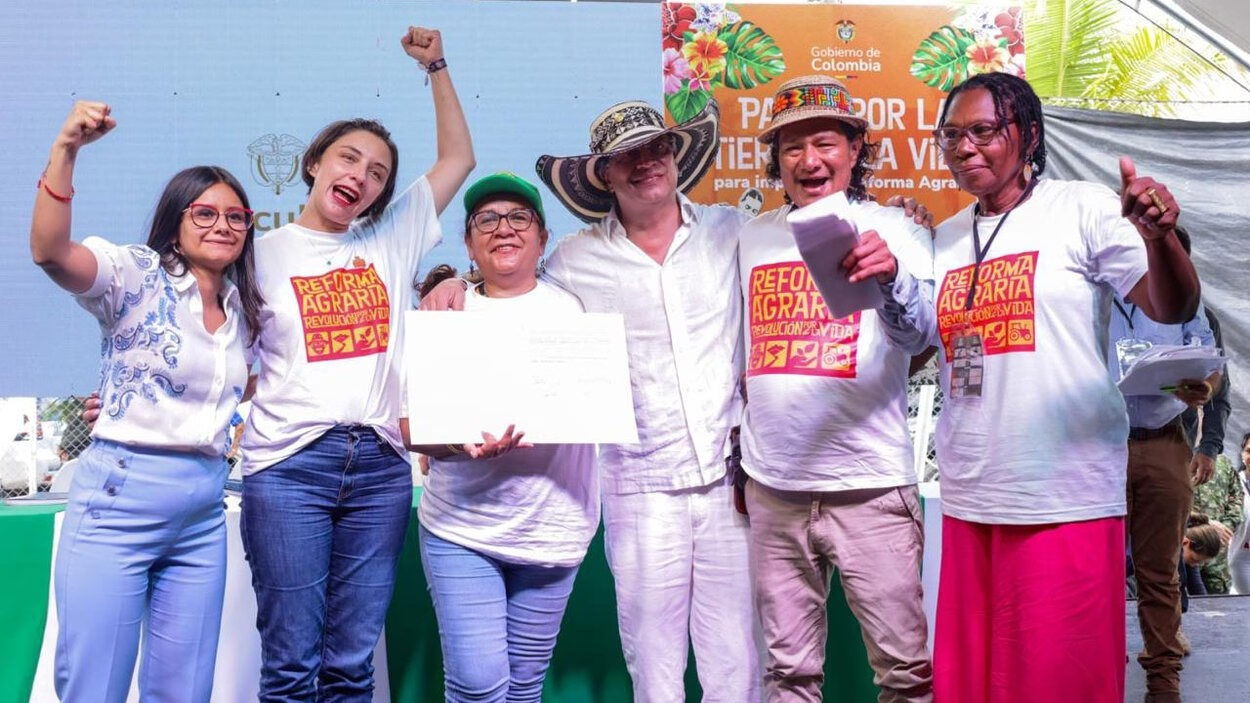
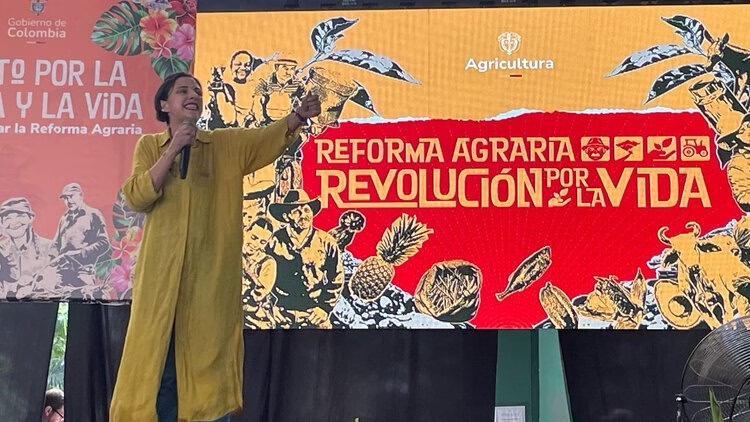
Colombian President Gustavo Petro signs a Pact for Land and Life; Revolution for Life, committing to carry out land redistribution, restitution, and recognition to enable rural working people to pursue economically and ecologically regenerative livelihoods. In this blog, Prof. Jun Borras and Itayosara Herrera discuss the implications of this pact.
Photo Credit: Ministry of Agriculture, Colombia
In February 2025, in Chicoral, Tolima, Colombia, 5,000 campesinos, Afrodescendants, Indigenous and government officials gathered for two days, and made a pact: Pacto fpr la Tierra y la Vida – Pact for Land and Life; Revolution for Life. The 12-point agreement signed by President Gustavo Petro and representatives of grassroots social movements revolved around the commitment to carry out land redistribution, restitution, and recognition to enable rural working people to pursue economically and ecologically regenerative livelihoods, with meaningful representation. The Chicoral event tries to undo a past in Colombia, and confronts a difficult challenge in the present world.
Undoing the past
In 1972 in Chicoral, landed elites and traditional political parties conspired to dismantle the 1960s redistributive land reform. They pushed to relax the criteria for defining unproductive land and inadequate land use to effectively avoid expropriation. This agreement became known infamously as the Pacto de Chicoral. It marked the definitive burial of Colombia’s redistributive land reform. It was, in essence, a pact of death—the death of land reform in Colombia—whose consequences continue to shape society today. Instead of redistribution, Colombia experienced more than half a century of counter-land reform, which led to increased violence in rural areas and the unprecedented expansion of the agricultural frontier with internal colonization in lieu of redistribution. This would also contribute to the rise of coca cultivation under the control of narco syndicates. Ultimately, it fed into the divide-and-rule strategy of the elites toward campesinos, Indigenous, and Afrodescendants.
Chicoral2025 is historic as it flips Chicoral1972: from the death of land reform to a commitment to redistributive land policies. It is ground-breaking as it is a pledge for a common front of struggles for land among campesinos, Afrodescendants and the Indigenous, aspiring to put an end to the divide-and-rule tactic employed by counter-reformists.
Confronting current challenges
The contemporary climate of land politics is extremely hostile to redistributive land policies, reflected in the continuing global land grabs. The condition is marked a global consensus among reactionary forces celebrating land grabbing, while maligning redistributive land reforms, as exemplified in Trump’s plan for the Gaza land grab while rejecting a modest liberal land reform in South Africa that land reform advocates in that country are not even happy about.
This current condition did not emerge from nowhere. It is a direct offshoot of decades of neoliberalization of land policies. The neoliberal consensus has deployed coordinated tactics.
First, rolling back gains in redistributive land policies, largely through market-based economic policies hostile to small-scale farmers.
Second, containing the extent of implementation of existing redistributive land policies where these exist.
Third, blocking any initiative to pass new redistributive land policies in societies where these are needed.
Fourth, reinterpreting existing laws and narratives away from their social justice moorings and towards free market dogmas; thus, land tenure security means security for the owners of big estates and capital.
Finally, all four are being done in order to promote market-based, neoliberal land policies: justification and promotion of market-based land policies, formalization of land claims without prior or accompanying redistribution which simply ratifies what exists.
Minister of Agriculture Martha Carvajalino, Chicoral, February 2025 Photo Credit: Jun Borras
When neoliberalism gained ground in the 1980s, among the first casualties was redistributive land policies. The heart and soul of classical land reform were:
(a) land size ceiling, a cap to how much land one can accumulate and
(b) the right to a minimum access to an economically viable land size, or land for those who work it.
Today, land size ceiling is a taboo. Thus, programmes for providing minimum access to land to build-scale farms have difficulty finding land to redistribute.
During the past four decades, there have been only a handful of countries that managed to pursue redistributive land reforms: Bolivia, Brazil, Colombia, the Philippines, and Zimbabwe. Significant programs have provided collective land titles for the Indigenous such as the one in Colombia, although many of these lands are in isolated, marginal geographic spaces.
The more common accomplishments are a variety of petty reforms. Small reforms are not inherently good or bad, and they are good especially when they provide immediate relief to ordinary working people. They constitute ‘petty reformism’, a negative term, when small reforms were done in lieu of systemic deep reforms. Thus, limited land titling, formalization of land claims, and individualization and privatization of the commons – often labeled under a misleadingly vague banner: land tenure security, which is often about the security of the owners of big estates and capital.
Globalizing Chirocal2025
The need for land redistribution, restitution and recognition remains urgent and necessary, for Colombia and the world. This is even more so in the current era when dominant classes other than agrarian elites aggressively grab land from peasants and Indigenous: profiteers behind market-based climate change mitigation and adaptation strategies, corporate actors in renewable energy sector, global food system giants and financial capital. The forces against reforms have multiplied. But so as the potential forces in favour of reforms. The main alliance for redistributive land policies today is no longer limited to agrarian classes and state reformists; rather, it has to necessarily include social forces in food, environmental and climate justice, as well as labour justice, movements and struggles.
In 1979, FAO convened in Rome the World Conference on Agrarian Reform and Rural Development (WCARRD) hoping to bring new energy to global land reformism. The following year turned out to be beginning of the end of classic land reforms as neoliberalism kicked in and put an end to state-driven redistributive land policies. In March 2006, FAO convened a follow-up to WCARRD, the International Conference Agrarian Reform and Rural Development (ICARRD) in Porto Alegre, Brazil, with the goal of reviving efforts at democratizing land politics. The following year, the global land rush exploded that led to the dispossession of millions of peasants and Indigenous worldwide. In February 2026, twenty years after Porto Alegre, ICARRD+20 will be convened by the Colombian government. It is a very timely international initiative. Chicoral2025 signals what kind of agenda the Colombian government wants to emerge at ICARRD+20: a deep commitment to democratic land politics for regenerative renewal of life.
Several researchers from the ISS-based ERC Advanced Grant project RRUSHES-5 and the Democratizing Knowledge Politics Initiative under the Erasmus Professors program for positive societal impact of Erasmus University Rotterdam are engaged in the Pact for Land and Life process.
About the Authors:
Saturnino (‘Jun’) M. Borras Jr.
Saturnino (‘Jun’) M. Borras Jr. is a Professor of Agrarian Studies at the International Institute of Social Studies (ISS), The Hague. He served as Editor-in-Chief of the Journal of Peasant Studies for 15 years until 2023 and is part of the Erasmus Professor Program for Societal Impact at Erasmus University Rotterdam. He holds an ERC Advanced Grant for research on global land and commodity rushes and their impact on food, climate, labour, citizenship, and geopolitics. He is also a Distinguished Professor at China Agricultural University and an associate of the Transnational Institute. Previously, he was Canada Research Chair in International Development Studies at Saint Mary’s University (2007–2010).
Itayosara Rojas Herrera
Itayosara Rojas is a PhD Researcher at International Institute of Social Studies (ISS), Erasmus University Rotterdam. She is member of a European Research Council (ERC) Advanced Grant awarded project “Commodity & Land Rushes and Regimes: Reshaping Five Spheres of Global Social Life (RRUSHES-5)” led by Professor Jun Borras. As part of this project, Itayosara examines how the contemporary global commodity/land rushes (re)shape the politics of climate change, labour, and state-citizenship relations in the Colombian Amazon.
Are you looking for more content about Global Development and Social Justice? Subscribe to Bliss, the official blog of the International Institute of Social Studies, and stay updated about interesting topics our researchers are working on.
In this blog, Drs. Shyamika Jayasundara-Smits and Bilge Sahin reflect on Home Game, a documentary that unfolds not simply as a story of survival but as a profound meditation on the human condition—on displacement, memory, and the perpetual search for identity and belonging. Based on their contributions as panelists alongside the filmmaker—moderated by Gabriela Anderson of The Hague Humanitarian Studies Centre—this piece revisits key themes discussed during the special screening at the 2025 Movies that Matter Festival at the Filmhuis in The Hague.
Photo Credit: Barbara Raatgever
Set against the backdrop of the breakup of Yugoslavia and its aftermath, Home Game resists conventional narratives of linear healing or neat resolution. Instead, it invites viewers into the fractured, nonlinear experiences of its protagonists, weaving together personal memory and political critique in ways that linger long after the screen fades to black.
The film follows the life path of Lidija Zelovic, opening in Sarajevo during the turbulent 1990s. Lidija’s grandmother offers a haunting reflection: “There is peace until the shot is fired. But once the shot is fired, one realizes that the war started much earlier. Only then it is too late.” This single line unsettles common understandings of war and peace, refusing to treat them as discrete events. Rather, it exposes how the seeds of violence are often sown long before bullets fly—embedded in social, political, and economic structures.
This insight resonates strongly with Johan Galtung’s theory of structural violence. Structural violence refers to the harm caused by systems of inequality—patriarchy, racism, capitalism—that may not be overtly violent but are nonetheless profoundly injurious. These latent forms of harm, often normalized or rendered invisible, create the very conditions that make war possible. Thus, as Home Game suggests, the temporal boundary between war and peace is not a clean break but a blurry continuum.
This continuum is further explored when Lidija and her family relocate to the Netherlands as refugees. On the surface, they escape war. But the film astutely reveals how violence endures in less visible forms: through xenophobic political rhetoric, subtle exclusions, and the cultural dissonance of living between worlds. In the so-called “peaceful” West, the trauma of war does not dissipate—it mutates. Later in the documentary, as Lidija’s mother watches Dutch television from Bosnia, where the family are holidaying, she remarks, “They know how to live.” It is a moment filled with longing and alienation, proximity and distance. A good life appears within reach, yet remains stubbornly inaccessible.
In this way, Home Game challenges simplistic portrayals of migration as a journey from danger to safety, from trauma to recovery. The film instead treats home-making as a fractured and continuous process. Displacement produces a liminal existence—where the self is suspended between multiple geographies, languages, and temporalities. Home is no longer a stable place; it becomes both here and there, both past and present, and never fully one or the other.
Lidija’s now-teenage son, born and raised in the Netherlands, is a powerful example of this, feeling torn between his Bosnian heritage and his Dutch citizenship. His manner of untangling his various identities is contrasted with that of Lidija’s father, who dismisses the idea of being buried in the Netherlands after his death. His eventual interring in a grave in Zaandam marks a ‘full circle’ moment in the film, with Lidija noting that her son now feels Dutch as the screen darkens on an image of the family paying their respects.
One of the most powerful moments in the film occurs when Lidija returns to her childhood home in Sarajevo. Looking out at the familiar cityscape, she says, “I like it because it is mine.” But when her son asks, “Is the view of your country different?” she replies, “I am different; I don’t know about the view.” Her words capture the estrangement that displacement brings—not just from place, but from oneself. The trauma of war ruptures more than just space; it breaks the continuity of self, severing the past from the present in painful and irreversible ways.
Yet, Home Game is not a film of despair. It is honest about the wounds of war—many of which may never fully heal—but it is equally attentive to the quiet resilience of those who carry on. There is joy in the mundane: in a shared meal, a laugh, a football match. These moments are not trivial; they are the fragile threads from which new forms of life are woven.
Here, trauma studies provide an important lens. Scholars increasingly recognize that trauma is not solely destructive. It can also generate what is known as post-traumatic growth: a redefinition of identity, deeper empathy, new affiliations. Home Game captures this duality beautifully. Its protagonists, though fractured, are not broken. They carry layered identities—shaped by loss, survival, and hope—that continue to evolve through everyday acts of connection.
This interplay of trauma and transformation also has a political dimension. Drawing from Hannah Arendt’s concept of the “space of appearance,” the film becomes more than a personal story—it is a political act. Arendt reminds us of that action and speech among others in shared space is what constitutes the political. Home Game creates such a space, where pain, joy, and memory coexist. Through its portrayal of fractured identities and evolving relationships, it reclaims the political from the margins—from the survivors, the refugees, the displaced. Ernesto Laclau’s idea of the “internal antagonistic frontier” further enriches this reading. For Laclau, all social formations contain unresolved tensions—conflicts that can’t be eliminated, only negotiated. Home Game refuses to resolve these tensions. Instead, it makes them visible. Whether it’s the feeling of not fully belonging in the Netherlands or the ambivalence of returning to Sarajevo, the film insists on the legitimacy of contradiction. The documentary becomes a site of dissensus—a space where complex truths can coexist without being forced into a single narrative.
In refusing closure, Home Game speaks a deeper truth. Will there ever be full healing? A return to what was lost? The film suggests perhaps not. And perhaps that’s okay. Home Game is a reminder that home is not merely a place. It is a practice, process, and feeling that may flicker but never fully disappear. Home as well as life is not a tidy arc from trauma to triumph. It is recursive, messy, filled with beginnings that masquerade as endings and endings that open new questions. What matters, the film suggests, is not arriving at a final destination, but learning how to carry our stories—with complexity, dignity, and grace.
This special screening of ‘Home Game’ was put together by the Leiden-Delft-Erasmus Centre for Governance of Migration and Diversity (LDE GMD) together with Leiden-Delft-Erasmus Global. The other two organizers are the International Institute of Social Studies (ISS-EUR) and the Humanitarian Studies Centre. Photo credits from the event go to Barbara Raatgever. ‘Home Game’ is screening across the Netherlands throughout 2025.
Opinions expressed in Bliss posts reflect solely the views of the author of the post in question.
About the authors
Shyamika Jayasundara-Smits
Dr. Shyamika Jayasundara-Smits is an Associate Professor in Conflict and Peace Studies at ISS/Erasmus University Rotterdam. She is a transdisciplinary researcher specializing in Political Science, with expertise in International Relations and Critical Peace and Conflict Studies. Her research and teaching focuses on the intersections of governance, development, armed conflict, post-war transitions, and peacebuilding.
Bilge Sahin
Dr. Bilge Sahin is an Assistant Professor of Conflict and Peace Studies at the International Institute of Social Studies (ISS), Erasmus University Rotterdam. Her teaching and research explore the complex intersections of gender, sexuality, war, and security.
Are you looking for more content about Global Development and Social Justice? Subscribe to Bliss, the official blog of the International Institute of Social Studies, and stay updated about interesting topics our researchers are working on.
What happened to the scholar that didn’t embrace new media? They ran out of cassette tapes! Awful jokes aside, it’s more and more important for scientists, and particularly social scientists, to be plugged in to society to better interact with it. A recent Economist article highlighted that academic research papers in the humanities and social sciences are getting harder to read, more convoluted and stuffed full of jargon and incomprehensible sentences. There is a perception in the ‘outside world’ (perhaps pushed by populist political currents!) that academics are starting to talk more just to other academics rather than to society at large, which is at the very least not conducive to a high level of public discourse. In some cases, it has led to the removal of experts from the policymaking process. At the same time, and partially thanks to the growing legions of science communications officers and the phenomenon of ‘cool geeks’, there are more opportunities than ever for (social) scientists to spread their ideas and research in accessible, bite-sized and socially engaged ways. Even the Lowlands Festival has a science pavilion to show off the latest research on everything from the psychology of perceptions of equality, quantum physics, the creative possibilities of generative AI and much more besides.
Tom Ansell, Sarah Njoroge (MSc) and Gabriela Anderson intend this blog as a call to academics to think along, repackage their work into fun and digestible gobbets and make use of the science communications talent available to help boost our collective ‘impact’… whatever ‘impact’ means!
This image was taken at Research InSightS LIVE #4 Conflict Compounded: Implications of the war in Ukraine on global development challenges
Social science is best when it’s in conversation with society
Aside from the self-fulfilment element, and the satisfaction of personal curiosity, social scientific research has a function of providing evidence-based approaches to societal questions that can inform various stakeholders in how they act. That could be the government, organizations, businesses or people themselves. Like many forms of scientific enquiry, it serves to further human knowledge, and so (indirectly and ideally) improve people’s lives or the society that they live in. The link between the academic and the society in which they function should be one of constant conversation, where ideas are presented to people, and then validated or reconsidered through their experiences and their interaction with the everyday (this is also expressed by Anthony Giddens as the ‘double hermeneutic’). Of course, this sentence may spark flashing lights in the minds of many academics reading this, but in short – social science is rooted in society and so should seek to be in conversation with ‘real’ people all the time. A social scientist that hides away in a university is an isolated one! This means that researchers must have a way of being in conversation with people. At least part of that conversation must be a clear transmission of social science theories in a compelling and clear way, and knowledge sharing in a form that is digestible, interesting and (hopefully) means that people in the ‘real world’ can see their own lives and questions in cutting-edge research.
This is especially true in the last few years , where a significant portion of the world’s institutions face ‘alternative facts’ and the rise of public discourse strongly influenced by a ‘post-truth’ world. During the COVID-19 pandemic, for example, the need to provide accurate and evidence-based advice to the general public was literally a matter of life and death. Knowledge of the mechanisms of how an mRNA vaccine worked (the Moderna one) helped ensure that enough people went and received the jab to reach the critical mass of vaccinated people. Now imagine if the various biologists had remained hidden behind a wall of jargon and specific terminology, and all the while remained in their labs and refused to speak to the public in understandable language. Naturally, the immediate risks aren’t quite the same in social science research uptake, but the need for public trust and mandate is the same. Where the influence of rigorous social scientific research would help, however, is in government policymaking. Imagine how the new Dutch international aid policy would look had various members of ISS’ work been consulted in its drafting. We can’t make policymakers listen to good research, but we can make it as easy as possible for them to find, digest and be interested by it.
Avoiding extractivism and ‘closing the loop’
Considering the other side of the conversation between research and the public, we need to move beyond the effort of making sure our writing reflects our values as researchers to be ethical and non-extractive only during the research process. Research even in these most critical and conscious of times still teeters on the lines of opinion-mining, often masquerading through notions such as ‘collaboration’ and ‘co-creation’. Jamie Gorman expresses this quite well in the quote (almost jokingly): ‘What does a social researcher have in common with an oil rig operator? The answer is that both can be miners engaged in the extraction of a precious resource’. For social science researchers, that precious resource is knowledge. A key part of making sure that research is non-extractive is ‘closing the loop’ and making sure that the people that have contributed to the research are both involved and can get something out of it (something called participatory research).
The potential impact of research does not stop before and during the research process, it needs to extend into the dissemination and communication of said research. By looking beyond the production of a research to how it can be shared to an audience outside of the academic community, we allow for a greater reach through inclusivity, accessibility and even opening up for future potentials in participation and, most importantly, allowing research to be useable (from theory to practice and vice versa). How is this done? By sharing research in different mediums and through different mediums and media. Examples include translated versions, both in terms of language and even the softening of academic and ‘waffle’ jargon, different (relevant) and contextual forms of outputs, such as radio broadcasts (in the case of the Democratic Republic of Congo), video abstracts, infographics, posters, dialogue cafes, podcasts, etc. In doing so, we reach people at their different levels in all their differences of backgrounds, making room for a greater impact from our research.
Moving from inaccessible papers to socially engaged media
So, how do we actually move from rigorous, well-researched ideas to public discourse and policy that reflect them? The best science communication doesn’t just ‘simplify’ research, it translates, distils, demystifies and engages. It meets people where they are, using formats that are accessible without compromising complexity, and applies sky high thinking to everyday life.
Take podcasts, for instance. The Good Humanitarianbridges the gap between academic research and humanitarianism and the real-world challenges practitioners face. MOOCS, or open access-learning, allows people – whether they have an educational background in social sciences or not – to engage with contemporary debates. Written and visual storytelling, from in-depth interviews, infographics and posters to interactive web experiences, has made complex and socio-political topics more digestible for a general audience. Live shows, such as Research InSightS LIVE or dialogue cafes invite people to listen and engage on topics in enjoyable, yet succinct formats. In addition, social media is increasingly becoming more important for visibility, and as a way to link research that proposes an alternate world to the people that can achieve it. Even platforms like TikTok have been effectively used to debunk misinformation and explain key social science concepts in under a minute, but all face potential challenges of course.
At the same time, researchers must be empowered to engage in these spaces. Not everyone who can run a hefty statistical model or analyse complex patterns can seamlessly translate these insights for public consumption. This is precisely where science communicators come in – not to dilute these ideas but to ensure that big ideas are clarified and shared widely. Closing the loop isn’t just an ethical responsibility in participatory research – it’s a vital step toward ensuring that knowledge serves people by feeding back into their livelihoods.
Science communicators do more than just support researchers. They can be catalysts for expanding the reach and impact of academic work at its inception. Research can often benefit from creativity and audience awareness that can make it resonate beyond academia. In other words, researchers and science communicators can make an excellent team – if they truly collaborate. That means not just seeing communicators as an ‘add-on’, but valuing their input, trusting their instincts and recognizing their ability to turn rigorous research into compelling narratives that engage policymakers, practitioners and the public alike, also extending their inclusion to before and during the research process, not only after.
If universities and research institutes truly want to make an impact, they need to rethink the way they communicate knowledge. The challenge isn’t just about writing readable research papers. It’s about shaping public discourse, informing policy and making social science a living, breathing conversation. After all, what good is knowledge if it’s locked away in academic journals?
Opinions expressed in Bliss posts reflect solely the views of the author of the post in question.
About the authors:
Tom Ansell
Tom Ansell is the coordinator and programme manager of The Hague Humanitarian Studies Centre, and the Coordinator of the International Humanitarian Studies Association. He has a study background in religion and conflict transformation, as well as an interest in disaster risk reduction, and science communication and societal impact of (applied) research.
Sarah Njoroge
Sarah Njoroge (MSc) is a multi-skilled communications professional who tells stories on societal issues through videos, articles, podcasts and more. She has extensive experience writing, designing and co-producing content on international development. Sarah is currently a Digital Content Manager at RNW Media and formerly worked as a Communications Officer at ISS.
Gabriela Anderson
Gabriela Anderson is the community manager of The Hague Humanitarian Studies Centre and coordinates the Humanitarian Observatories Network. Graduating with a Master’s from the International Institue of Social Studies in 2022 with a focus on the Governance of Migration and Diversity, her research focuses on notions of (self-)representation, placemaking and the importance of inclusive communication in its various forms and through its different mediums, especially in areas of Conflict & Peace with both academic and practitioner related organizations.
Are you looking for more content about Global Development and Social Justice? Subscribe to Bliss, the official blog of the International Institute of Social Studies, and stay updated about interesting topics our researchers are working on.
On the first day in office of his second presidential term, Donald Trump signed an executive order freezing the USAID for 90 days, reportedly to assess the programme’s ‘effectiveness and alignment with US foreign policy’. On 10 March 2025, US Secretary of State Marco Rubio ended the world’s most vulnerable communities’ slight hope by announcing the permanent suspension of the USAID’s 83% programme. This aggressive measure is the harshest blow to the organization’s operation since its establishment in 1961. The UK and Netherlands are also making similar moves, significantly diminishing their overseas development and humanitarian funding. The measure has a significant adverse impact in Ethiopia, where humanitarian aid is the only thread of hope, at least currently, for many affected communities, including millions of internally displaced persons (IDPs). In this blog, Alemayehu B. Hordofa and Marga F. Angerasa contend that humanitarian actors and donors have not achieved the necessary strengthening of local capacities to respond to the ongoing crisis in Ethiopia, and that they should redouble their efforts to take targeted normative and practical measures to enhance local resilience to counterbalance, in the long-term, the adverse impacts of policy changes in donor countries.This photo was taken in April 2024 by the first author in Seba Care Internally Displaced Persons camp. Volunteers are giving medical support to IDPs as a part of the BilalAid health outreach programme in Seba Care IDP shelter in Mekele, Ethiopia. BilalAid was established in 2024 by local youths who were previously volunteering informally in their communities to respond to humanitarian causes.Humanitarian funding in Ethiopia
Ethiopia is one of the biggest recipients of humanitarian aid in Africa. According to the 2024 Ethiopian Humanitarian Response Plan, over 21.4 million people in Ethiopia needed humanitarian assistance due to complex humanitarian crises such as climate change-induced disasters, armed conflicts, political violence, epidemic outbreaks and landslides. The conflict in Northern Ethiopia (2020-2022), the ongoing armed conflict in the Oromia and Amhara regions and climate change-induced food insecurity in south and south-west parts of the country displaced millions of individuals from their homes and have made them dependent on humanitarian aid. In some parts of the country, conflict(s) have coincided with drought, exacerbating the crisis and worsening the vulnerability of the affected communities. In 2024, the humanitarian community in Ethiopia appealed for 3.24 billion USD to reach 15.5 million people. This appeal raised only 1.79 billion USD, with the US government contributing 405.3 million USD. Beyond responding to the crisis as the primary duty-bearer, the Government of Ethiopia (GoE) also contributed 264.5 million USD to the 2024 Ethiopian Humanitarian Fund (EHF). This year, the EHF has anticipated a requirement of 2 billion USD to respond to multiple crises in various parts of the country. Given the need for humanitarian support, the humanitarian fund in the country is visibly inadequate, and various humanitarian interventions in Ethiopia are being challenged by, among other things, inadequate funding and unfulfilled promises of localization. The USAID suspension is another recent significant blow to the country’s dwindling and inadequate humanitarian funding.
The USAID aid suspension has placed the lives of vulnerable communities at risk
The USAID funding cut has placed the lives of millions of people in need of humanitarian assistance in peril. The aid was stopped without any back-up, thus exposing vulnerable communities to exceptionally dangerous risks. Beyond the impact on people receiving aid, the decision has resulted in many aid workers being made unemployed. The Ethiopian Ministry of Health terminated 5000 employment contracts due to the USAID aid suspension. These health workers were supporting clinics on HIV-related programmes in various parts of the country. Likewise, even though a significant portion of Ethiopia’s development aid funding now comes from international development banks (World Bank, AfDB, IMF), which come with both punitive interest rates and market reforms, the suspension of USAID affects the country’s foreign currency reserve and flow – further minimizing the agency of Ethiopian policymakers and local organizations.
In addition, the suspension of aid affects accountability relations in the humanitarian sector and beyond. Following the announcement of the funding suspension, over 85 percent of Civil Society Organizations suspended their programmes in Ethiopia. These CSOs were implementing programmes ranging from ensuring the right to access justice for displaced communities, advocating for accountability in the humanitarian sector and durable solutions and socio-economic recovery for conflict-affected peoples. The suspension decapitated CSOs operating in complex operational spaces and exacerbated the murky Ethiopian civil society environment. According to one humanitarian worker that we interviewed in Addis Ababa, ‘the suspension suppresses independent voices and shrinks the civic space as it inhibits vibrant CSOs from implementing programmes’. The CSOs that advance diverse perspectives are affected by the USAID suspension and only those that are supported by government will continue to operate in the country. This perspective was also shared by other participants during the interviews conducted by the first author for his PhD research on humanitarian governance in Ethiopia.
The devastating impact that the USAID aid cut caused in the first few weeks of the announcement unveiled the fragmentation and fragility of Ethiopian formal humanitarian governance, its excessive reliance on foreign aid and its under-investment in supporting local humanitarian initiatives. Conversely, it allowed the government and the humanitarian actors to revisit and critically reflect on their practices around accountability and localization, as well as build the resilience of local actors to make humanitarian actors more predictable, effective and accountable.
The role of local actors in responding to crises
Ethiopia’s humanitarian action is noted for its plurality of actors. There are diverse humanitarian actors with their own practices and policies. However, the actors’ interventions vary in mandate, capacity and ability to respond to and cope with emergencies. They possess completely unequal power, leverage and authority, which are dependent on several factors including location, association and who they represent.
Beyond targeted and institutionalized humanitarian interventions, humanitarianism by the ordinary citizenry, or vernacular humanitarianism, is a defining feature of Ethiopia’s humanitarian action. Millions of internally displaced persons are living with and supported by the host communities with no meaningful support from international or national formal humanitarian organizations. Ordinary citizens often organize themselves around social media such as TikTok, Facebook and Instagram and were able to mobilize millions in support of victims of disasters. For example, ordinary Ethiopians informally organized on social media and did commendable work in averting the devastating consequences of drought in Borena in 2023, supported IDPs displaced from their homes due to political violence around Oromia-Somali borders in 2018 and supported millions of IDPs in Horro Guduru and East Wallagga zones while the institutionalized humanitarians were unable to intervene (during the first phase of the crisis) due to access difficulties. Ethiopian diasporas and business communities also participate in humanitarian action in the country. Apart from these few examples, ordinary Ethiopians are the backbone of the country’s humanitarian efforts and first responders to crises.
However, the contributions of local actors remain invisible, are not nurtured and there has been inadequate effort to genuinely strengthen their capacity. The dominant discourse has wrongly portrayed humanitarianism in Ethiopia as a monopoly field of international humanitarian actors belittling the local community’s effort to address their problems. The visibility of localized humanitarianism in Ethiopia has been overshadowed by the increased visibility of the ‘international humanitarian community’s’ response to crises. Likewise, despite the global movement and advocacy for accountability to affected communities, humanitarian practitioners we spoke to in Addis Ababa largely believed that the promises of localization have largely remained unfulfilled. The interviews that we conducted with humanitarian workers and independent observers revealed that humanitarian organizations were primarily preoccupied with service delivery rather than strengthening local capacity to transition to recovery and reconstruction. Thus, to make humanitarian efforts more predictable and effective, humanitarian actors should prioritize local initiatives to make the sector sustainable and least affected by external decisions. The recent policy changes in donor countries, spearheaded by the USAID suspension of foreign assistance, are a wake-up call for the country to strengthen its local humanitarian initiatives and advance and implement the humanitarian reform agenda in national and local contexts.
Mobilizing local actors and domestic resources
Mobilizing domestic resources can reduce the dependency on foreign countries overseas development and humanitarian aid policies. Local actors play a crucial role in filling the gaps created due to changes in the priorities and policies of donor countries. However, as local initiatives still lack targeted support, external donors finance a significant portion of formal humanitarian action, USAID being the major partner. Yet Ethiopia has recently started some venerable initiatives that could contribute to the country’s self-reliance in the long run. The country started a food sovereignty endeavour, dubbed by the Government of Ethiopia (GoE) as a ‘decisive path toward food self-sufficiency’. The initiative prioritizes investing in local innovations in agriculture and technology. The government planned to address food insecurity through funding by state-owned enterprises and large-scale farming coordinated by its national disaster risk management office, the Ministry of Agriculture and relevant regional offices. The country has also been implementing the Green Legacy Initiative to avert the negative impact of climate change. Similarly, the government has commenced other national initiatives, such as the Bounty of the Basket, which have a significant potential to strengthen local resilience and preparedness. The transitional justice and national dialogue mechanisms have also the potential to end or significantly reduce the humanitarian needs emanating from the devastating impacts of conflict or political violence. However, even though these initiatives have the potential, if appropriately implemented and subjected to rigorous accountability mechanisms, to minimize the impacts of climate change and end the need caused by conflict, they may not counterbalance the adverse impacts of the policy change in donor countries in the short term.
Conclusion and the way forward
Given the high level of need, it is tremendously challenging to respond to the current humanitarian crisis without support from the international community in general and USAID in particular. The theoretical rhetoric that regarded local actors as genuine partners with a meaningful role in leading and funding humanitarian responses has not yet been translated into practice. Affected communities are still considered passive recipients of aid by the majority of international humanitarian actors working in Ethiopia. The current initiatives by the GoE to satisfy humanitarian needs with local capacity are commendable and can change this narrative in the long run. Such initiatives need to show tangible progress on the ground. Ending conflicts with agreements and finding durable solutions for millions of IDPs currently stranded in various IDP shelters are some of the immediate measures that the government can take to relieve the pressure on humanitarian action in the country. Ensuring government efficiency and addressing rampant corruption that divert critical resources from the public are other measures that the government may immediately take to avert further crisis. Furthermore, local CSOs need to reassess their excessive reliance on international funding and devise innovative means to mobilize domestic resources, strengthen local giving and prioritize local innovations. The promises of localization remained unfulfilled. Donors and the INGOs currently operating in the country need to revisit their commitments to localization and hold themselves accountable for failing to honour the grand bargain’s promises.
Opinions expressed in Bliss posts reflect solely the views of the author of the post in question.
About the Authors:
Alemayehu B. HordofaAlemayehu B. Hordofa is a Ph.D. researcher at the International Institute of Social Studies (ISS), Erasmus University Rotterdam (EUR). He obtained his LLM in International Human Rights Law from the Irish Center for Human Rights (ICHR), University of Galway, Ireland. He is currently working on humanitarian governance in Ethiopia focusing on the role of Civil Society Organizations and Crisis-affected People to shape humanitarian governance ‘from below’. His research interests lie in forced displacement, accountability in humanitarian context, localization of humanitarian aid, transitional justice, and the development of CSOs in Ethiopia.
Marga Fekadu AngerasaMarga Fekadu Angerasa is a law lecturer at Wolkite University (Wolkite, Ethiopia) with research interest and specialty on human rights, forced displacement and transitional justice. He has an LLM in human rights law from Addis Ababa University (2021). Marga is a member of Ethiopia Humanitarian Observatory and advocates for the advancement of human rights and works with CSOs on human rights issues.
Are you looking for more content about Global Development and Social Justice? Subscribe to Bliss, the official blog of the International Institute of Social Studies, and stay updated about interesting topics our researchers are working on.
This blog is part of the Humanitarian Governance: Accountability, Advocacy, Alternatives’ project. This project has received funding from the European Research Council (ERC) under the European Union’s Horizon 2020 research and innovation programme under grant agreement No. 884139
Digital spaces can amplify marginalized voices, but for many women, especially Dalit women in India, they often become sites of abuse. Navigating the intersection of gender, caste, and religion, Dalit women face systemic exclusion and violence, reinforced by both offline and online structures. While technology does not oppress all women equally, movements like #MeToo have helped Dalit women spotlight caste-based and patriarchal violence. In this blog, recent ISS MA graduates, Sri Lakshmi, and Emaediong Akpan explore how digital platforms both challenge and reinforce structural inequalities, revealing that technology is never neutral.
Image Credit: DALL-E
Dalit women in India
The Indian Hindu religious caste system (more than 3000 years old) has stratified Indian society into castes based on bloodline, occupation, and economic resources. The Brahmancaste and other ‘upper’ castes have capitalized on their social position to exercise superiority and control over the ‘lower castes’ and therefore sustains an exploitative system. At the other end of the scale, the Dalit caste is deemed to have been rejected by God and is therefore ‘outside’ the caste system. While India has made progress in several social aspects, the sturdy caste system continues to prevail based on religious authorization. The Brahman caste has subjugated women from their own caste as well as ‘lower’ castes to maintain ‘caste purity’. This modus operandi is manifested in intense oppression and gender-based violence towards the Dalit women. ‘In every sphere of life, they (Dalit women) are in a pitiable position, worse off than the upper caste women’due to the triple oppression exerted by men from their own caste and ‘upper castes’. The triple oppression here refers to casteism, patriarchy,and economic injustices that are manifested as gender-based violence, caste-based discrimination, and being limited to low-grade jobs that are poorly paid.
The Janus-faced nature of digital spaces in India: Reflections on the non-neutral nature of digital spaces
These spaces also act as a window into the broader Indian society, where norms and power interact to control individual actions. In navigating societal norms, digital spaces have been useful in helping Dalit women find community and access resources for mobilization. For example, Pallical, a Dalit rights activist, noted that ‘online space is refreshing and a space we never had earlier. There used to be limited regional media spaces, but we are now visible, and much of our anti-caste conversations are now happening on social media platforms’. For example, stories of how Dalit women were flogged and assaulted in public in the small city of Una led to government intervention only after it went viral on Twitter.
In this example, Twitter (and other digital spaces) served as a powerful public space for minorities and marginalized voices to circumvent traditional media; online, these actors could express opinions and opposition in a succinct format, as well as unite and organize swiftly in their capacity as ‘new social movements’. However, this is not the full picture. In these spaces, these marginalized groups are still unable to escape society and have been re-victimized in the spaces that also hold a ‘liberating’ potential’. This inability to ‘escape’ reality is why Wacjman states that technologies are not neutral; they do not exist outside of society but are a part of society. Within digital spaces, interactions are understood as performing gender roles that are deeply ingrained in society.
Former Twitter CEO Jack Dorsey and Activists holding a Poster: Source Nalina
This sparked controversy and threats of boycotts on Twitter, ultimately emboldening casteism by forcing an apology for the poster and image. Despite knowing the impact of the caste system, Twitter conformed to the social norms in Indian society by stating that the poster ‘did not represent Twitter’s official position’. Twitter also apologized for speaking out against marginalization and social injustice in order to avert the risk of losing the Indian market which boasts about 8 million Twitter users. This singular act amongst many others reflects how technology is both a source and consequence of marginalization; first because of how it relates with society and second as a consequence of marginalization by reinforcing it through ‘mindless apologies’.
Twitter’s Denial of Siding with Dalits; Source: Bapuji and Chrispa
Gendered access and use of technology in India: The #MeToo case study in India
The #MeToo movement was a viral online movement of raising voices against the sexual harassment of women. Many women came forward to share their experiences using the hashtag #MeToo on Twitter and other digital spaces.
The Indian #MeToo movement leaves the original ‘Me’ behind
The Indian #MeToo movement was started in 2017 by Raya Sarkar, a woman from the Dalit caste. She used the digital space of Facebook to expose sexual harassment as a form of gender-based violence by male professors in Indian universities by curating a List of Sexual Harassers in Academia (LoSHA). Sarkar was berated for posting such a ‘name and shame list’ in an attempt to re-enact the historical silencing and disregard for the testimonies of sexual violence against Dalit women in India. After this, the movement was taken over by mainstream activists, especially on Twitter and this diffused any remnant attention on the marginalization of women from the Dalit caste. While there were several personal testimonies on Twitter in which Indian women shared their experiences of sexual harassment, the testimonies of Dalit women were absent and scarcely featured in the debates that ensued. Hence, Twitter became a tool used to exclude the voices of the most oppressed who suffer on account of their class, race, and gender. In this way, Twitter reinforced the marginalization of Dalit women.
Technology as a source and consequence of gendered relations: Exclusion and discrediting of marginalized voices
As stated earlier, digital spaces have been instrumental in helping marginalized groups draw attention to social injustices. However, platforms like Twitter are generally unsupportive and even hostile toward women from the Dalit caste. Their marginalization on Twitter reflects these women’s reality by mirroring the existing caste network. It is unsettling to witness the casual and rarely-questioned oppression on Twitter faced by Dalit women. The oppression includes casteist slurs, disparaging comments on darker skin tones, and implicit insults on how women who are academically, professionally, and financially successful, or who have a fairer skin tone, are told that they don’t ‘look’ Dalit. Twitter has also provided the space for misogynists to target Dalit women without any consequences. This shows how technology (digital spaces) embolden and exacerbate existing gender inequalities and caste-based marginalization’ . Gender- and caste-based social dynamics and technology therefore connive to leave women from the Dalit caste behind on Twitter.
Conclusion
While there are numerous accounts of the benefits of social movements that have been organized in digital spaces, the realities are not the same for all, especially for marginalized groups. This lends credence to Whelan’s position that technology does not oppress all in the same way, nor does it necessarily oppress all women. In India, Dalit women, despite having gained access to digital spaces to draw attention to the injustice they face, are often faced with violence based on their gender and caste. Thus, although Twitter helped to break the culture of silence around sexual violence and draw attention to the injustices faced by Dalit women, it did not influence social relations to address the root causes. Rather, it emboldened these root causes and became a space where Dalit women continue to experience violence. People who wield more power (upper caste and those with more access) decide and shape technology by deciding what information is important or true.
Digital spaces are double-edged – they expose women and marginalized groups to harm, yet remain vital for organizing social movements. Recognizing the lack of neutrality of these spaces remains crucial, as offline systems of oppression are often mirrored and reinforced online. While legal frameworks can play a role in addressing digital harms, they alone cannot dismantle deeply entrenched caste and gender hierarchies. Instead, the focus must shift to challenging the power structures that shape technology itself. The experiences of Dalit women show that technology can be both a tool of oppression and resistance. Ensuring that digital platforms do not further marginalize vulnerable communities requires holding innovators and policymakers to higher ethical standards while amplifying the voices of those fighting for justice.
Opinions expressed in Bliss posts reflect solely the views of the author of the post in question.
About the authors:
Sri Lakshmi
Sri Lakshmi is a recent graduate of the Master’s in Development Studies program at the International Institute of Social Studies. With nine years of experience working with students, caregivers, educators, disability inclusion organizations, and government officials. Sri is passionate about fostering inclusive spaces, bridging the gap between education and social impact.
Emaediong Akpan
Emaediong Akpan is a recent graduate of the Master’s in Development Studies program at the International Institute of Social Studies. With extensive experience in the development sector, Emaediong Akpan’s work spans gender equity, social inclusion, and policy advocacy. She is also interested in exploring the intersections of law, technology, and feminist policy interventions to promote safer online environments. Read her blogs 1,2, 3
Are you looking for more content about Global Development and Social Justice? Subscribe to Bliss, the official blog of the International Institute of Social Studies, and stay updated about interesting topics our researchers are working on.
Gender inequality and the discrimination of sexual and gender minorities in Nigeria are often attributed to sociocultural norms and unfavourable state policies. However, reflecting on body politics reveals a deeper entanglement with state control, colonial legacies, and capitalism. Our bodies are not just personal, they are sites of regulation, commodification, and profit. From the exploitation of women in the corporate sector, often referred to as ‘corporate prostitution’, to the policing of gender nonconforming and the sexualisation of bodies in the creative industry, capitalism thrives on controlling and monetising bodies. In this blog, Eno-Obong Etetim reflects on these dynamics and highlights body politics activism in Nigeria, arguing that a decolonial lens is crucial for reclaiming bodily autonomy.
Gender inequality and the discrimination of sexual and gender minorities in Nigeria are often attributed to sociocultural norms and unfavourable state policies. However, my reflection on body politics reveals a deeper entanglement with state control, colonial legacies, and capitalism. Our bodies are not just personal, they are sites of regulation, commodification, and profit. From the regulation of the body by the state to the utilisation of certain bodies to drive profits, the body is a canvas for the expression of capitalism and state power. This commodification and socio-political regulation of human bodies encompasses what is termed ‘body politics’ and has birthed the need for activism to reclaim bodily autonomy.
I reflect on my evolving understanding of body politics and its intersection with capitalism through three illustrative examples: The commodification of women within the Nigerian banking sector – often referred to as ‘corporate prostitution’; The state’s regulation of sexual minorities and gender non-conforming individuals, and; The sexualisation of bodies within the creative industry. With these examples, I explore instances of body politics activism in Nigeria, ultimately concluding with how decoloniality serves as a relevant framework for conceptualising and fostering resistance.
Examples of Body Politics at Work
‘Corporate Prostitution’
The Nigerian banking sector has faced criticism for its gender-specific hiring practices, particularly in marketing roles. For these roles, women are often recruited based on certain physical characteristics, like height, slimness, and lighter skin tone. These traits are frequently perceived as advantageous for attracting high-net-worth clients, mostly men, to the bank’s customer base. This recruitment approach is grounded in the belief that female marketers can use their appearance to boost customer engagement and grow the bank’s clientele. Many financial institutions have been alleged to impose unrealistic sales targets on these marketers, with monthly quotas sometimes reaching millions of Naira. Reports suggest that management may advocate for morally ambiguous practices, evidenced by phrases like “do what you must [to bring in customers],” which could pressure women to utilise their physical appeal in questionable ways to meet these benchmarks. In turn, this trend of sexualising women in the workplace has led some male clients to expect sexual favors in exchange for financial services, such as opening accounts or depositing funds.The systemic focus on profit generation has shifted attention away from ethical considerations, linking career advancement directly to the ability to meet these aggressive targets. Employees who fail to meet these expectations face job insecurity or dismissal.
In response to this commodification of women’s bodies and the pressing need for reform, the Nigerian Senate introduced proposals for an anti-corporate prostitution and exploitation bill in 2010 and again in 2016. These legislative efforts aimed to address the intersection of gender, employment practices, and corporate responsibility within the financial sector.
LGBTIQ+ and State Control
Another significant aspect of body politics lies in how the state regulates sexuality. Harcourt, in her work, connects the discourse on body politics to Foucault’s idea of Biopolitics, which pertains to the socio-political control and regulation of life, often leading to the reinforcement of gendered identities. A closely related concept is Mbembe’s necropolitics, which discusses the sovereignty of the body, often manifesting as state threats to life and death. For instance, in Nigeria, the government enforces discrimination and threatens the lives of LGBTIQ+ individuals through the same-sex prohibition act, which criminalises all forms of same-sex relationships. This law serves as a clear illustration of body politics since it dictates how bodies must exist. The systematic control of bodies as a means to uphold state order has been the subject of academic discourses. According to Alexander the state normalises heterosexuality while condemning any sexual orientation that does not contribute to the reproduction of the nation. In this way, the state views bodies merely as sites for reproduction. By placing LGBTIQ+ rights within the context of capitalism and body politics, we can better understand that state regulation of sexuality is also tied to the need to maintain a future labor force. Historically, states have opposed non-traditional family structures because women’s bodies have been seen as essential for population growth. Furthermore, capitalism thrives on hierarchies and a gendered division of labor, but gender non-conforming individuals challenge these established roles and responsibilities. By reinforcing heterosexuality, the state seeks to secure future populations and, ultimately, the labour workforce.
Body Politics and the Creative Industry
The creative industry thrives on the sexualisation of women’s bodies. ‘Sex sells’ is a capitalist phrase utilised in the marketing and entertainment industry as a rationale to portray women’s bodies in an overtly sexualised manner under the guise of sexual liberation. Female talent and capacity for career advancement in the creative industry are measured not by artistic merit, but by whatever erotic heights the body can achieve.
Female artists are subjected to systemic pressures where their physical appearance significantly influences their career opportunities; for instance, actresses are overlooked for roles due to insufficient sexual appeal, and music videos often feature scantily dressed women as vixens, reinforcing a narrative that prioritises hyper-sexualised imagery. This trend reflects a capitalist agenda aimed at profit maximisation, where increased viewership translates into increased financial returns for both the artist and their management. One example is the music video for Cardi B and Megan Thee Stallion’s WAP song – that featured five minutes of ‘twerking’ – which gained 26 million views, within 24 hours of its release, establishing the record for the most views in a day. This is no attempt to condemn the artists themselves but rather to buttress societal response to the hyper-sexualisation of women in contemporary media. The societal pressure to adhere to these narrowly defined body standards has consequently fostered a global market for cosmetic surgeries, with many women opting for surgical interventions to meet these expectations.
Body Politics Activism in Nigeria
Anti-corporate Prostitution and Exploitation Bill
In 2010 and 2016, members of the Nigerian Senate attempted to address the troubling commodification of female workers in commercial banks by proposing the Anti-Corporate Prostitution and Exploitation Bill. This legislation aimed to prevent employers from taking advantage of employees and compelling them to engage in ‘iniquitous’ acts that undermine their integrity for profit. While many hailed this bill as a positive step, it faced significant pushback from the banking sector and ultimately was not passed by the Senate. Activism may often fail but ‘succeed’ in creating the needed effort to spark public interest in certain issues and catalyse new forms of activism. Although the Anti-Corporate Prostitution Bill has yet to become law, it succeeded in raising awareness and inspired female-led organisations to push for anti-harassment legislation in workplaces and educational institutions within the Senate. One notable example is the anti-harassment bill in tertiary institutions.
Queer Activism
Same-sex unions [and relationships] are illegal in Nigeria, punishable with up to 14 years of imprisonment. This law not only targets same-sex relationships but also criminalises any support offered to individuals within this community. Despite these harsh restrictions, many individuals and organisations are actively fighting for the basic rights to life, health, and social services for queer individuals. Anti-capitalist queer activism in Nigeria has taken on various forms, including campaigns for reproductive justice and opposition to healthcare systems that prioritise profit over essential, life-saving medical care for gender non-conforming individuals, all while facing considerable state resistance. Additionally, efforts to promote inclusion in the workforce for queer individuals, improve representation in organisations and institutions, and advocate against workplace exploitation are all crucial components of body politics activism in the region.
Decoloniality as a Lens for Body Polities Activism
The categories in which we define ourselves – including our understanding of gender and sexuality – are rooted in Universalist perspectives and the “colonial matrix of power”. In her groundbreaking work, The Invention of Woman, Nigerian decolonial feminist scholar Oyéronké Oyewùmí explores how Western discourses have shifted the local socio-cultural understandings of pre-colonial Nigerian societies. She argues that the ongoing debate surrounding the gender binary is, in fact, an imported issue. Oyewùmí highlights how Western privileges tied to the visual perception of bodies created a gendered gaze that systematically categorised certain bodies, perpetuating a narrative of inferiority in comparison to the so-called ‘ideal’ of the white, civilised male. Similarly, Latin American feminist decolonial writer Maria Lugones elaborates on how colonialism has reproduced gendered identities. She contends that binary concepts of gender were used as tools of colonial control, undermining and invalidating the existing understandings of identity. These binaries have played a significant role in sustaining not only capitalism but also patriarchy, effectively serving the Eurocentric agenda aimed at population growth for labour reproduction. Positioning decoloniality in body politics activism requires delinking from Western ideologies of gender and humanness. Activists can benefit from situating their resistance in narratives that do not encourage or conform to Eurocentric and colonial dominant narratives. For instance, recent queer activism by Nigerians has been rooted in re-telling the stories of old Yoruba cosmology by relating its gender complexities and gender-fluid nature through anthropological research and modern art.
Conclusion
Body politics is the commodification and control of human bodies and experiences often through hegemonic power relations, and body politics resistance aims to challenge capitalist, colonial, and socio-political discourses that have shaped hegemonic perceptions of the body. If our bodies are sites that are transformed by hegemonic social relations and “hetero-patriarchal capitalism” we must sever from those ties and learn alternative ways of being, doing, and thinking. Body politics activism provides an opportunity to dispel colonial and hegemonic gendered behaviour that has resulted in the categorisation of women and gender non-conforming persons in the lower global pyramid of power.
Opinions expressed in Bliss posts reflect solely the views of the author of the post in question.
About the author:
Eno-obong Etetim
Eno-Obong Etetim is a researcher and recent graduate of the Master’s in Development Studies program at the International Institute of Social Studies. She has several years of experience working on projects focused on gender, health equity, sexual and reproductive rights, and social norms. Her research interests also extend to sustainability and policy interventions that promote social justice.
Are you looking for more content about Global Development and Social Justice? Subscribe to Bliss, the official blog of the International Institute of Social Studies, and stay updated about interesting topics our researchers are working on.
The UN Refugee Convention contributes to asylum and migration-related challenges in the EU, as well as the often inadequate reception of refugees globally. In this Opinion piece, Tom De Veer explains how some adjustments to the Convention could remove a key flaw that currently exacerbates these issues. If adopted in other refugee laws, treaties, and conventions, this change could have enormous positive effects on refugees worldwide.
Image Credit: Wikicommons
The core of the UN Refugee Convention is the principle of non-refoulement, which prohibits sending refugees against their will to places where they face risk. As a result, countries cannot simply deport asylum seekers to another nation. This principle explains the difficulties the United Kingdom encountered in attempting to deport asylum seekers to Rwanda and the opposition from the EU to Italy’s attempts to house asylum seekers in Albania. These objections arise because institutions such as the European Convention on Human Rights (ECHR) do not consider the reception conditions in many countries to be sufficiently safe.
However, when refugees flee to a country, the non-refoulement principle is satisfied because they were not forced to go there. This applies to 85% of the world’s refugees — those who lack the financial means to travel to wealthy nations. Instead, they live in often deplorable and sometimes unsafe conditions in nearby, usually poor, countries in their region. Although the UN Refugee Convention recommends that countries unable to accommodate refugees adequately receive assistance from other nations, it does not mandate such aid. In practice, this often results in insufficient support. Meanwhile, asylum seekers who can afford the journey to a Western country receive all social security benefits and eventually often become citizens of the country. Without changes to the current system, this disparity will likely worsen, as reports from the UN and the Intergovernmental Panel on Climate Change (IPCC) predict that refugee flows will increase significantly in the coming decades due to climate change and related conflicts.
It is therefore critical to develop better refugee conventions and build a robust infrastructure for the reception, accommodation and resettlement of (climate) refugees worldwide. This can be achieved by removing the non-binding nature of the UN Refugee Convention. If a poor country cannot adequately fulfill its obligations to refugee rights, wealthier nations should be required to assist. With this system in place, regional reception centres can be established or existing ones improved, allowing asylum seekers to be relocated to nearby countries where they can receive proper care. Wealthy countries will have a strong incentive to fund these initiatives to prevent asylum seekers from arriving in their territories. Refugees will then be more likely to choose nearby reception locations in their region, knowing they will ultimately be resettled there anyway. This system will also eliminate the need for expensive, dangerous and often deadly journeys to the EU.
Furthermore, individuals who do not genuinely need to flee their homes but seek welfare in wealthy nations will no longer be able to do so. They will remain in their home countries, as they will know they will be sent to reception centres in their region, where their hopes for greater prosperity will not be realised. This system will ensure that those who truly need protection can seek refuge in nearby, safe locations and will enhance that those who don’t stay home.
The safety of asylum seekers can be ensured in various ways. One option is to deploy UN peacekeepers to protect such locations, as is done in some existing refugee camps. However, these peacekeeping missions will only succeed if peacekeepers are given a strong mandate, including the authority to use force to protect refugees if necessary. This will require cooperation from involved countries and the international community’s commitment to providing such mandates. Another approach could involve establishing reception centres in safe countries, with guarantees from host governments to ensure the safety of asylum seekers. Foundation Connect International has conducted an initial assessment of countries that may be suitable for hosting asylum seekers in different regions, using safety as a key criterion, based on the Global Peace Index. For example, countries like Zambia emerged as potential safe havens.
For this adaptation of the UN Refugee Convention to be effective, it must be embraced by other national and international refugee treaties, laws and conventions. The populations of the EU generally support such changes. In the Netherlands, for instance, a 2022 survey by Ipsos on behalf of Foundation Connect International showed strong public backing for the idea of properly accommodating asylum seekers in their regions. This was the preferred solution among nearly 70% of 3,000 Dutch citizens, largely regardless of their political views, with only 12% rejecting it.
In addition to regional reception, there is also a need to facilitate the return of refugees to their home countries once it is safe, and to address the root causes of migration, particularly poverty. Wealthy nations can assist by funding return programmes and making the proper reception of returnees a condition for aid and trade with the EU. As the cost of receiving asylum seekers in Western countries is, on average, 50 times higher than in poorer nations, a portion of the savings could fund these initiatives, as demonstrated by Foundation Connect International’s calculations.
By implementing these changes, wealthy countries would fulfil their responsibilities, supporting poorer nations in accommodating asylum seekers and accepting refugees from their own regions. As a result, refugees worldwide would be safely and properly accommodated in nearby countries. This would eliminate the current inequity where those with financial means can access safety in wealthy nations, while others are forced to survive in squalor in their regions.
Opinions expressed in Bliss posts reflect solely the views of the author of the post in question.
About the author
Mr. Tom de Veer is the director of the international NGO and consultancy bureau Foundation Connect International that specialises in water, sanitation and hygiene in developing countries. He also leads a lobby programme of Connect International that aims to mainstream cash transfers for life for people in developing countries in combination with reception of migrants in their regions to enhance support to all refugees worldwide and surrounding host populations.
t.deveer@connectinternational.nl
Are you looking for more content about Global Development and Social Justice? Subscribe to Bliss, the official blog of the International Institute of Social Studies, and stay updated about interesting topics our researchers are working on.
Nepali brides in South Korea are often portrayed as victims of violence, abuse, exploitation, slavery, and trafficking. But are these the only realities of Nepali brides? Nilima Rai in this article, challenges the dominant monolithic narrative of victimhood and sheds light on the other realities of these women – many of whom navigate such matrimonies with resilience, academic and professional achievements, and significant socioeconomic and cultural contributions in Korea and Nepal. Through patchwork ethnography, this article reveals Nepali brides’ overlooked agency, aspirations, achievements, and contributions beyond their image as victims.
‘They call us Bhote ko budi,1 someone with Pothi Visa,2 who didn’t find a suitable man to marry, the victims of domestic violence and abuse, and someone who is miserably sitting in a corner and crying over their ill fate,’ one of the Nepali brides said. This illustrates the racist, sexist, and negative remarks the Nepali brides encounter in their day-to-day lives. This article discusses how the dominant narrative of victimhood further reinforces stigmas and prejudices of Nepali brides.
Transnational marriage in South Korea: Nepali brides
Transnational marriage between Nepali brides and Korean men began in the early 1990s when Nepali migrant workers entered Korea through the Industrial Trainee System.3These brides, mainly belonging to socio-economically marginalised Tibeto-Burmese ethnic groups, are preferred4 due to their physical similarity to Korean people.
Nepali women participate in transnational marriage as an opportunity created by globalisation but with an expectation to fill the bride shortage vis-à-vis the ongoing crisis of social reproduction in South Korea. Like other foreign brides,5 Nepali brides make compromised choice of marrying foreign men and settling outside their country to escape poverty, attain upward mobility, or find access to labour markets that are otherwise denied to them.6 Conversely, Korean men7 rejected in the local marriage market due to their low socio-economic status and societal expectations of women seeking brides outside their racial/ethnic pool in countries such as China, Vietnam, the Philippines, Cambodia, Mongolia, and Nepal to name a few.
In Nepal, such marriages occur through commercial marriage brokers, mutual friends and relatives living and working in Korea. Since the early 2000s, Nepali women have entered transnational marriage through the marriage agencies/bureaus in Korea and Nepal.
The media’s victim narrative and its impact on Nepali brides
With the active involvement of the marriage brokers as matchmakers and the negative implications of such commercialised marriages, Nepali brides are often disparagingly depicted as ‘victims’ – the victims of trafficking, slavery, domestic violence, abuse, and deception. For more than a decade and even today, domestic and international news media have been replete with the sufferings of Nepali brides in Korea, portraying them as pitiful, bleak, wretched, sold, trafficked, and enslaved in Korean households. A rapid increase of unregulated marriage agencies in Nepal and Korea has resulted in increased numbers of fraudulent marriages engendering domestic violence and abuse of some of the Nepali brides. News media have widely reported cases of violence against Nepali brides along with their testimonies. Such efforts have highlighted the grave concerns of violence against those Nepali brides who experienced domestic violence and abuse. However, the paucity of research on the overall experiences of these brides, and the overwhelming representation of these women in media not only created their image as ‘women in peril’ and labelled them as ‘victims’ but also reinforced the already existing stigmas and prejudices against these women within the Nepali diaspora community in Korea.
These brides are subjected to gender-oppressive slurs by the Nepali diaspora community which sees them as ‘promiscuous’, ‘leftovers’, or someone who has a problem or is behaving strangely, thus ineligible to marry a man from their vicinity. The media’s tendency to depict Nepali brides merely as victims, the lack of research as well as the condescending attitudes of the Nepali diaspora community and the potential threat of oppressive slurs has often resulted in the silencing of Nepali brides.
‘Other Nepali brides in our community scolded me for allowing them to take my video and giving an interview to one of the media people,’ said one of the Nepali brides. This illustrates the negative implications of such narratives of Nepali brides fostering distrust and discontentment not only towards the media but also within the Nepali diaspora community. Some expressed their resentment through words, while others demonstrated it through their act of refusal, hesitation and constant need for reassurance that those approaching them were not affiliated with the media.
The realities of other Nepali brides
Narrating these women’s stories only through victimhood perspectives obscures the other realities of brides who claim to be empowered through economic gain, freedom of mobility and the acquisition of new knowledge and skills. These are the Nepali brides whose lived realities differ from those who suffer from violence and abuse.
‘Do we look like the victims of domestic violence or unhappy in our marital life, like how these journalists often portray us? Rather, I think I made the right decision getting married and coming here as I have more freedom to work, earn and live my life on my own terms,’ one of the Nepali brides said.
Similarly, another Nepali bride expressed her frustration, saying, ‘I am sick and tired of how these Nepali media represent us. A few years back, one of the journalists asked for our (her husband and her) photo, saying they wanted to cover the stories of Nepali brides. Still, in the end, they published our photo under the awful title and story that talked about how pitiful Nepali brides are. I am more than happy with my husband, who speaks fluent Nepali and actively contributes to Korean and Nepali literature and society. We both are hotel entrepreneurs. So, do you think my story fits into one of those stories published in the newspaper?’
Nepali bride with her husband tending their kitchen garden at Jeju-do, South Korea
The Nepali brides who were not victims of violence – and whose stories did not fit in with the articles published in news media – claimed to have made adjustments early on in their marriage, particularly in terms of language, food, and culture. They are now content with their familial relationships, have successfully established their professional careers, and are able to support their left-behind/natal families in Nepal.
These brides wish to be recognised as successful entrepreneurs, educators, nurses, police officers, poets, counsellors, interpreters, and promoters of Nepali culture, food, and language across the Nepali border. Instead of questioning their intentions in choosing a foreign spouse and vilifying them as ‘gold diggers’ – those who marry old Korean men for ‘card’/citizenship – and helpless victims of violence – who are beaten, battered, and abused by their husbands and in-laws – they want their achievements and contributions in both Korea and Nepal to be valued and acknowledged.
Furthermore, these women are often fluent in the Korean language and are pursuing/pursued further academic and professional endeavours in Korea; things they believe they could not have achieved in Nepal. Based on my research, Nepali migrant workers and students rely heavily on these brides to book public venues and bargain in local shops. They also rely on them for critical services such as translating/interpreting sensitive court cases and counselling in medical and mental health cases. Furthermore, these brides provide constant support and services as teachers and educators in schools, institutes, and migrant worker centres; provide health and safety orientations in factories and industries; act as counsellors to facilitate immigration procedures; work as nurses in hospitals, as police officers, established women’s shelters for migrant workers and provide all the necessary support in the rescue and repatriation of undocumented migrant workers.
Highlighting these women’s stories as achievers and contributors is not to trivialize the gravity of the issues related to violence against Nepali women/brides at all levels in and outside the country. The main aim of this article was to discuss the consequences of one-way narratives of victimhood that have negative implications on the lives of other Nepali brides who are happy with the positive outcome of their struggles in a foreign land. There is a need for in-depth research into the broader experiences of these women and for a multi-stakeholder dialogue and deliberation with state and non-state actors such as news media.
Endnotes
1. ‘Bhote’ is “a derogatory term for ethnically Tibetan people from northern Nepal (Gurung 2022, 1746). This kind of racial slur has been used against Nepali brides in Korea due to the resemblance or the similar physical features of Korean men with these ethnically Tibetan people.
Gurung, Phurwa.2023. ‘Governing caterpillar fungus: Participatory conservation as state-making, territorialization and dispossession in Dolpo, Nepal’ EPE: Nature and Space 6, No.3: 1745-1766.
2. In Nepal, the word ‘poth’” or ‘hen’ is a derogatory colloquial term often used as an oppressional slur that evinces male dominance or superiority over women (Lama and Buchy 2002).
Lama, Anupama and Marlene Buchy. 2002. ‘Gender, Class, Caste and Participation: The Case of Community Forestry in Nepal’ Indian Journal of Gender Studies 9, No.1: 27-41.
3. Before the Employment Permit System (2004), Korea systematised the inflow of migrant workers by introducing the Industrial Trainee System in 1991. Nepali migrant workers entered Korea through this trainee system. In 1990, 43,017 Nepali migrant workers were recorded in Korea.
Rai, Nilima, Arjun Kharel, and Sudeshna Thapa.2019. Labour Migration from Nepal-Factsheet: South Korea, Centre for the Study of Labour and Mobility and Foreign Employment Board, Nepal. https://archive.ceslam.org/fact-sheets/factsheet-south-korea
Based on my research findings, some Nepali brides were found to enter Korea through the trainee system in the early 1990s and later married Korean men.
4. Kim, Kyunghak, and Miranda De Dios. 2017. ‘Transnational Care for Left-Behind Family in Nepal with Particular Reference to Nepalese Married Migrant Women in Korea’ Global Diaspora and the Transnational Community: Migration and Culture.
5. Kim, Minjeong.2018. Elusive Belonging: Marriage Immigrants and ‘Multiculturalism’ in Rural South Korea. Honolulu: University of Hawaii Press.
6. Based on the findings of the study.
7. Kim, Hansung, Sun Young Lee, and In Hee Choi. 2014. ‘Employment and Poverty Status of Female Marriage Immigrants in South Korea’ Asian and Pacific Migration Journal 23, No.2: 129-154.
This blog post is based on the empirical evidence collected from field research in South Korea and Nepal (2023-24) for my doctoral study.
Opinions expressed in Bliss posts reflect solely the views of the author of the post in question.
About the author
Nilima Rai is a Ph.D. candidate in Gender Studies at Queen’s University, Kingston, Ontario. Her research explores the lived realities of Nepali brides in South Korea. She holds master’s degrees in Development Studies from Erasmus University, the Netherlands, and in Conflict, Peace, and Development Studies from Tribhuvan University, Nepal, and the University of Ruhuna, Sri Lanka. Her interests include migration, marriage and labor mobility, social justice, women’s rights, and the intersections of conflict, disaster, and gender.
Are you looking for more content about Global Development and Social Justice? Subscribe to Bliss, the official blog of the International Institute of Social Studies, and stay updated about interesting topics our researchers are working on.
Gender Studies worldwide confront the double whammy of the academic field’s persistent urgency amidst heightened risk for its scholars and students. As a result, there is a pressing need for collaboration and solidarity among scholars working in Gender Studies to safeguard academic freedom for high-quality research and education and strengthen advocacy efforts in the face of growing challenges. Four Gender Studies hubs in Pakistan, Turkey, and the Netherlands have started creating and using digital spaces for knowledge creation, exchange, and mutual support.
Persistent urgency of Gender Studies to further a gender equality agenda
Rooted in feminist activism of the late 1960s, Gender Studies uniquely integrates theory, vision, and action to examine the role of gender in society and resulting inequalities and power differences. The discipline remains highly relevant. Despite global policy commitments to gender equality – from the UN Convention on the Elimination of All Forms of Discrimination against Women (CEDAW) to the Sustainable Development Goals (SDGs) – gender-based violence and human rights violations as well as gender gaps in the economy and in decision-making positions persist.
In Pakistan, consistently ranked among the lowest in gender equality, the situation is dire. Gender-based violence, including abductions, (gang)rape, and domestic violence experienced by women, increased in 2023 compared to 2022. Transphobia has intensified, exemplified by the Federal Shariat Court’s declaring sections of the historic Transgender Persons (Protection of Rights) Act 2018 in violation of Islamic law, even as transgender persons face ongoing violence and discrimination. State repression, including obstruction of annual Aurat [women’s] marches on International Women’s Day, further undermines efforts for gender justice.
To tap the potential of Gender Studies to counter such gender-based discriminations and gaps, the discipline’s Northern bias poses a formidable obstacle. Gender Studies curricula are still dominated by theories grounded in the global North, despite the discipline’s emphasis on intersections with local contexts and histories that produce specific forms of gendered structures and inequalities in society. For students in global South contexts like Pakistan, this creates the impression of an academic discipline that is antagonistic to students’ culture, dismissive of their lived realities and struggles, making engagement difficult. Therefore, to implement gender equality agendas effectively, indigenous gender perspectives are crucial.
The Netherlands, known for its strong gender equality commitments, is not immune to the rise of anti-gender rights politics. As part of a major overhaul of the Dutch policy for development cooperation that significantly reduces support for international partners and orients it more towards Dutch interests, the Minister for Foreign Trade and Development Aid recently announced to end international funding for women’s rights and gender equality, threatening to halt progress in its commitment to pursuing a feminist foreign policy.
Countering anti-gender rights backlash through transnational digital collaboration in Gender Studies
Against the backdrop of persistent gender inequalities, Northern-centric theorising of gender and backlash against Gender Studies, we have started experimenting with transnational digital collaboration between the institutions in which we are based in Pakistan, Turkey, and the Netherlands. This approach offers an effective way to address these intertwined challenges to gender equality through context-sensitive engagement.
We believe that this initiative has the potential to transfer context-sensitive Gender Studies knowledge to a broader audience while modernising higher education institutes and enhancing curricular relevance. It also fosters transnational solidarity among scholars, providing a safe space to share work, address concerns, and collaboratively navigate challenges to gender equality in academia and beyond.
Opinions expressed in Bliss posts reflect solely the views of the author of the post in question.
About the authors:
Karin Astrid Siegmann works as an Associate Professor of Gender and Labour Economics at the International Institute of Social Studies of Erasmus University Rotterdam (ISS).
Saad Ali Khan is an Assistant Professor at the Centre for Excellence in Gender Studies at Quaid-i-Azam University Islamabad (CEGS) and a Visiting Fellow at the ISS.
Rabbia Aslam is an Assistant Professor at the CEGS. Her doctoral research investigated Gender Studies as an academic field in Pakistan.
Bilge Sahin works as an Assistant Professor in Conflict and Peace Studies at ISS where she incorporates gender perspectives into her teaching and research.
Alia Amirali is an Assistant Professor at the CEGS as well as a feminist organizer.
Selin Akyüz is an Associate Professor at TED University Ankara, specializing in gender studies, political masculinities, and feminist methodologies.
Aurangzaib Alizai holds the position of an Assistant Professor in the Gender and Development Studies Department at the University of Balochistan Quetta.
Tuğçe Çetinkaya is a PhD candidate in the Department of Sociology at Middle East Technical University Ankara where her doctoral research explores the gender and class dynamics of local environmental struggles.
Zuhal Yeşilyurt Gündüz is Professor and heads the Center for Gender Studies as well as the Political Science and International Relations Department at TED University in Ankara.
Muhib Kakar is an academic and researcher specialised in Gender Studies.
Amna Hafeez Mobeen is a lecturer and researcher at CEGS. She recently completed her doctoral dissertation at Pakistan’s National Institute of Pakistan Studies (NIPS).
Are you looking for more content about Global Development and Social Justice? Subscribe to Bliss, the official blog of the International Institute of Social Studies, and stay updated about interesting topics our researchers are working on.
The recent USAID funding freeze has left critical international development programmes in limbo, with devastating consequences for women and girls. The freeze is undoing decades of progress in gender-sensitive development work, putting at risk thousands of aid programmes that support women and thereby limiting the ability of frontline workers to serve their communities. The global development sector is now scrambling to find alternative funding and policy solutions to keep gender-focused initiatives alive.
In this interview, Plan International’s Director of Business Development Allison Shannon, and Vannette Tolbert, Senior Communications Manager, discussed the immediate and far-reaching impacts of this policy decision with Emaediong Akpan and Eno-Obong Etetim, recent MA graduates in Women and Gender Studies from the International Institute of Social Studies, both of whom were also impacted by the USAID stop work order. From disrupted education to increased vulnerability to child marriage, the freeze threatens essential services that protect and empower girls. Drawing on reflections from the interview, the authors explore the ongoing impact of the freeze and highlight the necessity for urgent action.
The recent USAID funding freeze has left critical international development programmes in limbo, with devastating consequences for women and girls. In this article, we explore the ongoing impact of the freeze while reflecting on our conversation with Plan International’s Director of Business Development, Allison Shannon, and Senior Communications Manager, Vannette Tolbert. As recent MA graduates in Women and Gender Studies from the International Institute of Social Studies. we examine how this freeze is undoing decades of progress in gender-sensitive development work, putting at risk thousands of aid programmes that support women and limiting the ability of frontline workers to serve their communities. We discuss how the freeze is disrupting education, increasing vulnerability to child marriage and threatening essential services that protect and empower girls while highlighting the urgent need for immediate action.
Pause, when do we ‘press play’?
‘Until we are all equal’ is the guiding ethos behind Plan International’s work across the globe. Yet, like many other organizations, this mission is currently threatened due to the recent USAID funding freeze. The suspension of funds has halted 13 programmes across 12 countries, disrupting essential services that support girls’ education, child protection and economic empowerment. These countries include Nepal, Ethiopia, Nigeria, Niger, Burkina Faso, Bangladesh, Cambodia, Philippines, Malawi, Egypt, Jordan, Mexico and Honduras. Notably, immediate consequences of this decision include the discontinuation of maternal healthcare services, leaving women without access to essential prenatal and reproductive health services; the interruption of educational opportunities for girls, increasing their vulnerability to early marriage and long-term economic hardship; and the disruption of gender-based violence prevention programmes, putting millions of women and girls at greater risk of violence. The impact is particularly severe for marginalized communities which have relied on USAID-funded initiatives as a crucial lifeline. Senior Communications Manager Vannette Tolbert says, ‘The freeze is not just pausing development efforts; it is actively dismantling critical support systems for women and girls worldwide.’
Plan International relies significantly on funding from the US Agency for International Development (USAID), which accounts for one-third of its overall budget. USAID has provided over US$54 million to support Plan’s programmes, funding essential initiatives that promote gender equality, prevent child marriage and ensure access to education for girls around the globe. The rationale behind the freeze centres on a reassessment of US foreign aid spending, yet its immediate impact is felt by the world’s most vulnerable populations. To put this in perspective, Tolbert states that US$38 million in grant funding across 13 contracts in 12 countries has been affected, while US$19.5 million in unspent funds remains frozen.
The ripple effects: How the freeze endangers girls and women
1. Education interrupted: The risk of reversing gains: In Nepal, for instance, Plan International’s remedial classeshave become critical in providing vital academic support to young girls like Ganga, an ambitious eighth-grader with dreams of becoming a teacher. These classes not only help reinforce her academic skills but also boost her confidence in a society where education for girls often takes a backseat. Without this essential assistance, hundreds of girls like Ganga face the grim possibility of failing their exams, which could lead to early marriage – a common reality for many girls from economically strained households in Nepal where educational opportunities are limited.
Beyond Nepal, in Nigeria’s conflict-affected regions, Plan International-supported non-formal learning centres serve as a haven for children displaced by violence. These centres create nurturing environments where children can access not only literacy and numeracy training but also crucial psychosocial support to help them cope with conflict-induced trauma. With the funding freeze now in effect, these vital safe spaces have shut down, leaving thousands of children, especially girls, without viable options for continued education and emotional well-being.
In Kenya, Plan International’s community-driven approach has been essential in improving education for girls. Through their GirlEngage project, Plan listens to the specific needs of girls and their communities, ensuring that solutions are both relevant and sustainable. When high absenteeism rates were reported in schools, Plan engaged with communities and identified the need for menstrual products and safe hygiene spaces. In response, they constructed washrooms and latrines to address this gap. As a result, absenteeism rates dropped significantly and graduation rates skyrocketed. However, with the recent funding freeze, these vital initiatives are now at risk and threaten to reverse years of progress in education and gender equality, leaving long-lasting consequences for the affected communities
Increase in child marriage
In numerous communities, girls are seen as ‘economic assets’, and financial hardship often leads to early marriages. As Tolbert notes, ‘…families can’t afford to support many children, so the girls are sent off at very young ages, often as a financial transaction’. Community-driven initiatives, supported by organizations like Plan International, have been crucial in delaying child marriages by educating families and fostering behavioural change. ‘These programmes not only fund services – they reshape mindsets, empower allies and drive lasting social change’. However, the funding freeze risks reversing this progress, as many families may turn back to traditional survival strategies, including marrying off their daughters to ease financial strain. Without timely intervention, the significant gains made in preventing child marriage could be undone.
This is evident in the case of community leaders, key opinion leaders and allies who were beginning to challenge harmful traditions but will now face reduced support, slowing progress toward gender equality. For instance, the role of fathers in challenging gender norms and advocating for their daughters’ well-being could experience significant setbacks. Many fathers, often referred to as Girl Dads, have been actively engaged in initiatives promoting girls’ education and ending child marriage. The case of Yusuf in Indonesia, who re-evaluated his decision to marry off his daughter after participating in a Plan International anti-child marriage and girls’ education awareness session, exemplifies the tangible influence of such efforts. With one in nine Indonesian girls still married before the age of 18, the withdrawal of funding may lead to a reduction in interventions and an increase in child marriages.
Similarly, in Uganda, where Plan International collaborates with activists like Peter, who combats child marriage in a context where 34% of girls marry before reaching adulthood, the potential loss of USAID funding could impede progress in altering detrimental cultural norms. The situation is further exacerbated by the fact that USAID represents Uganda’s largest single donor for health aid. The funding freeze jeopardizes essential health services, including maternal care and HIV/AIDS treatment, which are vital to the well-being of hundreds of thousands of Ugandans.
Economic disempowerment and vulnerability
Economic empowerment programmes, particularly for women and girls, are another casualty of the funding freeze. Plan International has supported childcare centres at industrial parks in Ethiopia. The centres allow women to access to childcare at the site of their work, enabling them to gain income and skills through working while supporting Ethiopia’s industrial development. These initiatives have been instrumental in equipping women to make informed decisions about their futures. Now, with funding paused, the sustainability of these programmes is uncertain, leaving women without critical support systems and increasing their economic vulnerability.
4. Humanitarian assistance: From bad to worse
Perishable food and medical supplies for over 100,000 displaced families are stranded in warehouses, putting lives at risk. Plan International’s US$7.8 million Bureau of Humanitarian Assistance project in Ethiopia supports 58,000 displaced people with healthcare and 56,000 with food aid. The freeze has stranded supplies, endangering lives and preventing critical aid delivery.
Hana, a single mother working in an Ethiopian industrial park relied on USAID-funded childcare and mental health support to maintain employment. The freeze now leaves her struggling to find affordable childcare and manage work, threatening her family’s financial stability.
Mulu, a 28-year-old single mother working at Hawassa Industrial Park, relied on the USAID-funded Early Childhood Care and Development Centre for childcare while she worked. The sudden closure of the centre due to funding cuts left her struggling to keep her job while caring for her daughter. Missing work days to find alternative childcare has put her employment at risk, threatening her family’s financial stability and future.
This withdrawal has left communities, local partners and even governments questioning the reliability of international aid commitments, while organizations like Plan International, which have spent years cultivating relationships and fostering development through a bottom-up approach, now face the daunting task of re-establishing credibility.
Beyond the freeze: The big picture
As USAID funding stalls, other global players are stepping in to fill the gap, leading to significant geopolitical shifts. This shift is not just about financial assistance, it signifies a broader change in global influence and the loss of USAID’s presence in these communities. As authors, we are inclined to question the impact of US soft power in these communities. While it has been seen as a tool for fostering influence and cooperation, it also prompts us to reconsider whether this form of aid truly benefits the communities it targets or whether it perpetuates dependency. The resulting shift in the international development landscape could have lasting effects, altering the dynamics of both aid distribution and global power structures.
In response to the crisis, organizations are seeking diversified funding sources. Corporate partnerships, such as Plan International’s collaboration with private partnerships to support menstrual hygiene education, upskill young people and amplify the voices of women, present potential alternatives. However, corporate social responsibility (CSR) initiatives are not a monolith, and many smaller NGOs lack the resources to pivot swiftly. Without immediate policy intervention, these organizations face closure, leaving gaps that private donors alone cannot fill.
Reflections on the aid freeze: Colonial legacies, Global South reactivity
As women from the Global South with extensive expertise in implementing USAID-funded initiatives in Nigeria, we have been actively engaged in research, policy advocacy and programme implementation focused on addressing gender inequality and systemic exclusion. Our work has encompassed gender-responsive legislative advocacy, stakeholder engagement and the design of intersectional health interventions alongside violence-prevention strategies. Through these initiatives, we have gained insights into how international development funding influences opportunities for women and girls in fragile contexts.
Our perspective is shaped by a critical lens that highlights the structural dependencies inherent in international aid systems. While USAID funding has historically facilitated advancements in health, education access, economic empowerment, and protective services, the recent abrupt suspension of these funds exposes the vulnerability of relying on external financing for sustainable gender justice initiatives. This new reality necessitates not only an analysis of the immediate ramifications but also a comprehensive reflection on the inherent drawbacks of donor-dependent funding models.
Our collaborations with local organizations and policymakers in Nigeria have illuminated the disproportionate impact of funding disruptions on grassroots movements, many of which lack alternative resources to sustain their advocacy efforts. The freeze not only impedes service delivery, it also undermines the authority of local actors, who navigate intricate socio-political landscapes to foster gender-transformative change. This erosion of trust in partnerships raises critical ethical considerations regarding the long-term viability of externally funded programmes and the need for decolonial approaches to global development.
As researchers and practitioners, we perceive the USAID funding freeze as a crisis that highlights the dissonance between global aid policies and localized strategies for achieving gender justice. Addressing this situation requires a shift from immediate funding appeals to a thorough interrogation of power dynamics within development frameworks, prioritizing the voices of marginalized communities in shaping funding agendas, and ensuring that gender-focused interventions are genuinely community-led and resilient to geopolitical shifts. However, we acknowledge that moving away from aid dependency and reframing funding mechanisms for aid-dependent countries is a complex process that must consider the enduring effects of colonization in these regions.
As policymakers deliberate, the stakes for women and girls in vulnerable communities hang in the balance. Consequently, urgent advocacy is needed to push for resolutions that prioritize continuity in development efforts while rethinking our approaches to these initiatives. For those with decision-making influence, the message is unequivocal: restore funding, rebuild trust and reaffirm commitments to gender equality and global development. The costs of inaction are simply too significant to ignore.
Opinions expressed in Bliss posts reflect solely the views of the author of the post in question.
About the authors:
Emaediong Akpan
Emaediong Akpan is a legal practitioner. She recently graduated from the Master’s in Development Studies program at the International Institute of Social Studies. With extensive experience in the development sector, Emaediong Akpan’s work spans gender equity, social inclusion, and policy advocacy. She is also interested in exploring the intersections of law, technology, and feminist policy interventions to promote safer online environments. Read her blogs here.
Eno-obong Etetim
Eno-Obong Etetim is a researcher and recent graduate of the Master’s in Development Studies program at the International Institute of Social Studies. She has several years of experience working on projects focused on gender, health equity, sexual and reproductive rights, and social norms. Her research interests also extend to sustainability and policy interventions that promote social justice.
Are you looking for more content about Global Development and Social Justice? Subscribe to Bliss, the official blog of the International Institute of Social Studies, and stay updated about interesting topics our researchers are working on.
Over fifty years later, the Nigerian Civil War, a pivotal conflict in the nation’s history, continues to influence contemporary discourse. The recent publication of A Journey in Service by former military Head of State General Ibrahim Babangida has reignited discussions on the war’s legacy and its enduring impact. In this Blog, ISS recent MA graduate, Emaediong Akpan explores the Civil War’s complexities, peacebuilding efforts, and the relevance of time in these processes. She highlights how historical narratives shape current realities and the lessons they offer for the future.
Nigerian Civil War: Causes, Participants, and Casualties
The Nigerian Civil War was a violent conflict between Nigeria, led by General Yakubu Gowon, and the secessionist Republic of Biafra, led by Lt. Colonel Odumegwu Ojukwu (Late). The war ensued after the breakdown of the Aburi accord, which was designed to promote inclusive governance, leading the Igbos to lose faith in the possibility of existing together as a nation.
The war lasted about 30 months and resulted in the death of approximately two million civilians. There are several accounts of the Nigerian civil war. These accounts often have ethnic, political, and colonial undertones in their presentation of the root causes, the judgment of its outcomes, and the peacebuilding efforts. However, it is important to note that the root causes of the war are numerous. It begins with a colonial history that forced diverse nations with distinct cultures, languages, and identities into a single entity known as Nigeria.
Relevant political causes of the war include the coup on July 15, 1966, which resulted in the deaths of several northern leaders. This event fostered the perception of ethnic motives behind the coup, leading to widespread violence, looting, and a mass exodus of Igbos back to the south.
In the aftermath, Aguiyi Ironsi, the new military leader and an Igbo man, was overthrown and assassinated in another coup led by northern military officers. This coup further exacerbated the ongoing ethnic tensions in Nigeria, as the northern and southeastern regions clashed over power and representation. Ironsi’s removal marked a significant shift in leadership, replacing him with Lieut. Col. (later Gen) Yakubu Gowon, a northerner.
The Relationship Between Time and Peacebuilding
a. The Role of Time in Lasting Peace
In building peace, there is often an expectation for warring parties to negotiate and leave the past behind. Even the Bible says, “do not remember the former things, nor consider the things of old” (Isaiah 43:18). However, peace scholar John Paul Lederach argues that sustainable peace requires acknowledging historical grievances
For those who experienced conflict firsthand, history remains influential in shaping perspectives and interactions. If peace initiatives fail to account for these lived experiences and address root causes, peace remains fragile and susceptible to renewed tensions. The post-war experience of the Igbos illustrates this dynamic; economic hardship, loss of property, and exclusion from federal positions created lasting grievances that were not adequately addressed.
b. There is No Prescription for Peace
Usually, people impose their own ideas of peace on others. In navigating the transition from crisis to a peaceful future, it is crucial to avoid essentialist views, allowing for creativity and acceptance that post-conflict, ‘peace’ may not be easily achieved. Recognizing and acknowledging the experiences of others opens opportunities to imagine a future together. The future is deeply intertwined with the past, forming a continuum where individuals remain connected to their experiences. Agonistic peace becomes relevant here because it fosters non-essentialist perspectives that unlock the creativity needed to imagine the future. It provides space for differences and resistance, holding transformative power.
However, a fixation on uniformity can hinder the healing process, driving a hasty disregard for differences in favor of assimilation. This ultimately ignores basic human needs and sets the stage for disaster. In Nigeria’s case, post-civil war peacebuilding prioritized national unity over addressing structural inequalities. This approach framed the preservation of “One Nigeria” as the primary goal, sidelining discussions of marginalization. The persistence of groups advocating for Biafra today reflects these lingering divisions.
Analysis of Time and Peacebuilding in the Nigerian Civil War
i. Gowon’s Reconciliation vs. Igbo Realities
Following the war, Lieut. Col. (later Gen) Yakubu Gowon introduced a policy of Reconciliation, Reconstruction, and Rehabilitation, ‘forgiving’ the secessionist state, assuming this approach would foster national cohesion. For Gowon, it was natural for peace to follow war, and forgiveness was key to achieving that. However, for the Igbos, peace was not a straightforward transition after war, and ‘forgiveness’ was not as significant to them. They believed that forgiveness was not Nigeria’s to grant; it belonged to them. Genuine forgiveness would require confronting historical events such as the forced amalgamation of Nigeria, coups, mass murders, and the disregard for the Aburi accord. Gowon’s actions thus led to a clash between immediate demands and historical narratives.
Post-war, Gowon focused on restoring the country’s unity, implying that the war’s aim was to preserve territorial integrity. The slogan during the war was, “to keep Nigeria one, is a task that must be done,” reinforcing the idea that Nigeria exemplifies a successful colonial legacy. Instead of fostering genuine peace, the policies adopted were more about maintaining a singular national narrative.
Governments often misunderstand the critical role of time in peacebuilding, focusing solely on the present without considering historical narratives. Gowon’s limited understanding of time caused him to concentrate on the most recent manifestation of conflict which was the civil war while ignoring the longstanding tensions that led to it.
ii. Nigeria Must Be One: Dictating Peace for Others
Violence does not occur in isolation; it is deeply embedded in broader power dynamics. This reality makes agonistic peace appealing, as it fosters the necessary objectivity for conflict transformation. Such transformation enables us to reimagine ‘enemies’ as opponents and ‘antagonism’ as difference, embracing resistance.
The enduring song, “Ojukwu wanted to separate Nigeria, But Gowon said Nigeria must be one…” which I learnt as a child echoes this sentiment and reinforces the belief that the Nigerian civil war was a “just war”. However, it also highlights the failure of Nigerian leaders to recognize that there was a time when the Igbos existed separately. It appears as if the leaders had forgotten this reality, leading to a forced unity.
The historical context I have provided illustrates how political actions transcend time and shape the future. Gowon’s prioritization of political stability over addressing historical grievances has fueled ongoing “structural dimensions of violence,” including the marginalization of Igbos and others aligned with Biafra long after the war ended. This prioritization creates a peace narrative that Mbembe describes as the ‘mutation of war’ that perpetuates violence even after conflict resolution.
In Nigeria, peacebuilding was coerced, and anyone or group who opposed the re-assimilation of all ethnic groups faced criminalization.
Conclusion: Reflections on Transformation
Peacebuilding is a commitment to the future, one that requires a reflective understanding of the past as its foundation. For the Igbos, the civil war is not just history; it is an enduring narrative that continues to shape their identity and lived experiences. Lt. Colonel Ojukwu and Biafra live on through the stories passed down to their children. The dominant narratives of the Nigerian civil war often overlooks the rich history of the Igbos, threatening their existence as a distinct community. To ensure their experiences are recognized, the stories of resilience, survival, and suffering must be told from their own perspective.
I acknowledge that these narratives may not guarantee peace, but it is a crucial step toward understanding the roots of conflict and transforming perceptions of enemies into opportunities for dialogue. A truly inclusive approach is essential for fostering reconciliation. This approach must embrace diverse narratives to address the historical complexities that continue to challenge national unity in Nigeria.
As long as Nigeria’s peacebuilding efforts remain primarily state-driven, these challenges will persist. A more inclusive framework, one that directly engages affected communities and meaningfully acknowledges historical grievances, may offer a more sustainable path forward.
Opinions expressed in Bliss posts reflect solely the views of the author of the post in question.
About the author:
Emaediong Akpan
Emaediong Akpan is a legal practitioner, called to the Nigerian Bar in 2015. She recently graduated from the MA programme Development Studies with a specialization in Women and Gender Studies at the International Institute of Social Studies, Erasmus University Rotterdam. Read her blogs here
Are you looking for more content about Global Development and Social Justice? Subscribe to Bliss, the official blog of the International Institute of Social Studies, and stay updated about interesting topics our researchers are working on.
“It’s only when the tide goes down, thatwe can see who was swimming naked”. But the cruel irony of climate change is this: the water may never recede. The way to swim the high tide is by wearing clothes adapted to the new climate, as the PhD researcher, Luciana dos Santos Duarte, talked about at UN COP29.
Photo Credit: Beka Pratov
As the world reaches the critical threshold of 1.5°C global warming, the impacts of climate change are becoming harder to ignore. With over 8 billion people on Earth, our consumption habits are transforming the planet in irreversible ways. The fashion industry, notorious for its fast-paced cycles and environmental toll, has expanded at an unprecedented rate. Ultra-fast fashion brands like Shein have outpaced giants like Zara, rapidly producing trendy garments at a fraction of the cost. The fashion sector now accounts for an estimated 10% of global carbon emissions, underscoring its contribution to the climate crisis.
Fashion’s response to the climate crisis
Part of the fashion industry has acknowledged its role in the climate crisis by setting carbon reduction targets and exploring sustainable practices. Brands like Patagonia lead with initiatives like the Fashion Pact, a coalition committed to climate goals and aligning with the Paris Agreement. Patagonia’s Worn Wear programme promotes a circular economy by repairing and recycling items and by using recycled materials like fishing nets and plastic bottles to reduce waste. These efforts signal a shift towards a just transition in the fashion and textile sector.
What Artificial Intelligence has to say about fashion
When we asked ChatGPT about the future trends for sustainable fashion in a climate-stricken world, it identified key themes for the industry to explore:
Sustainable materials;
Circular fashion;
Second-hand;
Local production;
Biodegradable;
Minimalism;
Technology integration;
Fashion activism;
Ethical practices.
However, AI does not tell us how to adapt to disasters and catastrophes such as floods and heatwaves.
Adaptation to climate change
While these so-called trends are progressive, they lack creative insights and solutions to adapt to climate change. Governments and climate researchers are bracing themselves for a possible scenario where global temperatures rise by over 3°C. The Brazilian government, for example, is already preparing for this possibility. This reality signals the need for adaptation strategies, not just mitigation efforts. To survive in a world marked by extreme temperatures and frequent natural disasters, the fashion industry must go beyond reducing emissions. The question we face is: what will we wear to endure this new, harsher climate?
Tenfashion trends to adapt to climate change
1.Becoming nocturnal
As global temperatures rise, daytime activity in many regions may become untenable due to extreme heat. Cities might shift to a predominantly nocturnal rhythm, with daily life occurring after sunset. Fashion would adapt by prioritizing reflective clothing to enhance visibility and safety in low-light conditions. Breathable, lightweight fabrics would dominate, ensuring comfort in humid or warm nighttime environments while maintaining practicality and style.
2. Personal survival kits Clothing may incorporate built-in survival kits, integrating essential items like compact water pouches, first-aid supplies and emergency tools. This innovation reflects the growing demand for functional gear that addresses real-world challenges. Garments might include discrete compartments or modular attachments, ensuring utility without sacrificing aesthetics. As climate events like floods, wildfires and storms grow more frequent, such features could become a standard for preparedness.
3. Specialized coatings in textile engineering
Advancements in textile engineering are opening new possibilities for resilience against extreme conditions. Fabrics treated with specialized coatings could resist heat, UV radiation and water, providing wearers with enhanced protection. Such innovations may not only improve comfort but also extend the lifespan of garments, reducing waste and promoting sustainability.
4. Heat-resistant materials
Designers are developing heat-resistant materials to withstand intense sunlight and high temperatures, addressing the challenges of rising global temperatures.
5. Green surface design and nature integration
Eco-friendly fashion is evolving to harmonize with natural systems. Light-coloured, reflective fabrics can reduce heat absorption, keeping wearers cooler in direct sunlight. Incorporating biophilic designs– patterns inspired by nature – into urban fashion fosters a sense of connection to the environment. These elements not only offer practical benefits but also encourage sustainable practices in design and consumption.
6. Frugality and multi-purpose designs
In response to resource scarcity, fashion is embracing multifunctionality. Garments that transform based on weather conditions, such as coats that convert to rain capes or jackets with detachable linings, are gaining popularity. These designs cater to practicality while emphasizing minimalism, reducing the need forand excessive wardrobe.
7. Revisiting forgotten patents
The fashion industry is rediscovering innovations from the past to solve modern challenges. Concepts like solar-powered clothing and electric-heated garments, once sidelined, are regaining attention. These older patents are being adapted with contemporary materials and technology to align with the needs of a changing climate.
8. Gamification of e-commerce
Digital fashion is reshaping e-commerce with gamified experiences. Non-fungible tokens (NFTs) and augmented reality enable interactive, customizable collections, reducing physical production and waste while engaging tech-savvy consumers. Gamified experiences make sustainable practices more appealing and accessible, by selling a digital product-experience.
9. Micro-Earth living
‘Micro-Earth’ wardrobes focus on compact, modular designs that adapt to various climates and activities, promoting a low-impact lifestyle. They are inspired by the micro-environments we can control at home, such as terrariums, since we feel powerless to deal with climate change.
10. Escape to Mars: Aesthetic and technological escape
Space-inspired fashion offers innovation but risks distracting from urgent earthly issues. While futuristic designs inspire creativity, they must also align with sustainability to address the real challenges of climate resilience.
The relentless tide may not recede, but it forces us to confront what we have built – and what we can salvage. In this shifting landscape, adaptation is no longer a choice; it’s a necessity. From garments designed to withstand extreme weather to digital fashion reducing physical waste, innovation is emerging as both a survival tool and a creative outlet. These solutions remind us that even in a crisis there is room for reinvention. What we wear in this new world will reflect more than style; it will reflect our determination to endure and thrive, even as the tides of change continue to rise.
Opinions expressed in Bliss posts reflect solely the views of the author of the post in question.
About the Authors
Luciana Duarte
Luciana dos Santos Duarte
United Nations Observer at the UN Climate Change Conference COP. Product Designer, Lecturer of Industrial Design Engineering at The Hague University of Applied Sciences, double-degree PhD researcher in Development Studies at the International Institute of Social Studies (Erasmus University Rotterdam) and in Production Engineering (Federal University of Minas Gerais, Brazil). Founder of Amazonia Design
Tanishkar Majukar
Tanishka Majukar
BSc Industrial Design Engineering student at The Hague University of Applied Sciences, Public Relations and Social Media Assistant at Amazonia Design, Press Team for MUN at the International School of the Hague.
Are you looking for more content about Global Development and Social Justice? Subscribe to Bliss, the official blog of the International Institute of Social Studies, and stay updated about interesting topics our researchers are working on.
Recent graduates aspiring to enter the global governance and development field often face pressure to meet the sector’s demands, yet universities typically fall short in preparing them for these real-world challenges. A research project conducted by The Hague University of Applied Sciences (THUAS) and The Hague Humanity Hub (THHH) bridges that gap by exploring and training critical soft skills overlooked in academic settings. In this blog, Sylvia I. Bergh, Carina Herlo, Emma Wedner, and Sue Friend share their insights from this project.
As we approach the 10th anniversary of the adoption of the Sustainable Development Goals (in September 2025), the clock is ticking: we have just five years left to achieve these ambitious targets by 2030. It’s more relevant than ever to reflect on whether the current and next generation of professionals are being taught the skills needed to navigate the next years and contribute to solving the challenges faced by the global governance and development sector.
The increasingly competitive global governance job market, shaped by budget cuts to the aid, development and CSO sectors, has made it clear that young professionals need more than technical or academic expertise to succeed. The ‘Achieving the Sustainable Development Goals: Providing the Skills Needed for Future Global Governance Professionals in The Hague’ research-action project aimed to address this challenge. Referring to the Inner Development Goals (IDG) framework, the project identified the essential soft skills that academic programmes often overlook, such as curiosity, systems thinking and intercultural communication, bridging the gap between academic knowledge and the demands of a rapidly evolving sector.
Bridging the gap between academic learning and real-world application
The research phase of the project involved conducting interviews with 21 professionals from global governance and development organizations across The Hague, including HR officers, monitoring and evaluation experts and professionals actively engaged in SDG-related projects. The interviews revealed that the key soft skills required for success in this field include curiosity, strategic and contextual as well as systems thinking, flexibility/adaptability to political and cultural contexts, effective communication in diverse environments and proactiveness. Despite their importance, many interviewees reported that these soft skills were not always adequately present in the entry level professionals they hire or work with, implying that they are not sufficiently developed in academic programmes.
Building on these findings, the project developed a series of workshops intended to test whether the previously mentioned soft skills can be effectively trained. The ‘EmpowerSDGs Skills Training’ hosted at THHH between May and June 2024, consisted of five workshops that targeted skills like curiosity-driven working, systems thinking, contextual understanding and intercultural communication. The 20 participants (selected out of 90 applicants) developed these skills through practical tasks such as creating causal loop diagrams and theory of change maps, with feedback provided by trainers. Participants were encouraged to create a professional portfolio in which to include these practical assignments, alongside reviewed and updated CVs and motivation letters. These portfolios were intended to enhance participants’ job search prospects by showcasing their soft skills and ability to think critically about global challenges and practical implications in the portfolio.
One unique aspect of the programme was the inclusion of ‘Handshake’ career conversations with professionals from the THHH community. These conversations provided participants with valuable networking opportunities, real-world perspectives and advice on working in the global governance and development sector. As one participant shared: ‘The Hub’s involvement effectively bridged the gap between our academic learning and real-world application, enhancing the practical aspects of the programme and providing a tangible connection to the professional world we aspire to enter. Many of the handshakes were with people who are members of the Hub. It was inspiring to see how career-diverse and high-achieving many of the Hub’s members are.’
The evaluation and feedback from participants was largely positive. Many reported greater confidence in applying and demonstrating their soft skills, while others, especially those with more experience, noted minimal change. The programme seemed to be most beneficial to early-career professionals who were still developing their skills and professional portfolios. One participant remarked: ‘I liked the fact that we did multiple tests of personality and communication style and then, through practical application, we saw how each type becomes evident through group work. It really made me realize that each person brings their own strengths to the table and how important it is to recognize and cherish the differences between people, instead of looking for teammates who are similar to me.’ This was underlined by another participant: ‘Understanding different personality types and how they influence team dynamics is crucial for personal and professional development. It helped me recognize the importance of knowing my own values and how these can affect my functionality within a team.’
While it’s easier to claim proficiency in soft skills during an interview, the real challenge lies in conveying these competencies effectively in a CV or motivation letter. Listing traits like curiosity or adaptability may not suffice, as employers are increasingly looking for concrete examples of these skills in action.
The Empower SDG skills training programme directly addressed this issue by guiding participants on how to translate soft skills into tangible, real-world examples through CVs and motivation letters. One participant noted, ‘The discussions on how to articulate my impact have given me a new perspective on presenting my achievements. This knowledge will be invaluable not just for job applications, but also for networking, interviews and future career advancement.’ Feedback from participants revealed that the workshops helped them develop confidence in presenting their skills in ways that resonate with employers, enhancing their job search prospects. However, as we reflect on these insights, a pressing question remains: How can universities better adapt to the needs of the sector by adequately preparing graduates in terms of professional soft skills development and by supporting them in their job search?
Conclusion
In order to meet the global governance and development sector’s future challenges, the need for young professionals who possess both academic expertise and essential soft skills will only grow. The next step lies in expanding the availability of, and integrating, such training opportunities into higher education, ensuring that graduates are not only aware of the skills required but are also equipped to effectively communicate and apply them in their careers. Potential employers also have a responsibility here by increasing the availability of (paid!) internships. Without such concrete steps, the disconnect between what universities teach and what employers seek will only deepen, leaving many talented individuals struggling to showcase and develop their full potential.
Opinions expressed in Bliss posts reflect solely the views of the author of the post in question.
About the Authors:
Carina Herlo
Carina has experience working with youth-led organizations in peacebuilding, using communications, storytelling and advocacy to create meaningful change. She is passionate about gender, peace, security and migration and holds a master’s degree in International Security from the University of Groningen. Carina participated in the EmpowerSDG training programme.
Sylvia I. Bergh
Sylvia I. Bergh is Associate Professor in Development Management and Governance at the International Institute of Social Studies (ISS), Erasmus University Rotterdam (EUR), and Senior researcher at the Centre of Expertise on Global and Inclusive Learning and the Research Group on Multilevel Regulation at The Hague University of Applied Sciences (THUAS). She would like to build on the EmpowerSDG project by researching the relevance of the Inner Development Goals and helping students and recent graduates find jobs in the international development and peace and justice sector.
Emma Wedner
Emma is a Junior Programme Manager at the Hague Humanity Hub, where she focuses on talent development projects for young professionals with aspirations to work in sustainable development, peace & justice. She is also active in the Council of Europe, working towards better conditions for youth in Europe.
Sue Friend
Sue is currently a master’s student in Intelligence and National Security at Leiden University. She holds a bachelor’s degree in Political Science and has a keen interest in intelligence analysis, focusing on how data-driven insights can enhance national security strategies and inform policy decisions. Sue also participated in the EmpowerSDGs training programme.
Are you looking for more content about Global Development and Social Justice? Subscribe to Bliss, the official blog of the International Institute of Social Studies, and stay updated about interesting topics our researchers are working on.
In this blog, ISS Professor of Humanitarian Studies Thea Hilhorst highlights the banning of UNRWA by the Israeli government. UNRWA is not only an aid provider, within Gaza it provides many functions that the state might take care of in other countries, from medical provision to education. The Israeli government’s reasoning for banning UNRWA are based on false pretenses, and providing the vitally needed humanitarian aid now that a ceasefire has been reached will only become more complex if UNRWA stops its vital work.
No longer than a week after a ceasefire was reached in Gaza, UNRWA was forced to stop its work in the territory. This is creating yet another complexity in the already difficult task of providing vital humanitarian assistance to Gazans. If Israel is serious about its promise to provide more humanitarian help to Gaza, its first and most important task should be to put off or cancel its plan to withhold cooperation, communication, and facilitation from UNRWA, including forcing its offices to close and staff to leave the country.
UNRWA, it should be remembered, it part of the UN, and has had the responsibility of providing assistance for Palestinians since 1949. Moreover, in Gaza the operation functions similarly to the state in other countries. Until the beginning of the most recent war, Israel controlled Gaza but did not govern it (aside from militarily). Hamas’ political wing took over the various institutions of state in Gaza (in 2006), but Israel and several large international donors and countries refused to work with it as they consider it a terrorist organization. UNRWA took responsibility for a large number of state services, including healthcare coordination, education, and infrastructure repair. Since the start of the recent war, UNRWA has been an essential keystone part in the coordination of humanitarian aid deliveries to Gaza.
A majority of the Israeli parliament, the Knesset, voted to ban UNRWA at the end of October 2024, deciding to remove UNRWA’s operating rights in Israel and Israeli-held territory – effectively meaning it can no longer operate at all. One of the arguments for the vote to ban UNRWA was its ties with Hamas, which do exist to the extent that Hamas is the most major political force in Gaza and so must be collaborated with to work in the territory. A well-publicised report stemming from research into UNRWA by the former French Minister for International Affairs, Tanya Colonna, added to several other reports confirming UNRWA’s overall neutrality.
When it was made known that some UNRWA staff were involved in the Hamas-led attacks on Israeli civilians on 7 October 2023, the workers were immediately dismissed and UNRWA’s various regulations to ensure neutrality were further sharpened. Indeed, UNRWA couldn’t have predicted that its staff might take part in such attacks, not least because UNRWA staff are screened by the Israeli security services before they are allowed to begin their work.
From the proceedings of the debate in the Knesset, it would seem that lots of Israeli lawmakers take issue with UNRWA because it often speaks out over the right of return for Palestinians displaced in 1948-9, and therefore feeds the idea of Palestinian victimhood. The Israeli politicians also held that UNRWA registers the children of refugees as refugees, therefore systematically increasing the numbers of displaced people. In reality, this isn’t the decision of UNRWA: children of refugees that do not receive any nationality in their birth land are always registered as refugees, otherwise they would have no official identity. These rights (to identity) are codified in international law. Every organization that might replace UNRWA would have to do the same.
Following the ceasefire, humanitarian assistance should finally be delivered to Gaza. Medical services also need life support, and fast: the vast majority of hospitals across Gaza are now bombed out: part
of the over 70% of all buildings in Gaza that have been damaged by the war. Without UNRWA, this task becomes near-impossible, and whilst other organisations will fill the gap as best they can, they estimate that it will take up to 3 years to fulfil the now-empty space that UNRWA had.
In the previous decades, and during various wars in Gaza, UNRWA has organized and maintained education, medical services, and provisions for families in need. To pull the plug now flies in the face of the stated aim to ‘flood Gaza with aid’. It would, for Gazans, be incredibly helpful for Israel to put off or cancel the banning of UNRWA.
Opinions expressed in Bliss posts reflect solely the views of the author of the post in question.
About the Author:
Thea Hilhorst
Dorothea Hilhorst is professor of Humanitarian Studies at the International Institute of Social Studies of Erasmus University.
Are you looking for more content about Global Development and Social Justice? Subscribe to Bliss, the official blog of the International Institute of Social Studies, and stay updated about interesting topics our researchers are working on.
In this blog, Munzoul Assal, Professor at the universities of Khartoum and Bergen, and Scholar at risk the Chr Michelsen Institute provides an in-depth discussion of the long-term crisis and instability facing Sudan. He argues that in order to reach a better outcome for Sudanese people, we must look beyond the numbers and immediate outcomes of various atrocities and concentrate too on their origins. This contribution was given as a reflection upon the first Annual IHSA Lecture that took place in Bergen, Norway, in May 2024, and is part of a series around the theme ‘War and Humanity’.
Credit: Unsplash
A deeply divided country across multiple lines
Sudan has gone through decades of civil wars and political instability. Wars of competing visions have developed into wars of attrition. Wars are first fought in people’s minds before being taken to the physical battlegrounds. For decades, Sudan has suffered from an identity crisis, which to me is the root cause of wars in the country. There are of course triggering factors, and uneven development is one of them.
Divisions such as Arabs versus Africans, Christians versus Muslims, ‘Patriotists’ versus ’Traitors’, etc. have dominated political discourse in post-independence Sudan. The different ruling elites, military and civilian alike, pursued policies of “unity in conformity” instead of “unity in diversity”. It has been held that the Sudanese should conform to an Arab and Muslim identity when in fact the country is quite diverse in terms of religion, ethnicity, climate, and livelihoods systems! Persons deemed not conforming to Arab and Muslim identity are alienated or discriminated against in different ways in public institutions or at best considered outliers. Media institutions, too, do not reflect the rich diversity characteristic of Sudan.
As early as the mid-1950s, people in the South, Eastern Sudan, and Darfur raised objections to the state’s policies that marginalize peripheral areas. The first war started in 1955, one year before independence, and continued for 17 years. It was ended by the Addis Ababa Agreement in 1972 and there was relative peace for 10 years. War started again in 1983 and before it was put to an end by the Comprehensive Peace Agreement signed in 2005 between the government and Southern Sudanese rebels, war then started in Darfur. And the rest is history. But not quite so!
Competing narratives to frame the current conflict
It does not make a lot of sense to talk about death and destruction in Sudan as results of the current war that has been raging for over a year and a half. That is what wars are about anyway. Since the start of the conflict between the Sudanese Armed Forces (SAF) and the Rapid Support Forces (RSF) in April 2023, about 11.7 million people have been forcibly displaced within Sudan and to neighboring countries. In Khartoum alone, 61,000 persons were killed. The total number across the country is 150,000. Death, displacement, and destruction of infrastructure should alert us to look beyond these numbers. Wars have their own histories that need to be narrated.
When this current devastating war started in April 2023, the Sudanese society had already been divided along ethnic, regional, and religious-ideological; in addition to political divisions that cut across other divisions. Competing narratives are used to describe the current war, such as:
This is a war between two armies: the RSF reneged on its commitments and wanted to seize power unconstitutionally,
This is a war between a regular army and a militia,
This is a war between those who want to see Sudan transition to democracy and those who want dictatorship,
This is a war between Western Sudan and Riverine Sudan,
This is an external invasion supported by the UAE,
This is a war orchestrated by the Islamists who used Sudan Armed Forces to get back to power,
Social and conventional media are the platforms in which these competing narratives are debated. Heated exchanges between political antagonists take place in these platforms leading to the prevalence of hate speech. The widespread looting and killings carried out by the RSF, and the indiscriminate bombing carried out by SAF, plus ethnic targeting and profiling undertaken by SAF’s military intelligence and security services compound the dire humanitarian situation and deepen interethnic hostilities.
Linking competing narratives to historical conflict
The discourse that portrays the war as conflict between Western Sudan and the rest of the country is entwined with middle class predilection of linking the current war to the Mahadist period (1881-1898) that witnessed widespread atrocities in central Sudan. This narrative ethnicizes the war and emphasizes divisions fed by post-independence political failures including uneven development, discrimination, and marginalization of peripheral areas in Sudan, like Darfur, South Kordofan, and the Blue Nile. These areas are currently active war zones and witness deteriorating humanitarian conditions.
It is ironic that the most vocal segments of the Sudanese society (the privileged, educated middle class who have access to media outlets and the international community) about atrocities and the worsening humanitarian situation are the same people who contribute to the reproduction of violence through hate speech, calling for the elimination of foes, and resisting calls for stopping the war. Yet, there are those who are working hard to confront this dire situation. In fact, the humanitarian discourse although prevalent in the Global North’s media is developed in places like Sudan. For instance, much of what comes in the media is provided by first responders and emergency rooms that cater for the immediate need of victims in the war zone. It is important to look at the situation beyond numbers. Addressing the factors behind atrocities is no less important that tackling their consequences.
The deepening humanitarian situation makes everybody suspicious about everybody else. Neighbors do not trust each other, and people accuse each other of being snitches. When SAF recaptures an area from the RSF, it arrests, tortures, and kills those accused of being collaborators with the RSF. The targeting is on ethnic basis. When the RSF occupies an area, it targets those allegedly collaborating with SAF or Islamists loyal to the former regime of President Omer El-Bashir. These types of atrocities do not find their way to the media because revealing them would defeat the narratives of those behind them. Again, these acts widen ethnic cracks and contribute to worsening humanitarian conditions.
From humanity’s perspective, the top priority is to save lives and serve survivors of atrocities. This is work that must continue, but saving lives can be realized better by contributing to addressing the causes of atrocities, and not only by counting the dead. For Sudan, the tragic situation is not dealt with candidly at the present time. There is reporting about the deteriorating humanitarian situation, but the talk about numbers, relief, and justice sweeps the issue of societal rifts under the rug. Perhaps something needs to be done here and now to uncover these rifts and their impacts.
Opinions expressed in Bliss posts reflect solely the views of the author of the post in question.
About the Author
Munzoul Assal
Munzoul Assal is professor of social anthropology at the universities of Khartoum and Bergen, and a scholar at risk at the Chr Michelsen Institute. His research areas include migration and refugee studies, conflict and peace building and citizenship. He is an honorary fellow of the Royal Anthropological Institute of Great Britain and Ireland.
Are you looking for more content about Global Development and Social Justice? Subscribe to Bliss, the official blog of the International Institute of Social Studies, and stay updated about interesting topics our researchers are working on.
In this blog, Sr. Medhin Tesfay, Director of Social and Development programmes at the Daughters of Charity Tigray (DoC-T), shares her experiences alongside that of her organization in providing solidarity-based locally embedded humanitarian assistance throughout the course of the most intense period of the conflict in Tigray from 2020-2022. During this period DoC-T had to adopt many of its approaches and services, providing programmes including emergency relief aid, psycho-social support for victims of gender-based violence in the conflict, and more besides. Sr. Tesfay is a member of the Humanitarian Observatory Ethiopia, which is hosted by the University of Addis Ababa in collaboration with ISS as part of the Humanitarian Governance: Accountability, Advocacy, Alternatives (HUM-GOV) project.
Sr. Medhin Tesfay, helping elderly and disabled individuals reach the emergency cash distribution desk during the conflict.
Amidst the prolonged humanitarian crisis and huge internal displacement in Tigray, the DoC-T adopted a community-centered approach to humanitarian aid. With the solid believe that affected population needs both hardware (in terms of food and non-food provision of assistance) and software (in terms of empowerment) supports, DOC-T has been providing impactful and innovative mental health support to empower vulnerable communities to heal, rebuild, and claim their rights. This journey demonstrates the strength of resilience, dignity, and local leadership in overcoming adversity.
Since 1973, the DoC-T have been committed to supporting vulnerable communities, particularly during the catastrophic famine of 1984-1985 and the intense conflict between 2020 and 2022. Our focus has always been on delivering targeted assistance to women, children, the elderly, and persons with disabilities. Throughout these critical periods, the DoC-T have consistently provided essential services, especially during the two years of the conflict in Tigray. DoC-T has worked relentlessly to deliver emergency cash assistance, life-saving food, vital non-food items, and necessary psychosocial support to the traumatized individuals in our communities. We have done this with a strong sense of purpose, humility, love, and empathy. This blog underscores our significant contributions during these trying times and reaffirms our steadfast dedication to creating a lasting positive impact.
From 2020 to 2022, Tigray region faced significant consequences from a prolonged conflict, compounded by one of the longest humanitarian crisis in recorded history. During this tumultuous period, DoC-T played a crucial role in delivering life-saving assistance, especially in the early days of the crisis when Mekelle (the capital of Tigray) became a refuge for many internally displaced persons (IDPs). This demonstrate the resilience of locally rooted and embedded organizations to provide vital supports to the vulnerable segments of the society when the humanitarian space is filled with insecurities and uncertainties.
While other humanitarian organizations were still arriving, DoC-T provided daily emergency support across 27 IDP camps, feeding over 34,000 IDPs for nearly eight months, often risking the safety of its employees. The organization also helped in remote and hard-to-reach areas of Tigray inaccessible to major international humanitarian agencies. The organization confronted dire conditions caused by disruptions in essential services and identified public schools that had been converted into makeshift shelters, mobilizing resources to address critical shortages of food, water, and clothing effectively. All the while DOC-T was also stuck providing all what it could, which was not even close to how much was needed. At times when there was no food, sisters and staff even went on foot on journeys that took 4 hours daily (visiting two times a day) to just to be with the community and console them.
Despite the closure of borders amid a devastating two-year conflict, the DoC-T, led by Sister Medhin Tesfay, made the decision to remain in the region with the community. This religious order was believed to be the only one operating in the area during the early days of the war.
Moving from emergency relief to offering psychosocial support
In response to the difficulties faced by women during the conflict, the Daughters of Charity offered not only emergency food assistance but also psychosocial support for those traumatized by the conflict’s horrific consequences. This psychosocial support was delivered through Women-to-Women Listening Circles, which included a nurse, a social worker, a medical student, an aid worker, and a leader from the Daughters of Charity. We drew inspiration from the Helpful Active Listening (HAL) circles, a grassroots initiative that effectively supported survivors of the Rwandan genocide. This straightforward and cost-efficient approach trains resilient women within the community to provide basic psychosocial support to their peers, enabling quick outreach to those in need. The method has successfully empowered and healed hundreds while also addressing the stigma surrounding sexual violence and fostering solidarity among victims. This impact is captured in the phrase: “breaking down the stigma and taboo surrounding sexual violence and promoting the creation of new links of solidarity between victims.”
The service has enabled survivors of gender-based violence (GBV), who once experienced deep shame and found it difficult to communicate with their children, parents, or spouses, to overcome shame and become advocates for marginalized individuals facing stigma. In the Bora district, these survivors have formed their own group and gained recognition and vital support from the local authorities. Haftu Gebru, head of the Bora District Education and Health Office, emphasized their transformation from passive victims to proactive advocates tackling the root causes of GBV showcasing the agency of the victims to advocate for solutions.
In these difficult times, the DoC-T achieved remarkable progress, but we were not in this endeavor alone. We were fortunate to receive essential assistance from numerous donors, particularly CARITAS Germany, which has dedicated considerable resources to enhance the lives of individuals in Tigray, especially in the Abergele district, which has been severely impacted by conflict and disasters.
As a valued long-term partner, CARITAS Germany has played a crucial role in the rehabilitation of specific schools and health centers, as well as repair of water points severely damaged by conflict. These initiatives have significantly reduced student dropouts, improved access to education, and ensured the availability of clean water, thereby safeguarding the community against waterborne diseases.
Lessons Learned and the Necessity to Support Local and Contextualized Intervention
The biggest lesson we learned was that with a bit more effort, it is possible to create formidable advocates in every intervention effort that can help to ensure the sustainability of the intervention by creating lasting community ties that can pass down experiences and create a structure for others to follow.
The DoC-T have been aimed to be a symbol of hope in Tigray during challenging times. We hope that our initiatives in healthcare, food security, education, and community support have positively impacted lives and fostered resilience. However, the ongoing violence and the situation faced by internally displaced persons (IDPs) have created a dire need for urgent, coordinated emergency and development responses. We urge a collaborative effort to tackle the humanitarian crisis in Tigray, leveraging our extensive experience in assisting marginalized communities in challenging circumstances.
The HUM-GOV Project is supported by a European Research Council (ERC) advanced grant, under project number: 884139
Opinions expressed in Bliss posts reflect solely the views of the author of the post in question
About the Author
Sr. Medhin Tesfay
Sr. Medhin Tesfay is a Director of Social and Development programmes of DoC Tigray, Ethiopia. She is committed to empowering marginalized communitiess by improving access to essential services and fostering sustainable development which earned her the 2023 Romero International Award offered by Trocaire during their 50th anniversary for her courageous advocacy for justice.
Are you looking for more content about Global Development and Social Justice? Subscribe to Bliss, the official blog of the International Institute of Social Studies, and stay updated about interesting topics our researchers are working on.
Travelling with children is more complex than travelling alone. It is also more expensive. Yet the impact of children on migration decision-making – and the dilemmas faced by parents and caregivers on the world’s major migration routes – are poorly understood.
In this blog, Chloe Sydney draws upon recent survey data to share initial insights into how parents and caregivers make decisions about migration when children are accompanying them on their journey.
Photo Credit: PACES
Surveying migrant decision-making
Between March and October 2024, the Mixed Migration Centre (MMC) surveyed 1,557 people on the move in Italy, Niger, and Tunisia for PACES, a 40-month Horizon Europe project that aims to understand migration decision-making and thereby also inform migration policymaking (1). Among people surveyed, 11.5% were travelling with children(2).
A gendered and geographical distribution
Women surveyed were nearly four times more likely than men to travel with children, with 24% of women travelling with children compared to just 6.5% of men – and their migration decision-making accordingly constrained.
Geographically, the percentage of respondents travelling with children drops progressively along the route: 16% in Niger, 10% in Tunisia, and just 8% in Italy(3). As can be observed on MMC’s 4Mi Interactive, a similar trend emerges when broadening the scope beyond PACES to all data collected in the three countries. This may be because parents and caregivers are wary of exposing children to the significant risks found in the Sahara, Libya, and the Mediterranean Sea.
How the risks inform the route
Recommendations and past experiences of family or friends were the most common factor informing choice of route for all respondents. For those travelling with children, safety and familiarity also played an important role in informing decision-making: as illustrated below, those travelling with children were somewhat more likely than others to prioritize safety (30% compared to 26%) and to choose routes they knew best (36% compared to 27%).
However, cost matters too, especially since travelling with children makes things more expensive. ‘My journey here with my children has not been easy at all, I had to spend a lot of money between Benin and Niger’, shared a Togolese father. In the face of limited resources, 35% of those travelling with children chose their route at least partly because it was the cheapest option, compared to 26% of other respondents. Conversely, parents and caregivers travelling with children were less likely to prioritize the fastest route, possibly because faster routes tend to be more expensive.
If the cheapest route involves greater risks, parents and caregivers face a difficult dilemma. Should you expose your children to danger in the hope of finding safety? In the words of British poet Warsan Shire,
you have to understand, that no one puts their children in a boat unless the water is safer than the land […]
Keeping safe en route
In the absence of safe alternatives, parents and caregivers take steps to mitigate the risks. As shown below, to protect themselves from crime and abuse, people travelling with children were more likely to travel in a group (58%), stop in places with trusted contacts (42%), and use safer methods of transport (36%). These precautions aim to reduce risks related to crime and abuse, but may also increase the cost of travel.
Despite efforts to protect children from harm, over two-thirds (68%) of respondents travelling with children felt children had been highly or very highly exposed to serious risks such as physical violence, sexual violence, kidnapping or death during the journey.
‘I cannot encourage anyone to take this route, because I lost my daughter during the journey, and I miscarried as a result of the pressure’, shared a Nigerian woman in Tunisia. ‘If you want to go, you should leave your children at home’, warned a father who saw his daughter being raped on their journey from Chad to Tunisia.
Where to go and whether to stay
Just as travelling with children can influence the route taken and the means of travel, it also influences decision-making with regards to choice of destination.
Reflecting parents’ and caregivers’ safety concerns, among those who specified a destination, over half (54%) of respondents travelling with children said they chose it at least partly because it was the safest option(4). This was the case for just 44% of those not travelling with children.
Perhaps to provide for their families, people travelling with children were more likely to mention their choice of destination was influenced by economic opportunities, at 80%. They were also more likely to mention the social welfare system, at 41%. Access to better education mattered somewhat more to them as well, as shown in the figure below.
Finally, travelling with children impacts whether and why people might one day return to their countries of origin. Those travelling with children were more likely to say they would return only if they believed it was safe (26% compared to 18% for other respondents). ‘The security situation is much better here than in our country of origin’, explained a man from northeast Nigeria, surveyed in Niger.
What we’ve learned
Among the people we interviewed, the presence of children impacts migration decision-making. Those travelling with children more often prioritise safety when selecting a destination, deciding whether to return, or to a certain extent when choosing a route. However, as travel becomes more expensive, costs also play a more important role in decision-making, potentially forcing some families to forsake safer, costlier routes in favour of more affordable, perilous journeys.
Our data also highlights the risks faced by children on the move, and their resulting need for specialised protection services. ‘My daughter has suffered many injustices on this route, she will be forever traumatised’, said a mother from Tigray in Ethiopia. ‘She has seen things beyond her years.’ Those who embark on dangerous journeys with their children, however, often have few alternatives: opportunities for safe, regular migration from Tigray, for example, are limited, even though the region is beset by high levels of food insecurity, limited access to essential services including education, and continued political instability.
Endnotes:
1. Since we rely on non-probability sampling, our findings cannot be generalized to all people on the move. Our baseline data collection will be complemented by two rounds of longitudinal data collection, enabling us to examine decisions to stay and migrate over the course of a year and a half.
2. One respondent refused to say whether they were travelling with children.
3. The proportion of women surveyed remains relatively stable across the three countries, so this does not explain the drop in respondents travelling with children.
4. 177 respondents travelling with children and 1,344 of other respondents had specified a destination.
Funded by the European Union. Views and opinions expressed are those of the authors only and do not necessarily reflect those of the European Union. Neither the European Union nor the granting authority can be held responsible for them.
Opinions expressed in Bliss posts reflect solely the views of the author of the post in question.
About the author
Chloe Sydney
Chloe Sydney is the Mixed Migration Centre’s Global 4Mi and Data Coordinator. She has nearly a decade of research experience, with a particular focus on forced migration. Chloe has a PhD on refugee decision-making with regards to return, and a master’s degree in International Migration and Public Policy.
Are you looking for more content about Global Development and Social Justice? Subscribe to Bliss, the official blog of the International Institute of Social Studies, and stay updated about interesting topics our researchers are working on.
Although challenging, scholar-activism is a crucial analytical and political endeavor today.
In some particular settings, perhaps the best way to advance social science research is to engage in collaboration with social groups whose vision you are broadly sympathetic to. Yet the challenge is that you may find yourself politically supporting and advocating the very social practices you are studying. Does this make your research biased? Like many other development practitioners, I do not feign to practice disinterested research. Ultimately, ethical and political commitments permanently inform our practice: why we study certain phenomena and not others, why we consider some as problems but not others. Thus, no social science research is politically neutral; it all has a bias. But a certain level of political bias and scientific rigor are two different things.
Acknowledging that social research is biased does not imply a lack of rigor. As scholar-activists, our duty is to ensure that the visions we identify with are also subjected to theoretical scrutiny and peer review, and to practice honest reporting. The challenges are enormous. For instance, can you disagree with your local collaborator? Does scholar-activism mean ‘anything goes’ in terms of accepting uncritically whatever is being claimed by your local researcher partners? In this blog, Lorenza Arango reflects on collaborating with the Norman Pérez Bello Claretian organization (The Claretians, for short) in the eastern plains of Colombia.
The savanna landscape in Puerto Gaitán, Meta. Photo by author, June 2022.
It was in the middle of the 2022 rainy season in the Altillanura, Colombia.
Anita, a member of the Claretian organization and the leader of the field visit, was facing a tough decision: to cancel the visit halfway through – with several of the tasks we had agreed on still incomplete – or to move to another area within the region to finalize our mission. Heavy rains had made several of the roads impassable and navigating the Meta River to reach our next destination seemed the only way out. But travelling by river poses other security concerns, especially to social organizations such as the Claretians, whose members have become targets of threats and persecution.
‘How do you want to proceed? Shall we cancel the visit?’, I asked.
‘Let me think through… People are already waiting for us’, Anita replied.
After hours on the phone with members of the communities we were to visit, and with the head of the Claretian organization, to validate the security conditions in the area, the decision was made: to get on the first boat departing at 4:00 am, and to stick together during the approximately 8-hour journey, as well as to remain alert and cautious.
In recent years, the eastern Altillanura (high plains) in Colombia – encompassing the department of Vichada and portions of Meta – have turned into a major frontier destination for lucrative investments in land. Over a short period of time, the region changed from being a far, scattered and poorly developed landscape of tropical savannas bordering Venezuela to become the greatest and ‘last agricultural frontier’ of the country and even the new ‘promised land’.
The Colombian Altillanura was part of a broader phenomenon of spectacular, multi-faceted land grabs across the world known as the ‘global land rush’. Roughly between 2004 and 2017, multiple corporate land deals were pursued in the area. Other land deals were halted at early stages of implementation or never really touched the ground, but nevertheless contributed to fuel the investment frenzy. Meanwhile, land accumulation by stealth, effected by low-profile actors, progressed apace – taking part in the bandwagon effect driven by the land rush.
For the indigenous peoples and the peasantry inhabiting the Altillanura, the tropical savannas were not an investment target. They were their home sites and key a source of livelihoods. For decades now, both communities have suffered from the effects of multiple iterations of land dispossession and forced displacement by different actors (including the state, economic elites, armed guerrilla groups, narcotraffickers and paramilitary). The recent land rush in the area, and the ensuing social and environmental crisis, further exacerbated the precarious living conditions experienced by these – making them the poorest strata of the rural population.
An improvised kitchen at the indigenous settlement of ‘Iwitsulibo’ (Puerto Gaitán, Meta). Photo by author, June 2022.
Against this background, the work of the Norman Pérez Bello Claretian organization (Corporación Claretiana Norman Pérez Bello – CCNPB) is fundamental. The Claretians is a Colombian non-profit organization that promotes social justice and peace and accompanies peasant and indigenous communities who assert their rights through non-violent mechanisms. It offers legal advice, as well as psychological, pedagogical and communications support. Since around 2003, the Claretians has continually supported efforts by various rural peoples to improve their living conditions in Colombia’s eastern plains and other regions of the country. To date, it is perhaps the only organization in the area whose work in the defence of rural communities has endured the test of time and the brutality of various forms of violence – including persecution of its members and threats against their lives.
As a PhD researcher within the European Research Council (ERC) Advanced Grant-funded RRUSHES-5 project, based at the International Institute of Social Studies (ISS) of Erasmus University Rotterdam, I am pleased to have collaborated with the Claretians and to have learned first-hand from the work it does in the Altillanura. My first engagement with its work happened when I accidentally came across short online publications by the organization, in which it denounced recent land grabs in the area and the effects these had on Sikuani indigenous peoples. I later heard about the organization from other researchers and investigative journalists and became an admirer of its work.
On the basis of collaborative agreements, the Claretians facilitated a significant part of my fieldwork in the Altillanura for my doctoral dissertation. Together we visited what had become key investment sites by large corporations and political and economic elites in the municipality of Puerto Gaitán in the Meta department and in La Primavera and Santa Rosalía in Vichada. We listened to and documented people’s retelling of harsh stories of dispossession associated with the investment rush and the consequences to their livelihoods of land lost.
While collaborating with the Claretians, the alleged boundaries between scholarly research and activism suddenly becoming less rigid. This collaboration has also taught me the often-challenging practice of scholar activism and how indispensable it is today.
Traversing the open plains and water springs by foot in rural Puerto Gaitán, Meta. Photos by author, June 2022.
On a number of occasions, I inevitably performed tasks closer to advocacy work – which clearly influenced my research outcomes. For instance, at most field sites we visited, I cooperated in setting up meetings and assemblies between indigenous community members and government officers, hoping these could result in the challenges faced by the indigenous people (for example, in terms of their land access and their living conditions) being better addressed. I also helped draft press releases denouncing abuse and threats of coercion by the local police and illegal armed groups against community members and the Claretians and demanding that the state ensure the fundamental rights of the indigenous peoples. I also devised tools that could help to leverage indigenous peoples’ decision-making power in response to state authorities, such as printed maps of their territories.
Public assembly converging indigenous communities across the eastern plains and government functionaries from the National Land Agency in La Primavera, Vichada. Photos by author, March 2023.
At the same time, the collaboration allowed the Claretians to systematize much of the evidence it had collected over the years about the politics of land access in the Altillanura, as well as to reach larger audiences – through reports and other publications that came out of our partnership.
Of course, experiences of scholar-activism such as this are not exempt from challenges. How could both parties ensure that the research project I was representing would be useful and impactful to the people on the ground? What other research strategies should I employ to validate the conclusions resulting from the collaborative work, apart from fieldwork? Also, were the Claretians – given its knowledge of the area and of the communities it accompanies – entitled to set the objectives and terms of our collaboration? Could I object to the organization’s practices or disagree with the behaviour of some of its members in the field? If so, could that risk our collaboration or compromise particular outcomes from it? In the end, all of us, both the members of the organization and myself, had to deal with these questions and several other contradictions arising along the way.
All in all, the underlying message is clear: in contexts of widespread land dispossession, such as the one shaping the Colombian Altillanura, struggles over land remain a key axis of mobilization, which in turn make of scholar-activism an analytically crucial and politically empowering undertaking and method of work – despite of (or even because of) the difficulties surrounding it.
***
Nowadays in academia, research with positive societal impact has gained wide support. It is often interpreted to mean that academic work impacts and transforms society and societal actors. This is certainly valid and important. But in my case, another dimension is also clear: non-academic societal actors can profoundly impact and transform academics and academic work. While the first interpretation is significantly explored in academic circles, the impact of society and societal actors in academia is relatively less so. Yet I believe it is equally important to think about how non-academic societal actors, especially social justice activists like Anita and her Claretian colleagues, positively impact and transform academic researchers like me, and, for that matter, academia and academic work I am embedded in. And that feels right.
Opinions expressed in Bliss posts reflect solely the views of the author of the post in question.
About the Author
Lorenza Arango is a PhD researcher at the International Institute of Social Studies (ISS, The Hague) of Erasmus University Rotterdam. She is a member of the research team of the European Research Council (ERC) Advanced Grant awarded project ‘Commodity & Land Rushes and Regimes: Reshaping Five Spheres of Global Social Life (RRUSHES-5)’, led by Jun Borras. As part of this project, she is working on the interactions between contemporary commodity/land rushes and the spheres of labour and food politics, as well as on state-citizenship relations in Colombia.
Are you looking for more content about Global Development and Social Justice? Subscribe to Bliss, the official blog of the International Institute of Social Studies, and stay updated about interesting topics our researchers are working on.

 By
By